Leaders from China and Russia met in Kyrgyzstan for the Shanghai Cooperation Organisation (SCO) summit. The regional group aimed to reduce U.S. influence in global affairs while the U.S. held a separate G20 finance meeting.
Key Facts
The SCO summit took place in Kyrgyzstan.
Chinese President Xi Jinping and Russian President Vladimir Putin attended the summit.
The SCO group focuses on cooperation among member countries in Central Asia and beyond.
The leaders discussed pushing back against U.S. dominance in global politics and economics.
At the same time, the U.S. hosted G20 finance ministers to discuss global financial issues.
The U.S. is dealing with a large national debt and new challenges for its central bank.
The meeting reflects ongoing tensions between China-Russia and Western countries.
The SCO includes several Eurasian countries working together on security and economic matters.
Read the Original
Want the full story? Tap a source to open the original
article.
Dolly Parton was buried next to her late husband in Nashville after a private family funeral. A tribute concert was held at the Grand Ole Opry to honor her musical legacy, and Tennessee’s governor announced plans to name Nashville International Airport after her.
Key Facts
Dolly Parton died at the age of 80 and was buried in Woodlawn Memorial Park in Nashville.
She was laid to rest beside her husband, Carl Dean.
Family members shared heartfelt messages about her love and support.
A tribute concert took place at the Grand Ole Opry with performances by her niece Jada Star, Jelly Roll, and Carly Pearce.
The Tennessee governor announced plans to rename Nashville International Airport in her honor.
Parton’s legacy includes her music and the Imagination Library, a program that sends free books to children.
Fans worldwide have paid tribute, including candlelight vigils and chart success for her song "9 to 5" in the UK.
Read the Original
Want the full story? Tap a source to open the original
article.
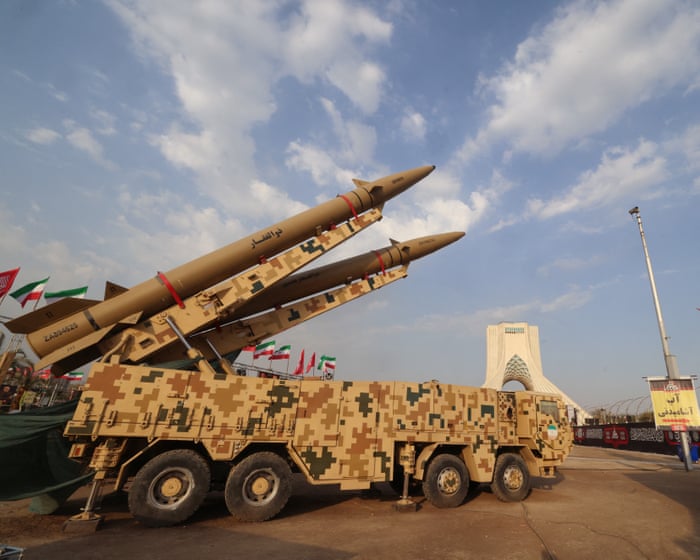
Iran attacked US military bases in Jordan and the United Arab Emirates after the US struck Iranian rocket launchers on Larak Island in the Strait of Hormuz. This exchange is the first direct conflict between the two sides since July and has increased tensions in the region.
Key Facts
The US targeted Iranian rocket launchers on Larak Island, claiming they were preparing to fire missiles with naval mines.
Iran responded by launching missile and drone attacks on US bases in Jordan and military assets in the UAE.
Iran’s Islamic Revolutionary Guard Corps (IRGC) reported casualties from the US strike and warned of further consequences.
The US Central Command said the attack on Larak Island was defensive to protect civilian ships and global trade routes.
President Donald Trump stated that Iran’s Kharg Island was heavily damaged, but Iran has not confirmed this.
Iran’s Ministry of Foreign Affairs called the US strike a violation of its sovereignty and said it caused civilian and military casualties.
The IRGC described the retaliatory strikes as legal self-defense under the UN Charter.
The US claimed it intercepted missiles from Iran targeting Jordan, suggesting Iran’s military power has weakened.
Read the Original
Want the full story? Tap a source to open the original
article.
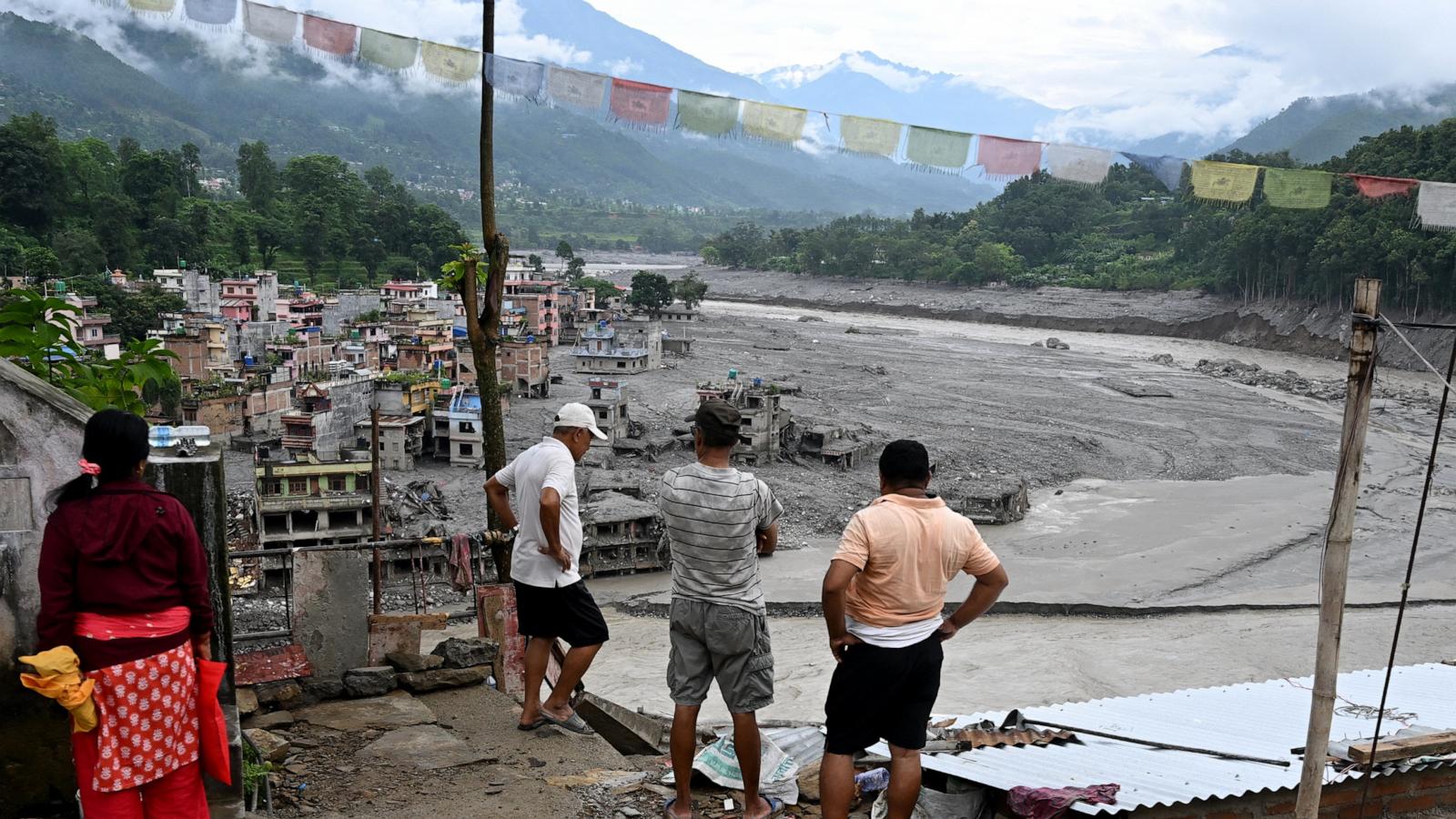
A Tibetan advocacy group says the actual damage from recent floods on the Tibetan side of the Nepal-China border is much worse than China’s official reports. Chinese authorities report 16 deaths and 546 missing people, but the advocacy group estimates hundreds of homes destroyed and more missing people than stated. Chinese officials have restricted information and punished those sharing what they call false disaster news.
Key Facts
Deadly floods hit the Nepal-Tibet border on August 26, caused by a glacier collapse.
Chinese officials report 16 dead and 546 missing, including 261 foreigners.
The International Campaign for Tibet estimates at least 300 homes destroyed in Tibet.
Public discussion and independent reporting about the disaster in Tibet is heavily restricted.
At least 10 people were punished by Tibetan security officials for sharing "false disaster information."
The death toll on the Nepal side is over 900, with more than 4,000 missing.
Survivors in Tibet have been moved to a nearby town under strict control and limited communication.
Chinese social media mostly reflects official statements, with some questioning why updates only come from Nepal.
Read the Original
Want the full story? Tap a source to open the original
article.
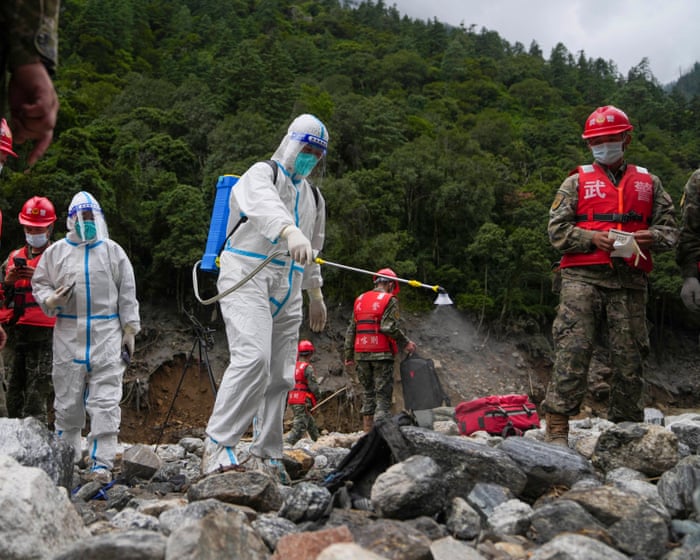
Rescue teams from Nepal, with help from Chinese and Indian experts, are trying to reach hundreds of workers trapped in hydropower tunnels after severe floods hit the Himalayan region. The floods, caused by a glacier collapse, have killed over 900 people and left thousands missing in Nepal and China.
Key Facts
Heavy floods struck the Nepal-Tibet border, triggered by a glacier collapse.
More than 900 people have died and around 5,000 are missing.
About 933 workers are believed to be trapped inside tunnels at 11 hydropower projects.
Rescue teams use excavators, controlled blasts, and searchlights to clear debris and water.
Over 90,000 people are estimated to have been affected by the floods.
Nepal’s Prime Minister says this is an unprecedented natural disaster and difficult terrain complicates rescue efforts.
Nearly 21,000 security workers, along with civilians and volunteers, are involved in rescue operations.
Chinese officials report 16 deaths and over 500 missing in their area; foreign nationals are also unaccounted for near Tibet.
Read the Original
Want the full story? Tap a source to open the original
article.
Kazakhstan’s President Tokayev appointed Erlan Karin as the country’s first vice president, a role created under a new constitution. Karin, a longtime adviser to Tokayev, is now next in line to lead Kazakhstan. The Kazakh parliament also reapproved Olzhas Bektenov as prime minister.
Key Facts
Erlan Karin was named Kazakhstan’s first vice president under a new constitution adopted earlier in 2024.
Karin has worked closely with President Tokayev since 2019 and has experience in counter-terrorism and public administration.
President Tokayev described Karin as experienced and a patriot.
The vice president role makes Karin first in line to succeed Tokayev as leader.
Olzhas Bektenov was reappointed as prime minister; he has held the position since 2024.
Both appointments were quickly approved by the pro-Tokayev parliament, controlled by the Adilet party.
Tokayev’s new constitution allows him to run for another seven-year term; his current term ends in 2029.
Tokayev became president in 2019, succeeding Kazakhstan’s first president, Nazarbayev, and distanced himself from Nazarbayev after unrest in 2022.
Read the Original
Want the full story? Tap a source to open the original
article.
The author lost her sister and father within a short time and was grieving while experiencing persistent pain and other symptoms. After several hospital visits and surgeries, she was diagnosed with ovarian cancer, which explained her earlier symptoms that had been mistaken for other conditions.
Key Facts
The author’s sister died suddenly in September 2023 at age 30.
Soon after, the author experienced pain under her right breast and other symptoms like bloating and nausea.
Her father passed away in January 2025, and in summer 2025, her mother was diagnosed with cervical cancer.
In January 2026, she was hospitalized and had her gallbladder removed due to gallstones and chronic inflammation.
Less than a month later, she developed severe abdominal pain linked to appendicitis, and a CT scan revealed liver lesions.
Her appendix was removed, and the surgeon suspected endometriosis, but pathology later showed the cancer originated from the ovary.
The author was surprised by the ovarian cancer diagnosis after several months of symptoms and misdiagnoses.
She has since started treatment and is receiving free therapy to help cope emotionally.
Read the Original
Want the full story? Tap a source to open the original
article.
When President George W. Bush returned to Washington, D.C. on August 31, 2001, the CIA director briefed him but did not mention a recent terrorism arrest or discuss domestic threats. On the same day, Saudi Prince Turki bin Faisal al-Saud unexpectedly resigned as head of Saudi intelligence after 23 years, a move tied to tensions over handling terrorism and relations with Osama bin Laden.
Key Facts
President Bush returned from a month-long vacation on August 31, 2001.
CIA director George Tenet resumed intelligence briefings but did not mention Zacarias Moussaoui’s arrest or domestic terror threats.
Saudi Prince Turki bin Faisal al-Saud resigned as head of Saudi intelligence, surprising the CIA.
Prince Turki had led Saudi intelligence for 23 years and had close ties with the CIA.
He helped manage Saudi support and financing for Arab fighters in Afghanistan during the Soviet invasion.
Prince Turki was believed to have had a relationship with Osama bin Laden, possibly an agreement to avoid attacks inside Saudi Arabia.
Saudi cooperation with the U.S. was limited during investigations of attacks on U.S. sites in Saudi Arabia during the 1990s.
The U.S. pressured Pakistan after 9/11 but did not issue similar warnings to Saudi Arabia.
Read the Original
Want the full story? Tap a source to open the original
article.
A ferry carrying 267 people sank off northern Cyprus on August 30, 2026, killing eight people and leaving 18 missing. Survivors described panic and chaos as they tried to escape, while rescue teams searched for missing passengers.
Key Facts
The ferry left Kyrenia in northern Cyprus and was headed to Tasucu in Turkey when it capsized.
There were 267 people on board, including passengers and crew.
Eight people died, and 18 were still missing as rescue efforts continued.
Survivors said the ferry began to list and take on water after loud noises came from below decks.
The crew initially said the problem was a loose gasket causing a leak.
Panic grew as people struggled to find life jackets and many were trapped below decks.
Rescuers in nearby boats pulled many survivors from the sea.
Northern Cyprus authorities have launched an investigation and detained the ferry’s crew.
Read the Original
Want the full story? Tap a source to open the original
article.
Leaders from China, Russia, India, and other countries will meet in Kyrgyzstan for the 25th Shanghai Cooperation Organisation (SCO) summit. They plan to discuss peace, development, trade, and security amid ongoing global conflicts.
Key Facts
The SCO summit will be held in Bishkek, Kyrgyzstan, with the theme "Together for Sustainable Peace, Development and Prosperity."
Key attendees include President Xi Jinping (China), President Vladimir Putin (Russia), Prime Minister Narendra Modi (India), and President Masoud Pezeshkian (Iran).
Leaders from Pakistan, Uzbekistan, Belarus, Kazakhstan, Turkey, the UN, and ASEAN will also participate.
The SCO started in 1996 as a security group to resolve border disputes among China, Russia, and Central Asian countries.
The summit marks 25 years of the SCO’s existence and aims to deepen cooperation among member countries.
The meeting happens during ongoing conflicts like the Russia-Ukraine war and tensions involving Iran, affecting global energy and finance.
The SCO is seen as a way for rising powers like China and India to promote a multipolar world, where global power is shared among several countries.
The leaders may discuss strengthening trade, security, and peaceful conflict resolution, though major breakthroughs are uncertain.
Read the Original
Want the full story? Tap a source to open the original
article.
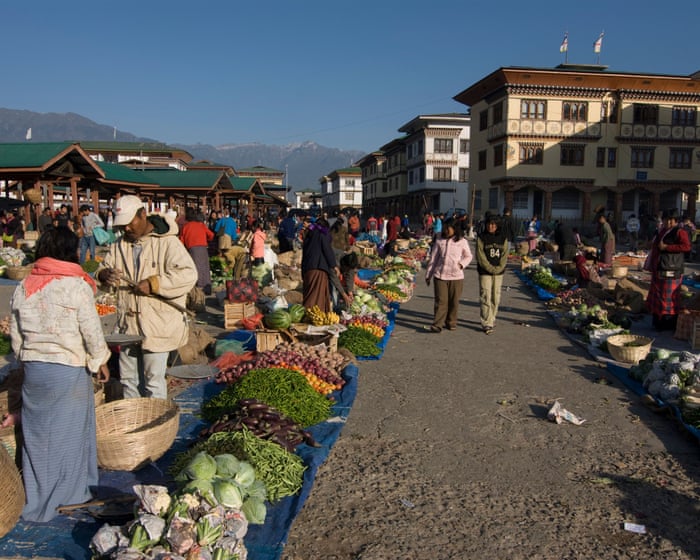
Leaders and experts from over 60 countries are meeting in Bhutan for the first “conscious food summit” to discuss how to fix global food problems worsened by climate change and conflict. The summit promotes a new approach that combines science with spiritual and cultural values to improve food systems and resilience.
Key Facts
The summit is held in Paro, Bhutan, and lasts five days.
Delegates include governments, farmers, mindfulness experts, and yoga therapists.
Bhutan’s Prime Minister Tshering Tobgay emphasizes that food issues relate to hunger, poverty, climate change, and stability.
The summit focuses on “conscious eating” and regenerative farming, using Indigenous knowledge.
Flash floods in the Nepal-Tibet border area have killed at least 919 people, with more than 4,700 still missing. The floods caused heavy damage to homes, roads, and bridges, and many Americans are among the missing.
Key Facts
At least 903 bodies were found in Nepal, and 16 in Tibet as of August 31, 2026.
More than 4,700 people remain missing, including about 85 Americans.
The floods began after a landslide caused a wall of ice, water, and debris to rush down a mountain near the Nepal-Tibet border.
The disaster affected areas up to 62 miles downriver from the landslide site.
The Nepal National Disaster Management Authority and Chinese officials are coordinating rescue efforts.
The United States activated $3.6 million in emergency aid for food and supplies to help affected families.
The U.S. Embassy warned Americans not to travel to the flood zone due to ongoing dangers and disrupted services.
The landslide was measured at magnitude 5.2 and originated from a glacier about 16,000 feet high.
Read the Original
Want the full story? Tap a source to open the original
article.
Spanish Prime Minister Pedro Sanchez said that social media linked to Israel and Russia spread false information about the migrant crisis in Ceuta, a Spanish territory in North Africa. He said this disinformation was part of a campaign against Spain and Europe, connected to disagreements over the wars in Ukraine and the Middle East.
Key Facts
The migrant crisis in Ceuta happened in July 2026 when many migrants entered the Spanish exclave suddenly.
Sanchez accused social networks connected to Israel and Russia of spreading rumors and false information about this event.
Far-right groups also helped spread this disinformation to attack Spain and Europe.
Spain opposes wars in Ukraine and the Middle East, which may explain why Israel and Russia targeted it with these campaigns.
Sanchez said Moroccan authorities were not responsible for the migrant influx, based on intelligence reports.
About 70,000 migrants entered Ceuta, and most were later sent back to Morocco.
The European Union’s foreign policy body, the European External Action Service, researched the disinformation spread.
Read the Original
Want the full story? Tap a source to open the original
article.
An 85-year-old man named Gordon Nicholass died on August 12, months after he was injured during a burglary at his home in Helmshore, Lancashire. Police are investigating whether the assault he suffered was related to his death.
Key Facts
The burglary happened around 3:00 AM on April 29 at Gordon Nicholass’s home.
Nicholass was attacked and hurt on his head and face when he confronted the burglars.
He was treated in hospital, went home, but later returned to the hospital and passed away on August 12.
Police have done a post-mortem test and are still checking if the attack caused or contributed to his death.
The burglars caused a lot of damage to the property, but police say it does not seem like they stole anything.
Police think the attack might have been planned or targeted.
Nicholass was known for his skills in engineering and was loved by family and friends.
Lancashire Police are supporting the family during this investigation.
Read the Original
Want the full story? Tap a source to open the original
article.
Algerian President Abdelmadjid Tebboune wants to bring back the death penalty for people who start forest fires on purpose. This comes after over 100 wildfires in northern Algeria killed at least 12 people and caused a lot of damage.
Key Facts
More than 100 wildfires were reported in northeast Algeria in recent days.
At least 12 people have died due to the fires.
The president asked the justice ministry to change the law to allow the death penalty for arsonists.
Currently, intentionally starting forest fires can lead to up to 30 years in prison or life imprisonment.
No executions have happened in Algeria since 1993, although the death penalty is still in the law for some crimes.
The fires happened during a heatwave affecting northern Africa, including Algeria and Tunisia.
Officials said most of the fires have been put out, but some were still burning as of the latest reports.
The government plans to pay compensation to affected families and repair damaged homes and services.
Read the Original
Want the full story? Tap a source to open the original
article.
Since the fall of Bashar al-Assad’s government, Syria’s new leadership has focused on diplomacy with Israel instead of war. Despite frequent Israeli attacks and military presence in southern Syria, Damascus continues to seek peace and regional support but does not fully trust Israel.
Key Facts
Syria stopped military conflict with Israel after a 1974 agreement under Hafez al-Assad.
Rebels led by President Ahmed al-Sharaa took power in Syria in December 2024.
Israel responded with attacks on Syrian military sites and increased troops in southern Syria.
Syrian officials claim they want peace with all neighbors and no military attacks on Israel.
Israel has repeatedly attacked Syria and warns against Syrian troop deployment near the border.
Syria has gained trust from President Donald Trump’s U.S. administration and maintains ties with Turkey and Gulf states.
Syria filed complaints at the United Nations about Israeli strikes, incursions, and arrests in Syrian territory.
Syrian leaders say they do not trust Israel but see negotiations as necessary for security.
Read the Original
Want the full story? Tap a source to open the original
article.
In 2022, the Nord Stream pipelines that carried gas from Russia to Germany were damaged by underwater explosions, causing the largest methane gas leak in history. Two Ukrainian divers suspected to be involved were arrested in Europe, and the incident led Germany to rethink its heavy reliance on Russian gas, changing its energy policies and affecting relations with Ukraine.
Key Facts
The Nord Stream pipelines cost $19 billion to build and carried gas from Russia's Arctic to Germany's Baltic coast.
On September 26, 2022, explosions damaged the pipelines, stopping gas deliveries and causing a large methane leak.
Two Ukrainian divers, Volodymyr Zhuravlev and Serhii Kuznetsov, are suspected in the sabotage and were arrested in Croatia and Italy.
The pipeline damage shocked Germany’s economy and forced a rapid shift in its energy sources.
Before the explosion, Russian gas supplied about 55% of Germany’s natural gas needs, crucial for heating and industry.
Germany’s energy policy now focuses on reducing fossil fuel imports by using renewables, improving energy efficiency, and diversifying gas sources.
The attack strained political relations between Germany and Ukraine.
The incident highlighted the risks of relying heavily on energy imports from politically sensitive countries.
Read the Original
Want the full story? Tap a source to open the original
article.
Raja Shehadeh, a Palestinian writer and lawyer, has donated his personal diaries, dating back to 1967, to the University of Edinburgh. These diaries document the history of Palestine, including major events like the Six-Day War, and will be preserved and archived in Scotland.
Key Facts
Raja Shehadeh began writing diaries in 1967 when he was 15 years old.
His diaries cover important historical events, such as the Six-Day War and changes in the West Bank.
The collection includes more than 5 million words spread across tens of thousands of pages.
Shehadeh decided to move the archive to Scotland due to fears it might be destroyed amid conflict in Palestine.
The diaries are now safely held at the University of Edinburgh’s Centre for Research Collections.
Shehadeh has a strong connection to Edinburgh, where he has launched many books.
The archive also contains materials from Shehadeh’s late father, a lawyer in Ramallah.
The transfer was supported by the Digital Archive of the Middle East and other organizations.
Read the Original
Want the full story? Tap a source to open the original
article.
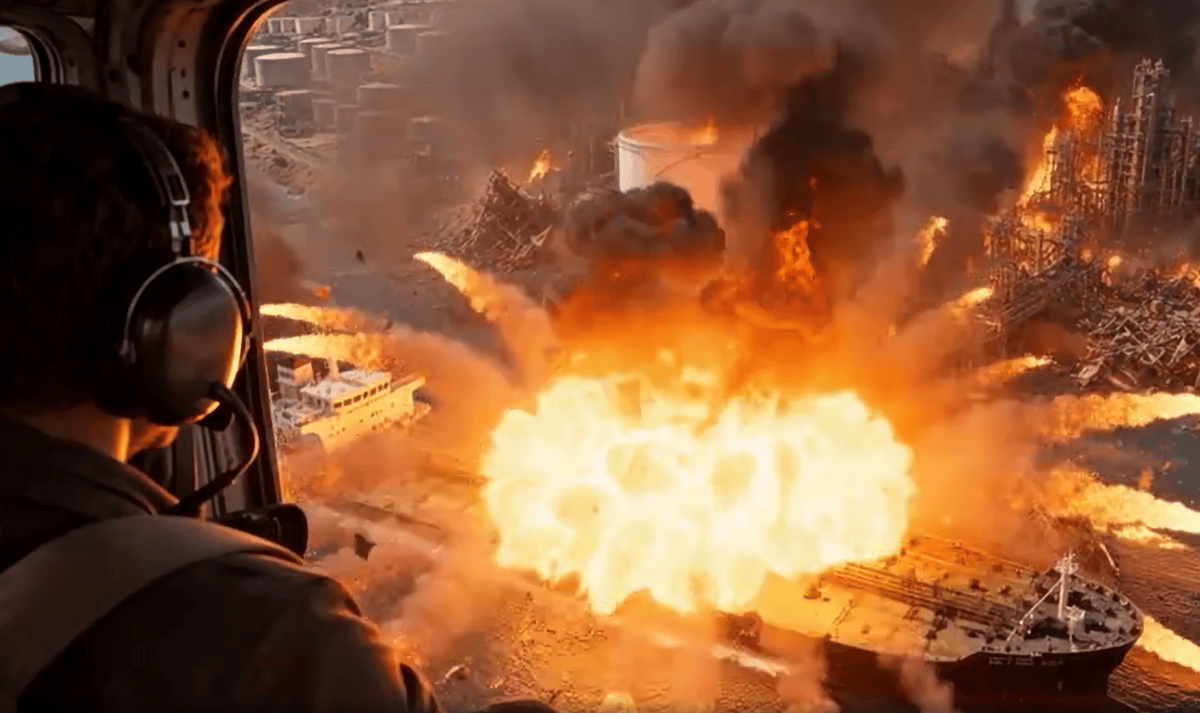
President Donald Trump shared an AI-generated video showing explosions on Iran's Kharg Island, but Iranian officials said no attack happened there. The U.S. military confirmed limited strikes on other Iranian sites and reported targeting Iranian missile launchers on Larak Island in the Strait of Hormuz.
Key Facts
President Trump posted an AI-made video claiming Kharg Island was heavily attacked.
Iranian sources said Kharg Island was not attacked and activities continued as normal.
Kharg Island is important because it handles 90% of Iran's oil exports.
The U.S. Central Command said it conducted precise strikes against Iranian mine-laying capabilities in the Strait of Hormuz.
The U.S. struck two Iranian missile launchers on Larak Island.
Iran said it responded by attacking two Jordanian air bases with ballistic missiles.
Iran's Revolutionary Guard reported stopping a tanker in the Strait of Hormuz by hitting it with naval mines.
Washington and Tehran exchanged attacks for the first time since July, amid ongoing tensions over sanctions and negotiations.
Read the Original
Want the full story? Tap a source to open the original
article.
Tensions between the US and Iran escalated after the US launched airstrikes on Iranian military targets in the Strait of Hormuz, and Iran responded with missile attacks on US bases in the Middle East. A supertanker caught fire after hitting naval mines in the strait, and both sides exchanged warnings and accusations amid ongoing conflict.
Key Facts
The US carried out airstrikes on Iranian rocket launchers on Larak Island in the Strait of Hormuz.
Iran’s Islamic Revolutionary Guard Corps (IRGC) attacked two US military airbases in Jordan with ballistic missiles, claiming heavy damage.
A supertanker hit two naval mines in the southern Strait of Hormuz, caught fire, and stopped moving; Iran said the ship was violating security rules.
Iran also said it targeted US military personnel at an airbase in the United Arab Emirates.
President Donald Trump claimed on social media that Iran’s Kharg Island, an important energy hub, was being destroyed, but Iran’s National Oil Company denied damage.
Iran’s supreme leader called the US and Israel enemies of all Islamic nations and urged Muslim countries to oppose them.
Israel evacuated Prime Minister Netanyahu’s son from the US due to a security threat.
US Treasury Secretary Scott Bessent plans to increase efforts to limit Iran’s economic activities during upcoming G20 meetings.
Read the Original
Want the full story? Tap a source to open the original
article.