Leaders from China, Russia, India, and other countries will meet in Kyrgyzstan for the 25th Shanghai Cooperation Organisation (SCO) summit. They plan to discuss peace, development, trade, and security amid ongoing global conflicts.
Key Facts
The SCO summit will be held in Bishkek, Kyrgyzstan, with the theme "Together for Sustainable Peace, Development and Prosperity."
Key attendees include President Xi Jinping (China), President Vladimir Putin (Russia), Prime Minister Narendra Modi (India), and President Masoud Pezeshkian (Iran).
Leaders from Pakistan, Uzbekistan, Belarus, Kazakhstan, Turkey, the UN, and ASEAN will also participate.
The SCO started in 1996 as a security group to resolve border disputes among China, Russia, and Central Asian countries.
The summit marks 25 years of the SCO’s existence and aims to deepen cooperation among member countries.
The meeting happens during ongoing conflicts like the Russia-Ukraine war and tensions involving Iran, affecting global energy and finance.
The SCO is seen as a way for rising powers like China and India to promote a multipolar world, where global power is shared among several countries.
The leaders may discuss strengthening trade, security, and peaceful conflict resolution, though major breakthroughs are uncertain.
Read the Original
Want the full story? Tap a source to open the original
article.
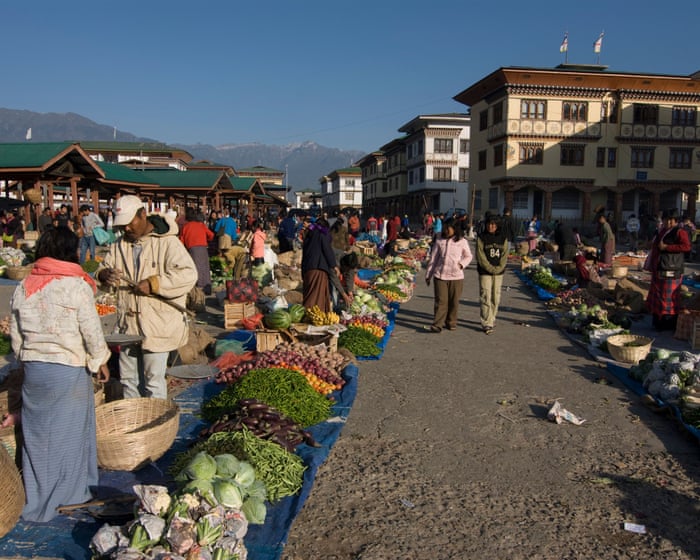
Leaders and experts from over 60 countries are meeting in Bhutan for the first “conscious food summit” to discuss how to fix global food problems worsened by climate change and conflict. The summit promotes a new approach that combines science with spiritual and cultural values to improve food systems and resilience.
Key Facts
The summit is held in Paro, Bhutan, and lasts five days.
Delegates include governments, farmers, mindfulness experts, and yoga therapists.
Bhutan’s Prime Minister Tshering Tobgay emphasizes that food issues relate to hunger, poverty, climate change, and stability.
The summit focuses on “conscious eating” and regenerative farming, using Indigenous knowledge.
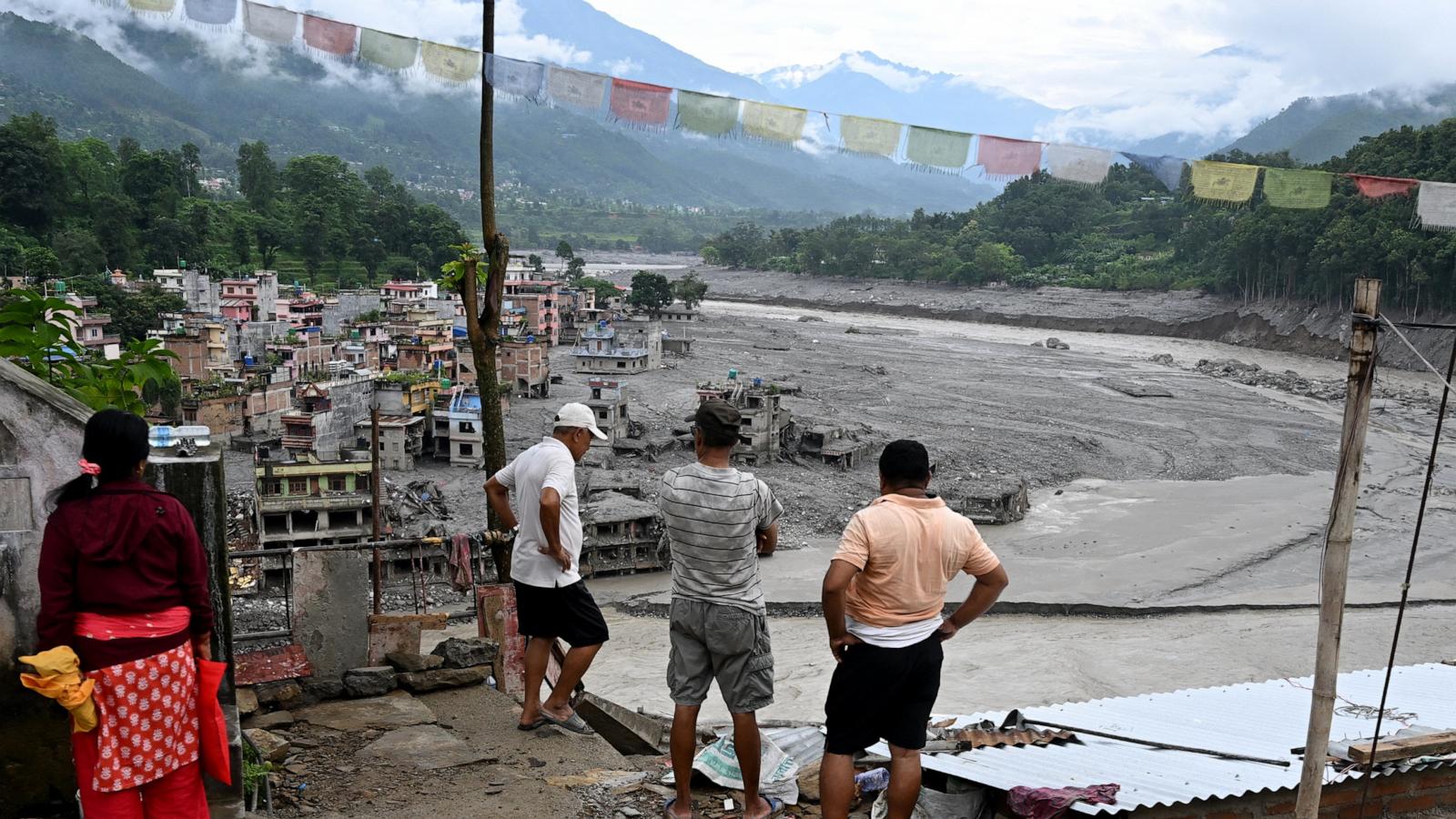
Flash floods in the Nepal-Tibet border area have killed at least 919 people, with more than 4,700 still missing. The floods caused heavy damage to homes, roads, and bridges, and many Americans are among the missing.
Key Facts
At least 903 bodies were found in Nepal, and 16 in Tibet as of August 31, 2026.
More than 4,700 people remain missing, including about 85 Americans.
The floods began after a landslide caused a wall of ice, water, and debris to rush down a mountain near the Nepal-Tibet border.
The disaster affected areas up to 62 miles downriver from the landslide site.
The Nepal National Disaster Management Authority and Chinese officials are coordinating rescue efforts.
The United States activated $3.6 million in emergency aid for food and supplies to help affected families.
The U.S. Embassy warned Americans not to travel to the flood zone due to ongoing dangers and disrupted services.
The landslide was measured at magnitude 5.2 and originated from a glacier about 16,000 feet high.
Read the Original
Want the full story? Tap a source to open the original
article.
Spanish Prime Minister Pedro Sanchez said that social media linked to Israel and Russia spread false information about the migrant crisis in Ceuta, a Spanish territory in North Africa. He said this disinformation was part of a campaign against Spain and Europe, connected to disagreements over the wars in Ukraine and the Middle East.
Key Facts
The migrant crisis in Ceuta happened in July 2026 when many migrants entered the Spanish exclave suddenly.
Sanchez accused social networks connected to Israel and Russia of spreading rumors and false information about this event.
Far-right groups also helped spread this disinformation to attack Spain and Europe.
Spain opposes wars in Ukraine and the Middle East, which may explain why Israel and Russia targeted it with these campaigns.
Sanchez said Moroccan authorities were not responsible for the migrant influx, based on intelligence reports.
About 70,000 migrants entered Ceuta, and most were later sent back to Morocco.
The European Union’s foreign policy body, the European External Action Service, researched the disinformation spread.
Read the Original
Want the full story? Tap a source to open the original
article.
An 85-year-old man named Gordon Nicholass died on August 12, months after he was injured during a burglary at his home in Helmshore, Lancashire. Police are investigating whether the assault he suffered was related to his death.
Key Facts
The burglary happened around 3:00 AM on April 29 at Gordon Nicholass’s home.
Nicholass was attacked and hurt on his head and face when he confronted the burglars.
He was treated in hospital, went home, but later returned to the hospital and passed away on August 12.
Police have done a post-mortem test and are still checking if the attack caused or contributed to his death.
The burglars caused a lot of damage to the property, but police say it does not seem like they stole anything.
Police think the attack might have been planned or targeted.
Nicholass was known for his skills in engineering and was loved by family and friends.
Lancashire Police are supporting the family during this investigation.
Read the Original
Want the full story? Tap a source to open the original
article.
Algerian President Abdelmadjid Tebboune wants to bring back the death penalty for people who start forest fires on purpose. This comes after over 100 wildfires in northern Algeria killed at least 12 people and caused a lot of damage.
Key Facts
More than 100 wildfires were reported in northeast Algeria in recent days.
At least 12 people have died due to the fires.
The president asked the justice ministry to change the law to allow the death penalty for arsonists.
Currently, intentionally starting forest fires can lead to up to 30 years in prison or life imprisonment.
No executions have happened in Algeria since 1993, although the death penalty is still in the law for some crimes.
The fires happened during a heatwave affecting northern Africa, including Algeria and Tunisia.
Officials said most of the fires have been put out, but some were still burning as of the latest reports.
The government plans to pay compensation to affected families and repair damaged homes and services.
Read the Original
Want the full story? Tap a source to open the original
article.
Since the fall of Bashar al-Assad’s government, Syria’s new leadership has focused on diplomacy with Israel instead of war. Despite frequent Israeli attacks and military presence in southern Syria, Damascus continues to seek peace and regional support but does not fully trust Israel.
Key Facts
Syria stopped military conflict with Israel after a 1974 agreement under Hafez al-Assad.
Rebels led by President Ahmed al-Sharaa took power in Syria in December 2024.
Israel responded with attacks on Syrian military sites and increased troops in southern Syria.
Syrian officials claim they want peace with all neighbors and no military attacks on Israel.
Israel has repeatedly attacked Syria and warns against Syrian troop deployment near the border.
Syria has gained trust from President Donald Trump’s U.S. administration and maintains ties with Turkey and Gulf states.
Syria filed complaints at the United Nations about Israeli strikes, incursions, and arrests in Syrian territory.
Syrian leaders say they do not trust Israel but see negotiations as necessary for security.
Read the Original
Want the full story? Tap a source to open the original
article.
In 2022, the Nord Stream pipelines that carried gas from Russia to Germany were damaged by underwater explosions, causing the largest methane gas leak in history. Two Ukrainian divers suspected to be involved were arrested in Europe, and the incident led Germany to rethink its heavy reliance on Russian gas, changing its energy policies and affecting relations with Ukraine.
Key Facts
The Nord Stream pipelines cost $19 billion to build and carried gas from Russia's Arctic to Germany's Baltic coast.
On September 26, 2022, explosions damaged the pipelines, stopping gas deliveries and causing a large methane leak.
Two Ukrainian divers, Volodymyr Zhuravlev and Serhii Kuznetsov, are suspected in the sabotage and were arrested in Croatia and Italy.
The pipeline damage shocked Germany’s economy and forced a rapid shift in its energy sources.
Before the explosion, Russian gas supplied about 55% of Germany’s natural gas needs, crucial for heating and industry.
Germany’s energy policy now focuses on reducing fossil fuel imports by using renewables, improving energy efficiency, and diversifying gas sources.
The attack strained political relations between Germany and Ukraine.
The incident highlighted the risks of relying heavily on energy imports from politically sensitive countries.
Read the Original
Want the full story? Tap a source to open the original
article.
Raja Shehadeh, a Palestinian writer and lawyer, has donated his personal diaries, dating back to 1967, to the University of Edinburgh. These diaries document the history of Palestine, including major events like the Six-Day War, and will be preserved and archived in Scotland.
Key Facts
Raja Shehadeh began writing diaries in 1967 when he was 15 years old.
His diaries cover important historical events, such as the Six-Day War and changes in the West Bank.
The collection includes more than 5 million words spread across tens of thousands of pages.
Shehadeh decided to move the archive to Scotland due to fears it might be destroyed amid conflict in Palestine.
The diaries are now safely held at the University of Edinburgh’s Centre for Research Collections.
Shehadeh has a strong connection to Edinburgh, where he has launched many books.
The archive also contains materials from Shehadeh’s late father, a lawyer in Ramallah.
The transfer was supported by the Digital Archive of the Middle East and other organizations.
Read the Original
Want the full story? Tap a source to open the original
article.
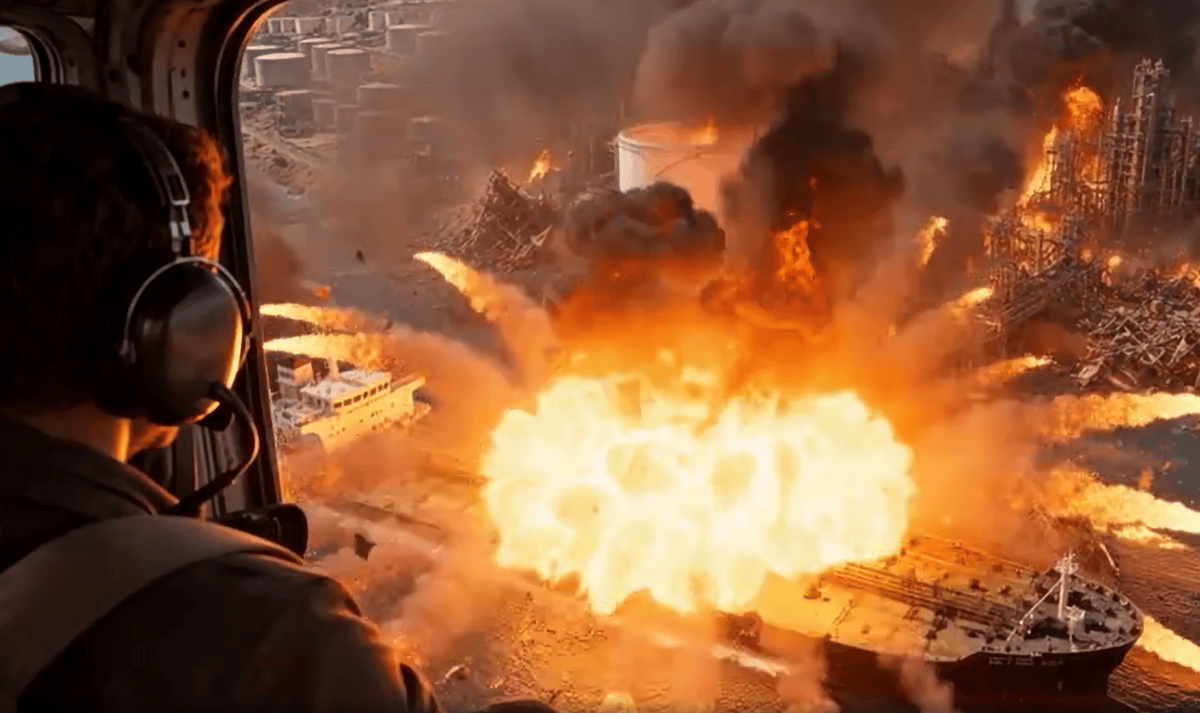
President Donald Trump shared an AI-generated video showing explosions on Iran's Kharg Island, but Iranian officials said no attack happened there. The U.S. military confirmed limited strikes on other Iranian sites and reported targeting Iranian missile launchers on Larak Island in the Strait of Hormuz.
Key Facts
President Trump posted an AI-made video claiming Kharg Island was heavily attacked.
Iranian sources said Kharg Island was not attacked and activities continued as normal.
Kharg Island is important because it handles 90% of Iran's oil exports.
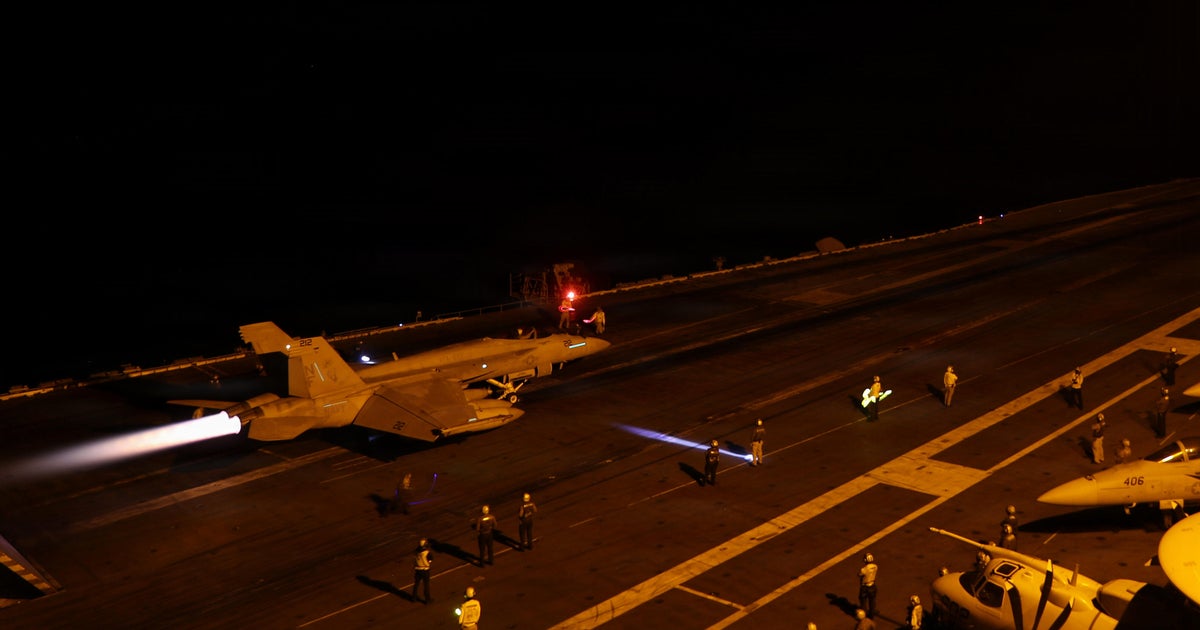
The U.S. Central Command said it conducted precise strikes against Iranian mine-laying capabilities in the Strait of Hormuz.
The U.S. struck two Iranian missile launchers on Larak Island.
Iran said it responded by attacking two Jordanian air bases with ballistic missiles.
Iran's Revolutionary Guard reported stopping a tanker in the Strait of Hormuz by hitting it with naval mines.
Washington and Tehran exchanged attacks for the first time since July, amid ongoing tensions over sanctions and negotiations.
Read the Original
Want the full story? Tap a source to open the original
article.
Tensions between the US and Iran escalated after the US launched airstrikes on Iranian military targets in the Strait of Hormuz, and Iran responded with missile attacks on US bases in the Middle East. A supertanker caught fire after hitting naval mines in the strait, and both sides exchanged warnings and accusations amid ongoing conflict.
Key Facts
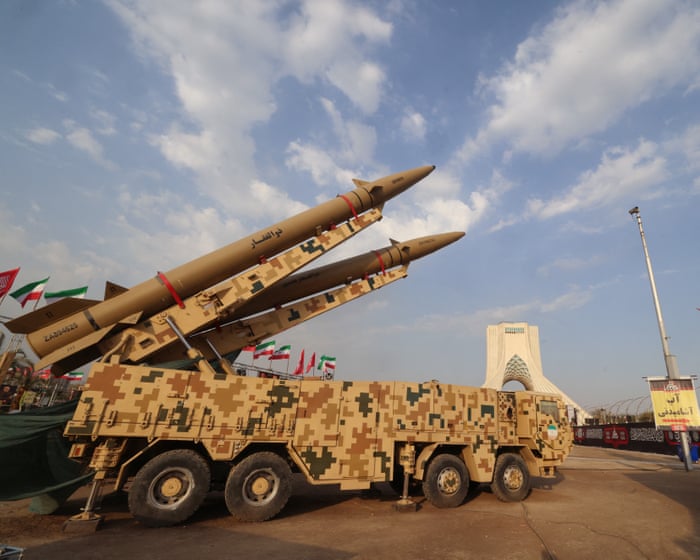
The US carried out airstrikes on Iranian rocket launchers on Larak Island in the Strait of Hormuz.
Iran’s Islamic Revolutionary Guard Corps (IRGC) attacked two US military airbases in Jordan with ballistic missiles, claiming heavy damage.
A supertanker hit two naval mines in the southern Strait of Hormuz, caught fire, and stopped moving; Iran said the ship was violating security rules.
Iran also said it targeted US military personnel at an airbase in the United Arab Emirates.
President Donald Trump claimed on social media that Iran’s Kharg Island, an important energy hub, was being destroyed, but Iran’s National Oil Company denied damage.
Iran’s supreme leader called the US and Israel enemies of all Islamic nations and urged Muslim countries to oppose them.
Israel evacuated Prime Minister Netanyahu’s son from the US due to a security threat.
US Treasury Secretary Scott Bessent plans to increase efforts to limit Iran’s economic activities during upcoming G20 meetings.
Read the Original
Want the full story? Tap a source to open the original
article.
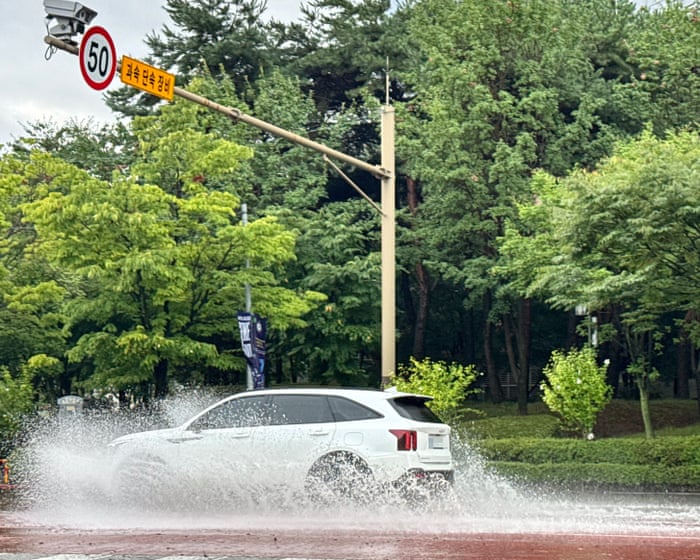
South Korea is preparing for heavy rain and storms strengthened by unusually warm waters in the Yellow Sea, with rainfall expected to exceed 200mm in some areas. Nearby countries including Thailand, the Philippines, and parts of the Pacific are also experiencing severe weather conditions, while Europe faces continued high temperatures as summer ends.
Key Facts
South Korea expects heavy rain exceeding 200mm in central and northern regions due to storms over the Yellow Sea.
The Yellow Sea’s surface is unusually warm at 29°C, which is 4°C above the usual average, strengthening the storms.
Thailand is under heavy rain warnings during its monsoon season (May to October).
The Philippines’ Tarlac province declared a state of calamity due to prolonged heavy rain in August.
Several tropical storms and typhoons are active or developing in the northwest and eastern North Pacific, near the Philippines, China, and Hawaii.
Hurricane Karina and Tropical Storm Lowell are expected to pass near Hawaii without making landfall.
Europe is experiencing a record-breaking hot summer, with temperatures rising up to 10°C above average, reaching nearly 40°C in Bosnia and Herzegovina.
Read the Original
Want the full story? Tap a source to open the original
article.
Heavy flooding in Nepal caused many deaths and damage. A school headmaster saved over 1,600 students during the floods. The Nepalese press criticizes major polluters for climate change impacts, noting Nepal’s very small share of global emissions.
Key Facts
Nepal experienced severe flash floods that caused hundreds of deaths and widespread damage.
Headmaster Rajendra Dadabi saved 1,643 pupils at Tribhuvan Trishuli secondary school during the floods.
Nepal produces only 0.1% of global carbon emissions but suffers greatly from climate-related disasters.
The Nepalese media calls for accountability from big polluters in richer countries.
The flooding raises broader concerns about climate justice and responsibility for environmental harm.
Related news includes child sex abuse reports in French childcare and studies on insect voting behavior, but these are separate topics.
Read the Original
Want the full story? Tap a source to open the original
article.
Iran's Revolutionary Guard said it attacked U.S. military bases in Jordan and the United Arab Emirates after the U.S. struck Iranian rocket launchers on Larak Island near the Strait of Hormuz. A supertanker was reportedly hit by sea mines in the Strait of Hormuz, causing a fire and halting its journey. Jordan intercepted multiple missiles entering its airspace amid the tensions.
Key Facts
The U.S. military struck Iranian rocket launchers on Larak Island in the Strait of Hormuz.
Iran's Revolutionary Guard fired ballistic missiles at U.S. bases in Jordan, including King Hussein and Al-Azraq air bases.
Iran also claimed to target U.S. personnel at a base in the United Arab Emirates.
A supertanker was struck by two sea mines in the Strait of Hormuz, causing a fire and stopping the ship.
Iran said the tanker tried to pass through the Strait without permission but gave no details on the ship or crew.
Jordan's military intercepted and destroyed eight missiles that entered Jordanian airspace.
President Donald Trump posted an AI-created video on social media showing an attack on Iran’s Kharg Island, though no attack was confirmed there.
Iran's National Oil Company said operations on Kharg Island continue without disruption.
Read the Original
Want the full story? Tap a source to open the original
article.
Nepal is urgently trying to rescue over 900 workers trapped underground after heavy floods caused by a glacier collapse hit hydropower projects. The disaster has killed more than 900 people in Nepal and dozens in China’s Tibet region, with thousands still missing. Rescue efforts involve Nepalese, Chinese, and Indian teams working to clear mud and debris from tunnels.
Key Facts
The floods were caused by a glacier collapse on the Nepal-Tibet border.
At least 903 people have died in Nepal and 16 in China’s Tibet region.
Around 4,247 people are missing in Nepal, and 546 in Tibet following the disaster.
More than 900 workers are trapped in tunnels at hydropower projects blocked by mud and rocks.
Nepal has involved nearly 21,000 security personnel, workers, and volunteers in rescue operations.
Chinese government sent over 2,100 rescue workers, aid worth $33 million, and tunnel experts to help Nepal.
Roads and highways have been heavily damaged, complicating relief efforts.
The Red Cross estimates over 90,000 people have been affected by the floods.
Read the Original
Want the full story? Tap a source to open the original
article.
A photojournalist gained rare access to a Taliban household in Afghanistan and documented the complicated lives of Afghan women there. Her work shows that Afghan women face many challenges, including poverty, drought, and strict social rules, but they are not just passive victims.
Key Facts
Elise Blanchard is an award-winning photojournalist and author of the book "In the House of a Taliban."
She studied the life of women inside a Taliban-controlled home in Afghanistan.
Afghan women’s situations are shaped by poverty, patriarchy (male-dominated culture), climate change, and political instability.
Child marriage is common in areas affected by drought, especially in Badghis province.
The coverage challenges the idea that Afghan women only suffer without agency, showing their complex reality.
The Taliban has controlled Afghanistan for five years, with ongoing restrictions on women’s rights.
Blanchard’s work includes photos and stories that reveal social contradictions within Taliban families.
Read the Original
Want the full story? Tap a source to open the original
article.
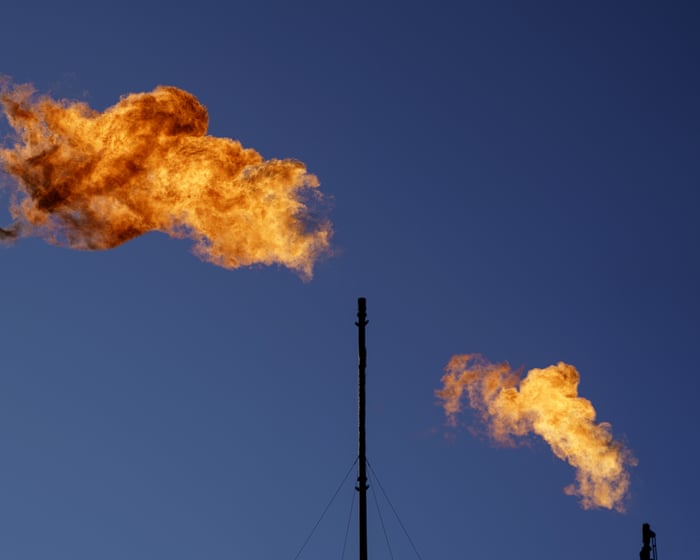
Turkmenistan has begun repairing large methane leaks from its old oil and gas facilities, according to recent United Nations data. Methane is a strong greenhouse gas that heats the planet much faster than carbon dioxide, so fixing these leaks helps reduce global warming quickly.
Key Facts
Methane traps 80 times more heat than carbon dioxide and causes about 25% of global warming.
Turkmenistan was identified in 2023 as the country with the worst large methane leaks.
The country has fixed eight major leaks by repairing pipes, wells, and flares.
The UN’s Methane Alert and Response System (Mars) sent 192 methane leak alerts to Turkmenistan last year.
Turkmenistan responded with information and repair plans to about 20% of the alerts.
The United States received 138 alerts but did not respond or fix any leaks last year.
A huge leak in Mexico’s offshore oil industry released 37 tonnes of methane per hour, but Mexico has not yet fixed it.
Turkmenistan joined the global methane pledge in December 2023 to reduce emissions.
Read the Original
Want the full story? Tap a source to open the original
article.
Han Hak-ja, leader of the Unification Church in South Korea, was sentenced to two years in prison for giving expensive gifts to the country’s former first lady, Kim Keon Hee, as part of bribery and political funding crimes. The court found that Han’s church provided luxury items worth about $58,000 in exchange for favors, marking the first official proof of the church’s attempt to influence politics.
Key Facts
Han Hak-ja is 83 years old and leads the Unification Church, also known as The Family Federation for World Peace and Unification.
Han was sentenced to two years in prison for bribery, related to giving two Chanel bags and a diamond necklace to Kim Keon Hee.
The gifts were valued at 80 million won (around $57,900).
Kim Keon Hee, the wife of former South Korean President Yoon Suk Yeol, was sentenced to 20 months in jail for accepting these bribes.
Prosecutors said the gifts were given between April and July 2022 in exchange for business and political favors.
Photos released by prosecutors showed $19 million in cash found in Han’s personal safe.
The Unification Church was founded in South Korea in the 1950s by Sun Myung Moon and is known for mass weddings and its controversial reputation.
The church has political connections in South Korea, Japan, and the U.S., and is banned or restricted in some places.
Read the Original
Want the full story? Tap a source to open the original
article.
The 83rd Venice Film Festival is starting in Venice, Italy, showcasing top international films and many well-known movie stars. The event, which runs until September 12, is important for the film industry and often influences the Oscars.
Key Facts
The Venice Film Festival is the oldest major film festival, starting in 1932.
It is the second most prestigious film festival in the world, after Cannes.
The festival runs from early September until September 12.
The opening film this year is “Ink” by Danny Boyle, about Rupert Murdoch’s early newspaper career.
George Clooney will receive a lifetime achievement award and is involved as a producer of the film “Furies.”
Other stars attending include Robert Pattinson, Penélope Cruz, Javier Bardem, and Ellen Burstyn (also receiving a lifetime achievement award).
The festival features films that are often considered for the Oscars.
A dark comedy called “Wild Horse Nine,” about CIA agents, is one of the anticipated movies.
Read the Original
Want the full story? Tap a source to open the original
article.
Iran’s Kharg Island is an important place where most of Iran’s oil is shipped out. Attacking or taking control of the island could hurt Iran’s oil sales and cause bigger conflicts, potentially raising oil prices worldwide.
Key Facts
Kharg Island is the main point for exporting almost all of Iran’s oil.
The U.S. and Israel have been involved in strikes related to the island during a recent conflict.
President Donald Trump suggested that U.S. troops might take over the island but also said a deal with Iran could happen soon.
Attacking the island would reduce oil coming from Iran and might increase global oil prices.
Taking the island would put U.S. forces very close to Iran’s coast, within missile and drone range.
Nearby islands like Abu Musa and the Greater and Lesser Tunb are also important and controlled by Iran but claimed by the United Arab Emirates.
The Strait of Hormuz nearby is a key waterway used for a large part of the world’s oil trade.
Kharg Island has oil storage, worker housing, and historic sites like a Portuguese fortress and old monasteries.
Read the Original
Want the full story? Tap a source to open the original
article.