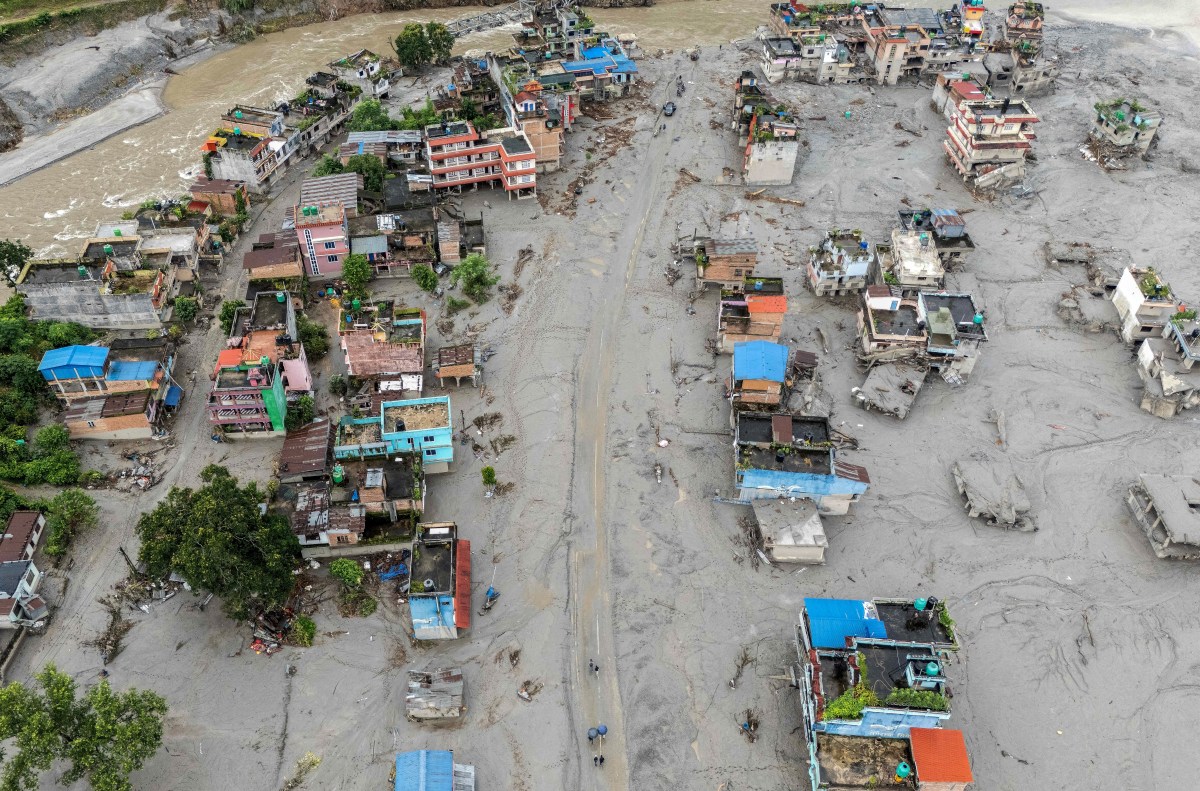
A flash flood in Nepal and Tibet killed at least 675 people and left over 3,000 missing, including 33 British nationals. A woman traced her missing mother and aunt’s last location to the Nepal-China border using a TikTok video posted just before the flood struck.
Key Facts
The flash floods hit Nepal and Tibet on Wednesday, destroying villages and causing many deaths and missing persons.
At least 675 people have died, and more than 3,000 are reported missing.
Among the missing are 33 British citizens, including a 13-year-old child.
A UK team is scheduled to arrive in Kathmandu to assist.
Two missing women, Hemangini Jitendra Patel and Hema Sunil Amin, were on a pilgrimage and last seen near the Nepal-China Friendship Bridge.
Their daughter used a TikTok video made by their tour guide to confirm their location before the flood.
The flash flood followed a 5.2 magnitude seismic event near the Nepal-China border.
Families of the missing are trying to contact local guides and authorities and are considering their next steps amid challenging conditions.
Read the Original
Want the full story? Tap a source to open the original
article.
Congress members and arms control experts warn that the Pentagon’s new plan for using nuclear weapons in a limited way could lead to dangerous misunderstandings. They believe this plan might make people think nuclear weapons can be used safely without causing large-scale conflict, which is risky.
Key Facts
The Pentagon has introduced a new nuclear doctrine focused on possible limited use of nuclear weapons.
Critics say this approach may create a false sense of control over nuclear warfare.
Lawmakers and arms control experts urge Congress to set rules to oversee this doctrine.
The concern is that using nuclear weapons in a limited way could escalate into wider nuclear war.
The debate highlights the need for clear government guidance on nuclear weapons policy.
The current administration is reviewing nuclear strategy as part of national defense planning.
Congressional oversight could help prevent accidental or unintended nuclear conflict.
Read the Original
Want the full story? Tap a source to open the original
article.
Seven people have been charged with damaging President Donald Trump’s golf resort in Scotland during a protest, with authorities saying the crime has a “terrorist connection.” The protest was linked to a group called Palestine Action, which has been labeled a terrorist organization in the UK and US.
Key Facts
The incident happened on March 8, 2025, at Trump Turnberry golf course in western Scotland.
The protesters damaged turf, sprayed weedkiller, flooded areas by breaking sprinklers, and painted political messages related to Gaza and Palestine.
The group Palestine Action is banned under UK terrorism laws since July 2025 and is also considered a terrorist group by the US.
Seven individuals, including Kieran Robson and Uzma Bashir, face charges of criminal damage.
The charges include an aggravation because of a claimed “terrorist connection.”
A preliminary court hearing was postponed to October 2025.
Previous convictions of Palestine Action members for a 2024 protest also cited a terrorism link, which some human rights groups criticized.
A campaign group said these charges could lead to very long prison terms even without direct terrorism charges.
Read the Original
Want the full story? Tap a source to open the original
article.
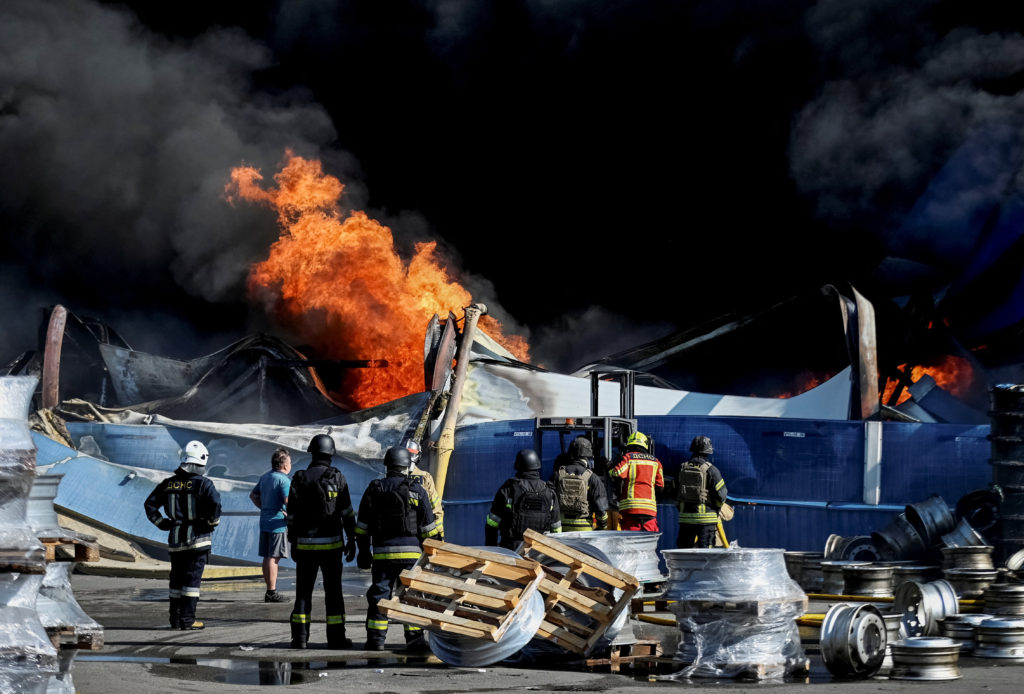
A Russian attack hit a weapons storage site near Kyiv, Ukraine, causing fires and explosions. The blasts killed 38 people and injured many more. This is the second time in less than two months that a munitions depot near Kyiv was attacked.
Key Facts
A Russian strike targeted a weapons depot close to Kyiv.
The attack caused large fires and powerful explosions.
At least 38 people died from the blasts.
Dozens of people were injured.
This was the second strike on a munitions depot near Kyiv in under two months.
Read the Original
Want the full story? Tap a source to open the original
article.
A fire at a hospital nursery in Islamabad, Pakistan, killed 14 newborn babies. The Pakistani Prime Minister ordered the suspension of eight officials and called for criminal action against those responsible, following a report that found safety failures at the hospital.
Key Facts
The fire happened at the Pakistan Institute of Medical Sciences (PIMS) in Islamabad.
14 newborns died, and only one baby was rescued from the fire.
The nursery had no fire alarm or sprinkler system.
The hospital lacked proper fire and emergency response procedures and training.
Eight officials, including hospital directors and security staff, were suspended after the investigation.
Emergency services were called six minutes after the fire started and arrived 15 minutes after the call.
The government announced compensation of about $18,000 for each family of the victims.
The investigation revealed supervisory staff were not on duty when the fire began, and only a few hospital safety procedures addressed fire emergencies.
Read the Original
Want the full story? Tap a source to open the original
article.
Israeli military strikes in Gaza have killed three Palestinians and wounded others, including attacks near hospitals. Iran’s leadership is now dominated by military generals and clerics closely aligned with the country’s ruling religious government, signaling a tough stance against the U.S. and internal dissent.
Key Facts
Israeli strikes in central Gaza killed three Palestinians and wounded several others on August 29, 2026.
Two Palestinians were killed and one injured in a strike on a motorbike in Gaza City.
Tank fire killed a farmer in eastern Deir al-Balah.
An Israeli airstrike near Al-Aqsa Martyrs hospital wounded three Palestinians; Israel accused a Hamas commander hiding nearby.
Israel warned medical facilities against being used for terrorist actions and said it would target threats accordingly.
Since October, Israeli military actions have killed at least 1,313 Palestinians in Gaza, according to Gaza’s health ministry.
Iran’s new supreme leader, Ayatollah Mojtaba Khamenei, remains out of public view after the killing of senior leaders in February strikes.
Iran’s recent leadership appointments include trusted military allies, signaling readiness for prolonged conflict with the U.S. and a crackdown on dissent at home.
Read the Original
Want the full story? Tap a source to open the original
article.
A flash flood caused by a collapsed glacier in the Himalayas near the Nepal-China border has killed at least 676 people and left nearly 3,000 missing. Many missing individuals, including about 90 Americans, were on a religious pilgrimage to Mount Kailash in Tibet. Rescue efforts continue amid concerns over health risks for displaced survivors.
Key Facts
The flood happened on August 26 along the Trishuli River near the Nepal-China border.
At least 676 people are confirmed dead, and nearly 3,000 remain missing after the disaster.
About 90 of the missing people are American citizens.
Many victims were on a pilgrimage to Mount Kailash, a sacred site for several religions.
Rescue operations have been ongoing for several days with teams providing emergency care.
Secondary health issues like infectious diseases are a concern due to crowded shelters and poor sanitation.
Difficult terrain and damaged infrastructure make it hard to reach and help affected communities.
Survivors describe seeing floodwaters destroy homes and people being swept away while they fled to higher ground.
Read the Original
Want the full story? Tap a source to open the original
article.
A rally in New York City features Mohan Bhagwat, leader of the Hindu nationalist group RSS, which some groups say has a history of discrimination and violence against minorities in India. Supporters say the event promotes unity, but critics worry it is an attempt to improve the group's image despite these concerns.
Key Facts
The event is called the Universal Oneness Celebration and is hosted by American Hindus for Engagement and Dialogue.
Mohan Bhagwat leads the RSS, a Hindu paramilitary group linked to violence against Muslims, Christians, and Sikhs in India.
Critics plan protests outside Madison Square Garden where the rally takes place.
Some groups call the event a "goodwill tour" to improve the RSS's reputation in the US.
The RSS is considered the ideological parent of India’s ruling Bharatiya Janata Party (BJP).
Indian Prime Minister Narendra Modi, connected to the RSS, has also held large events in the US to rally overseas supporters.
Hindu nationalist groups are expanding their influence among the roughly 2.5 million Hindus living in the United States.
The event organizers say it promotes peace and harmony, but critics see a gap between this message and the treatment of minorities in India.
Read the Original
Want the full story? Tap a source to open the original
article.
Dolly Parton, a famous country singer who died at age 80, was remembered not only for her music and acting but also as a quiet feminist icon. Although she never openly called herself a feminist, her life choices, career, and song lyrics showed her strong independence and support for women.
Key Facts
Dolly Parton died recently at the age of 80.
She was an actor, singer, philanthropist, and businesswoman.
Parton never publicly identified as a feminist or took political labels.
Feminist leader Gloria Steinem praised Parton in 1987 for empowering women and poor people.
Parton’s songs often highlighted issues like double standards faced by women.
She was married to Carl Dean for nearly 60 years, but they valued personal freedom within their relationship.
Fans and writers see her as a feminist because of how she lived and the messages in her work.
Parton was known for being relatable and appealing widely across political views.
Read the Original
Want the full story? Tap a source to open the original
article.
A glacier collapsed in the Himalayas, causing flash floods that hit areas in Nepal and Tibet. More than 600 people have died, and rescue teams are trying to find around 2,500 people who are missing.
Key Facts
A glacier collapse triggered sudden floods in Nepal and Tibet.
Over 600 people have died due to the flooding.
Around 2,500 people are missing and feared trapped or washed away.
Rescue workers are actively searching for survivors.
The event happened in the Himalayan mountain region.
Officials are concerned about the risk of another flood occurring soon.
The floods caused widespread damage across the affected border area.
Read the Original
Want the full story? Tap a source to open the original
article.
Dolly Parton was well known not only as a country singer but also for her charity work. She founded the Imagination Library to help children learn to read. Nashville’s Grand Ole Opry will hold a tribute event to honor her.
Key Facts
Dolly Parton was a beloved country music singer.
She created the Imagination Library charity to promote reading for young children.
The Imagination Library provides books to kids to support literacy.
Jeff Conyers, president of the Dollywood Foundation, spoke about Dolly Parton’s generosity.
Nashville’s Grand Ole Opry is hosting a tribute event to remember Dolly Parton.
The tribute event features many famous guests.
Dolly Parton was fondly called the “book lady” because of her work with books and children.
Read the Original
Want the full story? Tap a source to open the original
article.
Israeli airstrikes hit a medical warehouse inside a hospital in Gaza, wounding three people and killing two others in separate attacks. The Israeli military said it targeted a Hamas commander but did not provide evidence. The health ministry in Gaza reported rising casualties and many people trapped under rubble after ongoing violence since a ceasefire started last year.
Key Facts
An Israeli drone struck a medical supply tent inside Al-Aqsa Martyrs Hospital in Deir el-Balah, injuring three people.
The Israeli military claimed it targeted a Hamas commander inside the hospital compound.
Separate strikes killed at least two people in Gaza City’s Tal al-Hawa neighborhood and al-Musaddar village.
Another Israeli drone dropped an explosive near Kamal Adwan Hospital in northern Gaza.
Gaza’s Health Ministry reported 10 bodies and 18 wounded received over 48 hours amid continued attacks.
Since the October 2023 ceasefire, 1,313 Palestinians have died from Israeli attacks, according to Gaza health officials.
The Palestinian Centre for Missing and Forcibly Disappeared Persons estimates 4,000 to 5,000 Palestinians are still missing under rubble.
Over 73,000 Palestinians have been killed and more than 174,000 injured in Gaza since the war began in October 2023.
Read the Original
Want the full story? Tap a source to open the original
article.
The conflict involving Iran has lasted six months and costs about $1,100 per US taxpayer so far. Iran’s leaders, including military generals and religious figures, are united and prepared for a long fight with the United States, aiming to keep control within their country.
Key Facts
The war with Iran has lasted six months as of August 2026.
The cost of the conflict is estimated at $1,100 per US taxpayer.
Iran’s leadership is mainly made up of military generals and religious clerics.
They are determined to continue the confrontation with the US.
Iran’s leaders want to avoid unrest inside the country.
President Donald Trump initially hoped to change Iran’s government but those hopes have not materialized.
US sanctions and military actions have not caused Iran to give in so far.
The conflict is part of ongoing tensions between Iran and the United States.
Read the Original
Want the full story? Tap a source to open the original
article.
Heavy floods and landslides near the Nepal-Tibet border have caused over 680 deaths and nearly 3,000 people are still missing. Rescue teams are working in dangerous conditions because a flood-created lake upstream may break its banks and cause more damage.
Key Facts
The disaster affected areas around the Nepal-Tibet border.
682 people have died due to floods and landslides.
Nearly 3,000 people remain missing.
Floodwaters formed a lake upstream, creating a risk of bursting river banks.
Rescue operations are ongoing but are very risky.
The Nepali army is using helicopters to help rescue survivors.
Hundreds were trapped in a hydropower tunnel and the army worked to free them.
About 93,000 people have been affected by the floods, according to the Red Cross.
Read the Original
Want the full story? Tap a source to open the original
article.
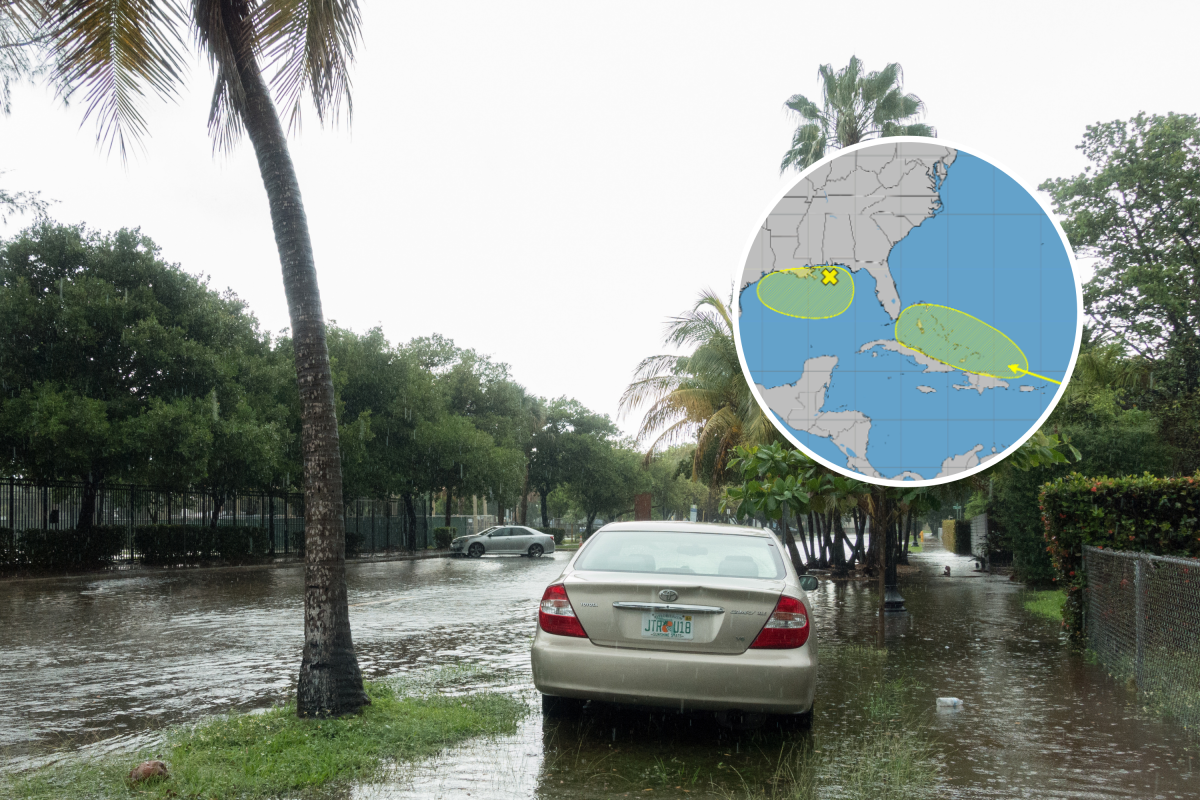
Forecasters are watching the waters near Florida, the Bahamas, and the Gulf of Mexico for possible tropical storm development before Labor Day weekend. Tropical Storm Dolly has weakened but could reorganize, and other storms might form in these warm waters, although no hurricanes are currently active.
Key Facts
Tropical Storm Dolly has weakened to a tropical rainstorm but may strengthen north of Cuba next week.
Two general areas have a low (below 40%) chance of storm formation: near the northern Caribbean/Bahamas and the Gulf of Mexico.
Florida could be the first to experience effects if a storm forms or moves near the area.
The Gulf Coast may see a storm develop or move into the Gulf later in the week.
Dolly is expected to face tough conditions like wind shear and dry air while crossing the northern Caribbean this weekend.
If Dolly survives, conditions north of Cuba and near Florida may allow it to strengthen.
Winds in the atmosphere will decide if any storm moves away from the mainland or toward Florida and the Gulf Coast.
No tropical cyclones are currently active in the Atlantic as of Saturday morning, but marine warnings remain in effect.
Read the Original
Want the full story? Tap a source to open the original
article.
A Russian missile strike near Kyiv killed at least 37 people and damaged many homes. The attack hit a warehouse storing explosives close to a care home, raising concerns about safety and storage practices in Ukraine during the ongoing conflict.
Key Facts
The strike happened in the Bucha district near Kyiv and killed 37 people.
A fire broke out that damaged about 50 residential buildings.
The warehouse hit stored explosives and was near a care home for elderly and disabled people.
Ukrainian President Zelenskyy said storing ammunition near homes is illegal and promised an investigation.
34 victims were residents of the damaged care home.
Russia's Ministry of Defense said the warehouse held parts for long-range drones.
This attack follows similar missile strikes that have hit ammunition depots and caused deaths and fires.
The attack is part of ongoing Russian missile raids aimed at wearing down Ukraine’s defenses.
Read the Original
Want the full story? Tap a source to open the original
article.
Treasury Secretary Scott Bessent announced Operation Economic Outcast on August 24. This operation expands sanctions to cut off Iran’s connections to the global economy by targeting systems used to avoid existing sanctions.
Key Facts
The operation is called Operation Economic Outcast.
It was announced on August 24 by Treasury Secretary Scott Bessent.
The goal is to block Iran’s ties to the global economy.
It focuses on the infrastructure used to evade sanctions.
The operation represents a major increase in sanctions efforts against Iran.
Read the Original
Want the full story? Tap a source to open the original
article.
The National Oceanic and Atmospheric Administration (NOAA) and various almanacs have released their weather predictions for the coming fall season. Different forecasts suggest varied conditions, such as colder and wetter weather or hotter and drier weather, depending on the source and location.
Key Facts
NOAA and multiple almanacs have published fall weather forecasts.
Predictions vary between cold and wet or hot and dry conditions.
Weather expectations depend on the forecast source.
Local weather may differ from generalized seasonal forecasts.
People should check forecasts relevant to their area for accuracy.
Read the Original
Want the full story? Tap a source to open the original
article.
Russian officials and analysts have recently talked about the possibility of Russia using tactical nuclear weapons in Ukraine as a last resort. However, experts and studies show these nuclear threats are mainly used to scare Ukraine’s supporters and may not represent a real intent to use such weapons.
Key Facts
A Bloomberg report said some Russian officials believe Putin might use tactical nuclear weapons in Ukraine if needed.
Russian military analyst Igor Korotchenko suggested using tactical nukes to block European weapons going to Ukraine.
Hardline oligarch Konstantin Malofeyev proposed a tactical nuclear strike to quickly end the fighting in Ukraine.
A study by German and Czech research centers found over 400 nuclear-related statements from Russia since the war began.
Most Russian nuclear statements are seen as warnings meant to scare Western countries into providing less help to Ukraine.
Experts at Chatham House and former U.S. Army General Ben Hodges say the chance of Russia actually using nuclear weapons in Ukraine is very low.
Nuclear threats seem to be aimed more at causing fear and hesitation rather than an actual plan to use nuclear arms.
A senior researcher from the Royal United Services Institute (RUSI) said current reports of possible nuclear use follow the same pattern of past threats without credible signs they will happen.
Read the Original
Want the full story? Tap a source to open the original
article.