The Israeli military carried out an air strike in the Jenin area of the West Bank, killing three Palestinians it described as militants linked to Hamas and Palestinian Islamic Jihad. This air strike is a rare use of Israeli air power in the occupied West Bank amid ongoing tensions and military operations there.
Key Facts
The strike took place on August 28, 2026, in Jenin, a city in the northern West Bank.
Israeli forces killed three Palestinians, including Qais Bitawi, whom Israel called a Hamas operative.
Palestinian Islamic Jihad said the three killed were its fighters, with Bitawi described as a leader of its armed wing in the West Bank.
Israeli military said Bitawi was involved in planning and carrying out attacks against Israeli civilians and security forces.
Weapons were found in the vehicle used by the three men.
The air strike was part of a larger operation called "Iron Wall," targeting militant networks in northern West Bank refugee camps.
This type of air strike is uncommon in the West Bank, which has usually seen raids and ground operations rather than air attacks.
The West Bank has experienced increased violence from Israeli settlers and military actions since Hamas attacked Israel in October 2023.
Read the Original
Want the full story? Tap a source to open the original
article.
Norway's Crown Prince Haakon became King Haakon VIII after his father, King Harald V, died at age 89. Haakon's new role includes supporting the monarchy and improving the royal family's image following controversies involving his wife and stepson.
Key Facts
King Harald V of Norway died at 89 years old.
Crown Prince Haakon, 53, became King Haakon VIII.
Haakon adopted the motto "All for Norway," used by his great-grandfather.
Haakon's wife is now Queen Mette-Marit.
Their oldest child, Ingrid Alexandra, became Crown Princess and heir to the throne.
Haakon served as regent when his father's health declined.
The royal family has faced public issues due to Haakon's wife's past contact with Jeffrey Epstein and his stepson's prison sentence for rape.
Read the Original
Want the full story? Tap a source to open the original
article.
The conflict involving Iran has lasted six months with no clear end. President Donald Trump originally said the conflict would only take six weeks, but fighting continues. The United States is managing this ongoing situation.
Key Facts
The conflict related to Iran has been ongoing for six months.
President Donald Trump predicted the conflict would be over in six weeks.
Despite this prediction, there is no end to the conflict in sight.
The United States is actively involved in handling the situation.
CBS News reporter Courtney Kealy provided the latest update.
Read the Original
Want the full story? Tap a source to open the original
article.
Western officials say Russia is losing about 6,000 more soldiers each month in Ukraine than it can replace. In response, Russia is increasing missile attacks on Ukrainian civilians and infrastructure, aiming to weaken Ukraine’s morale ahead of winter. The UK plans to share missile technology information with Ukraine and urges more international help to defend against Russian attacks.
Key Facts
Russia loses about 6,000 more troops each month in Ukraine than it recruits.
Russia recruits around 1,000 soldiers daily but cannot keep up with casualties.
Russian missile attacks on Ukraine target energy and civilian infrastructure, with over 360 missiles fired since early July.
Western officials warn that further large-scale Russian mobilization is risky and may be ineffective.
Ukraine is attacking Russian fuel supplies and asks allies for more missiles and defense systems.
UK Prime Minister Andy Burnham visited Kyiv and promised to share details about British cruise missile components.
Russia has threatened retaliation against the UK but wants to avoid direct conflict with NATO.
Officials say Russia may use cyberattacks or proxy attacks but aims to avoid escalating into wider war.
Read the Original
Want the full story? Tap a source to open the original
article.
Doctors have agreed on a worldwide new way to define and diagnose heart attacks, especially to improve care for women. This change highlights types of heart attacks that affect women more and helps doctors treat them faster and better.
Key Facts
Four major heart health groups created a new global definition for heart attacks.
The new rules focus on types of heart attacks common in women but often ignored before.
These include heart attacks caused by artery spasms, embolisms (blockages from clots or fatty deposits), and artery tears often linked to childbirth.
Women now have a lower threshold for heart attack diagnosis based on troponin protein levels in their blood.
Previously, women needed to reach the same high troponin level as men to be diagnosed, which caused many delays.
The changes aim to reduce delays in care and improve treatments targeted to the causes of women's heart attacks.
The new definition was announced at the European Society of Cardiology conference in Munich.
Experts expect this change to save lives and improve understanding of heart attack causes and treatments worldwide.
Read the Original
Want the full story? Tap a source to open the original
article.
Six people were hurt when a sign fell at the Big Church Fest, a Christian festival in West Sussex. Emergency services responded quickly, and the festival was stopped early on Friday afternoon.
Key Facts
Six people were injured after a sign fell at Big Church Fest near Steyning, West Sussex.
The incident happened shortly after 3:30 pm on Friday.
Ambulance teams, including critical care paramedics and specialists, attended the scene.
Organizers cancelled the rest of the Friday events and told visitors to leave or return to their campsites.
Sussex Police arrived around 3:40 pm and stayed to manage the situation.
Traffic around the festival site was disrupted, with a request for people to use different routes.
Big Church Fest calls itself the largest Christian festival in the UK.
Read the Original
Want the full story? Tap a source to open the original
article.
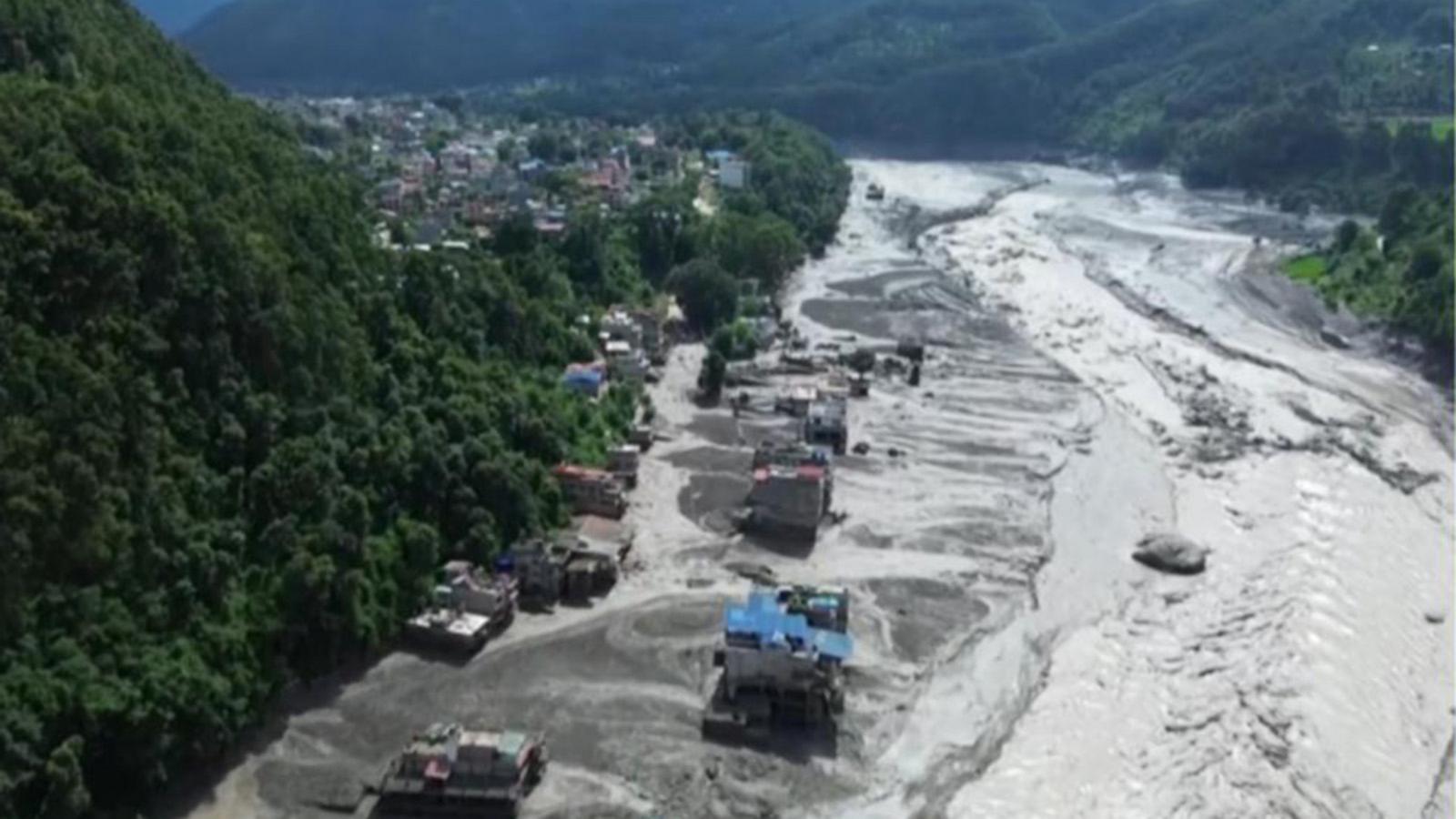
Nepal is facing a major disaster caused by floods from high-altitude lakes that can release large volumes of water. Relief efforts are underway, but experts say long-term planning and support are critical to help affected communities recover and prepare for future events.
Key Facts
Hundreds of high-altitude lakes in Nepal can release huge amounts of water, causing floods.
Many communities are hard to reach due to the disasters' scale.
Tens of thousands of people in Nepal have been affected by these floods.
Official damage assessments are still in the early stages.
Immediate emergency aid is ongoing, but long-term recovery plans are needed.
Long-term recovery includes rebuilding homes and restoring livelihoods.
Experts warn these types of floods may happen more often in the future.
The Nepal International Federation of Red Cross is involved in the relief efforts.
Read the Original
Want the full story? Tap a source to open the original
article.
The London Science Museum has ended its long-standing partnership with the oil company BP after decades of collaboration. This decision follows concerns about BP’s environmental impact and pressure from campaigners and educators.
Key Facts
The Science Museum Group academy, which supports education and training in science, stopped working with BP at the end of their contract.
BP helped the museum reach over 1 million young people and trained more than 11,000 science professionals.
Campaigners criticized BP for influencing science education and not acting enough on climate change.
The museum ended its partnership with another oil company, Equinor, in 2024 for not meeting climate goals.
Some schools had threatened to boycott the museum because of its links to BP.
The museum still receives funding from Adani Green Energy, linked to coal mining and energy production.
The museum’s director confirmed the partnership ended but emphasized BP’s past support.
BP has been asked to comment on the end of the partnership.
Read the Original
Want the full story? Tap a source to open the original
article.
In Nepal, at least 538 people have died due to recent floods, and almost 1,000 people are still missing. Over 3,700 people have been rescued so far, but damaged roads, bridges, and mud make it hard to continue search and rescue efforts.
Key Facts
Nepal’s confirmed death toll from the floods is at least 538.
Nearly 1,000 people remain missing after the flood disaster.
More than 3,700 people have been rescued so far.
Roads and bridges have been destroyed by the floods.
Thick mud from the floods is slowing down search and rescue teams.
Families are searching hospitals and disaster areas hoping to find loved ones alive.
The Red Cross reported that around 93,000 people in Nepal and Tibet have been affected by the floods.
The army is actively rescuing people, including those trapped in tunnels.
Read the Original
Want the full story? Tap a source to open the original
article.
Flood survivors in Bidur, Nepal, are leaving their homes and moving to higher ground because there is a risk of another sudden flood. Relief workers have also been told to leave the area, which is slowing down efforts to find people who are missing.
Key Facts
Floods have affected the town of Bidur in Nepal.
People are evacuating to safer, higher areas.
There is a warning of another possible flash flood.
Relief workers are also evacuating for safety reasons.
The evacuation of relief workers is delaying search efforts for missing individuals.
The situation remains dangerous due to ongoing flood threats.
Read the Original
Want the full story? Tap a source to open the original
article.
English singer-songwriter Paul Heaton has achieved his first UK solo number one album with "Jenius." Following the recent death of Dolly Parton, her classic song "9 to 5" and other hits have re-entered the UK charts, showing renewed popularity.
Key Facts
Paul Heaton’s album "Jenius" is his first solo UK number one and his sixth overall including previous band work.
Heaton sold more vinyl copies than any other album in the past week to help reach number one.
Dolly Parton passed away recently at age 80, leading to several of her songs returning to the UK top 40.
"9 to 5" reached number 12 on the UK chart, its highest position since 1981.
Parton’s songs "Jolene" and "Islands in the Stream" also re-entered the charts in the top 15.
Paul Heaton plans to fund pub celebrations for his 65th birthday next year, continuing a tradition from 2022.
Brandon Flowers, lead singer of The Killers, released a country album named "Thrasher," which reached number three on UK charts.
Sam Fender and Olivia Dean’s song "Rein Me In" extended its record as the longest-running UK number one single.
Read the Original
Want the full story? Tap a source to open the original
article.
Terminator 2: Judgment Day is a popular sci-fi action movie released in 1991 and is celebrating its 35th anniversary with a special theater re-release. The film features Arnold Schwarzenegger as a reprogrammed robot protecting a young boy, John Connor, and has memorable characters and groundbreaking special effects.
Key Facts
Terminator 2 was released in 1991 and is a sequel to the 1984 film The Terminator.
The movie earned $520 million worldwide, far exceeding its $70 million budget.
Arnold Schwarzenegger plays a good robot, a change from his role as a villain in the first film.
The story centers on a father/son-type relationship between the robot and John Connor, a key character.
Linda Hamilton returns as Sarah Connor and became a strong action heroine in this film.
The villain is the T-1000, a powerful robot made of liquid metal, played by Robert Patrick.
The film used new special effects technology that was not available for the first movie.
Despite the film’s success, the studio behind it, Carolco Pictures, went bankrupt in 1995.
Read the Original
Want the full story? Tap a source to open the original
article.
Nikolay Mladenov, the Board of Peace envoy, warned that if both sides do not follow the peace plan, the ceasefire in Gaza could collapse and violence may return. The Board has planned an international force to stabilize Gaza and has received $7 billion in reconstruction pledges, but Israeli Prime Minister Netanyahu has rejected the current roadmap.
Key Facts
Mladenov warned both Palestinians and Israelis that failing to follow the peace roadmap risks the ceasefire failing.
The Board of Peace planned an International Stabilization Force to be deployed in Gaza; Morocco agreed to participate but Turkey was vetoed by Israel.
$7 billion in reconstruction funds have been pledged for Gaza, with Qatar, Egypt, and Turkey playing key roles in negotiations.
The roadmap includes reconstruction, disarmament of armed groups, Israeli withdrawal, and police restructuring in Gaza.
Hamas has approved the roadmap, but Israeli Prime Minister Netanyahu has rejected it and denies agreeing on international troops in Gaza.
Since the ceasefire started in October 2025, over 1,300 Palestinians have been killed and 4,300 wounded by Israeli fire; overall casualties since 2023 are much higher.
Recent talks involving Hamas, Egypt, and US envoy Jared Kushner aim to narrow differences with Israel on the peace plan.
The success of the peace roadmap depends largely on Israel’s acceptance, which remains uncertain.
Read the Original
Want the full story? Tap a source to open the original
article.
Nepal recently experienced severe flooding that caused heavy damage and loss of life. A hydrologist explained that the country's very steep land made the flooding happen quickly, leaving people little time to prepare or escape.
Key Facts
Nepal has steep topography, meaning the land is very hilly and mountainous.
This steep terrain caused floodwater to move swiftly and with great force.
Because of the rapid flooding, victims had very little time to respond or evacuate.
The flooding in Nepal was catastrophic, leading to many casualties and damages.
A hydrologist and visiting professor at Georgetown University in Qatar provided insight into how the landscape affected the flooding.
Relief and rescue efforts are ongoing as authorities search for survivors.
The article also mentioned related severe weather events in other regions but focused mainly on Nepal’s flooding.
Read the Original
Want the full story? Tap a source to open the original
article.
People in Gaza are facing serious problems using cash because many bank branches and ATMs were destroyed during the war. Many residents cannot open bank accounts or use electronic payments due to damaged ID cards and the damaged banking system. As a result, buying everyday items has become difficult because sellers often refuse old or worn-out banknotes.
Key Facts
The war on Gaza since October 7, 2023, led to severe damage to banking infrastructure and restrictions on cash entering Gaza.
More than 50 bank branches and many ATMs were destroyed in Gaza.
Large amounts of cash are trapped inside damaged or destroyed bank vaults.
Many people lost their original ID cards, making it hard to open new bank accounts or access electronic wallets.
Merchants often refuse to accept worn-out cash notes, causing payment problems.
People rely on electronic money transfers, but these can be slow, unreliable, and hard to use for some residents.
Digital payments have become essential, but not everyone has the technology or accepted ID to use them.
Even after partial reopening of banks, there is still a shortage of available cash in the economy.
Read the Original
Want the full story? Tap a source to open the original
article.
Scientists have found that flesh-eating bacteria are now appearing in regions that used to be too cold for them. This shows the bacteria are expanding their reach beyond the areas where they were commonly found before.
Key Facts
Flesh-eating bacteria were once mostly found in warm places.
Recently, these bacteria have been spotted in colder regions.
The bacteria cause serious infections by destroying tissue.
Scientists study this change to understand why the bacteria are spreading.
Changes in climate or environment may help the bacteria survive in new areas.
Tracking these bacteria is important to prevent and treat infections.
The expansion could affect health risks in places not previously exposed.
Read the Original
Want the full story? Tap a source to open the original
article.
Salmonella infections in the UK are expected to increase until health authorities identify the source of the outbreak. The current cases, totaling 474 with one death, are likely linked to imported eggs used in cafes and restaurants, but the exact origin has not yet been confirmed.
Key Facts
There have been 474 confirmed salmonella cases and one death in the UK linked to this outbreak.
The UK imports about 1.6 billion eggs each year, with imports increasing by 60% since 2021.
Experts believe imported eggs served outside the home, such as in catering and restaurants, are connected to the outbreak.
These imported eggs are often cheaper than UK-produced eggs that carry the "lion mark" indicating hens vaccinated against salmonella.
Previous outbreaks linked to eggs came from European countries like Poland, but the current source is still unknown.
Tracing food sources in catering is harder than in retail stores due to less transparency in supply chains.
Public health experts expect the number of cases to rise until the source is identified, which may take weeks.
Avoiding runny eggs eaten outside the home unless they have the lion mark is one precaution individuals can take.
Read the Original
Want the full story? Tap a source to open the original
article.
Ukraine has strengthened its defense in the eastern Donetsk region as Russian forces push to capture the city of Sloviansk. Britain and France have agreed to supply Ukraine with advanced Storm Shadow cruise missiles to help Ukraine target Russian missile production and launch sites.
Key Facts
Ukraine reinforced defense units in the eastern city of Sloviansk on August 26.
Russia is close to Sloviansk, but estimates differ between 2.5 miles and 10 miles away.
Ukrainian forces still hold parts of the city of Kostiantynivka despite Russian infiltration efforts.
Ukraine is targeting Russian supply lines, storage, and airfields to disrupt Russian military operations.
Since August, Ukraine has destroyed several Russian fighter jets and drone storage facilities.
Ukraine has hit 242 Russian military supply ships and damaged 267 power stations in Crimea, causing widespread blackouts.
Long-range Ukrainian strikes have damaged Russian oil refineries and gas processing plants multiple times since June.
Ukraine’s focus is shifting to stopping the production and launch of Russian ballistic missiles rather than intercepting them mid-air.
Read the Original
Want the full story? Tap a source to open the original
article.
Israeli strikes killed at least five Palestinians in Gaza, including three members of one family. These attacks happened despite a ceasefire agreed in 2025, while many people in Gaza continue to face serious hunger and lack access to food.
Key Facts
Israeli drone strikes killed five Palestinians in different areas of Gaza.
Three people from the Abdeen family died north of Khan Younis.
Another Palestinian man was killed in Gaza City’s Sabra neighborhood by a drone missile.
A strike on a tent east of Gaza City killed one person and injured others.
An Israeli military attack in Jenin in the West Bank killed three Palestinians.
Israel claimed it killed Hamas and Palestinian Islamic Jihad commanders, but no proof was given.
Gaza faces severe food shortages with nearly half of people reporting hunger at least once in the past month.
Restrictions limit the number of trucks bringing goods into Gaza to about 217 daily, less than the 600 trucks promised in the ceasefire deal.
Read the Original
Want the full story? Tap a source to open the original
article.
Norway's King Harald V has died at the age of 89, ending his long reign as the country's monarch. Crown Prince Haakon is expected to become the new king, while the royal family faces attention regarding Crown Princess Mette-Marit's past and her son's criminal conviction.
Key Facts
King Harald V was Norway's longest-serving monarch.
He died at the age of 89.
Crown Prince Haakon will succeed him as king.
The royal family is under scrutiny due to Crown Princess Mette-Marit's alleged past links to Jeffrey Epstein.
Crown Princess Mette-Marit's son was convicted of rape.
Tributes for King Harald have come from across Europe.
The news highlights Norway’s transition to a new king.
Read the Original
Want the full story? Tap a source to open the original
article.