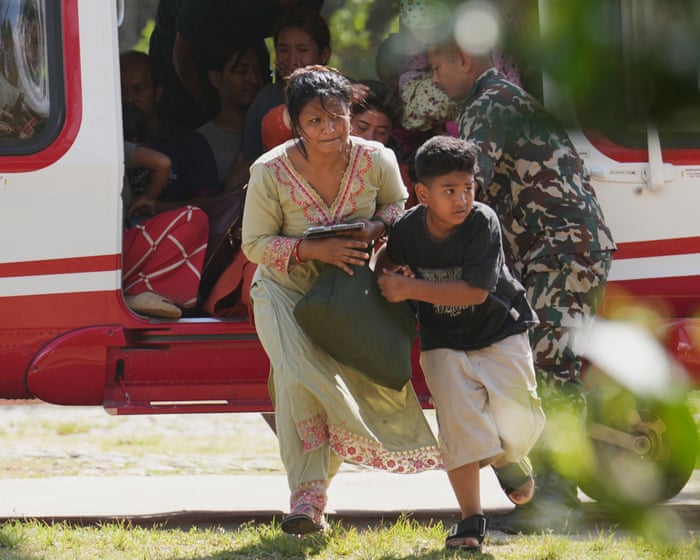
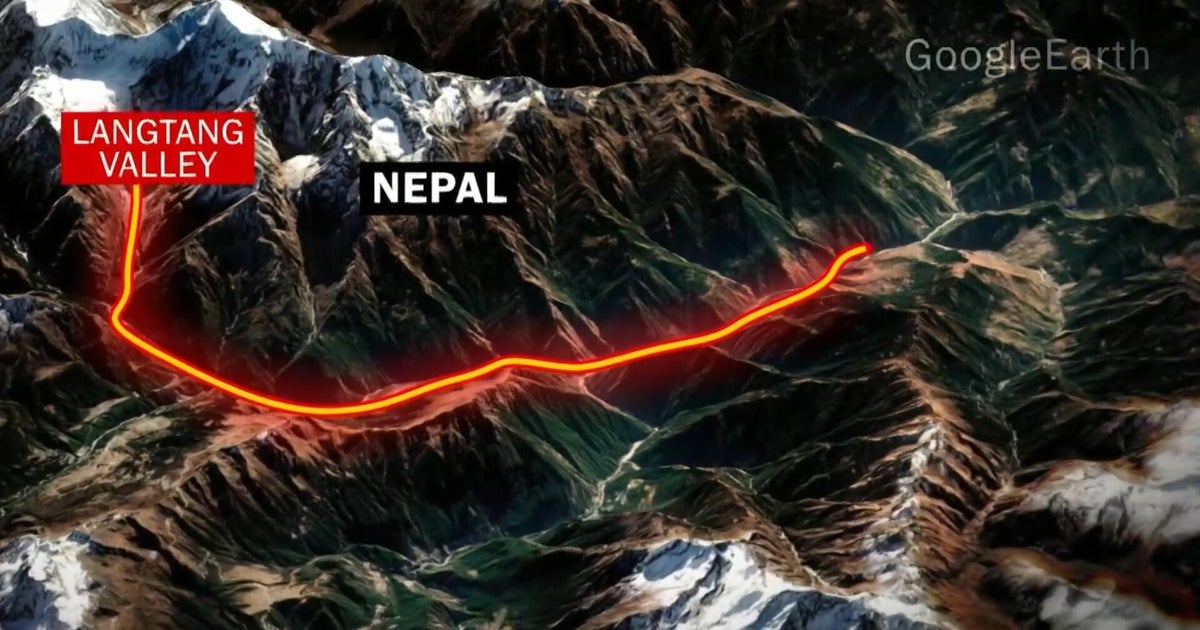
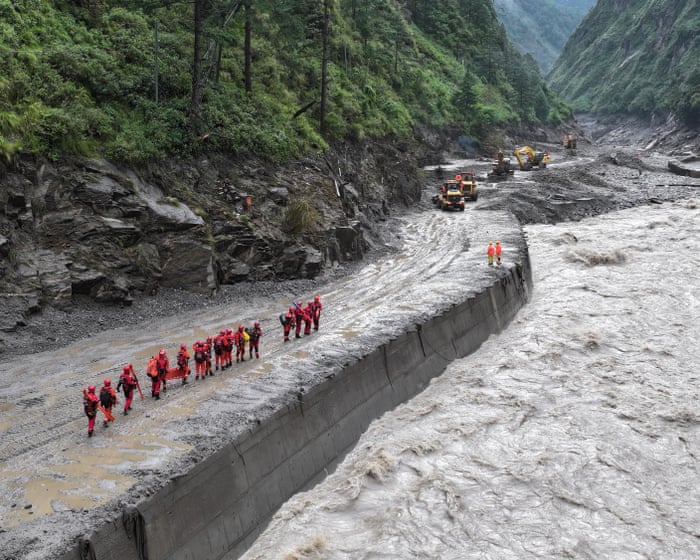
Flash floods caused by a glacier collapse on the Nepal-Tibet border have affected at least 93,000 people. The disaster has killed more than 540 people, left nearly 2,000 missing, and damaged many homes, roads, and bridges, prompting a large rescue effort.
Key Facts
The flash floods occurred on Wednesday after part of a glacier broke off in Nepal’s Langtang national park.
Over 540 people have died, with 538 deaths in Nepal and 5 in Tibet, China.
About 1,900 people are still missing, including foreign workers and trekkers.
Homes, bridges (over 40), and roads (over 40 km) were badly damaged or destroyed.
Rescue work is delayed due to fears of more flooding from debris dams and rising rivers.
Bodies have been found many miles downstream in the Chitwan district near Tibet.
Hundreds of injured people are being treated in Kathmandu hospitals.
Nepal’s steep landscape and climate effects like glacier melting and heavy rains increase the risk of floods.
Read the Original
Want the full story? Tap a source to open the original
article.
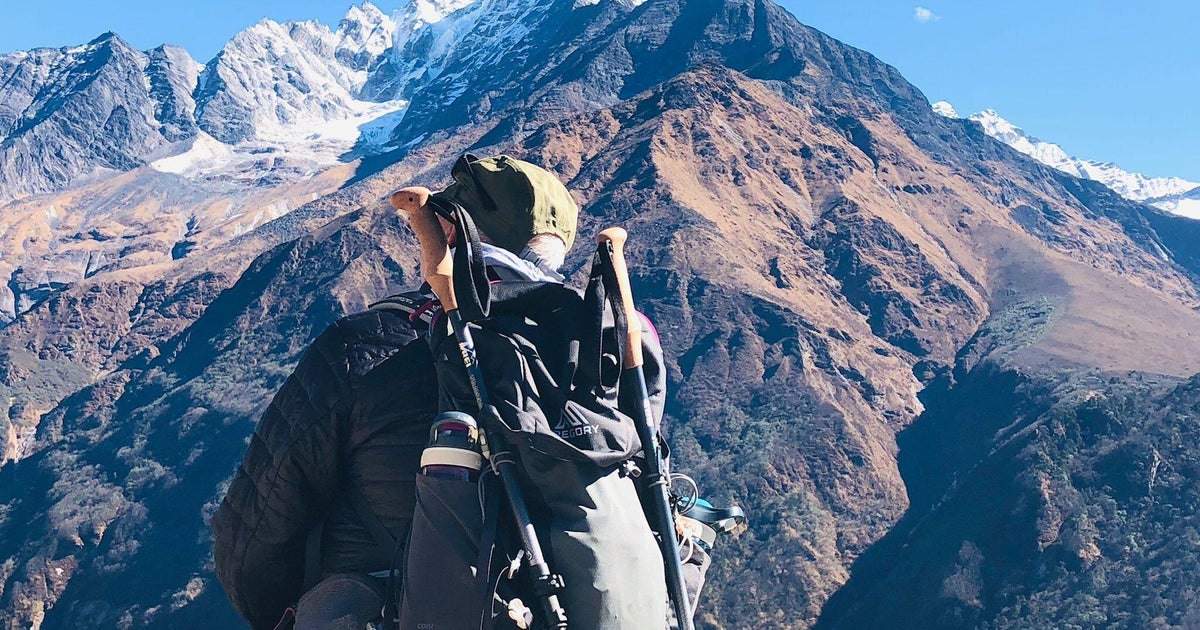
A Missouri deputy attorney general named Shaun Mackelprang was found alive six days after he went missing during a hike in the mountains of Wyoming. Rescue teams located him by helicopter near Scott Lake in the Wind River Range.
Key Facts
Shaun Mackelprang is 55 years old and works as a deputy attorney general in Missouri.
He disappeared while hiking in the Wyoming wilderness.
Authorities searched for six days before finding him alive.
Rescuers used a helicopter to reach him near Scott Lake.
The Wind River Range is a mountain area about 100 miles long in western Wyoming.
The rescue took place on a Wednesday morning.
Mackelprang’s safe recovery ended a multiple-day search effort.
Read the Original
Want the full story? Tap a source to open the original
article.
The Spanish government asked people to stay calm in Ceuta after protests over migrants led to clashes with police. About 60,000 migrants entered Ceuta from Morocco in July, causing tensions as many remain in the area while authorities work to identify and manage them.
Key Facts
Around 60,000 migrants crossed into Ceuta, a Spanish territory in North Africa, in July 2026.
Ceuta has about 80,000 residents and covers 18.5 square kilometers (7 square miles).
Many migrants are still in Ceuta, living on the streets and beaches.
Recent protests by locals against migrants led to violence and clashes with police.
Some migrant belongings were burned during the protests.
A soldier was injured when migrants threw stones at troops.
Spanish Interior Minister Fernando Grande-Marlaska called for calm and an end to violence.
Authorities are identifying migrants to decide who can seek asylum and who should be sent back.
Political parties on the right want all migrants returned to their home countries.
Ceuta and Melilla are Spain’s only land borders with Africa.
Read the Original
Want the full story? Tap a source to open the original
article.
Two men stole a valuable platinum necklace covered with 673 diamonds from a museum in Vienna, Austria. The necklace once belonged to Queen Nazli of Egypt and was part of a jewellery exhibition at the Museum of Applied Arts. Police are searching for the suspects who broke a glass case with a hammer and escaped during the theft.
Key Facts
The stolen necklace is platinum, weighs 200 carats, and has 673 diamonds.
It belonged to Queen Nazli of Egypt and was worn at her daughter's wedding in 1939.
The necklace was loaned to the Museum of Applied Arts (MAK) in Vienna for a jewellery exhibition.
The thieves entered during opening hours, bought tickets, broke the display glass with a hammer, and fled.
Police released images of the suspects and are searching the city with a tracking dog.
The necklace had been sold for $4.3 million in 2015 at a Sotheby’s auction.
The museum exhibition, featuring over 300 pieces by Van Cleef & Arpels, has been temporarily closed.
Several recent high-profile thefts from European museums show increasing violence and use of tools like sledgehammers.
Read the Original
Want the full story? Tap a source to open the original
article.
A group of 77 trekkers from different countries went missing after a flash flood hit the China-Nepal border area on August 26. The Isha Foundation, a spiritual organization based in Tennessee, lost contact with these participants, and is managing the situation from afar.
Key Facts
The missing trekkers were on a pilgrimage in the Himalayas near the China-Nepal border.
The flash flood occurred on August 26, causing the group to lose contact.
The group included people from several countries.
The Isha Foundation is a non-profit spiritual organization located in McMinnville, Tennessee.
Leslie Crispi, the community liaison for Isha Foundation, spoke about how the organization is coping with this tragedy.
Crispi has done the pilgrimage herself and described it as a deeply spiritual and life-changing experience.
The situation is ongoing and unfolding thousands of miles from where the Isha Foundation is based.
Read the Original
Want the full story? Tap a source to open the original
article.
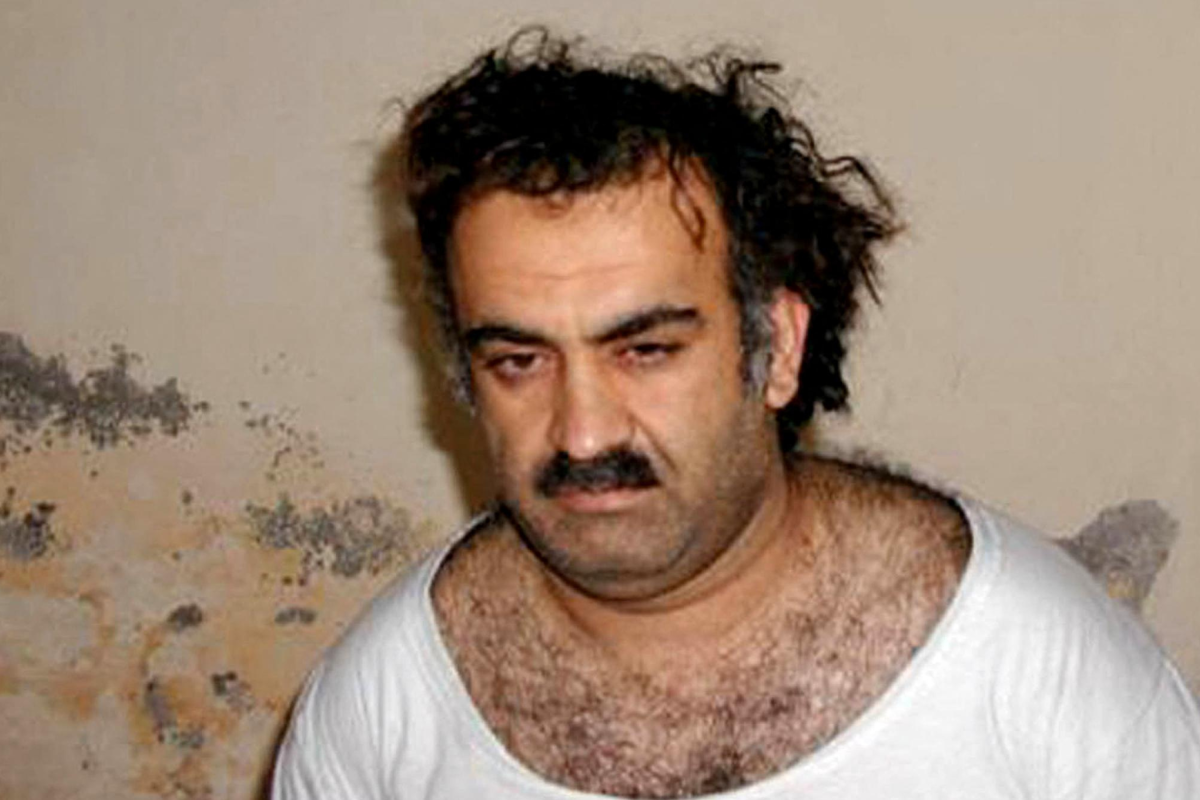
The trial of Khalid Shaikh Mohammed, accused mastermind of the September 11 attacks, is set to begin in 2028, nearly 27 years after the event. As a new generation grows up with little direct memory of 9/11, the meaning of the attacks and their aftermath has changed in America’s national view over time.
Key Facts
Khalid Shaikh Mohammed is scheduled to stand trial on June 5, 2028, for the 9/11 terror attacks.
The trial is happening almost 27 years after the attacks on September 11, 2001.
The United States and the world have changed greatly since 2001, including leadership and technology.
Younger generations like Gen Z and Gen Alpha have little or no personal memory of 9/11.
The event has become part of history seen through social media and internet culture, often turned into memes.
After 9/11, President George W. Bush’s approval rating rose sharply due to national unity and response efforts.
The U.S. spent 20 years and many lives in wars related to 9/11’s aftermath, especially in Afghanistan.
The trial may become a focus for public debate and reflection on how America views 9/11 today.
Read the Original
Want the full story? Tap a source to open the original
article.
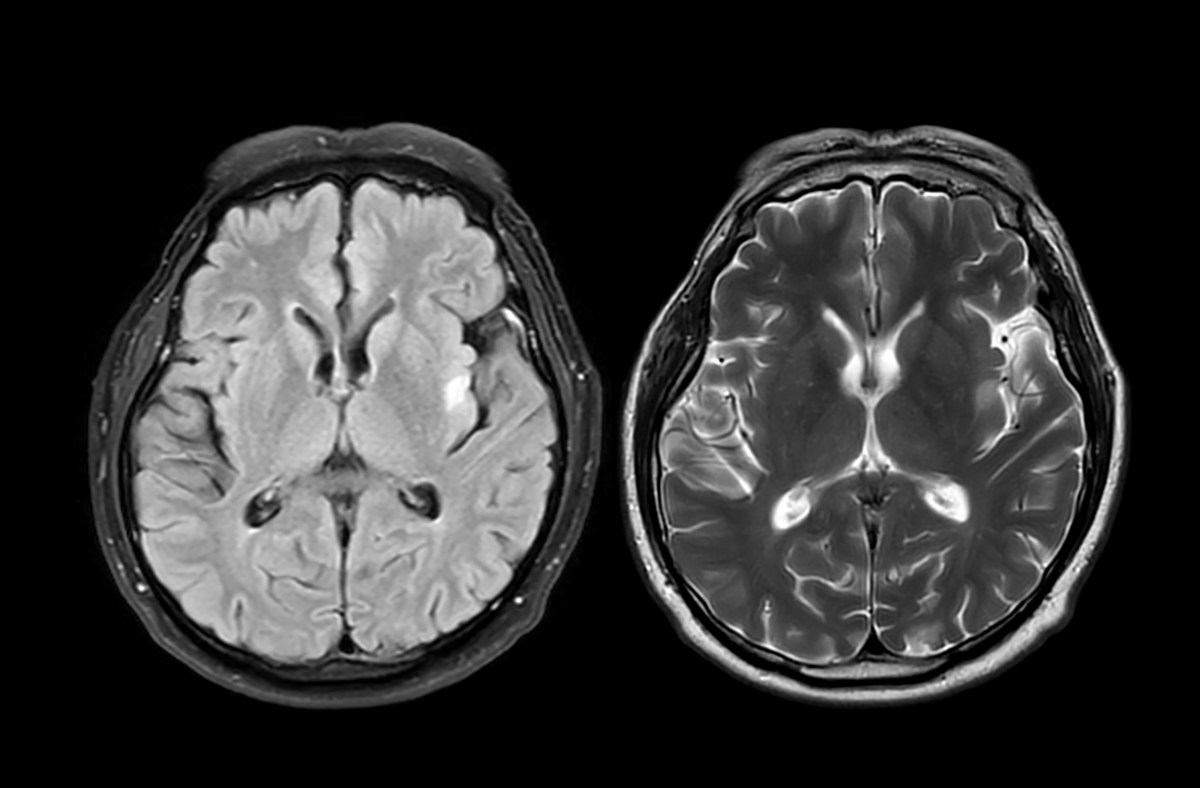
A new brain scan tool can measure shrinkage in areas related to thinking and memory to help predict how quickly people with early-onset Alzheimer’s disease might move from mild cognitive problems to full dementia. The tool uses MRI scans to focus on eight brain regions and gives a score that shows how much the brain is shrinking, which helps doctors estimate disease progression.
Key Facts
Early-onset Alzheimer’s disease happens before age 65 and often starts with mild cognitive impairment (MCI).
The new tool looks at shrinkage in eight parts of the brain involved in memory and thinking.
Researchers studied 130 people with MCI and 97 healthy people aged 40 to 64 over about two years.
About 65% of those with early-onset Alzheimer’s progressed from MCI to dementia during the study.
More brain shrinkage was linked to faster progression from MCI to dementia.
The tool predicted disease progression better than just looking at symptoms.
This biomarker could help doctors and families plan for the future and decide when to join clinical trials.
Experts say such tools can improve communication but should not be seen as exact predictions.
Read the Original
Want the full story? Tap a source to open the original
article.
A street artist named Chris Ashmore painted a mural of snooker player Ronnie O’Sullivan in Sheffield. Some people liked it, while others said the player looked like a zombie, but the artist said the mural is not finished yet and will be improved.
Key Facts
Chris Ashmore was hired to create the mural on the back wall of the Spot On snooker club.
The mural shows Ronnie O’Sullivan, a seven-time world snooker champion.
Some viewers said the mural looks like a zombie or skeletal figure.
Ashmore said he only spent two weeks on it out of five planned and will do touch-ups.
The artist could not use a scissor lift to step back and see the whole mural because of uneven ground.
Some locals liked the mural and said it brightened their day.
The manager of the snooker club supported Ashmore and will help him fix parts of the mural.
The manager objected to personal attacks on the artist while accepting that opinions on the artwork can differ.
Read the Original
Want the full story? Tap a source to open the original
article.
Dolly Parton, the well-known country singer and helper of others, offered to try new, untested cancer medicines to support cancer research. Many people paid tribute to her, and fans started a petition to rename Nashville’s airport in her honor.
Key Facts
Dolly Parton is a famous country music singer and humanitarian.
She offered to try experimental cancer drugs to aid research.
Thousands of fans signed a petition to rename Nashville's airport after her.
Tributes have been pouring in to celebrate her contributions.
Parton’s family has shared more details about her actions.
The news was reported by CBS News and covered on their app and websites.
Nashville is a city closely associated with Dolly Parton and country music.
Read the Original
Want the full story? Tap a source to open the original
article.
Celine Dion has returned to Paris to start a series of concerts after revealing she has a rare neurological illness called stiff-person syndrome. She will perform 16 shows in September and October at the Plenitude Arena, followed by more concerts next May.
Key Facts
Celine Dion arrived in Paris to prepare for her concert residency at the Plenitude Arena.
She plans to perform 16 shows from September to October, with 10 more planned for next May.
Dion revealed in 2022 that she has stiff-person syndrome, a rare neurological disorder.
The concert series is called "Celine Dion Paris 2026-2027."
She has sold nearly 260 million albums worldwide and is famous for hits like "My Heart Will Go On."
Dion returned briefly to perform at the Paris 2024 Olympics opening ceremony.
Plenitude Arena can hold up to 40,000 people and was a venue for the Paris Games.
Dion did not reveal which song she would sing first, calling it a "big secret."
Read the Original
Want the full story? Tap a source to open the original
article.
Mohan Bhagwat, leader of India’s Rashtriya Swayamsevak Sangh (RSS), is scheduled to speak at a large event in New York called the “Universal Oneness Celebration.” The event aims to promote unity, but some local officials and human rights groups in the US oppose it due to the RSS’s history of promoting Hindu majoritarian views and alleged persecution of minorities in India.
Key Facts
Mohan Bhagwat is the chief of the RSS, a Hindu nationalist group founded in 1925 in India.
The RSS is closely linked to India’s ruling Bharatiya Janata Party (BJP), led by Prime Minister Narendra Modi.
The RSS promotes the idea of Hindutva, which favors Hindu cultural and political dominance in India.
The “Universal Oneness Celebration” event will be held at Madison Square Garden in New York with over 5,000 attendees, including multi-faith leaders.
New York Mayor Zohran Mamdani does not support Bhagwat’s visit and called the RSS’s ideology exclusionary.
Various US human rights groups, like Hindus for Human Rights, claim Bhagwat does not represent all Hindus.
The event is organized by American Hindus for Engagement and Dialogue (AHEAD) Forum, a US non-profit with leadership linked to the RSS.
Critics say the event’s message of “unity” focuses on Hindu unity politically opposed to Muslims and Christians.
Read the Original
Want the full story? Tap a source to open the original
article.
Sudan's military-led government has ended a two-year curfew and state of emergency in Khartoum, aiming to restore normal life after fighting with the paramilitary Rapid Support Forces (RSF) ended in March 2025. Despite this, clashes continue elsewhere in Sudan, and tensions with neighboring Chad have risen due to cross-border attacks and accusations.
Key Facts
The curfew and emergency in Khartoum were imposed more than two years ago during fighting between Sudan’s army and the RSF.
Over two million people have returned to Khartoum after fleeing the war that started in April 2023.
The government has reopened the main airport and is encouraging businesses and embassies to return.
Many buildings are damaged or looted, and power outages persist due to RSF drone attacks and damaged infrastructure.
Security patrols and identity checks continue in Khartoum to guard against RSF fighters and illegal activities.
Chad accused Sudan’s army of an air strike inside its territory; Sudan denies the claim and stresses respect for neighboring borders.
Sudan accuses Chad of allowing RSF military supplies to pass through its airports and borders; Chad and the UAE deny this.
The United States expressed concern about the conflict’s impact on regional stability and called for a humanitarian truce.
Read the Original
Want the full story? Tap a source to open the original
article.
A mother in New York City caught hand, foot, and mouth disease (HFMD) from her young son and experienced severe symptoms, including painful mouth sores and skin bumps. While HFMD usually affects young children mildly, adults can have more intense pain and symptoms.
Key Facts
HFMD is common in children under five and causes fever, mouth sores, and a skin rash.
The disease usually resolves on its own within about a week.
HFMD is highly contagious and can spread from children to adults through close contact.
A recent study shows certain virus strains have led to more adults getting HFMD, sometimes with unusual or stronger skin symptoms.
The mother experienced severe pain, especially in her hands and feet, making it hard to sleep and move.
Treatment mainly involves over-the-counter medicines to relieve pain and fever.
Some adults, especially with weakened immune systems, may face more serious illness from HFMD.
The mother’s wife did not get sick and helped care for their child and her during recovery.
Read the Original
Want the full story? Tap a source to open the original
article.
A partial collapse of a glacier caused severe flooding in areas near the Nepal and Tibet border. This flooding has destroyed villages and towns, and over 1,200 people are currently missing as rescue teams continue their search.
Key Facts
A glacier partially collapsed near the border between Nepal and Tibet.
This collapse caused a powerful flood wave.
The flood affected multiple villages and towns in the area.
More than 1,200 people are reported missing after the flood.
Rescue workers are actively searching for the missing individuals.
The disaster has raised concerns about possible further flooding.
Scientists linked the flood directly to the glacier collapse.
Read the Original
Want the full story? Tap a source to open the original
article.
A glacier collapse in the Himalayas caused severe flash floods in Nepal and Tibet, killing many people. While Nepal has shared detailed information about the disaster, China’s tight control over news from Tibet has limited public understanding of the damage there.
Key Facts
A glacier broke off in the Himalayas, causing deadly floods in Nepal and Tibet.
Nepal’s official death toll reached 538, while China reported only five deaths.
Nepalese journalists have freely reported from the disaster areas, interviewing survivors and rescuers.
Chinese state media focus on rescue efforts but provide limited information on damage or casualties.
Tibet is a highly controlled region where information is strictly monitored by Chinese authorities.
Independent reporting from Tibet is difficult due to government restrictions on journalists and locals.
Chinese leader Xi Jinping prioritized rescue efforts and sent top officials to oversee the response.
China deployed hundreds of emergency workers, including military personnel, but details on their actions are scarce.
Read the Original
Want the full story? Tap a source to open the original
article.
Rescue teams are working to find survivors and help people after a large flash flood hit the border between Nepal and Tibet, killing over 500 people and leaving more than 1,400 missing. The rescue efforts face serious challenges due to difficult mountain terrain, heavy rains, and the threat of more flooding from new lakes formed by debris.
Key Facts
The flash flood occurred near the border of Nepal and Tibet on August 26, 2026.
At least 552 people have died in Nepal, and 5 in Tibet.
More than 1,400 people are still missing after the flood.
The flood created new lakes formed by mud and debris blocking rivers.
These lakes are unstable and could cause more flooding if the natural dam breaks.
Rescue work stopped briefly when water overflowed one of the new lakes but later resumed.
Heavy rains are expected, increasing the risk of more floods and making rescue harder.
The mountainous area is very difficult to access, making rescue operations complex and dangerous.
Read the Original
Want the full story? Tap a source to open the original
article.
A new study from Sweden found that breast cancers with low to intermediate levels of estrogen receptors (ER) behave differently than those with high ER levels. The researchers suggest that classifying breast cancer by ER levels as a spectrum, rather than a simple positive or negative, could improve treatment decisions and patient outcomes.
Key Facts
Breast cancer cells can have receptors for hormones like estrogen (ER) and progesterone (PR), which influence treatment options.
Cancers are usually classified as ER-positive or ER-negative based on the presence of estrogen receptors.
The study analyzed data from over 75,000 women in Sweden with HER2-negative breast cancer.
Tumors with 10%-29% ER expression had survival rates and features closer to ER-negative cancers than strongly ER-positive ones.
Patients with ER expression between 10% and 59% had worse survival than those with high ER levels.
Combining chemotherapy with hormone therapy improved survival in patients with intermediate ER expression compared to hormone therapy alone.
Researchers suggest ER should be reported as a percentage and used as a continuous measurement for treatment decisions.
More research is needed to apply these findings in clinical practice and explore other factors like progesterone receptors.
Read the Original
Want the full story? Tap a source to open the original
article.
Violence by Israeli settlers in the occupied West Bank is increasing and may reach record levels this year. Human rights groups say these settlers are moving into new areas and attacks on Palestinians have risen alongside the growth of Israeli settlements, which are illegal under international law.
Key Facts
Violence by Jewish settlers in the West Bank is on the rise.
Attacks on Palestinians by settlers have increased under the current Israeli government.
Israeli settlements in the West Bank are expanding rapidly.
These settlements are considered illegal under international law.
Many settler attacks on Palestinians get little media coverage.
The BBC tracked settler violence incidents over one recent week.
Human rights groups warn that settler violence is spreading into new parts of the West Bank.
The report is part of ongoing coverage of tensions between Israelis and Palestinians in the region.
Read the Original
Want the full story? Tap a source to open the original
article.
Anil Goel, a 67-year-old man from Northern Virginia, went missing after severe floods and mudslides swept away a border checkpoint on the Nepal-Tibet border. He was part of a group crossing from Nepal to Tibet on a pilgrimage when the disaster struck, and rescue efforts continue as many remain missing.
Key Facts
Anil Goel was at the Rasuwagadhi immigration checkpoint near the Nepal-Tibet border when floods and mudslides destroyed the area.
About 10 Americans, including Goel, were at the checkpoint on August 26, 2026, just before the disaster.
Goel’s family received a photo showing his group at the checkpoint about 35 minutes before the floods.
His visa was approved at 8:35 a.m. local time, shortly before the area was hit by the flood.
The disaster was caused by the collapse of a rock ledge and a Himalayan glacier upstream.
Goel was on a hiking and religious pilgrimage trip to Mount Kailash, a sacred mountain in Tibet.
He had visited Nepal many times before for trekking and loved the region.
Rescue operations are still ongoing, with concerns about a swollen glacial lake that could cause more flooding.
Read the Original
Want the full story? Tap a source to open the original
article.
A study analyzing over 64,000 adults found that people who ate less sugar during their first 1,000 days after conception had lower rates of several cancers and aged more slowly at a biological level. The research used the natural experiment of sugar rationing in the UK in the early 1950s to compare those exposed to lower sugar intake with those who were not.
Key Facts
The study used data from 64,761 adults in the U.K. Biobank.
Sugar rationing in the UK ended in September 1953, doubling daily sugar consumption from about 40g to 80g.
Adults who had reduced sugar exposure in their first 1,000 days showed lower risks of several cancers, including liver, rectal, lung, prostate, and breast cancers.
The risk of liver and intrahepatic bile duct cancers was 69% lower in those exposed to sugar rationing.
Lower sugar intake early in life may lead to healthier eating habits that last into adulthood.
Researchers suggest both lasting biological effects and long-term behavior changes may explain the health benefits.
The first 1,000 days after conception are critical for developing food preferences and biological development.
Participants with lower early sugar exposure had longer telomeres, a marker linked to slower aging.
Read the Original
Want the full story? Tap a source to open the original
article.