Three former leaders of Hong Kong’s annual Tiananmen Square vigil were convicted of inciting subversion under China’s national security law. They appeared in court to discuss their sentences, which could be up to 10 years in prison. The court also found their disbanded pro-democracy group guilty.
Key Facts
The three convicted are Lee Cheuk-yan, Chow Hang-tung, and Albert Ho, former leaders of the Hong Kong Alliance in Support of Patriotic Democratic Movements of China.
They were charged in 2021 under China’s national security law, which targets actions seen as threatening state security.
Lee and Chow pleaded not guilty, while Ho pleaded guilty.
They face a maximum prison sentence of 10 years.
The pro-democracy alliance organized annual vigils in Hong Kong commemorating the 1989 Tiananmen Square crackdown.
The court judges said the defendants encouraged efforts to end one-party rule in China by unlawful means.
The verdict has raised concerns among foreign governments about declining freedoms in Hong Kong.
Chow argued that seeking democracy should not be treated as a crime and that she did not deserve prison.
Read the Original
Want the full story? Tap a source to open the original
article.
King Harald V of Norway died peacefully at Oslo University Hospital on August 28 at age 89. His son, Crown Prince Haakon, became the new king amid recent controversies involving Haakon’s wife, Crown Princess Mette-Marit, related to her past connection with Jeffrey Epstein.
Key Facts
King Harald V was Norway’s monarch since 1991 and Europe’s oldest reigning king at 89.
He died peacefully in hospital after treatment for haemolytic anaemia, a condition causing red blood cell destruction.
Crown Prince Haakon succeeded him as King Haakon VIII.
Norway’s prime minister expressed sadness and gratitude for Harald’s long service.
The royal family faces controversy over Crown Princess Mette-Marit's association with Jeffrey Epstein, revealed by US documents.
Mette-Marit apologized publicly for her friendship with Epstein.
Mette-Marit's son, Marius Borg Høiby, was sentenced to prison in June for rape and other offenses and is appealing.
Crown Princess Mette-Marit has serious health issues, including a lung transplant in July.
Read the Original
Want the full story? Tap a source to open the original
article.
Lifeguards in Gaza are working under difficult conditions to keep swimmers safe along the crowded beaches. Many of their tools and rescue equipment were destroyed in the war, but they continue to watch over people trying to enjoy moments of relief amid ongoing conflict.
Six months after the United States and Israel launched a military campaign against Iran, the conflict has shifted back to economic pressure. Iran’s leadership has weakened due to targeted attacks, and severe sanctions have deeply hurt Iran’s economy, making survival more difficult.
Key Facts
The US and Israel began a coordinated military campaign against Iran on February 28, following growing tensions after Israel’s war on Gaza in October 2023.
Iran’s Supreme Leader Ali Khamenei was killed early in the campaign, and his son Mojtaba was appointed but has not appeared publicly.
Several top Iranian military leaders were also killed, leading to new appointments focused on loyalty and continuity.
The US has intensified economic sanctions under “Operation Economic Outcast” to cut off Iran’s financial connections worldwide.
Iran’s oil exports dropped from about 1.8 million barrels per day to less than half a million.
Inflation in Iran is nearing 90%, and food prices have doubled compared to last year.
The current economic crisis is worsened by long-standing international sanctions and internal economic weaknesses.
The campaign’s outcome has so far been Iran’s survival but with increasing economic hardship.
Read the Original
Want the full story? Tap a source to open the original
article.
Six months have passed since the United States and Israel started a war with Iran. President Donald Trump expected the conflict to last only a few weeks, but it is still ongoing with no plans for peace talks.
Key Facts
The war between the US, Israel, and Iran began six months ago.
President Donald Trump initially predicted the war would last four to five weeks.
The conflict has continued far beyond that estimate.
President Trump has said the war will go on as long as needed.
There is currently no timetable for restarting peace negotiations with Iran.
The US and Israel are the main countries leading the conflict against Iran.
Discussions about Trump’s accomplishments during the war are ongoing.
The situation remains unresolved with no clear end in sight.
Read the Original
Want the full story? Tap a source to open the original
article.
Six months into the conflict between the United States and Iran, President Trump’s administration has focused on slowly tightening economic pressure on Iran rather than quick military victory. This strategy has reduced Iran’s control over the Strait of Hormuz and damaged its nuclear program, but challenges remain.
Key Facts
The U.S. aims to limit Iran’s economic resources rather than defeat it through rapid military action.
Iran’s ability to control tanker traffic in the Strait of Hormuz has weakened due to U.S. naval pressure and alternative shipping routes.
Iran’s oil exports through the Strait have dropped significantly because of a U.S. blockade.
Iran has used the Strait of Hormuz to disrupt global shipping but is losing its leverage.
The U.S. military strikes in June 2025 damaged Iran’s nuclear capacity, especially its ability to produce weapon-grade materials.
Iran continues to build and protect underground nuclear facilities, raising concerns about its nuclear commitments.
The Trump administration views the conflict as a slow process to gradually limit Iran’s power rather than an immediate win.
Read the Original
Want the full story? Tap a source to open the original
article.
Singapore plans to clear large parts of Maju Forest and Gillman Forest to build new homes. This decision has led to rare public protests and petitions, with many residents and environmental groups concerned about the loss of important natural habitats.
Key Facts
Singapore’s government will clear about 15 hectares (37 acres) of Maju Forest and 10 hectares (25 acres) of Gillman Forest for housing.
Maju Forest is home to endangered species and diverse wildlife, such as long-tailed macaques and critically endangered birds.
Over 60,000 people have signed petitions against the forest clearance.
Public protests and rallies have taken place at Speakers’ Corner, a designated free speech area in Singapore.
This opposition is unusual in Singapore, where development decisions are often made without public debate.
Past public pushback helped preserve part of Dover Forest from being fully developed.
Prime Minister Lawrence Wong recently announced plans for island land reclamation to support industry and defense, which also raised environmental concerns.
Residents and groups are calling for stronger environmental protections and more transparency in planning decisions.
Read the Original
Want the full story? Tap a source to open the original
article.
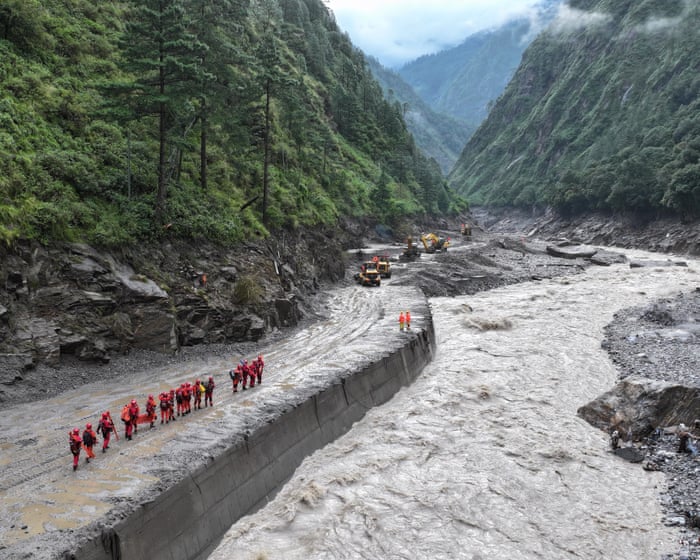
A flash flood caused by a glacier collapse in the Himalayas has killed over 470 people in Nepal and Tibet, with many still missing. Rescue teams face difficult conditions, including destroyed roads and the threat of a nearby unstable lake that could cause more flooding.
Key Facts
At least 469 people have died in Nepal and 3 in Tibet due to the flood.
Around 1,535 people are still missing in both regions.
The flood occurred after a glacier collapsed, sending ice, rocks, and mud down river valleys.
Entire villages, roads, bridges, and hydropower plants were destroyed.
Helicopters are being used to rescue people and deliver aid because roads are washed out.
A barrier lake formed by the disaster holds millions of cubic meters of water and may burst, creating a new flood risk.
Nepal deployed 30,000 security personnel; China sent 500 military and paramilitary staff and its Premier to supervise rescue work.
Nepal has declined international rescue help but asked for financial aid to support ongoing relief efforts.
Read the Original
Want the full story? Tap a source to open the original
article.
A police officer in Scotland, Alan Greer, who was later found to be a violent serial rapist, joined the police force despite having criminal warnings on his record. Police Scotland has confirmed they knew about some offenses before hiring him but said current checks would catch such issues.
Key Facts
Alan Greer was investigated in 2002 and 2005 for making inappropriate phone calls to women.
He received a formal police caution from the Metropolitan Police in 2005.
Despite knowing this caution, Strathclyde Police accepted Greer into the force in 2009.
Greer worked as a police officer for 17 years before taking his own life in 2024.
During his career, he committed multiple serious sexual offenses, including rape and assault.
Police Scotland has identified 15 victims but believes the actual number may be higher.
Police Scotland now conducts annual integrity tests and regular re-vetting of officers.
Assistant Chief Constable Lynn Ratcliff said Greer would not pass today’s vetting checks.
Read the Original
Want the full story? Tap a source to open the original
article.
China has warned that a newly formed lake near the Nepal-Tibet border may burst and cause another flood. The lake was created by debris blocking rivers after a glacier collapse caused a deadly flash flood earlier this week.
Key Facts
A recent glacier collapse triggered a flash flood near the Nepal-Tibet border on Wednesday.
A barrier lake holding about 2.5 million cubic meters of water has formed upstream from the flood site.
Officials expect an additional 3 million cubic meters of water to flow into the lake by Saturday.
The lake has started to overflow, raising concerns about a possible breach and a second flood.
Heavy rain has complicated the situation and increased risk levels.
Rescue teams near the Nepal-Tibet border have suspended operations due to safety risks from the overflowing lake.
Nepali authorities warn of potential floods caused by river blockages and advise people to avoid rivers.
Hundreds have died or gone missing in Nepal and Tibet from the initial flood, with many missing on the Tibet side, including foreigners.
Read the Original
Want the full story? Tap a source to open the original
article.
Flood rescue efforts in Tibet have been paused because a lake formed by debris is at risk of bursting. In Nepal, the death toll from the floods has reached 469, with over 1,300 people missing.
Key Facts
Rescue work in Tibet stopped due to danger from a debris-formed lake that might burst.
The floods hit the border area near Gyirong in Tibet, destroying villages and causing flash floods.
Nepal’s death toll from the floods is 469, with more than 1,300 people still missing.
Over 500 foreign citizens are among the missing in Nepal, including individuals from India, the US, Australia, Britain, and Canada.
Chinese media report at least 558 people missing in Tibet, with at least 260 being foreign nationals.
Nepalese army helicopters are trying to rescue about 100 people trapped in a tunnel at a hydropower project.
Rescue efforts are slowed down by destroyed roads and bridges in the mountainous region.
Continued rain is expected to raise water levels in the lake, increasing the risk of further flooding downstream.
Read the Original
Want the full story? Tap a source to open the original
article.
Europe is experiencing a severe drought and high temperatures that are causing rivers and farmland to dry up. This situation is affecting farming, river transportation, and the cooling systems of some nuclear power plants.
Key Facts
Europe is facing record-low water levels in its rivers due to drought and heat.
Farmland is drying out, which can harm crop growth.
Shipping on rivers is being disrupted because of low water levels.
Some nuclear power plants use river water to cool their systems, and this is now a challenge.
The drought and heatwaves are widespread, impacting multiple industries and regions across Europe.
Read the Original
Want the full story? Tap a source to open the original
article.
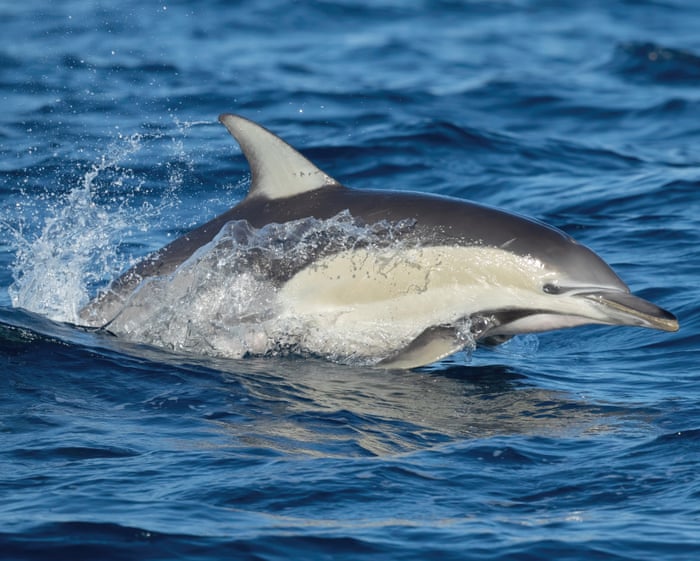
A dolphin in South Australia died from the H5N1 bird flu virus, the second known native mammal in the area to be infected. Due to concerns about possible mass deaths of elephant seals from the virus, the Australian government is removing researchers from the remote Macquarie Island station to protect their mental health.
Key Facts
A common dolphin near Goolwa, South Australia, tested positive for H5N1 bird flu.
This is the second native mammal in Australia known to catch H5 bird flu, after seals and a red fox.
Researchers will be withdrawn from Macquarie Island, 1,500 km from Tasmania, due to expected seal deaths during breeding season.
The government is concerned about the mental health impact on researchers from seeing many dead seals.
Macquarie Island has large elephant seal populations living close to the research base.
Bird flu has not yet been found on Macquarie Island but is expected to cause a significant seal death event.
South Australia will now confirm bird flu cases through local labs instead of relying on a central government lab.
The government plans to monitor the situation to allow researchers to return in future seasons.
Read the Original
Want the full story? Tap a source to open the original
article.
Six months after the start of the conflict between the United States, Israel, and Iran, the war shows no clear signs of ending soon or causing a collapse of Iran's government. The fighting has led to disruptions in oil shipping routes and increased tensions in the Middle East, with regional countries adjusting their defense and economic strategies.
Key Facts
The war began on February 28, 2026, after surprise attacks by the US and Israel on Iran.
The US hoped economic and military pressure would change Iran’s government, but this has not happened.
Oil shipping through the Strait of Hormuz has slowed significantly due to attacks and a US blockade.
The Gulf states are facing challenges in using oil income to grow their economies because of the conflict.
The US military remains heavily present in the Middle East.
Tensions, such as between Houthi rebels and Saudi Arabia, are expected to continue or worsen.
New military agreements, like one between Turkiye, Pakistan, and Saudi Arabia, show rising regional defense cooperation.
Rival global powers like China and India continue their influence in the region, but their involvement is steady rather than increasing dramatically.
Read the Original
Want the full story? Tap a source to open the original
article.
A French-Colombian soldier serving in the French Foreign Legion was kidnapped in early August while traveling in southwestern Colombia. Colombian authorities believe the kidnappers are part of a breakaway faction of the former FARC guerrilla group involved in criminal activities like drug trafficking and illegal mining.
Key Facts
The soldier, Jose Olger Melo Charry, was taken hostage on August 6 in the department of Narino, Colombia.
Melo Charry holds the rank of corporal and joined the French Foreign Legion four years ago.
The kidnappers are believed to belong to Estado Mayor Central, a dissident group from the old FARC rebel army.
FARC officially disarmed in 2016 after a peace agreement, but some factions continue illegal activities.
The boss of the group blamed for the kidnapping is Ivan Mordisco, Colombia’s most-wanted guerrilla leader.
Armed groups in Colombia often kidnap people to get money or pressure the government.
Colombia’s current president, Abelardo de la Espriella, is taking a tougher approach against armed groups with U.S. support.
Peace talks under the previous president, Gustavo Petro, failed to reduce violence from these groups.
Read the Original
Want the full story? Tap a source to open the original
article.
Paramedics in Kanazawa, Japan, ask people not to rearrange their shoes when they enter a home during emergencies. They explain that changing the shoe placement can slow down their work, especially when carrying a patient on a stretcher.
Key Facts
In Japan, it is common to take off shoes when entering a house.
Homeowners usually arrange guests’ shoes neatly facing the door for easy exit.
Paramedics arrange their shoes in a special way so three people can quickly put them on and leave with a patient.
Moving the shoes can cause delays of about 30 seconds, which may affect patient care.
Firefighter Daisuke Yamashita explained the reason for strict shoe placement in a video posted on Instagram.
Many people thanked the emergency services for sharing this advice online.
Paramedics suggest people prepare important documents ahead of time, like the national ID card, to help speed up emergency care.
Some comments suggested that usual manners could be set aside during emergencies if needed.
Read the Original
Want the full story? Tap a source to open the original
article.
In northern Nigeria’s conservative state of Sokoto, a lively nightlife scene thrives despite strict religious rules, a local morality police, and ongoing security problems. People gather in nightclubs to enjoy music, dancing, and drinks, showing a contrast between the region’s Islamic traditions and modern social life.
Key Facts
Sokoto state in northern Nigeria is known as the “seat of the caliphate” due to its important Islamic history.
The Hisbah force is the local Islamic police that enforces Shariah laws, including dress codes and alcohol bans.
Despite these laws, nightclubs in Sokoto remain busy and popular among locals, especially on weekends.
Partygoers use nightlife as a way to enjoy life and escape the difficulties caused by insecurity and economic problems.
Non-Muslim residents like Vincent Tabat and Benjamin Danjuma openly attend clubs and sometimes face conflicts with the Hisbah force.
Northern Nigeria sits where the population is nearly half Christian and half Muslim, creating complex religious dynamics.
Nightlife in the north contrasts with stricter religious expectations but continues growing.
Experts say nightlife has long existed in Nigeria and now helps people cope with regional challenges.
Read the Original
Want the full story? Tap a source to open the original
article.
Wildfires in Algeria caused the death of 12 people across several provinces. More than 150 fires started in one day, and most of them have been put out.
Key Facts
Wildfires occurred in multiple provinces in Algeria.
Twelve people died because of the fires.
Over 150 fires started in just one day.
Less than one-third of the fires are still burning.
Residents in Jijel province are examining the damage caused by the fires.
Read the Original
Want the full story? Tap a source to open the original
article.
A theater in Kyiv is staging a new version of Homer’s ancient epic, the Odyssey, to reflect the pain and struggles caused by the war in Ukraine. The play features both professional actors and active soldiers, using modern imagery like drones and robots to represent the dangers faced in the current conflict.
Key Facts
The play is called “Odysseus, Maeotis” and is performed at the Ivan Franko National Academic Drama Theater in Kyiv.
It combines the ancient story of Odysseus with the real experiences of Ukrainians during the war.
Active soldiers, including Daniil Mireshkin who plays Odysseus, are part of the cast.
The staging replaces mythological monsters with modern war machines like drones and robots.
The play focuses on themes like the struggle to return home, captivity, and identity.
The production was delayed several times due to ongoing Russian attacks.
“Maeotis” refers to the Sea of Azov, linking the story to a local geographical reference.
The director, Ivan Uryvskyi, says the play was mostly written from scratch but keeps the core story of Odysseus’ return.
Read the Original
Want the full story? Tap a source to open the original
article.
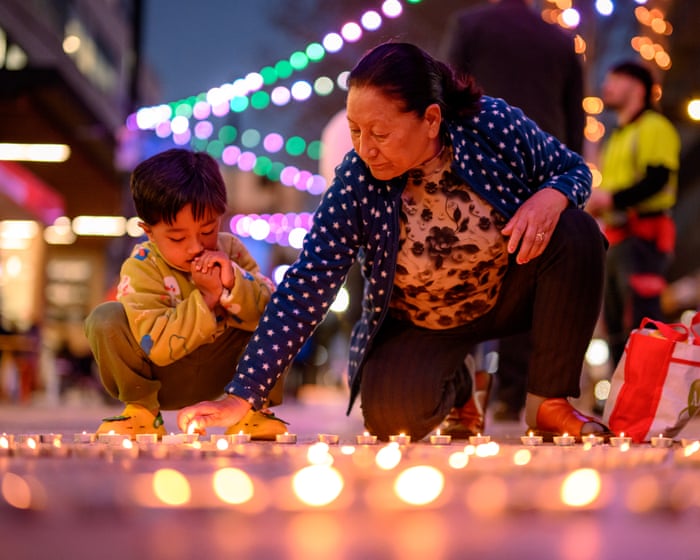
Heavy floods and landslides in Nepal have killed at least 469 people and left more than 1,300 missing. Nepali communities in Australia are holding vigils and raising funds to support relief efforts, while the Australian government has launched a $5 million aid package and continues to search for 39 Australians still missing.
Key Facts
Massive flash floods and landslides hit the Bhotekoshi and Trishuli river areas in Nepal.
The death toll has reached 469, with over 1,300 people missing as of Friday.
Thirty-nine Australians are reported missing in the disaster zone.
The Australian government announced $5 million in aid to help Nepal.
Nepali Australians are organizing candlelight vigils and moments of silence to honor victims.
Community groups in Victoria and New South Wales are holding prayer events and supporting families of the missing.
Several Nepali diaspora organizations are crowdfunding for Nepal’s disaster relief fund.
The Australia Tibet Council is also planning prayer events to remember those affected.
Read the Original
Want the full story? Tap a source to open the original
article.