A French-Colombian soldier serving in the French Foreign Legion was kidnapped in early August while traveling in southwestern Colombia. Colombian authorities believe the kidnappers are part of a breakaway faction of the former FARC guerrilla group involved in criminal activities like drug trafficking and illegal mining.
Key Facts
The soldier, Jose Olger Melo Charry, was taken hostage on August 6 in the department of Narino, Colombia.
Melo Charry holds the rank of corporal and joined the French Foreign Legion four years ago.
The kidnappers are believed to belong to Estado Mayor Central, a dissident group from the old FARC rebel army.
FARC officially disarmed in 2016 after a peace agreement, but some factions continue illegal activities.
The boss of the group blamed for the kidnapping is Ivan Mordisco, Colombia’s most-wanted guerrilla leader.
Armed groups in Colombia often kidnap people to get money or pressure the government.
Colombia’s current president, Abelardo de la Espriella, is taking a tougher approach against armed groups with U.S. support.
Peace talks under the previous president, Gustavo Petro, failed to reduce violence from these groups.
Read the Original
Want the full story? Tap a source to open the original
article.
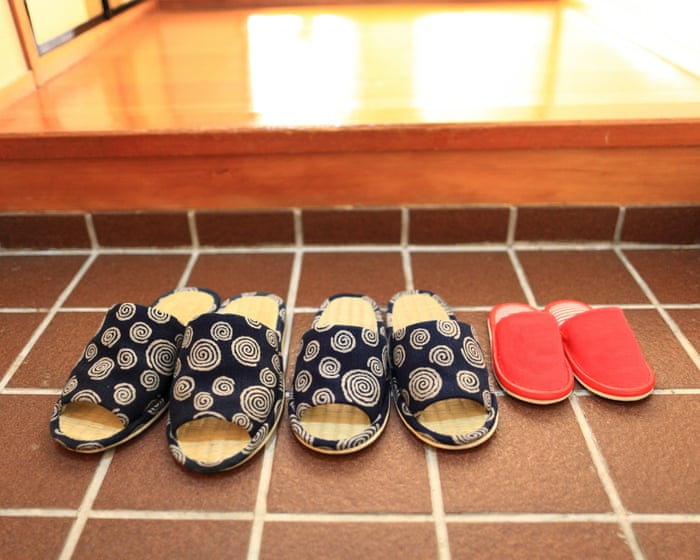
Paramedics in Kanazawa, Japan, ask people not to rearrange their shoes when they enter a home during emergencies. They explain that changing the shoe placement can slow down their work, especially when carrying a patient on a stretcher.
Key Facts
In Japan, it is common to take off shoes when entering a house.
Homeowners usually arrange guests’ shoes neatly facing the door for easy exit.
Paramedics arrange their shoes in a special way so three people can quickly put them on and leave with a patient.
Moving the shoes can cause delays of about 30 seconds, which may affect patient care.
Firefighter Daisuke Yamashita explained the reason for strict shoe placement in a video posted on Instagram.
Many people thanked the emergency services for sharing this advice online.
Paramedics suggest people prepare important documents ahead of time, like the national ID card, to help speed up emergency care.
Some comments suggested that usual manners could be set aside during emergencies if needed.
Read the Original
Want the full story? Tap a source to open the original
article.
In northern Nigeria’s conservative state of Sokoto, a lively nightlife scene thrives despite strict religious rules, a local morality police, and ongoing security problems. People gather in nightclubs to enjoy music, dancing, and drinks, showing a contrast between the region’s Islamic traditions and modern social life.
Key Facts
Sokoto state in northern Nigeria is known as the “seat of the caliphate” due to its important Islamic history.
The Hisbah force is the local Islamic police that enforces Shariah laws, including dress codes and alcohol bans.
Despite these laws, nightclubs in Sokoto remain busy and popular among locals, especially on weekends.
Partygoers use nightlife as a way to enjoy life and escape the difficulties caused by insecurity and economic problems.
Non-Muslim residents like Vincent Tabat and Benjamin Danjuma openly attend clubs and sometimes face conflicts with the Hisbah force.
Northern Nigeria sits where the population is nearly half Christian and half Muslim, creating complex religious dynamics.
Nightlife in the north contrasts with stricter religious expectations but continues growing.
Experts say nightlife has long existed in Nigeria and now helps people cope with regional challenges.
Read the Original
Want the full story? Tap a source to open the original
article.
Wildfires in Algeria caused the death of 12 people across several provinces. More than 150 fires started in one day, and most of them have been put out.
Key Facts
Wildfires occurred in multiple provinces in Algeria.
Twelve people died because of the fires.
Over 150 fires started in just one day.
Less than one-third of the fires are still burning.
Residents in Jijel province are examining the damage caused by the fires.
Read the Original
Want the full story? Tap a source to open the original
article.
A theater in Kyiv is staging a new version of Homer’s ancient epic, the Odyssey, to reflect the pain and struggles caused by the war in Ukraine. The play features both professional actors and active soldiers, using modern imagery like drones and robots to represent the dangers faced in the current conflict.
Key Facts
The play is called “Odysseus, Maeotis” and is performed at the Ivan Franko National Academic Drama Theater in Kyiv.
It combines the ancient story of Odysseus with the real experiences of Ukrainians during the war.
Active soldiers, including Daniil Mireshkin who plays Odysseus, are part of the cast.
The staging replaces mythological monsters with modern war machines like drones and robots.
The play focuses on themes like the struggle to return home, captivity, and identity.
The production was delayed several times due to ongoing Russian attacks.
“Maeotis” refers to the Sea of Azov, linking the story to a local geographical reference.
The director, Ivan Uryvskyi, says the play was mostly written from scratch but keeps the core story of Odysseus’ return.
Read the Original
Want the full story? Tap a source to open the original
article.
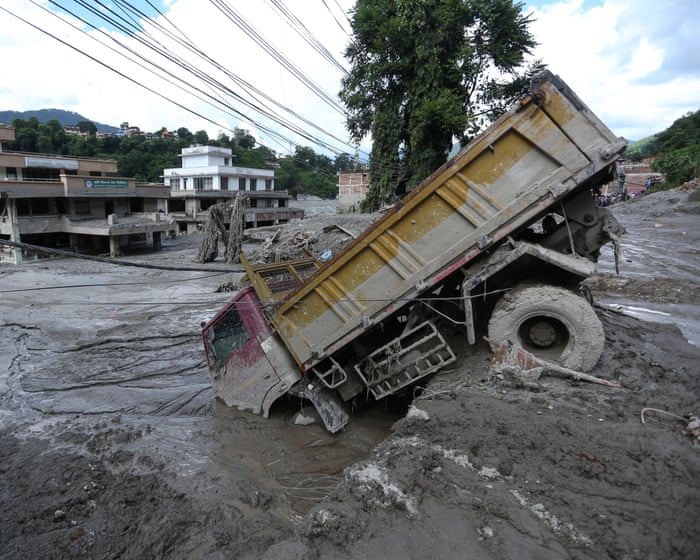
Heavy floods and landslides in Nepal have killed at least 469 people and left more than 1,300 missing. Nepali communities in Australia are holding vigils and raising funds to support relief efforts, while the Australian government has launched a $5 million aid package and continues to search for 39 Australians still missing.
Key Facts
Massive flash floods and landslides hit the Bhotekoshi and Trishuli river areas in Nepal.
The death toll has reached 469, with over 1,300 people missing as of Friday.
Thirty-nine Australians are reported missing in the disaster zone.
The Australian government announced $5 million in aid to help Nepal.
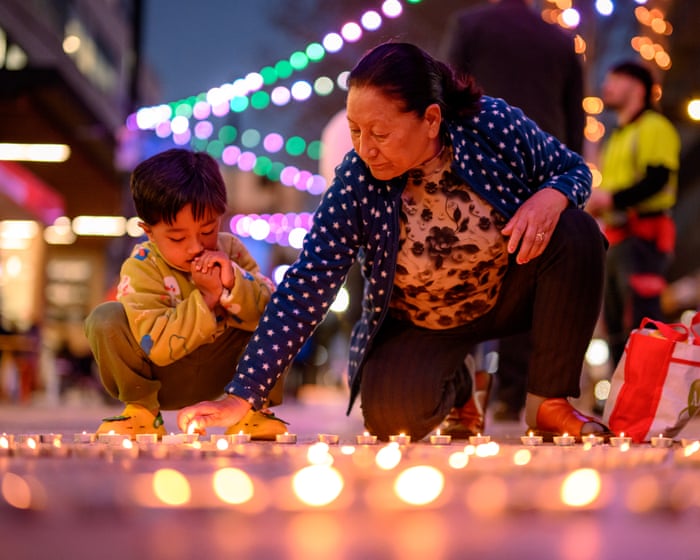
Nepali Australians are organizing candlelight vigils and moments of silence to honor victims.
Community groups in Victoria and New South Wales are holding prayer events and supporting families of the missing.
Several Nepali diaspora organizations are crowdfunding for Nepal’s disaster relief fund.
The Australia Tibet Council is also planning prayer events to remember those affected.
Read the Original
Want the full story? Tap a source to open the original
article.
The Democratic Republic of Congo (DRC) has started vaccinating front-line health workers against Ebola using a vaccine licensed for a different strain. There is no approved vaccine for the current Bundibugyo strain, and clinical trials are underway to find one.
Key Facts
The DRC is prioritizing health workers and front-line staff for Ebola vaccination.
The vaccine being used is approved for another Ebola strain, not the Bundibugyo strain currently spreading.
Over 50,000 doses of the vaccine have arrived in the DRC.
The outbreak is mainly in the Ituri province, near the border with Uganda.
About 20,000 vaccine doses will be used in trials to test effectiveness against the new strain.
The DRC has recorded 5,713 confirmed Ebola cases and 2,744 deaths so far.
The outbreak is the deadliest in the DRC’s history and is still spreading.
Challenges include insecurity, a health worker strike, and population movements.
Read the Original
Want the full story? Tap a source to open the original
article.
A Sydney library returned the book How to Sell a Genocide to its shelves after removing it following complaints linked to a violent antisemitic attack in the area. The State Library of New South Wales reminded the local council of its legal duty to provide free access to information, leading to the book’s reinstatement.
Key Facts
Waverley library in Sydney removed the book How to Sell a Genocide after complaints from a survivor of a deadly antisemitic attack in Bondi.
The book was critical of Israel and published by Pluto Press, written by Adam Johnson.
The State Library of NSW intervened by reminding the council about laws supporting library independence and free access to information.
Almost 2,500 people signed a petition supporting the return of the book to the shelves.
The book discusses what it considers the US media’s role in Gaza’s destruction.
The author criticized the council for not explaining the specific reasons behind removing the book.
Jewish community leaders had expressed concerns and supported the initial removal of the book because of its content and local sensitivity.
The library council emphasized that while some materials may be upsetting, people should have the right to choose what to read.
Read the Original
Want the full story? Tap a source to open the original
article.
Six months after the United States and Israel launched attacks on Iran, the Middle East has changed but not in the way the attackers wanted. Iran survived heavy bombings and leadership losses, gained new power by controlling the Strait of Hormuz, and regional security alliances have shifted.
Key Facts
The U.S. and Israel attacked Iran on February 28, 2026, aiming to overthrow its government and install a pro-Western leadership.
Iran survived the attacks, replacing its leaders and strengthening its position in the region.
Iran gained control over the Strait of Hormuz, an important route for global oil and gas trade.
Gulf Arab nations felt less secure without strong U.S. protection and are seeking other security options.
Israel continues fighting its enemies but faces strained relations with the U.S. after years of conflict in Gaza.
Efforts to improve relations between Israel and Saudi Arabia have weakened.
After months of warfare, U.S. President Donald Trump agreed to a ceasefire with Iran in April and made a deal in June, which later fell apart.
Iran’s confidence grew, and it now aims to reshape the region rather than collapse under pressure.
Read the Original
Want the full story? Tap a source to open the original
article.
China sent hundreds of soldiers to Gyirong, a town near the border in Tibet, after a landslide caused by ice, mud, and rocks falling into a mountain river triggered a severe flash flood. The disaster has led to search and rescue efforts by the military.
Key Facts
A landslide occurred in Gyirong, Tibet, caused by a wall of ice, mud, and rocks collapsing into a river.
The landslide triggered a powerful flash flood in the area.
Hundreds of Chinese military personnel were sent to help with rescue and recovery.
The event happened on a Thursday.
The disaster affected eastern China near the Nepal border.
Search and rescue operations are ongoing with military support.
The information was reported by Al Jazeera from Beijing.
Read the Original
Want the full story? Tap a source to open the original
article.
Thousands of people in Indonesia marched to parliament in Jakarta to demand tougher punishments for corrupt officials. The protest marked one year since violent antigovernment rallies and focused on passing a bill to seize assets connected to corruption.
Key Facts
The protest took place on August 27, exactly one year after riots during antigovernment rallies that caused about 10 deaths and 7,000 arrests.
Riot police held demonstrators behind locked gates for much of the day and used tear gas and water cannons after some protesters threw objects.
Protesters want parliament to pass a long-delayed bill that would let the government take assets linked to corruption.
Some protesters called for corrupt officials to face the death penalty.
About 200 students from various universities took part, also demanding the end of a corrupt free school meal program and lower food prices.
Lawmakers met with protest leaders and promised to resign if the anti-corruption bill is not passed by December 15.
Police deployed 18,500 officers and detained 65 people before the protest, accused of trying to cause trouble.
Officials said the heavy police presence was to protect protesters and help them express their views safely.
Read the Original
Want the full story? Tap a source to open the original
article.
A Belgian tourist, Celine Cremer, died after getting lost on a remote walking track in Tasmania in June 2023. A coroner found her death was due to several mistakes, including poor preparation for cold weather and losing her phone, which stopped her from calling for help.
Key Facts
Celine Cremer set out on a walk at Philosopher Falls in Tasmania on June 17, 2023, and was reported missing nearly 10 days later.
Her remains were found in January 2026 by private searchers organized by her family and friends.
The coroner ruled she died between June 17 and 21, 2023, from an accident caused by multiple overlapping errors.
Cremer wandered off the poorly marked track towards Magnet Dam late in the afternoon when daylight was fading.
The weather was near freezing, and she lacked proper clothing and waterproof gear.
She lost her mobile phone, her only way to communicate, making it hard to find her or get help.
Data from her phone showed her last recorded movement was around 4:18 pm, after which her route became unknown.
Tasmania police are reviewing how private search groups are used in missing persons cases and may create formal rules.
The coroner advised walkers to follow safety guidelines and suggested warning signs be installed at the track entrance about its poor condition.
Read the Original
Want the full story? Tap a source to open the original
article.
Seven people have been charged with damaging President Donald Trump’s Turnberry golf course in Scotland. The charges say the damage had a connection to terrorism, including graffiti and digging up the grass with political messages.
Key Facts
The incident happened on March 8, 2023, at the Trump Turnberry golf course and hotel in Scotland.
Graffiti included the phrase “Gaza is not 4 sale.”
The accused are Kieran Robson, Uzma Bashir, Ricky Southall, Autumn Taylor Ward, Rebecca Sian Davies, John Moxley, and Dylan Chiaramello.
They are charged with damaging the turf, spraying weed killer, painting slogans on buildings and signs, and damaging a sprinkler system.
The charges say the damage had a terrorist connection, which means the crime is considered more serious.
The accused are scheduled to appear in court on August 31, 2024.
Scottish First Minister John Swinney met with Eric Trump in March 2023, condemning the vandalism and promising a serious response.
Turnberry is a famous golf course that has hosted major events and was bought by President Trump in 2014.
Read the Original
Want the full story? Tap a source to open the original
article.
A wetland in Cheshire, called Woolston Eyes, has been restored from a dumping ground into a thriving habitat for the rare black-necked grebe bird. The restored area now hosts 64% of Britain’s breeding population of this species, showing fast growth thanks to conservation efforts.
Key Facts
Woolston Eyes was previously a dumping site for dredgings from the Manchester Ship Canal.
Since 2021, it has been restored with pools, reedbeds, willow scrub, and grassland by the RSPB and Woolston Eyes Conservation Group.
The restoration included creating nesting islands to protect black-necked grebes by nesting near black-headed gulls.
In 2023, four pairs of black-necked grebes successfully raised 15 chicks there.
By 2025, 35 pairs were recorded, with 29 nesting on the restored wetlands, making up 64% of the UK’s breeding pairs.
The site is also home to other rare birds like willow tit, pochard, and grasshopper warbler.
Woolston Eyes depends on rainfall but can manage water levels by moving water between areas.
Conservationists stress the importance of restoring wetlands across the UK to help more species recover.
Read the Original
Want the full story? Tap a source to open the original
article.
Heavy flash floods caused by a glacier collapse have killed at least 469 people and left over 1,400 missing near the Nepal-China border. Rescue teams in Nepal and China are searching for survivors and helping those affected by the disaster.
Key Facts
The floods happened after part of a glacier collapsed in the Himalayan region.
More than 469 people are confirmed dead, and over 1,400 are missing in Nepal and Tibet.
Hundreds of people have been rescued, with many receiving medical care in Kathmandu.
Foreigners, including trekkers and pilgrims, are among the missing.
Buildings and roads were destroyed or buried under mud and debris.
A new lake formed on the border, raising concerns about potential dam flooding.
U.S. President Donald Trump offered help to Nepal and called the destruction terrible.
Scientists say the collapse caused melted water and rocks to flood the valleys below.
Read the Original
Want the full story? Tap a source to open the original
article.
South Korea, the United States, and Japan will conduct a joint military exercise called Freedom Edge from September 7 for five days near South Korea’s Jeju Island. The drill aims to improve defense against North Korea’s nuclear and missile threats, while North Korea has warned it will respond strongly to such actions.
Key Facts
The Freedom Edge drill involves South Korea, the U.S., and Japan working together in air and naval exercises.
The exercise focuses on missile defense, anti-submarine warfare, and surveillance.
North Korea sees the drill as hostile and provocative, accusing it of targeting China and Russia as well.
Last week, President Donald Trump ordered a significant reduction of a U.S.-South Korea military drill to ease tensions with North Korea.
Despite this goodwill gesture, North Korea fired about 10 short-range missiles as a warning.
North Korea has refused to resume talks unless the U.S. drops its demand for North Korean denuclearization before negotiations.
North Korea has strengthened its nuclear arsenal and increased cooperation with Russia amid stalled diplomacy.
Experts believe North Korea may now seek formal recognition as a nuclear power and sanctions relief in exchange for partial disarmament.
Read the Original
Want the full story? Tap a source to open the original
article.
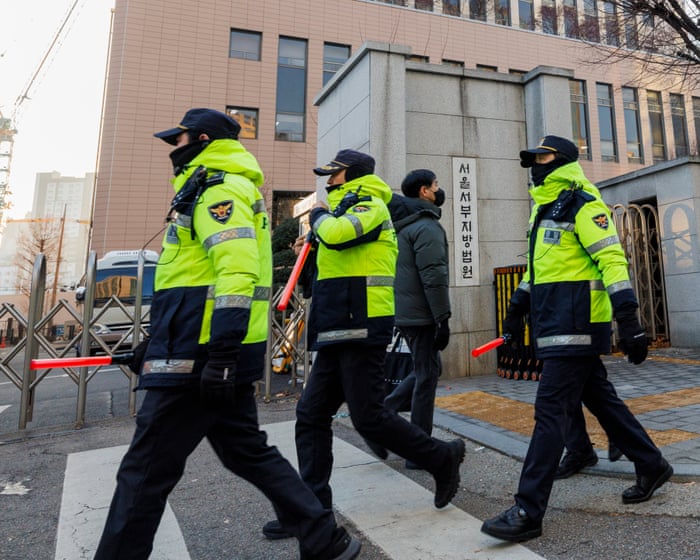
South Korean police will review about 310,000 missing persons cases closed in the last three years after a scandal in which an officer allegedly falsified records to close cases, two of which involved deceased individuals. President Lee Jae Myung has called for an investigation and reform, while the government admitted structural problems in how missing persons cases are handled.
Key Facts
A police officer in Jeju was arrested for allegedly falsifying records to close missing persons cases.
Two missing people, a woman and a man, whose cases the officer closed, were later found dead.
Over 70,000 adults were reported missing last year in South Korea, with 99.7% of cases closed without a full search.
Korean law only formally recognizes children, autistic people, and those with dementia or mental disabilities as missing persons, giving police more search tools for these groups.
Adults not in these categories are classified as runaways and don’t receive the same search efforts or tools.
The officer denies wrongdoing but faces charges including neglect of duty and falsifying records.
The police review of cases will finish by November and cases with signs of improper handling will be reopened.
Attempts to pass laws to improve search powers for missing adults have failed due to concerns about privacy and possible abuse of tracking powers.
Read the Original
Want the full story? Tap a source to open the original
article.
A mudslide on the border between Nepal and Tibet has created a lake that Chinese authorities warn could break and cause flooding downstream. Authorities have evacuated nearly 1,100 people from the area, and the water level in the lake is expected to rise over the next few days, increasing the risk of further damage.
Key Facts
A mudslide occurred on August 26, 2026, at the China-Nepal border near Gyirong in Tibet.
The mudslide created a lake that could breach and cause flooding.
Water levels in this lake are expected to rise until about September 1, 2026.
Chinese officials warn the lake could release floodwaters downstream and cause more damage.
Approximately 499 local residents and 555 tourists have been evacuated from the danger zone.
The mudslide and resulting floods have caused hundreds of people to go missing.
The disaster has affected both Nepal and China's Tibet Autonomous Region.
Nepal’s death toll from related flooding has reached at least 469 people.
Read the Original
Want the full story? Tap a source to open the original
article.
Australia is considering reducing its refugee intake from 20,000 to 13,750, despite a global increase in people needing protection. This comes as the number of displaced people worldwide reaches nearly 130 million, the highest ever recorded.
Key Facts
Australia currently resettles 20,000 refugees yearly.
The government has thought about cutting refugee intake by about one-third, back to levels last seen during the Morrison government.
There are nearly 130 million displaced people worldwide, more than 1% of the global population.
Australia’s refugee intake is a small part of its total migration program, which includes about 300,000 people a year.
The Labor party supports keeping the refugee intake at 20,000 and aims to increase it to 27,000 eventually.
Political concerns, including the rise of the One Nation party, influence Australia’s refugee policies.
Australia ended its dedicated program for persecuted Afghans in 2024, even though many still need protection.
The United States has reduced its refugee resettlement numbers in recent years, and Australia may be following this trend.
Read the Original
Want the full story? Tap a source to open the original
article.
A flash flood caused by a glacier collapse on the Nepal-Tibet border has killed at least 469 people, with more than 1,300 still missing. Rescue teams and military helicopters are searching for survivors while warning that a nearby debris-blocked river may flood again.
Key Facts
The death toll from the flash flood is now 469, increasing by 80 since the last update.
Over 1,300 people remain missing, including hundreds of tourists from India, the US, Britain, Australia, and Canada.
Rescue efforts are difficult due to destroyed bridges and damaged roads in the mountainous region.
An artificial lake formed by the flood debris is at high risk of breaching, which could cause more flooding downstream.
Chinese and Nepalese authorities have evacuated over 1,000 people from the disaster area.
The Nepal Red Cross says about 93,000 people may have been affected and has launched a $31 million emergency appeal.
The UN released $2 million to help with medical care, shelter, and water in the disaster zone.
The Nepalese army has rescued over 100 people by helicopter and moved injured individuals to hospitals.
Read the Original
Want the full story? Tap a source to open the original
article.