Seven people have been charged with damaging President Donald Trump’s Turnberry golf course in Scotland. The charges say the damage had a connection to terrorism, including graffiti and digging up the grass with political messages.
Key Facts
The incident happened on March 8, 2023, at the Trump Turnberry golf course and hotel in Scotland.
Graffiti included the phrase “Gaza is not 4 sale.”
The accused are Kieran Robson, Uzma Bashir, Ricky Southall, Autumn Taylor Ward, Rebecca Sian Davies, John Moxley, and Dylan Chiaramello.
They are charged with damaging the turf, spraying weed killer, painting slogans on buildings and signs, and damaging a sprinkler system.
The charges say the damage had a terrorist connection, which means the crime is considered more serious.
The accused are scheduled to appear in court on August 31, 2024.
Scottish First Minister John Swinney met with Eric Trump in March 2023, condemning the vandalism and promising a serious response.
Turnberry is a famous golf course that has hosted major events and was bought by President Trump in 2014.
Read the Original
Want the full story? Tap a source to open the original
article.
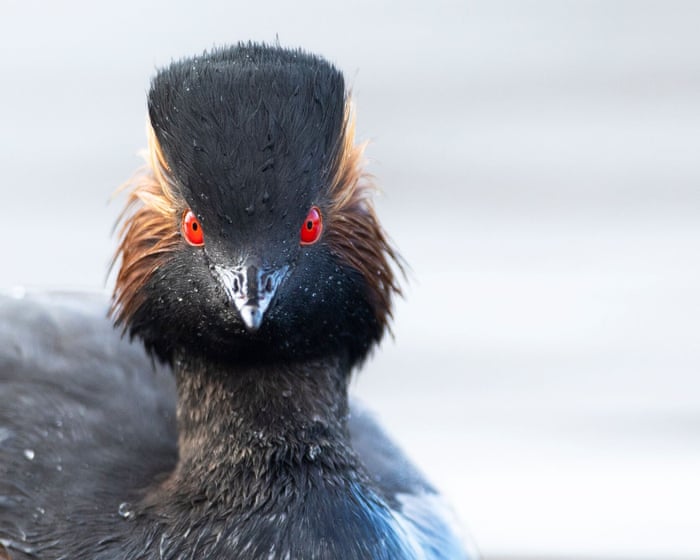
A wetland in Cheshire, called Woolston Eyes, has been restored from a dumping ground into a thriving habitat for the rare black-necked grebe bird. The restored area now hosts 64% of Britain’s breeding population of this species, showing fast growth thanks to conservation efforts.
Key Facts
Woolston Eyes was previously a dumping site for dredgings from the Manchester Ship Canal.
Since 2021, it has been restored with pools, reedbeds, willow scrub, and grassland by the RSPB and Woolston Eyes Conservation Group.
The restoration included creating nesting islands to protect black-necked grebes by nesting near black-headed gulls.
In 2023, four pairs of black-necked grebes successfully raised 15 chicks there.
By 2025, 35 pairs were recorded, with 29 nesting on the restored wetlands, making up 64% of the UK’s breeding pairs.
The site is also home to other rare birds like willow tit, pochard, and grasshopper warbler.
Woolston Eyes depends on rainfall but can manage water levels by moving water between areas.
Conservationists stress the importance of restoring wetlands across the UK to help more species recover.
Read the Original
Want the full story? Tap a source to open the original
article.
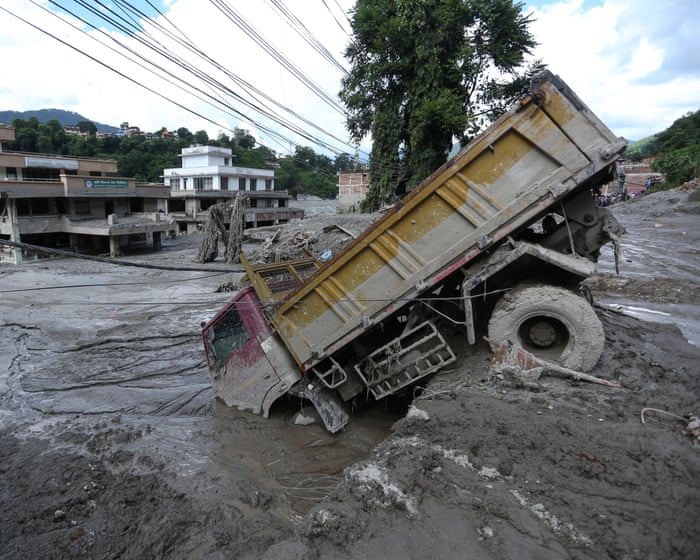
Heavy flash floods caused by a glacier collapse have killed at least 469 people and left over 1,400 missing near the Nepal-China border. Rescue teams in Nepal and China are searching for survivors and helping those affected by the disaster.
Key Facts
The floods happened after part of a glacier collapsed in the Himalayan region.
More than 469 people are confirmed dead, and over 1,400 are missing in Nepal and Tibet.
Hundreds of people have been rescued, with many receiving medical care in Kathmandu.
Foreigners, including trekkers and pilgrims, are among the missing.
Buildings and roads were destroyed or buried under mud and debris.
A new lake formed on the border, raising concerns about potential dam flooding.
U.S. President Donald Trump offered help to Nepal and called the destruction terrible.
Scientists say the collapse caused melted water and rocks to flood the valleys below.
Read the Original
Want the full story? Tap a source to open the original
article.
South Korea, the United States, and Japan will conduct a joint military exercise called Freedom Edge from September 7 for five days near South Korea’s Jeju Island. The drill aims to improve defense against North Korea’s nuclear and missile threats, while North Korea has warned it will respond strongly to such actions.
Key Facts
The Freedom Edge drill involves South Korea, the U.S., and Japan working together in air and naval exercises.
The exercise focuses on missile defense, anti-submarine warfare, and surveillance.
North Korea sees the drill as hostile and provocative, accusing it of targeting China and Russia as well.
Last week, President Donald Trump ordered a significant reduction of a U.S.-South Korea military drill to ease tensions with North Korea.
Despite this goodwill gesture, North Korea fired about 10 short-range missiles as a warning.
North Korea has refused to resume talks unless the U.S. drops its demand for North Korean denuclearization before negotiations.
North Korea has strengthened its nuclear arsenal and increased cooperation with Russia amid stalled diplomacy.
Experts believe North Korea may now seek formal recognition as a nuclear power and sanctions relief in exchange for partial disarmament.
Read the Original
Want the full story? Tap a source to open the original
article.
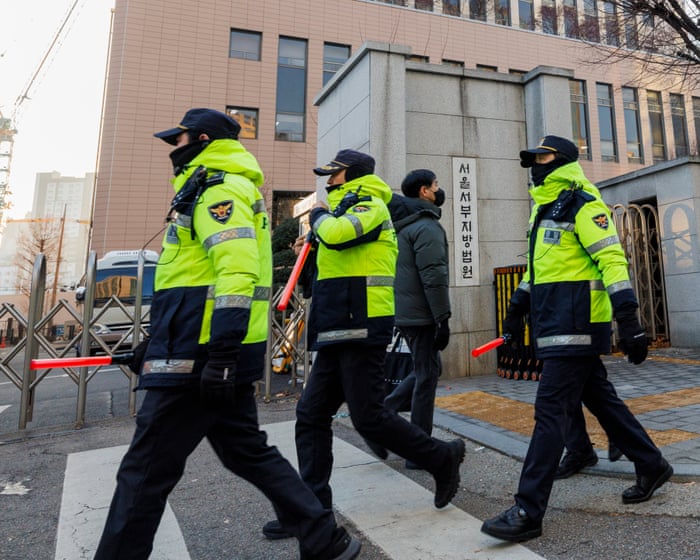
South Korean police will review about 310,000 missing persons cases closed in the last three years after a scandal in which an officer allegedly falsified records to close cases, two of which involved deceased individuals. President Lee Jae Myung has called for an investigation and reform, while the government admitted structural problems in how missing persons cases are handled.
Key Facts
A police officer in Jeju was arrested for allegedly falsifying records to close missing persons cases.
Two missing people, a woman and a man, whose cases the officer closed, were later found dead.
Over 70,000 adults were reported missing last year in South Korea, with 99.7% of cases closed without a full search.
Korean law only formally recognizes children, autistic people, and those with dementia or mental disabilities as missing persons, giving police more search tools for these groups.
Adults not in these categories are classified as runaways and don’t receive the same search efforts or tools.
The officer denies wrongdoing but faces charges including neglect of duty and falsifying records.
The police review of cases will finish by November and cases with signs of improper handling will be reopened.
Attempts to pass laws to improve search powers for missing adults have failed due to concerns about privacy and possible abuse of tracking powers.
Read the Original
Want the full story? Tap a source to open the original
article.
A mudslide on the border between Nepal and Tibet has created a lake that Chinese authorities warn could break and cause flooding downstream. Authorities have evacuated nearly 1,100 people from the area, and the water level in the lake is expected to rise over the next few days, increasing the risk of further damage.
Key Facts
A mudslide occurred on August 26, 2026, at the China-Nepal border near Gyirong in Tibet.
The mudslide created a lake that could breach and cause flooding.
Water levels in this lake are expected to rise until about September 1, 2026.
Chinese officials warn the lake could release floodwaters downstream and cause more damage.
Approximately 499 local residents and 555 tourists have been evacuated from the danger zone.
The mudslide and resulting floods have caused hundreds of people to go missing.
The disaster has affected both Nepal and China's Tibet Autonomous Region.
Nepal’s death toll from related flooding has reached at least 469 people.
Read the Original
Want the full story? Tap a source to open the original
article.
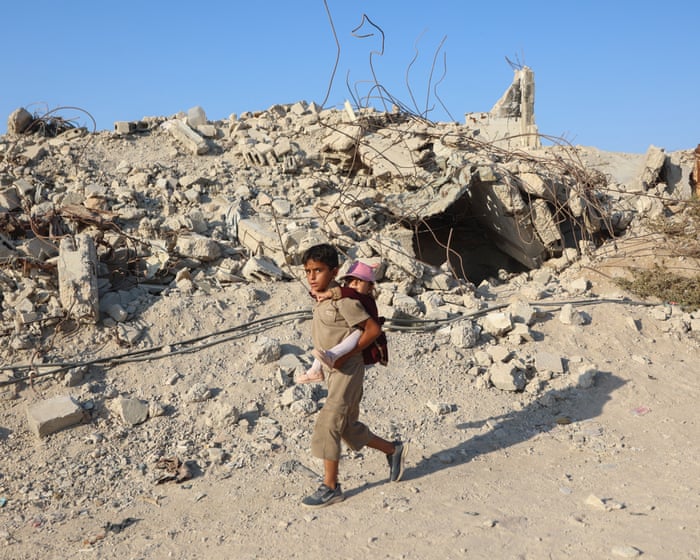
Australia is considering reducing its refugee intake from 20,000 to 13,750, despite a global increase in people needing protection. This comes as the number of displaced people worldwide reaches nearly 130 million, the highest ever recorded.
Key Facts
Australia currently resettles 20,000 refugees yearly.
The government has thought about cutting refugee intake by about one-third, back to levels last seen during the Morrison government.
There are nearly 130 million displaced people worldwide, more than 1% of the global population.
Australia’s refugee intake is a small part of its total migration program, which includes about 300,000 people a year.
The Labor party supports keeping the refugee intake at 20,000 and aims to increase it to 27,000 eventually.
Political concerns, including the rise of the One Nation party, influence Australia’s refugee policies.
Australia ended its dedicated program for persecuted Afghans in 2024, even though many still need protection.
The United States has reduced its refugee resettlement numbers in recent years, and Australia may be following this trend.
Read the Original
Want the full story? Tap a source to open the original
article.
A flash flood caused by a glacier collapse on the Nepal-Tibet border has killed at least 469 people, with more than 1,300 still missing. Rescue teams and military helicopters are searching for survivors while warning that a nearby debris-blocked river may flood again.
Key Facts
The death toll from the flash flood is now 469, increasing by 80 since the last update.
Over 1,300 people remain missing, including hundreds of tourists from India, the US, Britain, Australia, and Canada.
Rescue efforts are difficult due to destroyed bridges and damaged roads in the mountainous region.
An artificial lake formed by the flood debris is at high risk of breaching, which could cause more flooding downstream.
Chinese and Nepalese authorities have evacuated over 1,000 people from the disaster area.
The Nepal Red Cross says about 93,000 people may have been affected and has launched a $31 million emergency appeal.
The UN released $2 million to help with medical care, shelter, and water in the disaster zone.
The Nepalese army has rescued over 100 people by helicopter and moved injured individuals to hospitals.
Read the Original
Want the full story? Tap a source to open the original
article.
The Democratic Republic of Congo has started a vaccination campaign to fight the deadliest Ebola outbreak in its history. It is using a vaccine that works on a different Ebola strain because there is no vaccine yet for the current Bundibugyo variant.
Key Facts
Congo is facing its deadliest Ebola outbreak so far.
The outbreak is caused by the Bundibugyo variant of the Ebola virus.
There is currently no specific vaccine for the Bundibugyo variant.
Congo is using a vaccine developed for a different Ebola strain.
The vaccination campaign aims to help control the spread of the virus.
Ebola is a severe infectious disease that can cause high death rates.
Vaccination is an important step to protect people and stop the outbreak.
Read the Original
Want the full story? Tap a source to open the original
article.
Quebec’s main governing party has started its election campaign by naming U.S. President Donald Trump as their main political opponent. The party leader said Trump’s trade policies and comments about Canada have caused economic problems and affected Quebec’s political debates, including issues about the province’s independence.
Key Facts
Quebec’s governing party is the Coalition Avenir Québec, led by Christine Fréchette.
The provincial election is set for October 5, 2026.
Fréchette described President Trump as the “real adversary” because of his trade war with Canada.
Trump’s U.S. tariffs have hurt important industries in Quebec.
Trump’s mention of making Canada the 51st U.S. state has affected Quebec’s debate about possibly leaving Canada.
The Parti Québécois, Quebec’s separatist party, plans another independence referendum but will wait until Trump is no longer president.
The Quebec Liberal Party argues that Quebec is stronger as part of Canada, especially during international trade tensions.
Christine Fréchette became leader of the governing party in April 2026 after the previous premier stepped down.
Read the Original
Want the full story? Tap a source to open the original
article.
A family of four Australians, including two boys, went missing after flash floods hit a pilgrimage area in Nepal and Tibet. Nearly 40 Australians are reported missing, with hundreds dead and many still unaccounted for following the disaster.
Key Facts
Shylaja Muralitharan, her husband Chandrasekaran, and their two sons Ashwin (14) and Aarush (11) disappeared during flash floods in Nepal.
The family was part of a group of 15 Australians trekking to Mount Kailash in Tibet.
Nearly 400 people have died, and about 1,400 mostly tourists remain missing after the floods.
Other Australians missing include couples and families from New South Wales, Victoria, and Queensland.
Tour companies involved include Himalayan Glacier Adventures, Trekkers Society, and Kailash Journeys.
Rescue efforts and information are limited, causing concern among relatives.
The flood was caused by a sudden glacier collapse triggering a flash flood in the Rasuwa area.
Local organizations and cricket clubs have expressed hope and support for the missing Australians.
Read the Original
Want the full story? Tap a source to open the original
article.
In Ceuta, Spain, protests against migrants have increased. Protesters destroyed and burned migrant tents and stopped a Red Cross convoy delivering food and water. Police were sent to manage the situation as protesters called for migrants to be sent back to their home countries.
Key Facts
The protests are happening in Ceuta, a Spanish city in North Africa.
Protesters are against migrants arriving in the city.
They have taken down and burned shelters used by migrants.
A Red Cross convoy with food and water was blocked by the protesters.
Police forces were deployed to control the protests.
The protesters want recently arrived migrants to be deported.
Read the Original
Want the full story? Tap a source to open the original
article.
Two wildfires are burning near California’s Big Sur coast, including a new fire called the Plaskett Fire and a larger one called the Timber Fire. Firefighters are working with aircraft and controlled burns to stop the fires from spreading, while some residents have been evacuated and parts of Highway 1 have been closed.
Key Facts
The Plaskett Fire started recently in steep terrain near Highway 1 in Monterey County.
The Plaskett Fire has no containment yet and caused some evacuations and highway closures.
Fire crews are using helicopters and planes to drop water and fire retardant on the Plaskett Fire.
The Timber Fire has been burning since August 8 and covers nearly 31 square miles.
About 20% of the Timber Fire is contained using back-burning to protect populated areas.
Officials closed parts of Highway 1 to protect people and allow firefighting efforts.
Fire danger in California is high because of lightning and winds from a nearby tropical storm.
Firefighters are trimming vegetation around buildings to help prevent the fire from spreading.
Read the Original
Want the full story? Tap a source to open the original
article.
Emily Damari, a British-Israeli woman who was held hostage by Hamas for over 15 months, married her partner Dami Amit in Tel Aviv. She was kidnapped during a Hamas attack in October 2023 and released in January 2025 as part of a temporary ceasefire.
Key Facts
Emily Damari was kidnapped from her home in southern Israel on October 7, 2023.
She was held captive by Hamas for more than 15 months.
During the attack, Damari was injured, losing two fingers on her hand.
She was released in January 2025 along with other hostages as part of a ceasefire deal between Israel and Hamas.
Damari and her partner Dami Amit got engaged in January 2026 and married in Tel Aviv recently.
Several former hostages attended the wedding ceremony.
The 2023 Hamas attack killed about 1,200 people and took 251 hostages.
Israel’s military response in Gaza has resulted in over 73,000 deaths according to Gaza health officials.
Read the Original
Want the full story? Tap a source to open the original
article.
The U.S. military announced it has removed all Iranian sea mines from key shipping paths in the Strait of Hormuz. This area is an important waterway used for international shipping.
Key Facts
U.S. Central Command (Centcom) said the sea mines were placed by Iran.
The mines were found and cleared from the main routes ships use to pass through the Strait of Hormuz.
The Strait of Hormuz is a vital passage for global oil and cargo transportation.
Admiral Brad Cooper, Centcom Commander, confirmed the removal in a video shared on social media.
The clearing of mines is described as a major milestone by the U.S. military.
Removing the mines helps ensure safe navigation for international ships in the region.
Read the Original
Want the full story? Tap a source to open the original
article.
An air strike near the border between Chad and Sudan killed at least 12 people, with Chad blaming the Sudanese army for the attack. The strike targeted a fuel market used by Sudan’s paramilitary Rapid Support Forces (RSF), amid ongoing conflict between Sudan’s army and the RSF.
Key Facts
At least 12 people died and 7 were injured in the air strike near the Chad-Sudan border.
Chad claims the Sudanese army carried out the attack targeting the RSF fuel market.
The conflict between Sudan’s army and the RSF has lasted over three years and displaced millions.
Chad reported a previous air strike by Sudan on its military convoy inside Chad’s territory.
Chad increased military alert and deployed armored vehicles and signal-jamming trucks near the border.
Sudan denies targeting Chad and says it respects its neighbors’ sovereignty.
The US embassy in Khartoum condemned the Sudanese army for the air strikes on Chad.
Almost one million displaced Sudanese refugees live in Chad and face a water crisis.
Read the Original
Want the full story? Tap a source to open the original
article.
A former US ambassador to Turkiye, Francis J. Ricciardone, said that Israeli Prime Minister Benjamin Netanyahu thinks it helps him politically to call Turkiye an enemy. This comes before Israel’s legislative elections in October.
Key Facts
Francis J. Ricciardone is a former US ambassador to Turkiye.
He spoke to Al Jazeera’s program ‘This is America’.
Ricciardone said Netanyahu sees “political value” in calling Turkiye an enemy.
Netanyahu is Israel’s Prime Minister.
Israel has legislative elections scheduled for October.
The statement suggests Netanyahu might be using conflict with Turkiye for political gain before elections.
Turkiye and Israel have a complicated relationship.
Read the Original
Want the full story? Tap a source to open the original
article.
The UK will experience unsettled weather over the late August bank holiday weekend, with rain, thunderstorms, and cooler temperatures replacing the recent warm conditions. Rain is expected most days, especially in Scotland by Monday, and strong winds and lightning are possible in parts of eastern England.
Key Facts
A yellow weather warning for thunderstorms is active until 7:00 a.m. Friday in eastern England.
Heavy rain, frequent lightning, hail, and strong winds are expected in affected areas.
Showers and thunderstorms will affect western Scotland, Wales, north-west England, and may spread east later.
Temperatures will feel cooler, ranging from about 16°C to 23°C (61°F to 73°F), near average for late August.
Saturday to Monday will have mixed weather with rain, showers, thunderstorms, and some sunny spells.
Monday’s wettest weather will likely be in Scotland, while England and Wales will see a mix of sun and showers.
Stronger winds could affect southern UK areas during the weekend.
The early September forecast suggests continued mixed weather with no sign of a return to prolonged hot conditions.
Read the Original
Want the full story? Tap a source to open the original
article.
Iran is making a list of demands to reopen the Strait of Hormuz, a vital waterway for oil shipments. Iran says the U.S. must lift its blockade and ease sanctions first, while the U.S. says the strait is open and has no plans to negotiate now.
Key Facts
Iran’s top security official, Mohsen Rezaei, said they are setting terms for reopening the Strait of Hormuz.
Ending the regional conflict is one of Iran’s demands for reopening the strait.
Qatar, Oman, and Pakistan have sent delegations to Iran to mediate talks.
Iran and Oman agreed on a possible shipping corridor through their waters, if U.S. demands are met.
Iran’s Revolutionary Guard said Tehran will not reopen the strait unless the U.S. lifts its port blockade, pays war damages, and removes sanctions.
The strait was effectively closed by Iran after a U.S.-Israel bombing campaign in February but was briefly opened under a June agreement.
The June agreement ended after accusations from both sides of violating its terms.
President Trump stated the strait is open, that U.S. forces cleared mines, and said he is not in a hurry to restart talks with Iran.
Read the Original
Want the full story? Tap a source to open the original
article.
Malaysia will begin returning about 1,500 Rohingya refugees to Myanmar on September 29 as part of a voluntary program. The refugees are mainly from the Rohingya minority, who have faced persecution in Myanmar; Malaysia says it will not send back anyone whose life is in danger.
Key Facts
Malaysia plans to return 1,500 Myanmar refugees, mostly Rohingya, starting on September 29.
The program is voluntary and aims to repatriate a total of 5,000 Rohingya with Myanmar’s agreement.
Two Myanmar naval warships and a hospital ship will help carry out the returns.
Malaysia hosts over 126,000 Rohingya refugees, registered with the UN refugee agency.
Malaysia is not a signatory to the UN Refugee Convention and does not formally recognize refugees.
Malaysia will stop the returns if there is a risk of persecution or danger to the refugees.
Human Rights Watch says it is not safe yet for Rohingya to return due to ongoing military violence in Myanmar.
Over 10,000 Myanmar nationals were held in Malaysian immigration detention as of mid-August, with many awaiting identity checks.
Read the Original
Want the full story? Tap a source to open the original
article.