In Ceuta, Spain, protests against migrants have increased. Protesters destroyed and burned migrant tents and stopped a Red Cross convoy delivering food and water. Police were sent to manage the situation as protesters called for migrants to be sent back to their home countries.
Key Facts
The protests are happening in Ceuta, a Spanish city in North Africa.
Protesters are against migrants arriving in the city.
They have taken down and burned shelters used by migrants.
A Red Cross convoy with food and water was blocked by the protesters.
Police forces were deployed to control the protests.
The protesters want recently arrived migrants to be deported.
Read the Original
Want the full story? Tap a source to open the original
article.
Two wildfires are burning near California’s Big Sur coast, including a new fire called the Plaskett Fire and a larger one called the Timber Fire. Firefighters are working with aircraft and controlled burns to stop the fires from spreading, while some residents have been evacuated and parts of Highway 1 have been closed.
Key Facts
The Plaskett Fire started recently in steep terrain near Highway 1 in Monterey County.
The Plaskett Fire has no containment yet and caused some evacuations and highway closures.
Fire crews are using helicopters and planes to drop water and fire retardant on the Plaskett Fire.
The Timber Fire has been burning since August 8 and covers nearly 31 square miles.
About 20% of the Timber Fire is contained using back-burning to protect populated areas.
Officials closed parts of Highway 1 to protect people and allow firefighting efforts.
Fire danger in California is high because of lightning and winds from a nearby tropical storm.
Firefighters are trimming vegetation around buildings to help prevent the fire from spreading.
Read the Original
Want the full story? Tap a source to open the original
article.
Emily Damari, a British-Israeli woman who was held hostage by Hamas for over 15 months, married her partner Dami Amit in Tel Aviv. She was kidnapped during a Hamas attack in October 2023 and released in January 2025 as part of a temporary ceasefire.
Key Facts
Emily Damari was kidnapped from her home in southern Israel on October 7, 2023.
She was held captive by Hamas for more than 15 months.
During the attack, Damari was injured, losing two fingers on her hand.
She was released in January 2025 along with other hostages as part of a ceasefire deal between Israel and Hamas.
Damari and her partner Dami Amit got engaged in January 2026 and married in Tel Aviv recently.
Several former hostages attended the wedding ceremony.
The 2023 Hamas attack killed about 1,200 people and took 251 hostages.
Israel’s military response in Gaza has resulted in over 73,000 deaths according to Gaza health officials.
Read the Original
Want the full story? Tap a source to open the original
article.
The U.S. military announced it has removed all Iranian sea mines from key shipping paths in the Strait of Hormuz. This area is an important waterway used for international shipping.
Key Facts
U.S. Central Command (Centcom) said the sea mines were placed by Iran.
The mines were found and cleared from the main routes ships use to pass through the Strait of Hormuz.
The Strait of Hormuz is a vital passage for global oil and cargo transportation.
Admiral Brad Cooper, Centcom Commander, confirmed the removal in a video shared on social media.
The clearing of mines is described as a major milestone by the U.S. military.
Removing the mines helps ensure safe navigation for international ships in the region.
Read the Original
Want the full story? Tap a source to open the original
article.
An air strike near the border between Chad and Sudan killed at least 12 people, with Chad blaming the Sudanese army for the attack. The strike targeted a fuel market used by Sudan’s paramilitary Rapid Support Forces (RSF), amid ongoing conflict between Sudan’s army and the RSF.
Key Facts
At least 12 people died and 7 were injured in the air strike near the Chad-Sudan border.
Chad claims the Sudanese army carried out the attack targeting the RSF fuel market.
The conflict between Sudan’s army and the RSF has lasted over three years and displaced millions.
Chad reported a previous air strike by Sudan on its military convoy inside Chad’s territory.
Chad increased military alert and deployed armored vehicles and signal-jamming trucks near the border.
Sudan denies targeting Chad and says it respects its neighbors’ sovereignty.
The US embassy in Khartoum condemned the Sudanese army for the air strikes on Chad.
Almost one million displaced Sudanese refugees live in Chad and face a water crisis.
Read the Original
Want the full story? Tap a source to open the original
article.
A former US ambassador to Turkiye, Francis J. Ricciardone, said that Israeli Prime Minister Benjamin Netanyahu thinks it helps him politically to call Turkiye an enemy. This comes before Israel’s legislative elections in October.
Key Facts
Francis J. Ricciardone is a former US ambassador to Turkiye.
He spoke to Al Jazeera’s program ‘This is America’.
Ricciardone said Netanyahu sees “political value” in calling Turkiye an enemy.
Netanyahu is Israel’s Prime Minister.
Israel has legislative elections scheduled for October.
The statement suggests Netanyahu might be using conflict with Turkiye for political gain before elections.
Turkiye and Israel have a complicated relationship.
Read the Original
Want the full story? Tap a source to open the original
article.
The UK will experience unsettled weather over the late August bank holiday weekend, with rain, thunderstorms, and cooler temperatures replacing the recent warm conditions. Rain is expected most days, especially in Scotland by Monday, and strong winds and lightning are possible in parts of eastern England.
Key Facts
A yellow weather warning for thunderstorms is active until 7:00 a.m. Friday in eastern England.
Heavy rain, frequent lightning, hail, and strong winds are expected in affected areas.
Showers and thunderstorms will affect western Scotland, Wales, north-west England, and may spread east later.
Temperatures will feel cooler, ranging from about 16°C to 23°C (61°F to 73°F), near average for late August.
Saturday to Monday will have mixed weather with rain, showers, thunderstorms, and some sunny spells.
Monday’s wettest weather will likely be in Scotland, while England and Wales will see a mix of sun and showers.
Stronger winds could affect southern UK areas during the weekend.
The early September forecast suggests continued mixed weather with no sign of a return to prolonged hot conditions.
Read the Original
Want the full story? Tap a source to open the original
article.
Iran is making a list of demands to reopen the Strait of Hormuz, a vital waterway for oil shipments. Iran says the U.S. must lift its blockade and ease sanctions first, while the U.S. says the strait is open and has no plans to negotiate now.
Key Facts
Iran’s top security official, Mohsen Rezaei, said they are setting terms for reopening the Strait of Hormuz.
Ending the regional conflict is one of Iran’s demands for reopening the strait.
Qatar, Oman, and Pakistan have sent delegations to Iran to mediate talks.
Iran and Oman agreed on a possible shipping corridor through their waters, if U.S. demands are met.
Iran’s Revolutionary Guard said Tehran will not reopen the strait unless the U.S. lifts its port blockade, pays war damages, and removes sanctions.
The strait was effectively closed by Iran after a U.S.-Israel bombing campaign in February but was briefly opened under a June agreement.
The June agreement ended after accusations from both sides of violating its terms.
President Trump stated the strait is open, that U.S. forces cleared mines, and said he is not in a hurry to restart talks with Iran.
Read the Original
Want the full story? Tap a source to open the original
article.
Malaysia will begin returning about 1,500 Rohingya refugees to Myanmar on September 29 as part of a voluntary program. The refugees are mainly from the Rohingya minority, who have faced persecution in Myanmar; Malaysia says it will not send back anyone whose life is in danger.
Key Facts
Malaysia plans to return 1,500 Myanmar refugees, mostly Rohingya, starting on September 29.
The program is voluntary and aims to repatriate a total of 5,000 Rohingya with Myanmar’s agreement.
Two Myanmar naval warships and a hospital ship will help carry out the returns.
Malaysia hosts over 126,000 Rohingya refugees, registered with the UN refugee agency.
Malaysia is not a signatory to the UN Refugee Convention and does not formally recognize refugees.
Malaysia will stop the returns if there is a risk of persecution or danger to the refugees.
Human Rights Watch says it is not safe yet for Rohingya to return due to ongoing military violence in Myanmar.
Over 10,000 Myanmar nationals were held in Malaysian immigration detention as of mid-August, with many awaiting identity checks.
Read the Original
Want the full story? Tap a source to open the original
article.
The article describes the film adaptation of the hit stage musical "Dear Evan Hansen." The story follows a high school boy named Evan who lies to comfort a grieving mother by pretending he was friends with her late son, leading to more complicated falsehoods.
Key Facts
The film is based on the popular stage musical "Dear Evan Hansen."
The main character, Evan Hansen, is a high school student.
Evan lies to a grieving mother about knowing her deceased son.
The lies grow and cause Evan to face bigger problems.
The film stars Ben Platt, who also originated the role on stage.
The movie runs for 2 hours and 6 minutes.
The story involves themes of grief, friendship, and coping with loss.
The article is from a program guide describing how to watch the film.
Read the Original
Want the full story? Tap a source to open the original
article.
Israeli forces set up three new roadblocks around homes in the West Bank village of Qusra, cutting off Palestinians from their land and restricting movement. The roadblocks surround a hilltop area where Israeli settlers and soldiers control access, continuing a siege that began in August 2023.
Key Facts
Three new roadblocks were placed at Ras al-Ain hill in Qusra village in the northern West Bank.
The gates block access to Palestinian homes and land, including land with olive, almond, and fig trees.
Israeli soldiers hold the keys to these gates and control movement in and out of the area.
The area has been declared a closed military zone by Israeli forces.
Three Palestinian homes have been under siege by Israeli settlers since August 9, 2023.
The roadblocks surround the hill, cutting off a road that connects Qusra with nearby villages Talfit and Jalud.
Residents, including Loui Ridi, a Palestinian-American, are unable to leave their homes freely.
There have been calls for international intervention to end the siege, but little action has been taken.
Read the Original
Want the full story? Tap a source to open the original
article.
Ghana was one of the first African countries to include the RTS,S malaria vaccine in its regular immunisation program, which helped reduce child deaths by 13 percent. However, recent cuts to U.S. aid, especially from USAID, have created a large funding gap, threatening health programs including child immunisation, and raising concerns about maintaining vaccine supplies and delivery.
Key Facts
The RTS,S malaria vaccine helped lower child deaths by about 13 percent in Ghana, Kenya, and Malawi.
USAID aid cuts left Ghana facing an estimated $156 million funding gap across various health programs.
The health funding shortfall was about $78.2 million, affecting malaria prevention, maternal and child health, nutrition, family planning, and HIV services.
A study found that 75% of districts in northern Ghana reported vaccine delays or irregular supplies after donor withdrawal.
Ghana’s health leaders see this funding gap as a chance to explore new healthcare financing, including private sector involvement.
Some experts believe Ghana should rely more on local funding and reduce dependence on Western donors for healthcare.
Private hospitals in Ghana are working to grow medical tourism and help improve healthcare quality.
Local organizations and civil society groups are stepping up to support health interventions using internal and corporate funds.
Read the Original
Want the full story? Tap a source to open the original
article.
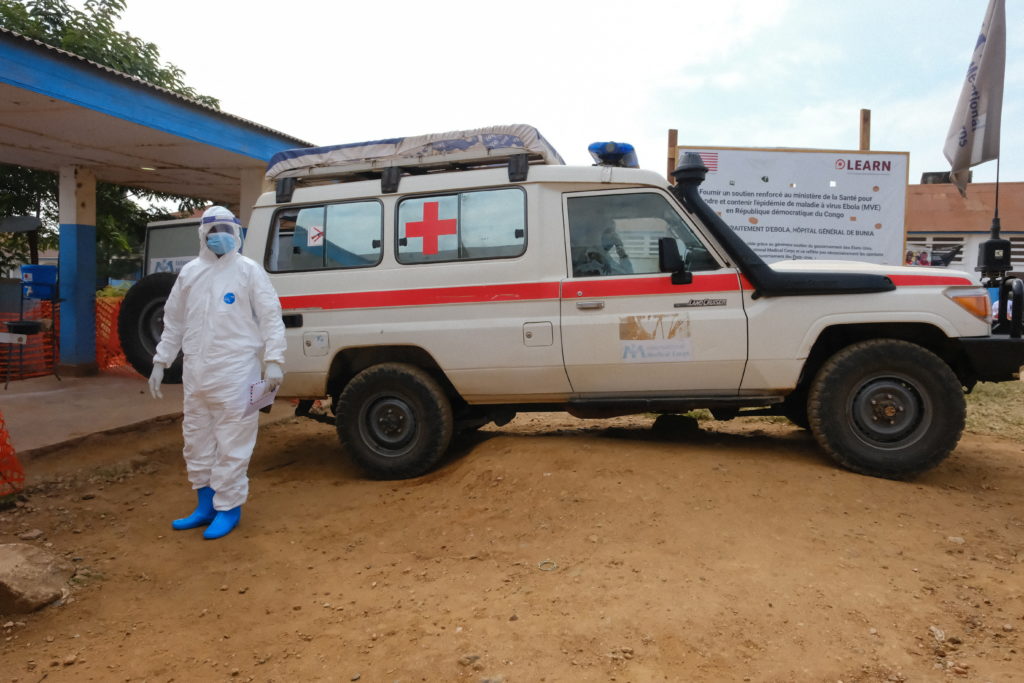
Congo has started vaccinating people against Ebola to fight its deadliest outbreak ever. The vaccine, Ervebo, is given first to health workers and those exposed to the virus, even though it is officially approved for a different Ebola strain.
Key Facts
Congo launched an Ebola vaccination campaign in Kisangani, eastern Congo.
Health workers and contacts of patients are the first to receive the vaccine.
The outbreak has affected six provinces, including Ituri, North Kivu, and Tshopo.
So far, there have been 5,713 confirmed cases and 2,744 deaths, nearly a 48% death rate.
The outbreak is spreading amid insecurity, displacement, health worker strikes, and population movement.
Over 50,000 doses of the Ervebo vaccine have arrived in Congo.
Ervebo vaccine is approved for the Zaire Ebola virus, but Congo’s outbreak is caused by Bundibugyo Ebola.
Ervebo is used under a special program, and its effectiveness against Bundibugyo Ebola is still being studied.
Read the Original
Want the full story? Tap a source to open the original
article.
Congo has started vaccinating people against Ebola to fight its deadliest outbreak ever. The vaccine campaign began in Kisangani, targeting health workers and people exposed to the virus to help slow the disease’s spread.
Key Facts
The vaccination campaign launched in Kisangani, Tshopo province, eastern Congo.
Health workers and frontline responders are the first to receive the Ervebo Ebola vaccine.
Congo has recorded 5,713 confirmed Ebola cases and 2,744 deaths so far, with a death rate of about 48%.
The outbreak affects six provinces, including Ituri, North Kivu, South Kivu, Tshopo, Haut-Uele, and Bas-Uele.
The World Health Organization says the outbreak is out of control and may exceed the 2014-2016 West Africa Ebola toll.
More than 50,000 doses of the Ervebo vaccine have been delivered; 70,000 doses have been approved for use.
Ervebo is approved for one type of Ebola (Zaire), but is being used to protect against Bundibugyo Ebola because no specific vaccine exists.
The vaccine is given under a special program that allows use in urgent situations despite not being fully approved for this specific virus.
A clinical trial is underway to see if Ervebo works against Bundibugyo Ebola during this campaign.
The vaccination campaign covers 14 health zones across three provinces: Tshopo, Bas-Uele, and Haut-Uele.
Read the Original
Want the full story? Tap a source to open the original
article.
Rohingya refugees in Malaysia face increasing hostility, including evictions and police raids on their community schools. Many Rohingya children cannot attend public schools and study in unlicensed centers that are now under threat, leading to fear and uncertainty in the community.
Key Facts
Over 126,000 Rohingya refugees live in Malaysia, making it the second-largest host country after Bangladesh.
Rohingya people are denied citizenship in Myanmar, their homeland, and face ethnic violence there.
The 2017 Myanmar military crackdown led to mass killings and forced many Rohingya to flee.
Rohingya children in Malaysia cannot attend public schools and rely on community-run learning centers.
These learning centers have faced police raids, causing some to close or operate under strict rules for safety.
Some Rohingya refugees were recently evicted from villages in Malaysia and temporarily detained.
Public opinion in Malaysia has shifted against Rohingya, increasing their vulnerability and isolation.
The Rohingya crisis is recognized internationally, with Myanmar facing a genocide case at the UN court.
Read the Original
Want the full story? Tap a source to open the original
article.
The film *The Dog Stars*, based on Peter Heller's novel and directed by Sir Ridley Scott, is a science fiction story set in a post-apocalyptic world after a deadly flu pandemic. Actor Jacob Elordi plays Hig, a pilot searching for hope in a ruined society, and the film explores themes like human survival, environmental damage, and appreciating everyday life.
Key Facts
*The Dog Stars* is a sci-fi film set in the 2030s after a pandemic leaves few survivors.
Jacob Elordi stars as Hig, a former mechanic and pilot, who flies over Colorado searching for safety.
The film also stars Guy Pearce, Margaret Qualley, and Josh Brolin.
The story shows abandoned cities and struggles for food and medicine, reflecting real-life pandemic experiences.
Elordi says the movie highlights how people often wonder what life is missing despite having basic needs met.
The film features images of environmental destruction like scorched lands and wildfires tied to climate change.
Both Elordi and Pearce have personal connections to areas affected by natural disasters in Australia.
The film offers hope by showing nature’s ability to regrow even after major devastation.
Read the Original
Want the full story? Tap a source to open the original
article.
A parasitic illness outbreak caused by cyclospora linked to recalled iceberg lettuce has now spread to 20 U.S. states, with more than 11,400 people sickened. Health officials are investigating lettuce from a farm in central Mexico operated by Taylor Farms and continue to test produce to prevent further illness.
Key Facts
Cyclospora cases have been confirmed in 20 U.S. states, including newly added Georgia, Tennessee, and Texas.
More than 11,400 people have fallen ill in this outbreak.
Two deaths linked to the outbreak were reported in Michigan, involving people with serious health problems.
The outbreak is connected to iceberg lettuce grown by Taylor Farms in central Mexico.
The FDA last inspected the Mexican farm seven years ago and is currently conducting more inspections and tests.
Cyclospora is a parasite that causes diarrhea and spreads through fecal contamination.
The CDC says about 17,180 cases of cyclospora have been confirmed in the U.S. this year, with 922 hospitalizations.
Illnesses from cyclospora are more frequent in late spring and summer and are less common than some other foodborne illnesses like salmonella.
Read the Original
Want the full story? Tap a source to open the original
article.
Dolly Parton gave the money she earned from Whitney Houston’s version of the song "I Will Always Love You" to help the Black community in Nashville. A local historian explained how she used these royalties to support and improve the lives of people in that community.
Key Facts
Dolly Parton wrote the song "I Will Always Love You."
Whitney Houston recorded a famous version of the song.
Dolly Parton earned royalties from Whitney Houston’s rendition.
She used this money to support the Black community in Nashville.
A Nashville historian, David Ewing, discussed this topic.
The story was featured on CBS News’ program "The Daily Report."
Read the Original
Want the full story? Tap a source to open the original
article.