Dolly Parton gave the money she earned from Whitney Houston’s version of the song "I Will Always Love You" to help the Black community in Nashville. A local historian explained how she used these royalties to support and improve the lives of people in that community.
Key Facts
Dolly Parton wrote the song "I Will Always Love You."
Whitney Houston recorded a famous version of the song.
Dolly Parton earned royalties from Whitney Houston’s rendition.
She used this money to support the Black community in Nashville.
A Nashville historian, David Ewing, discussed this topic.
The story was featured on CBS News’ program "The Daily Report."
Read the Original
Want the full story? Tap a source to open the original
article.
Kristina Wilfore, Director at Reset Tech, discusses a new report about the "Male Grievance Industry," which uses social media to exploit men's feelings of loneliness and economic worries. The report also highlights a trend called "looksmaxxing," an extreme focus on improving appearance online that gained billions of views from a small number of accounts.
Key Facts
The "Male Grievance Industry" is a business on social media targeting men by twisting their real-life pressures.
It takes advantage of men's desires to feel strong, loyal, and protective, which are often positive values.
This industry redirects those values to promote products or ideas.
Men’s loneliness, economic anxiety, and identity struggles are used to attract their attention online.
"Looksmaxxing" is a cosmetic-focused trend on social media aiming to improve appearance drastically.
In two years, just 216 accounts related to looksmaxxing generated 14.6 billion views.
The interview is part of BBC’s "The Interview" series shared on their World Service and as a podcast.
Marianna Spring and Matt Shea present the episode, with contributions from the Top Comment team.
Read the Original
Want the full story? Tap a source to open the original
article.
A DHL cargo plane caught fire after its tires blew out during landing in Los Angeles on Wednesday night. The incident caused damage but there is no information about injuries in the report.
Key Facts
The plane belongs to DHL, a cargo delivery company.
The plane’s tires blew out as it landed at night.
A fire broke out after the tire blowouts.
The landing took place in Los Angeles.
The report does not mention any injuries or casualties.
The incident was covered by CBS News.
Read the Original
Want the full story? Tap a source to open the original
article.
A large avalanche in Nepal caused landslides and floods near the China-Nepal border. More than 380 people have died, and over 1,400 people, including at least 60 Americans, are missing.
Key Facts
A glacial avalanche triggered landslides and flash floods along the China-Nepal border.
At least 380 people have died so far.
More than 1,400 people are reported missing after the disaster.
At least 60 Americans are among the missing.
The situation is ongoing, and the death toll is expected to rise.
The event has caused great concern for families waiting for news about their loved ones.
Read the Original
Want the full story? Tap a source to open the original
article.
A DHL cargo plane caught fire while landing at Los Angeles International Airport. Investigators have looked into the cause of the fire shown in a video of the incident.
Key Facts
The incident happened as the DHL cargo plane was landing at Los Angeles International Airport.
The plane burst into flames during the landing process.
A video captured the moment the fire started on the plane.
CBS News reported details about what caused the fire.
The specific cause of the fire was investigated by authorities.
No information was given about any injuries or damages beyond the fire.
Read the Original
Want the full story? Tap a source to open the original
article.
Hypermobility Spectrum Disorder (HSD) is a condition where joints move more than usual due to loose connective tissues, causing pain, fatigue, and other symptoms. Many people with HSD wait many years to get a diagnosis, and there is limited clinical guidance and specialist support available.
Key Facts
HSD causes joints to bend beyond the normal range because of weak connective tissue.
Symptoms include joint pain, fatigue, digestive problems, and clumsiness.
HSD and related conditions like hypermobile Ehlers-Danlos Syndrome (hEDS) affect connective tissues throughout the body.
People with HSD often wait around 19 to 22 years before receiving a diagnosis in the UK.
Women appear to be more affected by HSD and hEDS than men.
The UK’s health system lacks specific guidelines to diagnose HSD clearly.
Very few patients have GPs who actively manage the disorder or access to expert doctors.
Many diagnosed individuals learn about managing the condition through social media and community resources.
Read the Original
Want the full story? Tap a source to open the original
article.
Syrian President Ahmed al-Sharaa has appointed Mazloum Abdi, former leader of the Kurdish-led Syrian Democratic Forces (SDF), as a presidential advisor. This appointment follows the recent dissolution of the SDF and its integration into the Syrian military.
Key Facts
Mazloum Abdi led the Kurdish-led Syrian Democratic Forces (SDF), which recently dissolved.
The SDF has merged with the Syrian military as part of unifying the country.
President al-Sharaa issued Decree No 164 to appoint Abdi as an advisor to the presidency.
Earlier, al-Sharaa had offered Abdi higher positions, such as deputy defense minister and provincial governor.
The SDF's integration followed a ceasefire after government forces took key northeastern cities like Raqqa and Deir Az Zor.
The Syrian government recognized Kurdish as a national language and restored citizenship rights to Kurds for the first time since 1946.
The SDF was the largest armed group outside the Syrian army before this integration.
The SDF’s women’s units (YPJ) expressed interest in joining the military but were told the army has no units for women.
Read the Original
Want the full story? Tap a source to open the original
article.
A town in the UK called Middlesbrough is experiencing violence and fear after a crash and gang conflicts led to deaths and damage. Meanwhile, Nepal and Tibet are facing a disaster from flash floods caused by a glacier collapse, with many people missing and rescue efforts ongoing.
Key Facts
Middlesbrough had a crash on the A66 road last weekend that killed seven people.
The town is experiencing gang violence, a house fire that killed a woman and a child, and cars crashing into homes.
Hundreds of police officers have been sent to Middlesbrough to try to stop the violence.
Residents in Middlesbrough feel unsafe and afraid to leave their homes.
In Nepal and Tibet, flash floods caused by a collapsing glacier have led to at least 1,300 people missing.
Rescue teams are finding bodies far from the flood area, and there is a risk of another flood due to a fast-filling lake.
British citizens are among those missing in Nepal, and families are struggling to get information.
The international community is trying to provide help to the affected areas in Nepal and Tibet.
Read the Original
Want the full story? Tap a source to open the original
article.
Heavy flooding hit parts of Nepal and Tibet after a glacier collapsed in the Himalayas. This collapse released a large amount of water, mud, and debris that caused severe damage and destroyed communities.
Key Facts
The flooding occurred in the Himalayan region, affecting Nepal and Tibet.
Scientists say the disaster was probably caused by a glacier breaking apart.
The broken glacier released water, mud, and debris.
This sudden release caused a flood that swept away entire communities.
Experts like Dan Shugar from the University of Calgary are studying the disaster.
The event happened recently, with more details emerging a day later.
The waterSHED Lab at the University of Calgary focuses on water-related disasters.
Read the Original
Want the full story? Tap a source to open the original
article.
The article marks 250 years since the Battle of Brooklyn, where George Washington's Continental Army faced a major defeat during the Revolutionary War. Experts explain how this loss eventually helped the American forces win the war for independence.
Key Facts
The Battle of Brooklyn happened 250 years ago.
George Washington led the Continental Army in this battle.
The battle was a significant defeat for the American forces.
Despite this loss, it helped lead to America's final victory in the Revolutionary War.
Lindsay Chervinsky, head of the George Washington Presidential Library, discusses the battle's importance.
The Revolutionary War was fought for American independence from Britain.
The article uses historical reflection to understand the event’s long-term effects.
Read the Original
Want the full story? Tap a source to open the original
article.
Armed gangs in Haiti killed 47 people and kidnapped more than 50 in an attack near the capital, Port-au-Prince. The national police face criticism for not stopping gang violence, which has increased since the 2021 assassination of President Jovenel Moise and the country’s ongoing political instability.
Key Facts
On August 23, gangs attacked Kenscoff, killing 47 people and kidnapping over 50.
Police say they have no clear plans yet to respond to the mass kidnapping.
One gang leader threatened to kill all hostages if police kill any gang members.
An estimated 70% of Port-au-Prince is controlled by gangs.
Since Moise’s assassination in 2021, Haiti has lacked national elections and political stability.
More than 3,050 people were killed by violence in Haiti between January and June 2023, according to the UN.
Over 1.5 million people have been displaced by gang clashes across the country.
A UN-backed Gang Suppression Force began arriving in Haiti in April to fight gang violence but has had limited success so far.
Read the Original
Want the full story? Tap a source to open the original
article.
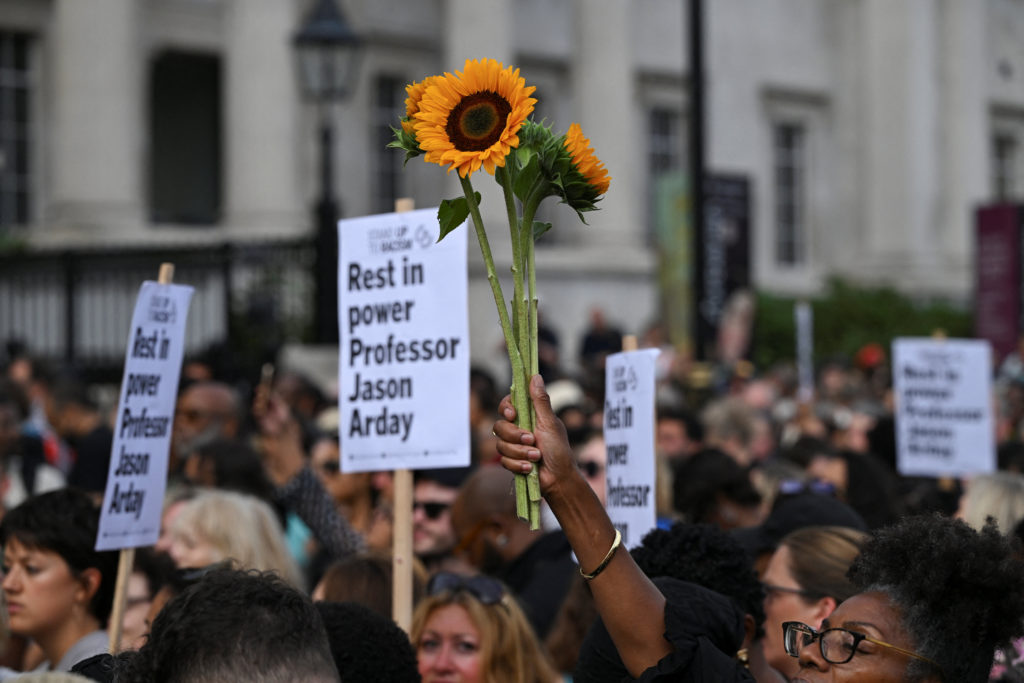
Jason Arday, the youngest Black professor at Cambridge University, died at age 41 after intense media scrutiny over accusations about his academic work and personal claims. His memoir, "Great and Unfortunate Things," was published shortly after his death and shares his personal story, including challenges he faced as an autistic child and his career achievements.
Key Facts
Jason Arday was an autistic child who was non-verbal and illiterate until his late teens.
He became the youngest Black professor in Cambridge University's history.
Arday faced allegations including plagiarism and exaggerating athletic and fundraising achievements.
Cambridge initially defended him but later launched an investigation into his qualifications.
Arday died on August 14, 2024, shortly after the investigation and media coverage intensified.
His memoir was published in the UK and U.S., following his family's wishes.
The memoir aims to share Arday’s side of the story amid public controversy.
His family asked the media to respect their privacy while they grieve.
Read the Original
Want the full story? Tap a source to open the original
article.
Ratko Mladic, a Bosnian Serb general convicted of genocide and crimes against humanity during the 1992-1995 Bosnian War, has died while serving a life sentence. His death does not end the impact or memory of the crimes for survivors and victims’ families.
Key Facts
Ratko Mladic was a Bosnian Serb general during the war in Bosnia and Herzegovina from 1992 to 1995.
He was convicted of genocide and crimes against humanity.
Mladic received a life sentence for these crimes.
He died while serving this life sentence.
The war involved severe violence and atrocities, leading to many victims.
Survivors and families of victims continue to feel the effects of the war and Mladic’s actions.
His death does not officially close the history or consequences of the war crimes.
Read the Original
Want the full story? Tap a source to open the original
article.
Dolly Parton passed away at 80 after a short fight with cancer. Her sister said Dolly was willing to try experimental treatments if there was no hope, hoping to help others in the future.
Key Facts
Dolly Parton died after a brief battle with cancer at age 80.
She told her sister she would try experimental drugs if conventional treatments failed.
Dolly was known for her kindness and charitable work, including education and health donations.
She founded the Dollywood Foundation to improve education and created a program that gives free books to children.
In 2020, she donated $1 million to COVID-19 research, aiding vaccine development.
Dolly grew up poor in rural Tennessee as one of 12 children.
Her sister Stella said they had weekly coffee meetings and praised Dolly’s generous nature.
Politicians and celebrities, including President Donald Trump, expressed sadness and respect after her death.
Read the Original
Want the full story? Tap a source to open the original
article.
The governor of Kherson, a city in southern Ukraine, has urged residents to leave due to intense Russian attacks. These attacks have damaged a heating plant and threaten long-term electricity and heating outages in the area.
Key Facts
Kherson has about 280,000 people and faces heavy Russian attacks.
Russian strikes hit a district heating plant in Kherson with glide bombs.
There is a risk of long-lasting power and heating outages in the city.
The governor advised families, especially those with children and elderly, to evacuate if possible.
Russian forces are positioned across the Dnipro river and often shell Kherson.
Neither Ukraine nor Russia currently can stop these glide bombs or drones effectively.
Russian attacks have increasingly targeted civilian infrastructure in Ukraine.
Kherson was under Russian control from March to November 2022 before being retaken by Ukraine.
Read the Original
Want the full story? Tap a source to open the original
article.
Latvia’s foreign minister spoke about concerns over possible Russian sabotage activities targeting Europe. Latvia, which was once occupied by the Soviet Union, is now part of NATO, a group of countries working together to protect against threats like Russia.
Key Facts
Latvia was occupied by the Soviet Union for about 50 years.
Latvia is a member of NATO, the North Atlantic Treaty Organization.
NATO is an alliance formed to defend member countries from outside threats.
Latvia shares a border with Russia.
The Latvian foreign minister warned about Russian sabotage in Europe.
The interview took place after a week of active diplomatic discussions.
Many European countries that were once under Soviet control remain concerned about Russian actions.
Read the Original
Want the full story? Tap a source to open the original
article.
The ceasefire between Israel and Hamas in Gaza is fragile, with ongoing Israeli attacks causing concern. Life in Gaza remains very difficult, and even small activities like flying a kite create fear for people on both sides of the border.
Key Facts
The ceasefire between Israel and Hamas is currently under pressure and unstable.
Israeli strikes have continued despite the ceasefire efforts.
The head of the U.S.-supported Board of Peace criticized the ongoing Israeli attacks.
Simple activities, like flying a kite, cause fear because of the conflict’s tensions.
Ordinary people in Gaza are living through very challenging and unusual conditions.
The article focuses on how youth in Gaza are coping amid the destruction and trauma.
The situation reflects broader problems caused by the conflict between Israel and Hamas.
Read the Original
Want the full story? Tap a source to open the original
article.
The Mayo Clinic is using art activities alongside regular medical treatments to help people with Alzheimer’s and dementia. They believe engaging in the arts can improve the care and well-being of these patients.
Key Facts
The Mayo Clinic is a well-known medical institution.
Alzheimer’s and dementia are diseases that affect memory and thinking.
Traditional treatments focus on medicine and therapy.
The Mayo Clinic adds arts activities to support patients.
Art can include music, painting, or other creative methods.
This approach aims to improve patients’ quality of life.
The information comes from a special report in a health and arts series called CANVAS.
Read the Original
Want the full story? Tap a source to open the original
article.
Syria’s President Ahmed al-Sharaa has appointed Kurdish leader Mazloum Abdi as an adviser to the presidency. This follows the recent dissolution of the Kurdish-led Syrian Democratic Forces (SDF) as part of a deal to integrate Kurdish forces into the Syrian army and government.
Key Facts
Mazloum Abdi was the head of the Kurdish-led Syrian Democratic Forces (SDF).
The SDF was dissolved as part of an agreement with the Syrian government to integrate Kurdish forces into the Syrian army.
President Ahmed al-Sharaa appointed Abdi as an adviser to the presidency.
The integration deal marks an end to Kurdish hopes for official autonomy in Syria.
Kurdish language has been officially authorized for instruction in Syrian schools, a historic first since Syria's independence.
The SDF was originally formed in 2015 with U.S. support to fight the Islamic State group.
The deal follows clashes earlier in 2026 where Kurdish forces lost territory to government troops.
U.S. special envoy Tom Barrack praised the integration deal as a diplomatic step to strengthen Syria’s sovereignty.
Read the Original
Want the full story? Tap a source to open the original
article.