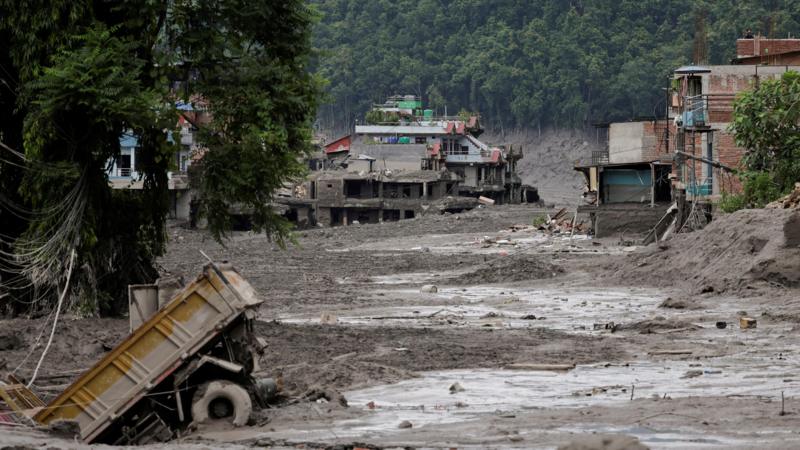
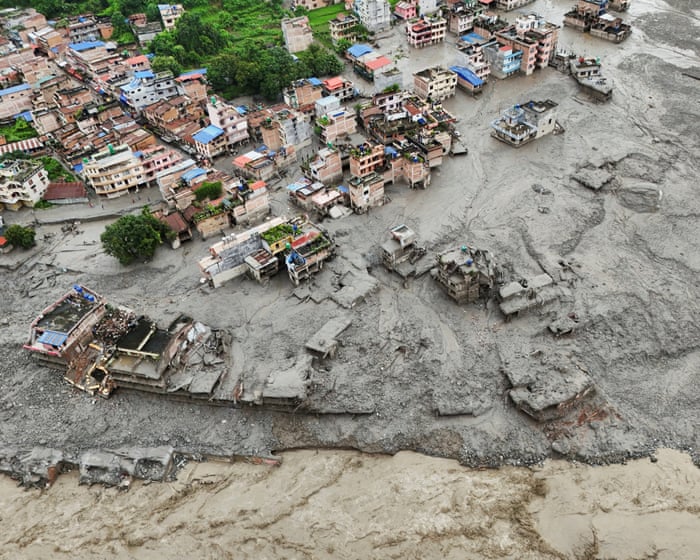
Flash floods and mudslides struck the Rasuwa region near the Nepal-Tibet border, causing at least 160 deaths and leaving hundreds of tourists missing, including 33 from the UK. Rescue efforts continue amid harsh conditions, and several tour groups have lost contact with guests and guides in the affected area.
Key Facts
At least 157 people died in Nepal and 3 in Tibet due to the floods and mudslides.
Nepal police report 579 tourists missing; 466 of them are foreign nationals from 28 countries.
Among the missing are 33 UK nationals, 54 Americans, and 113 Nepalese tourists.
Several tour companies, including Alpine Eco Trek, Himalayan Glacier US, and Kailash Journeys, lost contact with groups traveling in the area.
The youngest missing British citizen is a 13-year-old girl.
Poor weather has prevented rescue helicopters from flying to the area.
The UK Foreign Office and British Prime Minister Andy Burnham are in contact with Nepalese authorities to support those affected.
The flash floods likely resulted from a glacial collapse and debris flow, causing a seismic event with a magnitude of 5.2.
Read the Original
Want the full story? Tap a source to open the original
article.
Fourteen babies died in a fire at the Institute of Medical Sciences in Islamabad, Pakistan. Families have started funerals and are asking questions about why hospital staff and emergency services did not help the infants more quickly.
Key Facts
A fire occurred at the Institute of Medical Sciences in Islamabad.
Fourteen babies were killed in the fire.
Funerals for the babies have begun.
Parents and families have voiced anger and sorrow over the loss.
Families accuse hospital staff of not properly assisting the infants.
Emergency services are also blamed for abandoning the babies.
The incident has caused public grief and demand for answers.
Read the Original
Want the full story? Tap a source to open the original
article.
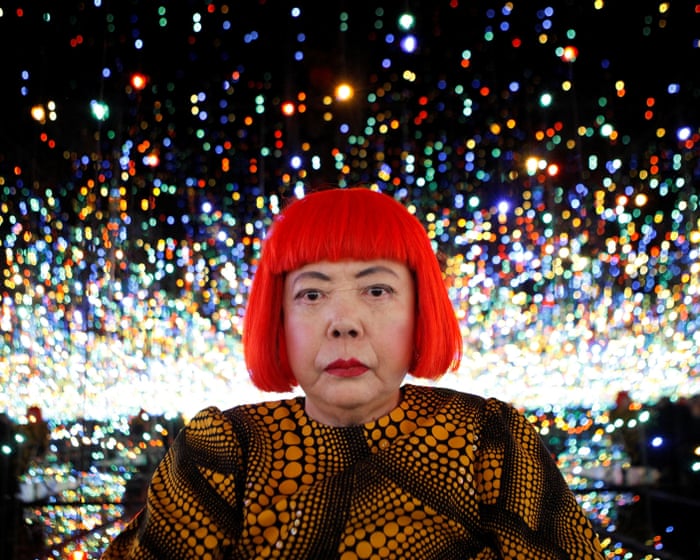
Japanese artist Yayoi Kusama, famous for her polka dot art and avant-garde style, died in Tokyo at age 97. She created art inspired by her hallucinations and mental health struggles and worked actively for many decades.
Key Facts
Yayoi Kusama died on August 14, 2026, in Tokyo at the age of 97.
She was known as the “polka dot queen” for her signature use of dots and nets in art.
Kusama’s work included paintings, sculptures, performances, fiction, and poetry.
She began creating her unique art style at age 10, inspired by hallucinations.
Kusama moved to the U.S. in the late 1950s and became part of New York’s avant-garde scene.
She returned to Japan in the 1970s and lived in a psychiatric hospital while continuing to produce art.
Her works, including pumpkin sculptures and immersive installations, attracted many visitors and sold for millions.
Kusama described her art as a way to express a philosophy called "self-obliteration," using repeated patterns to symbolize losing the self.
Read the Original
Want the full story? Tap a source to open the original
article.
Yayoi Kusama, a famous Japanese artist known for her polka dot designs and unique art style, died at age 97. She worked as an artist for many decades, creating paintings, sculptures, and immersive installations that gained worldwide recognition.
Key Facts
Yayoi Kusama was known as the "polka dot queen" for her artwork featuring dots, nets, and infinity themes.
She was born in 1929 and started creating her signature art at age 10.
Kusama experienced visions and hallucinations from childhood, which inspired her art style.
She moved to the United States in the late 1950s and became part of the New York avant-garde art scene.
Kusama returned to Japan in the 1970s and lived in a psychiatric hospital, where she continued to create art.
Her works, including pumpkin sculptures and infinity rooms, attracted many visitors and sold for millions of dollars.
Kusama also started a fashion line and founded the "Church of Self-Obliteration."
She died on August 14, 2026, in a Tokyo hospital.
Read the Original
Want the full story? Tap a source to open the original
article.
A new sauna theatre has opened at the Edinburgh Fringe Festival, offering performances inside a heated sauna where audiences wear swimwear. The shows mix traditional sauna rituals with storytelling, music, and theater, creating a unique cultural experience.
Key Facts
The sauna theatre seats 80 people and heats the air to about 90°C (194°F).
Audiences watch performances while sitting in swimwear inside the sauna.
The venue features shows including traditional sauna rituals called aufguss, music, storytelling, and adaptations of works like Virginia Woolf’s The Waves.
Nudity is not allowed; visitors are reminded to bring swimwear or can borrow it at the venue.
The sauna theatre is the first of its kind in the UK but similar venues exist in countries like Japan, Germany, and Italy.
Shows include breaks and options for audience members to leave or take cold plunges.
The sauna space includes showers and hairdryers so visitors can freshen up afterward.
Organizers plan to return with the sauna theatre for the next festival to develop more performances.
Read the Original
Want the full story? Tap a source to open the original
article.
Forty children who went missing from UK hotels housing asylum seekers have not been found, according to a parliamentary report. The government is being asked to explain what actions it is taking to locate these children and prevent others from going missing.
Key Facts
Forty children remain missing after leaving hotels where asylum seekers were housed in the UK.
Two of the missing children are believed to be under 18 years old.
Over 440 unaccompanied asylum-seeking children went missing in 2023, some as young as 12.
The Home Office has issued guidance to police and local agencies to help find the missing children.
The High Court ruled in 2023 that using hotels to house lone child asylum seekers was unlawful.
Some children found were in exploitative or trafficked situations, according to a former asylum minister.
A parliamentary committee demands regular updates on efforts to find missing children and improve protections.
A government watchdog gave the UK its lowest rating for failing to protect asylum seekers’ rights, criticizing cuts to support programs.
Read the Original
Want the full story? Tap a source to open the original
article.
Yayoi Kusama, a famous Japanese artist known for her polka dot designs, died at age 97 in Tokyo. She created paintings, sculptures, and large art displays that became popular worldwide and continued painting until the end of her life.
Key Facts
Yayoi Kusama died on August 14 at a hospital in Tokyo.
She was 97 years old.
Kusama’s art featured repetitive patterns, especially polka dots, which she said came from how she saw the world.
She struggled with mental health issues and spent time in psychiatric hospitals but kept making art.
Kusama moved to New York in 1957, one of the first Japanese women artists to do so.
Her works were shown in major museums like the Museum of Modern Art and the Whitney Museum in New York.
Kusama collaborated with fashion brands like Louis Vuitton and licensed her designs for items like teacups and clothing.
She received Japan’s Order of Culture award in 2016, the country’s highest artistic honor.
Read the Original
Want the full story? Tap a source to open the original
article.
South Korean police are seeking to charge seven transport ministry officials for falsifying documents related to the 2024 Jeju Air crash that killed 179 people. The crash happened when the plane’s landing gear failed to deploy, and authorities found bird strikes on the engines as well as concerns about a concrete structure at the airport.
Key Facts
The Jeju Air Boeing 737-800 crashed at Muan International Airport in South Korea in 2024.
Out of 181 people on board, 179 died; only two survived.
The plane’s landing gear did not deploy properly, causing it to skid off the runway and hit a concrete structure.
Bird strikes were found in the plane’s engines, which may have contributed to the crash.
The concrete structure, which housed antennas to guide landings, may have contributed to the accident because it was made of hard materials.
Police say seven transport officials falsely claimed the antennas met all safety rules.
Charges against the officials could lead to up to seven years in prison if convicted.
Police are also investigating around 70 others linked to the airport operations and antenna installation.
Read the Original
Want the full story? Tap a source to open the original
article.
A large flood caused by a glacier collapse hit the border area between Nepal and Tibet, killing at least 165 people and leaving many more missing. Rescue teams are working to find survivors, including dozens of foreign tourists and pilgrims.
Key Facts
A glacier collapsed triggering a powerful flood that destroyed villages in Nepal and Tibet.
At least 165 bodies were found, and hundreds more people are missing.
Missing people include tourists and pilgrims from India, the US, UK, Australia, Canada, and other countries.
The flood struck near the Nepal-China Rasuwagadhi border crossing in the Himalayas.
Early reports of an earthquake were corrected; the shaking was caused by the glacier collapse itself.
Helicopters are being used to rescue survivors trapped by mud and debris.
The area is popular with pilgrims visiting the sacred Kailash Mansarovar site.
The United Nations and international groups are providing aid to the disaster area.
Read the Original
Want the full story? Tap a source to open the original
article.
Yayoi Kusama, a famous Japanese artist known for her polka dot artwork, died at age 97 in Tokyo. She continued painting until her last days and was celebrated worldwide for her unique style that used repeated dots and shapes.
Key Facts
Yayoi Kusama died on August 14, 2026, in a Tokyo hospital at the age of 97.
Kusama was known for using polka dots and repetitive patterns in her paintings, sculptures, and installations.
She continued to create art throughout her life, working actively until her final days.
Kusama experienced hallucinations since childhood and spent time in psychiatric institutions but kept painting.
She moved to New York in 1957, becoming one of the first Japanese women artists in the city, despite initial poverty.
Kusama’s work was shown in major museums like the Museum of Modern Art and the Whitney Museum in New York.
She collaborated with fashion brands, such as Louis Vuitton, and her art appeared on various products.
In 2016, Japan honored her with the Order of Culture, its highest award for artists.
Read the Original
Want the full story? Tap a source to open the original
article.
Yayoi Kusama, a famous Japanese artist known for her polka dot designs on paintings and sculptures, died at age 97 in Tokyo. She continued to paint until her last days and was widely recognized around the world for her work.
Key Facts
Kusama died on August 14 at a hospital in Tokyo.
She was 97 years old.
Kusama’s art featured repetitive patterns, especially polka dots.
She had hallucinations from childhood, which inspired her polka dot designs.
Kusama worked in New York starting in 1957 and was one of the first Japanese women artists there.
Her work appeared in major museums like the Museum of Modern Art in New York.
She collaborated with brands such as Louis Vuitton later in life.
Kusama won Japan’s Order of Culture award in 2016, the country's top honor for artists.
Despite mental health challenges, she was dedicated to her art until the end.
Read the Original
Want the full story? Tap a source to open the original
article.
A small plane crashed into shallow water near the remote coastal town of Seldovia, Alaska, shortly after takeoff. Rescue teams waited for the tide to go out before reaching the plane, which was submerged about 15 feet underwater.
Key Facts
The crash happened next to Seldovia, a small town about 136 miles southwest of Anchorage.
The plane was a Piper PA-24-260, which can carry between one and four people.
Authorities did not immediately know how many people were on board or if there were any survivors.
The plane crashed into the Seldovia Slough, a shallow water area near the shore.
State troopers waited for the tide to recede to reach the aircraft.
The National Transportation Safety Board (NTSB) is investigating the crash.
A separate plane crash occurred less than a week earlier at a remote site in western Alaska, killing all eight people aboard.
That previous crash happened during poor visibility due to heavy fog.
Read the Original
Want the full story? Tap a source to open the original
article.
CIA Director John Ratcliffe visited Moscow to warn Russia against attacking NATO countries. He also discussed concerns about Iran during his meetings with Russian officials. President Donald Trump confirmed the trip and described it as "semi-routine."
Key Facts
CIA Director John Ratcliffe traveled to Moscow earlier this week.
The main purpose was to warn Russia not to attack NATO countries. NATO is a group of countries that work together for defense.
Ratcliffe also raised issues related to Iran during his talks.
President Donald Trump confirmed the visit in an interview but called it "semi-routine."
A spokesman for Russian President Vladimir Putin said Ratcliffe spoke with Russian intelligence but did not meet Putin.
The CIA did not officially comment on the trip.
The Wall Street Journal was the first to report on the trip’s purpose.
Read the Original
Want the full story? Tap a source to open the original
article.
Qatar’s Prime Minister Sheikh Mohammed bin Abdulrahman will visit Tehran to meet Iranian officials and discuss lowering tensions and restarting talks between Iran and the United States. The visit aims to support diplomacy as the best way to solve regional problems and comes amid ongoing conflict and stalled agreements between Iran and the U.S.
Key Facts
Sheikh Mohammed bin Abdulrahman, Qatar’s Prime Minister and Foreign Minister, is visiting Tehran for diplomatic talks.
The talks will focus on reducing tensions and creating conditions for renewed Iran-U.S. dialogue.
Qatar has acted as a mediator between the U.S. and Iran, helping to secure a June agreement that paused fighting but collapsed in July.
The U.S., led by President Donald Trump, plans to increase economic sanctions on Iran and is not rushing to resume negotiations.
Iran calls the new sanctions “economic terrorism” and asks the UN not to enforce them, stating they harm civilians’ basic needs.
Control over the Strait of Hormuz, a key global oil route, remains a major disagreement between Iran and the U.S.
Oil shipments through the strait have dropped significantly since the conflict began in February.
Oman and Pakistan have also engaged in recent talks with Iran to try to ease the situation.
Read the Original
Want the full story? Tap a source to open the original
article.
A glacial collapse in Tibet caused mudslides that left more than 550 people missing. At the same time, flash floods in Nepal’s border area killed at least 162 people and left hundreds more missing, damaging homes and roads.
Key Facts
Mudslides in Tibet on August 26, 2026, resulted from a glacial collapse.
Over 550 people are missing in Tibet after the mudslides.
Flash floods struck Nepal’s Nuwakot district and nearby areas along the border with China.
At least 162 people died in Nepal due to the flash floods.
Hundreds of people, including tourists and workers, are missing in Nepal.
The floods and mudslides destroyed roads, buried buildings, and damaged vehicles.
The affected region has steep valleys that are important for travel and local economy.
Rescue efforts are ongoing amid difficult conditions caused by the natural disasters.
Read the Original
Want the full story? Tap a source to open the original
article.
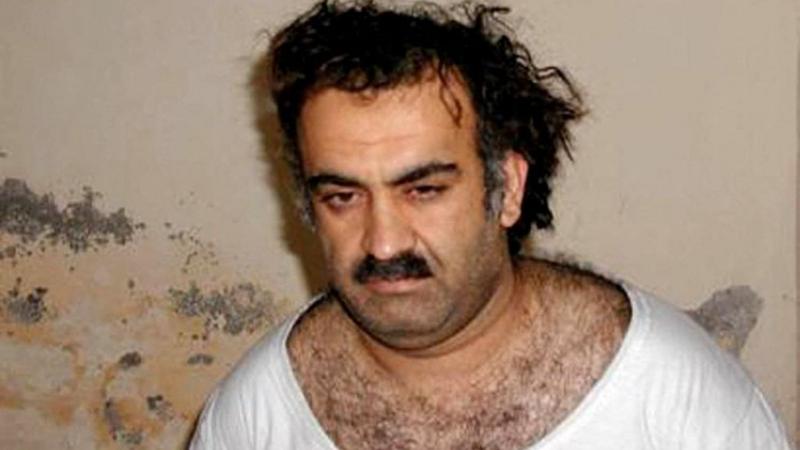
Khalid Sheikh Mohammed, accused of planning the 2001 9/11 attacks, will have his trial in June 2028. A military judge delayed the trial by a year from prosecutors’ original request to allow more time to prepare.
Key Facts
Khalid Sheikh Mohammed is charged with masterminding the 9/11 attacks in 2001.
The attacks killed about 3,000 people and involved hijacked planes hitting the World Trade Center and the Pentagon.
Mohammed was captured in Pakistan in 2003 and held at Guantanamo Bay since 2006.
A military judge set the trial start date for June 5, 2028.
The trial delay gives more time to settle legal issues, including what evidence can be used.
Mohammed had agreed to plead guilty to avoid the death penalty, but a court rejected this deal in 2023.
Three alleged accomplices will stand trial with Mohammed: Walid bin Attash, Ali Abdul Aziz Ali, and Mustafa al-Hawsawi.
The Guantanamo Bay prison continues to hold around 15 detainees related to terrorism cases.
Read the Original
Want the full story? Tap a source to open the original
article.
Palestinians held a public funeral for Sliman Mansour, a well-known artist, in the occupied West Bank after he died at age 79. Mansour was known for his important contributions to Palestinian art, including the famous painting called "Camel of Hardship."
Key Facts
Sliman Mansour died at the age of 79.
He was a leading figure in Palestinian art.
Mansour created "Camel of Hardship," a famous painting in the Arab world.
His funeral took place in the occupied West Bank.
Many Palestinians attended to mourn and honor him.
Mansour’s work highlighted Palestinian culture and experiences.
The report was filed from Birzeit in the occupied West Bank.
Read the Original
Want the full story? Tap a source to open the original
article.
Yayoi Kusama, a Japanese artist known for her bright, colorful art and installations, died at age 97 in Tokyo. She created many styles of art throughout her life, including painting, sculpture, and performance, and became famous worldwide for her unique work with polka dots and mirrored rooms.
Key Facts
Kusama was born in Japan in 1929 and experienced hallucinations as a child, which influenced her art.
She moved to New York in 1958 and became known for her "infinity net" paintings featuring repeated dot patterns.
Kusama created "soft sculptures" in the 1960s to deal with personal feelings about sex and shame.
She staged performance art events during the 1960s that gained attention and controversy.
Kusama’s art inspired many artists, though she felt her contributions were overlooked by the mainstream art world.
She lived in a psychiatric hospital later in life but continued to paint until her death.
Kusama's works have sold for millions at auction, setting records for living female artists.
Her signature style includes bright colors, polka dots, and immersive mirrored installations.
Read the Original
Want the full story? Tap a source to open the original
article.
The Brazilian government sued the chat platform Discord for $97 million, accusing it of not protecting children and teenagers on its service. The lawsuit follows a tragic case where a 13-year-old girl livestreamed her suicide after being pressured, leading Brazil to demand better safety measures.
Key Facts
Brazil filed a $97 million lawsuit against Discord for failing to protect young users.
The lawsuit asks Discord to improve protections for children, teens, and women online.
Discord said the lawsuit is too harsh and that it follows Brazil’s laws.
A 13-year-old girl in Brazil livestreamed her suicide after being bullied by other teens on Discord.
Four teenagers and one adult were arrested related to the girl's death.
Brazil’s National Data Protection Agency ordered Discord to stop livestreaming on August 12.
Discord announced it would stop some streaming services and work to make the platform safer for teens.
Brazil also fined TikTok $30 million recently for violations of child privacy laws.
Read the Original
Want the full story? Tap a source to open the original
article.
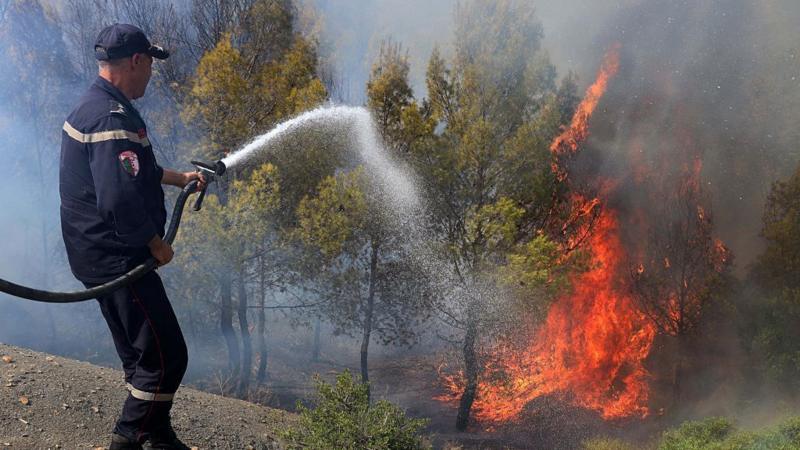
At least 12 people have died and many others have been injured as wildfires spread across northern Algeria. The fires are happening during a strong heatwave affecting northern Africa, and firefighters are working hard to control dozens of blazes in several provinces.
Key Facts
At least 12 people died due to wildfires in northern Algeria.
Dozens of people have burn injuries; six are in intensive care.
The worst-hit provinces are Jijel (5 deaths), Bejaia (4 deaths), and Tizi Ouzou (3 deaths).
Authorities evacuated many homes in the affected areas.
Firefighters are battling 69 fires across the country as of Wednesday evening.
Algeria has had severe wildfires before, including a deadly event in Bejaia three years ago.
Climate change is making wildfires worse by increasing temperatures across North Africa.
The World Meteorological Organization says North Africa is warming faster than other parts of Africa.
Read the Original
Want the full story? Tap a source to open the original
article.