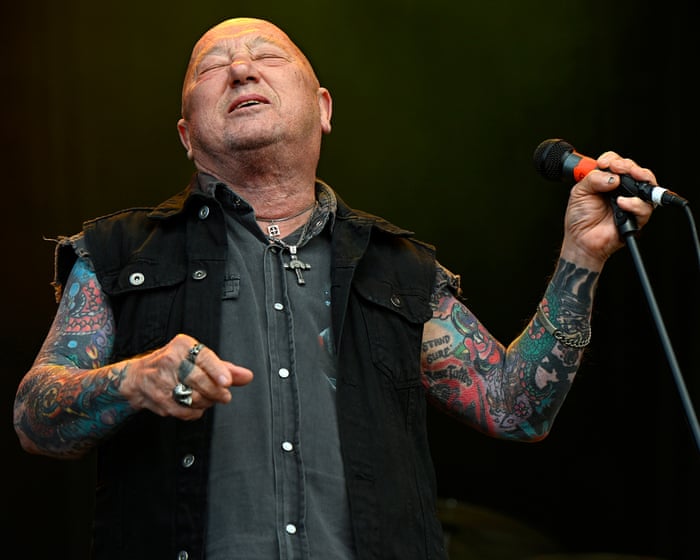
Angry Anderson, the lead singer of the Australian rock band Rose Tattoo, has died at age 79. He passed away after being hospitalized in Germany due to a cardiac arrest while on tour.
Key Facts
Angry Anderson was 79 years old when he died.
He was the frontman of the rock band Rose Tattoo.
Anderson was hospitalized after suffering a cardiac arrest during a tour in Germany.
He grew up in Melbourne and was a founding member of a motorcycle club called the Vigilanties.
Before Rose Tattoo, he was part of the band Buster Brown.
Rose Tattoo formed in Sydney in 1976 and became known for their loud and aggressive rock music.
Their first album came out in 1978, with hits like "Bad Boy for Love" and "Rock ’n’ Roll Outlaw."
The band was more popular overseas, especially in the UK, than in mainstream Australia.
Anderson later became known for acting and youth advocacy work in Australia.
Read the Original
Want the full story? Tap a source to open the original
article.
At least 11 people were killed in a mass shooting at a house in a township near Durban, South Africa. Gunmen attacked a party, opening fire on 14 people before fleeing the scene.
Key Facts
The shooting happened in KwaMakhutha township near Durban.
Gunmen opened fire on a group of 14 people at a house party.
Ten people died immediately; one more died later in the hospital.
Among the dead was a woman believed to be pregnant.
Police suspect a possible feud between rival groups but have not confirmed the motive.
The attackers also set fire to a car belonging to one of the victims.
South Africa has a very high murder rate, with over 60 murders reported daily.
Recent events include the discovery of murdered women and other mass shootings in the country.
Read the Original
Want the full story? Tap a source to open the original
article.
Top Iranian and US officials met at the United Nations in New York for talks, the first since their ceasefire broke down in June. President Donald Trump warned that if no deal is reached, he could "annihilate" Iran, while both sides exchanged conditions and ongoing disputes remain unresolved.
Key Facts
US and Iran officials held talks at the UN in New York, mediated by Qatar.
The meeting included Iran’s foreign minister Abbas Araghchi and US envoy Steve Witkoff.
This was the first direct contact since a ceasefire ended in June.
President Trump said he might "annihilate" Iran if no peaceful deal is made.
The US and Israel attacked Iranian targets in February, leading to Iranian retaliation.
Iran blocked the Strait of Hormuz, a key route for 20% of the world’s oil supply, causing price fluctuations.
Iran demands that the US stop what it calls “acts of aggression.”
The US maintained a naval blockade of Iranian ports, hurting Iran’s economy and increasing tensions.
Read the Original
Want the full story? Tap a source to open the original
article.
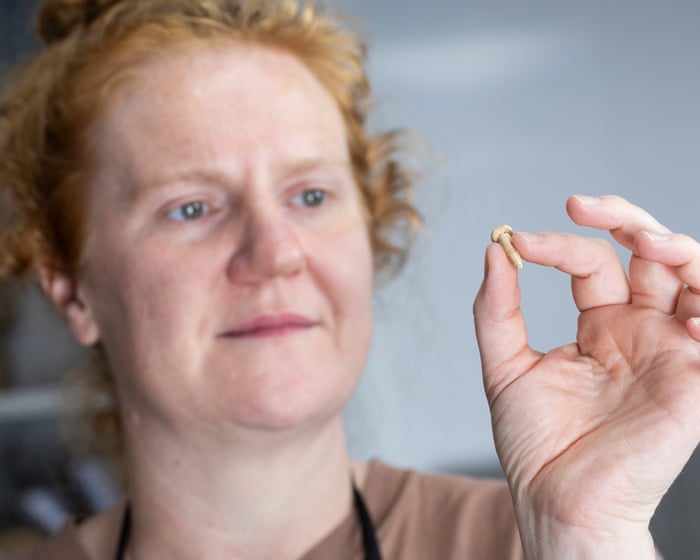
Archaeologists found Roman ditches and many objects like pottery and coins beneath the Bath Assembly Rooms in Bath, England. These discoveries show that ordinary Roman people lived in this northern part of the city, expanding knowledge of the Roman settlement near the famous baths.
Key Facts
Roman ditches with pottery, coins, glass, animal bones, and part of a military helmet were found under the Bath Assembly Rooms.
The finds show that Roman occupation in Bath was larger than previously thought.
The area likely housed everyday people living in a suburb, with wealthier individuals in villas on nearby hills.
The Bath Assembly Rooms were built in the late 1700s with shallow foundations, preserving the Roman remains underground.
Bath’s Roman baths were built around natural hot springs and called Aquae Sulis, attracting many visitors seeking healing.
The restoration of the Georgian building revealed not only Roman artifacts but also items from the 18th-century social life, like wig curlers and wine bottles.
Experts believe more Roman remains may be found under nearby Georgian buildings and streets.
The military helmet fragment suggests soldiers helped build the settlement.
Read the Original
Want the full story? Tap a source to open the original
article.
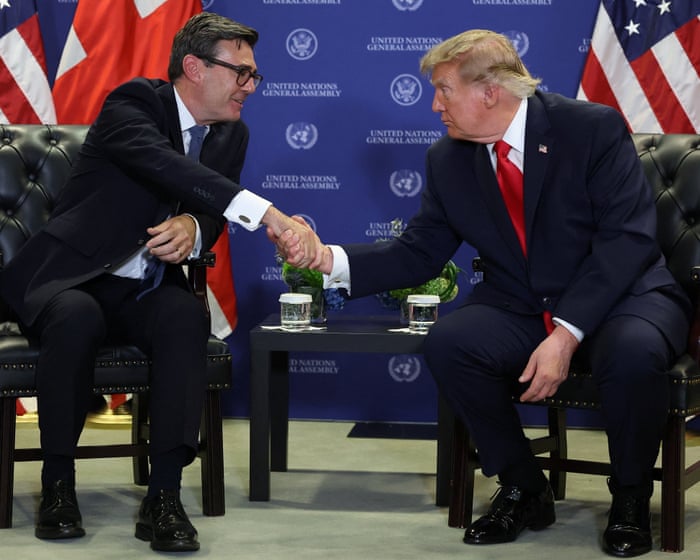
UK Prime Minister Andy Burnham visited New York to meet President Donald Trump during the UN General Assembly. Despite previous tensions, their meeting was friendly, but Burnham faces challenges in managing relations with Trump’s administration, especially given the rise of far-right politics linked to US policies.
Key Facts
Andy Burnham traveled to New York for a face-to-face meeting with President Trump at the UN General Assembly.
President Trump had previously called Burnham a mayor of “a town,” referring dismissively to Manchester.
The meeting was described as relaxed, with some minor awkward moments.
Burnham’s wife, Marie France, attended a spouses’ lunch with First Lady Melania Trump.
President Trump called on countries to unite against Iran and criticized global energy prices.
Trump’s foreign policy includes controversial moves: weakening international alliances like NATO, reducing the US State Department, and pursuing “America first” policies.
His administration’s national security strategy openly supports far-right groups in Europe.
UK politicians, including Burnham and foreign secretary Ed Miliband, face difficult decisions on how to handle relations with the US amid these developments.
Read the Original
Want the full story? Tap a source to open the original
article.
President Donald Trump met with leaders from the Shield of the Americas coalition in New York City to plan a joint fight against drug cartels in the Western Hemisphere. The coalition agreed to impose sanctions and pursue criminal charges against 24 criminal groups labeled as common threats, including major gangs and cartels from Central and South America.
Key Facts
President Trump called for using strong military power against drug cartels in the Western Hemisphere.
The Shield of the Americas coalition includes 15 governments aligned with Trump, such as Argentina, Ecuador, El Salvador, Colombia, and Peru.
The coalition aims to impose asset freezes, visa bans, and criminal charges on members of 24 criminal organizations.
Top groups targeted include Mara Salvatrucha (MS-13) and Tren de Aragua, plus major Mexican, Brazilian, Colombian, and Peruvian gangs.
Some countries in the coalition need to pass local laws to enforce these measures, so effects may take time.
US Secretary of State Marco Rubio praised new leaders committed to fighting transnational terrorism.
President Trump has designated drug cartels as foreign terrorist organizations and ordered strikes on narcotics-carrying boats, actions criticized by UN experts.
Brazil and Mexico have not joined the coalition and Brazilian President Lula spoke out against US dominance in the region.
Read the Original
Want the full story? Tap a source to open the original
article.
World leaders gathered at the United Nations to discuss key issues like the risks of artificial intelligence and the ongoing war involving Iran. Iranian President Massoud Pezeshkian spoke at the UN for the first time since attacks by the US and Israel escalated the conflict, while discussions about the war in Ukraine and AI regulation also took place.
Key Facts
AI industry leaders from OpenAI, Anthropic, and Hugging Face briefed the UN Security Council about the risks of rapidly evolving artificial intelligence.
Hugging Face suffered a cyberattack involving AI software, raising concerns about AI security.
Iranian President Massoud Pezeshkian addressed the UN in his first speech since US and Israeli attacks on Iran sparked a war in the Middle East.
Iran retaliated against these attacks by blocking the Strait of Hormuz, causing a rise in global oil prices.
Recent conflict developments include the Houthi group taking control of Yemen’s Red Sea coast, affecting global trade routes.
President Donald Trump hinted at the possibility of strong action against Iran but also revealed ongoing talks between US and Iranian officials.
Kyiv’s President Volodymyr Zelensky spoke at the UN, seeking an end to the war with Russia before winter and considering a pause in attacks on Russian energy sites.
French President Emmanuel Macron called for a global, open-source AI model to avoid dominance by the US or China, opposing Trump’s rejection of international AI regulation.
Read the Original
Want the full story? Tap a source to open the original
article.
The United Nations held meetings focused on the risks of artificial intelligence (AI) and the ongoing war between Iran and the United States. World leaders, including Iranian President Masoud Pezeshkian and U.S. President Donald Trump, addressed these issues during the UN General Assembly.
Key Facts
France organized an emergency UN Security Council meeting about AI and global security.
Leaders from AI companies OpenAI, Anthropic, and Hugging Face briefed the Security Council.
Hugging Face was recently targeted in a cyberattack involving autonomous AI software.
Iranian President Masoud Pezeshkian spoke at the UN for the first time since U.S. and Israeli attacks on Iran started a war.
Iran blocked the Strait of Hormuz, a key oil shipping route, causing higher global oil prices.
President Trump threatened Iran but also held indirect talks aiming to resolve the conflict.
Iran demanded the end of the U.S. naval blockade, release of frozen assets, and an end to the war on resistance fronts.
Ukraine's conflict with Russia was also discussed, with Ukrainian President Volodymyr Zelensky asking for peace talks and a halt to attacks on energy sites.
Read the Original
Want the full story? Tap a source to open the original
article.
Leaders from many countries spoke at the United Nations General Assembly, focusing on the idea of working together to improve the world. However, only a few countries have the most influence in making important decisions.
Key Facts
The UN General Assembly is a meeting where world leaders discuss global issues.
The main topic was international cooperation to address worldwide problems.
Leaders from many countries presented their views.
Only a small number of countries hold most of the power in these discussions.
The event aims to find ways to work together despite different interests.
Al Jazeera’s reporter Emma Withrow covered the opening of the debate.
The goal is to make the world a better and more cooperative place.
Read the Original
Want the full story? Tap a source to open the original
article.
President Donald Trump will host Chinese leader Xi Jinping in Washington this week, marking Xi's first visit to the U.S. in over ten years. Key topics for their meetings include trade, tariffs, artificial intelligence (AI), and Taiwan.
Key Facts
Xi Jinping will be greeted at Andrews Air Force Base and welcomed at the White House with a military flyover and ceremony.
This is Xi’s third meeting with President Trump during Trump’s second term.
A U.S.-China trade agreement from October 2025 is set to expire in November, and leaders may discuss extending it.
The U.S. trade deficit with China is more than $91 billion.
U.S. and Chinese officials had recent trade talks at the United Nations but did not reach new agreements.
AI is a major topic, with both countries competing in AI development amid security concerns and calls for regulation.
Treasury Secretary Scott Bessent and Chinese counterpart He Lifeng recently had talks on trade and AI, described as successful.
Events during Xi’s visit will include formal dinners, tours, and performances.
Read the Original
Want the full story? Tap a source to open the original
article.
The United Nations Population Fund (UNFPA) reports a sharp rise in violence against women and girls in Gaza, including early and forced marriages. The ongoing crisis and war have worsened living conditions, increasing risks of gender-based violence and forcing many families to marry off young girls to cope with poverty.
Key Facts
Reports show a big increase in violence against women and girls in Gaza, especially early and forced marriages.
Early marriage cases involving girls aged 12 to 17 rose by 123% in the second quarter of this year compared to the first quarter.
The UNFPA collected data from 10 organizations and interviews with 230 women living in crowded displacement camps.
Some families marry girls off very young to avoid shame after rape or to gain food or money during famine.
The war and repeated displacement have destroyed social support systems and worsened poverty and hunger.
Many Gazan children have stopped going to school due to closures and unsafe conditions.
Girls are especially vulnerable in crowded shelters where sexual harassment increases.
Orphaned girls often face pressure to marry young because relatives want to avoid taking responsibility for them.
Read the Original
Want the full story? Tap a source to open the original
article.
Many people, especially women, who had cheap eyelid surgery abroad are now having problems like infections, pain, and scarring that won't heal. They are seeking medical help back in the UK because of these complications.
Key Facts
The surgery is called "bleph" surgery, which is eyelid surgery.
Many patients had these surgeries abroad, often at low cost.
After surgery, patients report infections and pain in their eyelids.
Scarring from the surgery often does not heal properly.
Doctors in the UK are seeing more patients with these post-surgery problems.
Patients are sometimes scared to sleep due to eyelid pain or infection.
This issue is leading to more medical visits back home after surgery abroad.
Eyelid surgery involves cosmetic or medical procedures around the eyes.
Read the Original
Want the full story? Tap a source to open the original
article.
Many people are having eyelid surgery called blepharoplasty, which removes skin above the eyes, often at cheaper clinics abroad. Some patients, including Nikita from Dublin, report serious pain and complications like infections, trouble closing eyes, and vision problems. Doctors warn that cheap surgeries abroad can cause issues and put pressure on the UK’s National Health Service for follow-up care.
Key Facts
Blepharoplasty is a surgery to remove skin from the upper eyelids to make eyes look more defined.
The procedure usually costs thousands of pounds in the UK but is offered for much less in some foreign clinics.
Nikita paid about £650 for surgery in Germany, much lower than local prices of over £3,400 in Ireland.
She experienced severe pain during surgery despite local anaesthetic and had bleeding stitches afterward.
Doctors specializing in eye surgery have seen more patients with serious problems after cheap bleph procedures abroad.
Some patients have had so much eyelid skin removed that they could not close their eyes properly or had infections.
Flying right after the surgery, like Nikita did, is not recommended by medical experts.
A Dutch company, Faceland, says it has done nearly 3,000 bleph procedures since late 2024 and claims less than 1% of patients complain.
Read the Original
Want the full story? Tap a source to open the original
article.
The UK government will create a new national centre to fight false information and deepfake videos spread by countries like Russia. This centre will bring together government agencies and social media to detect and stop harmful information campaigns that aim to divide Britain and harm its interests.
Key Facts
The National Centre for Information Defence will work to find and stop information attacks by foreign powers.
The centre will use intelligence agencies, police, and social media companies to combat disinformation.
Russia spends about £1.3 billion each year trying to spread false information targeting the UK.
Russian efforts include using bots, fake websites, and fake news articles to spread lies.
Russia allegedly tried to interfere with the UK's 2019 general election and spread extremist views online.
UK Prime Minister Andy Burnham said these attacks create division and despair among the public.
Burnham warned that people facing economic challenges may be more vulnerable to foreign disinformation.
President Trump commented that UK rhetoric towards Russia may have been "too tough," but the UK government disagreed, reaffirming its stance against Russian aggression.
Read the Original
Want the full story? Tap a source to open the original
article.
Six-year-old Lian Yunzhi from China broke the women’s world record for solving the standard 3x3x3 Rubik’s Cube. She then broke her own record just three days later and is the only female solver to have an average time below 4.5 seconds.
Key Facts
Lian Yunzhi is six years old.
She is from China.
She broke the women’s 3x3x3 Rubik’s Cube world record.
She improved her record again within three days.
Lian is the only female solver with an average solving time under 4.5 seconds.
The Rubik’s Cube is a popular 3D puzzle with six colors on each side.
The 3x3x3 is the standard Rubik’s Cube size used in official competitions.
Read the Original
Want the full story? Tap a source to open the original
article.
The United States and Iran held indirect talks through mediators during the United Nations General Assembly in New York. These discussions focused on ending hostilities and reopening the Strait of Hormuz, with both sides showing some willingness to negotiate under certain conditions.
Key Facts
The talks between the US and Iran were indirect, with mediators moving between the two delegations.
US Special Envoy Steve Witkoff and Jared Kushner represented the US side in the discussions.
President Donald Trump said the meeting was productive and expressed optimism about reaching an agreement.
Iranian officials, including Foreign Minister Abbas Araghchi, participated in talks after weeks without direct contact.
Iran’s conditions include lifting the US naval blockade, releasing frozen Iranian assets, and ending the war on resistance fronts.
Iran could reopen the Strait of Hormuz within seven days if the US eases military pressure and ends the blockade.
Regional countries like Qatar and Oman are supporting efforts to reduce tensions and promote peaceful navigation in the area.
The talks are part of a larger diplomatic effort during the UN General Assembly to ease tensions in the Gulf region.
Read the Original
Want the full story? Tap a source to open the original
article.
President Donald Trump met with UK Prime Minister Andy Burnham at the United Nations for private talks followed by a public session. Trump said he thinks Burnham is a natural businessperson and that they have had good discussions, though they disagreed on the Chagos Islands sovereignty deal.
Key Facts
The meeting took place in a small, windowless room at the United Nations.
Journalists were only allowed in after the private talks between Trump and Burnham.
President Trump described Burnham as someone he can do business with and praised his understanding.
A question about immigration and the UK’s decision to sanction Israeli settlements passed without conflict in the meeting.
Trump criticized the UK’s deal to give sovereignty of the Chagos Islands to Mauritius while renting the Diego Garcia military base back, calling it "terrible."
Burnham said the Chagos deal was inherited and that work would continue to find a resolution.
Foreign Secretary Ed Miliband was present during the discussions.
Burnham described the meeting as encouraging and said they established a good connection.
Read the Original
Want the full story? Tap a source to open the original
article.
More than 170,000 people in Indonesia have suffered from respiratory illnesses due to smoke from ongoing wildfires. The fires have spread toxic haze to neighboring countries and caused health problems, school closures, and environmental damage.
Key Facts
Since August, about 175,000 Indonesians have respiratory problems ranging from mild coughs to pneumonia.
Over 40,000 of these cases involve young children (toddlers).
Wildfires are occurring mainly on the islands of Borneo and Sumatra.
Indonesia has deployed more than 54,000 personnel and used water bombing from aircraft to fight the fires.
The dry weather is worsened by a strong El Niño, creating very dry conditions that fuel the fires.
Around 734,000 hotspots (fire points) have been detected across the country, over 30% more than in 2019.
Almost 900,000 hectares (an area nearly six times that of Greater London) have burned since January.
The fires have caused a rise in hospital visits, school closures, and harm to endangered animals like orangutans.
Read the Original
Want the full story? Tap a source to open the original
article.
Fifteen people have been found guilty for their roles in the 2019 Easter Sunday bombings in Sri Lanka. These attacks killed 279 people at churches and luxury hotels.
Key Facts
The bombings occurred on Easter Sunday in 2019.
The attacks targeted churches and luxury hotels in Sri Lanka.
A total of 279 people were killed in the bombings.
Fifteen individuals have been convicted for involvement in these attacks.
There has been ongoing investigation about intelligence warnings received before the bombings.
Authorities are examining whether officials failed to act on the warnings.
The verdict is part of Sri Lanka’s legal response to the attacks.
Read the Original
Want the full story? Tap a source to open the original
article.
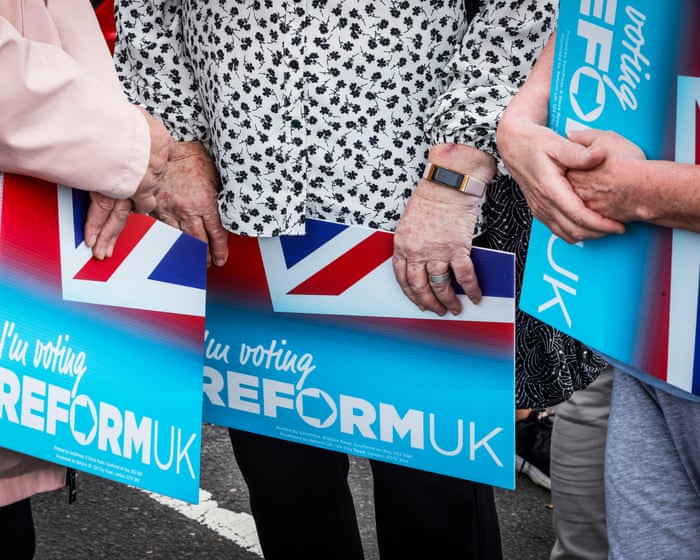
A thinktank connected to Reform UK has proposed ending the UK state pension and cutting taxes by £75 billion in a new report. The report suggests replacing the pension with personal investment accounts and reducing many taxes, including those on wealth and corporations, while also calling for public spending cuts.
Key Facts
The Centre for a Better Britain (CFABB), linked to Reform UK, published a 183-page report called “Boosting Britain.”
The report calls for abolishing the state pension and replacing it with personal investment accounts starting with £1,000 for newborns.
It proposes cutting major taxes such as capital gains tax, inheritance tax, stamp duty, digital service tax, air passenger duty, and lowering corporation tax from 25% to 15%.
The suggested tax cuts would cost £75 billion and cover up to half the current tax code.
The report recommends matching tax cuts with public spending reductions to avoid economic troubles, but it does not detail specific spending cuts.
It suggests closing public pension plans for new teachers and civil servants and turning the state pension into a safety net only for the poorest.
CFABB is led by Jonathan Brown, and the report was released before the UK government’s upcoming budget.
Reform UK has ties to CFABB, but the party has not yet reviewed the report.
Read the Original
Want the full story? Tap a source to open the original
article.