Dozens of migrants spent over 30 hours at sea before being taken to Dover in the UK. The migrants left from the Normandy coast in France, faced tough conditions, and were helped by British rescue teams before arriving.
Key Facts
Around 60 migrants were on a small boat that left the Normandy coast on Monday morning.
The migrants were at sea for more than 30 hours, with the UK’s rescue teams helping them to safety.
The French coastguard followed the boat and said the migrants refused help because they wanted to reach the UK.
British authorities transferred the migrants to Border Security Command after rescuing them.
There were protests in the town of Gosport after initial reports suggested the migrants would arrive there.
Border Force eventually took the migrants to Dover instead of Gosport.
Six people were arrested after some protesters in Gosport became hostile to police.
Migrants have recently launched boats from unusual locations on the Normandy coast, farther west than usual.
Read the Original
Want the full story? Tap a source to open the original
article.
People from Venezuela protested in New York against Delcy Rodriguez, who is serving as the country's interim President. They asked world leaders not to accept her government as legitimate during the United Nations General Assembly.
Key Facts
Delcy Rodriguez is acting as Venezuela’s interim President.
She took power in January after Nicolas Maduro was captured by the US military.
Venezuelans held protests in New York City.
The protests happened during the UN General Assembly meeting.
Protesters called on global leaders to avoid normalizing relations with Rodriguez’s government.
The protesters consider the current government illegitimate.
The UN General Assembly is a place where world leaders meet to discuss global issues.
Read the Original
Want the full story? Tap a source to open the original
article.
Hurricane Polo, a very strong storm, became a category 5 hurricane near Mexico due to unusually warm ocean waters linked to the El Niño climate pattern. The storm is moving slowly near the southwest coast of Mexico, causing heavy rain and dangerous ocean conditions, but it is not expected to hit the land directly.
Key Facts
Hurricane Polo reached category 5, the highest level on the hurricane scale, with wind speeds near 180 mph (285 km/h).
NOAA called Polo "extremely dangerous" and noted it intensified rapidly in 24 hours.
Warm ocean waters from the El Niño weather pattern are helping the storm grow stronger.
The hurricane is expected to move along the coast of southwest Mexico without making landfall.
Heavy rains up to 8 inches (20 cm) could cause flooding and mudslides in coastal Mexican states Jalisco, Colima, and Michoacan.
Large ocean waves and dangerous surf will affect the coast for several days.
Sea surface temperatures linked to El Niño are now the highest on record in parts of the Pacific Ocean.
El Niño is a natural cycle that warms the Pacific Ocean every few years, affecting global weather.
Read the Original
Want the full story? Tap a source to open the original
article.
Canada has promised 100 million Canadian dollars to help Palestinians, mostly for humanitarian aid, and to support peace and security efforts. At the United Nations General Assembly, leaders from Canada, the UK, and France criticized restrictions on aid to Gaza and called for action to support a two-state solution between Israel and Palestine.
Key Facts
Canada is providing 100 million Canadian dollars ($71 million) in aid to Palestinians.
80% of Canada’s aid will be for humanitarian help, and 20% will support peace and police training in the West Bank.
Canada opposes Israel’s E1 settlement plan and has joined 11 other countries in banning trade with goods from illegal Israeli settlements.
Since the start of the conflict in Gaza, Canada has pledged over 600 million Canadian dollars ($426 million) to help Palestinian civilians.
French President Emmanuel Macron criticized global leaders for blocking humanitarian aid to Gaza.
British Prime Minister Andy Burnham warned that failing to act on a two-state solution will reduce public trust in politicians.
Both the UK and France have banned trade with Israeli settlements in the West Bank.
Leaders at UNGA emphasized the lasting importance of pursuing peace and humanitarian support for Palestinians.
Read the Original
Want the full story? Tap a source to open the original
article.
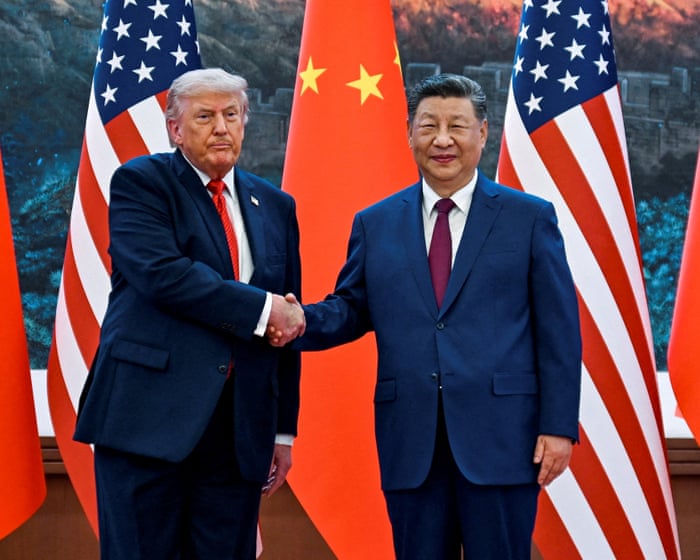
Chinese leader Xi Jinping is visiting Maryland to meet President Donald Trump for their second face-to-face meeting this year. Both leaders may discuss artificial intelligence (AI) safety, but their countries still disagree strongly on trade, technology control, and politics.
Key Facts
Xi Jinping’s visit to Maryland marks his first state visit to the US since 2015.
This is the second meeting between President Trump and Xi in 2024, with the first held in Beijing in May.
No major agreements are expected, as US-China relations remain tense over trade and technology issues.
Leading tech CEOs like Jeff Bezos and Elon Musk will attend a state dinner focusing on AI safety.
The US wants to maintain its lead in AI technology, viewing it as vital for future global power.
The US proposed creating a joint mechanism with China to address AI safety, but it is not a full agreement.
China wants to cooperate on AI but disagrees with US views on the level of threats posed by Chinese AI progress.
China has introduced rules to label AI-generated content and control chatbot speech to align with government policies.
Read the Original
Want the full story? Tap a source to open the original
article.
UK Prime Minister Andy Burnham spoke at the UN General Assembly and criticized Israel's military actions in Gaza. He said these actions led the UK to impose sanctions on illegal Israeli settlements in Palestinian land.
Key Facts
UK Prime Minister Andy Burnham addressed the UN General Assembly.
He criticized Israel's war in Gaza.
Burnham described the conflict in strong terms, calling it genocidal.
The UK imposed sanctions on Israeli settlements considered illegal.
These settlements are built on Palestinian territory.
The UK’s sanctions are a response to continued Israeli military actions.
Burnham vowed the UK will not ignore the suffering of Palestinians.
Read the Original
Want the full story? Tap a source to open the original
article.
US President Donald Trump and UK Prime Minister Andy Burnham met face-to-face for the first time at the United Nations General Assembly in New York City. They discussed the controversial deal on the Chagos Islands, with President Trump criticizing it and Burnham promising to seek a resolution.
Key Facts
President Trump said he "can do business" with UK Prime Minister Andy Burnham.
Trump called the Chagos Islands deal, which would transfer sovereignty to Mauritius, "terrible" and "ridiculous."
Burnham changed his position and pledged to work toward resolving the issue after meeting Trump.
The Chagos Islands include Diego Garcia, a joint UK-US military base in the Indian Ocean.
British media described the meeting as historic and noted ongoing disagreements remain.
Burnham expressed concerns about artificial intelligence regulation, wanting global principles, while Trump rejected any global control efforts.
The meeting happened on the sidelines of the UN General Assembly in New York City.
Other news included climate change warnings about heat deaths and various UK domestic stories unrelated to the Trump-Burnham meeting.
Read the Original
Want the full story? Tap a source to open the original
article.
South Sudan’s President Salva Kiir has ended the transitional government set up in 2018 and appointed a temporary administration as the country prepares for its first national elections on December 22. This move removes all vice-presidents and dissolves local and national assemblies, leaving Kiir in control during the election period.
Key Facts
President Kiir dissolved the transitional unity government established by the 2018 peace deal.
A caretaker government is now in place while South Sudan prepares for elections.
All vice-presidents, ministers, and local administrators have been removed.
The national and state assemblies have been dissolved; judiciary and security agencies remain.
Elections are scheduled for December 22, without a permanent constitution or census completed.
The opposition has rejected the legal changes allowing Kiir to stay in power during elections.
Kiir replaced the head of the elections commission with Gabriel Bol Deng Majok recently.
Riek Machar, the main opposition leader, is under house arrest and on trial for treason and other charges.
Read the Original
Want the full story? Tap a source to open the original
article.
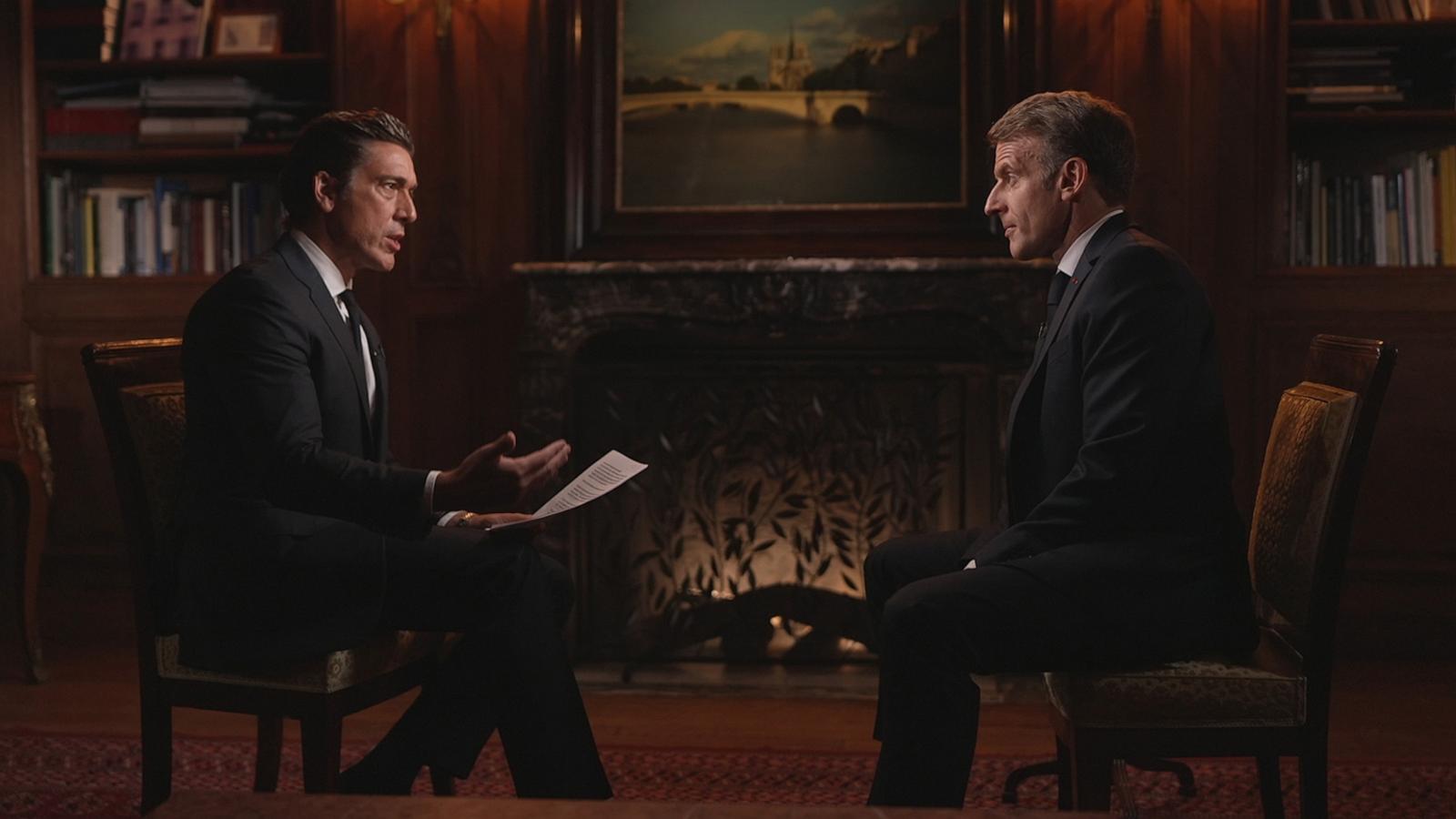
French President Emmanuel Macron told ABC News that the world underestimated the importance of the Strait of Hormuz in the ongoing energy crisis. He said the main goal of his meeting with President Trump was to find a way to reopen this critical waterway, which Iran has threatened to block.
Key Facts
Macron said Iran realized it could control the Strait of Hormuz, a key oil shipping route.
The closure of the strait has caused fuel prices to rise globally.
Macron said reopening the strait is mainly up to the U.S., which he called the country able to fix the problem.
France is willing to help protect safe passage through the strait but does not want to engage in direct conflict.
Macron criticized past wars aimed at regime changes by bombing, calling them ineffective and not a good option.
He acknowledged disagreements with President Trump but described their relationship as very frank and good.
Macron said he has influenced President Trump’s support for Ukraine's resistance against Russia.
Macron said he does not believe Russian President Putin’s claims of peaceful intentions toward Europe.
Read the Original
Want the full story? Tap a source to open the original
article.
The US has criticized Australia’s plan to let online users turn off social media algorithms, saying it could lead to censorship. Australia wants to protect users from harmful content by making tech companies offer an opt-out, but the US worries this could limit free speech and affect content outside Australia.
Key Facts
Australia proposes a law to let users turn off social media algorithms.
The law aims to protect users from harmful content online.
The US embassy in Canberra says this law could cause censorship of free speech.
The US fears the law could reduce exposure to independent journalists and controversial topics.
Australia’s Prime Minister Anthony Albanese says the law gives control back to users, not the government.
The US worries government biases could hurt minority or independent voices.
The law could impact innovation and affect users worldwide, not just in Australia.
President Donald Trump, speaking at the UN, downplayed concerns about AI regulation.
Read the Original
Want the full story? Tap a source to open the original
article.
Awa Diba gave birth in a Senegal hospital just before a nationwide health workers' strike began, highlighting problems in the country’s health system such as poor conditions and lack of equipment. Despite economic growth driven by oil and gas production, Senegal struggles with high debt, reduced foreign aid, and underfunded healthcare, leading to strikes by medical professionals demanding better pay and resources.
Key Facts
Awa Diba went into labor as Senegal’s health workers prepared to strike, experiencing overcrowded and poorly maintained hospital conditions.
Senegal’s healthcare workers, including doctors and pharmacists, held strikes in September 2025, continuing emergency services but stopping routine care.
The medical union SAMES demands more hiring, better career benefits, and increased investment in hospitals, especially outside the capital, Dakar.
Senegal’s public-sector debt was 132% of GDP at the end of 2024, with recent audits revealing previously undisclosed borrowing.
The country’s economy grew 6.7% in 2025 due to new oil and gas production.
Cuts in U.S. foreign aid have affected important health programs like HIV and malaria treatment.
The Senegalese government is seeking financial help from the IMF, World Bank, and foreign investors to address economic and health system challenges.
Unemployment among young people aged 15 to 34 was 28.4% in early 2026, pushing some to retrain for healthcare jobs.
Read the Original
Want the full story? Tap a source to open the original
article.
UK Prime Minister Andy Burnham gave his first speech at the United Nations General Assembly. In his address, he spoke about the dangers of Russian disinformation and introduced plans for international rules on artificial intelligence (AI).
Key Facts
Andy Burnham is the Prime Minister of the United Kingdom.
This was Burnham’s first speech at the United Nations General Assembly.
He warned about the risks caused by Russian disinformation, which means false or misleading information spread by Russia.
Burnham announced new actions to create global standards for AI, which are rules for using artificial intelligence safely and fairly.
The United Nations General Assembly is a yearly meeting where world leaders discuss global issues.
The speech was delivered on a Tuesday.
Read the Original
Want the full story? Tap a source to open the original
article.
Ukraine’s President Zelenskyy said Ukraine is ready to stop attacks on Russian energy facilities if Russia stops attacking Ukraine’s energy system. He discussed ending the war and energy ceasefires with US President Donald Trump and UK Prime Minister Andy Burnham during meetings at the United Nations General Assembly.
Key Facts
Zelenskyy held talks with President Trump and UK Prime Minister Andy Burnham in New York City.
Ukraine is open to a bilateral “energy ceasefire” with Russia, meaning both sides would stop attacking energy facilities.
Zelenskyy said no agreement was made for Ukraine to stop attacks on Russian oil without Russia stopping attacks on Ukraine’s energy.
President Trump expressed concern that Ukraine’s strikes on Russian fuel sites raised global diesel prices.
Both countries had briefly agreed to stop attacks on energy facilities but strikes resumed soon after.
Russia has launched drone attacks on Ukrainian energy and port infrastructure, including attacks on September 15 with about 200 drones.
Ukraine has used long-range drones to attack Russian oil refineries far from their border.
Zelenskyy warned Russia is preparing a new large attack on Ukraine amid ongoing conflict.
Read the Original
Want the full story? Tap a source to open the original
article.
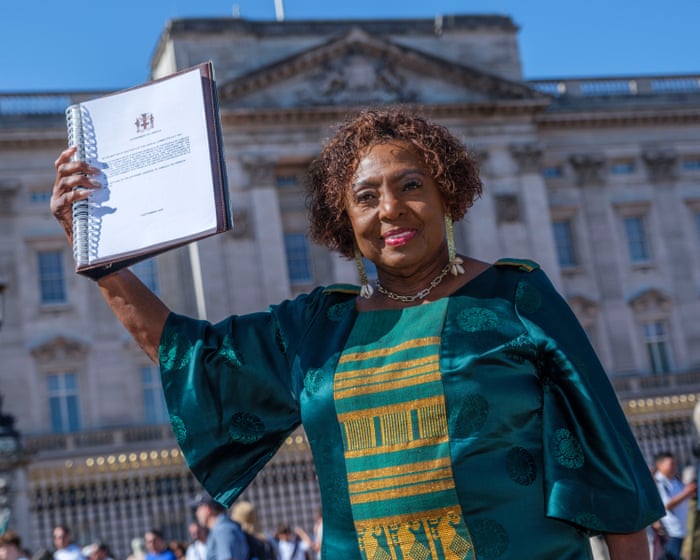
King Charles has sent Jamaica’s slavery reparations petition to the UK’s highest appeals court, the Privy Council, for legal advice. The petition asks if the forced transport of Africans to Jamaica was lawful, if it was a crime against humanity, and if Britain owes compensation for slavery and its lasting effects.
Key Facts
Jamaica’s culture minister announced that King Charles referred the petition to the Privy Council on September 7, 2026.
The petition asks three legal questions about the legality and impact of slavery and Britain’s responsibility.
The Privy Council is the final appeals court for some UK overseas territories and Commonwealth countries.
Jamaica used a rare legal process allowing the King to refer important legal questions to the Privy Council.
Jamaica cannot take this dispute to the International Court of Justice because of British legal reservations.
The Privy Council’s opinion won’t force the UK to pay reparations but could influence future talks and other countries’ claims.
Jamaica’s government recently lodged the petition in London and met with various communities and institutions, including the British Museum.
Caribbean nations are planning coordinated legal and diplomatic efforts to seek reparations for slavery.
Read the Original
Want the full story? Tap a source to open the original
article.
Iranian President Masoud Pezeshkian has arrived in New York to attend the United Nations General Assembly. He plans to speak about the ongoing conflict between the US and Iran and ask for efforts to reduce tensions through diplomacy.
Key Facts
Masoud Pezeshkian is the President of Iran.
He arrived in New York to take part in the UN General Assembly.
The US and Iran are currently involved in a conflict described as a war.
President Pezeshkian will address the UN to discuss the conflict.
Iran wants to promote diplomatic talks to lower tensions with the US.
The visit is part of Iran’s effort to gain international support for its position.
The UN General Assembly is a yearly meeting where countries talk about global issues.
Read the Original
Want the full story? Tap a source to open the original
article.
The UK Prime Minister Andy Burnham announced plans to create a National Centre for Information Defence to fight against Russian disinformation using AI technology. He also called for new global rules to make artificial intelligence safer and said the UK aims to lead international efforts on this issue.
Key Facts
The UK will set up a National Centre for Information Defence to detect and stop AI-driven disinformation from hostile states like Russia.
Russian agencies are accused of running large disinformation campaigns using fake websites, bots, and forged branding of UK institutions.
Russia spends about £1.3 billion yearly on manipulating information worldwide.
The UK government says Russia tried to interfere in the 2019 UK general election.
AI is seen as both an economic opportunity and a risk that can increase the scale of threats like misinformation and cyber-attacks.
The UK wants to lead global efforts to create rules ensuring AI safety, transparency, and fair access.
The UK hosts the AI Security Institute, which tests major AI models before public release to improve safety.
The UK will emphasize AI safety principles during its G20 leadership next year.
Read the Original
Want the full story? Tap a source to open the original
article.
UK Prime Minister Andy Burnham spoke at the United Nations General Assembly and accused Russia of trying to interfere in the UK's 2019 election through information warfare. He also announced the creation of a National Centre for Information Defence to protect the country against harmful state-led information attacks.
Key Facts
UK Prime Minister Andy Burnham spoke at the UN General Assembly.
He accused Russia of using information warfare against the UK.
Russia was said to have tried to interfere in the UK's 2019 election.
Information warfare means spreading false or misleading information to influence opinions or events.
Burnham called Russia’s actions “repulsive.”
The UK will create a National Centre for Information Defence.
This centre will work to counter harmful information attacks from other countries.
The goal is to protect the UK’s elections and public trust.
Read the Original
Want the full story? Tap a source to open the original
article.
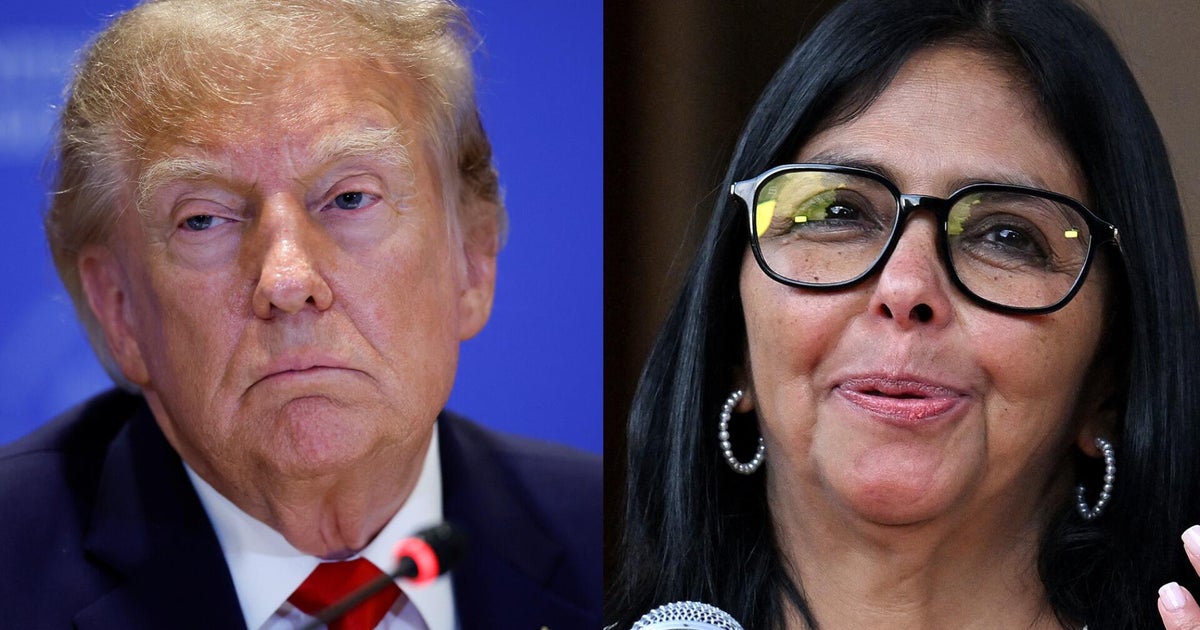
President Donald Trump hosted Venezuela’s acting president, Delcy Rodríguez, at a dinner for world leaders during the United Nations General Assembly in New York. This event brought together various international leaders for discussions and meetings.
Key Facts
President Trump invited Delcy Rodríguez, Venezuela’s acting president, to a dinner.
The dinner took place in New York during the U.N. General Assembly.
The U.N. General Assembly is a yearly meeting where world leaders discuss global issues.
Delcy Rodríguez is the acting president of Venezuela at this time.
The dinner included other world leaders who were in New York for the U.N. event.
The gathering provided a chance for leaders to meet and talk directly.
Read the Original
Want the full story? Tap a source to open the original
article.
Ukraine is close to signing a major drone defense agreement with the United States, possibly during the United Nations General Assembly. The deal supports expanding production and use of Ukrainian defense drone technology in the U.S., improving cooperation against drone attacks like those from Iran and Russia.
Key Facts
Ukraine plans to sign a drone defense deal with the U.S. soon, possibly at the U.N. meeting in New York.
The U.S. and Ukraine have created a plan to expand testing and making of Ukrainian defense drones on U.S. soil.
Iran used Shahed drones to attack U.S. bases in the Middle East, similar to drones Russia uses against Ukraine.
Ukraine helped by sending drone interceptors and pilots to counter these attacks.
Ukraine has made defense deals with countries like Saudi Arabia, Qatar, and the UAE to finance its drone industry.
Ukraine aims to produce 10 million drones this year, far more than the U.S. Army’s 50,000 drones in 2025.
Experts say Ukraine’s strength is not only in drones but also in the software, operators, and teams managing them.
Ukrainian components and expertise were key in making U.S. interceptor drones operational against Iranian drones.
Read the Original
Want the full story? Tap a source to open the original
article.
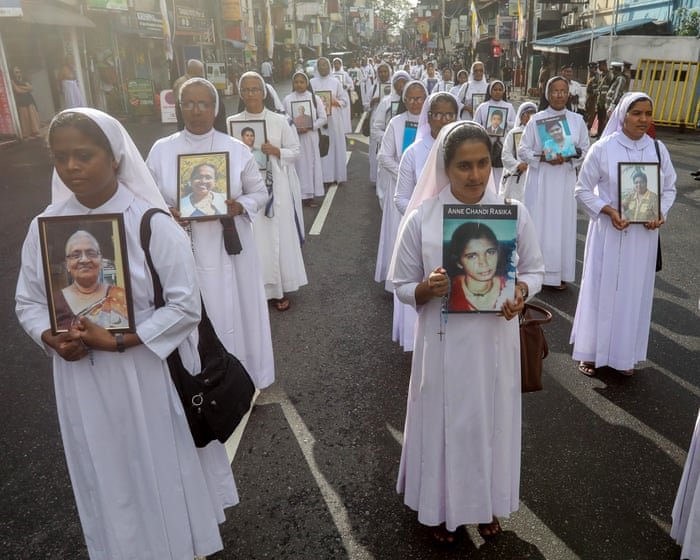
A Sri Lankan court sentenced 15 men to hundreds of years in prison for their part in the 2019 Easter bombings that killed 267 people and injured nearly 600. The attacks targeted churches and hotels and were inspired by the Islamic State group.
Key Facts
The 2019 Easter bombings involved six explosions at three churches and three hotels in Sri Lanka.
A total of 267 people died and nearly 600 were injured in the attacks.
The attackers were linked to two local Islamist militant groups and inspired by the Islamic State.
15 men were convicted and sentenced to between 200 and 260 years in prison each.
The court confiscated the property of the convicted men, all from Sri Lanka’s Muslim minority.
The trial lasted nearly five years and was held under heavy security.
Another 9 suspects were acquitted, and one died before trial.
Police and intelligence officials were found negligent for not acting on warnings; a former police chief and defence official were sentenced to death but death sentences have not been carried out in Sri Lanka since 1976.
Read the Original
Want the full story? Tap a source to open the original
article.