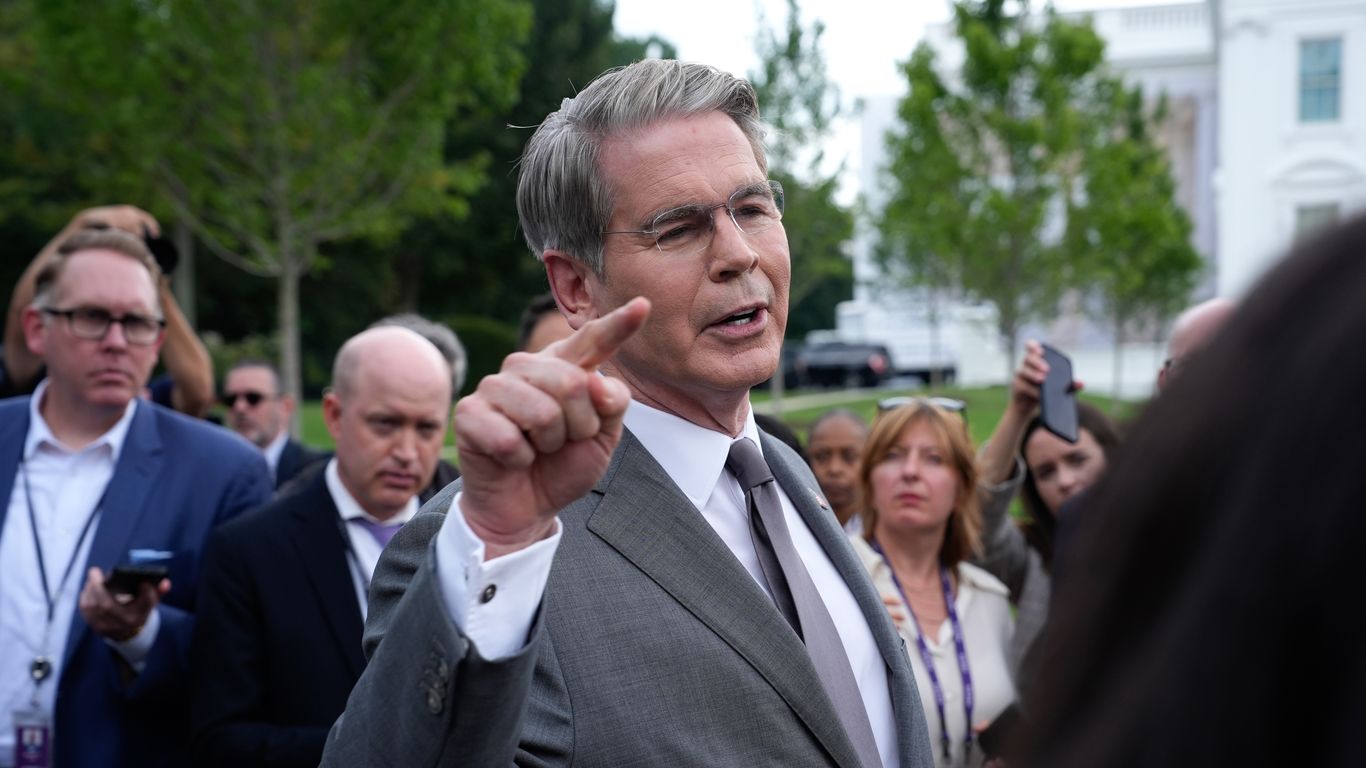
The United States has announced it will target all of Iran’s sources of income, including its oil industry. Treasury Secretary Scott Bessent described this as a serious economic campaign and warned that countries trading with Iran may face strong consequences.
Key Facts
The US plans to block all sources of money coming into Iran.
Oil exports from Iran are a primary target of these measures.
Treasury Secretary Scott Bessent calls this effort an "unprecedented" economic war.
Countries that keep trading with Iran risk facing harsh penalties from the US.
The campaign aims to pressure Iran by cutting off its revenue streams.
This move is part of President Trump’s administration’s approach to Iran.
The focus is on disrupting Iran’s economy internationally.
Read the Original
Want the full story? Tap a source to open the original
article.
Ukraine and Russia are attacking each other’s ports and ships in the Black Sea, slowing down shipments of grain that are vital for Ukraine’s farming economy. Both countries have targeted key infrastructure, and efforts to create a truce for safe passage of civilian ships have not succeeded.
Key Facts
Ukraine is a major producer of wheat, barley, sunflower seeds, and corn, with 90% of its exports going through the Black Sea.
Fighting has damaged grain terminals, ports, and ships on both the Ukrainian and Russian sides.
Ukraine has launched drone attacks on Russian energy and transport infrastructure to pressure Moscow.
Russia responds by hitting Ukraine’s grain silos, port facilities, and ships near Odesa.
Russia wants Ukraine to stop attacking its energy sector before agreeing to a truce in the Black Sea.
Ukraine’s farming sector accounts for about 20% of its economy and nearly half of its exports during peaceful times.
The conflict is causing serious challenges for farmers and risks global food supply disruptions.
Both nations have damaged commercial container ships and grain terminals in the contested waters.
Read the Original
Want the full story? Tap a source to open the original
article.
Canada’s opposition leader, Pierre Poilievre, asked Prime Minister Mark Carney to bring the Canadian Parliament back together because trade talks with the United States have failed. He said Canadians need to understand what went wrong in the talks and how new trade tariffs might affect their daily lives.
Key Facts
Pierre Poilievre is the leader of Canada’s opposition party.
Mark Carney is the Prime Minister of Canada.
Trade talks between Canada and the United States recently collapsed.
There are growing tensions that could lead to a trade war between the two countries.
Poilievre wants Parliament to meet so members can discuss the trade issues.
He says Canadians need clear information about the impact of tariffs, which are taxes on imported goods.
The situation puts Canadian families at risk of higher costs and economic problems.
The request is part of political pressure on the government to respond to the trade dispute.
Read the Original
Want the full story? Tap a source to open the original
article.
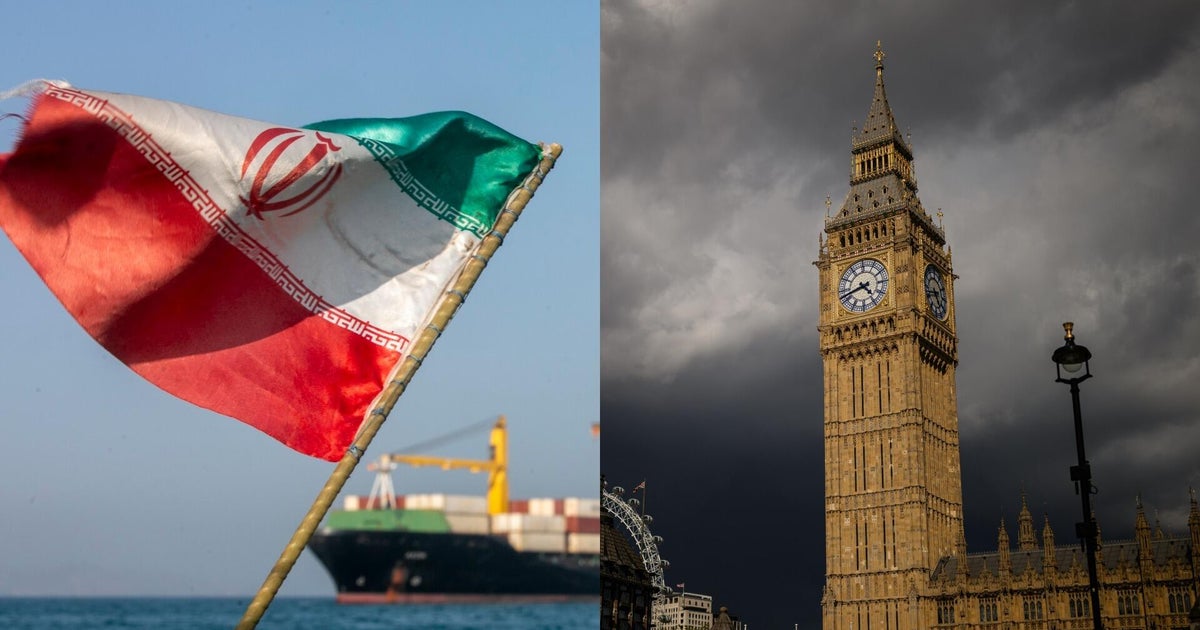
Hackers linked to Iran temporarily shut down a small power plant in the United Kingdom in July, marking the first known time Iranian hackers took a UK power facility offline. Around the same time, similar hackers targeted water systems in several U.S. states, causing disruptions by locking operators out and damaging equipment.
Key Facts
The cyberattack on the UK power plant happened in July and lasted four days.
Iranian-linked hackers also targeted water systems in New Jersey, Minnesota, Georgia, and South Dakota causing pressure loss and flooding.
The attacks focused on programmable logic controllers (PLCs), computers that control industrial systems like power, water, and manufacturing plants.
PLCs are used worldwide in many critical systems, including hospitals, chemical plants, elevators, trains, traffic lights, and fire safety.
Many PLCs were designed decades ago and lack modern cybersecurity protections.
Hackers used simple methods, such as scanning for exposed devices and exploiting factory default passwords.
The UK’s National Cyber Security Centre has reported over 200 cyberattacks on UK critical infrastructure in the past year, with about 75% linked to hostile countries including Iran.
The attacks may be tests preparing for future attempts on more important targets.
Read the Original
Want the full story? Tap a source to open the original
article.
A three-year-old girl in Nepal was allegedly raped and murdered, causing widespread protests and anger. The government has promised to review laws on serious crimes and create a memorial for the child, while nine people have been arrested in connection with the case.
Key Facts
The girl went missing in Madhesh province and was found dead three days later.
Nine people have been arrested related to the crime.
Protests have taken place in the city of Simara over the incident.
The government agreed to review serious crime laws and build a memorial for the victim.
A video showing a teenage suspect’s police statement was leaked online, leading to police investigations.
The chief district officer said police officers involved in the leak will be punished.
Nepalese Police report over 25,500 cases of rape and sexual abuse filed from July 2017 to July 2025, with more than 3,200 victims under age 10.
Some activists want harsher punishments for minors convicted of serious crimes, but there is caution against reinstating the death penalty.
Read the Original
Want the full story? Tap a source to open the original
article.
In Colombia, illegal armed groups are recruiting children and training them to use drones armed with explosives for violent attacks. Human Rights Watch found that these groups use social media to recruit children as they fight for control over rural areas involved in drug trafficking and illegal mining.
Key Facts
Drug gangs and rebel groups in Colombia are increasingly recruiting children for combat and dangerous tasks.
Children are being trained to pilot drones equipped with explosives.
At least 1,500 children have been recruited by armed groups since 2021, with 625 cases reported in 2024.
Child recruitment declined after a 2016 peace deal but has risen again due to smaller rebel groups filling the void.
Armed groups use social media to recruit children and promote rebel life.
These groups use drones in attacks that have caused deaths and injuries; 121 drone attacks were reported in early 2026.
Girls in these groups sometimes face forced sexual abuse by commanders.
Authorities and social protection systems are struggling to prevent child recruitment and provide support for rescued children.
Read the Original
Want the full story? Tap a source to open the original
article.
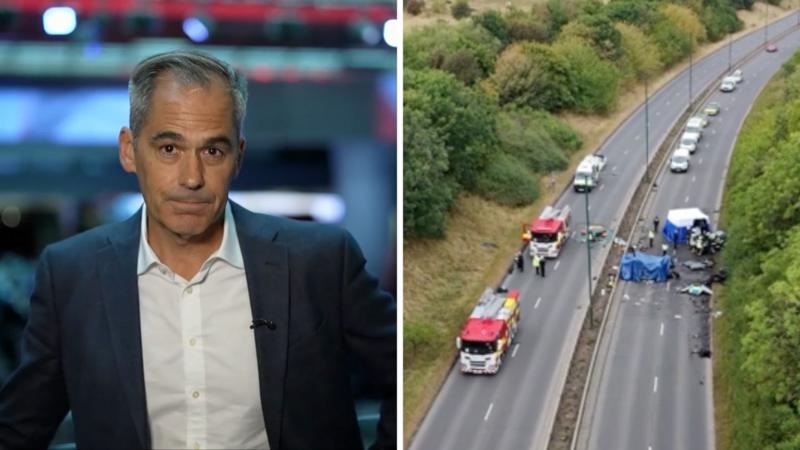
Britain’s government asked TikTok and other social media platforms to remove videos that show and praise dangerous driving after a fatal crash killed two police officers and five young men. The crash happened when a car was driven the wrong way on a road in northeastern England. Officials want social media to stop hosting content that encourages risky driving.
Key Facts
Two police officers, Matthew Blades and Tom Clough, died in a crash with a Volkswagen going the wrong way on a road in northeastern England.
Five people in the Volkswagen, aged 17 to 23, also died at the scene.
The government told TikTok and similar platforms to remove videos that celebrate dangerous driving.
British Defense Minister Luke Pollard said social media companies should police themselves better.
The car involved had a cloned number plate to avoid detection.
Police arrested 12 people on suspicion of criminal activity, including possession of a firearm, linked to the crash.
Similar incidents in Ireland involved teenagers dying in a wrong-way driving crash, leading to calls for TikTok to discuss illegal content; TikTok declined the invitation.
The UK media regulator has government support to take strong action against platforms that do not meet legal responsibilities.
Read the Original
Want the full story? Tap a source to open the original
article.
U.S. Treasury Secretary Scott Bessent announced new sanctions targeting countries and businesses that trade with Iran. These measures aim to increase economic pressure on Iran until at least after the U.S. midterm elections, with the goal of influencing Iran’s behavior without military action.
Key Facts
The U.S. plans to impose stronger "secondary" sanctions on entities doing business with Iran.
Existing sanctions against Iran’s oil sector are already in place but have been only partially enforced.
The U.S. wants its Western allies to help enforce the new sanctions.
Countries like China, Russia, India, Pakistan, Qatar, and Turkey still trade with Iran and must be pressured.
Iran’s economy is in crisis, with its currency declining sharply and inflation causing high food prices.
The U.S. naval blockade restricts most Iranian oil exports, hurting the economy further.
Iranian officials admit to economic difficulties and express concern that without economic strength, their security cannot be sustained.
Iran has threatened to retaliate against countries that comply with U.S. sanctions.
Read the Original
Want the full story? Tap a source to open the original
article.
A low-budget Chinese animated film called "Niu Lai" unexpectedly became a big hit in China. Made by a mother and son, the movie earned about 20,000 times its $200 budget after becoming popular on social media.
Key Facts
"Niu Lai" means "Here Comes the Ox/Cow" in English.
The film was made by Xin Yumeng, who did most of the work, and his mother, Sun Lifang, who wrote the script and helped with music.
The movie’s animation style looks very simple, similar to cartoons from the mid-1990s.
It earned only about $1,000 in the first 10 days but later made around $5.9 million as it went viral.
The story is about a calf who goes on a journey of self-discovery and overcoming challenges.
The ox character relates to Xin’s father’s birth year in the Chinese zodiac.
Some experts see the film’s success as a reaction to modern, polished media and a sign of people appreciating raw, passionate work.
The film inspired fans to create their own videos and has been used for public messages like traffic safety in China.
Read the Original
Want the full story? Tap a source to open the original
article.
Japanese lawmakers visited Beijing to improve strained relations between Japan and China. This effort follows tension caused by Japanese Prime Minister Takaichi’s remarks on Taiwan, which led to diplomatic and economic problems between the two countries.
Key Facts
A Japanese delegation arrived in Beijing for talks to ease diplomatic tensions.
Relations worsened after Prime Minister Sanae Takaichi said Japan might respond militarily if China attacked Taiwan.
China considers Taiwan part of its territory and reacts strongly to such comments.
China issued travel warnings for its citizens against Japan and imposed trade restrictions, affecting Japan’s access to rare earth minerals.
The delegation includes members from Japan’s ruling and opposition parties.
Communication between Japanese and Chinese officials has nearly stopped, the worst since 1972.
China’s Foreign Ministry called for Japan to act to restore normal talks.
More diplomatic and business delegations from Japan to China are planned in the coming months.
Read the Original
Want the full story? Tap a source to open the original
article.
Scientists warn that climate change is causing more frequent and severe weather events like heat waves, floods, and wildfires around the world. These events are happening now, with some recent disasters including Australia’s massive wildfires and floods in Pakistan. Despite scientific evidence, some leaders, including President Donald Trump, have expressed skepticism about climate change.
Key Facts
Climate change is increasing the frequency and intensity of extreme weather events globally.
The Earth’s average temperature is about 1.44 degrees Celsius higher in 2025 than in the early 1800s.
The United States has emitted the most greenhouse gases, contributing significantly to climate change.
President Donald Trump has called climate change a "hoax" and criticized climate policies.
Major recent disasters include Australia’s "Black Summer" wildfires (2019-2020) and Pakistan’s 2022 floods.
Extreme weather events are likely to continue even if the world reaches net zero emissions immediately.
Net zero means balancing greenhouse gas emissions by removing as much as is released.
Carbon dioxide can stay in the atmosphere for hundreds of years, prolonging its effects.
Read the Original
Want the full story? Tap a source to open the original
article.
Nearly half of the people infected with Ebola in the Democratic Republic of Congo (DR Congo) are dying from the disease. This outbreak is the deadliest Ebola epidemic in the country’s history, according to the DR Congo government.
Key Facts
The Ebola outbreak is currently happening in the Democratic Republic of Congo.
Almost 50% of infected patients are dying from the virus.
This is the deadliest Ebola outbreak DR Congo has ever experienced.
The government of DR Congo provided these infection and death figures.
Ebola is a serious virus that causes severe illness and often leads to death.
Efforts to control the outbreak are ongoing but it remains very dangerous.
Read the Original
Want the full story? Tap a source to open the original
article.
Two U.S. Air Force refueling planes left their base in Bulgaria last week after Iran expressed anger about their presence there. The planes had been at Bezmer Air Base for training flights during their deployment.
Key Facts
Two U.S. military KC-135 refueling aircraft were deployed to Bezmer Air Base in Bulgaria.
The base is located in the southeast of Bulgaria.
The planes conducted training flights during their stay.
The KC-135 aircraft left the base last Friday.
Iran showed strong anger about the U.S. planes being deployed in Bulgaria.
Bulgarian Defense Minister Dimitar Stoyanov provided information about the deployment and departure.
Read the Original
Want the full story? Tap a source to open the original
article.
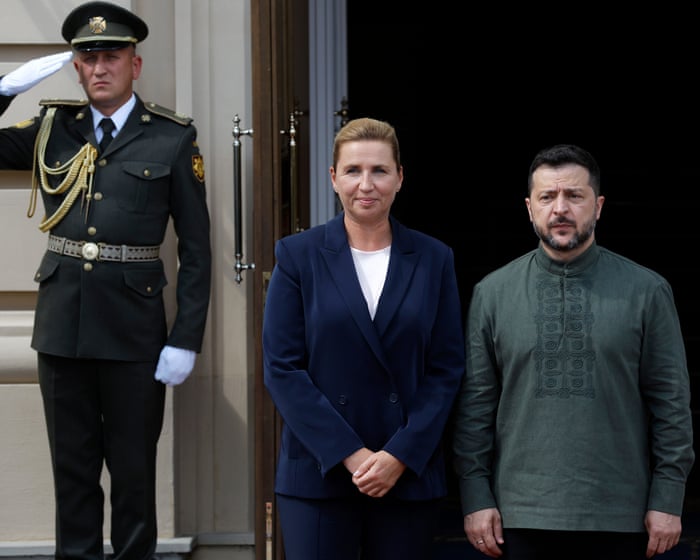
Danish Prime Minister Mette Frederiksen received unwanted beauty advice on social media while visiting a war zone in Ukraine. She rejected the comments, emphasized self-acceptance, and encouraged people to focus on more meaningful topics.
Key Facts
Mette Frederiksen is Denmark’s second female prime minister and has led the country since 2019.
She recently traveled to Ukraine and experienced air raid sirens during her visit.
A male cosmetic surgeon messaged her offering to fix a spot on her nose.
Frederiksen declined the offer and said she is happy with her body and does not need such opinions.
She often receives unsolicited comments about her appearance, including her teeth, hair, and facial features.
Frederiksen’s profile has increased due to her stand on Greenland issues with President Donald Trump and support for Ukraine.
She advised people to talk about important matters instead of focusing on looks.
Frederiksen expressed solidarity with others facing pressures about appearance and promoted embracing imperfections.
Read the Original
Want the full story? Tap a source to open the original
article.
President Vladimir Putin has signed a decree allowing Russia to take temporary control of important infrastructure if it is not properly protected or quickly repaired after damage. This comes as Ukraine continues its intense drone attacks on Russian facilities, especially targeting energy and transportation sites.
Key Facts
The decree lets the Russian government take over infrastructure that is poorly protected or slow to fix damage.
Control would shift to Russia’s Federal Agency for State Property Management or another official body.
The decree applies to fuel and energy sites, including nuclear power plants, as well as communication, transport, logistics, and public utilities.
Ukraine has used drones and missiles to target Russian infrastructure since the invasion began in February 2022.
Attacks on Russian energy facilities have caused fuel shortages and hurt the economy.
Ukrainian strikes have hit warehouses of major Russian online retailers Wildberries and Ozon, causing billions in damage.
The Perm oil refinery, a key processing plant, was recently damaged and forced to halt operations for repairs expected to take about two weeks.
Read the Original
Want the full story? Tap a source to open the original
article.
Mummified human and animal remains may carry health risks due to toxic substances used in preservation and growth of harmful microbes. Studies have found poisonous fungi and toxic metals in mummies, which can cause respiratory and other infections if not handled carefully.
Key Facts
Mummified remains often contain toxic chemicals like arsenic, mercury, and lead used in preservation.
Harmful microbes such as fungi and bacteria can grow on mummies if stored in poor conditions.
Toxic spores were linked to illnesses and deaths among people handling ancient mummies.
In 1973, 10 of 12 scientists working on a Polish royal tomb died from infections caused by fungi spores.
The “mummy’s curse” legend partly comes from health effects caused by these toxic spores and microbes.
Lord Carnarvon, who funded the Tutankhamun tomb discovery, died from an infected mosquito bite, not a curse.
Environmental conditions in places like Palermo catacombs and Krakow crypts encourage fungal growth on mummies.
Professionals working with mummies use protective gear like masks and gloves to avoid health risks.
Read the Original
Want the full story? Tap a source to open the original
article.
Norah O'Donnell, a CBS News host, shared her thoughts on exercise during an interview. She talked about the workouts she likes least, which celebrity she would like to exercise with, and when she feels her strongest both mentally and physically.
Key Facts
Norah O'Donnell appeared on the "Healthful" podcast.
Her personal trainer, Kira Stokes, asked her about her exercise preferences.
O'Donnell revealed the workout she likes the least.
She named a celebrity she wishes to work out with.
She discussed times when she feels the strongest mentally and physically.
The interview was available on CBS News and the CBS News app.
Read the Original
Want the full story? Tap a source to open the original
article.
A car travelling the wrong way on the A66 motorway collided with a police car, killing two officers and five passengers. The crash happened early on a Saturday morning, and several people in the car had previous criminal records.
Key Facts
The crash took place on the A66 motorway around 3:30 a.m. BST on Saturday.
A Volkswagen Passat was driving the wrong way before hitting a marked police car.
Two police officers, PC Matthew Blades and PC Tom Clough, died in the collision.
Five people inside the Volkswagen also died in the crash.
Four of the five passengers had prior convictions.
One passenger, Makai Saddington, 18 years old, had pleaded guilty to assaulting a police officer in the past.
Police reports, video footage, and photos helped piece together how the crash happened.
The incident took place in the Middlesbrough area and is under investigation.
Read the Original
Want the full story? Tap a source to open the original
article.
Canadian fans booed the U.S. national anthem at two recent soccer games, showing growing frustration after trade talks between Canada and the United States failed. The trade dispute has led to high tariffs imposed by both countries, fueling tensions in their relationship.
Key Facts
Canadian fans booed the U.S. national anthem at Vancouver Whitecaps vs. FC Dallas and CF Montréal vs. Los Angeles Galaxy matches.
Trade talks between Canada and the United States recently collapsed due to last-minute changes by the U.S. side.
The U.S. has imposed 50% tariffs on about $20 billion worth of Canadian goods, including cars, alcohol, and dairy products.
Canada plans to match U.S. tariffs dollar for dollar, starting September 8, targeting U.S. industries like steel, electronics, and agriculture.
Canadian Prime Minister Mark Carney criticized the U.S. for unfair trade demands and stressed Canada’s commitment to protecting its workers and economy.
President Trump announced plans to expand tariffs on U.S. auto parts and steel, accusing Canada of taking advantage of the U.S.
Relations between the two countries have worsened under President Trump’s second term, with Canadians increasingly viewing the U.S. negatively.
A survey shows 48% of Canadians have an unfavorable view of Americans, while 79% of Americans have a favorable view of Canadians.
Read the Original
Want the full story? Tap a source to open the original
article.
Prince Harry has left the board of African Parks, a wildlife charity in Africa, after the group admitted that its rangers committed human rights abuses against local communities. The charity confirmed the abuses happened in a national park in the Republic of the Congo and said it is working to improve its protection policies.
Key Facts
Prince Harry was a trustee and former president of African Parks for about 10 years.
African Parks admitted that its rangers abused members of the Baka community in the Republic of the Congo’s Odzala-Kokoua national park.
Abuses included physical violence, waterboarding, and rape to keep locals from entering their ancestral forests.
The charity says it has strengthened safety and protection measures after an independent review.
A human rights group called Survival International urged Prince Harry to leave the charity’s board.
African Parks manages over 20 million hectares of land across 13 African countries in partnership with governments and local communities.
Prince Harry continues to support conservation efforts in Africa despite stepping down from the board.
The Duke and Duchess of Sussex plan to move back to the UK from California with their children.
Read the Original
Want the full story? Tap a source to open the original
article.