Four people have been arrested in Kenya after at least 18 elephants died from suspected poisoning. Officials believe the elephants ate tomatoes sprayed with illegal pesticides containing cyanide near Amboseli National Park.
Key Facts
Three Kenyans and one Tanzanian were arrested in connection to the poisoning.
At least 18 elephants, mostly female adults and calves, died over the past two months.
Tests found cyanide traces in tomato plants found in the elephants' stomachs.
The poisoned tomatoes came from farms in the Kimana area, near Amboseli National Park.
The Amboseli ecosystem is a large area near the Kenya-Tanzania border where over 2,000 elephants live and migrate.
Illegal pesticides banned in Kenya are sometimes smuggled from Tanzania and used by local farmers.
Elephants often raid farms for food, increasing risk of poisoning.
The suspects were released on bail and the investigation is ongoing.
Read the Original
Want the full story? Tap a source to open the original
article.
The trial of Lindsay Clancy, a Massachusetts mother accused of killing her three children, has sparked widespread discussion and conspiracy theories on social media. Experts say social media platforms like TikTok amplify such content because their algorithms prioritize user engagement, leading to rapid spread of both information and misinformation.
Key Facts
Lindsay Clancy is on trial for the alleged killing of her three children in Massachusetts.
Social media users are creating theories and questioning evidence from the trial.
No legal evidence supports claims that Patrick Clancy, Lindsay’s ex-husband, committed the crime.
The trial has drawn international attention and sparked debates about maternal mental healthcare in the U.S.
Platforms like TikTok use algorithms that promote content which keeps users engaged, including conspiracy videos.
Experts trace public obsession with trials back to historic cases like the 1893 Lizzie Borden trial.
Some social media users feel participating in the discussion gives them a sense of community.
A screenwriter and professor posted viral TikTok videos analyzing the trial as if it were a TV show narrative.
Read the Original
Want the full story? Tap a source to open the original
article.
Dutch public broadcaster Avrotros has decided not to take part in the 2027 Eurovision Song Contest. They said the contest can no longer be seen as neutral because it includes countries involved in ongoing military conflicts, leading to division and concerns about fairness and safety.
Key Facts
Avrotros withdrew from the 2027 Eurovision Song Contest due to concerns over neutrality.
The Eurovision Broadcasting Union (EBU) updated rules disallowing countries involved in armed conflict from hosting the contest if they win.
Avrotros feels these rule changes do not fully restore the contest’s neutral character.
The Netherlands boycotted this year’s contest after Israel was allowed to compete despite ongoing conflict concerns.
Other Dutch broadcasters might still participate in Eurovision as the Netherlands has multiple public broadcasters.
The EBU continues discussions with Dutch media to possibly enable another broadcaster’s participation.
Some countries, including Spain and Ireland, also boycotted Eurovision recently over similar concerns.
The rule changes affect both Israel and Ukraine due to their involvement in ongoing conflicts.
Read the Original
Want the full story? Tap a source to open the original
article.
A report by Amnesty International found that Indian police used pellet guns, grenades, electric shock batons, and other weapons against young protesters in New Delhi who were demanding the resignation of the Education Minister over exam scandals. The police denied using excessive force, but hospital records, videos, and witness testimonies show many students were injured during the protests on July 20, 2026.
Key Facts
Amnesty International investigated police actions during Gen Z protests in New Delhi.
Protesters demanded the resignation of Education Minister Dharmendra Pradhan after exam paper leaks.
Police used pellet-firing shotguns, grenades, batons, and electric shock devices against protesters.
Over 100 students were injured, with many treated for pellet wounds according to hospital records.
Police denied using excessive force, but Amnesty’s evidence contradicts these claims.
The Delhi Police blocked communications and set up barricades during the protests.
Opposition leaders, including Rahul Gandhi, criticized the government and called for resignations.
Similar protests spread to other parts of India, where police also used force, such as in Bihar.
Read the Original
Want the full story? Tap a source to open the original
article.
Authorities in eastern Libya executed 10 people after convicting them of terrorism-related crimes in military courts. The executions have led to criticism from human rights groups who question the fairness of the trials and the use of military courts for civilians.
Key Facts
Ten people were executed by firing squad in eastern Libya on terrorism charges.
The executions were ordered by military courts controlled by the Libyan National Army under Gen. Khalifa Hifter.
The convicted were accused of ties to terrorist groups and assassinations of soldiers and civilians.
Local reports say the executions happened at Qarnada military prison, with families notified to collect bodies in Benghazi.
Human rights groups say military trials of civilians may violate Libya's laws and international fair trial standards.
Libya has been divided between rival governments in the east and west since 2011.
Amnesty International and other groups have criticized Libya’s ongoing death penalty use and trial procedures.
Libya continues to struggle with political instability and conflict backed by various domestic and foreign forces.
Read the Original
Want the full story? Tap a source to open the original
article.
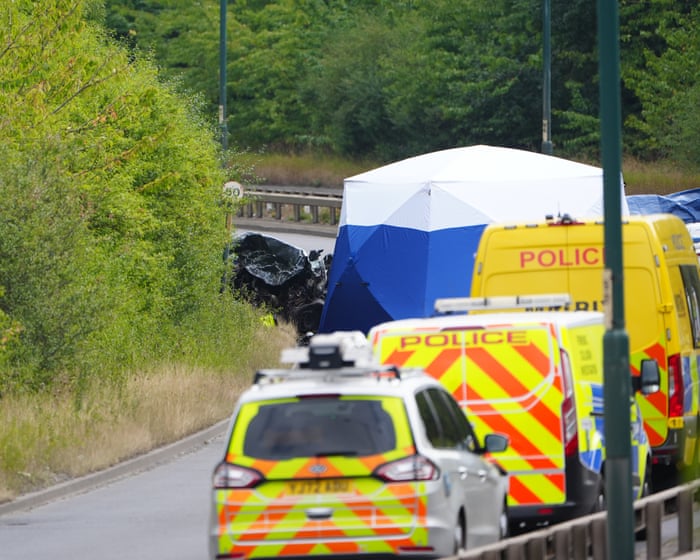
A minister urged social media companies to remove videos that show dangerous driving after a crash on the A66 killed seven people, including two police officers. The crash happened when a car driving the wrong way hit a police vehicle, and social media content showing risky driving has raised safety concerns.
Key Facts
Seven people died in the crash, including police officers PC Matthew Blades and PC Tom Clough.
The crash involved a Volkswagen Passat driving the wrong way on the A66 motorway in Middlesbrough.
The Passat contained five people aged 17 to 23 who also died in the collision.
Police chased the car for seven minutes before it drove against traffic, causing the fatal crash.
The car is believed to have had cloned license plates (fake or copied plates).
Defence minister Luke Pollard asked social media platforms to remove posts that encourage dangerous driving.
Social media platforms could face action under the Online Safety Act if they do not remove harmful content.
TikTok is being investigated by regulators over child safety and its age-checking system.
Read the Original
Want the full story? Tap a source to open the original
article.
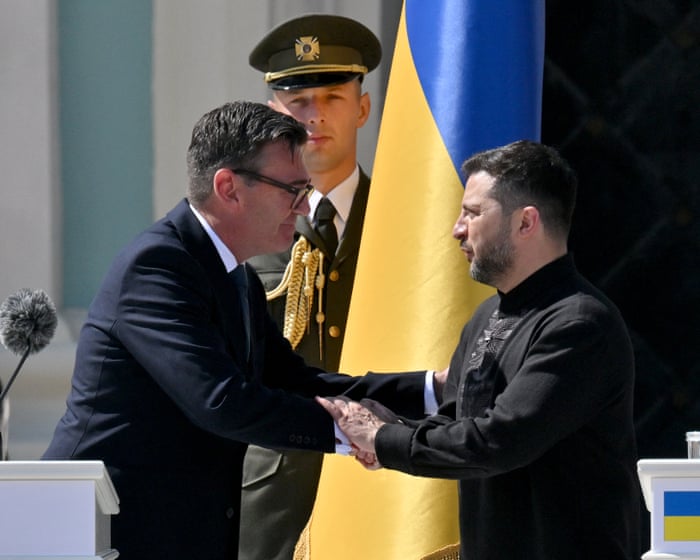
The UK has given Ukraine secret blueprints to help make long-range missiles, increasing tensions with Russia. Russian officials say this move harms peace efforts and they plan to target missile-making sites in Ukraine.
Key Facts
UK Prime Minister Andy Burnham visited Kyiv to deliver secret missile blueprints.
The blueprints relate to British components used in long-range cruise missiles.
Russia warned this action would worsen the conflict and block peace talks.
Russia plans to find and destroy missile production locations in Ukraine.
Ukraine is facing increased missile attacks, causing civilian casualties.
The UK and France are helping Ukraine build missile assembly lines.
Russia withdrew its ambassador to the UK amid worsening relations.
Ukraine’s Independence Day was marked under threat of further Russian missile strikes.
Read the Original
Want the full story? Tap a source to open the original
article.
The Dutch public broadcaster AVROTROS will not take part in next year’s Eurovision Song Contest. They said the contest is no longer neutral because of conflicts related to the war in Gaza and has become a source of division.
Key Facts
AVROTROS, the Dutch public broadcaster, announced on Monday that it will boycott Eurovision 2027.
The decision is due to international conflicts affecting the event and its loss of neutrality.
Eurovision organizers said countries involved in armed conflict cannot host the contest.
The Dutch broadcaster feels these rules do not restore Eurovision’s neutral reputation.
Israel finished second in both the 2025 and 2026 contests.
Eurovision 2027 will be held in Burgas, Bulgaria, the first time the country will host.
This year, Eurovision had 131 million viewers, down by 35 million from last year due to some countries boycotting over Israel’s participation.
Besides the Netherlands, Iceland, Spain, Ireland, and Slovenia also boycotted or refused to broadcast the contest this year.
Read the Original
Want the full story? Tap a source to open the original
article.
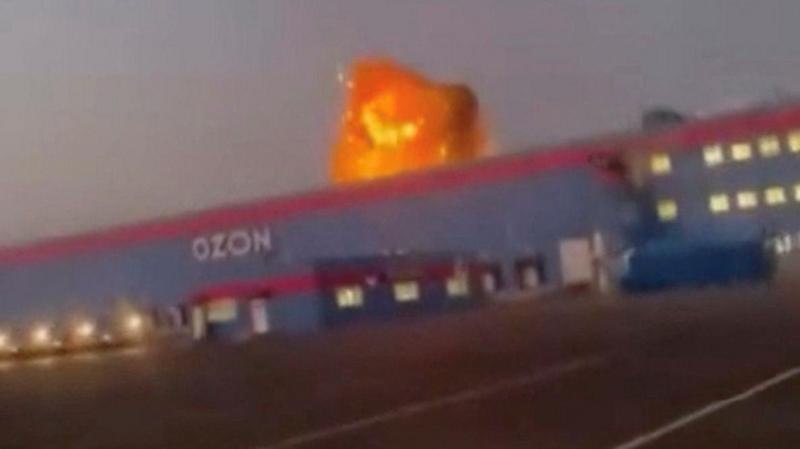
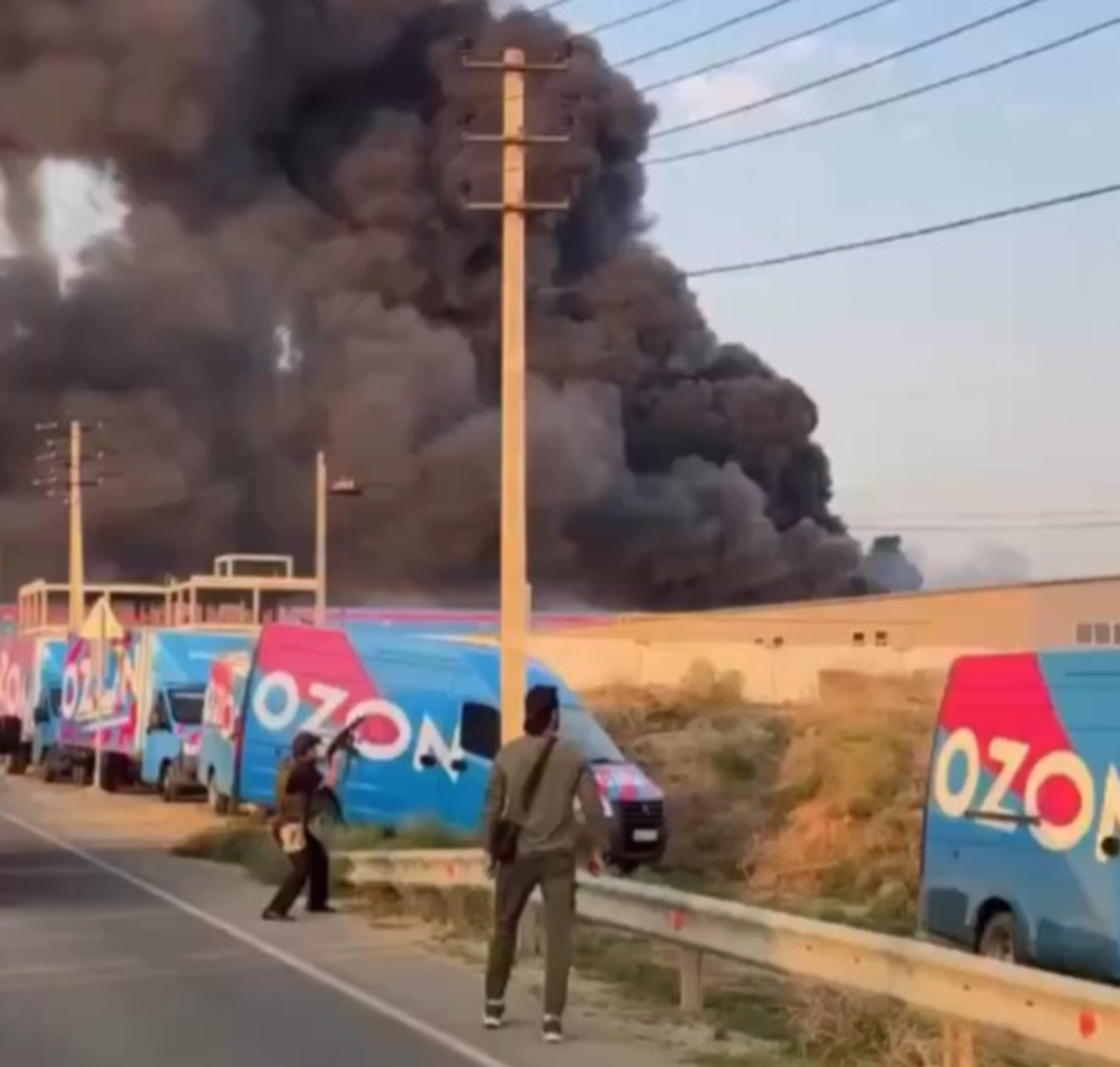
Ukraine launched drone attacks on warehouses of Ozon, Russia's second-largest online retailer, in several southern regions, causing fires and injuries. These strikes follow similar attacks on Wildberries, Russia's largest online retailer, as part of Ukraine’s efforts to disrupt Russia's military supply and economy.
Key Facts
Ukrainian drone strikes hit Ozon's logistics centers in Krasnodar, Dagestan, Stavropol, and Adygea regions.
Fires broke out at warehouses, and several workers were injured; some locations were evacuated.
Russia reported that three children died in Krasnodar from a drone strike, with six more hospitalized.
Ukraine says the strikes target dual-use goods storage that supports Russian military logistics.
Russia denies targeting civilians, and both sides reject deliberately hitting civilian areas.
Ozon’s shares dropped significantly following the attacks, and the Kremlin said it is considering support for affected businesses.
Wildberries and Ozon together serve most of Russia’s population for online shopping, acting as key delivery and supply networks.
The attacks signal increasing effects of the war on everyday Russians by hitting major commercial and economic hubs.
Read the Original
Want the full story? Tap a source to open the original
article.
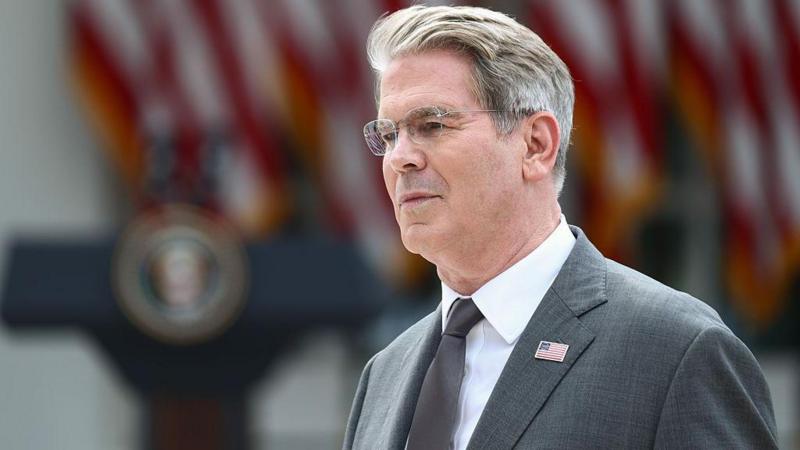
The US Treasury Secretary warned that the US plans to cut all economic ties with Iran in a major new financial move. Iran responded by threatening to stop all oil exports from the region and warned ships not to pass through the Strait of Hormuz without permission.
Key Facts
The US Treasury Secretary called the planned action against Iran "the single greatest financial offensive ever."
The US aims to isolate Iran economically and cut every economic connection to its government.
Iran threatened to halt all oil exports from the area if the conflict continues.
Iran warned ships not to use the important Strait of Hormuz without approval; this waterway handles about one-fifth of the world's oil and gas.
The US previously eased and then reimposed sanctions on Iran related to its nuclear program.
President Trump pulled the US out of the 2015 Iran nuclear deal in 2018 and reimposed sanctions.
The US recently targeted foreign banks and companies that do business with Iran through new sanctions.
Iran dismissed the US threats as ineffective and warned of regional consequences if the conflict escalates.
Read the Original
Want the full story? Tap a source to open the original
article.
European leaders are meeting in Kyiv to increase support for Ukraine, which is celebrating its 35th Independence Day amid ongoing conflict. The European Union has promised over six billion euros in aid, but Ukraine still lacks sufficient U.S. support for critical air defense systems.
Key Facts
Ukraine is marking 35 years of independence during an ongoing conflict with Russia.
European leaders are gathered in Kyiv to discuss additional support for Ukraine.
The European Union announced it will provide more than six billion euros in aid to Ukraine.
Ukraine depends heavily on the U.S. for its air defense but currently faces shortages.
The talks involve a group known as the Coalition of the Willing, focused on backing Ukraine.
Ukrainian President Volodymyr Zelenskyy is leading efforts to strengthen the country's defense.
The risk to civilian lives has increased, adding urgency to the need for better air defense.
The conflict has lasted over four and a half years since Russia's invasion began.
Read the Original
Want the full story? Tap a source to open the original
article.
Ukrainian drones have attacked several logistics centers of Ozon, Russia’s second-largest online marketplace, in different regions. These drone strikes caused fires, forced evacuations, and disrupted operations, as Ukraine targets supply networks that it says support Russia’s military.
Key Facts
Ozon’s logistics hubs in Krasnodar, Dagestan, Adygea, Stavropol, Samara, and Orenburg regions were hit by Ukrainian drone attacks.
The attacks caused large fires, evacuations, and some injuries, including the death of two children in Krasnodar from drone debris.
Ukraine targets these sites because it claims the warehouses support Russia’s military supplies.
Ozon is one of Russia’s biggest online marketplaces, competing with Wildberries, another e-commerce giant also targeted recently.
The largest fires occurred at warehouses covering tens of thousands of square meters.
Attempts to shoot down the drones were seen in videos of the attacks.
The attacks have impacted Ozon’s business, causing its shares to fall by 28% on the Moscow Exchange.
The strikes are part of Ukraine’s effort to disrupt Russian commercial and military supply chains during the conflict.
Read the Original
Want the full story? Tap a source to open the original
article.
London Zoo is conducting its yearly weigh-in to check the health of about 400 animals from birds to mammals. The weights and measurements are added to a global database that helps animal caretakers and conservationists track endangered species.
Key Facts
The zoo has over 14,000 animals but will weigh around 400 during this event.
Animals weighed include birds, reptiles, fish, mammals, and insects like katydids.
Some animals are trained to step onto scales, while others are encouraged using snacks.
The data collected is entered into the Zoological Information Management System (ZIMS).
ZIMS is a global tool that shares information with animal caregivers and conservationists worldwide.
Humboldt penguins at the zoo are classified as vulnerable due to climate change and other threats.
The weigh-in helps monitor animal health and supports efforts to protect endangered species.
Read the Original
Want the full story? Tap a source to open the original
article.
The United States, led by President Donald Trump, plans to impose its toughest economic sanctions yet on Iran to force the Iranian government to change its actions. The US aims to punish any country that does business with Iran, while Iran warns it will respond against nations joining the sanctions.
Key Facts
The US has been blocking Iranian ports to stop oil exports and targeting businesses helping Iran sell oil.
President Trump called for an “economic D-DAY” to isolate Iran and warned global countries against supporting Iran financially or through trade.
Treasury Secretary Scott Bessent said the US will enforce the "toughest sanctions in history" and threaten penalties on countries trading with Iran.
The US sees this move as the "greatest coordinated economic isolation in the history of the world."
Iran’s government called the sanctions a violation of other nations’ sovereignty and warned it would retaliate.
Iran has been under US sanctions for many years prior to these latest measures.
The US wants its allies worldwide to choose to stand with it in isolating Iran economically.
Read the Original
Want the full story? Tap a source to open the original
article.
A Hungarian military pilot safely ejected after his fighter jet crashed near the city of Szolnok. Authorities are investigating the cause of the crash, and no injuries have been reported.
Key Facts
The crashed jet was a Swedish-made JAS 39 Gripen.
The crash happened near Szolnok in central Hungary.
The pilot ejected safely and was unharmed.
The pilot tried to make sure the jet crashed on military property.
Hungary has 18 JAS 39 Gripen fighter jets in total.
Four jets were newly added to Hungary’s fleet this year from a 2024 order.
An investigation into the crash is currently ongoing.
The Minister of Defense traveled to the crash site with the chief of staff.
Read the Original
Want the full story? Tap a source to open the original
article.
Indonesia is increasing efforts to fight large forest fires that are burning thousands of hectares across several provinces. These fires have created thick smoke that affects cities and crosses into neighboring countries like Malaysia and Brunei.
Key Facts
Fires are burning in central and western Indonesia, including parts of Borneo and Sumatra islands.
The National Disaster Management Agency (BNPB) says El Nino weather patterns and a long dry season have worsened the fires.
President Prabowo Subianto visited fire-affected areas and promised more government support, such as adding water-bombing helicopters and oxygen for firefighters.
More than 11,500 hectares have burned in Riau province alone.
Indonesia is using 35 foreign-registered aircraft for water bombing and aerial patrols to fight the fires.
Satellite data shows South Sumatra has the highest number of fire hotspots with 1,429 areas detected.
Nearly 94,000 hectares burned in July, and dry conditions and strong winds make firefighting harder.
Ground firefighters total over 10,700, but some fire areas remain hard to reach, increasing the need for aerial firefighting support.
Read the Original
Want the full story? Tap a source to open the original
article.
A special court in Bangladesh has ordered three journalists to stay in jail until their trial for their alleged role in a 2024 student uprising that removed former Prime Minister Sheikh Hasina from power. The journalists face charges linked to the violent crackdown on protesters, while human rights groups have criticized their detention and called for the charges to be dropped.
Key Facts
Three journalists—Mozammel Babu, Farzana Rupa, and Shyamal Dutta—are being held by a special tribunal in Dhaka, Bangladesh.
They are accused of provoking the government against student demonstrators during a 2024 uprising that led to hundreds of deaths.
Former Prime Minister Sheikh Hasina was ousted and sentenced to death for crimes against humanity; she fled to India in 2024.
The journalists appeared in court and their next hearing is scheduled for October 25, 2024.
Human rights groups say jailing journalists for their reporting is wrong and harms press freedom in Bangladesh.
The journalists have been detained for years, facing multiple serious charges including murder.
The previous interim government, led by Nobel Peace Prize winner Muhammad Yunus, arrested the journalists.
Bangladesh has asked India to extradite Hasina, but India refused. Hasina plans to return to Bangladesh in December 2024.
Read the Original
Want the full story? Tap a source to open the original
article.
Courts in Zambia, including in the capital Lusaka, have been closed with police preventing access as the deadline to challenge the recent presidential election approaches. Opposition candidate Brian Mundubile, who came second in the vote, says he will contest the election results amid reports of threats, arrests, and the death of an opposition figure.
Key Facts
Zambian courts, including the High Court, Supreme Court, and local courts, are closed and taped off with an unusual police presence.
The deadline to file a petition against the presidential election result is Monday, potentially affecting President Hakainde Hichilema’s upcoming inauguration on September 1.
Opposition candidate Brian Mundubile, who received 38% of the vote, says he will challenge the election outcome due to alleged irregularities.
Mundubile is hiding after reported threats and arrests of opposition figures following the election.
A former opposition minister, Mutotwe Kafwaya, was killed during a security operation, raising calls for independent investigations by rights groups and lawyers.
International observers described the election day as largely peaceful but expressed concerns about late election reforms, media access, and a heavy military presence.
The EU observation mission reported issues such as attacks on vote tallying centers, delays in recording results, and lack of transparency in publishing detailed voting results.
Despite court closures, preparations for President Hichilema’s inauguration continue, including inspections at the venue.
Read the Original
Want the full story? Tap a source to open the original
article.
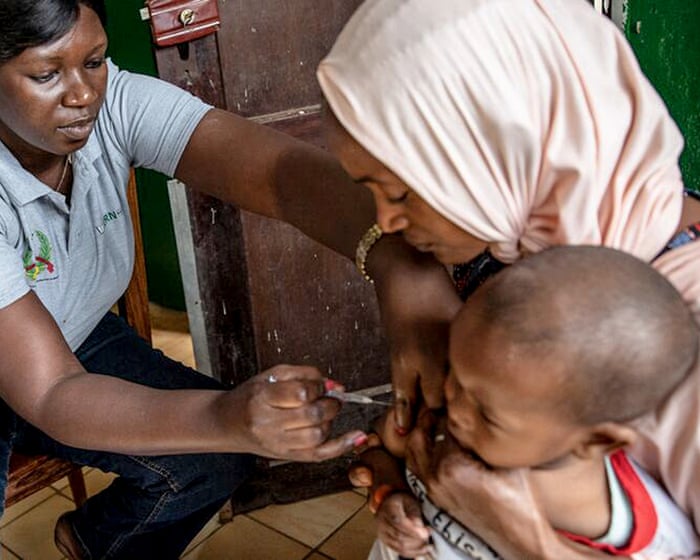
Guinea-Bissau declared an mpox outbreak on July 4, with more than half of the cases occurring in children. Health officials warn the disease may be spreading unnoticed due to weak health systems, and efforts are underway to increase public awareness and strengthen disease monitoring.
Key Facts
Guinea-Bissau announced an mpox outbreak less than two months after the first confirmed case.
There are 7 confirmed and 46 suspected mpox cases reported so far.
Around half of the affected patients are children, including 16 under four years old.
Mpox spreads through close contact and has caused over 2,000 deaths in Africa this year.
Most cases are in the capital region, Bissau, with one case nearby in Biombo.
No deaths from mpox have been reported in Guinea-Bissau to date.
Health experts emphasize the need for better surveillance and stronger frontline health services.
Community workers are conducting door-to-door education campaigns to inform the public.
The country is also facing challenges like poor infrastructure and political instability following a suspended presidential election.
Read the Original
Want the full story? Tap a source to open the original
article.
Ukraine’s drone strikes have damaged key Russian oil refineries, leading to fuel shortages in Russia and causing many Russians near the Kazakhstan border to drive long distances to fill up their tanks. This fuel shortage also affects other Central Asian countries, which depend heavily on Russian petrol supplies, causing regional price rises and smuggling attempts.
Key Facts
Ukrainian drones have attacked Russian oil refineries and fuel depots from Crimea to Siberia, causing damage that limits fuel production.
Fuel shortages in Russia have led to long lines and conflicts at petrol stations.
People living near Kazakhstan are driving far into Kazakhstan to buy fuel, a practice called “fuel tourism.”
Kazakhstan banned petrol exports in May, but smuggling of fuel back into Russia continues.
Kazakhstan’s fuel prices rose by about 15.6% this year despite having large oil refineries.
Kyrgyzstan and Tajikistan, which rely heavily on Russian petrol, are facing fuel supply problems and have asked for regional help.
A major Russian refinery in Omsk stopped operating after Ukrainian drone attacks, worsening the fuel shortage.
Fixing damaged refineries will take months or years because of the complexity of the equipment and supply challenges.
Read the Original
Want the full story? Tap a source to open the original
article.