Neutral summaries of your favorite news sources — just the facts.
Your favorite news sources, one neutral feed — we distill their reporting into fact-first
summaries and always link to the original story. How it works
World News
Comprehensive coverage of international news and global events
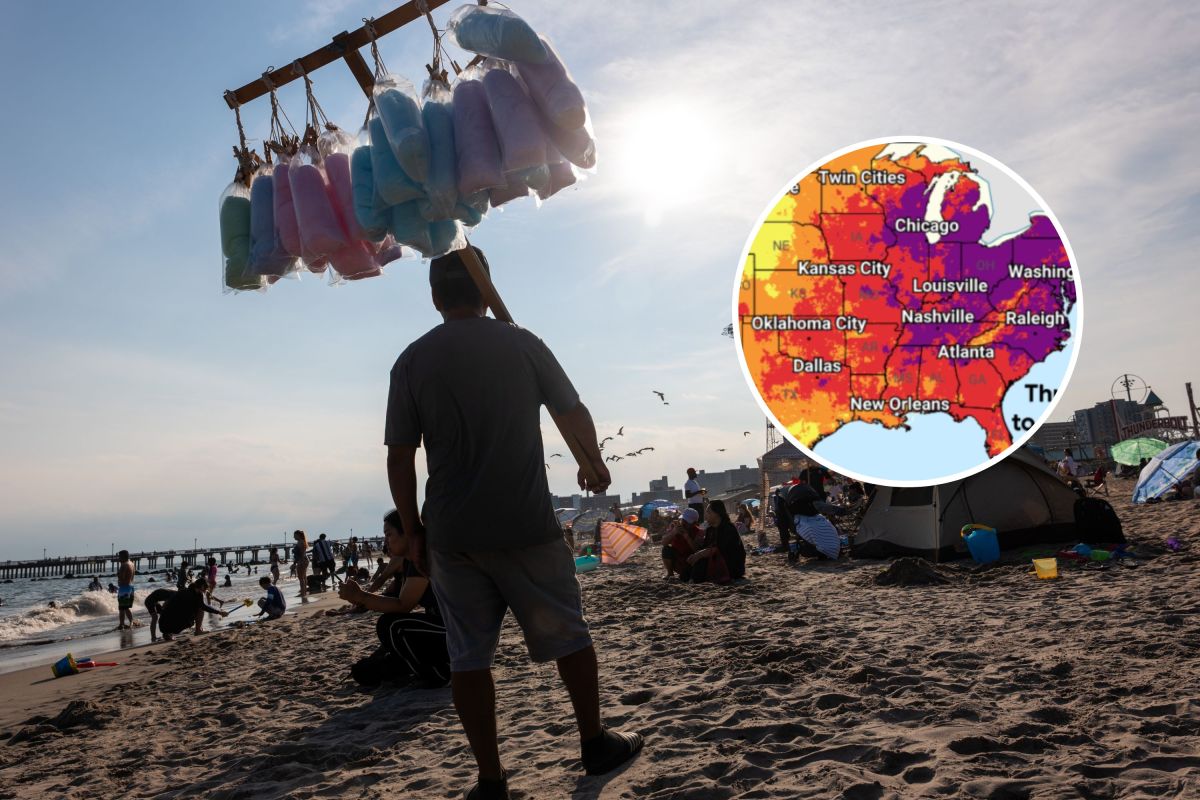
A large and intense heat dome is expected to bring extremely high temperatures and humidity across much of the central and eastern United States during the week of July 4. This extreme heat could affect millions of people, with some areas facing record-breaking temperatures and dangerous conditions that strain health and infrastructure.
Key Facts
The heat dome will peak from Tuesday through Thursday across the Midwest and Mississippi Valley, then spread to the Ohio Valley and East Coast later in the week.
Temperatures could reach the 90s to low 100s (°F), with humidity making it feel like 100 to 115 degrees.
The National Weather Service uses a HeatRisk scale from Level 0 to Level 4; Level 4 means rare, extreme heat that can affect anyone without proper cooling or water.
Level 4 heat risk is expected from Thursday through Saturday in many states including Michigan, Illinois, Pennsylvania, New York, and Virginia.
Many locations in the Northeast and Midwest are predicted to break temperature records during this period.
The heat dome causes heat by trapping hot air and blocking clouds, which increases sunshine and boosts temperatures.
Extreme heat may continue into the next week with some relief possible by July 7.
The heat dome is different from a normal heat wave because it lasts longer and prevents cloud formation, creating more intense heat.
Read the Original
Want the full story? Tap a source to open the original
article.
Five days after two strong earthquakes hit La Guaira, Venezuela, the area is still struggling with damage and recovery efforts. Many buildings were destroyed, and rescue teams continue searching for survivors amid economic and social challenges.
Key Facts
Two large earthquakes struck the coastal city of La Guaira, Venezuela.
The disaster caused heavy destruction to buildings and infrastructure.
Rescue operations are ongoing but face difficulties due to damaged roads and resources.
Over 1,400 people have died because of the earthquakes.
Thousands of people are still missing after the tremors.
Venezuela faces existing economic problems and displacement before the earthquakes.
The rescue teams say the time to find survivors is running out.
International media outlets have reported on the disaster and relief efforts.
Read the Original
Want the full story? Tap a source to open the original
article.
Vadym Iermolaiev, a wealthy Ukrainian businessman living in Monaco, was injured in a bomb attack near his apartment. Authorities are investigating the motive, with some suggesting personal conflicts or connections to alleged criminal activity rather than political reasons.
Key Facts
The bombing happened near Iermolaiev’s Monaco apartment on a Monday evening.
The attack injured Iermolaiev, his wife, and their 13-year-old child; the wife was critically hurt.
Iermolaiev is a real estate developer from Ukraine, with businesses in agriculture and vodka production.
He gave up his Ukrainian passport in 2018 and became a citizen of Cyprus.
Ukraine sanctioned him in 2023, accusing him of doing business in Russian-occupied Crimea and paying taxes to Russia; he denies these claims.
Iermolaiev has publicly condemned Russia’s invasion of Ukraine and supports Ukraine’s armed forces.
Some people close to him say he is not involved in politics and that the attack may be related to personal or business issues.
His son was arrested in Cyprus and extradited to Estonia, accused of telephone fraud linked to a criminal group.
Read the Original
Want the full story? Tap a source to open the original
article.
Amazon Prime has released a TV show called Elle, a spin-off of the popular movie Legally Blonde. The show has received mostly negative reviews, with critics saying it is boring and poorly written, though some found it fun and enjoyable.
Key Facts
Elle is a TV series based on the movie Legally Blonde, set in 1995.
It stars Lexi Minetree as a young Elle Woods, a high school junior.
Reese Witherspoon, the original Elle Woods, works as an executive producer but does not act in the show.
The story follows Elle as her family moves from California to Seattle after her father, a plastic surgeon, makes a mistake.
Many critics call the show dull, with weak writing and outdated cultural references.
Some reviewers praise it as entertaining and full of charm.
The show has eight episodes in its first season.
Critics note the show lacks the humor and strong storytelling of the original movie.
Read the Original
Want the full story? Tap a source to open the original
article.
Iran will have indirect talks with Qatar, which is acting as a mediator, to discuss a deal with the United States. The talks will focus on carrying out their agreement and the release of Iranian money that has been frozen by the US.
Key Facts
Iran plans to hold indirect talks with Qatar.
Qatar is acting as a mediator between Iran and the US.
The talks will focus on implementing a Memorandum of Understanding (MoU) between Iran and the US.
Part of the discussion will involve the release of Iranian assets frozen by the US.
Iran warned it will respond if the US violates the agreement.
The agreement aims to help end the ongoing conflict.
Read the Original
Want the full story? Tap a source to open the original
article.
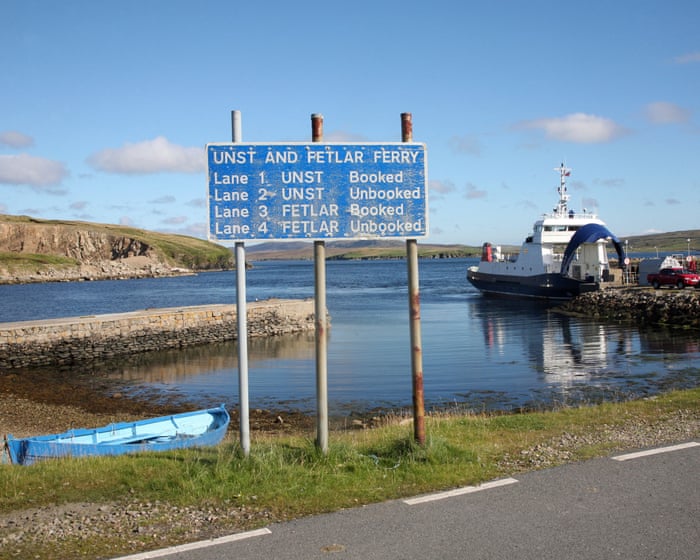
Shetland councillors have approved plans to explore building up to four underwater tunnels connecting some of the islands to replace old ferries. The first two tunnels would link Mainland Shetland to Yell and Unst islands, costing about £655 million and taking at least eight years to build.
Key Facts
The council voted to look into financing options for two subsea tunnels linking Mainland Shetland with Yell and Unst.
The tunnels aim to replace ageing ferries that are unreliable and contribute to population decline.
Building the two tunnels would cost around £655 million and take at least eight years.
The ferries are on average over 32 years old and often face staff shortages and weather-related cancellations.
Tunnels are expected to increase population, economic growth, and reduce the average age of island residents.
Construction costs may be funded by Scottish and UK governments, with possible private investment and toll revenues.
Shetland is important for the UK’s economy, producing a significant share of Scotland’s farmed salmon and mussels, and hosting the UK’s only spaceport.
Larger fixed links in Shetland may encourage similar projects in other island groups like the Western Isles.
Read the Original
Want the full story? Tap a source to open the original
article.
Actor Himesh Patel discusses his role as Dr. Watson in the Netflix film "Enola Holmes 3," where Watson helps Enola find her kidnapped brother, Sherlock Holmes. Patel explains how he researched the original stories to create a fresh version of Watson who acts as an emotional support for the characters while discovering himself.
Key Facts
"Enola Holmes 3" is a Netflix movie where Enola Holmes tries to rescue her kidnapped brother, Sherlock.
Himesh Patel plays Dr. Watson, a key character who supports Enola on her mission.
Patel first appeared as Watson in "Enola Holmes 2" (2022) with a smaller role and returns with a larger part in the third film.
Patel read the original Sherlock Holmes books by Arthur Conan Doyle and studied the time period to understand Watson better.
This version of Watson is designed to feel new and different from past portrayals, while still respecting the original character.
Watson acts as an emotional anchor for Enola and Sherlock but remains slightly separate, giving him a unique viewpoint.
Patel relates personally to Watson’s thoughtful and observant nature, which helped him portray the character’s quiet intelligence.
Patel also mentioned working with filmmaker Christopher Nolan on another project called "The Odyssey," but details were limited in the conversation.
Read the Original
Want the full story? Tap a source to open the original
article.
Senegal's parliament passed a constitutional reform that reduces the president’s powers and increases those of lawmakers, causing protests outside the parliament. The government plans to hold a national vote on the changes, but no date has been set yet.
Key Facts
The reforms give parliament more power to investigate and require the government to share natural resource agreements with lawmakers.
A new Constitutional Court with nine members will replace the current Constitutional Council of seven members.
The reforms stop a sitting president from leading a political party, affecting President Bassirou Diomaye Faye, who is no longer an official party leader but remains a member.
Presidents would be barred from approving certain laws between an election and the inauguration of their successor.
The ruling Pastef party, controlling most seats in the National Assembly, supports the reforms to balance government powers.
Opposition parties and civil groups say the changes are motivated by political revenge against President Faye.
Protests occurred with police using tear gas to clear demonstrators outside parliament during debates.
President Faye intends to hold a referendum on the reforms, but the parliamentary speaker questions the president’s authority to do so.
Read the Original
Want the full story? Tap a source to open the original
article.
The Chinese government is pressuring Catholics to leave underground churches and join state-approved groups. The Vatican has not publicly responded to this situation.
Key Facts
China wants Catholics to stop worshipping in underground churches.
The government prefers Catholics to join official, state-controlled churches.
Underground congregations are Catholic groups that meet secretly.
The Vatican, the central authority of the Catholic Church, has remained quiet about this issue.
The Chinese government controls religious groups to align them with its policies.
Read the Original
Want the full story? Tap a source to open the original
article.
U.S. envoys Steve Witkoff and Jared Kushner are in Doha, Qatar, holding discussions about Iran. These talks are happening while tensions between the U.S. and Iran remain very high, and the messages from both sides have been unclear.
Key Facts
Two U.S. envoys, Steve Witkoff and Jared Kushner, are in Qatar for meetings.
The talks focus on issues related to Iran.
Tensions between the U.S. and Iran are currently very high.
Both sides have given mixed or unclear messages about their intentions.
The discussions are part of ongoing diplomatic efforts to address the situation.
The meetings are being reported by CBS News and covered by contributor Aaron MacLean.
Doha, Qatar, is serving as the location for these talks.
Read the Original
Want the full story? Tap a source to open the original
article.
Special envoy Steve Witkoff and President Donald Trump’s son-in-law Jared Kushner will meet with Qatari leaders in Doha to continue talks related to Iran. They will meet with Qatar’s Prime Minister, Sheikh Mohammed bin Abdulrahman bin Jassim Al Thani, but will not have direct talks with Iran on Tuesday.
Key Facts
Steve Witkoff is a special envoy involved in talks about Iran.
Jared Kushner, President Trump’s son-in-law, is part of the delegation.
The meeting takes place in Doha, the capital of Qatar.
Qatar’s Prime Minister Sheikh Mohammed bin Abdulrahman bin Jassim Al Thani will attend the meeting.
Discussions focus on ongoing issues involving Iran.
There will be no direct meetings with Iranian officials on this day.
Qatar is acting as a mediator in the regional dialogue.
The talks are part of broader efforts to address regional tensions.
Read the Original
Want the full story? Tap a source to open the original
article.
A ceasefire between Lebanon and Israel has ended active fighting, providing a break from war. However, many people in Lebanon still face difficulties like rising prices, poverty, and uncertainty about the future.
Key Facts
Lebanon and Israel agreed to a ceasefire after months of war.
The ceasefire has reduced fighting but not resolved daily problems for Lebanese people.
Inflation, which means rising prices, is still a big problem in Lebanon.
Poverty remains widespread despite the ceasefire.
People in Lebanon continue to face uncertainty about what will happen next.
Solidarity, or people supporting each other, plays an important role during these hard times.
Read the Original
Want the full story? Tap a source to open the original
article.
Thousands of people marched in several South African cities to demand that undocumented foreign nationals leave the country. This follows a recent campaign that caused many migrants to flee and has led to four deaths.
Key Facts
The marches happened on a Tuesday in multiple cities across South Africa.
The protests called for illegal migrants to leave the country.
A recent campaign against undocumented migrants lasted several weeks.
Thousands of migrants have fled South Africa because of this campaign.
There have been four deaths linked to the campaign and resulting tensions.
The issue is part of broader xenophobic sentiment against immigrants in South Africa.
The marches highlight ongoing social and political challenges related to migration in the country.
Read the Original
Want the full story? Tap a source to open the original
article.
France’s parliament approved a law targeting fast-fashion online companies like Shein, Temu, and AliExpress. The law creates fines per product sold to reduce the environmental and social impact of ultra fast-fashion.
Key Facts
France’s Senate passed the bill after more than two years of debate.
The law targets ultra fast-fashion online retailers such as Shein, Temu, and AliExpress.
Fines will start at €0.25 to €6 per product in 2026.
The fines will increase to up to €10 per product by 2030.
The goal is to curb the negative effects of fast-fashion on the environment and society.
The bill reflects ongoing concerns about the speed and volume of cheap clothing sold online.
Read the Original
Want the full story? Tap a source to open the original
article.
France experienced a five-day heatwave in May that caused at least 300 more deaths than usual. In June, the country faced an even longer heatwave, with temperatures reaching record highs and causing additional deaths and disruptions.
Key Facts
The May heatwave lasted five days and led to about 300 extra deaths, about 14% more than normal.
These deaths were from all causes and not always directly linked to the heat.
The May heatwave was early in the year, catching people unprepared as schools and workplaces were still in full operation.
In June, France had 11 days of record-breaking hot weather, the hottest since temperature records began.
Many French homes and schools lack air conditioning, making it harder to cope with extreme heat.
Health officials reported around 1,000 more deaths during the June heatwave compared to previous months.
Experts estimate that heatwaves in France can cause between 1,000 and 7,000 deaths annually, and this summer could be closer to the higher number.
Prime Minister Sébastien Lecornu noted more people died at home during the recent heatwaves than before.
Read the Original
Want the full story? Tap a source to open the original
article.
The head of Syrian intelligence is attending a counter-terrorism conference at the United Nations in New York for the first time. This marks a significant moment for Syria, a country that has experienced serious problems with extremist groups in the past.
Key Facts
The Syrian intelligence chief is visiting New York to join a counter-terrorism conference at the UN.
This is the first time the Syrian intelligence leader has taken part in such an event.
Syria was once known as a center of extremist activity.
The visit is seen as an important step in Syria’s role in global anti-terrorism efforts.
The conference focuses on international cooperation to fight terrorism.
The event is taking place in 2026.
The visit signals a possible shift in how Syria engages with the international community.
Read the Original
Want the full story? Tap a source to open the original
article.
"Love Island" Season 13 Episode 31 will be released on July 1, 2026, and will be available to watch on Hulu starting at midnight Pacific Time. In this episode, the show features a new segment called Casa Amor, where male contestants leave the main villa to meet new female participants, while the women meet new male contestants to test the strength of current couples.
Key Facts
Episode 31 of "Love Island" Season 13 releases on July 1, 2026.
New episodes air daily during summer except Tuesdays.
The episode streams on Hulu at 12 a.m. Pacific Time (3 a.m. Eastern Time).
A Hulu subscription is required, starting at $11.99 per month.
Casa Amor is a special event where boys go to a different villa to meet new women, and new men arrive at the main villa to meet the girls.
Some contestants begin new connections, while others stay loyal to their partners.
Episodes last about 60 to 90 minutes.
Original cast members include Sean, Lola, Lorenzo, and others.
Read the Original
Want the full story? Tap a source to open the original
article.
The conflict between the United States and Iran has shown weaknesses in America’s power and trustworthiness. This situation could affect how other countries like China, Russia, and North Korea see and deal with the U.S.
Key Facts
The U.S. is currently in a conflict with Iran.
This conflict is revealing problems in America’s ability to lead and protect its interests.
Other major countries watching closely include China, Russia, and North Korea.
These countries might lose trust in the U.S. because of the conflict with Iran.
The U.S. credibility refers to its reputation for strength and reliability.
Losing credibility could affect future international relationships and negotiations.
The article suggests the Iran conflict has wider global effects beyond the immediate region.
Read the Original
Want the full story? Tap a source to open the original
article.
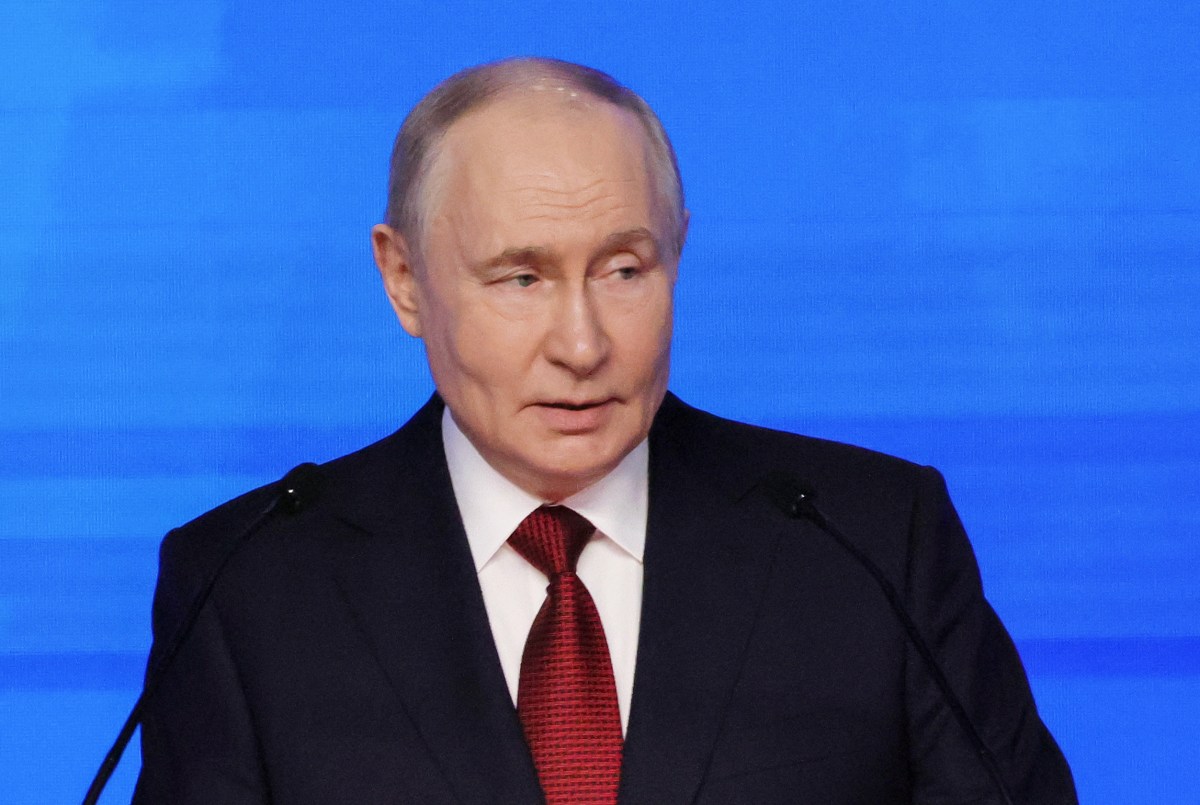
Trust in Russian President Vladimir Putin has dropped to its lowest point since the full-scale invasion of Ukraine began. Polls show fewer Russians trust him, with growing concerns about fuel shortages, rising prices, internet blackouts, and a slowing economy.
Key Facts
A recent poll found 69% of Russians trust President Putin, down 5 points in one week and much lower than 82% a year ago.
Distrust of Putin increased to 18%, up from about 10-11% a year earlier.
Approval of Putin’s job performance fell to 71%, down from 82% six months ago.
Another poll showed 60% of Russians believe economic conditions are worsening, the highest in 20 years.
Russia’s economic growth forecast for 2026 was lowered from 1.3% to 0.4%.
Fuel shortages and rationing are affecting many Russian regions due to Ukrainian drone attacks on energy infrastructure.
President Putin acknowledged fuel shortages but called the situation not critical.
Internet outages and increased fuel prices have caused public complaints and worry about government controls.
Read the Original
Want the full story? Tap a source to open the original
article.
A herd of cows wandered onto Britain’s busiest railway line in Staffordshire, blocking trains between London and Manchester for over three hours. The disruption caused delays and cancellations on several train services on Tuesday.
Key Facts
Cows blocked the west coast mainline near Staffordshire before 9 a.m.
The disruption lasted more than three hours and affected services until about 4 p.m.
Trains cancelled included Avanti West Coast and Lumo services between London Euston and Scotland.
London Northwestern and West Midlands trains also faced delays and cancellations.
Railway staff had trouble contacting the farmer responsible for the cows.
Tickets were accepted on some alternative train routes during the disruption.
The incident happened shortly after plans were announced for joint operations between London and Manchester.
The event caused travel problems for thousands of passengers on one of the UK’s busiest rail routes.
Read the Original
Want the full story? Tap a source to open the original
article.