Neutral summaries of your favorite news sources — just the facts.
Your favorite news sources, one neutral feed — we distill their reporting into fact-first
summaries and always link to the original story. How it works
World News
Comprehensive coverage of international news and global events
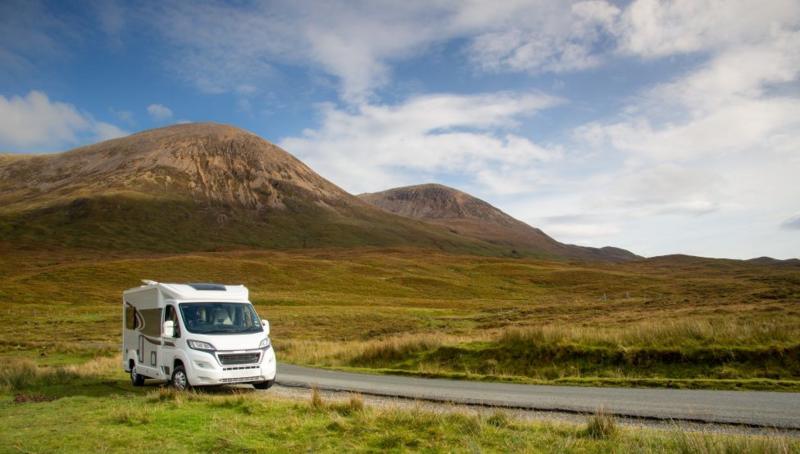
The Isle of Skye in the Scottish Highlands welcomes over 30,000 campervan trips every year, which helps the local economy. However, some visitors cause problems by leaving litter and human waste in nature, leading to complaints from residents about a lack of proper toilet facilities.
Key Facts
More than 30,000 campervan and motorhome trips visit the Scottish Highlands annually, with many on the Isle of Skye.
The island has a population of just over 10,000 and features few towns but many natural landscapes.
There are only 10 public toilets on Skye, and some local businesses participate in the Highland Comfort Scheme to offer toilet access.
Some tourists do not use toilets properly and are seen urinating openly, leaving tissue and waste in public areas.
Crofter Calum Beaton reported finding human waste and chemical toilet waste dumped on farmland.
Residents like Julia Dawber see up to nine campervans parked near her home and experience visitors relieving themselves close by.
Most visitors are responsible, as noted by local business owner Sarah MacKinnon, who said 95% behave well.
Scotland’s Outdoor Access Code encourages people to respect others, care for the environment, and take responsibility for their actions while visiting nature.
Read the Original
Want the full story? Tap a source to open the original
article.
Dame Penelope Keith was a famous British actress known for her roles in popular 1970s sitcoms like The Good Life and To the Manor Born. She had a long career in theatre and television, earning many awards including a damehood for her work in entertainment and charity.
Key Facts
Penelope Keith became well-known for playing Margo Leadbeatter in The Good Life.
She also starred as Audrey fforbes-Hamilton in To the Manor Born.
Keith began her acting career in the late 1950s and continued performing on stage and TV.
She won several awards, including TV Baftas, an Olivier award, an OBE, a CBE, and was made a dame in 2014.
Born in 1940 in Sutton, Surrey, she grew up in south London during World War Two.
Despite her refined voice, she came from a modest background and spent early years with her grandparents.
She was rejected by a top drama school for being too tall but trained at another acting school.
Her height often led her to play supporting roles, which helped her develop a wide acting range.
Read the Original
Want the full story? Tap a source to open the original
article.
A father and son were rescued alive from the rubble of a collapsed building four days after powerful earthquakes hit Venezuela. Rescue teams from France and the United States are working together to find more survivors as they continue search efforts.
Key Facts
The earthquakes struck Venezuela and caused buildings to collapse.
A father and son were found alive after being trapped for four days.
Rescue workers from France and the U.S. are involved in the search.
Teams are racing against time to save more people.
The rescue of the father and son brought hope to the rescue teams.
The earthquakes have caused widespread damage in Venezuela.
International help is part of the ongoing recovery effort.
Read the Original
Want the full story? Tap a source to open the original
article.
Powerful twin earthquakes hit Venezuela, killing at least 1,450 people. After more than four days, hopes of finding survivors are fading, and people are upset about the government’s response to the disaster.
Key Facts
Two strong earthquakes struck Venezuela recently.
At least 1,450 people have died because of the earthquakes.
Rescue efforts have been ongoing for more than four days.
The chance of finding more survivors is now low.
Residents are frustrated with how the government is handling the disaster.
International teams have joined the search for survivors.
The disaster caused widespread damage and grief in Venezuela.
Read the Original
Want the full story? Tap a source to open the original
article.
Pakistan's security forces conducted air and ground operations along the border with Afghanistan, killing at least 29 militants. The Afghan Taliban reported that at least 38 civilians died in Pakistan’s airstrikes in eastern Afghanistan.
Key Facts
Pakistan's military carried out strikes near the Afghanistan border.
At least 29 militants were killed by Pakistan’s forces.
The Afghan Taliban said these strikes caused the death of at least 38 civilians.
The operation involved both air and ground attacks.
The incident happened in eastern Afghanistan.
The reports come from Pakistan's security forces and the Taliban, presenting differing perspectives on casualties.
The conflict area is along the border between Pakistan and Afghanistan.
Read the Original
Want the full story? Tap a source to open the original
article.
Over 1,400 people have died after two earthquakes struck Venezuela on June 24, 2026. Rescue teams are still searching for survivors, but experts say the best chance to find living people is within 72 hours after a disaster, and that time is almost over.
Key Facts
Two earthquakes hit Venezuela on June 24, 2026.
The death toll has risen to over 1,400 people.
Rescue teams continue to search for survivors.
Experts say that most survivors are found within 72 hours after a disaster.
The search is entering its third day, and chances of finding survivors are decreasing.
A mother and baby were among the survivors found.
The natural disaster has caused a major humanitarian emergency in the region.
Read the Original
Want the full story? Tap a source to open the original
article.
Germany experienced a new high temperature record of 41.7°C (107.1°F) during a heatwave, according to early data from the German weather service. This extreme heat event affected the country on Sunday, June 28, 2026.
Key Facts
Germany set a new temperature record at 41.7°C.
The measurement is based on preliminary data from the German weather service.
The record was reached during a heatwave described as "brutal."
The heatwave is causing temperature records to be broken as it moves eastward.
Extreme heat events like this can have widespread effects on health, environment, and infrastructure.
The news was reported from Berlin by France 24’s correspondent.
Heatwaves are part of a larger pattern of changing weather conditions around the world.
Read the Original
Want the full story? Tap a source to open the original
article.
Film archivists from Europe are working to complete Orson Welles’s unfinished movie based on Don Quixote, more than 70 years after it was started. They are combining about 30 hours of footage from France, Spain, Italy, and Germany to create a coherent film.
Key Facts
Orson Welles began filming Don Quixote in 1957, initially as a TV project backed by Frank Sinatra, but it was never finished.
Filming took place over about 20 years in Mexico, Italy, and Spain, with Welles working on it until his death in 1985.
The footage is scattered across several European archives, including France, Spain, Italy, and the Munich film museum in Germany.
The reconstructing team has 30 hours of footage and plans to create the film without adding new scenes or special effects.
There is no complete script, but enough alternative versions exist to guide the editing process.
Some scenes are in black and white, while others were shot in color; the soundtrack is incomplete, and Welles himself voiced major roles in parts.
The story is a loose adaptation of Cervantes’s novel, with some scenes changed, such as one moved from a puppet theater to a cinema.
Esteve Riambau, leader of the project, compares Welles’s work to that of Michelangelo and sees this film as an important addition to Welles’s legacy.
Read the Original
Want the full story? Tap a source to open the original
article.
Recent military clashes between the United States and Iran seem to have stopped. Qatar and Pakistan helped both countries return to diplomatic talks, which will focus on safe navigation through the Strait of Hormuz.
Key Facts
Former US Ambassador to Oman Richard Schmierer commented on the US-Iran situation.
Military exchanges between the US and Iran have reportedly ended.
Qatar and Pakistan played a role in bringing the two sides back to diplomacy.
Talks are planned to take place in Doha on Tuesday.
The discussions will focus on ensuring safe passage through the Strait of Hormuz.
The Strait of Hormuz is a key waterway for international shipping, especially oil transport.
Read the Original
Want the full story? Tap a source to open the original
article.
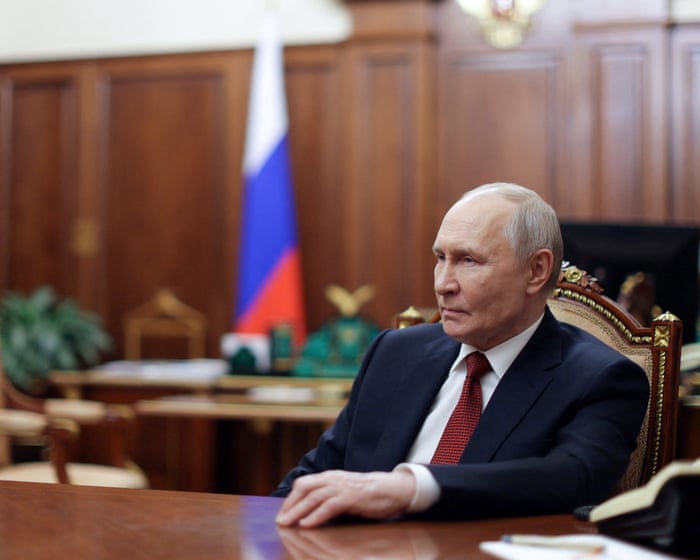
Russian President Vladimir Putin said Russia will keep fighting in Ukraine and refused to limit the use of long-range missiles, despite what he said was a proposal from Ukraine to stop such attacks. Ukraine has been increasing its drone attacks on Russian energy sites, causing damage and casualties in Russia.
Key Facts
Putin said Russia will continue its war against Ukraine and rejected Ukraine’s proposal to limit long-range missile strikes.
Putin claimed Ukraine made the proposal because its forces are under pressure along the long front line.
Ukraine has used long-range drones to attack Russian oil refineries and electricity plants far from the front lines.
Ukrainian strikes damaged oil refineries in Slavyansk and Yaroslavl regions of Russia, causing fires and casualties.
Russia reported shooting down over 100 Ukrainian drones and said some drones dropped explosives on Russian territory.
Russian attacks on Ukraine killed at least four people on the same day Putin spoke.
Putin acknowledged Russia had to increase air defenses to protect against Ukrainian drone attacks on its energy sector.
Ukrainian President Zelenskyy said these attacks weaken Russia’s ability to continue the war.
Read the Original
Want the full story? Tap a source to open the original
article.
Tensions between the US and Iran have increased due to attacks and missile strikes around the Strait of Hormuz, a key waterway for global oil shipping. President Trump warned that the US might use military force, while both sides agreed to pause hostilities and resume talks to reopen the strait.
Key Facts
Iran launched drone and missile attacks on Bahrain and Kuwait after US strikes on southern Iran.
President Donald Trump warned that the US might "militarily finish the job," threatening Iran’s existence.
Kuwait intercepted two ballistic missiles without injuries or damage reported.
Bahrain reported damage to a residential building after Iranian drone strikes, with no fatalities.
A Qatari national died and another was injured from shrapnel related to military activities in the area.
Iran insists it should have sole control over the Strait of Hormuz, a vital route for oil and gas shipping.
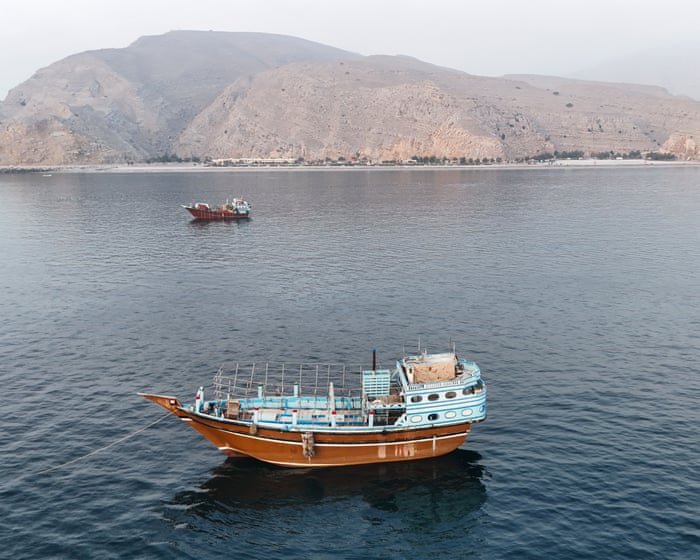
The US promotes a southern shipping lane along Oman’s coast, while Iran wants ships to use the northern route under its control.
Both sides agreed to halt recent attacks and continue technical talks to allow free movement of vessels through the strait.
Read the Original
Want the full story? Tap a source to open the original
article.
In August 1918, tens of thousands of people in Toronto attacked Greek-owned businesses, driven by anger and social tensions after World War I. This event is considered the largest anti-Greek riot in history and highlights the dangers of rising xenophobia, or fear and dislike of foreigners, in society.
Key Facts
The riot took place in Toronto in August 1918 during a heatwave.
20,000 to 25,000 people destroyed almost every Greek business in the city.
Greek immigrants made up less than 1% of Toronto’s population but owned over one-third of cheap local eateries.
Many Canadian veterans returning from World War I were unhappy with the government’s poor support and blamed Greek immigrants, who had mostly not served in the war.
Rumors spread that a Greek immigrant had harmed a Canadian veteran, leading to the violence.
The Greek community was seen as “slackers” because they usually did not serve in the military during the war.
Historian Thomas Gallant calls the riot a warning about the risks of unchecked anti-immigrant feelings.
The riot was sparked by an incident at the White City Cafe, a Greek-owned restaurant.
Read the Original
Want the full story? Tap a source to open the original
article.
Australia and Vanuatu have signed an agreement that stops foreign military bases from being built on Vanuatu’s islands. The deal also includes economic support from Australia and requires Vanuatu to discuss any important infrastructure deals with Australia first.
Key Facts
The Nakamal Agreement was signed by Australian Prime Minister Anthony Albanese and Vanuatu’s Prime Minister Jotham Napat in Canberra.
Vanuatu agreed to block any foreign military bases or military infrastructure on its islands.
Australia will provide more economic support to Vanuatu under this deal.
Vanuatu will consult with Australia about any third-party investment in critical infrastructure but does not have to give Australia veto power.
China expressed concern that the agreement may be aimed at limiting its influence in the Pacific region.
Vanuatu has separate economic agreements with China, which has funded infrastructure projects and supplied equipment to Vanuatu’s police.
Australia and Vanuatu will deepen cooperation on police training, maritime security, cybersecurity, and intelligence.
Australia is working with other Pacific island nations to reduce China’s growing influence in the area.
Read the Original
Want the full story? Tap a source to open the original
article.
Russian President Vladimir Putin said that Ukraine’s drone attacks on oil refineries are causing fuel shortages in Russia. The strikes have forced some regions to limit petrol sales, but Putin said the shortage is not critical and Russia is working to fix the problem.
Key Facts
Ukraine is using long-range drones to attack Russian oil refineries.
These attacks have damaged about a quarter of Russia’s oil refining capacity.
Fuel shortages have led to rationing in at least 56 Russian regions, including Moscow.
Crimea has declared a state of emergency due to disruptions caused by strikes.
Putin said Russia will increase fuel imports and protect refineries to ease shortages.
Ukrainian President Zelenskyy confirmed strikes in Krasnodar Krai and Yaroslavl oblast.
The shortages have caused long petrol queues, which is unusual in Russia.
Experts say the impact depends on how long Ukraine continues its attacks.
Read the Original
Want the full story? Tap a source to open the original
article.
China has imposed export controls on several Japanese organizations, accusing Japan of militarism and targeting entities connected to military technology. This move is part of ongoing tensions between China and Japan, especially over Taiwan and Japan’s increasing military activities.
Key Facts
China added 20 Japanese groups to a blacklist, stopping them from receiving items that could be used for military purposes.
Another 20 Japanese organizations were put on a watch list, requiring them to prove their exports won’t support Japan’s military.
Blacklisted groups include research centers and companies like Mitsubishi Precision and Hitachi Advanced Systems.
China said the controls are lawful and don’t affect normal trade but criticized Japan’s military build-up.
Japan’s government called the actions unacceptable and asked China to reverse them.
Tensions rose after Japanese Prime Minister Sanae Takaichi suggested Japan might defend Taiwan militarily.
China views Taiwan as part of its territory and opposes any foreign military support for Taiwan.
Experts say China uses economic pressure to punish Japan and warn other countries about challenging China’s position on Taiwan.
Read the Original
Want the full story? Tap a source to open the original
article.
Rescue teams and volunteers in Venezuela are searching continuously for people trapped under debris after two earthquakes on June 24. Many people are still missing, and families remain hopeful for survivors.
Key Facts
Two earthquakes hit Venezuela on June 24.
Rescue efforts are ongoing with teams and volunteers working day and night.
Many people are trapped under rubble.
Tens of thousands of people are reported missing.
Families continue to hope for survivors.
The situation is urgent, with time being critical to find survivors.
Read the Original
Want the full story? Tap a source to open the original
article.
Andy Burnham is expected to become the UK's next prime minister after Keir Starmer announced his resignation. Burnham's stance on the conflict between Israel and Gaza is uncertain, but experts believe he will likely continue the Labour Party's current policies and seek to encourage peace talks.
Key Facts
Keir Starmer resigned as UK prime minister amid pressure from the Labour Party.
Andy Burnham, former mayor of Greater Manchester, might lead the Labour Party next.
Labour lost many votes to the Green Party, which is critical of Israel's actions in Gaza.
Over 60% of Labour members want stronger actions on Israel, including stopping UK arms exports.
Burnham has called for a ceasefire in Gaza but has mostly aligned with Labour’s existing Israel policies.
Burnham has a mixed history on the Israel-Palestine issue, supporting Palestinian statehood but opposing boycotts of Israel.
Experts say Burnham’s foreign policy will likely focus on ending violence and maintaining voter support.
Burnham has not been deeply involved in foreign policy due to his previous role as mayor.
Read the Original
Want the full story? Tap a source to open the original
article.
Andy Burnham, the likely next prime minister of the UK, will present his economic and regional power plans in a speech soon. He aims to raise living standards over ten years by focusing on industry, housing, infrastructure, and public control of services.
Key Facts
Andy Burnham is the leading candidate to replace Keir Starmer as UK prime minister.
Starmer resigned two years after winning a large Labour majority.
Burnham plans to give more power to local regions and communities, especially in the North of England.
His economic plan includes reindustrialisation, improving housing and infrastructure, and reforms in utilities like transport, water, and energy.
Burnham calls his approach “Manchesterism,” which favors business-friendly socialism and rejects trickle-down economics.
He supports keeping Labour’s fiscal rules on borrowing and debt control.
Fiscal challenges include economic impacts from the war in Ukraine and conflicts in the Middle East.
United States President Donald Trump described Burnham as “extremely liberal” and doubted a North Sea oil and gas drilling opening under him.
Read the Original
Want the full story? Tap a source to open the original
article.
Israel's military caused a large explosion in the southern Lebanese village of Majdal Zoun. They said they destroyed a long tunnel used by the group Hezbollah, even though there is a ceasefire agreement between Israel and Lebanon backed by the United States.
Key Facts
The explosion happened in Majdal Zoun, a village in southern Lebanon.
Israel’s military said the blast destroyed a tunnel about 200 meters (about 650 feet) long.
The tunnel belonged to Hezbollah, a Lebanese group.
The explosion was very large and shaken the village.
There is a US-led ceasefire framework between Israel and Lebanon to stop fighting.
This event happened despite the ceasefire agreement.
Hezbollah is considered a political and military group in Lebanon.
Read the Original
Want the full story? Tap a source to open the original
article.
South Korea announced a large investment plan of over $1 trillion focused on making advanced semiconductor chips and artificial intelligence (AI) projects. The government and major companies like Samsung and SK Hynix will build new chip factories and AI data centers, especially in the southwestern part of the country, aiming to lead in these technologies by 2035.
Key Facts
South Korea will invest more than $1 trillion in AI and chip industries over several years.
Samsung Electronics and SK Hynix, two leading chipmakers, plan to spend $518 billion to build new chip factories in the southwest.
The government plans to invest between $3.2 billion and $13 billion in projects in Gwangju and South Jeolla province.
An additional $52.5 billion will be used to build a chip-packaging cluster near Seoul.
AI data centers will be developed with $356 billion of investment from companies like SK Group, GS Group, and Naver.
By 2035, South Korea aims to build AI data centers with a total investment of $648 billion.
The government focuses on developing regions outside the capital area to reduce economic gaps.
Some critics say the choice of location favors President Lee’s political stronghold rather than business needs, but Lee defends the plan, citing local power resources and industrial benefits.
Read the Original
Want the full story? Tap a source to open the original
article.