Four workers died after being hit by a fast train at Shin-Kanuma Station in Japan while they were removing weeds from the tracks. The train service on the Tobu Nikko Line was stopped after the accident, and an investigation is ongoing.
Key Facts
The accident happened around 10:46 a.m. local time near Tokyo.
The workers were performing maintenance work by removing weeds from the train tracks.
Three workers were found trapped under the train, and one was on the platform.
The train involved was a limited express train, one of the fastest types in Japan after the bullet trains.
Passengers on the train heard a strange noise before it made an emergency stop.
There was usually an employee nearby to warn workers of approaching trains, but it is unclear if this was the case at the time.
Train accidents causing deaths are very rare in Japan.
The Tobu Nikko Line's train service was suspended after the collision.
Read the Original
Want the full story? Tap a source to open the original
article.
Rowan Williams, a former archbishop of Canterbury, said Nigel Farage uses Christianity to encourage negative feelings toward Muslims in the UK. Williams also expressed doubts about the religious sincerity of far-right activist Tommy Robinson and questioned how his Christian faith aligns with his public actions.
Key Facts
Rowan Williams served as archbishop of Canterbury for 10 years until 2012.
Williams accused Nigel Farage of using Christianity to fuel anti-Muslim sentiment.
He believes some political groups mix religious ideas with nationalism to gain support.
Farage’s Reform UK party promotes the idea that Britain is built on Christian values.
Farage has criticized Muslim events and suggested some young people reject British values, referring to Muslims.
Tommy Robinson, a far-right activist, identifies as a Christian and has organized religious events.
Williams is skeptical about claims of religious belief when paired with rhetoric that can cause hostility.
Reform UK hired theologian James Orr, who has connections to President Trump’s administration.
Read the Original
Want the full story? Tap a source to open the original
article.
Hungarian literature often shows deep sadness linked to the country's history and culture. Recently, interest in Hungarian books has grown worldwide, but within Hungary, government problems have made it harder for authors to reach foreign readers. After political changes, the country is working to support its writers and cultural groups more openly.
Key Facts
Hungarian literature is known for its mood of melancholy, reflecting the country's difficult past.
Notable Hungarian writers like László Krasznahorkai and Péter Nádas have won international honors recently.
Some successful books about Hungarian melancholy are written by authors not native to Hungary.
Hungary’s political environment under Prime Minister Viktor Orbán limited Hungarian authors’ chances to publish abroad.
The Petőfi Cultural Agency, a state literary program, faced criticism for poor management and favoritism.
Following Orbán’s political loss, cultural leaders in Hungary are pushing for reforms to support literature and translation.
New government initiatives aim to help literary translators and establish a literary trade union.
Hungarian cultural institutions are trying to recover from years of political influence and isolation.
Read the Original
Want the full story? Tap a source to open the original
article.
The Israeli military admitted that its troops fired on a car in Gaza in 2024, which resulted in the death of five-year-old Hind Rajab. The military announced a criminal investigation into this incident and is also probing the killing of 15 Palestinian medics and humanitarian workers in 2025.
Key Facts
A car carrying five-year-old Hind Rajab was fired on by Israeli troops in Gaza in 2024.
The Israeli military confirmed its responsibility for the shooting.
A criminal investigation has been ordered into Hind Rajab’s death.
The military reviewed four other major incidents in Gaza.
One of the other incidents under investigation is the 2025 killing of 15 Palestinian medics and humanitarian personnel.
These events caused international outrage and concern.
The investigations are part of Israel’s official military response to these incidents.
The area involved is the Gaza Strip, which has experienced ongoing conflict and violence.
Read the Original
Want the full story? Tap a source to open the original
article.
Hundreds of thousands of students across England, Wales, and Northern Ireland are receiving their GCSE exam results, which show a slight overall improvement in grades. The gap between boys’ and girls’ performances is the smallest since 2016, and more pupils are achieving top grades compared to last year. Research also finds that mandatory GCSE resits in England negatively affect some teenagers’ mental health.
Key Facts
GCSE results for 16-year-olds in 2025 show a general rise in grades across England, Wales, and Northern Ireland.
The gender gap in GCSE results is the smallest since 2016, with boys improving in subjects like maths and English.
In England, 23% of pupils achieved grade 7 or above, up slightly from 22.6% in 2024.
Northern Ireland had 31.4% of pupils earning grades A or A*, an increase of 1 percentage point from last year.
Wales saw a rise in top grades to 20.1% and a small increase in passes at grade C or higher.
A study by University College London found that compulsory GCSE resits in England harm teenagers’ mental wellbeing.
Students who fail and must resit tend to suffer from lower self-confidence and are more at risk of dropping out of education or work.
The GCSE cohort taking exams in 2026 experienced significant disruptions during early schooling due to the COVID-19 pandemic.
Read the Original
Want the full story? Tap a source to open the original
article.
Australia is upset because Israel decided not to open a criminal investigation into the deaths of seven World Central Kitchen aid workers, including an Australian, who died in an airstrike in Gaza in 2024. Australia officially called in the Israeli ambassador to express its anger over this decision.
Key Facts
Seven World Central Kitchen staff members died in a 2024 airstrike in Gaza.
One of the victims was an Australian aid worker.
Israel chose not to start a criminal case regarding these deaths.
Australia strongly disagrees with Israel’s decision.
Australia summoned the Israeli ambassador to express its anger and concerns.
The case has received criticism from people around the world.
World Central Kitchen is an organization that provides food aid during crises.
Read the Original
Want the full story? Tap a source to open the original
article.
Russian missile attacks struck Kyiv and its surrounding areas overnight, killing at least nine people and injuring dozens. The strikes hit homes, warehouses, a medical facility, and an educational institution, while neighboring NATO countries responded with increased air defenses.
Key Facts
At least nine people died and 33 were wounded in missile strikes on Kyiv and nearby regions.
The attacks targeted residential areas, warehouses, a medical center, and a school.
Kyiv Mayor Vitali Klitschko and Kyiv regional governor Tymur Tkachenko provided updates on the damage and casualties.
Russia claimed it hit drone production sites, a military depot, and a logistics hub.
Ukrainian forces warned of Russian "Kalibr" missiles approaching Kyiv.
NATO member countries Poland and Romania activated air defenses and scrambled fighter jets due to nearby missile activity.
A drone from Ukraine entered Romanian airspace and crashed in a non-populated area.
Moscow reported an attack by about 250 Ukrainian drones, most of which were destroyed before reaching the city.
Read the Original
Want the full story? Tap a source to open the original
article.
A historic steam tugboat called the Slovenian has appeared in the Sava River near Sremska Mitrovica, Serbia, due to very low water levels caused by drought and extreme heat across Europe. The low river levels have also affected other major European rivers, disrupting trade, power, and water supplies.
Key Facts
The Slovenian is a steam tugboat built in 1913 in Budapest, then part of the Austro-Hungarian empire.
The boat is about 54 meters (177 feet) long and was used to pull heavy cargo along the Danube River.
The Slovenian survived two World Wars before sinking in the river.
The wreck has become more visible recently because of Europe’s severe drought and heat waves causing record-low river levels.
Other historical items like warships, ancient bones, and old constructions have appeared in rivers like the Danube and Rhine.
Low river levels have seriously affected nuclear power plants in Hungary and Romania.
River traffic, especially on Europe’s second-largest waterway, the Danube, has come to a halt.
The drought has damaged crops and caused water shortages from the Netherlands to Bosnia and up to the Alps.
Read the Original
Want the full story? Tap a source to open the original
article.
Goods banned or restricted by Israel, such as cigarettes, fuel, and medical supplies, are being smuggled into the Gaza Strip, creating a profitable illegal trade network. This smuggling involves multiple actors, including Israeli soldiers and Palestinian merchants, and results in higher prices for everyday items for Gaza's residents.
Key Facts
Israel bans or limits many goods entering Gaza, including cigarettes, fuel, and medical equipment, citing security concerns.
Smugglers bring in illegal goods like iPhones, solar panels, diesel fuel, and anesthetics.
The smuggling network involves traders, merchants, truckers, Israeli soldiers, and workers on both sides of the border.
Profits from smuggling reach millions of dollars, with some Israeli military personnel reportedly receiving bribes.
Gaza residents face higher prices for common items such as groceries and batteries due to these restrictions.
Hospitals in Gaza sometimes rely on smugglers to obtain necessary medicine and medical tools.
The Associated Press investigation used court documents and interviews with insiders to report on the smuggling operations.
Most people in Gaza have been displaced by war and depend on these smuggled goods for daily needs.
Read the Original
Want the full story? Tap a source to open the original
article.
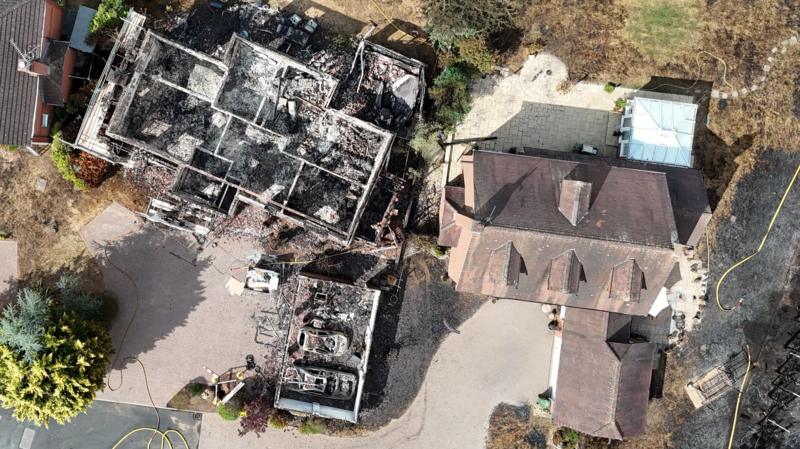
A fire in Stourbridge destroyed 19 homes and damaged many others, but some nearby houses were not harmed. Experts say factors like wind, heat, burning embers, and what is around a house can explain why some homes burn while others survive.
Key Facts
The fire destroyed 19 homes across five streets in Stourbridge.
Eight households saw their homes reduced to empty shells.
Of 96 houses evacuated, 85 families were able to return home.
Thirteen damaged homes were also safe enough for families to return.
Wind direction affected how the fire spread, sometimes sparing houses nearby.
Items like fences, sheds, patios, and dry plants can influence fire spread.
Fires do not spread like a solid wall but move in uneven bursts, like a water hose in the wind.
Radiant heat from the fire can damage or ignite materials even if flames don’t directly reach them.
Read the Original
Want the full story? Tap a source to open the original
article.
The Pentagon sent a survey to 31 NATO allies asking questions to assess their loyalty to the United States. Experts say this move aligns with President Donald Trump’s focus on loyalty in international relations.
Key Facts
The Pentagon distributed a loyalty questionnaire to 31 NATO member countries.
The purpose was to measure how loyal these allies are to the US.
This information was reported by Al Jazeera based on an exclusive document.
A NATO policy expert commented on the survey’s connection to President Trump’s priorities.
President Trump is known to value loyalty highly in his leadership style.
NATO is a military alliance of North American and European countries.
The survey reflects a political approach to evaluating alliances, rather than just military or strategic cooperation.
Read the Original
Want the full story? Tap a source to open the original
article.
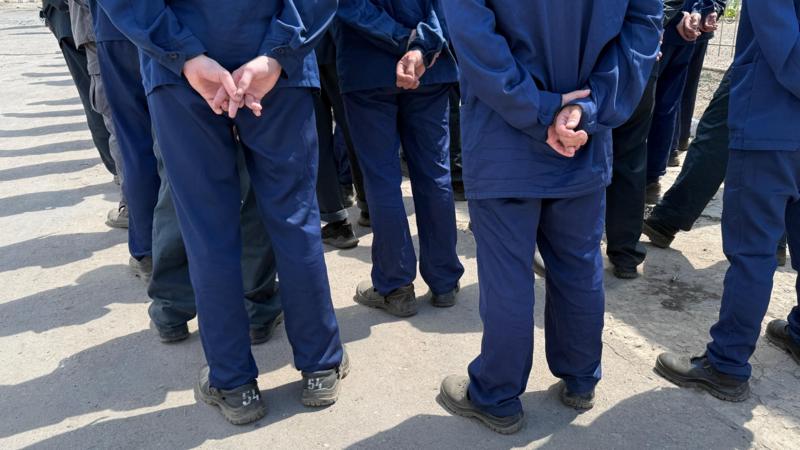
The article reports on captured soldiers who fought for Russia, including many born in Ukraine. Some Ukrainian-born men volunteered to fight for Russia due to their ties to Russia or local influences and now face imprisonment in camps in Ukraine.
Key Facts
The prisoner camp holds men captured while fighting for Russia, including those from Russian cities and occupied parts of Ukraine.
Many Ukrainian-born soldiers fighting for Russia see themselves as Russian and do not consider themselves traitors.
Some soldiers joined voluntarily, motivated by loyalty to Russia or personal reasons related to the conflict.
Ukraine treats captured citizens fighting for Russia as criminals, charging them with treason.
The identities of people from occupied regions are complicated due to years of Russian influence, schooling, and media control.
Prisoners report heavy casualties and shrinking volunteer numbers for the Russian side.
The prisoners spoke with the BBC away from guards, with the option to refuse interviews.
The ongoing war has deeply affected the identities and loyalties of people from eastern Ukraine.
Read the Original
Want the full story? Tap a source to open the original
article.
The Barbican Conservatory in London is closing for three years for major repairs to its glass roof and overall refurbishment. As part of the closure, the conservatory held events where 1,500 plant cuttings were given away to the public for free, allowing community members to take home pieces of the collection while the space is being restored.
Key Facts
The Barbican Conservatory is closing for three years to fix its glass ceiling and update its climate control system.
The closure is part of a £231 million renovation of the Barbican estate.
During the first of three plant adoption events, 500 cuttings were given to local people free of charge.
Visitors had to fill out an adoption form similar to those used for pets.
The plants include species from around the world, with choices like Swedish ivy, peperomia, and velvet plants.
The conservatory's head gardener, Marta Lowcewicz, will select new plants and keep as many original plants as possible.
The plant collection is designed to complement the Barbican’s bold concrete architecture.
The giveaway events were very popular, with tickets selling out quickly online.
Read the Original
Want the full story? Tap a source to open the original
article.
Russian missile strikes hit Kyiv, Ukraine, early Thursday, killing at least six people and injuring over two dozen. The attacks caused fires and reportedly damaged a children’s hospital and an apartment building.
Key Facts
Russian ballistic missiles struck Kyiv early on Thursday.
At least six people died from the attacks.
More than 24 people were injured.
Fires broke out in the capital city after the strikes.
The missiles reportedly hit a children’s hospital.
An apartment building was also reportedly damaged.
The strikes occurred during ongoing conflict between Russia and Ukraine.
Read the Original
Want the full story? Tap a source to open the original
article.
President Donald Trump announced a new plan to punish any country that does business with Iran, aiming to isolate Iran’s economy. This comes after months of military strikes and economic sanctions, as the U.S. seeks to pressure Iran amid ongoing conflicts and tense relations with China.
Key Facts
President Trump said countries helping Iran could face “tremendous economic consequences.”
He did not provide details on which countries would be targeted or what exact actions would be taken.
The announcement follows a pause in U.S. military strikes on Iran after nearly exhausting military targets.
The U.S. has been using sanctions and a naval blockade to block Iranian oil exports.
Iran’s economy already faces many sanctions but has adapted by using hidden oil shipments.
Trump warned against activities like oil smuggling and cash transfers that support Iran.
Experts say targeting China, Iran’s largest trading partner, could lead to conflict with Beijing.
The UAE recently suspended trade with Iran, citing missile attacks, though Iran denied these claims.
Read the Original
Want the full story? Tap a source to open the original
article.
A Chinese court sentenced Hui Ka Yan, the founder of Evergrande, to life in prison for large-scale fraud. The court also fined Evergrande billions of yuan after Hui pleaded guilty to charges including illegal fundraising and bribery.
Key Facts
Hui Ka Yan, also known as Xu Jiayin, founded Evergrande Group in China.
The Shenzhen Intermediate People’s Court gave him a life prison sentence on Thursday.
Hui admitted guilt in April for fraud, illegal collection of public money, and corporate bribery.
Evergrande was the world’s most indebted real estate company with over $300 billion in debt.
The company was forced to liquidate after Chinese officials tightened rules on borrowing in 2020.
The collapse of Evergrande caused problems for the whole Chinese real estate market.
The court fined Evergrande Group about 8.82 billion yuan ($1.31 billion).
Evergrande Real Estate was fined another 7 billion yuan ($1.04 billion).
Read the Original
Want the full story? Tap a source to open the original
article.
A Russian missile attack on Kyiv killed at least six people and injured 33. The missiles hit 12 areas across three districts, damaging homes, a hospital, and a school, while emergency workers rescued people trapped under rubble.
Key Facts
The attack occurred overnight on Thursday, causing explosions throughout the capital city.
At least six people died and 33 were wounded according to Ukraine’s Emergency Service.
Missile strikes affected Kyiv’s Darnytskyi, Sviatoshynskyi, and Solomianskyi districts.
Buildings damaged included residential homes, a medical facility, and an educational institution.
Emergency crews rescued people who were trapped under debris and in damaged buildings.
Russia has increased ballistic missile attacks on Kyiv to reduce the city’s air defense supplies.
Kyiv has a limited number of systems to intercept ballistic missiles, and its supply of Patriot system missiles (from the U.S.) is low.
President Donald Trump initially allowed Ukraine to produce Patriot missile systems but later canceled that approval.
Ukraine has increased long-range attacks on Russian military sites to reduce Russia’s ability to attack Ukrainian cities.
Read the Original
Want the full story? Tap a source to open the original
article.
Victoria’s highest court is reviewing Erin Patterson’s appeal against her conviction for three murders and an attempted murder involving poison mushrooms. Prosecutors argue the original case was very strong and want the court to dismiss her appeal and increase her sentence to life imprisonment without parole.
Key Facts
Erin Patterson was convicted for the murders of her estranged husband’s parents and his aunt using poison mushrooms.
She was sentenced to life in prison with a non-parole period of 33 years.
Patterson is appealing her conviction on several grounds, including issues with jury handling, evidence, and trial fairness.
Prosecutors say the case against Patterson was clear and that her appeal arguments lack strong evidence.
The prosecution is also appealing the sentence, saying it should be harsher with no chance of parole.
Patterson was also convicted of attempting to murder Heather Wilkinson’s husband, Ian Wilkinson, who survived.
The court is hearing both Patterson’s appeal and the prosecution’s appeal on the sentence.
Patterson is attending the court hearing remotely from a women’s prison.
Read the Original
Want the full story? Tap a source to open the original
article.
Victoria's premier, Ben Carroll, announced a royal commission to investigate serious problems in the state's construction projects, including corruption and violence. The inquiry will have broad powers to call witnesses, access documents, and examine actions by unions, companies, and government officials.
Key Facts
The royal commission focuses on major public and civil infrastructure construction in Victoria.
Former premiers and ministers can be required to testify at public hearings.
Chris Kourakis, a former South Australian chief justice, will lead the inquiry with a $50 million budget.
The commission has powers to get information and compel witness attendance until August 2027.
It will investigate wrongdoing involving the CFMEU union, construction companies, subcontractors, and others.
The inquiry will check if government departments properly managed and supervised projects.
Actions legally allowed under work and safety laws are not part of the inquiry but misuse of those laws can be investigated.
Legal costs for former ministers and premiers called to hearings will be paid publicly.
Read the Original
Want the full story? Tap a source to open the original
article.
Champagne producers in France are harvesting grapes earlier than ever before due to extreme heat and drought, which sped up the ripening process. This record-early harvest poses challenges as growers try to keep the high quality of their sparkling wine.
Key Facts
The 2026 Champagne grape harvest began between August 12 and 17, about a month earlier than usual.
Extreme heat and drought caused grapes to ripen faster and some to turn brown.
Spring frost reduced the grape crop by 43% before the drought further decreased yields.
Champagne producers are working quickly to pick grapes and protect wine quality.
The Gobillard & Fils vineyard, family-run for four generations, produces about 1.5 million bottles yearly.
Climate change has pushed harvests to start earlier in Champagne and other European wine regions.
The industry has been investing in research and new grape types that resist diseases better.
This year’s conditions are described as historic because early August vacations for harvest workers are now impossible.
Read the Original
Want the full story? Tap a source to open the original
article.