Ugandan social media critic Praise Aloikin Opoloje was detained and charged over alleged use of a SIM card registered to her mother. She says her arrest followed a video criticizing military chief Muhoozi Kainerugaba and alleges that men abducted and mistreated her; those claims could not be independently verified. The article also describes a father’s search for his 17-year-old son, whom he says armed men took after the teenager discussed protesting.
Key Facts
Authorities detained Opoloje on September 26, 2026, and charged her under Uganda’s 2024 communications regulations with allegedly using another person’s SIM card for illegal activity.
Opoloje denied the charge when she appeared in court on September 28.
Opoloje says her detention followed a video in which she said she was not afraid of military chief Muhoozi Kainerugaba.
She alleges that men forced her into a van, beat her and threatened to rape her; the article says her account could not be independently verified.
A court granted Opoloje bail on October 14 and required her to get permission before travelling internationally.
Emmanuel Baliza says armed men took his 17-year-old son, William, from their home after the teenager expressed plans to protest.
Baliza says the men claimed they were taking William to the Special Investigations Unit, but officials later denied holding him.
Baliza says his daughter told him William had posted on TikTok: “Uganda is bleeding.”
Read the Original
Want the full story? Tap a source to open the original
article.
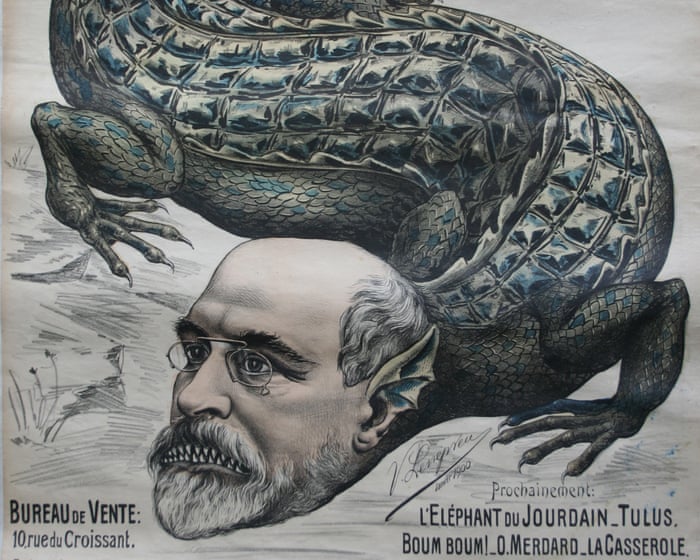
The Wiener Holocaust Library in London is opening an exhibition about the Dreyfus affair, which began after French army captain Alfred Dreyfus was wrongly convicted of treason in 1894. The exhibition presents about 40 items that show how newspapers, journals and posters spread antisemitic attacks and arguments over his innocence.
Key Facts
Alfred Dreyfus, a Jewish French army captain, was wrongly convicted of treason in 1894.
The affair prompted a surge of newspaper specials, journals, posters and other publications.
The Wiener Holocaust Library’s exhibition includes about 40 items related to the affair.
Some of the items came from the library’s founder, Alfred Wiener; others were collected later or loaned by Birkbeck, University of London.
The Musée des Horreurs poster series caricatured prominent supporters of Dreyfus.
The French government shut down publication of the poster series after about a year, deeming the images too grotesque.
The rightwing newspaper La Libre Parole reported that Dreyfus was guilty and featured antisemitic imagery.
Dreyfus was exonerated in 1906, promoted and awarded the Légion d’honneur.
Read the Original
Want the full story? Tap a source to open the original
article.
A U.S. Marine died Tuesday after a training incident at Camp Schwab in northern Okinawa, Japan, the 3rd Marine Division said. The Marine’s identity is being withheld until the family is notified, and an investigation is underway.
Key Facts
The incident occurred at Camp Schwab in northern Okinawa.
The 3rd Marine Division reported the Marine’s death.
The Marine died on Tuesday.
The military is withholding the Marine’s identity until 24 hours after the family has been notified.
The 3rd Marine Division said an investigation is underway.
The military had not provided further details about the circumstances surrounding the death.
Read the Original
Want the full story? Tap a source to open the original
article.
A Houthi siege of Taiz, Yemen, has lasted 30 days, cutting major roads and restricting access to food, fuel, medicine and water. The blockade has trapped residents and displaced people, while accumulating rubbish and disrupting families’ ability to travel between the city and surrounding areas.
Key Facts
The article reports that the siege has affected Taiz City’s 1.5 million residents and people in rural districts.
About 180,000 displaced people are also trapped amid clashes along the main road connecting Lahj and Taiz.
The Houthis seized al-Turbah in western Taiz governorate, cutting the city’s main route to Aden and the outside world.
The article says Houthi forces had already surrounded Taiz from the north, east and south after reaching its outskirts in 2015.
Major access roads are closed, and food, fuel, medical supplies and water are not reaching the city in sufficient amounts, according to a local official quoted in the report.
Rubbish is accumulating on Taiz’s streets because it cannot be transported to a landfill outside the city.
A resident returning with his family said they had to use a rough secondary road and passed nearly 20 newly established checkpoints before reaching a Houthi checkpoint about 15 kilometres from the city.
Read the Original
Want the full story? Tap a source to open the original
article.
Israel’s Central Elections Committee certified last week’s parliamentary election results, saying its review of 9,069 polling stations found no irregularities that affected the outcome. The results leave the Netanyahu-led bloc with 53 seats and Gadi Eisenkot’s bloc with 48, while Arab-led parties won 19; no bloc has the 61 seats needed for a majority.
Key Facts
The committee said it examined every complaint and found no evidence of fraud that compromised the election or changed its results.
Supreme Court Justice Noam Sohlberg cast the deciding vote to certify the results after representatives of Yesh Atid and Blue and White voted in favor and Likud and Shas abstained.
Netanyahu and his allies alleged that Arab-led parties stole the election, but the article says they offered no evidence for the claims.
The Shin Bet told the committee that intelligence pointed to foreign funding and influence operations involving thousands of people or more; law enforcement sources told Haaretz they were unaware of an operation on that scale.
The Shin Bet reportedly sought to question four Arab politicians, but had not provided prosecutors evidence regarding three of them.
National Security Minister Itamar Ben-Gvir called for the arrest and questioning of Arab party leaders and said his party would vote against approving the results.
Qatar rejected claims that it funded Arab-led parties and called them disinformation.
President Isaac Herzog received the certified results and will consult party leaders before choosing a candidate to try to form a coalition.
Read the Original
Want the full story? Tap a source to open the original
article.
Survivor Holly Alex says the Scottish government has been too slow to advance a public inquiry into grooming gangs, announced in February. The government says the inquiry is part of its work to protect children, while Police Scotland says an investigation into some reports made by Alex is ongoing.
Key Facts
Holly Alex said she was abused after entering care at age 14 and lived in five children's homes in Edinburgh between ages 14 and 17.
Alex said about 25 to 50 men were involved in her abuse in flats in Edinburgh and Livingston.
Social care records reviewed by BBC Scotland noted concerns that Alex was being groomed and described her repeatedly going missing, returning intoxicated and having unexplained money.
The records indicate that social workers and police knew of risks Alex faced.
The Scottish government announced a public inquiry into group-based child sexual abuse and exploitation in February.
Alex said survivors are still waiting for meaningful progress and urged the government to act as quickly as it had promised.
Education Secretary Màiri McAllan said safeguarding children was the government's priority and the planned statutory inquiry was a core part of that work.
Alex said abuse affects survivors whose perpetrators are not Asian and warned that the term “grooming gang” can create misconceptions about the abuse.
Read the Original
Want the full story? Tap a source to open the original
article.
Residents of Kolwezi in the Democratic Republic of Congo are suing a large Chinese-owned mine and the Congolese government over alleged environmental pollution. The case could become one of the country’s most significant environmental lawsuits.
Key Facts
The lawsuit was filed by residents of Kolwezi, a major mining center in the Democratic Republic of Congo.
The residents accuse a large Chinese mine of causing environmental pollution.
The Congolese government is also named in the lawsuit.
The report describes the case as potentially one of the most important in the country.
FRANCE 24 correspondent Emmet Livingstone reported on the case.
Read the Original
Want the full story? Tap a source to open the original
article.
Around 30 million people registered to vote in South Africa’s local elections on November 4, 2026, across the country’s nine provinces. The economy is a key issue, and Gauteng is receiving attention because of longstanding governance challenges.
Key Facts
About 30 million South Africans registered to vote.
The local elections took place on November 4, 2026.
Voting covered South Africa’s nine provinces.
The economy was a major issue in the elections.
Gauteng was a focus of attention due to longstanding governance challenges.
FRANCE 24 correspondent Eunice Masson reported on the elections.
Read the Original
Want the full story? Tap a source to open the original
article.
Thousands of Sudanese Arab refugees who fled fighting in Sudan have arrived in Chad. They face mistrust and hostility from other Sudanese refugees, amid accusations that fighters linked to the Rapid Support Forces have targeted civilians from other ethnic groups.
Key Facts
Thousands of Sudanese Arab refugees have fled to Chad.
Some Sudanese refugees in Chad distrust and mistreat the new arrivals.
The Rapid Support Forces are linked to fighters accused of targeting civilians from other ethnic groups.
The Rapid Support Forces' ranks are largely drawn from Sudan’s Arab communities.
The report was issued on November 4, 2026.
Read the Original
Want the full story? Tap a source to open the original
article.
Washington excluded South Africa and Rwanda from the African Growth and Opportunity Act (AGOA), ending their duty-free access to the U.S. market under the program. Exporters in both countries are assessing possible job losses and lower profit margins, while economists say the wider economic impact is likely to be limited.
Key Facts
The United States excluded South Africa from AGOA.
The United States excluded Rwanda from AGOA.
The exclusions end both countries’ duty-free access to the U.S. market through the program.
South African exporters are considering the potential effects on jobs and profit margins.
Rwandan exporters are also assessing possible job losses and squeezed margins.
Economists cautioned against alarmist reactions to the exclusions.
Economists said the broader economic fallout is likely to be limited.
Read the Original
Want the full story? Tap a source to open the original
article.
A U.S. Marine died after a training incident at Camp Schwab in Okinawa, Japan, on Nov. 3, the 3rd Marine Division said. The incident is under investigation, and officials have not released the Marine’s name or said whether anyone else was injured.
Key Facts
The incident occurred at Camp Schwab in Okinawa, Japan.
The Marine died following the incident on Nov. 3, 2026.
The 3rd Marine Division announced the death on Wednesday.
The Marines said the incident is under investigation.
A spokesperson for the III Marine Expeditionary Force confirmed the incident happened at Camp Schwab.
The spokesperson declined to say whether the Marine died at the scene or at a hospital.
The Marine’s name is expected to be withheld until the family has been notified.
Read the Original
Want the full story? Tap a source to open the original
article.
Protesters in several European countries have displayed Palestinian flags and keffiyeh scarves during demonstrations over issues including education, housing and living costs. Activists and some politicians describe the symbols as expressions of solidarity with Palestinians and opposition to colonialism and inequality, though the article notes that these messages do not resonate in every country.
Key Facts
Kenny Pierre Agboton of the Free University of Brussels for Palestine said the flag represents anti-colonial and anti-repression struggles.
Agboton said his group works with like-minded university associations in Belgium and provides them with flags for nationwide demonstrations.
In France, high school students and their supporters have protested for more affordable, higher-quality education, improved schools, smaller classes and more teachers.
Some French protesters have carried Palestinian flags or worn keffiyeh scarves.
French Student Union spokesperson Alice Cohen-Morzadec said she sees the demonstrations as part of a broader struggle over rights and global inequality.
Italian member of the European Parliament Mario Furore defended citizens' right to demonstrate with Palestinian flags.
The article says Palestinian symbols have also appeared at demonstrations in Northern Ireland.
Read the Original
Want the full story? Tap a source to open the original
article.
Indonesia’s President Prabowo Subianto dismissed his chief of staff, Listyo Sigit Prabowo, after police arrested him over alleged illegal wiretapping. The government said the alleged conduct could threaten state interests and the safety of national leaders, while officials said investigators had not determined a motive.
Key Facts
Police said the alleged wiretapping targeted several high-profile people, including the president and cabinet ministers.
Two other serving police officers were also arrested, including a senior officer who headed the National Police legal division.
Authorities allege the wiretapping took place from last year through this year, while Listyo led the National Police.
Investigators allege the suspects tried to conceal their actions by ordering intercepted-communication files deleted last month.
Indonesia’s senior minister for legal affairs said officials had not determined the motive for the alleged wiretapping.
The National Police’s top detective said the operation had no legal basis and was not part of a lawful investigation.
More than 20,000 Indonesian soldiers were deployed in Jakarta on Wednesday; the military described the deployment as routine and did not say it was linked to the arrests.
Read the Original
Want the full story? Tap a source to open the original
article.
Newsweek profiles 50 people who challenge policies aimed at rapidly reducing greenhouse-gas emissions. The article says many accept that human activity is warming the planet but question the cost, pace or preferred technologies of climate policies; it also includes some who reject mainstream climate science.
Key Facts
The article defines its use of “heretic” as a person who challenges climate policy or, in some cases, mainstream climate science.
Bill Gates argued in an October 2025 memo that improving human welfare should take priority over temperature and emissions targets.
Mark Carney ended Canada’s consumer carbon tax after becoming prime minister in March 2025 and later signed an agreement with Alberta to advance a proposed oil pipeline to the Pacific coast.
The Net-Zero Banking Alliance voted to shut down in October 2025, according to the article.
Donald Trump withdrew the United States from the Paris Agreement during his first week back in office and declared a national energy emergency.
The Trump administration has cut federal support for parts of the wind and solar industries and promoted an “energy addition” approach.
The article frames the debate as a disagreement over what climate policies to pursue, rather than only whether the climate is changing.
Read the Original
Want the full story? Tap a source to open the original
article.
President Donald Trump said the United States will end nearly $4 billion in annual aid to Israel by the end of the year, describing the move as one Prime Minister Benjamin Netanyahu had raised. The article says Netanyahu may present the change as evidence of Israel’s strength and greater independence, though U.S. aid has long supported Israeli military purchases and joint missile defense programs.
Key Facts
Trump said the decision to end annual aid was made under an agreement with Netanyahu.
Trump said Netanyahu raised the idea because U.S. aid had become a target for critics of the alliance.
Netanyahu had previously expressed a desire to reduce Israel’s reliance on U.S. military aid, but the announced deadline is sooner than observers expected.
A 2016 U.S.-Israel agreement provided $3.8 billion in annual assistance.
About $3.3 billion of that assistance funded Israeli purchases of U.S. military equipment, while roughly $500 million supported joint missile defense programs.
The Biden administration expanded assistance after the Gaza war began in October 2023 and withheld certain heavy munitions in May 2024 over humanitarian concerns.
Democratic Senate candidate Abdul El-Sayed welcomed Trump's shift on aid, according to the article.
Read the Original
Want the full story? Tap a source to open the original
article.
A sold-out audience attended a screening of the four-hour documentary *Musk* at the Ojai Documentary Film Festival in California. The week-long program also featured other documentaries and events, while the Ojai Playhouse planned a separate festival of 23 films considered award contenders.
Key Facts
*Musk* opened the Ojai Documentary Film Festival.
The festival was presented by the Ojai Playhouse and Hotel El Roblar.
The program included *You Can See Everything*, *Nuisance Bear* and *Jean-Michel Basquiat*.
The festival also held a special event with Lauren Greenfield, director of *The Queen of Versailles*.
Ojai Playhouse owner David Berger said the theater opened as a movie theater in 1914.
The Ojai Playhouse planned a separate week-long festival featuring 23 award-contending films.
Read the Original
Want the full story? Tap a source to open the original
article.
A 2026 nationwide survey found that Syrians most often identify Israel as a threat to Syria and the wider region, with Iran in second place. The poll also found broad opposition to recognizing Israel and growing support for democracy and political pluralism.
Key Facts
61 percent named Israel as the main threat to Syria, compared with 20 percent who named Iran.
For the Arab world overall, 58 percent named Israel as the main threat; 24 percent named Iran, up from 12 percent in 2025.
97 percent said Israel threatens Middle East security and stability, while 93 percent said the same of Iran.
About 96 percent said Israel is working to destabilize Syria, and 86 percent said it is driving separatist tendencies.
Almost 80 percent opposed recognizing Israel, and 74 percent opposed an agreement that did not return the occupied Golan Heights.
Respondents were divided on direct talks between Syrian and Israeli officials: 41 percent said the talks serve Syria’s interests and 49 percent said they do not.
76 percent said democracy is better than other systems despite its problems, up 16 percentage points from last year; three-quarters favored a system with political pluralism and separation of powers.
Half said Syria was heading in the right direction, while 35 percent disagreed. The survey was conducted by the Arab Center for Research and Policy Studies and the Arab Center for Contemporary Syria Studies.
Read the Original
Want the full story? Tap a source to open the original
article.
Iran’s negotiations with the United States take place amid a shift in influence toward military and security officials, as the two sides seek to prevent further fighting. President Masoud Pezeshkian said Supreme Leader Mojtaba Khamenei had given his government some authority over talks, but Iran’s security institutions and the supreme leader retain key roles in decisions about war and peace.
Key Facts
Pezeshkian said on Monday that Khamenei had given his government “certain powers” regarding negotiations with the United States, but he did not explain what those powers were.
Qatar and Pakistan have acted as mediators in efforts to prevent new U.S. strikes on Iran.
The conflict began with U.S. and Israeli air strikes on Iran on February 28, which killed Supreme Leader Ali Khamenei and other senior Iranian officials, according to the article.
Iranian authorities say decisions about the war and negotiations involve government institutions, including the supreme leader’s office and the Supreme National Security Council.
The Supreme National Security Council votes on major decisions such as ending the war before the supreme leader makes the final decision.
Mohsen Rezaei, a former Islamic Revolutionary Guard Corps commander, has served as secretary of the Supreme National Security Council since early August.
Iran’s Foreign Ministry spokesman said Rezaei could respond to a letter from U.S. Vice President JD Vance, while noting that Mohammad Bagher Ghalibaf remained chief negotiator.
Iran has proposed a seven-point plan that it says the United States must follow to end the war and reopen the Strait of Hormuz.
Read the Original
Want the full story? Tap a source to open the original
article.
The European Commission will meet with the United States, France, Germany, Britain, NATO and the World Bank to discuss winter support for Ukraine and the U.S.-led peace process. The talks are planned ahead of negotiations in Abu Dhabi and follow Russian strikes on power stations and a cargo vessel near Odesa.
Key Facts
The European Commission is convening talks with the United States, France, Germany, Britain, NATO and the World Bank.
The participants will discuss how to support Ukraine through the winter.
The talks will also address support for the U.S.-led peace process ahead of negotiations in Abu Dhabi.
U.S. special envoy Steve Witkoff said U.S. negotiators would meet European partners in Brussels.
The article reports that overnight attacks hit power stations in Kyiv and Zhytomyr.
A cargo vessel was attacked at sea near Odesa.
Spanish Prime Minister Pedro Sánchez described U.S. election results as a progressive fightback and criticized policies he said promote hate and inequality.
Read the Original
Want the full story? Tap a source to open the original
article.
Iranian parliament Speaker Mohammad Baqer Qalibaf said the U.S. midterm results showed Americans rejected the Iran war and warned the Trump administration against attacking Iran again. France 24 correspondent Reza Sayed said it is too early to know how the election will affect the conflict.
Key Facts
Qalibaf made his remarks on Wednesday, November 4, 2026.
Democrats won a sweeping victory in the U.S. midterm elections.
The article describes the result as widely seen as a rebuke of the Trump administration.
Qalibaf said the U.S. government should not ignore public opinion by attacking Iran again.
Reza Sayed, France 24's correspondent in Iran, said the election's impact remains uncertain.
The article notes that the conflict has often been unpredictable.
Read the Original
Want the full story? Tap a source to open the original
article.