A 10-year-old boy named Emmett was diagnosed with Usher Syndrome type 3, a rare genetic disease that causes gradual loss of hearing, vision, and balance. His mother shares their story as they learn to cope with the diagnosis and plan for his future needs.
Key Facts
Emmett was diagnosed in July 2026 through a genetic test after failing hearing tests and uncertain causes.
Usher Syndrome type 3 causes hearing and vision loss that worsens over time, often starting in childhood or adolescence.
Emmett may lose his night and peripheral vision and face profound hearing loss by adulthood.
There is no cure for Usher Syndrome, but treatments like cochlear implants and learning sign language and braille can help.
Emmett has expressed worries about his future, including marriage, career, and parenting.
His mother uses social media to raise awareness and share their experience with the condition.
Emmett’s siblings have a 25% chance of having the same genetic condition and are awaiting testing results.
The family is focused on staying positive and showing Emmett examples of people with similar challenges who live full lives.
Read the Original
Want the full story? Tap a source to open the original
article.
President Donald Trump threatened to bomb Oman if the country interferes with peace talks between the US and Iran. Oman is working with Iran on managing shipping through the Strait of Hormuz, while the US-Iran peace talks have mostly failed and tensions remain high.
Key Facts
President Trump said on Fox News that if Oman "gets in the way" of US-Iran talks, the US would bomb Oman.
Oman is a US ally and has stayed neutral in US-Iran conflicts but is negotiating directly with Iran over the Strait of Hormuz.
The Strait of Hormuz is a vital waterway for global oil shipping, and both Iran and Oman want control over parts of it.
A 60-day peace agreement (Memorandum of Understanding) between the US and Iran expired with little chance of renewal.
Iran has refused direct talks with the US and is negotiating only through Oman and other mediators.
Iran has attacked ships that used routes approved by Oman and the US instead of Iran’s preferred routes.
This is not the first time President Trump threatened Oman; he made a similar threat in May 2024.
Iran’s Islamic Revolutionary Guard Corps denied any direct talks with the US as claimed by President Trump.
Read the Original
Want the full story? Tap a source to open the original
article.
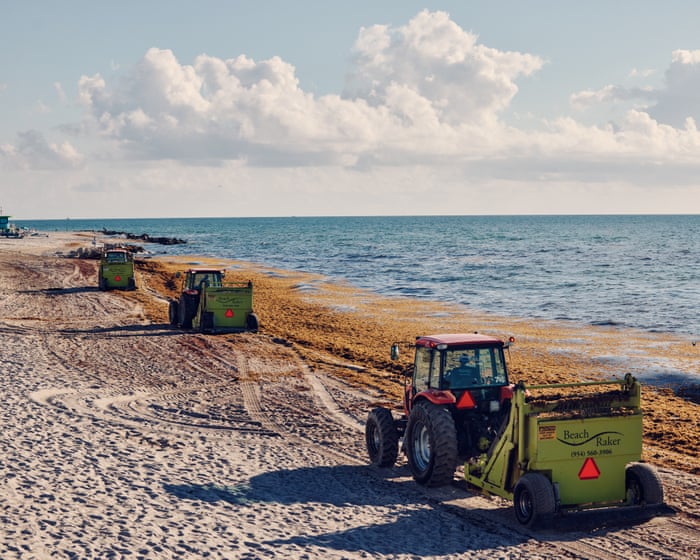
Miami-Dade County is facing an increasing problem with sargassum, a type of brown seaweed, washing up on its beaches. The county spends millions each year to clean the beaches while protecting sea turtle nests, and scientists link the rise in sargassum to factors like nutrient pollution, warmer waters, and climate change.
Key Facts
Chris Bumpus leads the team cleaning sargassum from 17 miles of Miami-Dade beaches during summer.
In July alone, about 9,000 tons of sargassum were removed, the highest monthly total recorded.
The county uses special permits to operate heavy equipment for cleaning, which cannot run during sea turtle nesting hours.
Around 700 sea turtle nests have been recorded on Miami-Dade beaches this season.
Miami-Dade spends $3 million annually on removing sargassum, the most of any Florida county.
Since 2011, the Great Atlantic Sargassum Belt has appeared, stretching from West Africa to the Gulf of Mexico, with seaweed amounts doubling every five years.
Scientists say river nutrients, warmer ocean temperatures, and ocean currents contribute to increased sargassum growth.
Climate change causes more ocean warming and rainfall, which adds nutrients to the ocean and increases seaweed blooms.
Read the Original
Want the full story? Tap a source to open the original
article.
Sonia Gandhi will release a memoir titled "Belonging: A Journey of Love" on November 10, where she reflects on her life in India’s Nehru-Gandhi political family and her political career. The book shares personal stories about her love, loss, and decision to decline becoming India’s prime minister.
Key Facts
Sonia Gandhi’s memoir is called "Belonging: A Journey of Love" and will be published on November 10.
She was born in Italy and met her future husband, Rajiv Gandhi, while studying in England.
Rajiv Gandhi was the grandson of India’s first prime minister, Jawaharlal Nehru, and son of Prime Minister Indira Gandhi.
Indira Gandhi was assassinated in 1984, and Rajiv Gandhi became prime minister but was also killed in 1991.
Sonia Gandhi later entered politics and became the longest-serving president of the Indian National Congress Party.
She chose not to become prime minister despite being offered the position.
Her party lost power in 2014 to Prime Minister Narendra Modi’s Hindu nationalist party.
Sonia Gandhi’s children, Rahul Gandhi and Priyanka Gandhi Vadra, are active politicians in India’s parliament.
Read the Original
Want the full story? Tap a source to open the original
article.
Turkey’s President Recep Tayyip Erdogan has signed a law to offer a conditional pardon to thousands of Kurdish militants from the PKK group if they fully disarm and dissolve. The law will suspend some prison sentences and legal actions against PKK members for several years, as part of a peace process.
Key Facts
The law applies to members of the Kurdistan Workers’ Party (PKK), a group involved in armed conflict with Turkey.
The PKK must fully dissolve and give up their weapons before the law takes effect.
Parliament approved the bill with strong support before the president signed it.
Sentences and legal cases against some PKK members will be paused for 5 or 10 years, depending on the crime's seriousness.
If individuals do not commit new crimes during this time, their cases may be dropped.
A special committee will supervise the disarmament process.
The PKK announced last year that it would disband based on a call from its imprisoned leader, Abdullah Ocalan.
The conflict between Turkey and the PKK has resulted in tens of thousands of deaths since the 1980s.
Read the Original
Want the full story? Tap a source to open the original
article.
Visitors to Richmond Park and Bushy Park in London are reminded not to feed or approach the wild deer, as it is illegal and dangerous. A man was recently injured by a stag that acted aggressively after being fed by people, leading to the deer being shot by wildlife officers to protect visitors.
Key Facts
Feeding deer in Richmond and Bushy parks is illegal and discouraged.
A man in his 60s was injured by a stag in Richmond Park after it approached his picnic group.
The aggressive stag was shot by a wildlife officer for safety reasons.
Feeding deer changes their natural behavior, making them more likely to approach humans and cause harm.
Deer in these parks do not need extra food, even during droughts, because there is enough natural food available.
Close contact with deer is dangerous; stags can weigh around 159kg (25 stone) and run up to 30 mph.
Visitors are advised not to take horse chestnuts (conkers) from the park, as they are important food for the deer.
Park officials urge people to respect the deer by keeping a safe distance and not feeding or touching them.
Read the Original
Want the full story? Tap a source to open the original
article.
England’s ancient oak trees are dying because of this summer’s very hot and dry weather. The drought is causing the trees to lose water and leaves early, and many old trees are struggling to survive these conditions.
Key Facts
Extreme heat and drought are causing oak trees in England to wilt and lose leaves early, a process called “early autumn.”
Ancient oak trees, over 300 to 400 years old, are especially vulnerable because they are less resilient to stress.
The Major Oak, one of Europe’s oldest ancient oaks, died in June mainly due to extreme weather.
About 3,300 large oak trees exist in England, with some over 9 meters around their trunks.
Several ancient oaks in England and Wales are in critical condition, including those named Crow Leasow and Tea Party oak.
Continuous droughts weaken trees over time, making it harder for them to recover.
Other tree species, like beech and pine, are also dying due to heat stress and sun damage.
Experts warn that many ancient oak trees could be lost over the next 60 years, and current estimates may understate the danger.
Read the Original
Want the full story? Tap a source to open the original
article.
A couple renovating a home built in 1834 in Michigan discovered many old jars in the basement containing home-canned food. They have not opened the jars due to safety concerns, as old canned food can carry dangerous bacteria. The jars have historical value, showing different styles and brands from past centuries.
Key Facts
The house was built in 1834 and has belonged to the Duran family for generations.
Sommer and Antonio Duran moved into the house in 2026 and started renovations.
They found many old jars in the basement, some from the late 1800s or early 1900s.
The jars contain home-canned food, but the couple has not opened them for safety reasons.
Old canned food can contain botulism, a deadly toxin from bacteria called Clostridium botulinum.
Botulism is hard to detect because it has no smell, taste, or visible signs.
Studies show homemade canned vegetables often cause foodborne botulism outbreaks.
The couple is researching the jars and their markings to learn more about their history.
Read the Original
Want the full story? Tap a source to open the original
article.
A man who works for a company housing asylum seekers has been charged with misconduct for sharing their home addresses. After the addresses were published, several properties were attacked by crowds over several nights in Thetford, Norfolk.
Key Facts
James Jobson, 62, is an employee at Serco, the company providing asylum seeker accommodation.
He is charged with misconduct in public office for sharing asylum seekers' addresses.
The addresses were in Thetford, Norfolk, in streets such as St John's Way and Bracken Road.
The sharing happened between August 3 and August 14, 2026.
Afterward, houses were targeted during violent events over three nights.
Jobson appeared at Ipswich Magistrates' Court and was sent to appear at Norwich Crown Court on September 14.
Norfolk Police linked the charge to the information release that led to attacks.
Serco said it is cooperating with the police but cannot comment further due to the ongoing investigation.
Read the Original
Want the full story? Tap a source to open the original
article.
Abderrahim Fakir, a 42-year-old Moroccan man living in Italy, died after police restrained him in the Bologna neighborhood of Pilastro. His death sparked protests and raised concerns about a new Italian security law that protects officials from prosecution when acting in self-defense or on duty.
Key Facts
Fakir was handcuffed and pinned down by police in Pilastro on July 19, then died at the scene.
An initial postmortem suggested his death was caused by lung compression.
Italy’s new security law gives public officials legal protection if they acted in self-defense or within their duties.
Prosecutors are investigating police and healthcare workers but will not formally file charges unless restraint was unjustified.
Fakir had a history of mental health issues and was said to be experiencing a psychiatric episode during the incident.
The case has led to protests and criticism of the government’s approach to policing and immigration.
Family and friends fear political influence may affect justice in the case.
Fakir’s body is being repatriated to Morocco for burial.
Read the Original
Want the full story? Tap a source to open the original
article.
The Ebola outbreak in the Democratic Republic of Congo (DRC) is the deadliest on record and is spreading faster than health teams can respond. Many infected people are not yet receiving treatment, and this makes it harder to stop the virus from spreading.
Key Facts
The Ebola outbreak in DRC is currently the deadliest ever recorded in the country.
The virus is spreading faster than health responders can track and treat patients.
Some infected people are outside treatment centers, making it difficult to see where the virus is circulating.
Late treatment reduces the chances of survival for patients.
Factors like conflict, people moving around, and humanitarian challenges make monitoring the outbreak harder.
Gaining community trust is essential for effective testing, tracing contacts, safe burials, and early care.
Without local cooperation, health efforts to control Ebola cannot work well.
Read the Original
Want the full story? Tap a source to open the original
article.
Heatwaves in France this year have caused damage to plants and farming, including at Claude Monet’s famous gardens in Giverny, Normandy. Some of the well-known parts of the gardens were harmed by the high temperatures.
Key Facts
France has experienced a series of heatwaves in 2026.
These heatwaves have negatively affected plants and farming.
Claude Monet’s gardens at Giverny, a popular tourist site, suffered damage.
The gardens are located in the Normandy region of northern France.
The damage includes some of the garden’s most famous attractions.
News about the heatwave’s effects was shared by France 2 and reporter Oliver Farry.
Heatwaves are becoming a concern for nature and tourism in France.
Read the Original
Want the full story? Tap a source to open the original
article.
In July 2026, Russia launched a record number of missile and drone attacks on Ukraine, causing many deaths and injuries, including attacks on civilian areas in Kyiv. Ukraine has a severe shortage of missile interceptors to defend against these strikes, partly due to the United States prioritizing supplies for other regions.
Key Facts
Russia fired 376 missiles at Ukraine in July 2026, the highest since May 2022.
Attacks included nearly 5,000 drones and guided bombs that destroyed buildings.
At least 12 people died and more than 100 were wounded in a missile strike on a Kyiv sports centre.
Many civilians lost homes and personal belongings in these attacks.
Ukraine lacks sufficient missile interceptors to defend against the strikes, having only about 10% of what it needs.
The U.S. stopped sending more interceptors to Ukraine, redirecting them to Middle East allies after conflicts involving Iran.
Ukrainian President Zelenskyy said even a small increase in interceptor supplies from the U.S. could save many lives.
Russian strikes often hit residential areas in response to Ukraine’s attacks on Russian oil and fuel facilities.
Read the Original
Want the full story? Tap a source to open the original
article.
The Palestinian village of Qusra in the West Bank is under siege by extremist Israeli settlers who are using tactics like blocking access to food and water to push families off their land. A Palestinian-American homeowner has returned from Ohio and expressed concern over settler violence, claiming the Israeli army is ignoring these attacks.
Key Facts
Qusra is a Palestinian village located in the occupied West Bank.
Extremist Israeli settlers are surrounding the village and trying to make families leave.
Settlers have cut off access to essential resources like food and water for the villagers.
Louai Abo Ridi, a Palestinian-American who owns a home in Qusra, returned from Ohio due to safety concerns.
Mr. Abo Ridi reports seeing Israeli soldiers allowing settler violence to continue without intervention.
The situation has created high tensions between villagers and Israeli soldiers.
The West Bank and Israeli settlements continue to be a site of conflict and humanitarian concern.
This incident is part of a broader ongoing conflict involving Israel, Palestinians, and related regional issues.
Read the Original
Want the full story? Tap a source to open the original
article.
At least 20 elephants died recently in Kenya. Some people suggested the deaths were caused by cyanide poisoning from pesticides used on nearby farms, but wildlife experts in Kenya disagree with this idea.
Key Facts
About 20 elephants died in Kenya.
The cause of death was initially thought to be cyanide poisoning.
Cyanide is a dangerous chemical sometimes found in pesticides.
The pesticides were said to come from farms close to where the elephants died.
Kenyan wildlife experts do not agree that cyanide poisoning caused the deaths.
The exact cause of the elephants’ deaths remains uncertain.
The issue is being investigated to find the real cause.
Read the Original
Want the full story? Tap a source to open the original
article.
Around 300 protesters in South Africa called on leaders from the Southern African Development Community (SADC) to address issues related to migrants. South Africa, the richest country in Africa, has a high unemployment rate and ongoing xenophobic violence against migrants, prompting calls for a continent-wide migration conference.
Key Facts
About 300 people protested against migrants in South Africa.
The protesters addressed leaders from the SADC regional group.
South Africa has a high unemployment rate of over 30 percent.
The country faces deep economic inequalities.
South Africa is a main destination for migrants in Africa due to its wealth.
Xenophobic violence against migrants is a continuing problem there.
The government in Pretoria wants a continent-wide meeting to discuss migration issues.
The event and protests highlight tensions around migration in southern Africa.
Read the Original
Want the full story? Tap a source to open the original
article.
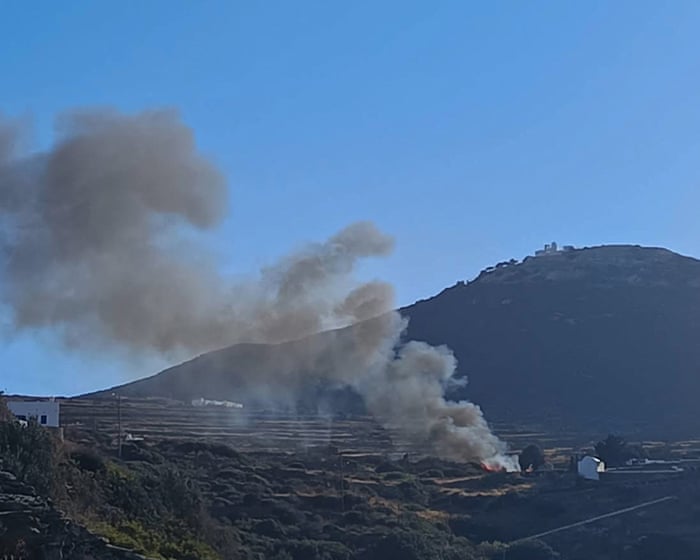
A helicopter crashed near the Greek island of Sifnos, killing a British couple on their honeymoon and the pilot. Greek police believe a mechanical fault, possibly engine failure, caused the crash just before landing.
Key Facts
The helicopter was a privately chartered Bell 206.
The victims were Marie Ebert and Alexander Cromie, both British and recently married.
The pilot, Giorgos Raikos, was 53 years old and a former air force officer.
Witnesses reported a strange noise from the helicopter before it crashed.
CCTV shows the helicopter spiraling out of control near the helipad.
The crash caused a fireball and thick smoke at the site.
Rescue workers found all three people dead at the scene.
Greek authorities are investigating, led by the ministry of infrastructure and transport.
Read the Original
Want the full story? Tap a source to open the original
article.
President Donald Trump announced he would scale down military drills with South Korea, calling the exercises "inappropriate and hostile" toward North Korea. This decision surprised many because it came just before the drills were to start, and it may affect relations with both allies and adversaries in the region.
Key Facts
President Trump canceled or reduced annual war games with South Korea, citing concerns about North Korea's reaction.
North Korean leader Kim Jong Un has been described by Trump as "unthreatening and respectful."
North Korea recently tested ballistic missiles, defying U.N. Security Council resolutions.
The cancellation was announced hours before the drills were scheduled to begin.
South Korea declined to support a U.S. position on the conflict in Iran, which Trump mentioned negatively.
There are concerns that this move favors North Korea at the expense of U.S. allies.
Experts note that North Korea now has stronger international support, including from Russia.
U.S. officials have called South Korea and other countries "model allies," but recent actions raise questions about the U.S. commitment to them.
Read the Original
Want the full story? Tap a source to open the original
article.
President Donald Trump said he plans to reduce U.S.-South Korea military drills, citing their high cost and emphasizing his good relationship with North Korean leader Kim Jong Un. Experts warn that this move could weaken trust with allies in the region while North Korea continues to strengthen its nuclear and missile programs.
Key Facts
President Trump wants to cut back on joint military exercises with South Korea called Ulchi Freedom Shield.
Trump highlighted his positive relationship with North Korea’s Kim Jong Un as a reason for scaling down drills.
North Korea’s military and nuclear capabilities have grown stronger since Trump last met Kim in 2019.
South Korean analysts worry that cutting exercises damages U.S. trust and reliability with its allies.
North Korea and Iran share missile technology and have close defense ties.
The U.S. aircraft carrier USS George Washington recently moved from the Western Pacific to the Middle East.
Pentagon officials have tried to reassure allies of U.S. commitment to Asia despite these changes.
Experts say allies may feel uncertain about the U.S. due to conflicting signals from Washington.
Read the Original
Want the full story? Tap a source to open the original
article.
Ukraine launched more than 600 drones toward Moscow in one of its largest attacks so far, with many drones shot down by Russian defenses. The drone strikes caused injuries, damage to homes, a shopping center, and a warehouse, and led to power outages and temporary flight restrictions in the Moscow area.
Key Facts
Ukraine sent at least 637 drones toward Moscow overnight.
Russian air defenses shot down at least 791 Ukrainian drones, including 197 over Moscow.
At least three people were injured in the Moscow area, including a 10-year-old girl.
Drone strikes damaged residential areas, a shopping center, a government building, and a warehouse belonging to the Russian company Wildberries.
Over 5,000 customers and 46 important social facilities in Moscow’s region lost power after the attacks.
Moscow’s international airports had temporary flight restrictions because of the strikes.
Ukraine has increased long-range drone attacks on Russian urban centers, military sites, and logistics hubs recently.
Russian Defense Ministry reported shooting down over 11,000 Ukrainian drones in August so far, nearing the record from July.
Read the Original
Want the full story? Tap a source to open the original
article.