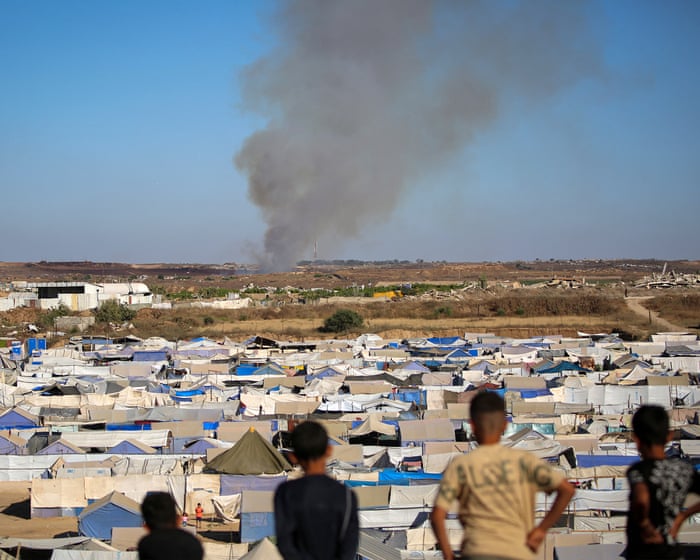
Security camera footage shows an Israeli soldier throwing a stun grenade into a car with young Palestinians during a raid in the Qalandiya refugee camp in the West Bank. The soldier then appears to close the car door as the grenade explodes inside.
Key Facts
The incident took place during a raid in the Qalandiya refugee camp.
The location is in the occupied West Bank.
A stun grenade was thrown into a car carrying young Palestinians.
The grenade is a non-lethal explosive used to disorient people.
The soldier is seen closing the car door after throwing the grenade.
The event was captured on a security camera.
The footage shows interaction between Israeli soldiers and Palestinian civilians during the raid.
Read the Original
Want the full story? Tap a source to open the original
article.
Israel used a digital military system called Tzayad to identify about 1,000 possible enemy targets per day during the wars in Gaza and Lebanon from October 2023 to the end of 2025. According to Elbit Systems, the company that supplies this system, it detected around 850,000 targets in real time across different battle areas during this time.
Key Facts
Israel’s Tzayad system tracked roughly 1,000 potential targets daily during the first two years of conflicts in Gaza and Lebanon.
The total number of detected targets was about 850,000 between October 7, 2023, and the end of 2025.
Targets included people, vehicles, and objects that could be attacked from land, sea, or air.
Elbit Systems presented these figures at a military conference in London, where senior British and NATO military officials also attended.
An Elbit spokesperson said the 850,000 figure reflects overall system activity and data, not only confirmed enemy targets or attacks.
Experts raised concerns about the large number of potential targets and the challenge of verifying the accuracy and legality of each one.
The conflict has caused heavy damage and displacement, including in Gaza and southern Lebanon.
Elbit Systems is developing the Tzayad system further to use artificial intelligence to help military decision-making.
Read the Original
Want the full story? Tap a source to open the original
article.
NATO is holding an important summit in Ankara amid tensions about defense spending and the U.S. military presence in Europe. European leaders have increased their defense budgets, but the U.S. has not clearly stated how many troops it might withdraw from the continent, causing uncertainty among allies.
Key Facts
NATO members agreed to increase their defense spending, with Europe and Canada spending nearly 20% more in 2025 than in 2024.
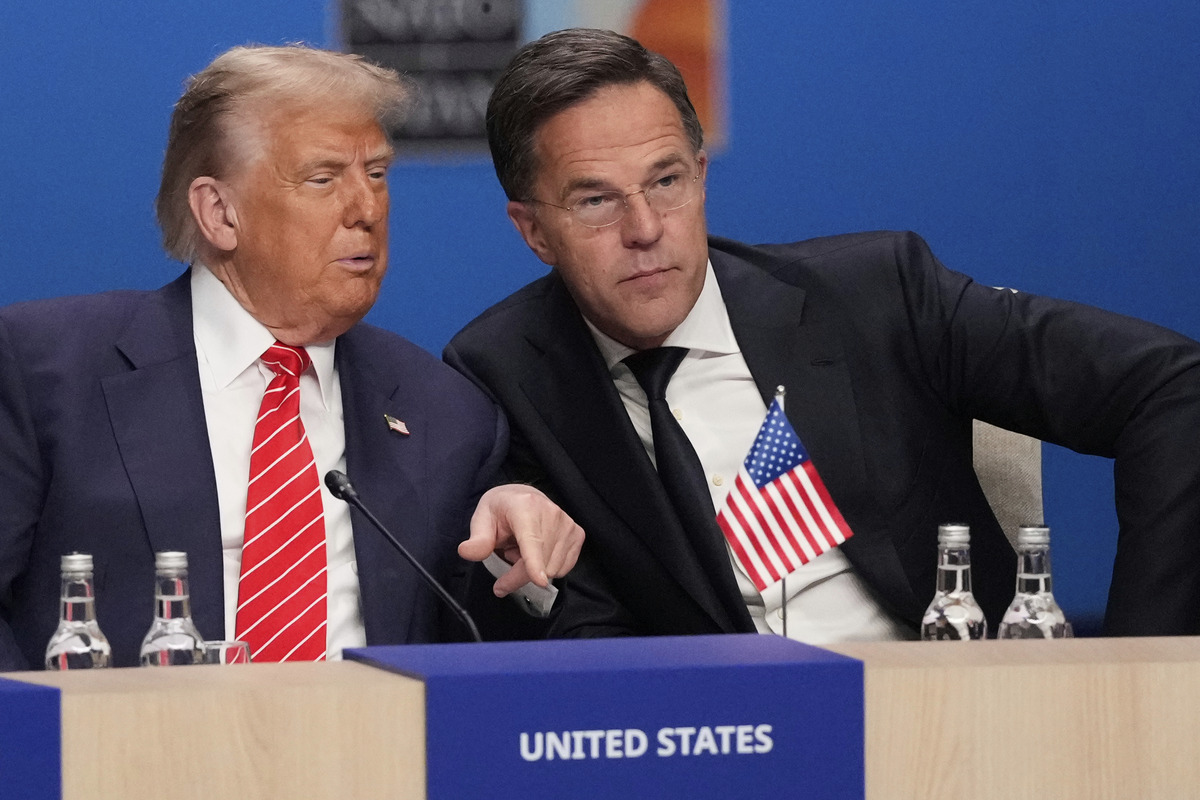
NATO Secretary General Mark Rutte visited President Trump to highlight the $1.2 trillion added to defense since Trump took office.
The Ankara Summit is expected to address U.S. troop levels in Europe, though the U.S. may not provide clear answers.
Some NATO countries have surpassed spending targets, while others lag behind, causing tension within the alliance.
The U.S. argues Europe has relied on American military support for decades, leading to complaints about unfair spending.
President Trump has publicly criticized NATO, calling the alliance one-sided and suggesting it is not benefiting the U.S. enough.
Discussions may include Europe's defense industry and Ukraine’s future security situation.
The summit will test the unity and future role of NATO after nearly 80 years of existence.
Read the Original
Want the full story? Tap a source to open the original
article.
Super Typhoon Bavi hit United States islands in the western Pacific, including the Northern Mariana Islands and Guam. The storm brought very strong winds and heavy rain, causing major damage and forcing residents to take shelter.
Key Facts
Super Typhoon Bavi made landfall near Guam, especially affecting the island of Rota.
Winds reached over 150 mph (241 km/h), like a category-five hurricane.
The storm moved slowly westward toward the Philippines at about 9 mph (14 km/h).
Authorities warned people to seek shelter immediately, treating the winds like a tornado threat.
The Northern Mariana Islands and Guam have about 210,000 residents combined.
Reports of major damage came from Rota, but full impact details are unclear due to poor communication.
Flood and typhoon warnings were active for several islands, including Guam, Tinian, and Saipan.
The storm could bring up to 20 inches (51 cm) of rain and last through Monday night.
Read the Original
Want the full story? Tap a source to open the original
article.
Prince Harry has accepted an invitation to stay at Buckingham Palace during his visit to London this week. He will be in the UK to attend the Invictus Games in Birmingham and participate in charity events.
Key Facts
Prince Harry will stay at Buckingham Palace for part of his UK trip.
The visit is confirmed by a spokesperson for the Duke of Sussex.
His trip includes attending the Invictus Games in Birmingham.
Prince Harry will also take part in several charity events during the visit.
The visit is scheduled for this week in London.
More details about the visit will be provided later.
Read the Original
Want the full story? Tap a source to open the original
article.
Millions of people in Tehran, Iran, are taking part in a multi-day funeral procession for the former supreme leader Ali Khamenei, who died in an airstrike linked to the ongoing conflict involving the US and Israel. His son, Mojtaba Khamenei, is now the new supreme leader but has not appeared publicly during the ceremonies.
Key Facts
Ali Khamenei, Iran’s former supreme leader, was killed in February during a US and Israel airstrike.
His son, Mojtaba Khamenei, became supreme leader in March but has not been publicly seen due to security reasons.
The funeral procession is lasting six days and covering five cities, with millions attending.
The procession includes the coffins of Khamenei and family members who died in the same strike.
Streets and airspace in Tehran have been closed due to national mourning.
The funeral will end at the Imam Reza shrine in Mashhad, Khamenei’s birthplace.
Calls for revenge against the US and Israel have been made during mourning events.
Israel’s defense minister warned that Iranian leaders who threaten Israel could face similar consequences.
Read the Original
Want the full story? Tap a source to open the original
article.
Sky, a UK TV and internet company owned by Comcast, has agreed to buy ITV’s media and entertainment business for about $2.1 billion. This deal aims to create a bigger company that can better compete with global streaming services.
Key Facts
Sky is a British provider of TV, internet, and mobile phone services.
Comcast owns Sky.
Sky will buy ITV’s media and entertainment division for up to 1.6 billion pounds ($2.1 billion).
ITV is the largest commercial broadcaster in Britain.
The deal includes ITV’s TV channels and streaming service.
ITV Studios, which produces shows like “I’m A Celebrity,” will stay separate and independent.
After the deal, the combined Sky-ITV group will be part of NBCUniversal once it splits from Comcast.
The goal is to build a UK-based company large enough to compete with international streaming giants.
Read the Original
Want the full story? Tap a source to open the original
article.
Over 300 children have died in the Sudan conflict over six months, with most deaths caused by drone strikes, according to UNICEF. The fighting between Sudan’s military and the Rapid Support Forces is focused in several states, leading to many casualties, displacement, and humanitarian needs.
Key Facts
More than 300 children have been killed in six months in the Sudan war, mostly from drone strikes.
The war began in April 2023 between Sudan’s military and the paramilitary Rapid Support Forces.
Fighting is concentrated in Kordofan, Darfur, and Blue Nile states.
Drone attacks are responsible for about 60% of the casualties.
At least 59,000 people have died and around 13 million have been displaced.
Over 30 million people in Sudan need humanitarian help.
Civilian places like schools, markets, fuel, and water stations have been targeted.
The United Nations urges all parties to protect civilians and allow safe access for aid.
Read the Original
Want the full story? Tap a source to open the original
article.
French President Emmanuel Macron is expected to visit Syria soon, marking the first visit by a Western leader since the 2024 removal of Bashar al-Assad. The visit aims to strengthen ties and discuss economic cooperation and regional issues, though no exact date has been given.
Key Facts
Macron’s visit will be the first by a Western European head of state since Assad was ousted in 2024.
The Syrian presidency announced the visit but did not specify the date.
Macron will be accompanied by French investors and company representatives.
The trip will focus on improving bilateral relations and economic cooperation.
Discussions will include regional and international developments.
The last French president to visit Syria was Nicolas Sarkozy in 2009, before the Syrian conflict began in 2011.
Other recent visitors to Syria include Qatar’s emir and European Commission chief Ursula von der Leyen.
The announcement follows a deadly bombing in Damascus that killed 10 people, showing ongoing challenges in Syria.
Read the Original
Want the full story? Tap a source to open the original
article.
Ukraine’s President Zelenskyy has asked NATO to make strong decisions at their upcoming summit after Russia launched missile and drone strikes on Kyiv, killing 11 people and injuring about 60. The European Commission said Ukraine urgently needs better air defense, and NATO leaders will discuss how to help during the summit in Ankara.
Key Facts
Russia attacked Kyiv overnight with around 68 missiles and over 350 drones.
The strikes killed 11 people and left about 60 injured.
Ukraine says it does not have enough interceptor missiles to protect its cities.
President Zelenskyy urged NATO to supply more air defense systems like Patriot missiles.
The European Commission has provided €4 billion of a €90 billion loan to help Ukraine defend against drone attacks.
More financial and military support is planned, including tough sanctions against Russia.
Russia claims it targeted military and energy sites, but civilian apartment buildings were damaged.
The NATO summit in Ankara will discuss Ukraine’s defense needs and related measures.
Read the Original
Want the full story? Tap a source to open the original
article.
China conducted a test launch of a long-range ballistic missile from a nuclear-powered submarine in the South Pacific. The missile carried a dummy warhead, and China said the test was routine, legal, and not aimed at any country. Australia and New Zealand expressed concerns, noting the launch took place within a nuclear-free zone.
Key Facts
China test-launched a long-range ballistic missile from a nuclear submarine in the South Pacific on June 7, 2026.
The missile carried a dummy warhead, meaning it was not armed with a real explosive.
China claims the test was part of annual military training and followed international law.
The launch happened within the South Pacific Nuclear Free Zone, which bans nuclear weapons testing in the area.
China ratified agreements not to test nuclear weapons in this zone and not to threaten countries with nuclear weapons there.
New Zealand was informed of the planned launch only a few hours before it happened and criticized the timing.
Australia called the missile test destabilizing for the region.
The test coincided with Australia and Fiji signing a new defense treaty aimed at countering Chinese influence in the Pacific.
Read the Original
Want the full story? Tap a source to open the original
article.
China test-fired a long-range missile from a nuclear submarine into the Pacific Ocean, which drew criticism from Australia, New Zealand, and Japan. These countries were informed before the test but expressed concern about the rising military activity and its impact on regional stability.
Key Facts
China launched a long-range ballistic missile from a nuclear-powered submarine in the South Pacific.
The launch occurred at 12:01 pm local time (04:01 GMT) on Monday.
China called the test a routine part of its annual military training and said it was not aimed at any specific target.
Australia, Japan, and New Zealand were notified ahead of the test.
Australian Foreign Minister Penny Wong described the test as destabilizing in the context of China's rapid military buildup.
Japan expressed grave concern and noted potential falling debris could impact its exclusive economic zone.
New Zealand called the missile test an unwelcome development and opposed the use of the South Pacific for missile tests.
The event highlights tensions over military activities in the Pacific region.
Read the Original
Want the full story? Tap a source to open the original
article.
Archaeologists found two gold rings about 2,000 years old at the Don Yai Thong site in western Thailand. The rings were discovered with human bones and are believed to be from an upper-class person during the Iron Age.
Key Facts
Two gold rings, around 2,000 years old, were found during a dig in Phetchaburi province, Thailand.
The rings were discovered alongside human skeletons at the Don Yai Thong archaeological site.
One ring had ancient Indian Brahmi script engraved on it, reading “pusarakhitasa,” linked to an auspicious zodiac sign.
The other ring was plain and without any pattern.
Experts think the rings’ owner might have been a merchant from the ancient Indian Vaishya caste.
The site dates back to the Iron Age, around 1,500 to 2,500 years ago.
Archaeologists have also found bronze and gold jewelry, pottery, and eight human skeletons.
The excavation started earlier this year after residents discovered ancient bronze drum pieces nearby.
Read the Original
Want the full story? Tap a source to open the original
article.
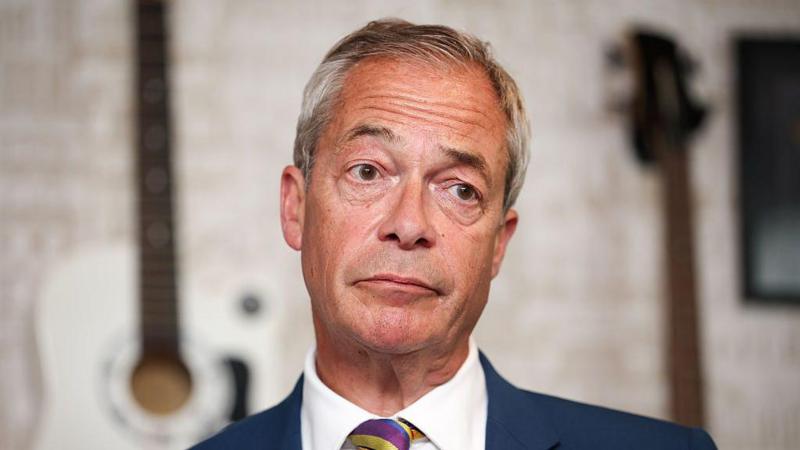
Nigel Farage said he did nothing wrong after reports showed he did not declare certain benefits from George Cottrell, an ally once convicted of fraud in the US. The matter has led to calls for a parliamentary investigation into whether Farage followed rules about declaring financial support before he became a Member of Parliament (MP).
Key Facts
Nigel Farage did not declare benefits from George Cottrell, who was convicted of wire fraud in the US in 2017.
Benefits included security staff, social media workers, and use of a property near Buckingham Palace.
UK rules say new MPs must declare financial interests or benefits received in the 12 months before their election.
Farage says he followed the rules and that the benefits were received before he became an MP.
Liberal Democrat MP Josh Babarinde has asked for a formal investigation into Farage’s declarations.
Farage is already under investigation for not declaring a £5 million gift from another donor.
Cottrell is linked to cryptocurrency businesses and an offshore gambling website.
Farage plans legal action against the newspaper that reported the benefits and says he is the target of an "establishment hit job."
Read the Original
Want the full story? Tap a source to open the original
article.
A 12-year-old girl named Fabiana was rescued after being trapped under rubble for more than 30 hours following twin earthquakes in Venezuela. She survived mainly by eating ketchup and cheese and only had a broken foot and some bruises. The earthquakes have killed 3,342 people and many others are still missing.
Key Facts
The earthquakes happened in Venezuela, affecting the northern city of La Guaira.
Fabiana was trapped under the rubble for over 30 hours before being rescued.
She survived by eating ketchup and cheese while trapped.
Fabiana sustained a fracture in her left foot and minor injuries.
By Sunday, 3,342 deaths were confirmed due to the earthquakes.
Tens of thousands of people are reported missing after the disaster.
The story was reported by BBC international correspondent Yogita Limaye.
Read the Original
Want the full story? Tap a source to open the original
article.
The funeral procession for Iran’s Supreme Leader Ali Khamenei has started in Tehran following his death in an air strike. Large crowds are attending the events, with plans for ceremonies in several cities before his burial in Mashhad.
Key Facts
Ali Khamenei, Iran’s Supreme Leader, was killed in an air strike on February 28.
His body lay in state for two days at Tehran’s Grand Mosalla religious complex.
The funeral procession began on Monday with many mourners in Tehran.
Authorities expect large crowds similar to those at the 1989 funeral of Khamenei’s predecessor, Ruhollah Khomeini.
Khomeini’s funeral saw over 10 million attendees and caused deadly crowd surges.
Additional funeral events are planned in Qom (Tuesday), Najaf and Karbala in Iraq (Wednesday).
Khamenei will be buried in his hometown of Mashhad on Thursday.
Four family members also died with Khamenei in the air strike.
Read the Original
Want the full story? Tap a source to open the original
article.
Large crowds gathered in Tehran as the funeral procession for Iran’s Supreme Leader, Ayatollah Ali Khamenei, moved through the city. The funeral events come after Khamenei was reportedly killed in air attacks by the US and Israel in February.
Key Facts
Ayatollah Ali Khamenei was the Supreme Leader of Iran.
He died following air attacks that Iran says were carried out by the US and Israel.
The funeral procession took place in Tehran, Iran’s capital.
Thousands of people attended the procession, filling the streets.
A week of ceremonies is planned to honor Khamenei.
The funeral procession was slow-moving through Tehran.
The article mentions the attacks happened in February.
Khamenei’s death is a significant event for Iran and the region.
Read the Original
Want the full story? Tap a source to open the original
article.
A Scottish village in Lanarkshire was chosen as a site for a large AI datacentre project that promised many jobs and investment. Local residents now worry they might lose their homes and green land, while questions remain about how much renewable energy the project will actually use.
Key Facts
The UK government selected Lanarkshire for a multibillion-pound AI datacentre development called an “AI growth zone.”
The project is led by the US company CoreWeave and Glasgow-based DataVita.
The datacentre will house special computer chips needed for artificial intelligence systems.
Initial promises included 3,400 new jobs and up to £543 million invested in local programs.
Residents were offered incentives like free solar panels and cash to avoid opposing the project, but these offers had no legal guarantees.
The project requires large amounts of energy and land, raising concerns about the loss of green belt areas.
DataVita claims it will power the site using renewable energy parks nearby, but current plans show they have less than 10% of the required land for this.
The AI growth zone will rely on the national electricity grid rather than being fully powered by on-site renewable energy, contrary to earlier claims.
Read the Original
Want the full story? Tap a source to open the original
article.
The beer group Camra says large beer companies are confusing customers by calling their beers “craft” when many come from big global firms. Camra wants the government watchdog to check if these companies use unfair tactics to keep small independent brewers out of pubs and off shelves.
Key Facts
Camra, a beer lovers’ club, claims big brewers mislead customers about their beers being “craft.”
Seven of the top 10 craft beers in the UK are actually owned by four big international companies.
These companies sometimes own pubs or have deals to promote their own beers over smaller brewers.
Camra asked the Competition & Markets Authority to investigate if small breweries face unfair competition.
Some beers marketed as foreign are actually brewed in the UK, like Madri by Molson Coors.
The trade group for independent brewers now calls their beer “indie” instead of “craft” to avoid confusion.
Big brewers like Asahi say they clearly label who owns each beer brand.
Camra wants the government to support pubs and fair competition for small brewers.
Read the Original
Want the full story? Tap a source to open the original
article.
A large AI datacentre project in rural Scotland, planned to be powered fully by renewable energy by 2030, is unlikely to meet this goal. Government documents and internal communications reveal that the site may have serious issues securing enough power from renewables and will rely on the general power grid instead.
Key Facts
The AI datacentre complex in Lanarkshire is an £8.2 billion project by US firm CoreWeave and Scottish company DataVita.
It was announced that the complex would run entirely on renewable energy by 2030.
Internal government and developer documents show concerns about power supply and doubt renewable goals can be met.
The site will connect to the national power grid, which has a long waiting list for new connections.
The government says the site’s energy needs will still mostly come from renewables.
AI datacentres require huge amounts of electricity to operate specialized computer chips for AI tasks.
The UK faces high electricity costs and delays for new grid connections, affecting such projects.
Experts say political promises about AI infrastructure often ignore practical challenges in energy and development.
Read the Original
Want the full story? Tap a source to open the original
article.