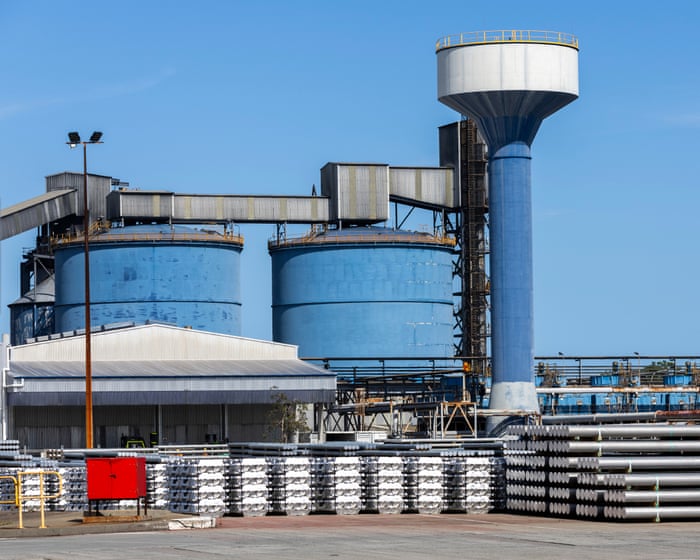
Australia’s Prime Minister Anthony Albanese and New South Wales Premier Chris Minns are set to announce a government bailout worth up to $2.5 billion for the Tomago aluminium smelter. The funding aims to keep the smelter open despite rising energy costs, with the cost shared equally between the federal and NSW governments.
Key Facts
The Tomago smelter is Australia’s largest aluminium smelter and uses over 10% of New South Wales’ energy.
The smelter employs about 1,000 workers and produces up to 590,000 tonnes of aluminium per year.
Rio Tinto, the smelter’s owner, considered closing the site when its electricity contract ended.
The bailout deal is expected to include $1 billion for capital improvements to the smelter.
The announcement is planned for a joint visit to Tomago by Prime Minister Albanese and Premier Minns.
The deal is linked to power purchase agreements with Snowy Hydro, a government-owned energy utility, creating about 2.5 gigawatts of new energy supply.
Other metal smelters in Australia, including copper and steel works, are also receiving government support to continue operations.
Tomago plans to become nearly 100% renewable in energy use by the end of the decade.
Read the Original
Want the full story? Tap a source to open the original
article.
The U.S. will release its July inflation report, which is expected to show that inflation is slowly cooling but still above the Federal Reserve’s 2% target. After recent high gas prices driven by geopolitical events and rising costs in technology, inflation may have temporarily eased but still remains a concern for the economy and consumers.
Key Facts
The July inflation report is expected to show a 3.4% increase in consumer prices compared to a year ago, slightly down from 3.5% in June.
Monthly prices likely rose 0.1% from June to July after a drop in gas prices in June.
Core inflation, which excludes volatile food and energy prices, is expected to drop to 2.5% in July from 2.6% in June.
Gas prices fell after a cease-fire in the U.S.-Iran conflict but started rising again by late July.
Inflation has stayed above the Fed’s 2% target for over five years.
Rising costs for services like healthcare and restaurant meals are contributing to sustained inflation.
Increased wages lead companies to raise prices, but income growth is not keeping up with inflation.
Economists and Federal Reserve officials are closely watching the data to understand where inflation is headed next.
Read the Original
Want the full story? Tap a source to open the original
article.
Prime Minister Andy Burnham said that his current efforts to help with the rising cost of living are not enough on their own. He plans to introduce a series of smaller changes, including public control of services like energy, water, and housing, and will ask the Chancellor to consider more support in the upcoming Budget.
Key Facts
Burnham admitted his announcements so far won't fully ease the cost-of-living pressures on people.
He plans to combine smaller actions to help reduce household costs.
Promised changes include reforming train fares and increasing public control of energy, water, and housing services.
He removed VAT from domestic energy bills and brought forward ending "subscription traps."
Burnham is touring the UK to discuss cost-of-living issues while Parliament is not in session.
He asked Chancellor John Healey to focus on the cost of living in the next Budget on 28 October.
The Chancellor will continue with strict spending limits, meaning support may be limited.
Burnham wants to help businesses by lowering business rates, especially for pubs and live venues, but will not make promises before the Budget.
Read the Original
Want the full story? Tap a source to open the original
article.
Repeated heatwaves in the UK this year have caused an estimated £4.4 billion loss in economic output by the end of July. Heat reduces worker productivity and forces some equipment to shut down, with the highest impact in London and the southeast.
Key Facts
UK heatwaves in May, June, and July have reduced economic output by around £4.4 billion.
Workers become less productive during high temperatures, and some machines must stop working due to overheating.
Verdant recommends rules to limit working temperatures and supports paying workers who lose hours due to heat.
The UK experienced its hottest summer on record, with an amber warning for extreme heat issued recently.
Indirect costs like wildfire fighting and extra energy use are not included in the £4.4 billion figure.
If heatwaves continue to worsen, annual economic losses could exceed £25 billion by 2030.
Research shows for every 1°C rise above 30°C, worker productivity drops by 3%.
Nearly three-quarters of England is officially in drought following this summer’s heatwaves.
Read the Original
Want the full story? Tap a source to open the original
article.
Oil prices increased by more than 2% as attacks on ships in the Middle East raised doubts about reopening the Strait of Hormuz, a key route for global oil shipments. Negotiations between countries involved have seen little progress, and tensions remain high, affecting oil supply and prices worldwide.
Key Facts
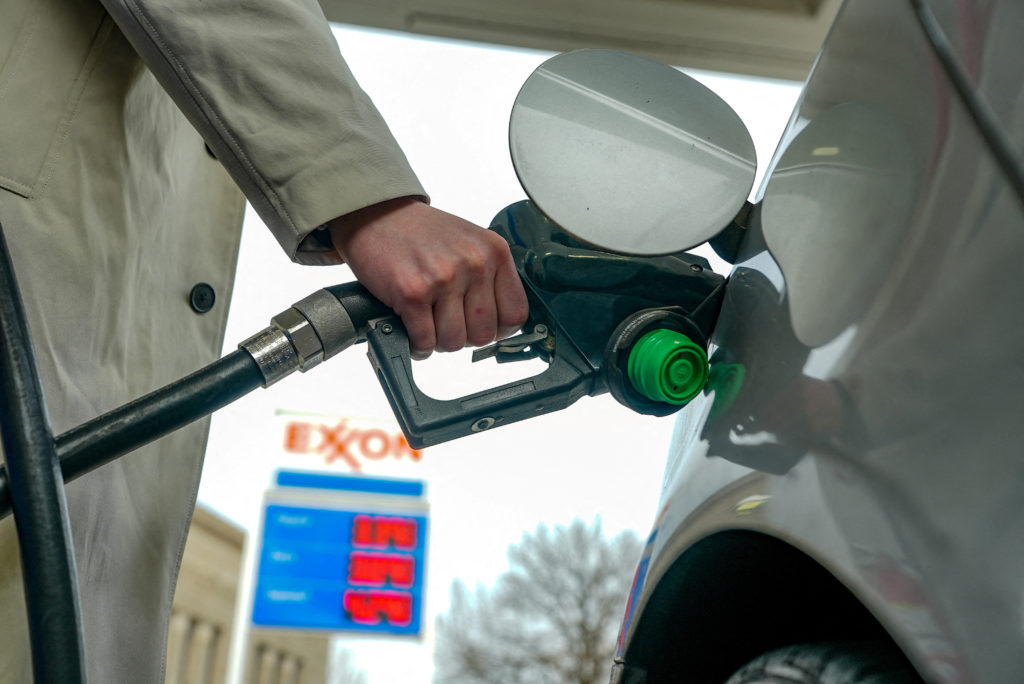
Brent crude oil prices rose to nearly $90 per barrel due to security concerns in the Strait of Hormuz.
The Strait of Hormuz carries about one-fifth of the world's oil supply before the recent conflicts.
Attacks by Yemen’s Iran-aligned Houthi group caused casualties and damaged shipping in the Bab al-Mandeb strait.
The US military struck a cargo vessel attempting to bypass a blockade of Iranian ports.
Talks between Oman and Iran on reopening the Strait of Hormuz are ongoing but face complications.
Iran demands the US lift sanctions and pay war reparations before reopening the strait.
President Donald Trump stated the US controls the strait, although ship traffic remains much lower than before the conflict.
The US Energy Information Administration expects Middle East oil production to recover to pre-war levels by early 2027 and forecasts Brent prices around $87 in 2026.
Read the Original
Want the full story? Tap a source to open the original
article.
Hiroshi Okuda, former president and chairman of Toyota Motor Corporation, died at the age of 93. He led Toyota’s global growth from 1995 to 2006 and was a key figure behind the development of the fuel-efficient Prius hybrid car.
Key Facts
Hiroshi Okuda worked at Toyota for 45 years and led the company from 1995 to 2006.
He helped develop the Prius in 1997, the first gas-electric hybrid car that became a symbol of green driving.
Okuda was not from the founding Toyoda family, which was uncommon for Toyota’s leadership.
Under his leadership, Toyota expanded global sales and set up manufacturing plants in the U.S. and Europe.
He was concerned about the impact of Toyota’s growth on American automakers like General Motors, Ford, and Chrysler.
Okuda emphasized the idea of “harmony” in the global auto industry.
He was a black belt in judo and graduated from Hitotsubashi University with a business degree.
After stepping down, he served as an adviser when Toyota added its first American board member in 2007.
Read the Original
Want the full story? Tap a source to open the original
article.
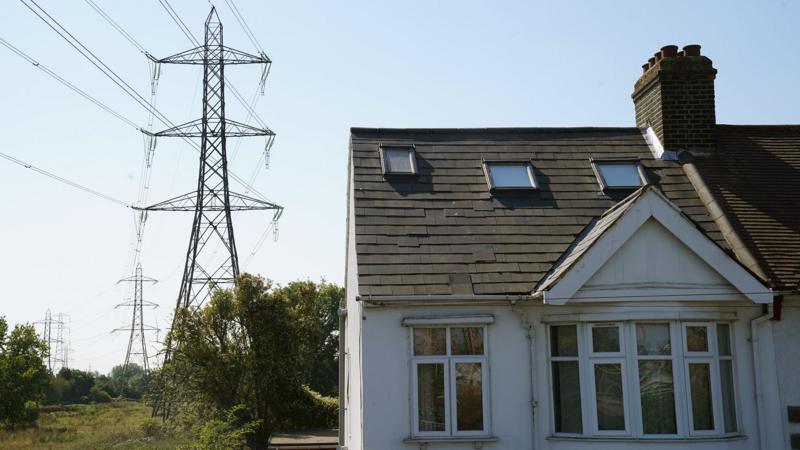
Households living near new upgraded electricity pylons and substations in Britain will get a £250 annual discount on their energy bills for up to 10 years. This scheme supports the upgrading of old power infrastructure to better distribute renewable energy and improve energy security.
Key Facts
The discount applies to homes within 1600ft (500m) of 43 transmission projects across Britain.
About two-thirds of these projects are in Scotland, mainly to support wind energy growth.
The upgrades replace infrastructure built mostly in the 1960s, designed for coal and gas power.
Around 80p will be added to all energy bills each year to fund the discount program.
Between 120,000 and 160,000 households could receive these discounts as more projects happen.
The first discounts will start early next year, mostly applied automatically to bills.
Some local residents and campaigners feel the discounts are too small compared to the impact on their homes and environment.
Pylons can be very tall; some planned pylons in northeast Scotland could reach about 187ft (57m).
Read the Original
Want the full story? Tap a source to open the original
article.
UK farmers are facing one of the driest and hottest growing seasons in decades, causing crops to look unusual but still be edible. Retailers may relax their usual strict rules on the appearance of fruits and vegetables to avoid empty shelves.
Key Facts
The UK is experiencing very dry and hot weather affecting vegetable growth and appearance.
Cauliflower heads are turning yellow because heat and sun exposure are higher than normal.
Cucumbers are growing misshapen, sometimes curling into spirals due to greenhouse heat stress.
Pak choi leaves have holes made by pests that thrive in hot, dry weather, and farmers have fewer pesticide options.
Potatoes are growing in odd shapes with knobs because heat slows their normal growth.
Retailers usually reject produce that looks different but may now accept these “wonky” vegetables to keep shelves stocked.
Despite appearance changes, the vegetables taste normal and are safe to eat.
Farmers and sellers are working with supermarkets to accept less perfect produce during this hot period.
Read the Original
Want the full story? Tap a source to open the original
article.
Americans now owe over a trillion dollars in credit card debt, which has increased by 60% in the last five years. Higher interest rates are making it harder for people to pay off their debts, leading to more late credit card payments.
Key Facts
Total credit card debt in the U.S. is more than one trillion dollars.
Credit card debt has grown by 60% compared to five years ago.
Rising interest rates increase the cost of carrying credit card debt.
Higher costs make it harder for people to pay down what they owe.
Late or missed credit card payments, called delinquencies, are increasing.
The article was explained by economics correspondent Paul Solman.
Read the Original
Want the full story? Tap a source to open the original
article.
Credit card debt in the U.S. rose to $1.26 trillion in the second quarter of 2026, approaching the highest level ever recorded. This increase is linked to strong consumer spending and higher prices for essentials like groceries and gas.
Key Facts
Credit card debt increased by $21 billion in the second quarter of 2026.
The total outstanding credit card debt is near the record of $1.28 trillion set in late 2025.
Rising prices for everyday items and strong consumer spending help push credit card balances higher.
The share of credit card balances over 90 days late rose from 7.6% in mid-2022 to 12.8% in early 2026.
Higher late payments are partly due to older debts rather than new missed payments.
Auto loan debt reached a record $1.71 trillion, while student debt and mortgage debt went down.
Total household debt in the U.S. is $18.8 trillion, including mortgages, auto loans, student loans, credit card debt, and home equity lines of credit.
The data comes from the New York Federal Reserve, using credit report information from Equifax.
Read the Original
Want the full story? Tap a source to open the original
article.
Trump Media & Technology Group is selling fast access to President Trump's social media posts on Truth Social through a data service called Truth API, charging up to $100,000 a month. The company hopes this new product will help increase revenue after struggling financially, but the service has raised concerns about fairness and ethics.
Key Facts
Trump Media sells faster access to Truth Social posts via an API to customers, mainly trading firms, for $60,000 to $100,000 per month.
The API provides quick access to posts from President Trump and other top accounts before they appear publicly on the platform.
The service could give investors a small advantage in reacting to market-moving news like tariffs or foreign policy updates from the president.
Trump Media’s CEO said they are talking with cloud firms, AI companies, and news outlets about buying access and plan to offer it to regular investors.
The company has never made a profit and saw its losses increase to $238 million in the second quarter, partly due to falling crypto asset values.
Trump Media also invests in crypto and is merging with a fusion energy firm to diversify its business.
Ethical questions arise over selling faster access to presidential posts that could influence financial markets.
A U.S. senator has proposed a bill to ban special paid access to government officials' social media accounts for market-related information.
Read the Original
Want the full story? Tap a source to open the original
article.
California’s high-speed rail project may run out of money by December 2027 unless it borrows billions to continue. The rail authority has cut its train order in half and delayed buying trains, risking federal funding and increasing costs.
Key Facts
The rail project could run out of funding by December 2027 without new financing.
The project faces a $9.5 billion funding gap over five years.
Borrowing to cover this gap could cost an extra $3.6 billion to $6.6 billion in interest.
The authority cut the train order from six trainsets to three, with options for 19 more but no guarantees.
The deadline to buy trains has been delayed to February 2030.
The authority may use a lease-purchase plan instead of outright buying the trains.
Federal "Buy America" rules, which require trains to be made in the U.S., were removed from the initial train order.
The rail authority missed deadlines tied to $4 billion in federal funding and dropped its lawsuit against the previous administration.
Read the Original
Want the full story? Tap a source to open the original
article.
Hims & Hers Health announced plans to start selling compounded peptides. The company is working on creating high-quality peptides made in the U.S., offering expert advice and regular blood tests to customers.
Key Facts
Hims & Hers Health plans to sell compounded peptides.
Peptides will be made in the United States.
The company aims to provide expert clinical guidance with the peptides.
Regular blood testing will be part of the service to monitor customers’ health.
The announcement was made during the company’s Monday earnings call.
Andrew Dudum, the CEO, shared these details during the call.
Read the Original
Want the full story? Tap a source to open the original
article.
U.S. stock markets fell slightly after recently reaching record highs, while oil prices moved up and down because of uncertainty about the war with Iran and its effect on oil supply. The S&P 500, Dow Jones, and Nasdaq all dropped, and Brent crude oil prices briefly rose above $90 before settling lower.
Key Facts
The S&P 500 index dropped by 0.3%, continuing a small decline after reaching an all-time high on Friday.
The Dow Jones Industrial Average fell by 184 points, or 0.3%.
The Nasdaq composite index decreased by 0.6%.
Brent crude oil prices jumped above $90 per barrel in the morning.
Later, Brent prices fell back below $87 before closing at $88.91.
The price of Brent crude oil increased by 1.4% compared to the previous day.
Oil price changes are linked to uncertainty about when the war with Iran will allow the free flow of crude oil again.
Read the Original
Want the full story? Tap a source to open the original
article.
The Australian Coalition plans to reduce net overseas migration to under 180,000 per year and drastically simplify the national housing construction code. The goal is to increase housing supply and make it easier to build affordable homes. The government says it will streamline the code soon, focusing on modernizing building rules.
Key Facts
The Coalition wants to cut net overseas migration to below 180,000 annually by reducing family and student visas.
Net overseas migration counts people entering Australia minus those leaving and is currently set at 185,000 per year.
The Coalition aims to reduce migration to address a shortfall of 130,000 homes over four years.
Shadow housing minister Andrew Bragg proposes cutting the 2,000-page construction code down to 80 pages for simpler building standards.
The government has frozen the current construction code for four years and plans a new streamlined version later this year.
Treasurer Jim Chalmers says the housing market’s recent slowdown is due to multiple reasons, not just tax changes.
The Commonwealth Bank reported an $11 billion profit, helped by strong home and business lending despite a weak housing market.
Personal loan repayments are becoming harder for some Australians, but home loan and credit card arrears remain low.
Read the Original
Want the full story? Tap a source to open the original
article.
Sales of used homes in the U.S. dropped by 1.7% in July compared to June, mainly because home prices and mortgage rates are very high. Despite the drop, sales were slightly higher than last year, but homes remain very expensive and hard to find.
Key Facts
Existing home sales fell 1.7% in July to a seasonally adjusted annual rate of 4.06 million units.
The median price of existing homes rose 2% from last year to $434,100 in July.
Mortgage rates for a 30-year fixed loan reached 6.69%, the highest in over a year.
Home prices have increased every year for 37 months in a row.
The number of homes for sale in July was 1.54 million, below the pre-pandemic typical 2 million.
At July's sales pace, there is about a 4.6-month supply of homes, less than the 5-6 months considered balanced.
First-time buyers made up 29% of home sales in July, lower than the usual 40%.
The Northeast region saw prices rise 5.2% year-over-year due to low home inventory.
Read the Original
Want the full story? Tap a source to open the original
article.
A federal safety agency released a report on a deadly explosion in August 2025 at the Clairton Coke Works steel plant in Pennsylvania. The explosion killed two workers and injured 11 others while flushing a gas valve, and the report recommends new safety procedures to prevent similar accidents.
Key Facts
The blast happened at U.S. Steel’s Clairton Coke Works near Pittsburgh.
Two workers died and 11 others were injured, including contractors.
The explosion occurred during a routine maintenance task involving flushing a gas valve with pressurized water.
The gas valve ruptured, releasing flammable coke oven gas.
The Chemical Safety Board found that U.S. Steel had no formal, written procedure for flushing gas valves safely.
OSHA fined U.S. Steel $118,214 and issued 10 safety citations due to incomplete and outdated safety practices.
The valve that failed was over 70 years old and made of brittle cast iron, a material not recommended for flammable gas systems.
The report suggested relocating buildings away from coke oven gas piping to reduce injury risk in case of future incidents.
Read the Original
Want the full story? Tap a source to open the original
article.
John Pye, co-founder of the auction company John Pye & Sons, has died at the age of 95. He helped grow a small business started in 1968 into a leading auction company with locations across the UK and Spain.
Key Facts
John Pye and his wife Ann started the company in 1968 called Furniture & General Auctions in Nottingham.
The business began with a horse and cart and focused on house clearances and business asset sales.
It became John Pye & Sons Limited in 1990 and moved to larger offices near Notts County's stadium.
The company bought the old Star Brewery site in New Basford in 1995 to expand.
In 2007, it switched from live auctions to online 24-hour timed auctions.
John Pye & Sons now has auction centers in Derby, Birmingham, Bo'ness, Margam, and Zaragoza, Spain.
The company said John Pye had a big impact on his colleagues and the local community.
The firm and family expressed thanks for the support after his passing.
Read the Original
Want the full story? Tap a source to open the original
article.
The Treasury Department and IRS have set rules for employer programs that let parents put pre-tax money into Trump accounts for their children. These accounts are a way to save money on taxes while investing for children’s futures, and employers may also contribute or match some of the money.
Key Facts
The Treasury and IRS released new guidelines for employer-sponsored contributions to Trump accounts.
Trump accounts are tax-deferred investment accounts for children.
Parents can contribute money directly from their paychecks before taxes are taken out.
Employers may also add money or match some of the parents’ contributions.
The announcement was made on a Tuesday.
This program aims to help families save for children’s futures through employer and parental contributions.
The rules include the process employers and parents must follow for contributions.
Read the Original
Want the full story? Tap a source to open the original
article.
Paramount CEO David Ellison may move the company’s headquarters out of California if the state continues to block its merger with Warner Bros Discovery and does not start settlement talks by October. California Attorney General Rob Bonta is leading a lawsuit to stop the merger, arguing it would reduce competition and harm the film industry.
Key Facts
Paramount plans to merge with Warner Bros Discovery in a deal worth $110 billion.
California is suing to block the merger, saying it would give the new company too much control over films and cable TV.
Paramount CEO David Ellison threatened to move the company out of California if talks do not begin by October 1.
Potential new headquarters states include Tennessee, Texas, or Georgia, which are not part of the lawsuit.
The merger has raised concerns about fewer opportunities for diverse stories in films and higher prices for consumers.
Ellison argues the lawsuit is about control over news outlets like CNN, not just market competition.
Paramount owns CBS News, Paramount Pictures, and recently consolidated with Skydance and Warner Bros Discovery.
California Attorney General Rob Bonta leads a coalition of 12 states opposing the merger on antitrust grounds.
Read the Original
Want the full story? Tap a source to open the original
article.