Several car models will stop being made after 2026, creating chances for buyers to get discounts on remaining stock. These vehicles, including the Ford Escape and Volkswagen ID.4, offer unique features and may become valuable classics in the future.
Key Facts
The Ford Escape, a small SUV with hybrid and plug-in hybrid versions, will end production after 25 years and four generations.
The 2026 Ford Escape starts at $31,845 and offers good comfort and fuel-saving options.
The Volkswagen ID.4, an electric SUV first released in 2021, will also be discontinued after 2026.
Buyers can potentially save about $10,000 off the price of a 2026 ID.4, which starts at $46,570.
The ID.4 has features like heated front seats, wireless charging, a large touchscreen, and driver assistance technology.
The Jaguar F-Pace, a luxury SUV, is ending production as the company moves to electric vehicles.
The Toyota GR Supra sports car, known for its power and manual transmission, will be discontinued.
The Tesla Model S electric car, known for its long driving range, is also on the list of discontinued models.
Read the Original
Want the full story? Tap a source to open the original
article.
British actor Will Poulter, filmmaker Adam Meeks, and chemical dependency counselor Annette Deao are touring Ohio to promote their indie film "Union County." The movie offers a realistic and hopeful look at addiction and recovery, featuring real people from the recovery community.
Key Facts
The film "Union County" was made last year and focuses on addiction and recovery.
Will Poulter is the lead actor in the movie.
Adam Meeks, who is from Ohio, wrote and directed the film.
Annette Deao is a program director at an adult recovery court in Ohio and helped with the movie.
The team is on a multiday road trip around Ohio to show the film at independent cinemas.
The film includes real people from recovery programs, not just professional actors.
The tour is informal, with no big studio support or publicists involved.
The movie highlights both the challenges of addiction and the strength of the local community.
Read the Original
Want the full story? Tap a source to open the original
article.
Eli Lilly is suing six companies that sell illegal versions of its experimental weight-loss drug, retatrutide, which is still in clinical trials and not yet approved by the FDA. The company wants to stop the growing illegal market that sells the drug online and in some stores before it is officially available.
Key Facts
Retatrutide is an experimental weight-loss drug being tested by Eli Lilly and has not yet been approved by the FDA.
Federal law forbids selling drugs that are not approved, but many companies and clinics are offering retatrutide anyway.
Eli Lilly has filed lawsuits against six companies, including telehealth firms, peptide sellers, a med spa, and a pharmacy.
Some of these companies sell retatrutide labeled "for research use" without requiring a prescription.
The illegal drug supply is believed to come from overseas manufacturers.
Eli Lilly plans to seek official FDA approval for retatrutide in early 2027.
Analysts expect retatrutide to be a very successful drug once approved, but worry about the impact of the illegal market.
Illegal sales have been found in places like convenience stores, often openly advertised without apparent punishment.
Read the Original
Want the full story? Tap a source to open the original
article.
Experts predicted that artificial intelligence (AI) would cause many job losses, especially in entry-level white-collar roles. However, a year later, AI has changed how jobs are done but has not caused large-scale unemployment. Employers now value AI skills more and are adjusting job roles rather than cutting many jobs.
Key Facts
AI was expected to eliminate many jobs, including half of entry-level white-collar positions.
Since ChatGPT’s launch in 2022, unemployment among workers exposed to AI rose only slightly, similar to workers less exposed.
Other factors like remote work and ending pandemic hiring also affect employment figures.
Measuring AI’s true impact on jobs is difficult due to delays in government data and limits in private data.
AI is changing job tasks by automating some parts and raising skill requirements.
About 74% of employers see AI skills as important or required, with 13% requiring them across all roles.
Employers want new hires to already have AI skills from day one.
Some job areas see both hiring and layoffs as companies explore the best mix of AI and human skills.
Read the Original
Want the full story? Tap a source to open the original
article.
OpenAI and Anthropic began as AI labs aiming to develop safe technology for society. However, as they grew into large companies focused on profits, their future financial success is uncertain, leading some to suggest the U.S. government should take control of them if private markets reject their value.
Key Facts
OpenAI and Anthropic were started by AI developers concerned about unsafe AI development by large tech firms.
Both labs filed for public stock offerings (IPOs) with very high valuations in June.
There is public concern about these companies concentrating too much global wealth.
Recently, AI-related stocks, including Nvidia and SpaceX, have dropped significantly after initial hype.
AI models are expensive to develop and quickly become outdated, making profits hard to sustain.
Similar AI models are available for free from open-source projects and Chinese competitors.
Many users rely on OpenAI and Anthropic’s technology, which is widely used despite uncertain profitability.
Some experts suggest that if these companies fail financially, the U.S. should nationalize them to protect public interest.
Read the Original
Want the full story? Tap a source to open the original
article.
Tui, a large European travel company, says people are booking holidays later because of the war in Iran and rising living costs. The company lost €60 million due to the conflict and saw profits drop in the spring, but summer holiday bookings have recently increased.
Key Facts
The war in Iran caused uncertainty, making travelers wait before booking trips.
Tui lost €60 million because of the war and related problems.
Two cruise ships were stuck in the Gulf for 12 weeks, costing the company €40 million.
Tui’s profits fell by 43% between April and June compared to last year.
Customer numbers dropped 3% in the same period to just under 10 million.
The markets and airlines part of Tui’s business moved from profit to loss due to weak demand and high fuel prices.
Summer holiday bookings have increased in the last few weeks as the season started.
Climate changes are affecting travel times, with more people choosing to travel outside the busiest months to enjoy cooler weather.
Read the Original
Want the full story? Tap a source to open the original
article.
Great Britain expects a drop in solar power during a near-total solar eclipse, creating a shortage in electricity supply on Wednesday evening. The national energy operator is taking steps to make extra power available and is asking consumers to reduce electricity use during peak hours.
Key Facts
The solar eclipse will block up to 95% of the sun in parts of Great Britain.
Solar power generation will drop by 300 to 1,100 megawatts during the eclipse.
Electricity demand is already high due to a summer heatwave.
The National Energy System Operator (Neso) initially predicted a shortfall over 1,700MW, later updated to about 1,200MW.
Neso is using market tools to encourage extra electricity generation and to maintain supply.
Electricity prices have risen sharply, reaching over £211.40 per megawatt-hour at 7pm.
Octopus Energy, a major electricity supplier, asked customers to avoid using washing machines and dishwashers between 6pm and 8pm.
Octopus Energy is offering eligible customers one free hour of electricity on Sunday as an incentive to reduce usage during the eclipse.
Read the Original
Want the full story? Tap a source to open the original
article.
Home insurance costs in the U.S. have risen sharply due to increasing climate disasters. While the current financial system supports paying for damages after disasters, it does not provide ways to invest in preventing those disasters and reducing future losses.
Key Facts
About 71% of American homeowners report higher insurance costs recently, with 42% saying the increases are large.
Average yearly home insurance premiums reached about $3,300 after rising nearly 25% from 2021 to 2024.
Climate disasters trigger a chain reaction: damaged homes lead to tougher insurance, lower property values, weaker mortgage security, less tax revenue, and higher local government borrowing costs.
State and local governments suffer most financially since they cannot print money and face tough budget choices after disasters.
Current financial markets allow investing in stocks, bonds, and carbon credits but lack investment options focused on preventing climate-related damages.
Preventing disasters like wildfires, floods, and heat waves would save money for many groups but the savings are spread out and hard to package for investors.
Creating new financial tools to invest in prevention efforts could stabilize insurance, help local budgets, protect property values, and offer new investment opportunities.
Prevention projects could include forest management and wetland restoration, with investors sharing verified savings from avoided losses.
Read the Original
Want the full story? Tap a source to open the original
article.
Hospitals are increasingly asking patients to pay large deposits before treatment, especially when their insurance is out-of-network. This practice comes as healthcare costs and patients' deductibles rise, making it harder for many to afford care.
Key Facts
Thomas Zordani traveled for a neurosurgery consultation but had his appointment canceled after Mayo Clinic required a $5,000 upfront payment.
Mayo Clinic determined after the appointment was made that Zordani's insurance was out-of-network, designating him "self-pay."
Hospitals are asking for prepayments more often to cover patients' larger share of medical costs due to rising deductibles.
Rising hospital prices, drug costs, and labor expenses push insurers to shift more costs to patients through higher deductibles.
The average deductible for employer family insurance plans is about $3,762; for Affordable Care Act plans, it rose 37% to around $3,786 in 2024.
Industry experts say this trend could make it harder for patients to get care and put financial strain on both providers and patients.
A health poll found that lower out-of-pocket costs are the most desired insurance plan change by insured adults.
Consumer advocates are receiving increasing complaints about upfront medical payment demands.
Read the Original
Want the full story? Tap a source to open the original
article.
N Chandrasekaran, chairman of Tata Group, announced he will step down when his term ends in February 2027. The Tata Sons board did not agree on renewing his contract, revealing ongoing disagreements within the company’s leadership.
Key Facts
Chandrasekaran is 63 years old and has chaired Tata Group since 2017.
The Tata Sons board could not agree on extending his term for another five years.
Tata Group owns major companies like Air India, Tata Steel, and Jaguar Land Rover.
The chairman’s decision highlights divisions and conflicts among Tata Sons board members.
Tata Trusts, a charity organization, owns 66% of Tata Sons and appoints some board members.
Disputes involve issues like board nominations, funding, and whether Tata Sons should be publicly listed.
Tata Group is dealing with business challenges, including reviving Air India.
Chandrasekaran’s predecessor, Cyrus Mistry, was removed in a controversial move that led to legal battles.
Read the Original
Want the full story? Tap a source to open the original
article.
Sir Rod Stewart has canceled the remaining dates of his US tour after having a routine heart procedure called a coronary stent. Doctors have advised him to rest for four weeks, and he is recovering well but will not perform until fully fit again.
Key Facts
Sir Rod Stewart is 81 years old.
He had a coronary stent procedure, which is a treatment to open narrowed or blocked heart arteries.
Doctors say his recovery is going well.
He was scheduled to perform 11 US concerts, including six shows in Las Vegas.
Some shows in Cincinnati and Cleveland were already canceled before the full tour cancellation.
Stewart will rest for four weeks before returning to the stage.
His upcoming tour dates in Mexico for September are still planned.
Ticket information and updates will be handled by concert promoters and venues.
Read the Original
Want the full story? Tap a source to open the original
article.
A report says smaller steel companies in India, producing nearly 40% of the country's steel, can save about one-third of their electricity costs and cut carbon emissions by switching to renewable energy. The report suggests that joining together to invest in renewable power projects is the most effective and affordable way for them to make the switch.
Key Facts
Smaller steelmakers in India use a lot of electricity, which can be up to 40% of their costs.
Using renewable electricity can reduce their power costs by about 22 to 24 million rupees (about $250,000 to $275,000) per company, or up to 34%.
India’s steel sector causes as much as 12% of the country’s carbon emissions.
India aims to reach net-zero emissions by 2070, meaning it wants to balance emissions with measures to remove them.
Only about 11% of smaller steel companies currently use renewable power, while the national share for renewables is about 22%.
Group investments in renewable energy projects can lower costs and risks for small companies.
Challenges slowing adoption of clean power include lack of awareness, government delays, and high initial costs.
Switching to clean power could help Indian steel companies avoid European carbon taxes.
Read the Original
Want the full story? Tap a source to open the original
article.
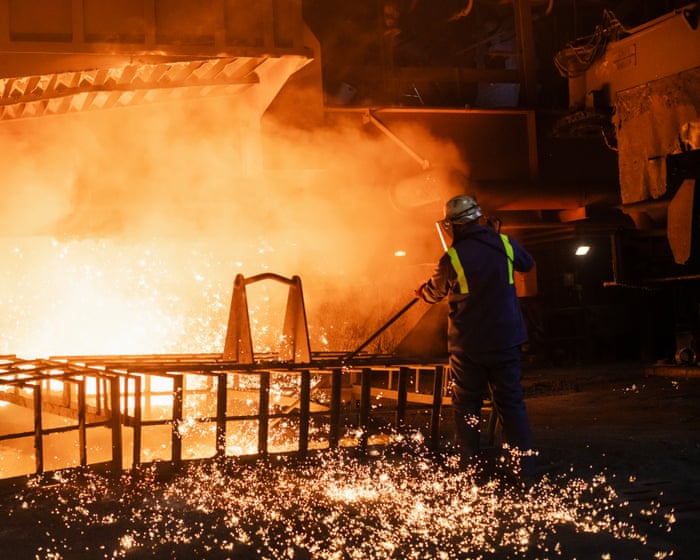
The steel blast furnaces in Port Talbot, Wales, closed in 2024 after over 100 years, causing nearly 3,000 job losses and impacting the local community. An exhibition called "Steeling Ourselves" uses photos and interviews to share how the town is coping with this change and looking toward the future.
Key Facts
Port Talbot’s Tata Steel blast furnaces shut down in 2024 after more than 100 years of operation.
The closure resulted in around 3,000 people losing their jobs.
The shutdown affected not only steelworkers but also local suppliers and businesses.
A photography exhibition titled "Steeling Ourselves" showcases life in Port Talbot before and after the closure.
The project is part of "After the End," a university research study on how communities handle big changes and endings.
Residents recall the blast furnaces lighting up the night sky, making the town feel alive.
Tata Steel plans to switch to a cleaner electric arc furnace, but it will employ far fewer workers and has faced delays.
People in Port Talbot remain hopeful and are trying to rebuild their community with creativity and resilience.
Read the Original
Want the full story? Tap a source to open the original
article.
Chinese automaker Chery has bought Nissan’s former car factory in South Africa to produce electric and hybrid vehicles. Chinese car makers are starting to build vehicles in Africa instead of just exporting, aiming to meet growing demand there and benefit from government support.
Key Facts
Chery acquired Nissan’s old Rosslyn plant near Pretoria, South Africa, to make plug-in hybrids, electric vehicles, and Jetour brand cars.
Chinese automakers are shifting production closer to African buyers to reduce dependence on exports.
Other Chinese companies like BAIC and Great Wall Motor also have assembly operations in South Africa.
Africa’s growing cities, rising middle class, and supportive government policies make it an attractive auto market.
Countries like South Africa, Morocco, Kenya, Ethiopia, and Ghana are best positioned for electric vehicle investments.
Morocco plans to build Africa’s first large battery factory (gigafactory) to support EV supply chains.
Local manufacturing can lower vehicle prices by avoiding import taxes and encourage investment in charging stations and batteries.
Switching to electric vehicles could reduce Africa’s reliance on imported fuels and help local economies.
Read the Original
Want the full story? Tap a source to open the original
article.
Asian stock markets mostly rose, with South Korea’s Kospi up 4%, while oil prices increased amid ongoing concerns about the war with Iran disrupting oil flow. U.S. stocks fell slightly after reaching recent highs, and inflation data awaited in the U.S. could influence Federal Reserve interest rate decisions.
Key Facts
Tokyo’s Nikkei 225 rose 0.6% to 67,334.94 points.
South Korea’s Kospi increased 4% to 6,597.90, helped by gains in Samsung Electronics (7.7%) and SK Hynix (7.1%).
Taiwan’s Taiex advanced 0.8%, while Shanghai’s index added 0.3%; Hong Kong’s Hang Seng fell 1.2%.
Australia’s S&P/ASX 200 dropped 0.6% to 9,197.00.
Brent crude oil price rose 0.9% to $89.67 per barrel; U.S. crude also gained 0.9% to $83.98.
The war with Iran has disrupted oil shipping through the Strait of Hormuz, keeping oil supply uncertain.
Iran denied President Trump’s statement about demanding compensation in negotiations to end the war.
Concerns about attacks in the Bab el-Mandeb strait could further threaten regional shipping and fuel instability.
U.S. inflation data expected to show a slight decrease to 3.4% in July, which may affect Federal Reserve interest rate decisions.
U.S. stock indexes (S&P 500, Dow Jones, Nasdaq) fell modestly after recent record highs.
Read the Original
Want the full story? Tap a source to open the original
article.
Japan has stopped importing several types of Indian mangoes after finding problems with sterilization and inspection processes. This suspension affects important mango varieties during the peak export season and causes economic challenges for Indian farmers and exporters who invested in meeting Japan's standards.
Key Facts
Japan suspended imports of six approved Indian mango varieties starting March 25 due to concerns over heat treatment and certification processes.
The varieties affected include Alphonso, Kesar, Langra, Banganapalli, Chausa, and Mallika.
Japan imported about $1.54 million worth of Indian mango products between 2025 and 2026.
The Japanese market is important because it pays higher prices and signals quality to other buyers globally.
The suspension follows a previous ban lifted in 2006 after India improved its pest control and inspection systems.
Heatwaves damaged mango crops in Maharashtra, and geopolitical issues increased exporting costs.
Exporters and farmers had invested heavily to meet Japan’s strict standards, including equipment and training.
The halt has disrupted contracts and caused stored mangoes to spoil, affecting farmers’ incomes.
Read the Original
Want the full story? Tap a source to open the original
article.
A four-year-old boy named Hudson was taken to hospital after a fake squishy toy bought from Shein exploded in his face. The toy’s filling caused eye damage, and Shein has removed the product from its platform and is reviewing safety.
Key Facts
Hudson’s mother bought discounted squishy toys from Shein.
The toy popped and exploded a white, sandy substance onto Hudson’s face.
After washing his eyes, they became swollen and painful, requiring hospital treatment.
Doctors flushed Hudson’s eyes to balance pH and gave him eye drops for vision damage.
Squishy toys are popular among children and often sold as blind boxes, but many counterfeits exist.
UK Border Force intercepted over 260,000 counterfeit toys in the last year.
Some counterfeit toys can contain harmful chemicals like phthalates and benzenes.
Shein stated the product is no longer available and said sellers must follow safety rules.
Read the Original
Want the full story? Tap a source to open the original
article.
Scientists at the University of Reading have created a chocolate bar made entirely from British-grown cocoa beans, a rare achievement since most UK chocolate depends on imported cocoa. This new chocolate bar celebrates the university’s 100th anniversary and highlights efforts to protect cocoa plants amid climate change challenges.
Key Facts
The late queen was the only person to have eaten a 100% British chocolate bar before, given to her as a child in 1932.
The University of Reading grew cocoa plants in Berkshire to make a new fully British chocolate bar.
Cocoa beans were harvested, fermented, and processed by a master’s student at the university.
The UK chocolate market is worth £10.4 billion but relies totally on imported cocoa.
The university has over 300 types of cocoa plants and hosts a center handling 97% of the world’s international cocoa plant movement.
Climate change threatens cocoa production with heat and extreme rainfall harming crops in producing countries.
Only six bars have been made so far due to slow cocoa pod growth, but production may increase.
The university hopes to gift a bar to the Princess of Wales, linking her Reading birthplace with the chocolate’s origin.
Read the Original
Want the full story? Tap a source to open the original
article.
Four U.S. states have started a trial against Meta, accusing the company of making Facebook and Instagram addictive for children. The states want Meta to change its apps and pay up to $1.4 trillion in damages. Meta denies these claims and says it is committed to protecting young users.
Key Facts
The states involved are California, Colorado, Kentucky, and New Jersey.
The lawsuit alleges Meta uses technology to deliberately make its social media platforms addictive for kids.
The states want changes to Meta’s apps and financial penalties up to $1.4 trillion, close to Meta’s market value.
Jury selection began in Oakland, California, and opening statements are expected to start August 18, 2026.
Meta has faced similar lawsuits before, with previous combined damages nearing $1 billion.
Experts compare this case to lawsuits against tobacco companies in the 1990s.
Meta founder Mark Zuckerberg is expected to testify during the trial.
Meta states it has worked with parents, experts, and law enforcement to protect young people.
Read the Original
Want the full story? Tap a source to open the original
article.
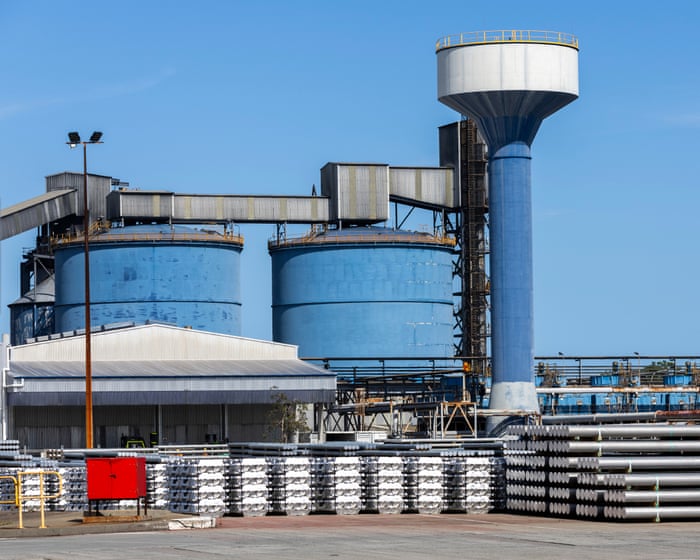
Australia’s Prime Minister Anthony Albanese and New South Wales Premier Chris Minns are set to announce a government bailout worth up to $2.5 billion for the Tomago aluminium smelter. The funding aims to keep the smelter open despite rising energy costs, with the cost shared equally between the federal and NSW governments.
Key Facts
The Tomago smelter is Australia’s largest aluminium smelter and uses over 10% of New South Wales’ energy.
The smelter employs about 1,000 workers and produces up to 590,000 tonnes of aluminium per year.
Rio Tinto, the smelter’s owner, considered closing the site when its electricity contract ended.
The bailout deal is expected to include $1 billion for capital improvements to the smelter.
The announcement is planned for a joint visit to Tomago by Prime Minister Albanese and Premier Minns.
The deal is linked to power purchase agreements with Snowy Hydro, a government-owned energy utility, creating about 2.5 gigawatts of new energy supply.
Other metal smelters in Australia, including copper and steel works, are also receiving government support to continue operations.
Tomago plans to become nearly 100% renewable in energy use by the end of the decade.
Read the Original
Want the full story? Tap a source to open the original
article.