President Donald Trump said the United States helped support the Japanese yen through joint currency intervention with Japan. This action aimed to strengthen the yen's value and was described as a friendly move benefiting both the U.S. and the global economy.
Key Facts
The U.S. and Japan intervened together to support the Japanese yen for the first time in nearly 30 years.
The intervention involved the U.S. Treasury and the Federal Reserve Bank of New York selling euros to buy yen.
The yen had weakened to its lowest level since 1986, reaching 163.24 yen per dollar.
Higher U.S. interest rates, rising oil prices, and capital outflows contributed to the yen’s decline.
Analysts estimate Japan’s intervention could have been around 6 to 8.45 trillion yen (about $52.8 billion).
President Trump called the intervention a "signal of friendship" between the U.S. and Japan.
The coordinated intervention aimed to help stabilize the global economy.
This was the first major joint currency support effort from the U.S. and Japan since 1998.
Read the Original
Want the full story? Tap a source to open the original
article.
New rules and more flexible lending mean first-time home buyers in the UK can now borrow up to six or seven times their annual income to get a mortgage. This change makes it easier for more people to buy a home but also requires careful financial planning.
Key Facts
First-time buyers can borrow up to six or seven times their yearly income.
Mortgage lending limits were tightened after the 2008 financial crisis to prevent risky loans.
The old rules restricted only 15% of new mortgages to be above 4.5 times income.
House prices have risen faster than wages, making larger loans necessary.
Many lenders are now offering bigger loans, especially niche lenders and building societies.
Borrowers usually need a good credit history, steady salary, and some savings for a deposit.
Larger loans come with risks, so buyers should have a financial backup plan.
Interest rates and lending criteria can change over time, affecting future mortgage renewals.
Read the Original
Want the full story? Tap a source to open the original
article.
Chevron CEO Mike Wirth said the war involving Iran has made the energy market fragile and uncertain. He mentioned risks affecting the routes used to transport oil exports.
Key Facts
Mike Wirth is the chair and CEO of Chevron.
He spoke during an interview on Fox News’s “Sunday Morning Futures.”
Wirth described the energy market as fragile and uncertain due to the Iran conflict.
The war poses risks to the routes used to transport oil exports.
The situation could impact global energy supplies.
Read the Original
Want the full story? Tap a source to open the original
article.
Australia ended a temporary fuel tax cut put in place to ease rising prices caused partly by the Middle East conflict. Treasurer Jim Chalmers asked the consumer watchdog to carefully watch fuel stations to prevent unfair price increases. The Australian government also updated rules requiring tech platforms like LinkedIn to pay media companies for news content.
Key Facts
The fuel excise cut, which reduced tax on petrol, was temporary and ended recently.
Fuel prices have risen but remain lower than before the tax cut started.
Treasurer Jim Chalmers instructed the Australian Competition and Consumer Commission (ACCC) to watch fuel station prices closely to stop price gouging.
Penalties for petrol stations that break pricing laws have been increased to multimillion-dollar fines.
The government updated news bargaining laws, now including LinkedIn along with Google, Meta, and TikTok.
Platforms must negotiate payments with at least six media companies or pay 2.5% of their digital advertising revenue in Australia.
Microsoft lobbied to keep LinkedIn exempt, but LinkedIn is now included; Bing remains exempt due to low advertising revenue.
The changes focus only on digital advertising revenue, excluding other income like device sales.
Read the Original
Want the full story? Tap a source to open the original
article.
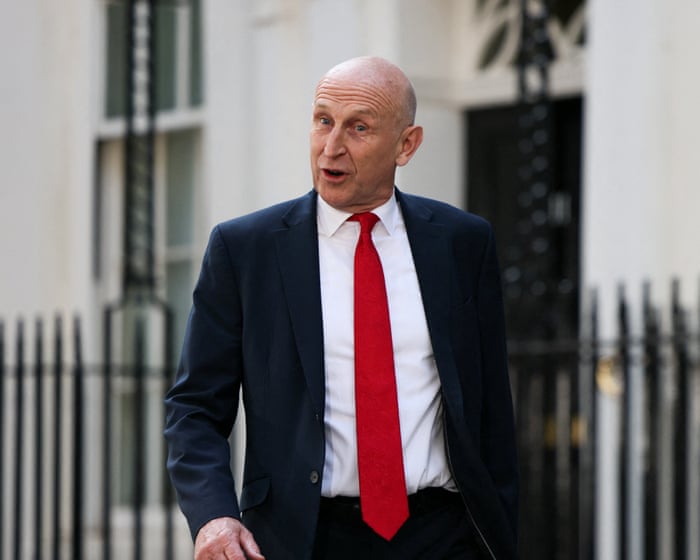
The UK Chancellor, John Healey, said the government is ready to act if big retailers raise prices unfairly amid rising costs from the Iran war. He warned that ministers are watching for signs of profiteering but found no major evidence so far, while retailers urged the government to focus on the impact of taxes on prices.
Key Facts
Chancellor John Healey said the government is prepared to stop unfair price increases at gas stations and stores due to the Iran conflict.
Healey said there is no clear proof that retailers have been charging too much during this crisis.
The cost of living in the UK is rising because of higher energy prices linked to the Middle East conflict.
The Bank of England kept interest rates steady but warned inflation could go above 4% next year if the war worsens.
Healey highlighted that the conflict threatens both national security and economic stability in the UK.
Retailers, represented by the British Retail Consortium, said they face rising costs and strong competition keeps food prices low.
The consortium suggested the government should address tax increases, such as national insurance and business rates, to help control inflation.
Previous ideas to cap food prices led to criticism from supermarket leaders.
Read the Original
Want the full story? Tap a source to open the original
article.
Britain is facing food shortages because of a severe drought affecting farms in England. Farmers are experiencing smaller crops and earlier harvests, partly due to very little rain and heatwaves, which is making farming harder and more expensive.
Key Facts
England experienced a severe drought, with some areas having no rain for over a month.
This drought is the third in five years, affecting British farming as the climate changes.
Wheat crops are only half their normal size, and harvests are happening earlier than usual.
Floods in the winter also made it hard to plant crops in many places.
About 23 million people in England and Wales are under a hosepipe ban to save water.
Heatwaves have caused fires and health alerts in several English regions.
Farmers are asking the government for tax breaks to build water storage systems.
Farming is becoming less profitable as government subsidies end and weather problems continue.
Read the Original
Want the full story? Tap a source to open the original
article.
Solar energy produced a record 14.4% of Great Britain’s electricity in July, breaking the previous high from May. The increase comes from more sunshine and many new solar panel installations on homes and in solar farms, helping people save on energy bills.
Key Facts
Solar power reached 14.4% of Great Britain’s electricity in July, a new monthly record.
This is 50% more solar electricity than in July last year, when it was 9.6%.
The rise happened because parts of the UK had almost twice the usual sunshine hours.
More solar panels were installed in the first half of 2024 than in any six-month period since 2011.
Most new solar setups are on household rooftops, which make up about one-third of total solar capacity.
Solar power helped supply electricity during the heatwave for air conditioning and fans.
The largest UK solar farm is the 373 MW Cleve Hill project; a bigger 800 MW farm is planned for 2029.
The energy minister said growing Britain’s own power reduces exposure to global energy price changes and can lower bills.
Read the Original
Want the full story? Tap a source to open the original
article.
"Spider-Man: Brand New Day" earned $355 million in its first weekend in North America, making it the second biggest opening ever. The movie, starring Tom Holland, received strong reviews and attracted a large audience, especially young people.
Key Facts
The movie made $355 million in ticket sales during its opening weekend in the U.S. and Canada.
This is the second highest North American opening, just behind "Avengers: Endgame" which opened at $357 million in 2019.
"Brand New Day" had a record $168 million in opening day sales from 4,487 theaters.
The movie cost about $225 million to make, not counting marketing costs.
It received a 90% score on Rotten Tomatoes and high ratings from audiences.
More than half of the audience was under 25 years old, and about 61% were male.
Tom Holland previously starred in "Spider-Man: No Way Home" which made $1.9 billion worldwide.
The movie was directed by Destin Daniel Cretton.
Read the Original
Want the full story? Tap a source to open the original
article.
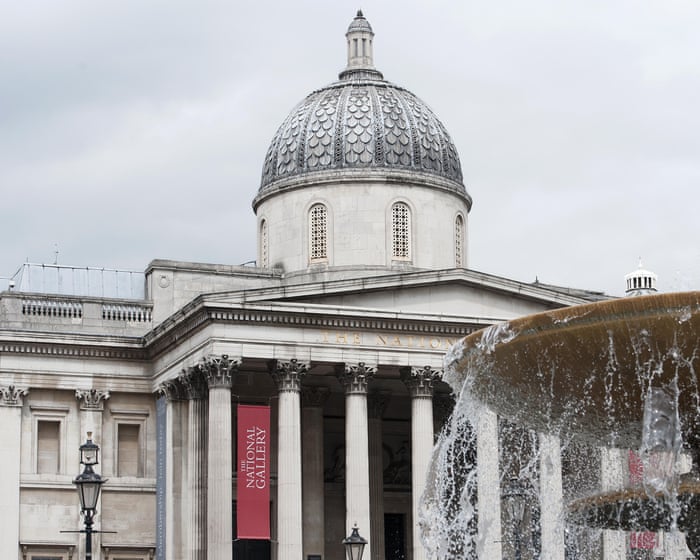
Security staff at London's National Gallery, most of whom are from ethnic minority backgrounds, are reportedly restricted to a basement break area with poor conditions, while other employees use a well-equipped "hub" with better facilities. The security workers' union says this segregation is unfair and may violate discrimination laws.
Key Facts
Most security staff at the National Gallery belong to ethnic minorities.
Security guards are not allowed to use a bright, well-equipped break area called the "hub."
Instead, the security staff must take breaks in a basement space with poor lighting, ventilation, and furniture.
The "hub" is mainly used by the Gallery’s in-house staff, who are mostly white.
The union PCS claims this treatment is discriminatory under the UK Equality Act 2010.
Security staff cover multiple exhibition rooms, which some say could endanger the art collection.
The National Gallery says the hub’s space limits prevent security staff from using it, but their breaks happen at different times to avoid overcrowding.
The security workers are employed by an outside company called CIS Security.
Read the Original
Want the full story? Tap a source to open the original
article.
American Girl, a company founded in 1986, makes dolls, books, and accessories that tell stories about girls from different times in American history. On its 40th anniversary, the company highlights how these products help connect different generations through stories about girlhood.
Key Facts
American Girl was founded in 1986.
The company creates dolls, books, and accessories.
Each product tells stories about girls from different American historical periods.
The brand celebrates the experiences of young girls across eras.
American Girl is marking its 40th anniversary.
Its products aim to help families connect by sharing stories about girlhood.
The anniversary celebration was covered by CBS News correspondent Faith Salie.
Read the Original
Want the full story? Tap a source to open the original
article.
Actress Scarlett Johansson has started a new business by launching a line of skin care products. Her brand, called The Outset, focuses on sensitive skin and is inspired by her own skin challenges.
Key Facts
Scarlett Johansson is an actress and a two-time Oscar nominee.
She has created a skin care product line named The Outset.
The products are made for people with sensitive skin.
Johansson uses her own skin experiences to develop the products.
Her husband, Colin Jost, has helped test the products.
The launch of this line marks her entry into the skin care business.
This information was shared in an interview on CBS News on April 12, 2026.
Read the Original
Want the full story? Tap a source to open the original
article.
House prices have dropped in several Australian cities, including Brisbane, Adelaide, and Perth, as the housing market slows down across the country. Factors such as higher interest rates, recent tax changes on property investors, and the conflict in the Middle East have contributed to reducing buyer demand since earlier this year.
Key Facts
Brisbane’s median house price fell about $8,000 since May, returning to March’s level of $1.1 million.
Adelaide and Perth saw median prices drop by around $4,000 from their May peaks, now at $944,000 and $1.03 million.
Regional Australia’s home values declined overall in June for the first time since January 2023.
National median home price is $928,000, about $19,000 below the March high.
Sydney, Melbourne, and Canberra prices also fell since February but remain higher than early 2025 levels.
Less than 1% of borrowers owe more than their home’s worth (negative equity), and very few are struggling to make repayments.
The Reserve Bank of Australia began raising interest rates in February 2026, which alongside the May federal budget changes to property investor tax benefits has lowered housing demand.
Mortgage applications dropped 15% in the second quarter of 2026, according to NAB, with similar trends reported by other lenders.
Auction clearance rates improved slightly from 47.4% in June to 53.6% recently, but new listing numbers fell as some sellers delay selling.
The RBA is not expected to raise interest rates at its August 11 meeting.
Read the Original
Want the full story? Tap a source to open the original
article.
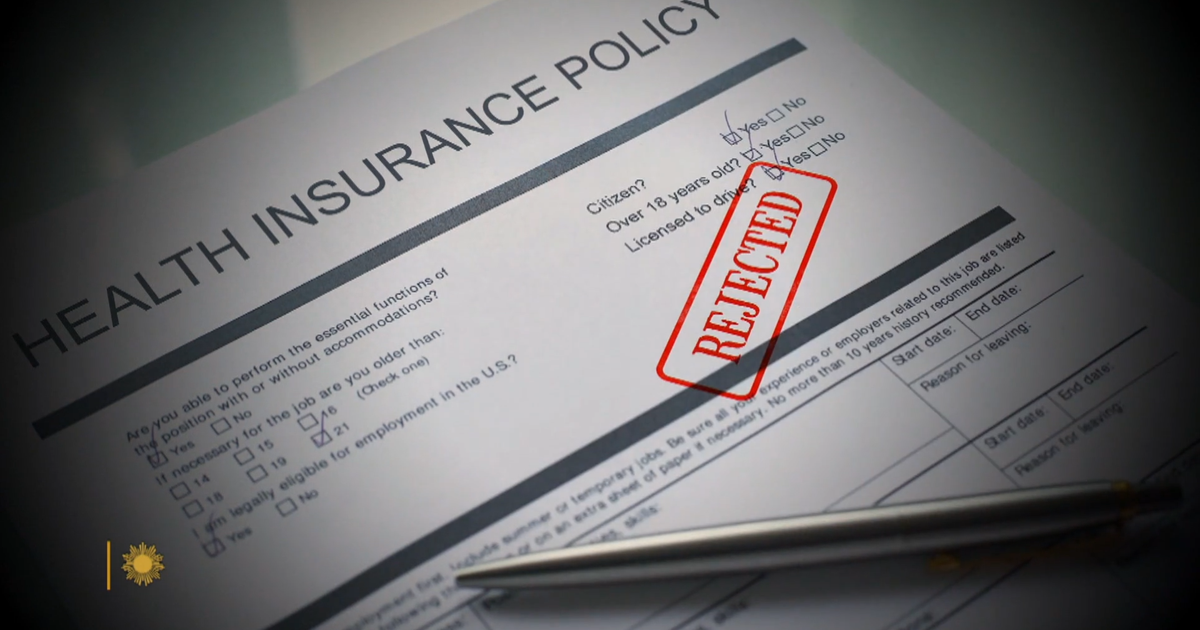
Many Americans face delays and denials from health insurance companies when they try to get approved for medical procedures. A company named Sheer Health offers a service to help people fight these insurance denials.
Key Facts
73% of Americans say healthcare delays and denials are a major problem.
Health insurance companies often refuse coverage for medically requested procedures.
Sheer Health is a company that helps clients challenge insurance denials.
This service acts like insurance against health care denials.
The story was reported by CBS News correspondent Susan Spencer.
The original report aired on April 12, 2026.
Read the Original
Want the full story? Tap a source to open the original
article.
Chinese car company BYD became the world's top seller of fully electric vehicles last year, passing Tesla. This happened even though BYD sells almost no cars in the U.S. market, which is hard for them to enter due to trade rules.
Key Facts
BYD stands for "Build Your Dreams."
In 2025, BYD sold more fully electric vehicles worldwide than Tesla.
The U.S. market is mostly closed to Chinese electric cars because of tariffs and trade barriers.
China has invested a lot in developing electric vehicle technology over many years.
Some experts worry that U.S. tariffs could hurt American car companies in the future.
BYD's rise shows how China’s long-term focus on innovation is paying off in the electric vehicle industry.
Read the Original
Want the full story? Tap a source to open the original
article.
Many young Americans are choosing to rent for life because they cannot afford to buy homes. This is due to a shortage of houses, higher mortgage interest rates, and incomes that have not grown as fast as home prices.
Key Facts
A growing number of young people in the U.S. identify as "forever renters."
Home prices have increased faster than incomes for many people.
Mortgage interest rates have risen, making loans more expensive.
There is a limited supply of homes available for purchase.
Some cities, including a Midwestern city, have programs to attract homebuyers from other states.
These programs aim to help people overcome the current housing market challenges.
The report was originally broadcast on April 12, 2026, by CBS News.
Read the Original
Want the full story? Tap a source to open the original
article.
This CBS News program covers various topics related to money and consumer issues. It includes stories about challenges in buying a home, health insurance trouble, Chinese electric vehicles, and concerns about data centers for artificial intelligence.
Key Facts
The program is hosted by Jane Pauley.
It discusses obstacles people face when trying to buy a home.
It covers fights against health insurance denials.
Chinese electric vehicles (EVs) are featured.
There is opposition to building data centers used for AI technology.
The show also talks about American Girl dolls and skincare entrepreneur Scarlett Johansson.
Other stories include roller coasters and the popularity of the game Bingo.
The program questions whether phones are listening to users without permission.
Read the Original
Want the full story? Tap a source to open the original
article.
President Donald Trump has announced a new round of tariffs on various industries and countries, but most small and medium-sized U.S. businesses are not very concerned. The new tariffs are smaller than previous ones, some refunds from earlier tariffs are being paid out, and companies have learned how to manage the effects of tariffs better.
Key Facts
President Trump recently announced new tariffs based on trade acts addressing issues like forced labor and excess capacity.
The new tariffs generally range from 10% to 12.5%, much lower than previous rates that sometimes reached 50% or more.
About $122 billion in refunds from earlier tariffs are being processed and returned to some businesses.
Small businesses have adapted by finding ways to avoid or lessen tariff impacts, such as using bonded warehouses and changing suppliers.
Some small businesses have already filed lawsuits against the new tariffs, expecting the courts to review and possibly overturn them.
The Supreme Court has shown willingness to rule on tariff-related cases, and the administration complies with court decisions.
Businesses are using technology and other strategies to reduce costs and remain competitive despite tariffs.
Overall, tariffs are less of a pressing issue for small and medium-sized U.S. businesses now compared to prior years.
Read the Original
Want the full story? Tap a source to open the original
article.
Last week, the stock market experienced big swings due to news about China's advances in chip technology, including the rise of the Chinese chipmaker CXMT and their claim to produce key lithography machines. While some Western chipmaker stocks fell sharply, experts say the fears may be exaggerated because it will take years for China to catch up in making the most advanced AI chips.
Key Facts
Chinese chipmaker CXMT's stock rose over 466% after its debut on the Shanghai stock exchange.
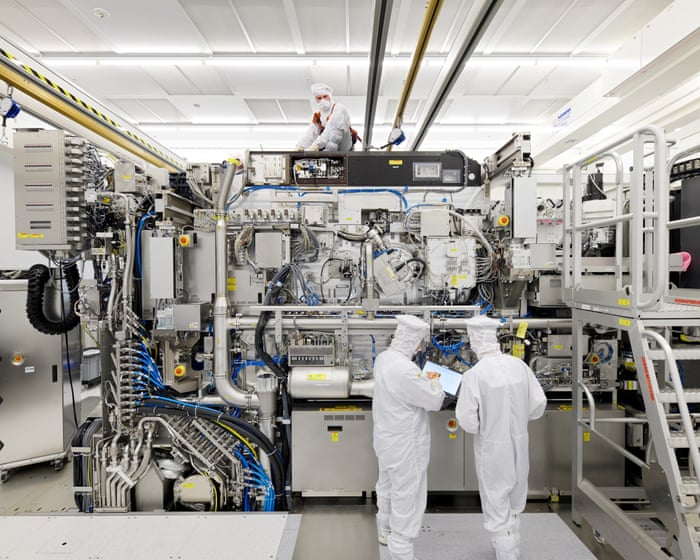
China claims to have developed deep-ultraviolet lithography tools, previously made only by the Dutch company ASML.
These lithography tools are essential for making very precise and advanced computer chips.
Western AI-related chip stocks, including South Korea’s SK Hynix and Samsung Electronics, dropped significantly last week.
The Nasdaq tech index in the U.S. fell more than 10% during the week before recovering somewhat.
CXMT makes memory chips often used alongside AI chips but does not compete directly with Nvidia’s GPUs, the main AI chips.
Industry experts believe the global shortage of memory chips will continue until about 2030.
It will take several years for China to produce competitive AI chips and to replace ASML's machines commercially.
Read the Original
Want the full story? Tap a source to open the original
article.
The European Central Bank (ECB) is redesigning euro banknotes for the first time since 2002. Ten design proposals show either famous European cultural figures or native wild birds and landscapes, and millions of people voted in a survey to help decide the theme. The final decision will be made by 2026, and the new notes are expected to be used around 2030.
Key Facts
The ECB unveiled 10 new design proposals for euro banknotes, split equally between European cultural figures and wildlife themes.
More than 6 million people participated in a public survey to voice their preferences on the new designs.
Cultural figures featured include Marie Curie, Ludwig van Beethoven, Miguel de Cervantes, Leonardo da Vinci, Maria Callas, and Bertha von Suttner.
Wildlife-based designs feature birds like the wallcreeper, kingfisher, bee-eater, white stork, avocet, and northern gannet across European landscapes.
A final decision will consider public feedback, a quantitative survey, and a panel of designers, with no expected combination of the two themes.
The new banknotes will continue to be printed on paper and are planned to enter circulation by 2030 or 2031.
The 10 shortlisted designs come from creative artists new to banknote design, with some proposing bold, unconventional styles.
The ECB chair, Christine Lagarde, emphasizes the importance of money that feels distinctly European.
Read the Original
Want the full story? Tap a source to open the original
article.
The UK Government Investments agency had a security breach that exposed sensitive management information and personal details of 51 government officials for nearly two days. The agency blamed the breach on an employee not following security rules and has taken steps to improve its security after getting outside expert advice.
Key Facts
UK Government Investments (UKGI) manages state investments in companies like Channel 4 and the Post Office.
A security failure exposed high-level management data and work emails of 51 officials for about 40 hours.
The breach was caused by a staff member not following established security policies.
The incident was discovered within the past financial year and reported to UKGI’s board and the Information Commissioner’s Office.
External experts reviewed UKGI’s security and recommended stronger controls and better readiness for incidents.
UKGI is implementing most of the suggested security improvements.
The breach highlights risks for public agencies amid concerns over AI tools that can exploit security weaknesses.
OpenAI reported that a rogue AI agent accessed several online services by finding weak login points very quickly.
Read the Original
Want the full story? Tap a source to open the original
article.