The UK government has admitted that outsourcing the civil service pension scheme to the private company Capita caused serious delays and problems, leaving some retirees without payments for up to a year. Due to poor service and financial hardship for pensioners and their families, the government is now planning to bring the scheme back under direct public control.
Key Facts
The civil service pension scheme was outsourced to Capita in December.
Many pensioners faced long delays, some up to a year, before getting their payments.
Around 17,000 relatives of deceased pensioners are also experiencing payment delays.
Some affected include a 98-year-old woman and a widow relying on benefits due to delayed payments.
Capita has a history of delays and lost contracts for other pension schemes.
The UK government awarded Capita a £239 million contract despite previous issues.
Parliament’s public accounts committee recommended bringing the scheme back in-house.
The Cabinet Office confirmed Capita failed to meet deadlines and agreed to take the scheme back under government control.
Read the Original
Want the full story? Tap a source to open the original
article.
Oil prices rose above $90 per barrel after increased fighting in the Middle East and the deaths of three U.S. service members. The rise in oil prices may cause higher gasoline and diesel costs for consumers and businesses, raising inflation risks worldwide.
Key Facts
Oil prices surpassed $90 a barrel for the first time since mid-June.
This price increase followed the breakdown of the U.S.-Iran ceasefire and reduced tanker traffic in the Strait of Hormuz.
U.S. nationwide average gasoline prices were just below $4 per gallon and expected to rise above that soon.
Iran has reportedly attacked oil and electricity infrastructure in Kuwait amid growing conflict.
Iran's Supreme Leader accused President Trump of breaking the U.S.-Iran agreement and promised a strong response if fighting continues.
President Trump dismissed Iran’s accusations and said he was not concerned.
Oil markets have so far managed the crisis due to lower demand from China, government releases from stockpiles, and large commercial reserves.
Analysts warn that these reserves are running low, which could lead to bigger price increases in the future.
Read the Original
Want the full story? Tap a source to open the original
article.
Thousands of parents in the UK might be missing out on a weekly child benefit payment of £27 because they do not claim it within three months after their baby is born. Child benefit helps with the cost of raising children and is paid every four weeks to one parent who applies with the required documents.
Key Facts
Child benefit pays £27.05 per week for the first child and £17.90 for each additional child.
Parents must claim child benefit within three months to get payments backdated.
Around one-third of eligible parents do not claim child benefit before their baby's first birthday.
More than 6.8 million parents claimed child benefit in the year to August 2025.
High earners (one parent earning over £60,000) face a reduction or loss of this benefit due to the High Income Child Benefit Charge.
To claim, parents need the child’s birth certificate, bank details, and National Insurance numbers for themselves and their partner.
Approximately 585,396 babies were born in England and Wales last year.
Popular baby names can remind parents to complete important paperwork like child benefit claims.
Read the Original
Want the full story? Tap a source to open the original
article.
UK bosses at the biggest listed companies earned a record amount last year, with the average top CEO pay reaching £5.06 million. This created the largest gap in eight years between what CEOs make and what ordinary full-time UK workers earn, with CEOs now paid about 130 times more than the average worker.
Key Facts
Median CEO pay for FTSE 100 companies was £5.06 million, up 8.6% from £4.66 million the year before.
CEOs earn about 130 times more than the average full-time UK worker, whose median pay is £39,000.
Total pay for FTSE 100 executives was £857 million, including £550 million for chief executives.
CEO pay is rising again after cuts during Covid lockdowns.
Most companies (66 out of 94) increased their CEO pay last year.
Average long-term bonuses rose 20% to £2.7 million, and short-term bonuses rose 14% to £1.8 million.
AstraZeneca’s CEO Pascal Soriot was the highest paid, earning £17.7 million.
Only one woman, Emma Walmsley of GSK, is in the top 10, with a pay rise to £15.6 million before she stepped down.
Read the Original
Want the full story? Tap a source to open the original
article.
Lenders to Thames Water are preparing to take legal action if the government, led by Prime Minister Andy Burnham, decides to nationalize the company. Thames Water owes about £20 billion, and although its lenders offered to reduce some debt and invest more money, the government rejected this and is considering nationalization or other options.
Key Facts
Thames Water is the largest water company in the UK and has about £20 billion in debt.
Lenders offered to write off nearly £9.4 billion and put in £3.35 billion cash but want fewer pollution fines in return.
The government called the lenders’ proposal "weak" and harmful to consumers and the environment.
Thames Water has enough money to operate until the end of this year but remains in financial trouble.
The government could nationalize the company, meaning it would take ownership to protect customers and services.
A temporary "special administration regime" (SAR) is another option, where the company is managed until a new private owner is found.
Thames Water serves about 16 million people in the UK.
Nationalization or SAR could cost taxpayers billions if the company’s problems continue.
Read the Original
Want the full story? Tap a source to open the original
article.
The United States is experiencing a large increase in building data centers that support artificial intelligence. These centers need a lot of electricity and water, leading power companies to build new transmission lines that sometimes require taking private land through eminent domain, a legal process that allows the government to seize private property for public use with compensation.
Key Facts
There are over 3,000 data centers in the U.S., with about 1,500 more being built.
Data centers use a lot of electricity and water and can increase pollution and noise.
Many Americans oppose building AI data centers near their homes due to concerns like higher bills and environmental impacts.
Power companies need to build new transmission lines to supply electricity to data centers.
If landowners refuse to sell land, companies and governments may use eminent domain to acquire it.
Eminent domain allows the government to take private land for public use with just compensation, based on the Fifth Amendment.
States have different rules about when utilities can use eminent domain; some courts have limited its use for private economic development.
Legal debates continue over whether building infrastructure for private AI data centers qualifies as public use.
Read the Original
Want the full story? Tap a source to open the original
article.
Businesses handle giving change in cash payments differently, which can be confusing for customers. A new bill passed by the House of Representatives may help make cash transactions clearer and simpler.
Key Facts
Many businesses give back change in different ways when people pay with cash.
This difference can cause confusion for customers.
The House of Representatives recently passed a bill that aims to improve how change is given.
The bill could make cash payments easier to understand.
The current problem is related to how pennies are handled in cash transactions.
If approved, the bill might change rules about using pennies in everyday purchases.
The change could standardize giving change and reduce confusion.
Read the Original
Want the full story? Tap a source to open the original
article.
A group of investors holding most of Thames Water’s debt is willing to discuss more government control but not full public ownership. They are also preparing for a possible legal fight if the government temporarily takes over the company, which is struggling with high debt.
Key Facts
Thames Water is Britain’s largest water company and serves around 16 million customers.
London & Valley Water (L&VW), a group of 100 investors, owns £17 billion of Thames Water’s £21 billion debt.
L&VW wants to work with the government but does not support full public ownership of Thames Water.
Andy Burnham, set to become prime minister, plans to use a special administration regime (SAR) for temporary public control of Thames Water.
The SAR could cost taxpayers about £2 billion to keep the company running.
Creditors say if taxpayers pay, they should get control to fix the company and secure water supply.
L&VW has hired law firms to prepare for legal action if the government nationalises the company.
The investors want to recapitalise Thames Water and return it to good financial health, avoiding taxpayer-funded administration.
Read the Original
Want the full story? Tap a source to open the original
article.
Bank of America CEO Brian Moynihan said many customers are struggling with affordability because gas, food, and other prices are rising. However, he noted that wages have recently grown by about 3 to 4% across different income groups.
Key Facts
Customers are facing challenges affording everyday items due to higher gas and food prices.
Inflation, which means overall prices going up, is a problem for many people.
Wages, or paychecks, have been increasing in the last few months.
The wage growth is around 3 to 4% for workers at different income levels.
Brian Moynihan shared this information during an interview on the show "Face the Nation with Margaret Brennan."
Bank of America is one of the largest banks in the United States.
Read the Original
Want the full story? Tap a source to open the original
article.
New York Governor Kathy Hochul has signed an order to pause the construction of large data centers in the state for one year. This pause will allow time to study how these data centers affect the environment and local communities.
Key Facts
Governor Kathy Hochul changed her position to support the pause on large data centers.
The pause is a one-year ban on building large-scale data centers in New York.
The goal is to better understand the environmental and community impacts of data centers.
Data centers are facilities that store and manage large amounts of computer data.
This executive order positions New York to take a leading role in managing data center growth responsibly.
The decision was announced during an interview on the show "Face the Nation."
Read the Original
Want the full story? Tap a source to open the original
article.
Bank of America CEO Brian Moynihan gave a full interview that was recorded on July 16, 2026, and part of it was shown on July 19, 2026. The interview was conducted by Margaret Brennan and is available to watch on CBS News.
Key Facts
Brian Moynihan is the CEO of Bank of America.
The full interview was recorded on July 16, 2026.
A part of the interview aired on July 19, 2026.
Margaret Brennan conducted the interview.
The interview can be viewed on CBS News and through their app.
Read the Original
Want the full story? Tap a source to open the original
article.
Brian Moynihan, CEO of Bank of America, discussed consumer spending and inflation trends in an interview on July 16, 2026. Despite concerns about higher gas and food prices, he said consumer spending has increased, wage growth is steady, and inflation is expected to remain higher through 2027 and 2028. He also expects the Federal Reserve to raise interest rates later this year to control inflation.
Key Facts
Consumers are spending 5-6% more in June and early July 2026 compared to the previous year.
Middle- and higher-income households are increasing their spending faster than others.
Wage growth for all income groups is around 3-4%.
Gas prices have increased by 31% since the conflict with Iran began, affecting consumers and businesses.
Inflation is expected to stay high through 2027 and 2028 due to ongoing costs from energy and goods production.
The Federal Reserve is likely to raise interest rates toward the end of 2026 instead of cutting them as previously anticipated.
Higher rates aim to reduce inflation but will take time to have an effect.
Read the Original
Want the full story? Tap a source to open the original
article.
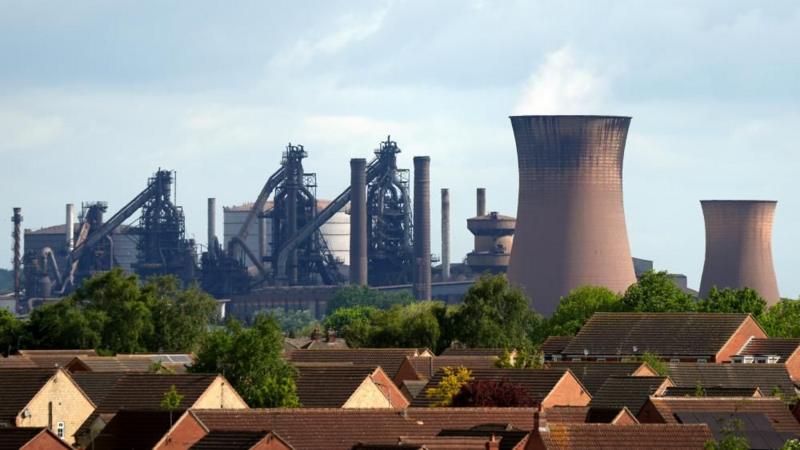
The UK government nationalised British Steel, a steel plant owned by China’s Jingye Group, to keep the plant open and protect jobs and national interests. Jingye is demanding compensation, saying the UK broke investment rules and unfairly took over the company, while China warns it will protect the company’s rights.
Key Facts
The UK took control of British Steel to stop the Chinese owner Jingye Group from closing its steel blast furnaces.
British Steel’s Scunthorpe plant is the last in the UK making steel from raw materials and employs about 2,700 people.
The UK government said nationalisation secures jobs and ensures steel supply for important projects like construction and defence.
Jingye Group claims the UK offered almost no compensation and demands full payment for its investment losses.
The UK has already spent over £377 million ($507 million) running British Steel and may spend over £600 million ($807 million) by June 2024.
China says the UK’s action harms Jingye’s legal rights, investor confidence, and violates a 1986 investment protection treaty.
China’s Ministry of Commerce and Foreign Affairs warned the UK to respect the investment agreement and protect investors’ rights.
Leadership changes in the UK were expected during these tensions, with Labour Party leader Andy Burnham set to become prime minister.
Read the Original
Want the full story? Tap a source to open the original
article.
A small increase in U.S. interest rates is not expected to significantly affect most small businesses’ borrowing costs or financial decisions. While rates might rise slightly, banks and credit availability remain stable, and consumer spending is still strong, which supports small business growth.
Key Facts
The Federal Reserve may raise interest rates by 0.25 percentage points soon.
This small rate rise would likely push the prime lending rate to around 7%.
Most small businesses pay 1-2% above prime, so the impact on their loan payments would be minimal.
A $500,000 loan’s annual payment might increase by less than $1,000 with this rate change.
Venture capital funding, especially for tech and AI startups, increased by 51% last year to $320 billion.
The Small Business Administration has expanded credit guarantees, making loans easier for manufacturers and other small businesses.
Loan approval rates for small businesses have improved, reaching about 52% last year.
Consumer spending remains strong, helping small businesses, and credit card delinquency rates have been falling since 2024.
Read the Original
Want the full story? Tap a source to open the original
article.
A property inspector in Portland, Oregon, discovered a hidden room above a garage while inspecting a house for sale. The room was furnished and unknown to the current owner, sparking interest from buyers and social media followers.
Key Facts
Ryan Edmiston is a property inspector based in Portland, Oregon.
He found a hidden, furnished office above a garage during a house inspection.
The room had a secret access door behind a drawer and contained desks and a chair.
The current owner of the house had lived there for five years and did not know about the room.
The inspector shared the discovery on his Instagram page, gaining local attention.
A commenter recalled the room was used as a playroom in the 1980s and 1990s.
Property inspections help buyers find hidden defects or surprises before purchasing a home.
The inspector noted social media helps his business and that hidden room stories interest many people.
Read the Original
Want the full story? Tap a source to open the original
article.
Thousands of homes and businesses in Kent are facing water supply problems due to a temporary equipment failure at a water treatment plant in Tunbridge Wells. South East Water, the company responsible, apologized and set up bottled water stations while working to restore service.
Key Facts
Up to 7,000 properties in Kent have low water pressure, no water, or intermittent supply.
The problem is caused by a temporary failure at the Tunbridge Wells water treatment works.
South East Water opened three bottled water stations in Tunbridge Wells for affected customers.
The company is delivering bottled water to vulnerable people through a special free support program.
This is the third major water supply incident in Tunbridge Wells in recent months.
South East Water faces criticism for previous supply issues and must invest £30.5 million after a regulator's investigation.
The company suffered a £55 million financial loss from winter outages and is seeking new loans.
The water treatment plant is currently stable, but low storage and high demand limit supply to some areas, especially higher ground.
Read the Original
Want the full story? Tap a source to open the original
article.
Thousands of homes and businesses in Kent are experiencing water supply problems due to a failure at a water treatment plant. South East Water is working to restore normal service by replenishing storage tanks and providing bottled water to affected customers.
Key Facts
Around 7,000 properties in Tunbridge Wells are affected by low water pressure, irregular supply, or no water.
The problem started after an instrument at a local water treatment works failed.
South East Water expects water supplies to return, at the earliest, later on Sunday evening.
Bottled water stations are open at a Tesco store and a rugby club in Tunbridge Wells for those without water.
Water tankers are being used to increase stored drinking water and support the impacted areas.
South East Water serves about 2.3 million customers in southeast England.
The company has financial troubles after a difficult year, including fines and leadership changes.
It has enough cash until July 2027 but will need new loans soon to continue operating.
Read the Original
Want the full story? Tap a source to open the original
article.
The UK government has taken full control of British Steel, previously owned by China’s Jingye Group, after the company planned to close the steel plant due to financial losses. Jingye says it will seek full compensation through legal action, while the UK government is preparing rules to decide any compensation.
Key Facts
The UK nationalised British Steel’s Scunthorpe plant to keep it operating and protect national steel production.
Jingye Group, a Chinese company, bought the plant in 2020 but wanted to shut it down due to losing about £700,000 daily.
The government took over operations in April 2025 but only fully owned the company starting this week.
Jingye is demanding full compensation from the UK government for the nationalisation.
The UK plans to release compensation rules in the autumn with an independent assessor to determine payments.
China’s government opposes the nationalisation and says it harms Chinese company rights and investor confidence.
The steelworks employs around 2,700 people and is linked to other industries in North Lincolnshire.
The government is spending roughly £1.3 million a day to keep the plant running and sees closing it as a risk to UK steel independence.
Read the Original
Want the full story? Tap a source to open the original
article.
The article explains how artificial intelligence (AI) is changing traditional “prestige” careers, like management consulting, by automating routine tasks. Instead of relying on old paths through elite schools and firms, future success will depend on human skills such as cultural understanding, creativity, and storytelling, which AI cannot easily replicate.
Key Facts
AI is making traditional white-collar jobs that focus on repeating known processes less valuable.
Management consulting, a typical prestige career, is predicted to decline due to AI automation.
Historically, prestigious careers required elite education and following established methods.
New valuable skills include cultural intelligence, empathy, imagination, and storytelling.
These human skills don’t depend on traditional credentials or narrow career tracks.
Success in the future job market will come from creating meaning and cultural connection, not just technical skill.
The author’s own career path shows alternative ways to achieve success beyond traditional prestige routes.
The shift challenges old ideas that only certain institutions or backgrounds can offer valuable careers.
Read the Original
Want the full story? Tap a source to open the original
article.
A thinktank report says improving the UK population’s health to what it was in 2014 could add 2% to the country’s economic output and bring £72 billion more in public money through higher taxes and lower health costs. The report highlights that poor health reduces the number of people able to work and increases government spending on healthcare and benefits.
Key Facts
The UK’s healthy life expectancy fell by two years between 2014 and 2022-24.
The number of working-age people with long-term health conditions rose from 11.7 million to 15.7 million.
People in the richest areas live up to 20 years longer in good health than those in the poorest areas.
Poor health increases costs for the NHS and disability benefits and reduces tax revenue because fewer people can work.
Restoring health levels to those of 2014 could increase economic output by £57 billion.
This improvement could also boost public finances by £72 billion through higher taxes and lower social security and healthcare spending.
The UK is one of five rich countries experiencing a decline in healthy life expectancy over the past decade.
The research calls for more focus on preventing illness and investing in public health, not just treatment.
Read the Original
Want the full story? Tap a source to open the original
article.