Tim Steiner, co-founder and CEO of Ocado, said he will not control the company like a "puppet master" after he steps down in 2028. Ocado reported a big fall in profits and its shares dropped sharply, but Steiner said the business is on a good path and will continue growing with new clients and facilities.
Key Facts
Tim Steiner will leave his CEO role at Ocado in 2028 but will stay on for one more year to provide advice.
Ocado’s pre-tax profit dropped from £607 million to £17 million in one year.
The company’s shares fell nearly 15%, reaching their lowest point in over ten years.
There are reports of tension in Ocado’s leadership about finding a new CEO, with the chair, Adam Warby, involved.
Steiner said he supports new leaders and does not want to control daily decisions.
Ocado plans to open robot-run warehouses in South Korea, Japan, and the US soon.
The company expects positive cash flow by November.
Ocado’s joint venture with Marks & Spencer saw a 15% sales increase to £1.76 billion in six months.
Read the Original
Want the full story? Tap a source to open the original
article.
New data shows that Generation Z is facing higher inflation than other age groups, with prices for goods they buy rising nearly 40% since 2018. One main reason is Gen Z’s higher spending on quick-service restaurants, where prices have gone up over 50%, compared to the general market increase of about 34%.
Key Facts
Generation Z includes people born from 1997 to 2012, currently aged about 14 to 29.
Since January 2018, prices for items Gen Z buys have increased by 39.4%, compared to a 33.8% increase nationally.
Quick-service (fast food) restaurant prices have risen 54%, much more than the overall 33.8% increase.
Gen Z spends more money on eating out and takeout than other generations and plans to do so even more through 2026.
The higher inflation for Gen Z is influenced by their spending habits, especially on dining out and value retailers.
Low-income consumers also face higher inflation and have less ability to adjust their spending.
Rising food prices and climate factors like El Niño may continue to push inflation up in the future.
The inflation measures include everyday goods such as groceries, household items, and health and beauty products.
Read the Original
Want the full story? Tap a source to open the original
article.
The UK government has taken full control of British Steel to keep its steelworks in Scunthorpe open and save 4,000 jobs. This move, backed by the new Steel Industry (Nationalisation) Act, ended the ownership of Chinese company Jingye, which had threatened to close the plant.
Key Facts
British Steel was nationalized 15 months after the government first intervened to stop its closure.
The steelworks in Scunthorpe produces primary steel from iron ore, making it the UK's last facility of this kind.
Jingye, the previous Chinese owner, had threatened to abandon the plant without preserving key equipment.
The government will appoint an independent expert to decide if Jingye should receive compensation.
The Labour government recalled Parliament to pass the Steel Industry (Nationalisation) Act, allowing the takeover.
The government aims to protect skilled jobs and maintain a vital part of the UK’s industrial base.
Future plans include moving towards producing “green steel” with cleaner, less polluting technology.
The steelworks may require over a billion pounds for upgrades and decarbonization in the coming years.
Read the Original
Want the full story? Tap a source to open the original
article.
The UK economy grew by 0.1% in May, according to official data. This small growth was mainly due to the service sector expanding, while production and construction sectors shrank.
Key Facts
The UK economy increased by 0.1% in May.
Growth came mostly from the service sector.
Production and construction sectors decreased.
In April, the economy had slightly shrunk.
The April contraction was linked to the impact of the US-Israel war with Iran on businesses.
Over the three months to May, the economy grew by 0.7% compared to the previous three months.
The data was reported by the Office for National Statistics (ONS).
Read the Original
Want the full story? Tap a source to open the original
article.
The UK economy grew slightly by 0.1% in May, recovering from a small drop in April. This growth happened despite rising energy costs caused by the war in Iran.
Key Facts
UK GDP increased by 0.1% in May after falling 0.1% in April.
Economists had predicted a 0.1% growth for May, matching the official figures.
The war in Iran has pushed up energy prices, affecting the UK economy.
The International Monetary Fund (IMF) raised its forecast for UK growth in 2024 to 1%, an increase of 0.2 percentage points.
The UK economy showed more strength than some experts expected given the Middle East conflict.
Oil prices have recently risen again due to renewed violence in the Middle East.
The Resolution Foundation thinktank warns that over half of the £23.6 billion economic flexibility from the spring budget could be lost because of the war’s impact.
Andy Burnham is beginning his role as Labour leader amid these economic challenges.
Read the Original
Want the full story? Tap a source to open the original
article.
The UK government has taken British Steel into public ownership to protect steelmaking jobs and maintain the country’s steel production ability. This move comes after concerns the steelworks might close, which would risk the UK's capacity to make new steel.
Key Facts
British Steel employs about 2,700 workers in Scunthorpe and supports other industries in the area.
The steelworks was owned by the Chinese company Jingye Group, which bought it in 2020.
Jingye said British Steel was losing about £700,000 a day before the government stepped in.
The UK government first took control in 2025 and now fully nationalized British Steel after Parliament passed new laws.
The law allows nationalization if it’s needed in the public interest to protect important industries.
The steelworks risked losing its blast furnaces, which are needed to make new, or "virgin," steel.
Virgin steel is used in major construction projects such as buildings and railways.
The government is considering limiting or refusing compensation to Jingye for the takeover.
Read the Original
Want the full story? Tap a source to open the original
article.
The United States, under President Trump’s administration, will impose 25% tariffs on some Brazilian products starting July 22. The US trade office says Brazil uses unfair trade practices, while Brazil’s government denies these claims and condemns the tariffs.
Key Facts
The US will start 25% tariffs on certain Brazilian goods on July 22.
Some products like coffee, beef, oranges, some energy products, and aerospace parts are exempted.
The US trade representative concluded Brazil has unfair trade practices after a one-year investigation.
Brazil denies the accusations and says it did not engage in unfair trade.
US officials say talks with Brazil failed to resolve trade issues.
The tariffs are applied under section 301 of the Trade Act of 1974.
Brazilian President Lula blames political reasons for the US action and points to local rival Flávio Bolsonaro.
The US Supreme Court recently limited President Trump’s power to impose tariffs under a different law, but this new tariff uses a different legal basis.
Read the Original
Want the full story? Tap a source to open the original
article.
Traders at Brixton market are trying to buy the market to keep it community-owned and protect small independent businesses. They are competing with big companies to buy the site, which is listed for £50 million, and hope to prevent a private equity firm from taking over and raising rents.
Key Facts
Traders want to keep Brixton market community-owned to protect independent shops.
The market is for sale at £50 million, and traders are competing against large companies.
The Buy Back Brixton campaign has reached the second stage of the bidding process.
The market is known for its diverse vendors from over 50 countries and strong African-Caribbean community ties.
Traders worry a private equity owner would increase rents and push out local businesses.
The current owner planned to redevelop the site, but community opposition stopped those plans.
Local politicians and the council support the traders’ community bid.
Traders have raised some funds but need more to meet the asking price and secure a loan.
Read the Original
Want the full story? Tap a source to open the original
article.
The chief executive of the Confederation of British Industry (CBI), Rain Newton-Smith, advised Andy Burnham, the new Labour leader, to avoid uncertain talks about tax and spending that could alarm businesses. She encouraged careful, steady decisions on fiscal plans and warned against costly ideas like renationalising utilities.
Key Facts
Andy Burnham is set to become the Labour party leader with a new cabinet soon.
Rain Newton-Smith said speculation about tax increases or spending cuts creates uncertainty that worries businesses.
She advised the new chancellor to take time to listen to business concerns before making decisions.
Newton-Smith supports gradual changes instead of major shocks to the economy.
She warned that renationalising utilities is expensive and might hurt ordinary people.
Public-private partnerships were recommended to fund important projects like housing and energy-efficient buildings.
British businesses face high energy costs; electricity prices are 45% above the average of major countries (G7).
Newton-Smith suggested moving energy transition costs off business bills to taxpayers or private funding.
Read the Original
Want the full story? Tap a source to open the original
article.
The United States will place a 25% tax (tariff) on certain goods imported from Brazil starting July 22. This action follows a U.S. investigation that found Brazil uses unfair trade practices, such as weak anti-corruption rules and unfair taxes, that hurt American businesses.
Key Facts
The U.S. is imposing a 25% tariff on some Brazilian imports due to unfair trade practices.
The tariffs begin on July 22 and exclude products not made in the U.S. or that could disrupt supply chains, like coffee, beef, and aerospace parts.
The U.S. Trade Representative said Brazil’s unfair actions block U.S. workers and companies from one of the world’s largest markets.
The U.S. investigation, lasting a year, found Brazil had issues like weak enforcement against corruption and unfair tariffs of its own.
The tariffs use Section 301 of the Trade Act of 1974, a law allowing action against unfair trade practices.
The U.S. had previously imposed and later lifted other tariffs on Brazil after progress in talks.
Brazilian President Lula da Silva criticized the tariffs and claimed they were politically motivated.
U.S. officials said the tariffs are based on long-standing trade concerns, not politics, and that recent talks with Brazil did not fix the problems enough.
Read the Original
Want the full story? Tap a source to open the original
article.
Mortgage rates for 30-year fixed loans have been around 6.5% recently, higher than a few years ago due to inflation and economic factors. To get the lowest mortgage rates now, experts say borrowers generally need a credit score of at least 740, but lenders are also looking at overall financial history, not just credit scores.
Key Facts
Mortgage rates for 30-year fixed loans are currently about 6.5%.
This rate is higher than in past years because of inflation, bond market changes, and steady Federal Reserve interest rates.
Borrowers with credit scores of 740 or higher usually get the lowest mortgage rates.
The average credit score of borrowers last year was 713, which is lower than the 740 needed for best rates.
For example, someone with a 740+ credit score might pay 6.4% interest, while someone with a score between 680-699 might pay 6.84%.
The difference in rates can mean paying about $87 more monthly and over $31,000 more in interest on a $300,000 loan.
Since November 2025, Fannie Mae and Freddie Mac removed minimum credit score requirements, so lenders now consider other financial behaviors.
Improving credit scores can happen quickly by paying down credit card balances and managing debts well.
Read the Original
Want the full story? Tap a source to open the original
article.
United Airlines expects to spend $6 billion more on jet fuel this year due to higher oil prices. Other airlines like Delta also face rising fuel costs and have increased ticket prices to help cover these expenses.
Key Facts
United Airlines will spend an extra $6 billion on fuel in 2024, making fuel their second-largest expense after labor.
In the second quarter, United already spent $2.3 billion more on fuel, an 84% increase compared to last year.
Delta Air Lines also saw a 77% rise in fuel costs in the second quarter, spending $4.4 billion.
Jet fuel prices hit a record high of nearly $5 per gallon in April and were $3.64 per gallon recently.
The rise in jet fuel prices is linked to the conflict involving the U.S. and Iran.
Airlines are raising ticket prices and adding fuel surcharges to help cover increased fuel costs.
Some airlines have cut inefficient flight routes and increased baggage fees to manage costs.
Passenger demand for air travel remains strong despite higher ticket prices.
Read the Original
Want the full story? Tap a source to open the original
article.
A Cold War-era nuclear bunker in Debert, Nova Scotia, is being converted into luxury condos designed to protect residents during crises. The project includes high-end features like gourmet food, security technology, and onsite medical care, aiming to attract wealthy buyers and boost the local economy.
Key Facts
The bunker, called The Diefenbunker, covers 64,000 square feet and was built to survive a nuclear attack.
Jonathan Baha'i, a Canadian cryptocurrency businessman, purchased it in 2013 for about C$31,300.
The project will create 50 luxury condo units with amenities such as biometric security, 24/7 surveillance, gourmet dining, and medical services.
The complex will include a spa, yoga room, cigar lounge, and an indoor facility to grow food.
Nearby Debert Airport allows private plane access for residents.
Security plans involve drone surveillance and cooperation with a German firm experienced in protecting high-profile clients.
Condo owners can rent out their units when not in use, with profits shared among owners.
Originally built during the Cold War for government use, the bunker was closed in 1996 and repurposed for emergency use before this renovation.
Read the Original
Want the full story? Tap a source to open the original
article.
A natural deodorant company called Wild spends millions of pounds on Instagram influencer marketing to sell its products. They work with well-known people like tennis player Emma Raducanu and TV personality Stacey Solomon, paying some influencers up to £1 million for campaigns.
Key Facts
Wild is a natural deodorant brand that uses refillable packaging.
The company was bought by Unilever last year.
Wild’s annual budget for influencer marketing is nearly £10 million and may double next year.
Top celebrities like Emma Raducanu can be paid about £1 million to be brand ambassadors.
Influencers may earn from £2,000 to £50,000 for a single Instagram post.
Wild employs over 20 people to manage influencer partnerships.
Influencer marketing is preferred because followers trust influencers more than traditional ads.
Authenticity is important; influencers usually promote products that match their personal brand or interests.
Read the Original
Want the full story? Tap a source to open the original
article.
Hundreds of employees and supporters protested layoffs at Bethesda and Zenimax, part of Xbox's parent company Microsoft. The rally aimed to urge Microsoft to resume contract talks and address job cuts affecting game development teams.
Key Facts
The protest took place outside Zenimax’s headquarters in Maryland during a midday rally.
Similar rallies were held at Microsoft offices in Texas, California, and Montreal.
The layoffs affected Bethesda Game Studios and Zenimax Online Studios employees.
The union involved is Zenimax Workers United, part of the Communication Workers of America (CWA).
Union leaders demanded Microsoft return to contract negotiations with uncontracted Bethesda staff.
Microsoft said it reached out to the union on July 6 to begin bargaining over the layoffs.
Microsoft CEO Asha Sharma stated layoffs were necessary to restructure Xbox for long-term growth.
Some laid-off employees criticized the layoffs as avoidable despite the company’s strong performance.
Read the Original
Want the full story? Tap a source to open the original
article.
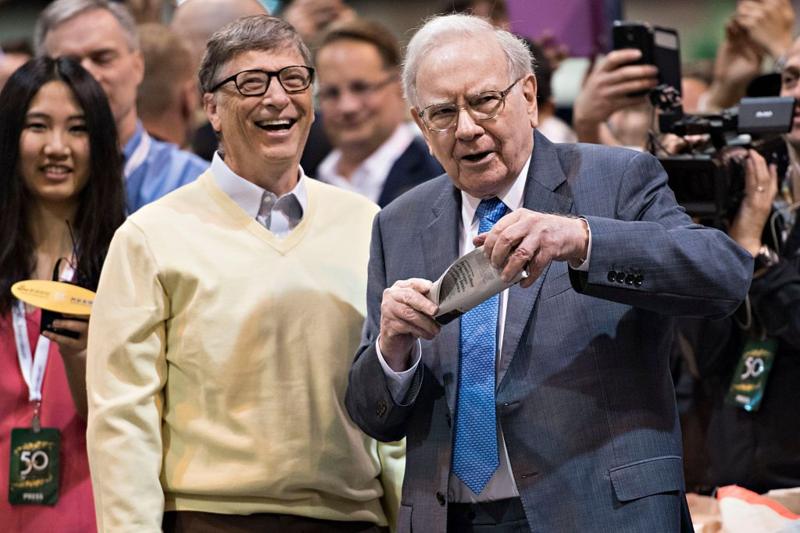
Warren Buffett called Bill Gates’ connection to Jeffrey Epstein "distasteful" but said everyone makes mistakes with who they trust. Buffett’s company has stopped donating to Gates’ charity after Gates testified to Congress about Epstein’s criminal history.
Key Facts
Warren Buffett described Bill Gates’ relationship with Jeffrey Epstein as "distasteful."
Buffett’s Berkshire Hathaway has ended its 20-year donations to the Bill and Melinda Gates Foundation.
Buffett gave his remaining shares intended for the foundation to family-linked groups instead.
Bill Gates testified before the US House Oversight Committee about knowing Epstein since 2011.
Gates admitted he should never have met Epstein and didn’t fully know Epstein’s crimes initially.
Epstein was convicted in 2008 for crimes involving underage prostitution and died in jail in 2019.
Buffett and Gates have been friends since 1991 and recently met to discuss the foundation’s donation change.
Buffett pledged $47 billion to the Gates Foundation over his lifetime but now feels his children can manage the money.
Read the Original
Want the full story? Tap a source to open the original
article.
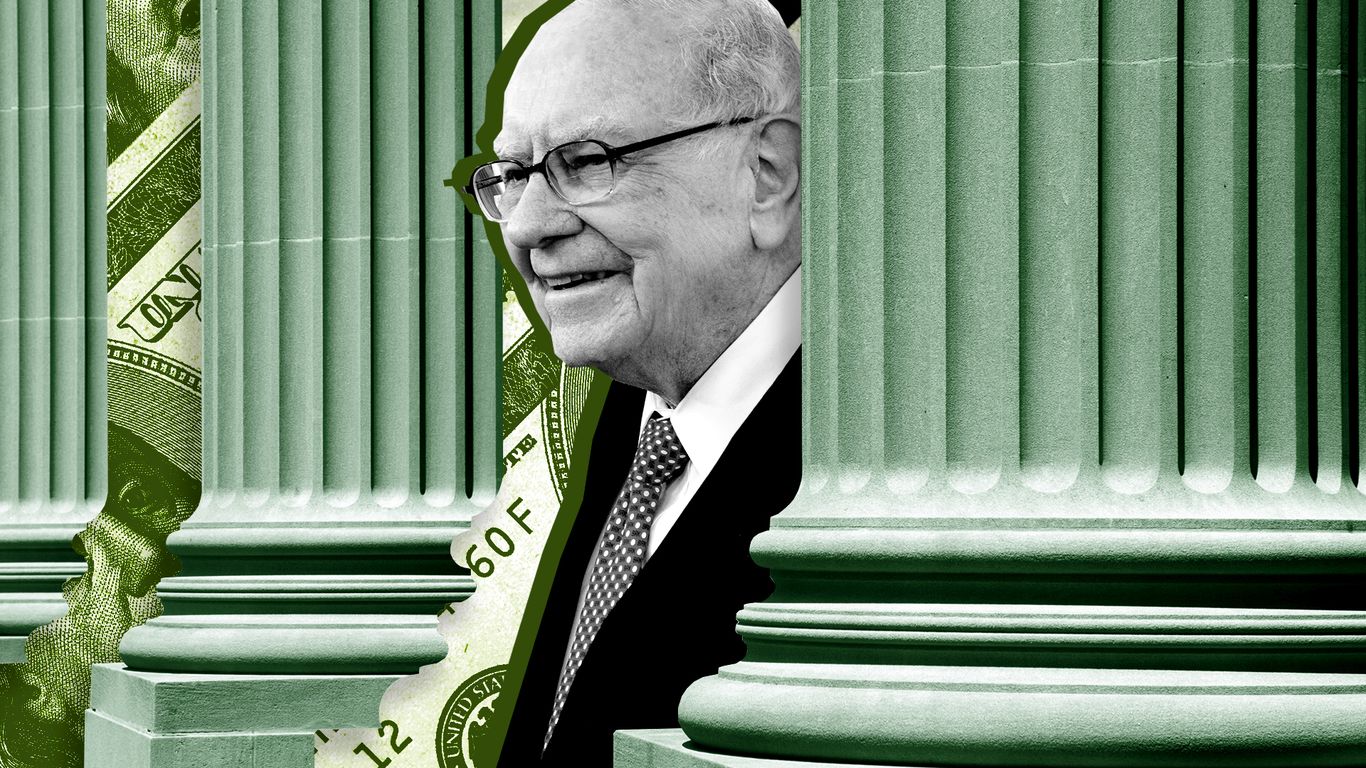
Warren Buffett expressed concern that America’s growing interest in gambling and speculative trading is hurting long-term investing. At the same time, new prediction markets like Kalshi are expanding options for betting but face criticism for encouraging gambling outside regular state rules.
Key Facts
Warren Buffett said many people prefer gambling to investing, making it harder to find good investment opportunities.
Prediction markets such as Kalshi and Polymarket allow users to bet on things like asset price movements or sports outcomes.
Kalshi introduced "perpetual futures," a type of bet on whether asset prices will rise or fall.
Critics worry that prediction markets and sports betting contribute to gambling addiction, especially among young people.
Kalshi’s CEO said many users feel traditional financial markets are unfair and hard to win in.
Kalshi supports new bipartisan legislation requiring facial recognition to stop minors from betting on these platforms.
Kalshi joined the National Council on Problem Gambling to help address problem gambling.
The discussion on America’s gambling issues is reaching lawmakers and industry leaders.
Read the Original
Want the full story? Tap a source to open the original
article.
Electricity prices are expected to rise in 13 states due to increased demand from data centers. This follows a recent power auction conducted by PJM, the grid operator for these states, for electricity supply from June 2028 to May 2029.
Key Facts
Data centers will increase electricity demand significantly in 13 states.
PJM, the grid operator, held a power auction recently.
The auction was for electricity supply covering June 2028 through May 2029.
The increase in demand is expected to raise electricity costs for consumers.
Monitoring Analytics, an independent group, oversees market activities related to the auction.
Data centers require large amounts of electricity to run their servers and equipment.
The higher electric power costs reflect the need to support these growing data center operations.
Read the Original
Want the full story? Tap a source to open the original
article.
Chris Marshall, also known as DJ Chris Cross, created Terrific Tunes, a music distribution platform to help independent artists share their work without relying on traditional record labels. Marshall used his years of experience as a DJ and knowledge of the music industry to support artists in managing their careers in today’s changing music world.
Key Facts
Chris Marshall is a DJ from Memphis with experience touring with famous hip-hop artists.
He started Terrific Tunes to help independent musicians distribute their music and keep more control.
Marshall’s grandfather was a songwriter for Stax Records, linking him to classic soul music traditions.
He began DJing in college while studying communications and learned the music business through real-world experiences.
Marshall moved to Atlanta to grow his music network and understand a major music business center.
Terrific Tunes helps artists with tasks like uploading music online and managing song information.
Marshall’s goal is to create a lasting platform beyond just releasing songs.
He believes artists need education and support to protect their careers and use their resources well.
Read the Original
Want the full story? Tap a source to open the original
article.