New rules started on July 15, 2026, for Buy Now Pay Later (BNPL) services like Klarna and Clearpay. These rules require companies to check if customers can afford payments, aiming to protect shoppers but also leading to more rejected applications.
Key Facts
New regulations for BNPL began on July 15, 2026.
Shoppers must now pass affordability checks before using BNPL.
BNPL allows people to pay for items over several months without interest.
Last year, there were about 100 million BNPL transactions, totaling roughly £7 billion.
Money Wellness, a free money advice service, saw record BNPL debt help requests in June with 4,520 customers.
This June number was only second to the usual high demand after Christmas in January.
The Financial Conduct Authority and experts are involved in explaining the new rules.
The changes aim to make BNPL safer but could also mean more people are turned down for these payment plans.
Read the Original
Want the full story? Tap a source to open the original
article.
Dale Vince, a green energy businessman and Labour Party donor, will receive damages from the Daily Mail’s publisher for using his photo to wrongly suggest he was involved in a sexual harassment case. The court of appeal ruled the newspaper misled readers by showing his picture next to a headline about another person’s misconduct.
Key Facts
Dale Vince is a businessman who supports the Labour Party and has donated over £5 million.
The Daily Mail published an article in June 2023 about Labour repaying money to a former donor accused of sexual harassment.
The article used a picture of Vince, but the headline referred to someone else, Davide Serra, who was found guilty of harassment in 2002.
The print edition kept Vince’s photo next to the misleading headline, while the online version replaced it after 47 minutes.
Vince sued the newspaper, claiming his personal data was wrongly used and that readers would wrongly think he was accused.
ANL (publisher of the Daily Mail) initially won in the high court but lost on appeal.
The court said the publisher failed to follow rules against misleading readers by mixing the headline and Vince’s photo.
Vince believes this case could change how libel laws work in the internet age, as many people only read headlines and not whole articles.
Read the Original
Want the full story? Tap a source to open the original
article.
Subaru of America is recalling over 541,000 vehicles due to a mistake on their certification labels. The labels show incorrect weight limits, which could cause the vehicle to be overloaded and increase the chance of accidents.
Key Facts
More than 541,000 Subaru vehicles are being recalled.
The recall is because the certification labels have a wrong gross axle weight rating (GAWR).
GAWR means the maximum weight an axle can safely carry.
The recall affects certain 2026 Crosstrek Hybrid, 2025-2026 Forester Hybrid and Forester, and 2019-2026 Ascent models.
Subaru was told about the problem by the National Highway Traffic Safety Administration (NHTSA) in May.
No crashes or injuries have been linked to this labeling error so far.
Subaru will send new labels by mail and offer free help from dealers to replace them.
Owners will be notified starting August 25, 2026.
The official Subaru recall number for this issue is WRH-26.
Read the Original
Want the full story? Tap a source to open the original
article.
Cognizant plans to hire 1,500 college graduates in the U.S. in 2026 to build a workforce that uses AI to help new employees learn faster and work in smaller, more skilled teams. The company is training new hires to use AI tools and gain industry knowledge quickly, aiming for them to take on important tasks sooner and work closely with clients.
Key Facts
Cognizant will hire 1,500 U.S. college graduates in 2026, with about 600 already hired.
AI is expected to help new employees gain skills faster and reduce the need for many middle-management layers.
New workforce teams will be smaller, with experienced workers acting as both coaches and active team members.
Graduates hired come from both technical and non-technical backgrounds and receive 8 to 12 weeks of training.
Cognizant focuses on hiring people who learn quickly and can develop expertise in specific industries or business areas.
The company has hired about 27,000 graduates globally since 2025 as part of a larger recruiting effort.
Some work requires employees to be physically near clients to improve business processes.
Cognizant uses programs and apprenticeships to connect with students early in their education.
Read the Original
Want the full story? Tap a source to open the original
article.
Debt collectors can sometimes go after money or property you inherit if you owe them money, but only after they get legal permission through a court. The rules depend on the type of debt, the kind of inheritance, and how and when you receive it.
Key Facts
Debt collectors can try to collect inherited assets only after getting a court judgment against you.
If you inherit cash and deposit it in your bank account, creditors may try to take it through legal methods like bank levies or garnishment.
Inherited real estate might be subject to liens or forced sale, but some states protect a primary home under homestead laws.
Retirement accounts inherited may have different protections based on federal and state laws and account type.
Creditors must follow legal steps before taking any inherited assets and usually cannot take property without a judgment.
If the inheritance is still in the probate process, creditors generally cannot claim it directly from the estate.
Unsecured debts like credit cards usually require a court judgment before collection, while secured debts involve collateral but do not automatically affect unrelated inherited assets.
Addressing debt problems early may help protect your inheritance from being taken by creditors.
Read the Original
Want the full story? Tap a source to open the original
article.
CBS Mornings Deals offers special discounts on various products that can help improve daily life. Customers can visit cbsdeals.com to find and buy these discounted items. CBS earns a commission when people buy through their website.
Key Facts
CBS Mornings Deals features exclusive discounts on lifestyle products.
The deals aim to help improve everyday living.
Customers can shop for these deals at cbsdeals.com.
CBS earns commissions from purchases made through the website.
The promotion is part of the CBS News platform.
The deals are highlighted during the CBS Mornings show.
Shoppers are encouraged to visit the website to take advantage of the offers.
Read the Original
Want the full story? Tap a source to open the original
article.
Bank of America CEO Brian Moynihan said that even though many Americans feel money is tight, people are still spending, which helps the U.S. economy grow. He expects the economy to grow by at least 2% this year, supported by strong consumer spending and events like the World Cup that boosted retail sales.
Key Facts
Consumer spending grew about 6% in the second quarter compared to last year.
Moynihan predicts the U.S. economy will grow by at least 2% this year.
The World Cup increased spending in host cities, with restaurant and bar sales up 5.3% compared to other parts of the U.S.
Bank of America was the official bank sponsor of the World Cup.
Moynihan views consumer actions as more important than Federal Reserve policies for understanding the economy.
He knows Federal Reserve Chair Kevin Warsh and expects steady leadership from him.
The bank recently made many senior hires in 26 cities, suggesting job growth is spreading across the country.
Moynihan believes the U.S. economy does not depend mainly on central bank actions but on real consumer behavior.
Read the Original
Want the full story? Tap a source to open the original
article.
A $2 billion development called Fourth & Central in downtown Los Angeles has been approved. It will create over 1,500 homes and focus on walkability, public spaces, and blending with the neighborhood instead of changing the skyline.
Key Facts
Fourth & Central is a mixed-use project in downtown Los Angeles costing $2 billion.
The project will provide more than 1,500 residential units.
It replaces old cold storage facilities, with plans to preserve one historic building if safe.
The design aims to create an "urban village" feel with 11 different buildings, not one big tower.
The project prioritizes housing, street-level activity, and neighborhood connection over tall skyscrapers.
Residents and community groups, especially from Little Tokyo, had concerns about gentrification and alcohol sales.
Changes were made to address community worries, including more affordable housing and reduced building height near Little Tokyo.
The Little Tokyo Community Council signed a Community Benefits Agreement and stopped opposing the project.
Read the Original
Want the full story? Tap a source to open the original
article.
India and the United Kingdom have started a new trade deal called the Comprehensive Economic and Trade Agreement (CETA). This deal reduces taxes on many goods and opens up services and markets for both countries, aiming to increase trade and business opportunities.
Key Facts
The trade agreement came into effect on a Wednesday (recently).
Indian exporters can now send many products to the UK without paying taxes, especially in textiles and other labor-intensive industries.
The UK will gradually reduce taxes on products like cars and also grant quotas to access Indian markets.
The UK removed tariffs on about 97% of its traded goods with India immediately.
India will remove taxes on 64% of tariff lines right away and gradually remove tariffs on another 21%, excluding sensitive items.
India exported $13.44 billion worth of goods to the UK in the financial year 2025-26, while importing $11.68 billion.
Services trade between the two countries was $35.44 billion in 2024, with India having a surplus of nearly $7.9 billion.
The deal helps professionals move temporarily to the UK without paying National Insurance for five years, benefiting over 75,000 professionals and 900 companies.
Read the Original
Want the full story? Tap a source to open the original
article.
California officials are recalling certain grapevine and desert willow plants sold at Costco because they may carry an invasive insect called the glassy-winged sharpshooter. This insect can spread a deadly plant disease called Pierce’s disease, which harms grapevines and threatens California’s large wine industry.
Key Facts
The glassy-winged sharpshooter is an invasive insect that feeds on plants and spreads a harmful bacterium called Xylella fastidiosa.
Pierce’s disease, caused by this bacterium, can kill grapevines by blocking their water system, and there is no cure.
California produces over 90% of the US’s grapes, with the grape and wine industry valued at billions of dollars.
Costco sold grapevine plants between April 21 and May 21, 2026, and desert willow plants between June 24 and July 3, 2026, that may carry the sharpshooter.
More than 1,300 affected grapevine plants were sold in Santa Clara County, with about 1,180 not yet recovered.
Agricultural workers are going door-to-door to collect the recalled plants and ask customers to report if they bought any affected plants.
The recall is currently focused on California counties including Santa Clara, Alameda, Napa, Sonoma, and others.
The USDA and California Department of Food and Agriculture are involved in managing the response.
Read the Original
Want the full story? Tap a source to open the original
article.
The article explains that cheaper medicines are available, but middlemen in the supply chain are preventing patients from accessing them. Both patients and doctors have limited control over which medicines reach them.
Key Facts
There are less expensive medicines available for patients.
Middlemen, such as distributors or pharmacy benefit managers, influence which medicines are provided.
Patients do not have the final say in choosing their medicines.
Doctors also are restricted in selecting medicines for their patients.
The supply chain system affects medicine prices and availability.
Read the Original
Want the full story? Tap a source to open the original
article.
China’s economy grew by 4.3% in the second quarter of 2024, which is one of its slowest rates since the 1990s and below the government’s target. While exports increased sharply, domestic consumer spending and investment have fallen, raising concerns about the country’s economic health.
Key Facts
China’s economy expanded by 4.3% from April to June 2024, below the 4.5% to 5% government target.
This growth rate is one of the weakest quarterly figures since official records began in the early 1990s.
Export shipments rose 27% in June, showing China relies heavily on selling goods abroad.
Domestic vehicle sales fell by over 16% in June, despite record car export numbers.
Retail sales excluding cars grew only 3% in June, showing weak consumer demand inside China.
Fixed-asset investment, including infrastructure spending, dropped over 4% from January to May.
Local governments, previously key to economic growth, have become obstacles to development, according to a top Chinese economist.
Economic growth for the first half of 2024 was 4.7%, within the official target range, possibly lowering pressure for major policy actions.
Read the Original
Want the full story? Tap a source to open the original
article.
China’s economy grew by 4.3% in the second quarter of 2026 compared to the same period last year. This growth rate is the weakest since late 2022 when China was still affected by the Covid-19 pandemic, driven by slow consumer demand despite a rise in exports.
Key Facts
China’s GDP growth was 4.3% in the second quarter of 2026.
This is the slowest quarterly growth since late 2022.
The slowdown is mainly due to weak consumer demand.
Exports increased, but not enough to boost overall growth.
The Covid-19 pandemic had previously impacted China’s economy in 2022.
China has set its lowest economic growth target since 1991.
There was the first annual decline in investment in 30 years.
The article also mentions the removal of the physical border between Gibraltar and Spain.
Read the Original
Want the full story? Tap a source to open the original
article.
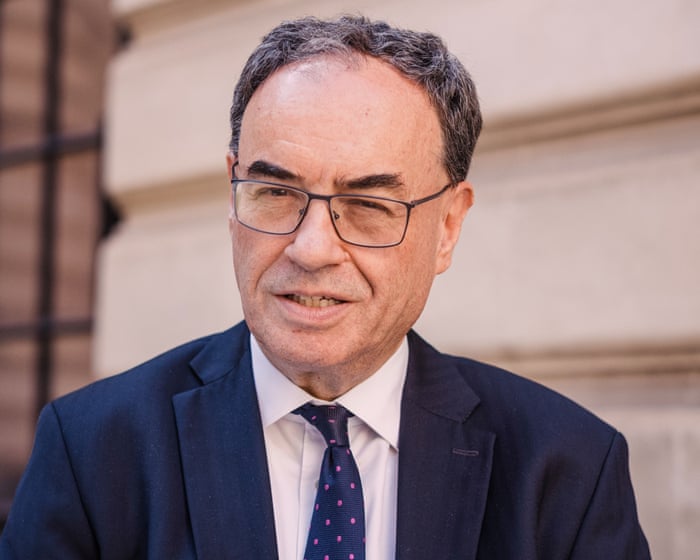
The Bank of England governor, Andrew Bailey, said he would have delayed a meeting with Nigel Farage last autumn if the £5 million donation to Farage’s Reform UK party had been under investigation at the time. Bailey met Farage to discuss cryptocurrency rules, but later acknowledged that knowing about the investigation might have changed his decision to meet.
Key Facts
Andrew Bailey is the governor of the Bank of England and also heads the Financial Stability Board.
Bailey met Nigel Farage in September to talk about cryptocurrency regulation.
The meeting happened months before the £5 million donation from crypto billionaire Christopher Harborne to Farage’s party became public.
The donation led to a parliamentary inquiry because it was undisclosed.
Farage asked the Bank to drop plans for a state-issued digital currency meant to compete with Tether, a large stablecoin.
Stablecoins are cryptocurrencies tied to real money like the US dollar and used for crypto transactions.
The Bank of England later dropped plans to limit how many stablecoins individuals can own.
Bailey said he did not regret the meeting but would have considered postponing it if the investigation was known.
Farage is now reported to a standards commissioner over possible lobbying rule breaches.
The Bank said it will keep meeting political figures confidential and continue meetings without favoritism.
Read the Original
Want the full story? Tap a source to open the original
article.
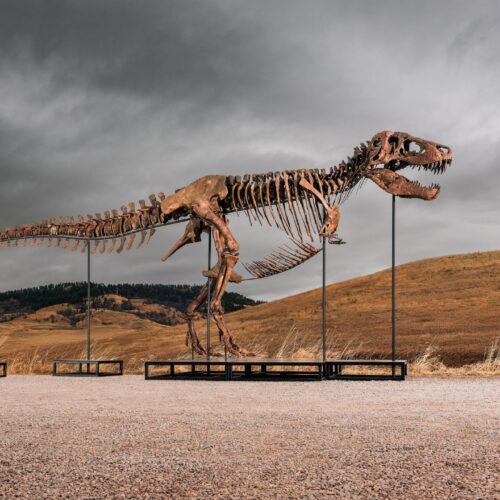
Sotheby’s auctioned a rare T. rex fossil called Gus, expected to sell for up to $30 million. There is growing concern among scientists that wealthy private buyers purchasing dinosaur fossils at auctions may limit scientific study and public access.
Key Facts
Gus is a 67-million-year-old T. rex skeleton, about 61% complete with 183 fossil bones.
The fossil was found in South Dakota and is mounted with a steel frame and replicas of missing bones.
Sotheby’s expects the skeleton to sell for as much as $30 million.
Private collectors have increasingly bought dinosaur fossils, which paleontologists worry will make fossils unavailable for research.
In 1997, Sotheby’s sold Sue, the most complete T. rex, which went to a museum and sold for $8.4 million.
Laws in the U.S. give landowners rights to fossils found on their property, encouraging private sales.
Studies show more T. rex fossils are in private collections than in public institutions.
Other fossils sold recently include a Stegosaurus for $44.6 million and a juvenile Ceratosaurus for $30.5 million, both to private buyers.
Auction houses say sales protect fossils from damage and support professional excavation, but some scientists disagree.
Read the Original
Want the full story? Tap a source to open the original
article.
A British Airways plane blocked a Gatwick Airport runway due to a technical problem, leading to a temporary closure and flight diversions. One EasyJet flight was diverted to Stansted Airport but could not refuel, causing passengers to wait on board for over two hours before leaving the plane and arranging their own travel.
Key Facts
A British Airways plane had a landing gear issue and blocked a Gatwick runway temporarily.
Emergency teams met the plane as a safety precaution when it landed.
This caused Gatwick Airport to close the runway briefly and divert some flights.
Most diverted flights eventually returned to Gatwick.
An EasyJet flight from Rome was redirected to Stansted Airport and became stuck due to a lack of available fuel.
Passengers on the EasyJet plane stayed onboard for over two hours overnight before disembarking.
EasyJet apologized and said they would reimburse passengers for their onward travel costs.
UK law allows passengers to claim compensation for flight cancellations or delays depending on the cause and the flight distance.
Read the Original
Want the full story? Tap a source to open the original
article.
Twenty-six Meta employees have sued the company, alleging it used artificial intelligence (AI) tools to decide who would be laid off, unfairly targeting people on medical, parental, or family leave. The lawsuit claims Meta’s AI-based performance ratings did not properly account for protected leave, leading to a higher number of layoffs among workers using such leave.
Key Facts
Meta announced plans to lay off about 8,000 workers, roughly 10% of its workforce, starting in May.
The lawsuit says Meta used AI systems, keystroke monitoring, and performance scores to select employees for layoffs.
These evaluation methods did not fairly measure employees who were on medical, parental, or family leave.
Many laid-off employees were on protected leave for reasons like pregnancy, disability, or caring for family members.
The lawsuit alleges Meta violated federal laws like the Family and Medical Leave Act and the Americans with Disabilities Act.
Meta denies the claims, saying workforce decisions were made by people, not AI.
The case raises issues about the use of AI in employment decisions and potential discrimination against protected groups.
Laws about “disparate impact”—when policies unfairly affect certain groups—are still relevant despite changes in government enforcement policies.
Read the Original
Want the full story? Tap a source to open the original
article.
Harley-Davidson, a famous American motorcycle company, is facing big challenges as its sales and profits keep falling. The company’s main customers are getting older, and younger people are not as interested in buying its expensive motorcycles.
Key Facts
Harley-Davidson started in 1903 and became a well-known symbol of American freedom.
The company reported $4.47 billion in revenue for 2025, which is 14% less than in 2024.
Its main motorcycle division lost $29 million, after making $278 million the previous year.
Global sales and shipments both dropped by more than 10 percent recently.
The company’s stock value peaked at $19 billion in 2006 but is now about $2.7 billion.
The average Harley-Davidson buyer’s age rose to 52 in 2024, up from the mid-40s in the early 2000s.
Younger generations are less interested in Harley's bikes, partly because they don't match the brand's traditional image.
Experts say Harley-Davidson needs to attract younger buyers to survive and grow in the future.
Read the Original
Want the full story? Tap a source to open the original
article.
A former church in Sydney, now called Divine Playhouse, has been ordered by its landlord to stop “offensive trade” after complaints from religious groups about performances. The venue, which supports LGBTQ+ artists and was set to host many creative events, may face eviction and is considering legal action.
Key Facts
Divine Playhouse is located in a former church building in Sydney’s central business district.
The venue was leased by Heaps Gay Events and planned to support over 1,500 artists and invest $650,000 in the arts sector during a year.
The landlord, KCSYD Pty Ltd, issued a notice claiming the venue insulted Christian beliefs.
Religious groups protested the opening night because of performances they found offensive.
The venue originally planned to be called Unholy Playhouse but changed its name after concerns.
Divine Playhouse’s social media was temporarily taken down after complaints but later restored with no breach found.
Over 5,000 people signed a petition supporting the venue as an inclusive space.
The NSW government gave the venue a $100,000 grant, which some Christian groups want withdrawn.
Read the Original
Want the full story? Tap a source to open the original
article.
The Organisation for Economic Cooperation and Development (OECD) recommends that the UK Labour Party should end the triple-lock promise on state pensions to help improve public finances. The triple lock increases pensions each year by the highest of wage growth, inflation, or 2.5%, and the OECD warns that this policy adds financial risks and pressures on government spending.
Key Facts
The triple lock guarantees state pensions increase each year by the highest of wage growth, inflation, or 2.5%.
The OECD says the triple lock raises public spending and risks due to economic shocks.
The OECD suggests replacing the triple lock with an average of earnings and inflation to save money.
Labour’s former chancellor Rachel Reeves is praised for promoting growth but faces limited budget flexibility.
Other reports also warn the triple lock costs more than expected and threatens long-term finances.
The OECD recommends improving NHS hospital efficiency to reduce spending.
It advises against raising tax rates since the tax system is already complex and a heavy burden.
Andy Burnham will be the new prime minister, with a new chancellor expected soon.
Read the Original
Want the full story? Tap a source to open the original
article.