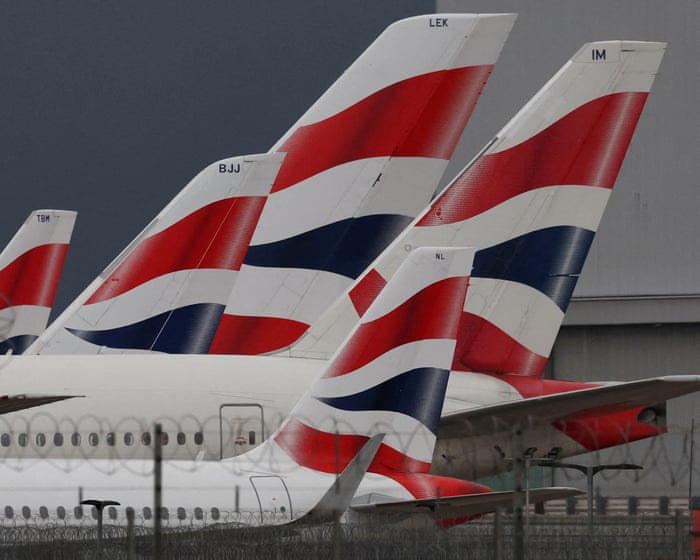
Tess De Mello worked as a British Airways cabin crew member for 30 years before losing her job in 2020 when the airline cut thousands of positions due to the pandemic. She is now in a legal fight with BA over her dismissal and claims that part-time cabin crew were underpaid holiday entitlement, which could affect many workers in the aviation industry.
Key Facts
Tess De Mello worked for BA cabin crew for 30 years and took pride in her job.
In 2020, BA cut around 10,000 jobs during the COVID-19 pandemic.
BA asked its longest-serving cabin crew to accept pay cuts of about 20% to keep their jobs; actual cuts ranged from 15% to 35%.
De Mello says she was unfairly dismissed after asking for clarification about her salary and time to decide on rehire terms.
An employment tribunal ruled against De Mello and a colleague, but they are appealing.
They claim part-time workers did not receive the correct holiday pay, referring to a 2022 supreme court decision on part-year worker rights.
If successful, their claim could lead to similar cases in the aviation sector with significant financial impact.
BA said a 2025 tribunal dismissed claims against the airline related to pandemic job cuts, finding BA’s actions non-discriminatory.
Read the Original
Want the full story? Tap a source to open the original
article.
A large leak of confidential files from the Curaçao Gaming Authority revealed details about many offshore online casinos. The documents expose how some casinos are linked to British and Georgian owners and suggest illegal practices targeting gamblers, especially in the UK.
Key Facts
The leak includes tens of thousands of confidential files from Curaçao’s gambling regulator.
Curaçao hosts more than 8,000 online casinos, making it a major hub for gambling firms.
Some casinos, like the crypto-focused Stake.com and Santeda network, are named in the leak.
Santeda casinos reportedly targeted vulnerable UK gamblers without proper licenses.
Upgaming, a Georgian-owned company, appears connected to Santeda in the leaked data.
Loans of over €15 million were made between Santeda and a Luxembourg company linked to Upgaming owners.
Oddsbet, once owned by Robert Bostock from the UK, was focused on high-stakes gamblers and linked to cryptocurrency investments.
The Curaçao Gaming Authority confirmed unauthorized access to its database by a hacker.
Read the Original
Want the full story? Tap a source to open the original
article.
TikTok has agreed to pay at least $100 million to the state of Alabama to settle a legal case about teen addiction. This payment comes just before a planned trial on the issue was due to start.
Key Facts
TikTok will pay at least $100 million to Alabama.
The payment settles a court case about teen addiction linked to TikTok.
The settlement happened shortly before the trial was to begin.
TikTok is one of several social media companies facing legal challenges over concerns about addiction among teenagers.
The case focused on how TikTok handles issues related to teen addiction.
Read the Original
Want the full story? Tap a source to open the original
article.
A UK lottery player has won the £111 million EuroMillions jackpot by matching all the winning numbers. This is the third time someone in the UK has won the big EuroMillions prize this year.
Key Facts
The winning numbers were 11, 12, 15, 38, 49, with Lucky Star numbers 10 and 12.
The lottery operator Allwyn confirmed the jackpot win.
This is the third UK jackpot win in 2025, following £181 million in March and a shared £125 million jackpot in April.
The largest EuroMillions prize won by a UK player is £195 million, claimed in 2022.
EuroMillions draws happen every Tuesday and Friday across nine European countries.
The next jackpot on Tuesday is estimated at £14 million.
Winners are encouraged to check their tickets and contact the lottery if they think they may have won.
Read the Original
Want the full story? Tap a source to open the original
article.
A new trend for bare, natural-looking nails is growing in popularity, with many people choosing no nail polish while still getting nail care. Some see this look as a symbol of luxury or status, while others view it as a way to simplify beauty routines or challenge traditional beauty standards.
Key Facts
Customers at a London nail salon are asking for manicures without polish, focusing on nail care like filing and moisturizing.
The bare nails trend has become popular on social media, fashion runways, and red carpets.
Some critics say the trend reflects deeper class issues and may erase cultural styles linked to Black, Latino, and Asian communities.
The trend challenges traditional ideas of “tasteful” beauty, which some say often favors white, European standards.
Some people choose bare nails to save time and money or to reject usual female beauty routines.
Irish TV presenter Angela Scanlon shared her personal choice to stop frequent manicures, which gained attention online.
Fashion events like New York Fashion Week have featured models with natural, polish-free nails.
Nail salons are adapting by creating very natural-looking fake nails to match the trend.
Read the Original
Want the full story? Tap a source to open the original
article.
A TikTok video by a US recruiter sparked a debate about whether it is appropriate to bring iced coffee to a job interview. Some say it seems unprofessional and like the interview is just one errand in a busy day, while others think this view distracts from the real challenges young people face in finding jobs.
Key Facts
A US recruiter warned that bringing iced coffee to interviews can look like the interview isn’t a priority.
Some people feel iced coffee is informal and immature for interviews.
Others say it’s not fair to judge candidates for what they bring or wear.
Young job seekers are struggling, with fewer entry-level roles and increased competition.
Some think the criticism of iced coffee is unfairly targeted, especially towards women.
Drinking coffee offered by the employer or during video interviews is generally accepted.
Many young candidates avoid anything that might harm their chances in tough job markets.
The debate started from a TikTok video and spread widely across social media.
Read the Original
Want the full story? Tap a source to open the original
article.
Diesel prices in Scotland have risen above £2 per litre at many filling stations, especially in island and rural areas. This increase is making it harder and more expensive for haulage businesses and farmers to operate, as fuel costs take up a larger part of their expenses.
Key Facts
Over 226 petrol stations in Scotland now charge more than £2 per litre for diesel.
The highest prices are in island regions like the Hebrides and Northern Isles, reaching up to 238.8p per litre.
Fuel costs for haulage companies have increased by about £250 weekly per lorry.
The war in Ukraine and conflict in the Middle East have raised crude oil prices, pushing up fuel costs.
The UK government has said there will be no increase in fuel duty this year to help consumers.
Some haulage firms add extra charges to customers to cover higher fuel costs.
The Road Haulage Association wants the government to stop future fuel tax rises and introduce rebates for commercial vehicle operators.
Higher fuel prices also affect farmers, increasing the cost of producing food during busy times like harvest.
Read the Original
Want the full story? Tap a source to open the original
article.
A U.S. appeals court ruled that states can regulate prediction market platforms like Kalshi as gambling. The court decided Kalshi's contracts on sports events are not a type of financial swap and therefore can be controlled under gambling laws.
Key Facts
The 6th U.S. Circuit Court of Appeals made the ruling on Kalshi on a Friday.
The court was unanimous with a three-judge panel.
The ruling sided with the states of Ohio and Tennessee.
Kalshi argued that its sports-event contracts were financial “swaps.”
The court rejected Kalshi’s argument about the contracts being swaps.
This decision means states can regulate prediction markets like gambling.
The ruling limits how prediction market companies like Kalshi can operate.
Read the Original
Want the full story? Tap a source to open the original
article.
Diesel prices in the US have reached record highs due to conflicts involving Russia, Ukraine, and Iran, which have disrupted global fuel supplies. President Donald Trump and some Republican lawmakers are considering banning or limiting US diesel exports to lower domestic fuel costs before the upcoming midterm elections.
Key Facts
The average price for a gallon of diesel in the US reached $6.50, up from $5.61 a month earlier.
Global conflicts and attacks have disrupted oil and diesel production, reducing fuel availability worldwide.
The US is the largest exporter of diesel and exports about 40% of what it uses domestically.
US diesel supplies are at their lowest level in over 40 years, with inventories dropping to 107.9 million barrels.
President Trump supports the idea of restricting diesel exports to lower fuel prices at home.
Republican lawmakers are pushing for a temporary ban on diesel exports ahead of midterm elections.
Experts warn that banning exports might backfire and cause fuel prices to rise both in the US and globally.
Polls show that many US voters see the cost of living as a key issue that will influence their vote in upcoming elections.
Read the Original
Want the full story? Tap a source to open the original
article.
Fast-food chains like McDonald's, Shake Shack, and Chipotle are adding more high-protein and low-calorie options to their menus. These changes respond to many customers using GLP-1 weight-loss drugs, which affect their food choices.
Key Facts
McDonald's is launching healthier menu items such as grilled chicken sandwiches, wraps, and egg bites.
The menu update is part of an $8.5 billion global restaurant renovation.
McDonald's wants to keep regular customers by offering foods that fit new eating habits, especially more protein and portion flexibility.
Shake Shack created a "Good Fit Menu" with gluten-free, vegetarian, and GLP-1-friendly options, like burgers served in lettuce wraps.
Chipotle highlights low-calorie and high-fiber options aimed at people using GLP-1 drugs.
Research shows families with GLP-1 users spend 8% less at fast-food and other restaurants within six months.
Experts expect fast-food menus to become more varied to meet the needs of people on these weight-loss medications.
Read the Original
Want the full story? Tap a source to open the original
article.
Sylvester Stallone, known for his role in "Rocky," shares in his new memoir "The Steps" how he struggled before creating the famous character Rocky Balboa. He writes about his difficult times and how he found inspiration to write a story many people could relate to — about facing life's challenges and seizing chances.
Key Facts
Sylvester Stallone became famous for playing Rocky Balboa in the 1976 film "Rocky."
"Rocky" was both a hit with audiences and critics, winning three Academy Awards.
Stallone's new memoir, "The Steps," will be published on September 29 by William Morrow.
In the book, he describes his early struggles before Rocky made him a star.
He wrote about feeling like life was hard and opportunities were closed to him.
Stallone realized many people feel the same frustration of not getting a fair chance.
This inspired him to create a character who had lost his dream but kept trying.
The memoir excerpt shows Stallone’s process of turning his feelings into a story everyone could understand.
Read the Original
Want the full story? Tap a source to open the original
article.
Costco is giving $60 shop cards to some members who meet certain conditions. Customers need to check their receipts to see if they qualify and learn how to get this offer.
Key Facts
Costco is offering $60 shop cards to qualifying members.
The offer applies only to certain Costco shoppers based on specific requirements.
Members need to look at their receipts to find out if they are eligible.
The shop card can be used for purchases at Costco stores.
Details on how to claim or use the card are available to qualifying customers.
This promotion is aimed at rewarding some Costco members.
The offer is part of Costco’s ongoing member benefits.
Read the Original
Want the full story? Tap a source to open the original
article.
A new study from Munich’s CESifo found no clear evidence that artificial intelligence (AI) has caused higher unemployment for recent college graduates so far. Researchers looked at detailed U.S. job data and found unemployment rates for recent graduates in 2026 were similar to previous years, despite concerns from some experts and business leaders that AI might reduce entry-level jobs.
Key Facts
Researchers Robert Fairlie and Jane Wu studied unemployment among college graduates aged 22 to 25 using U.S. Census data.
They focused on recent graduates because companies might reduce new hiring before laying off existing workers.
The unemployment rate for this group in summer 2026 was 7.3%, similar to past years (6.3%-7.8% between 2022 and 2024).
Including graduates who want jobs but aren’t actively searching did not change the findings.
Researchers compared groups by age and education level and considered how much their jobs could be affected by AI.
They found no strong evidence that AI has increased unemployment for recent graduates so far.
Some experts had warned AI could cause a rise in graduate unemployment in 2026, but current data do not support this.
AI adoption and AI-related spending are rising, which could affect future job markets, but the impact is not yet visible in the data.
Read the Original
Want the full story? Tap a source to open the original
article.
The article discusses what mortgage borrowers should consider if interest rates go up. It explains when it might be better to save money or pay off a mortgage faster to manage costs.
Key Facts
The article focuses on mortgage choices during rising interest rates.
It explains the impact of higher rates on mortgage payments.
It advises on when to save money instead of overpaying the mortgage.
It explores situations where paying more towards a mortgage might help reduce interest costs.
The content was published recently and is linked to financial advice from Martin Lewis.
The article is part of a business topic related to mortgages and personal finance.
It includes recommendations aimed at helping borrowers make the best decision for their finances.
The article is available with additional audio content on BBC Sounds.
Read the Original
Want the full story? Tap a source to open the original
article.
A group of states, led by California, sued to stop Paramount’s $111 billion merger with Warner Bros. Discovery because they believe it would reduce competition. California reached a settlement with Paramount, but free speech and media groups say the deal does not fix the competition problems and asked a judge to reject it. The judge is reviewing the deal and has questions about whether the settlement is fair and effective.
Key Facts
Twelve states, led by California, sued to block the merger of Paramount and Warner Bros. Discovery in July.
A judge previously ruled the merger might reduce competition and break antitrust laws.
California Attorney General Rob Bonta later agreed to a settlement with Paramount and other states joined.
Free speech and media advocacy groups filed a court paper saying the settlement gives the public almost no benefit.
Paramount’s conditions include releasing 30 movies a year, but critics say such promises are hard to enforce.
Groups argue the merger would still reduce competition, increase prices, and reduce choices for viewers.
The judge is asking for more information to make sure the deal is fair and not influenced by secret deals.
Senator Cory Booker asked for an explanation of how the settlement fixes the original problems and said the merger should be blocked.
Read the Original
Want the full story? Tap a source to open the original
article.
A jury in New Mexico found Facebook responsible for misleading users about how it protected their privacy. The case focused on a data breach involving Cambridge Analytica, where personal information from millions of users was used for political ads.
Key Facts
A New Mexico jury decided Facebook deceived users about privacy protections on its platform.
The case involved a data breach caused by a third-party quiz that collected data from about 87 million profiles.
The data was sold to Cambridge Analytica, a political consulting firm linked to President Trump’s 2016 campaign.
The jury ruled Facebook’s failure to protect user data affected more than two million people in New Mexico.
Facebook could face fines of up to $5,000 per violation, with over two million violations found.
Meta (Facebook’s parent company) settled a separate lawsuit for child safety issues but New Mexico’s case on Cambridge Analytica remains unique.
Other states settled or did not pursue the case, with New Mexico being the only state to continue legal action over this privacy breach.
The court also required Meta to use new safety measures like age verification and time limits on its platforms.
Read the Original
Want the full story? Tap a source to open the original
article.
Dolly Parton's manager filed for a restraining order against her nephew Bryan Seaver, accusing him of threats and intimidation related to a business dispute over Parton’s estate and companies. The case is part of a common type of legal fight that happens when wealthy people die, often involving unclear paperwork and emotional conflicts.
Key Facts
Dolly Parton’s longtime manager, Danny Nozell, requested a restraining order against her nephew Bryan Seaver.
The restraining order claims Seaver threatened and tried to pressure the manager and business.
Seaver has denied the accusations and expressed sadness over the situation.
The dispute involves a company called She's Alive LLC, set up by Parton to manage her business affairs after her death.
Dolly Parton’s sister said there is no family feud or fight over the estate.
An attorney explained this is mostly a business dispute about contracts and control, not just inheritance.
A temporary restraining order was granted but may only be short-term until the next court hearing.
The next hearing will decide if the restraining order will continue, and the case could take a long time and be costly.
Read the Original
Want the full story? Tap a source to open the original
article.
The UK government has promised £210 million to improve high streets by turning empty shops, pubs, and clubs into shared workspaces, cafes, and community centers. This money aims to support local communities in revitalizing their towns and help struggling areas recover from economic challenges.
Key Facts
£210 million will be used to transform boarded-up shops, pubs, and clubs into useful community spaces.
£125 million of this funding goes to local councils to renovate abandoned buildings into places like community halls and health centers.
£65 million will help communities save and improve at-risk businesses such as pubs and clubs.
£20 million will be split to support co-operative business ownership and fill long-vacant properties through rental auctions.
The funding focuses on community-led projects and adds to an existing £5.8 billion program for local regeneration.
A full government strategy to improve high streets across England will be announced later this year.
Research shows people feel high streets have declined more than other local areas, with many stores closing and increased shoplifting.
Co-operative pubs have grown 48% in five years but still represent a small part of the hospitality industry.
Read the Original
Want the full story? Tap a source to open the original
article.
The Imagination Library, a program started to promote reading, received donations from companies during the ‘Give Like Dolly Day’ event. The program was inspired by Dolly Parton's father, who was unable to read or write.
Key Facts
The Imagination Library is a reading program.
It was inspired by Dolly Parton's father, who could not read or write.
‘Give Like Dolly Day’ is an event to encourage donations.
Companies participated by donating to the Imagination Library.
Donations help support the program's mission to promote reading.
The event emphasizes the importance of literacy for children.
Read the Original
Want the full story? Tap a source to open the original
article.