Stock prices dropped on Tuesday as investors prepared for the Federal Reserve's decision on raising interest rates scheduled for Wednesday. The market showed caution ahead of this announcement.
Key Facts
Stocks were mostly down on Tuesday.
Investors expected the Federal Reserve to raise interest rates.
The decision was planned for Wednesday.
Higher interest rates can affect borrowing costs and the economy.
Market participants were cautious before the Fed meeting.
CBS News contributor Javier David provided a preview of the meeting.
Read the Original
Want the full story? Tap a source to open the original
article.
The U.S. Senate did not move forward with the Clarity Act, a major bill about cryptocurrency rules. Some Democrats and Republicans opposed the bill, which stopped it from advancing.
Key Facts
The Clarity Act is a bill related to cryptocurrency regulation.
The U.S. Senate voted but failed to advance the bill on Tuesday.
Both Democrats and some Republicans opposed the bill.
The bill aimed to create clearer rules for cryptocurrencies.
Nikhilesh De, an expert in global policy for CoinDesk, spoke about the issue on CBS News.
The failure to advance the bill means no new cryptocurrency rules were approved at this time.
Read the Original
Want the full story? Tap a source to open the original
article.
A man named Anton Hall ran a company called Level Up Giveaways, which promised cash prizes but did not pay winners before it closed in 2025. Despite being declared bankrupt and banned from managing companies, Hall appears to be involved in a new prize draw business using the Raffall platform.
Key Facts
Level Up Giveaways owed tens of thousands in unpaid prize money to customers before it shut down.
Anton Hall, the sole director of Level Up Giveaways, was declared bankrupt in November 2025.
Bankruptcy rules say a bankrupt person cannot run or manage a company without court permission.
Hall claims he is not a company director but runs the new competitions personally on Raffall, a website for hosting prize draws.
Raffall confirmed Hall’s account is registered in his name and payments go to his personal account.
The Insolvency Service, which oversees bankruptcies, has contacted Raffall about Hall’s account.
People who thought they won in the first company did not receive their prize money.
Hall has publicly discussed profits and the management of his new business on social media.
Read the Original
Want the full story? Tap a source to open the original
article.
Starting a new job can be challenging, but communicating openly and preparing ahead help ease the transition. Four recent job starters share practical tips like asking for help, setting up check-ins with managers, and connecting with colleagues to adjust better in new roles.
Key Facts
Sarisha Ganesan started a remote marketing graduate job and found regular communication with her team important.
Sarisha advises telling your manager if you struggle with tasks or workload.
Oliver Walker began a social media role quickly after graduation and suggested scheduling regular meetings with managers to track progress.
Oliver highlights the value of attending company events and engaging with coworkers.
Chinaza Eke did a civil service internship and learned that asking for help is expected and important.
She advises asking for guidance early to build connections and avoid problems.
Elijah Amoako recently switched jobs and researched his new employer beforehand to better understand his team.
Networking beyond your immediate team can help you adjust to a new workplace.
Read the Original
Want the full story? Tap a source to open the original
article.
The number of complaints from households about water companies in England and Wales has risen by 84% in one year, reaching over 15,000 complaints. The main issues relate to higher water bills, billing problems, and affordability, while water firms say the price increases fund important upgrades to infrastructure and the environment.
Key Facts
Complaints to the Consumer Council for Water (CCW) rose from 8,235 to 15,115 between 2024-25 and 2025-26.
Complaints made directly to water companies increased by 56%, totaling 321,347.
Ofwat has allowed water companies to raise bills by 36% between 2025 and 2030.
Thames Water and South West Water were rated "poor" for complaint handling and customer effort to resolve issues.
Portsmouth Water and Bristol Water scored "good" on complaint handling and customer experience.
Water UK said higher bills are needed to fund necessary upgrades for water supply and environmental protection.
94% of complaints are resolved early without further action from the consumer watchdog.
Ofwat recently approved bill increases for 13 water companies due to rising infrastructure and environmental costs.
Read the Original
Want the full story? Tap a source to open the original
article.
New home construction in the U.S. is slowing down, with building permits falling 19.4% below the pre-pandemic trend. The biggest declines are in Sun Belt cities that led the building boom during the pandemic, while some coastal and Midwest cities are seeing permit increases.
Key Facts
Residential building permits are 19.4% below the expected level before the pandemic.
Permits have fallen for 44 months in a row across the U.S.
Austin saw the largest drop, with permits down 25.3% year over year.
Other cities with big permit declines include San Antonio, Orlando, Charlotte, San Diego, Baltimore, and Chicago.
The slowdown is mainly in Sun Belt cities that grew rapidly during the pandemic.
Higher construction costs and mortgage rates are making it harder to build affordable homes.
Some places like San Jose, Seattle, Los Angeles, and New York are increasing permits.
New homes are being built faster but are smaller in size than before.
Read the Original
Want the full story? Tap a source to open the original
article.
The interest rate (yield) on the 10-year U.S. Treasury bond rose to its highest level since 2007. This increase may lead to higher borrowing costs for many Americans.
Key Facts
The 10-year Treasury bond yield hit 5.041% on Tuesday morning.
This is the highest yield level since July 2007, before the 2008 financial crisis.
The bond closed above 5% that day.
Higher bond yields generally mean higher interest rates on loans and mortgages.
The increase signals changes in government borrowing costs and could impact the broader economy.
Read the Original
Want the full story? Tap a source to open the original
article.
The overall cost of owning a car in the U.S. has increased significantly since 2020. While gas prices have gone up, higher repair costs, insurance rates, and maintenance are the main reasons for the rising expenses.
Key Facts
Car ownership costs have increased by 50% since 2020.
Repair costs for cars have risen 70% in the last five years.
Average repair costs for a new car in the first five years are about $1,750.
Auto insurance costs about $2,124 per year for full coverage in 2026.
People are keeping their cars longer; the average passenger car age was 14.5 years in 2025.
Cars now have more electronic parts and sensors, making repairs more expensive.
A shortage of mechanics has driven up service prices.
Gas prices average $4.33 per gallon, up 45% since February due to the war with Iran.
It costs about $12,863 per year to own and operate a new vehicle, or roughly $1,072 per month.
Read the Original
Want the full story? Tap a source to open the original
article.
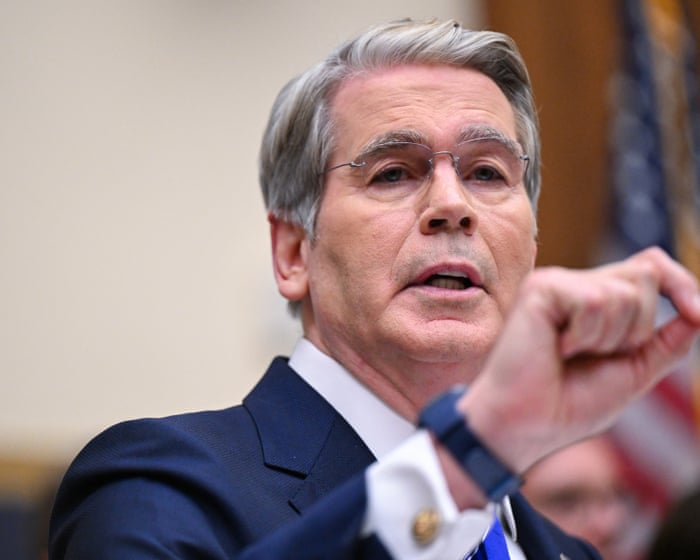
Treasury Secretary Scott Bessent appeared before the House Financial Services Committee to discuss issues related to artificial intelligence (AI) and rising bond yields. He defended the Treasury Department’s actions in the bond market while responding to lawmakers’ questions and concerns.
Key Facts
Treasury Secretary Scott Bessent attended a House Financial Services Committee hearing.
The hearing lasted nearly three hours.
Lawmakers focused on rapid developments in artificial intelligence (AI).
They also expressed concern over rising bond yields, which affect borrowing costs.
Bessent defended the Treasury’s recent interventions in the bond market.
Democrats on the committee questioned and challenged Bessent’s responses.
The hearing was tense but focused on financial and economic topics.
Read the Original
Want the full story? Tap a source to open the original
article.
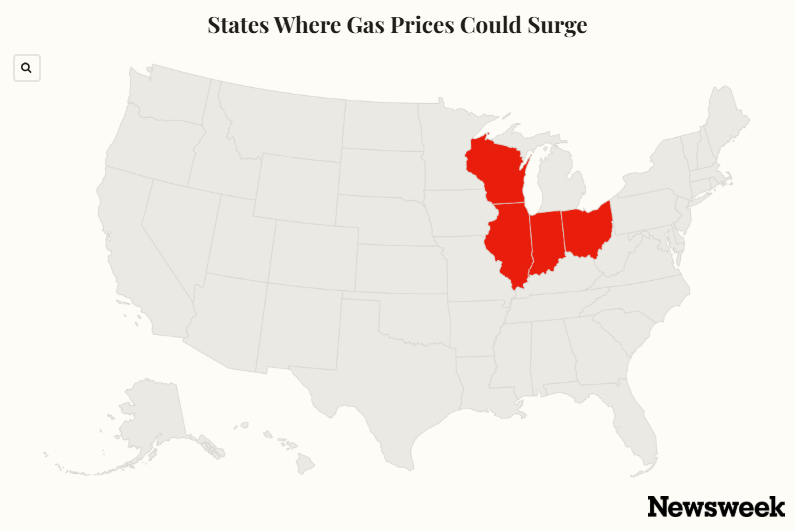
A power outage at the ExxonMobil refinery in Joliet, Illinois, caused the facility to shut down, leading to expected rises in gas prices in several Midwest states. Gas prices in the U.S. have been rising nationwide because of higher oil prices and global events affecting fuel supply.
Key Facts
The ExxonMobil refinery in Joliet processes about 275,000 barrels of crude oil daily and accounts for 6% of Midwest refining capacity.
The refinery shut down on Monday due to a total power outage.
Gas prices are expected to increase soon in Illinois, Indiana, Ohio, and Wisconsin.
The average U.S. gas price rose 17.2 cents last week to $4.25 per gallon as of Monday.
Oil prices topped $100 per barrel, influenced by geopolitical tensions involving the U.S., Iran, the Red Sea, and Saudi Arabia’s pipeline shutdown.
Attacks on Russian refineries also reduced fuel supplies, pushing prices higher.
The Pacific Northwest and Mountain West states have seen some of the largest gas price increases recently.
California has the highest average gas price in the U.S. at $5.81 per gallon as of early September.
Read the Original
Want the full story? Tap a source to open the original
article.
US Treasury Secretary Scott Bessent called the government’s large buyback of US bonds successful, despite rising bond yields reaching the highest levels in 19 years. The buyback aimed to lower borrowing costs amid inflation concerns and geopolitical tensions affecting energy prices.
Key Facts
The 10-year US Treasury bond yield hit 5.041% on Tuesday, the highest since 2007.
Rising bond yields mean higher interest rates on loans like mortgages and credit cards.
The US Treasury increased its bond buyback program from $2 billion to $6 billion to reduce bond yields.
Treasury Secretary Scott Bessent described recent bond sales as the most successful in 20 years.
The bond market is impacted by the Iran conflict, which has pushed oil prices above $108 a barrel.
The US government intervened earlier in August to support the Japanese yen, a currency held heavily by Japan who owns many US bonds.
Inflation in the US rose to 4.2% in May 2023 before falling to 3.4% in July and August.
The Federal Reserve is expected to raise interest rates soon in response to persistent inflation.
Read the Original
Want the full story? Tap a source to open the original
article.
The Federal Reserve is expected to raise interest rates soon, making high-yield savings accounts more attractive for savers. These accounts offer much higher interest rates than regular savings accounts and provide flexibility without locking in deposits.
Key Facts
The Federal Reserve is likely to increase the benchmark interest rate by 0.25% this week.
High-yield savings accounts adjust their interest rates based on market changes, often rising when the Fed increases rates.
Current top high-yield savings accounts are paying around 4% interest, much higher than traditional savings accounts.
Savers can earn hundreds or thousands of dollars more interest by using these accounts compared to regular savings accounts.
Unlike certificates of deposit (CDs), high-yield savings accounts allow easy access to money without penalties for withdrawal.
Many banks update their high-yield savings rates even before the Fed officially raises rates.
Online banks often offer better interest rates on high-yield savings accounts than physical banks.
Savers should shop around to find the best rates before moving their money.
Read the Original
Want the full story? Tap a source to open the original
article.
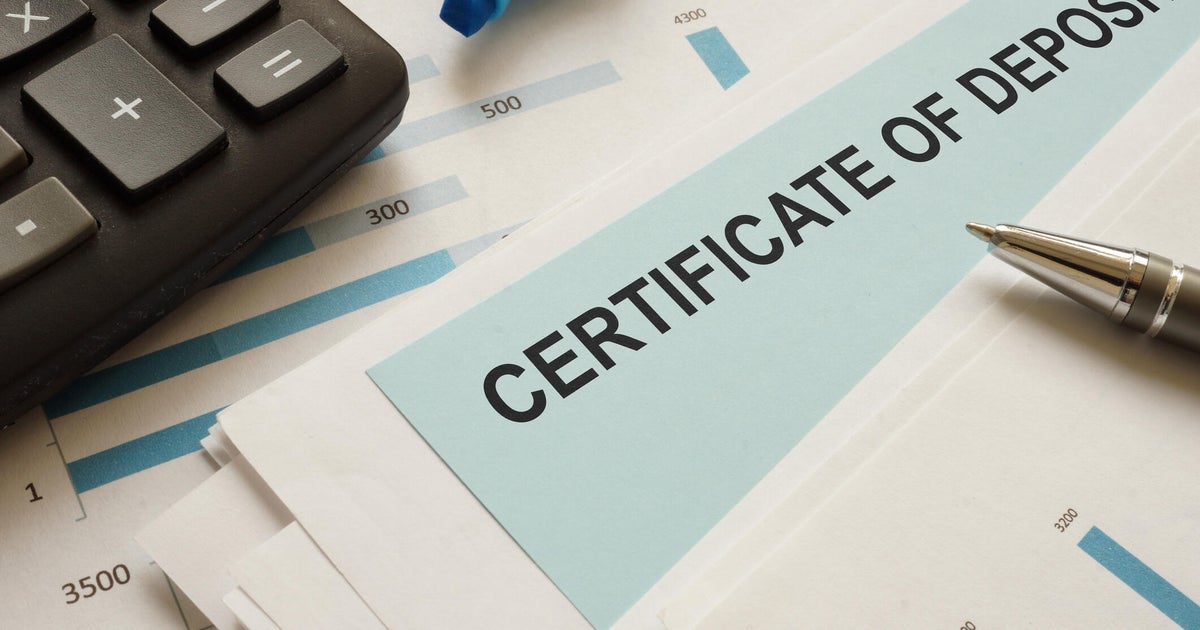
A $100,000 deposit in a 5-year certificate of deposit (CD) can earn around $23,700 to $24,300 in interest by 2031, depending on the interest rate. CDs offer a fixed, guaranteed return, making them a safe option for savers who want predictable earnings without the risks of investing in stocks.
Key Facts
A CD is a savings account with a fixed interest rate and a set term, such as 5 years.
Interest rates on 5-year CDs currently range from about 4.35% to 4.45%.
At these rates, a $100,000 CD can earn between $23,700 and $24,300 in interest by the end of five years.
The account holder must keep the money in the CD until maturity (5 years) to avoid early withdrawal penalties.
CD interest earnings are predictable and do not depend on market performance.
These rates are lower than average stock market returns over the past decade but come with less risk.
Savers should shop around for the best CD rates to maximize earnings.
If unsure about committing money for 5 years, alternatives like shorter CDs or high-yield savings accounts may be considered.
Read the Original
Want the full story? Tap a source to open the original
article.
The IRS is expected to update tax brackets for 2027 to address "bracket creep," which happens when inflation pushes people into higher tax rates without real income increases. These changes aim to keep tax rules fair as prices rise.
Key Facts
The IRS plans to adjust tax brackets in 2027.
Adjustments are to prevent "bracket creep."
"Bracket creep" occurs when inflation causes taxpayers to move into higher tax brackets even if their real income hasn't increased.
Updating tax brackets helps maintain fairness in the tax system.
These changes are projections and may be adjusted before 2027.
Inflation affects how much tax people pay over time.
The goal is to ensure taxes reflect actual income changes, not just price increases.
Read the Original
Want the full story? Tap a source to open the original
article.
The cost for the US government to borrow money has reached its highest point since 2007. Rising oil prices and concerns about inflation are causing interest rates to go up, which affects how much the government pays on its debt.
Key Facts
The 10-year US Treasury yield rose to 5.04%, the highest since 2007, before falling slightly.
Oil prices jumped to over $109 per barrel, up from around $86 at the end of August.
Tensions in the Middle East, especially involving Saudi Arabia, are causing worries about oil supply.
Higher oil prices contribute to inflation, pushing the US Federal Reserve to consider raising interest rates.
The US government has been buying back bonds to try to keep borrowing costs down.
Rising interest rates lead investors to demand higher returns on government debt, increasing borrowing costs.
Competition for debt from AI companies is also contributing to higher bond yields.
Bond yields reflect investor confidence, with higher yields suggesting lower confidence in government borrowing.
Read the Original
Want the full story? Tap a source to open the original
article.
High-yield savings accounts currently offer interest rates around 4.10%, allowing savers to earn more money compared to regular savings accounts. These accounts have flexible access to funds and can benefit from rising interest rates as set by the Federal Reserve.
Key Facts
High-yield savings accounts have variable interest rates that respond to market changes.
The Federal Reserve recently raised interest rates for the first time since 2023.
Rates on top high-yield savings accounts are about 4.10% as of September.
Interest earnings depend on how much money is deposited and maintained in the account.
Example: $10,000 saved at 4.10% would earn about $203 in six months.
These accounts allow withdrawals and deposits without penalties, unlike fixed-rate certificates of deposit (CDs).
Online banks often offer higher interest rates than traditional banks with physical branches.
Savers should compare rates and accounts before opening one to maximize returns.
Read the Original
Want the full story? Tap a source to open the original
article.
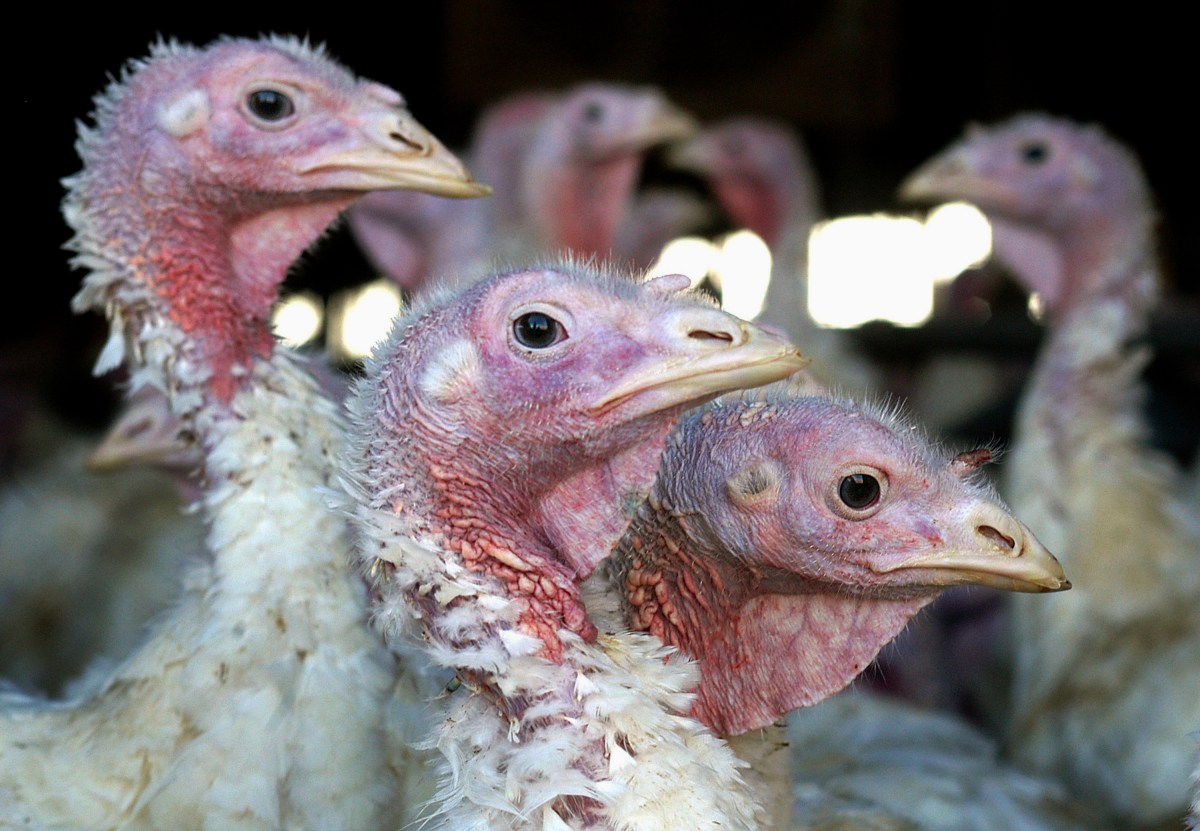
A new bird flu outbreak has hit turkey farms in Minnesota, South Dakota, and North Dakota, affecting more than 417,000 birds. This disease impacts turkey production, especially ahead of the busy holiday season when turkey demand is high.
Key Facts
Over 417,000 turkeys have been affected by bird flu in Minnesota, South Dakota, and North Dakota.
Minnesota, the top turkey-producing state, has seen 92,100 birds infected this fall.
South Dakota has confirmed bird flu in five commercial flocks totaling about 284,000 turkeys.
North Dakota reported its second outbreak this year in LaMoure County, affecting 41,600 birds.
Bird flu cases began increasing again in mid-August, starting in South Dakota.
Affected turkey farms include both meat-producing and breeding operations.
Infected flocks are destroyed to stop the disease from spreading.
The outbreak comes at a critical time before Thanksgiving and Christmas when turkey sales usually go up.
Read the Original
Want the full story? Tap a source to open the original
article.
The Federal Reserve is expected to raise its main interest rate by 0.25 percentage points on September 16, the first increase in over three years. This move aims to address ongoing inflation partly caused by high energy prices, and more rate hikes may follow if inflation remains high.
Key Facts
The Fed's interest rate hike is anticipated on September 16 to combat inflation above its 2% goal.
Inflation was 3.4% yearly in August, still higher than the Fed's target.
Higher interest rates make borrowing more expensive, which can reduce spending and slow inflation.
Energy prices have increased due to the ongoing conflict in Iran, keeping inflation pressure high.
Diesel reached a record price of $6.27 per gallon; gasoline rose to $4.33 per gallon recently.
The Fed raised rates 11 times last year when inflation peaked at 9.1%, bringing rates to 5.25%-5.5%.
President Trump has called for lower interest rates, but economists expect the Fed to continue hikes if inflation persists.
The Fed will release updated economic forecasts with the rate decision and hold a press conference afterward.
Read the Original
Want the full story? Tap a source to open the original
article.
Jon Voight and a group of lawmakers from both political parties support a federal tax credit for film and TV production. They say a new report shows that this credit would create jobs and make the U.S. film industry more competitive.
Key Facts
Jon Voight supports a federal tax credit for film and TV production.
Lawmakers from both parties are backing this idea.
The tax credit aims to bring film and TV jobs back to the U.S.
A recent report highlights the benefits of such a tax credit.
President Trump named Jon Voight a “special ambassador” last year.
The tax credit would help the U.S. compete with other countries offering similar incentives.
The goal is to make the film industry stronger and create more American jobs.
Read the Original
Want the full story? Tap a source to open the original
article.
Mortgage rates have risen recently and may increase again due to a possible Federal Reserve interest rate hike. The Fed affects short-term interest rates, which can influence mortgage rates indirectly. Borrowers should watch Fed decisions but focus on controllable actions like shopping for lenders and considering locking in current rates.
Key Facts
The average 30-year fixed mortgage rate rose from about 6.43% in July to 7.43% in mid-September.
The Federal Reserve is expected to raise its benchmark interest rate on September 16th due to ongoing inflation.
The Fed’s rate changes affect short-term borrowing costs, not mortgage rates directly.
Mortgage rates tend to follow longer-term bond yields, such as the 10-year Treasury yield.
The 10-year Treasury yield increased from 4.80% to 4.96% between September 8 and 11.
If the Fed signals more rate hikes, mortgage rates could rise, but a hike is not guaranteed to raise mortgage rates immediately.
Borrowers should compare multiple mortgage offers to find better rates or terms.
Locking in a mortgage rate may help protect against future rate increases if borrowers are ready to move forward.
Read the Original
Want the full story? Tap a source to open the original
article.