Energy bills are set to increase starting in July, which will affect household expenses. This rise is related to changes in the cost of living and energy prices.
Key Facts
Energy bills will go up beginning in July.
The increase will lead to higher monthly costs for energy users.
This change is linked to economic factors such as inflation and rising energy prices.
The cost of living is also affected by these changes, meaning overall expenses for households may rise.
The article provides guidance on what these changes mean for consumers.
Read the Original
Want the full story? Tap a source to open the original
article.
Oil prices fell about 4% after Iranian state TV reported that Iran plans to restore commercial shipping through the Strait of Hormuz to pre-war levels within one month. This news raised hopes of reduced tension in the Middle East, easing fears about global energy supply disruptions.
Key Facts
Brent crude oil price dropped 4% to below $95 a barrel, later settling near $95.24.
Iran and the US are reportedly discussing a draft peace deal involving reopening shipping through the Strait of Hormuz.
The deal would exclude military vessels and requires verification before any actions are taken.
If finalized within 60 days, the agreement could become a UN Security Council resolution.
The US dollar fell 0.2% against other major currencies following the news.
Oil prices are at a five-week low due to growing hopes of easing Middle East tensions.
Markets are cautious until more concrete details of the agreement emerge.
The draft deal includes the US withdrawing military forces nearby and lifting a naval blockade.
Read the Original
Want the full story? Tap a source to open the original
article.
In 2025, the typical pay for CEOs at large U.S. companies increased by nearly 6% to $17.7 million, while the median worker's pay rose by 4.7% to about $89,744. The gap between CEO and typical worker pay remains very large, with some CEOs making over 1,700 times more than their median employee.
Key Facts
Median CEO pay at S&P 500 companies rose to $17.7 million in 2025, up nearly 6% from the previous year.
Median pay for typical employees at these companies increased 4.7% to $89,744 in 2025.
CEO pay packages often include big rewards like stock bonuses and incentives to keep executives motivated.
The pay gap between CEOs and average workers remains huge; at some companies it takes 200 years for a worker to earn what a CEO makes in one year.
Coca-Cola’s CEO earned nearly 1,739 times more than its median worker, while TJX’s CEO earned about 1,774 times the median pay.
The data comes from an Associated Press survey using Equilar analysis of 337 S&P 500 CEOs with at least two full years in their roles.
Some cities are considering tax rules targeting companies with very large CEO-worker pay gaps.
Despite wage increases, many workers still struggle with living costs and have had to use credit to cover expenses.
Read the Original
Want the full story? Tap a source to open the original
article.
Global stock markets mostly rose following new record highs on Wall Street, driven by strong gains in technology and chip-related companies. Oil prices dropped as investors showed less concern about geopolitical tensions after U.S. President Donald Trump said talks with Iran on ending the war were progressing.
Key Facts
European markets mostly rose: Germany’s DAX gained 0.7%, France’s CAC 40 rose 0.5%, while Britain’s FTSE 100 slightly dropped 0.1%.
U.S. futures indicated small gains for the S&P 500 and Dow Jones Industrial Average.
Technology stocks, especially chipmakers like Micron Technology, saw heavy buying; Micron’s shares jumped 19.3%.
Analysts at UBS raised Micron’s 12-month price target from $535 to $1,625.
Asian markets showed mixed results: South Korea’s Kospi and Taiwan’s Taiex reached record highs, while Hong Kong and Shanghai indexes fell.
Japan’s Nikkei 225 rose then closed nearly unchanged after an initial boost from tech shares.
Oil prices fell as investors became less worried about geopolitical risks following President Trump’s comments on Iran talks.
U.S. stock gains followed a holiday break and were part of a broader global rally linked to optimism about economic and political developments.
Read the Original
Want the full story? Tap a source to open the original
article.
Samsung’s memory chip workers will get big bonuses averaging about £310,000 each after a new profit-sharing deal. This deal comes as strong demand for computer chips used in AI has raised Samsung’s profits and helped avoid a strike.
Key Facts
Samsung’s memory chip workers approved a profit-sharing deal with a 74% vote in favor.
The company will give 10.5% of its semiconductor division’s operating profits as bonuses.
Bonuses average around £310,000 per employee, mostly paid in company stock.
The bonus deal covers about 78,000 workers in Samsung’s semiconductor division.
Rising demand for AI data center chips has caused chip prices and profits to increase sharply.
Competitors SK Hynix and Micron each reached market values above $1 trillion recently.
Strong stock performances in chip companies helped boost major stock indexes like Nasdaq and Korea’s KOSPI.
The growth reflects a shift in investment focus toward memory chips essential for AI data processing.
Read the Original
Want the full story? Tap a source to open the original
article.
It has become more difficult for people, especially young people, to find jobs on Saturdays. Changes in the job market and retail sector have affected the availability of weekend positions.
Key Facts
Saturday jobs have become harder to find.
This trend mainly affects young job seekers.
Changes in retail businesses impact weekend work options.
Youth unemployment is connected to fewer available jobs.
The shift in employment patterns affects the retail and service industries.
Employers may be offering fewer hours or fewer weekend positions than before.
Read the Original
Want the full story? Tap a source to open the original
article.
The article calls for creating a sovereign wealth fund for the United States. It stresses the importance of investing this fund carefully to secure financial benefits for future generations.
Key Facts
A sovereign wealth fund is a government-owned investment fund.
The fund should be established to build national savings.
Wise investment can grow this fund over time.
The goal is to leave a valuable financial legacy for future Americans.
Such funds can support economic stability and long-term projects.
The article promotes forward-looking financial planning.
It suggests that the fund can help the country’s economic future.
Read the Original
Want the full story? Tap a source to open the original
article.
UPS has started refunding importers for tariffs charged under President Donald Trump’s 2025 global tariff policy after the Supreme Court ruled that the tariffs exceeded legal authority. The refunds apply to tariffs collected under an emergency law, while other tariffs on steel, aluminum, autos, and copper remain in place.
Key Facts
UPS is refunding importers for tariffs paid from January 30, 2026, following a Supreme Court decision.
The Supreme Court ruled 6–3 that Trump exceeded authority by using the International Emergency Economic Powers Act (IEEPA) to impose 2025 tariffs.
Only importers, not consumers, can claim these tariff refunds since importers initially paid the tariffs.
The U.S. Customs and Border Protection (CBP) launched a digital platform called CAPE for importers to request refunds.
UPS said refund requests will take 60 to 90 days for processing after approval.
UPS previously handled millions of shipments affected by tariffs and sent over $5 billion to the U.S. Treasury.
Tariffs on steel (50%), aluminum (50%), autos and auto parts (25%), and copper parts (5%) remain active under a different law (Section 232).
Consumers may not see price decreases right away, even with refunds to importers.
Read the Original
Want the full story? Tap a source to open the original
article.
Modella Capital, a British investment firm, has bought Flying Tiger, a Danish retailer with around 1,000 stores worldwide. The firm has a history of restructuring stores it buys, causing job losses and store closures, raising concerns about Flying Tiger’s future.
Key Facts
Flying Tiger sells affordable homewares and craft kits and has about 80 stores in the UK.
Modella Capital already owns TG Jones (formerly part of WH Smith), Claire’s, The Original Factory Shop, and Hobbycraft.
Claire’s and The Original Factory Shop collapsed earlier this year with around 2,500 job losses.
Modella plans to support Flying Tiger’s growth, including opening 700 new franchise stores globally by 2030.
Flying Tiger’s UK sales rose 22% to £70.1 million in 2024 but it has over £35 million in debt.
The retail sector faces challenges from inflation, rising costs, and strong competition from other discount retailers.
The company was controlled by its banks and management since a buyout in June 2023.
Flying Tiger was founded in the 1980s and opened its first UK store in 2005.
Read the Original
Want the full story? Tap a source to open the original
article.
A government inquiry found that many people did not understand the terms of their student loans before borrowing. More than half of over 52,000 respondents said the repayment rules were unclear or unfair, especially around interest and payment thresholds which affect how and when loans are repaid.
Key Facts
Over 52,000 people responded to a government inquiry on student loans in England.
More than half said they did not understand the terms before taking out loans.
The inquiry focuses on the fairness of repayment plans, especially Plan 2 loans issued since 2012.
Graduates repay 9% of their income above a set limit, currently £28,470.
The repayment threshold is frozen at £29,385 from 2027 to 2030, causing earlier repayments.
The government will cap interest on some loans at 6% next year due to rising inflation concerns.
Many respondents said repayment costs and tax impact were worse than expected and not reasonable.
The inquiry found that students from poorer families often pay more over time than those with wealthy parents, affecting social equality.
Read the Original
Want the full story? Tap a source to open the original
article.
Albert Manifold, the recent chair of BP, says the company fired him without warning and disagrees with claims about his behavior. BP removed him due to concerns about his conduct and leadership, and an interim chair is now in place while the company looks for a new leader.
Key Facts
Albert Manifold was appointed BP’s chair in October 2025 and served less than a year.
BP fired Manifold immediately, citing serious concerns about his behavior and governance.
Reports say Manifold acted aggressively and tried to control the company like an executive rather than a chair.
A whistleblower reported a pattern of unacceptable behavior, influencing the board’s decision.
Manifold replaced BP’s chief executive and hired a new CEO, Meg O’Neill, who started in April.
BP is shifting its focus back to fossil fuels and away from renewable energy.
Ian Tyler is the temporary chair while BP searches for a new permanent chair.
BP’s share price dropped after the news of Manifold’s departure.
Read the Original
Want the full story? Tap a source to open the original
article.
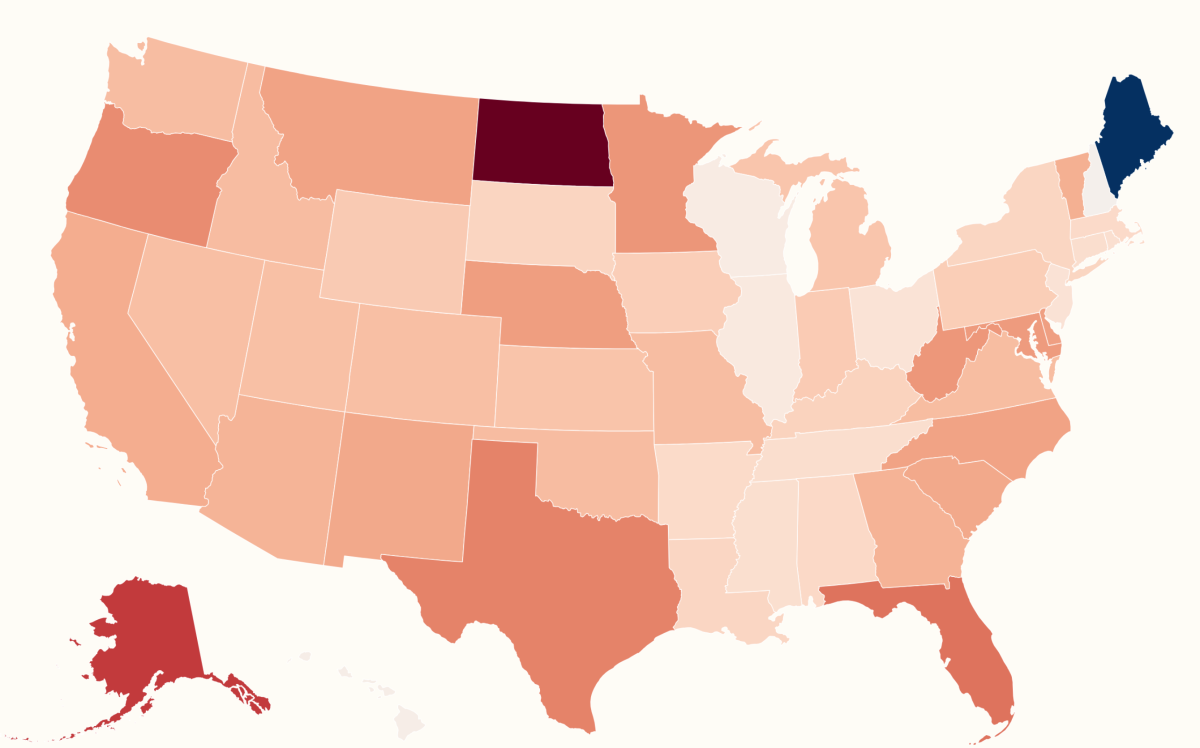
Personal bankruptcy filings increased in 49 U.S. states from March 2025 to March 2026, as many families face rising debt, high borrowing costs, and inflation. This trend reflects growing financial stress that could affect both households and the wider economy.
Key Facts
Bankruptcy filings rose year-over-year in 49 states; only Maine saw a decline of 8.1%.
North Dakota and Alaska experienced the largest increases (41% and 29%, respectively) but still have low total filings.
California had the highest number of filings overall, followed by Florida and Texas.
Alabama had the highest bankruptcy rate per 100,000 residents, followed by Mississippi and Tennessee.
Total U.S. household debt reached a record $18.8 trillion in the first quarter of 2026.
Rising bankruptcies are linked to increased credit card, mortgage, and other debts.
Economists warn that continuing defaults could lead to higher interest rates and more expensive borrowing for everyone.
The increase in bankruptcies signals significant financial distress for many Americans in 2026.
Read the Original
Want the full story? Tap a source to open the original
article.
Beef prices in the United States have reached record levels due to a smaller cattle herd, higher costs for ranchers, and strong demand. This rise in cost is making it harder for barbecue restaurants, especially in Texas, to stay open and maintain their prices.
Key Facts
Beef and veal prices were about 15% higher in April 2024 compared to the previous year.
The U.S. cattle herd size dropped to its smallest number since 1951.
Rising costs for ranchers include drought, higher fuel prices, and less available land.
Meatpacking companies are under investigation for possibly raising prices unfairly.
Demand for beef remains high, especially during grilling season, pushing prices up further.
The USDA expects beef prices to rise another 12% during 2024.
Texas barbecue restaurants face closures due to rising beef costs, affecting popular dishes like brisket and smoked sausage.
Some restaurants are changing menus to stretch meat supplies and control costs.
Read the Original
Want the full story? Tap a source to open the original
article.
Lidl has become the fifth largest supermarket in Great Britain, surpassing Morrisons in market share. Lidl’s sales grew by nearly 9% over 12 weeks to mid-May, helped by shoppers looking for lower prices amid rising costs.
Key Facts
Lidl’s market share reached 8.6%, while Morrisons’ was 8.3% during the 12 weeks to May 17.
Lidl increased its sales by 8.8% year over year, making it the fastest-growing big grocery chain.
Morrisons’ sales grew by only 1.3% in the same period.
Lidl started in the UK in 1994 and now has 1,000 stores and 13 distribution centers, employing 35,000 people.
In the year to February 2025, Lidl’s sales rose 8.3% to £11.7 billion, and profits more than doubled to £156.8 million.
Lidl plans to open 50 new stores and invest over £600 million in the UK within the next year.
Aldi, another German discount supermarket, is the fourth largest in the UK, close behind Asda, which is struggling with declining sales.
Shoppers are seeking cheaper options due to inflation, leading to increased sales at discount supermarkets like Lidl and Aldi.
Read the Original
Want the full story? Tap a source to open the original
article.
Australian fans of the K-pop group BTS are upset with Ticketmaster for not revealing ticket prices before sales start. They say this makes it hard to decide whether to buy tickets and are asking the Australian Competition and Consumer Commission (ACCC) to investigate.
Key Facts
Ticketmaster Australia announced BTS concerts in Melbourne and Sydney for February 2027.
Ticket prices and seating maps will only be shown when the online ticket "Waiting Room" opens.
Fans must join the official BTS fan club (Army) and pay a fee to access presale tickets.
Fans and the Consumer Policy Research Centre say not showing prices early is unfair and may pressure people to spend more.
Fans noted that other countries have ticket prices listed before sales begin.
Many fans are asking the ACCC to look into Ticketmaster’s ticket-selling approach.
The ACCC said businesses must show clear and accurate prices but are not required to share prices far in advance.
Fan groups want Ticketmaster to treat Australian fans the same as fans in other countries by sharing pricing information earlier.
Read the Original
Want the full story? Tap a source to open the original
article.
Taiwan’s economy is growing quickly because of its strong role in making semiconductors used in artificial intelligence (AI) technology. However, the economic benefits mainly affect the tech industry, while other sectors and many workers do not share in the growth.
Key Facts
Taiwan produces about 90% of the world’s most advanced chips used in leading AI models like ChatGPT.
Taiwan’s GDP grew 8.63% in 2025 and 13.69% in the first three months of 2026.
Exports reached $640.7 billion last year, with over two-thirds being tech-related goods and services.
Semiconductors make up more than 20% of Taiwan’s GDP, mainly produced by Taiwan Semiconductor Manufacturing Company (TSMC).
TSMC alone represents over 40% of the value of Taiwan’s stock market.
The semiconductor industry employs around 300,000 people in a total workforce of 11 million.
About 7 million Taiwanese work in the service sector, much larger than the tech manufacturing workforce.
Experts warn that Taiwan’s rapid growth is uneven, leading to concerns about widening wealth gaps and economic imbalance between industries.
Read the Original
Want the full story? Tap a source to open the original
article.
European Union agriculture ministers are meeting to discuss fertiliser shortages caused by disruptions in global supply linked to the war involving Iran. The European Commission has introduced a Fertiliser Action Plan to support farmers facing higher fertiliser costs and to reduce Europe’s dependence on food imports.
Key Facts
The EU imports large amounts of fertiliser including ammonia, urea, and nitrogen mixtures.
The war near Iran has disrupted shipping through the Strait of Hormuz, a key route for fertiliser trade.
The Middle East only accounts for a small part of the EU’s fertiliser imports, so direct supply impact is limited.
Higher gas prices caused by conflicts have made producing fertiliser inside Europe more expensive.
Nitrogen fertiliser prices in Europe are about 70% higher than the 2024 average.
The EU’s Fertiliser Action Plan includes financial aid for farmers and measures to increase imports from countries other than Russia and Belarus.
The plan also promotes alternatives to synthetic fertilisers and more efficient fertiliser use.
The EU has suspended tariffs on some nitrogen fertilisers from non-Russian and non-Belarusian countries to reduce costs.
Read the Original
Want the full story? Tap a source to open the original
article.
Australia’s Employment Minister Amanda Rishworth announced plans to change the country’s job services system to better help welfare recipients find work. The new system will tailor support based on a person’s skills and job readiness, moving away from forcing people to apply for many unsuitable jobs.
Key Facts
The employment system will be divided into three streams depending on a jobseeker’s skills and readiness for work.
The lowest stream offers digital support for those ready to work but needing help to find the right job.
The middle stream provides help to build skills and confidence for job seekers.
The highest stream offers intensive, flexible support for people with complex needs.
Currently, about 140,000 people have remained in the workforce program for over five years.
Welfare rules requiring many job applications will change to focus on meaningful activities tailored to each person.
Some critics say the proposed reforms do not go far enough and want to end privatized job services.
The government plans to develop details of the new system in consultation with employers, jobseekers, and providers over the next year.
Read the Original
Want the full story? Tap a source to open the original
article.
Gina Rinehart has helped fund Bruce McWilliam’s purchase of nearly 10% of Southern Cross Media, which owns the Seven Network and major radio brands. While Rinehart does not directly own the shares, she can control them if McWilliam breaks their agreement. This investment marks her return to the Australian media sector.
Key Facts
Gina Rinehart financed Bruce McWilliam’s acquisition of about a 9.73% stake in Southern Cross Media, valued at approximately $26 million.
Rinehart’s companies hold the power to control these shares if McWilliam breaches their contract.
Southern Cross Media owns the Seven Network, Triple M and Hit radio stations, and several newspapers in Western Australia.
Kerry Stokes is the largest shareholder with a 20% stake following a recent merger with Seven West Media.
McWilliam is a former executive at Seven West Media and bought shares largely with Rinehart’s financial support.
Southern Cross Media’s revenue dropped 1.5% to just over $1 billion in the first half of its last financial year.
Rinehart has previously invested in Australian media, including stakes in Ten Network and Fairfax.
Rinehart is politically active, supporting right-wing causes and donating to political groups.
Read the Original
Want the full story? Tap a source to open the original
article.
BHP, a large mining company, has delayed its plans to reduce emissions, partly because electric trucks and trains are not yet advanced enough to replace diesel. The Western Australian premier says big mining companies have a moral responsibility to reduce pollution as part of their social role. Internal documents reveal BHP may delay major climate actions until 2035 or 2040, risking its goal to reach net zero emissions by 2050.
Key Facts
BHP stopped a project that would have cut 1.7 million tonnes of emissions each year, equal to removing 350,000 cars from the road.
The company delayed renewable energy projects and continues to use polluting diesel trucks.
BHP's WA iron ore head said slower electric vehicle technology has postponed diesel replacement plans without a clear timeline.
Internal documents show BHP might delay major climate investments until 2035 or 2040.
Western Australia’s premier, Roger Cook, said miners have a moral duty to reduce emissions to keep public support for mining.
The federal government gave BHP $622 million in diesel tax rebates, while the company paid less than $9 million for exceeding emission limits last year.
BHP has cut global emissions by 36%, mostly from its Chile operations and closing a nickel mine, but emissions in Australia remain largely unchanged.
Analysts doubt BHP’s current plan will successfully meet its goal of net zero emissions by 2050.
Read the Original
Want the full story? Tap a source to open the original
article.