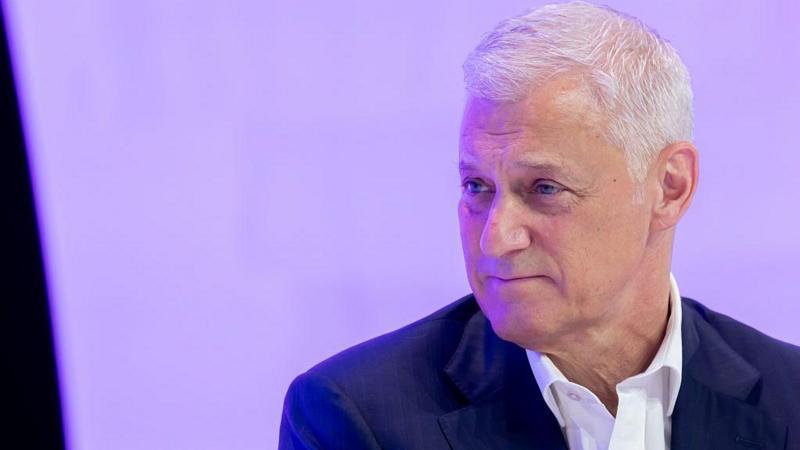
The CEO of Standard Chartered, Bill Winters, apologized after calling some employees "lower value human capital" when discussing job cuts due to AI automation. He explained the bank plans to cut about 15% of back office roles over four years but aims to help affected workers find higher-value jobs within the company.
Key Facts
Bill Winters, boss of Standard Chartered, described some jobs as "lower value human capital" vulnerable to AI replacement.
He apologized for the upsetting wording and explained it on LinkedIn.
The bank expects to cut around 7,800 back office roles over the next four years (about 15% of those jobs).
Standard Chartered plans to help employees retrain and move to higher-value roles within the company.
Winters said the comments were misunderstood and shared the full transcript to clarify his intent.
The rise of AI has caused many companies, including banks and tech firms, to announce large layoffs recently.
Some people remain critical of Winters, questioning whether he truly values his employees.
The bank stresses it wants to support workers through the fast changes driven by AI technology.
Read the Original
Want the full story? Tap a source to open the original
article.
Palantir's £50 million contract with the Metropolitan Police Service has been blocked by London Mayor Sadiq Khan due to concerns about procurement rules and company values. The decision has caused debate within the Labour Party and reactions from police officials and government ministers.
Key Facts
London Mayor Sadiq Khan blocked a proposed £50 million contract between Palantir and the Metropolitan Police.
The contract involved a two-year deal using AI technology for criminal investigations.
Khan cited a serious breach of procurement rules and concerns about Palantir’s alignment with London’s values.
Palantir has worked with the Israeli military and the Trump administration on immigration enforcement.
Some Labour MPs supported Khan’s decision, while government ministers urged him to explain his reasons.
The Metropolitan Police Federation criticized Palantir’s use of AI for monitoring officers, calling it invasive.
Palantir’s UK and Europe head, Louis Mosley, accused Khan of politicizing the contract and compromising safety.
Palantir already holds contracts worth hundreds of millions of pounds with the UK’s NHS and Ministry of Defence.
Read the Original
Want the full story? Tap a source to open the original
article.
Gas prices have increased sharply just before Memorial Day weekend, when many Americans travel by car. This rise in fuel costs affects the overall expense of holiday travel.
Key Facts
Gas prices have gone up significantly ahead of Memorial Day weekend.
Many Americans plan to travel by car during this holiday.
Higher fuel prices mean more expensive road trips.
The increase in gas prices may impact travel plans and budgets.
Memorial Day weekend is a time when road travel usually rises.
The news source reporting this is CBS News.
Read the Original
Want the full story? Tap a source to open the original
article.
American Airlines is getting ready for the busy summer travel season starting with Memorial Day weekend. The airline is making plans to handle more passengers and ensure smooth trips during this peak time.
Key Facts
The summer travel season begins on Memorial Day weekend.
American Airlines is preparing for increased passenger traffic.
The airline is focusing on smooth operations during the busy months.
CBS News correspondent Kris Van Cleave reported on the airline’s preparations.
The report includes a behind-the-scenes look at how American Airlines is managing the summer rush.
The focus is on making travel easier and more efficient for customers during summer.
Read the Original
Want the full story? Tap a source to open the original
article.
A $15,000 certificate of deposit (CD) account can earn high interest rates right now, much more than a regular savings account. Depending on how long the money is locked in, the interest earned can range from about $144 to over $3,300, with rates around 4% and fixed for the term.
Key Facts
Traditional savings accounts currently offer very low interest rates, around 0.38%.
CD accounts offer higher fixed rates, over 4% in many cases.
Interest rates on CDs stay the same for the entire term, even if overall rates drop later.
A $15,000 CD can earn from $144 (3-month term) up to $3,381 (5-year term) in interest.
Early withdrawal from a CD may result in fees, so money is locked until maturity.
Economic factors like inflation and global events could affect future interest rate changes.
Online banks often provide better CD interest rates than traditional banks.
Deciding whether to open a CD now or wait depends on expectations about future interest rates.
Read the Original
Want the full story? Tap a source to open the original
article.
Several major U.S. retailers, including Walmart and Amazon, have said that rising fuel costs are increasing their expenses. This situation may soon lead to higher prices for shoppers, especially if the high fuel prices continue through 2026.
Key Facts
Walmart reported that higher fuel costs added about $175 million in extra expenses in the first quarter of 2026.
Walmart’s CFO said if fuel prices stay high, customers should expect price increases in the second quarter and later in the year.
U.S. gas prices rose over 50% after the Iran war began and an embargo was placed on key shipments.
Walmart’s revenue grew 7.3% to $177.8 billion in the first quarter, with U.S. same-store sales up 4.1%.
Amazon introduced a 3.5% fee for some sellers to cover increased fuel and shipping costs, indirectly affecting prices.
Stew Leonard’s grocery chain also warned about fuel surcharges from suppliers, pressuring their costs.
Lower-income consumers are facing higher financial stress due to these rising fuel prices.
Despite challenges, Walmart believes it can manage the impact of higher fuel costs for now.
Read the Original
Want the full story? Tap a source to open the original
article.
Britain is expecting very hot weather over the late May bank holiday weekend, with temperatures reaching above 30°C. This is likely to cause heavy traffic, especially near seaside resorts and the Port of Dover, where border delays are adding to holiday travel problems. Many people will be traveling by car, plane, and train during this busy period.
Key Facts
Nearly 19 million drivers are expected on UK roads over the long weekend, 1 million more than in 2025.
Temperatures could exceed 30°C, increasing visits to coastal areas.
The Port of Dover faces long queues as French border checks use a new entry-exit system (EES) that is not fully operational.
High fuel prices (average 158.52p per litre) may keep about 5% of drivers at home.
About 2 million people are expected to fly abroad during the bank holiday, with strong demand for Mediterranean destinations.
Rail travel will be affected by planned engineering work and strikes, causing some service disruptions and replacement buses.
The busiest traffic days are likely to be Friday and Saturday, with coastal towns like Bournemouth seeing many day-trip visitors.
Read the Original
Want the full story? Tap a source to open the original
article.
In 2001, satellite TV company DirecTV sued O.J. Simpson for illegally accessing their signal without paying, a practice known as piracy. The case followed an FBI raid on Simpson’s Miami home as part of a wider investigation into drug trafficking and satellite TV piracy.
Key Facts
O.J. Simpson was sued by DirecTV for satellite TV piracy in federal court.
The FBI raided Simpson’s Miami home on December 4, 2001, during a two-year investigation.
Simpson was not arrested during the raid, and no drugs were found at his home.
DirecTV’s signal integrity director helped the FBI during the raid.
Simpson’s home address appeared linked to the purchase of illegal satellite TV equipment.
This piracy case occurred during a quieter period in Simpson’s legal troubles.
Simpson died of cancer in 2024.
Satellite TV piracy means accessing TV services without paying for them.
Read the Original
Want the full story? Tap a source to open the original
article.
Investors continue to put a lot of money into artificial intelligence (AI) companies despite growing public opposition and concerns about job losses and rising electricity costs. This backlash may slow the spread of AI technology and cause problems for companies and investors in the future.
Key Facts
Executives face protests, workers threaten strikes, and communities oppose new AI data centers due to concerns about job loss and electricity use.
SpaceX warns in its prospectus that public dislike of AI could lead to government restrictions or social unrest, harming business plans.
Morgan Stanley highlights that opposition to data centers could become a political issue, affecting AI growth.
Some AI companies and insiders are making large profits; for example, Meta offered huge pay packages to top AI researchers and OpenAI employees cashed in billions in stock.
Samsung employees in South Korea threatened to strike for a bigger share of AI-driven profits, showing worker pushback related to AI gains.
Communities worry that AI data centers increase electricity costs and do not bring enough local economic benefits.
Concerns also include AI misuse, misinformation, and data privacy issues.
Although investors are aware of resistance, the flow of money into AI businesses remains strong for now.
Read the Original
Want the full story? Tap a source to open the original
article.
The chief executive of Standard Chartered, Bill Winters, apologized for calling some workers losing their jobs to artificial intelligence “lower-value human capital.” The bank plans to cut about 7,800 back-office jobs, mainly because of AI replacing some roles, and aims to help affected employees find higher-value work.
Key Facts
Standard Chartered plans to cut around 7,800 back-office jobs due to artificial intelligence.
The cuts represent about 15% of the bank’s 52,000 back-office roles by 2030.
The jobs mostly affected are in locations like Chennai, Bengaluru, Kuala Lumpur, and Warsaw.
CEO Bill Winters described the affected roles as “lower-value human capital,” causing backlash.
Winters apologized on LinkedIn for his wording and said the bank will help employees move into better roles.
The bank seeks higher returns for shareholders amid these workforce changes.
Standard Chartered employs nearly 82,000 people worldwide.
The bank is finishing a long effort to become more profitable and less likely to be taken over.
Read the Original
Want the full story? Tap a source to open the original
article.
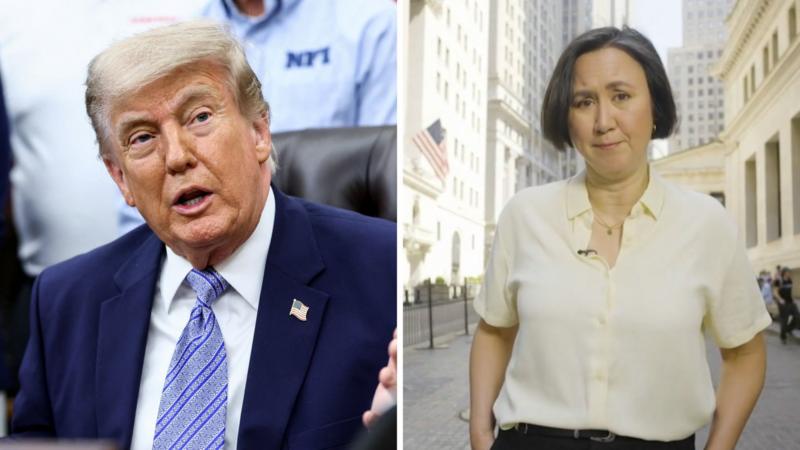
In early 2024, thousands of stock trades took place on behalf of President Donald Trump involving major U.S. companies. The Trump Organization stated that neither President Trump, his family, nor the company approve or have advance knowledge of these trades.
Key Facts
Thousands of stock market trades were made in the first three months of 2024 linked to President Trump.
These trades involved shares in some of America’s largest companies.
The Trump Organization said President Trump and his family do not select or approve the investments.
The organization also said they have no advance notice of trading activity.
Investment decisions and portfolio management happen without input from President Trump or his family.
The information about these trades comes from recent government filings.
The trading activity has drawn public attention and questions.
Read the Original
Want the full story? Tap a source to open the original
article.
Khayelitsha Cookies is a small bakery led by women near Cape Town, South Africa. The company has made a deal to supply cookies to British Airways, which is expected to create new jobs for women in an area with high unemployment.
Key Facts
Khayelitsha Cookies is located in one of South Africa’s largest townships.
The business is led by women.
They secured a contract to supply British Airways.
This deal aims to help create more jobs for women in the community.
The township has been heavily affected by joblessness.
The bakery focuses on making cookies.
The new business opportunities come from a partnership with a major airline.
Read the Original
Want the full story? Tap a source to open the original
article.
IT services companies have traditionally charged clients based on hours worked by humans. With the growing use of AI, companies now use "tokens," a digital measure of AI work, but tokens should not replace billable hours as a way to measure value. The key is to combine human skills and AI tokens effectively to deliver better business results rather than just focus on token usage.
Key Facts
IT service firms used billable hours to charge clients for human work in the past.
AI is becoming part of how these companies deliver services using digital work measured by tokens.
Tokens count AI use but do not directly show the value delivered to clients.
Focusing only on token usage can make costs rise without better business outcomes.
Companies need to blend human expertise and AI tokens to improve reliability and efficiency.
Each token interaction creates data that helps improve service delivery over time.
Successful companies will charge based on outcomes, not just hours or tokens used.
Effective management of tokens and human work together offers the most predictable and valuable results.
Read the Original
Want the full story? Tap a source to open the original
article.
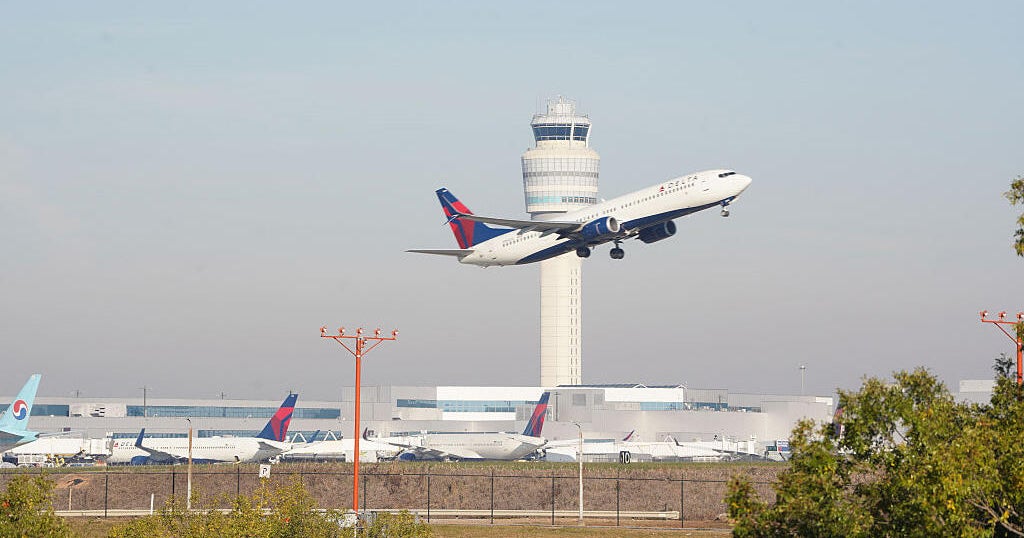
The U.S. Department of Transportation has launched a new website called Modern Skies to track progress on a $12.5 billion project to update the country's air traffic control system. This project involves thousands of upgrades to technology and infrastructure, aiming to improve flight safety and efficiency by 2028.
Key Facts
The Modern Skies website shows progress on more than 10,000 air traffic control projects nationwide.
The project focuses on updating radar systems, radios, fiber optic cables, and aircraft tracking technology.
Current work includes replacing old copper wiring and installing new digital voice switches and surface monitoring systems at airports.
The Federal Aviation Administration (FAA) plans to finish major upgrades by 2028.
Transportation Secretary Sean P. Duffy and FAA Administrator Bryan Bedford emphasized transparency by providing monthly updates.
The FAA manages over 18 million flights and 1 billion passenger movements each year, making it the world’s largest aviation system.
The project addresses new airspace demands like drones, supersonic planes, and space launches.
Officials are seeking additional funding from Congress to develop AI software that can better manage flight schedules and reduce delays.
Read the Original
Want the full story? Tap a source to open the original
article.
Volkswagen Group has successfully grown its sales in China by creating cars specifically designed for the Chinese market and partnering with local companies. Mercedes-Benz’s CEO said the company will not follow this path and will continue selling its global models in China, focusing on cars that traditionally attract Chinese buyers.
Key Facts
Volkswagen uses an "In China, for China" strategy with local partners like SAIC Motor to make cars suited to Chinese customers.
Volkswagen’s partnership with SAIC Motor has been extended until 2040, lasting nearly 50 years.
Volkswagen holds about 13.9% of the passenger vehicle market share in China through joint ventures.
Audi, part of Volkswagen Group, created a special Chinese sub-brand called AUDI to sell China-only models.
Audi offers vehicles marketed as smart and connected rather than just premium luxury cars.
Audi recently launched the China-only E5 Sportback and plans to release the E7X SUV soon.
Mercedes-Benz focuses on its global vehicle lineup instead of making China-only cars.
Mercedes-Benz CEO Ola Källenius said they would need a very strong reason to invest in cars just for the Chinese market, and so far, they have not seen it.
Read the Original
Want the full story? Tap a source to open the original
article.
SpaceX released a document for investors ahead of its planned $1.75 trillion stock market debut. The document revealed details about SpaceX's finances, its close business ties with Tesla, and its ambitious plans to build human colonies on Mars.
Key Facts
SpaceX plans to enter the US stock market with a $1.75 trillion initial public offering (IPO).
The investor prospectus is over 300 pages long and includes financial and future mission details.
SpaceX spent about $131 million buying Tesla Cybertrucks in 2025, likely over 1,300 vehicles.
SpaceX also purchased Tesla’s Megapack battery products, spending $506 million in 2025 and $191 million in 2024.
SpaceX’s long-term goal is to create permanent human colonies on the Moon and Mars.
Elon Musk will receive 1 billion shares if SpaceX successfully establishes a colony on Mars with at least 1 million people.
The company warns investors about challenges in achieving its goals, including scientific and operational risks.
The filing also mentions legal and regulatory risks involving Musk’s AI company xAI and its chatbot called Grok.
Read the Original
Want the full story? Tap a source to open the original
article.
The number of UK homes with air conditioning has doubled to 4 million in the past three years due to hotter summers and more people working from home. Experts and government advisers say air conditioning will become essential as temperatures rise and homes overheat more often.
Key Facts
About 4 million UK homes now have air conditioning, twice as many as three years ago.
Portable units using around 1kW of power are more common than built-in units, which use up to 2.7kW.
Recent UK summers have been very warm, with the hottest day reaching 40°C in July 2022.
Air conditioning helps with health and comfort problems, especially in loft conversions and homes with children.
Government climate advisers say all care homes and hospitals should have air conditioning within 10 years.
Heatwaves over 40°C are expected across the UK by 2050, and 90% of homes may overheat.
Air conditioning uses a lot of energy and causes about 4% of global greenhouse gas emissions.
Modern systems like heat pumps can be more efficient and are partly subsidised by the government.
Running costs for air conditioning are much higher than for fans, but fans do not cool the air, only move it.
Read the Original
Want the full story? Tap a source to open the original
article.
Estée Lauder and Spanish company Puig have stopped talks to merge into a large fashion and beauty company worth nearly $40 billion. They could not agree on control of the new company or how to distribute leadership positions.
Key Facts
Estée Lauder makes skincare, makeup, and fragrance brands like Clinique and Tom Ford Beauty.
Puig owns brands such as Jean Paul Gaultier and Charlotte Tilbury and is listed on the Madrid stock exchange.
The two companies disagreed on which family would control the merged company and how board seats would be shared.
The talks began in March but ended without a deal.
Estée Lauder’s stock price dropped about 20% when talks started but rose 11.5% after merger talks ended.
Puig’s shares rose 15% when the merger was announced but fell the same after talks ended.
Estée Lauder is mainly controlled by the Lauder family with strong voting power.
Puig’s CEO said the company will keep focusing on selective deals to grow its brand portfolio.
Read the Original
Want the full story? Tap a source to open the original
article.
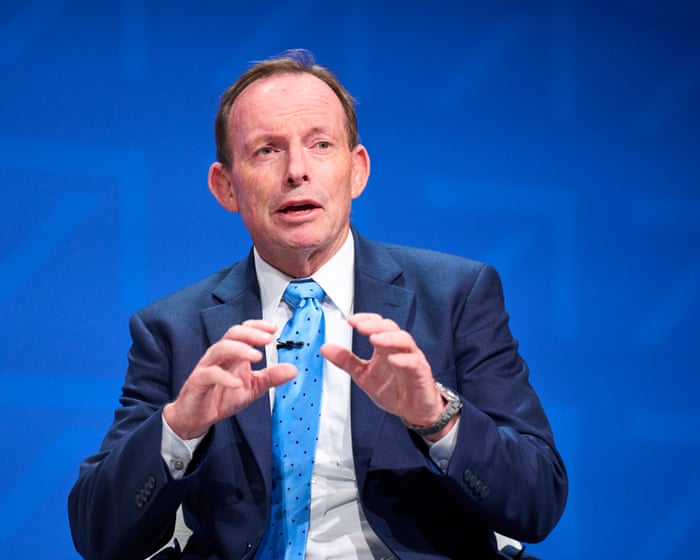
Tony Abbott will become the new federal president of the Liberal Party, marking his return to active politics seven years after leaving Parliament. He is the only nominee after Alexander Downer chose to run for vice-president instead, and Abbott’s election will be confirmed at the party’s federal council meeting in Melbourne next weekend.
Key Facts
Tony Abbott is a former Prime Minister of Australia and will return as the federal Liberal Party president.
Abbott was the only candidate nominated for the presidency; Alexander Downer is running for vice-president.
The Liberal Party’s federal council will confirm Abbott’s election next weekend in Melbourne.
The party president role is unpaid and focuses on administration and campaign support, separate from parliamentary duties.
Abbott’s return has caused concern among moderate Liberals, who worry he may push the party further to the right.
The Victorian Liberal Party is also undergoing leadership changes, with former federal director Brian Loughnane expected to become state president.
Internal party issues include a controversy over candidate vetting and a legal dispute involving party funds.
Abbott expressed his intention to support Angus Taylor’s campaign to become Prime Minister through his role as party president.
Read the Original
Want the full story? Tap a source to open the original
article.
Retail sales in Great Britain fell by 1.3% in April, the largest drop in a year, mainly because motorists bought much less petrol. Fuel sales dropped over 10%, reversing the sharp increases seen in March when people stocked up due to concerns about fuel prices during the Middle East conflict.
Key Facts
Overall retail sales in Great Britain fell by 1.3% in April compared with March.
Fuel purchases dropped more than 10% in April, the biggest monthly fall since November 2020.
In March, fuel sales grew sharply due to people stocking up amid rising fuel prices linked to the Iran conflict.
Without the fuel sales impact, retail sales still fell by 0.4% in April.
Beauty products and technology stores saw strong sales in April.
Clothing store sales fell by 2.4%, the lowest since June last year, affected by weather and worries about rising prices.
Consumer confidence is down, with April marking the first month retail sales showed effects from the Middle East crisis.
Retail sales in the first quarter of the year rose 1.1% compared to the previous year.
Read the Original
Want the full story? Tap a source to open the original
article.