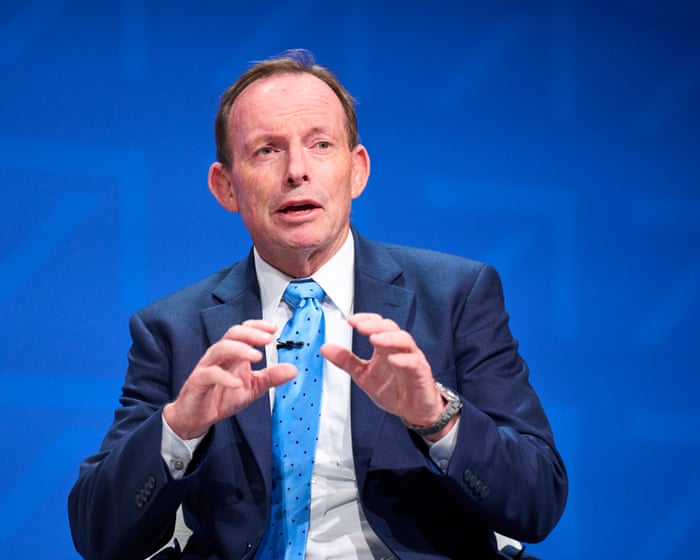
Tony Abbott will become the new federal president of the Liberal Party, marking his return to active politics seven years after leaving Parliament. He is the only nominee after Alexander Downer chose to run for vice-president instead, and Abbott’s election will be confirmed at the party’s federal council meeting in Melbourne next weekend.
Key Facts
Tony Abbott is a former Prime Minister of Australia and will return as the federal Liberal Party president.
Abbott was the only candidate nominated for the presidency; Alexander Downer is running for vice-president.
The Liberal Party’s federal council will confirm Abbott’s election next weekend in Melbourne.
The party president role is unpaid and focuses on administration and campaign support, separate from parliamentary duties.
Abbott’s return has caused concern among moderate Liberals, who worry he may push the party further to the right.
The Victorian Liberal Party is also undergoing leadership changes, with former federal director Brian Loughnane expected to become state president.
Internal party issues include a controversy over candidate vetting and a legal dispute involving party funds.
Abbott expressed his intention to support Angus Taylor’s campaign to become Prime Minister through his role as party president.
Read the Original
Want the full story? Tap a source to open the original
article.
Retail sales in Great Britain fell by 1.3% in April, the largest drop in a year, mainly because motorists bought much less petrol. Fuel sales dropped over 10%, reversing the sharp increases seen in March when people stocked up due to concerns about fuel prices during the Middle East conflict.
Key Facts
Overall retail sales in Great Britain fell by 1.3% in April compared with March.
Fuel purchases dropped more than 10% in April, the biggest monthly fall since November 2020.
In March, fuel sales grew sharply due to people stocking up amid rising fuel prices linked to the Iran conflict.
Without the fuel sales impact, retail sales still fell by 0.4% in April.
Beauty products and technology stores saw strong sales in April.
Clothing store sales fell by 2.4%, the lowest since June last year, affected by weather and worries about rising prices.
Consumer confidence is down, with April marking the first month retail sales showed effects from the Middle East crisis.
Retail sales in the first quarter of the year rose 1.1% compared to the previous year.
Read the Original
Want the full story? Tap a source to open the original
article.
Morrisons plans to close 100 convenience stores in the next few months due to ongoing losses and rising costs. The supermarket company says recent government policies have increased expenses, making it hard for some stores to profit.
Key Facts
Morrisons will close 100 stores soon, mostly convenience stores bought from McColls in 2022.
The affected stores have been losing money for several years despite efforts to improve them.
Morrisons says government policies have raised costs, but did not give exact details.
Last year, Morrisons also closed 52 cafes and 17 convenience stores, risking hundreds of jobs.
About 200 jobs at Morrisons’ Bradford headquarters are at risk.
Morrisons has about 1,700 convenience stores and opened over 120 franchise stores last year.
The company plans to expand and open many more franchise stores by 2026.
Extra costs to retailers include higher National Insurance contributions, increased minimum wage, and charges for recycling packaging.
Inflation for food prices was 3% in April, higher than the overall inflation rate of 2.8%.
Read the Original
Want the full story? Tap a source to open the original
article.
The article talks about the rise in County Court Judgments (CCJs) in the UK. It explains what CCJs or decrees are, why more people are getting them, and gives advice on how to handle or avoid court cases over unpaid debts.
Key Facts
County Court Judgments (CCJs) are legal decisions against people who fail to repay money they owe in England, Wales, and Northern Ireland.
In Scotland, similar judgments are called decrees.
The number of CCJs and decrees has gone up recently across the UK.
People with a CCJ have options like asking to pay in instalments or trying to cancel the judgment.
There are specific court forms and steps to apply for changes to a CCJ or decree.
Temporary protection programs exist while people get debt advice: "Breathing Space" in England and Wales, and a "moratorium" in Scotland.
The article provides links to official information and forms for each UK region.
Read the Original
Want the full story? Tap a source to open the original
article.
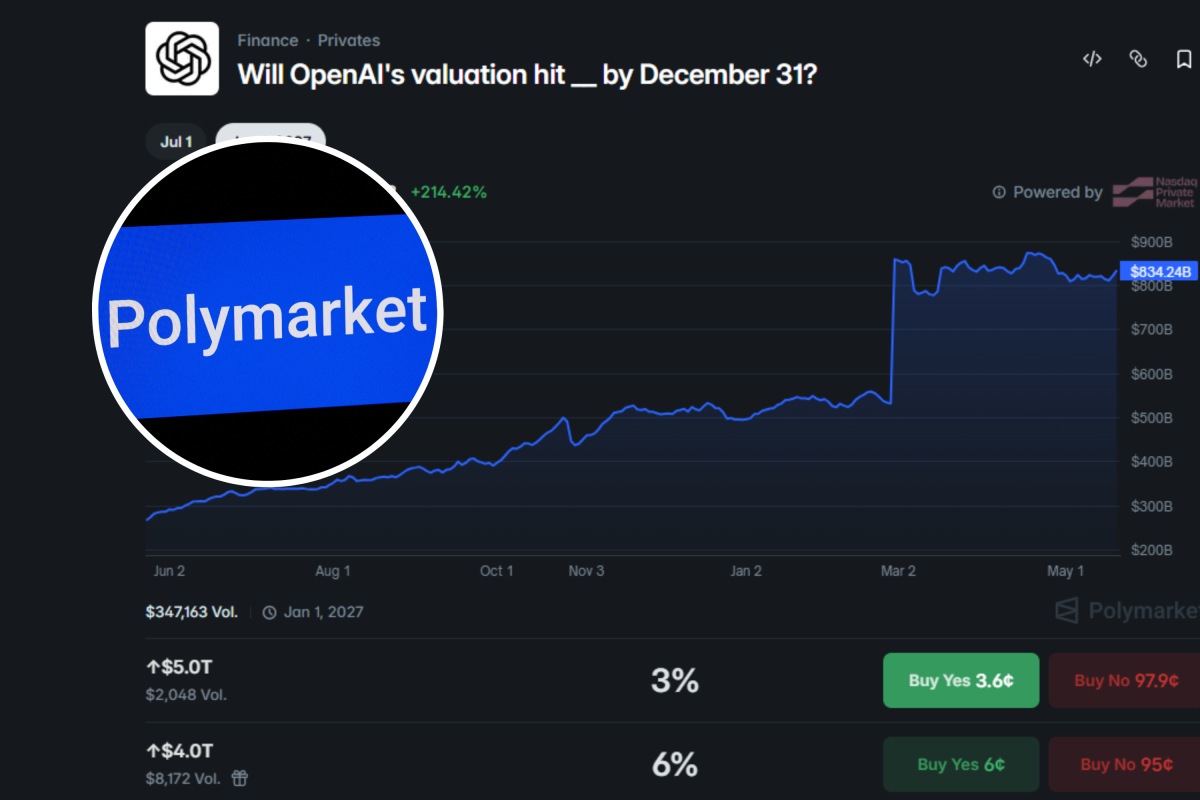
Polymarket has started offering betting contracts based on private startup companies' milestones, such as valuations and public offering timings. Legal experts worry this could encourage insider trading because company insiders might use private, nonpublic information to place bets.
Key Facts
Polymarket partnered with Nasdaq Private Market to create bets tied to private company events.
These bets include milestones like valuations or IPO dates for firms such as SpaceX and Anthropic.
Private companies like these usually don’t sell shares to the public and are owned by a small group of insiders.
Polymarket says this allows everyday investors to access financial information about startups valued over $1 billion, called "unicorns."
Experts warn employees might use inside knowledge to bet, creating risks of insider trading.
Polymarket has introduced new rules to prevent insider trading and claims to cooperate with law enforcement.
The company helped authorities investigate a case involving illegal betting by a soldier with insider information.
There are growing concerns and regulatory debates about the role of prediction markets in financial and political trading.
Read the Original
Want the full story? Tap a source to open the original
article.
Asian stock markets rose following small gains on Wall Street, as oil prices climbed due to ongoing uncertainty about the war involving Iran. Inflation in the U.S. dropped to its lowest level in four years in April, even though oil and gas prices are higher because of the conflict.
Key Facts
Asian shares increased, with Japan’s Nikkei rising 2.7%, South Korea’s Kospi up 0.6%, and Hong Kong’s Hang Seng gaining 1.2%.
Oil prices rose, with Brent crude at $104.08 per barrel and U.S. crude near $97.25, driven by disruptions around the Strait of Hormuz, a key oil shipping route.
Inflation in the U.S. fell to 1.4% in April, the lowest in four years despite higher energy prices from the Iran war.
U.S. stock indexes showed modest gains: S&P 500 up 0.2%, Dow Jones up 0.6%, and Nasdaq up 0.1%.
Talks between the U.S. and Iran to end the war have made little progress, keeping markets uncertain.
U.S. 10-year Treasury yields decreased to 4.56%, easing from earlier in the week when they were above 4.67%.
Shares of airlines like Southwest and American Airlines rose as oil prices first fell then climbed again.
Some individual companies, like Ralph Lauren, saw strong stock gains after better-than-expected quarterly results, while Nvidia shares dropped despite good earnings.
Read the Original
Want the full story? Tap a source to open the original
article.
The UK government borrowed £24.3 billion in April 2026, which was more than expected due to higher costs for pensions and benefits caused by inflation. Rising borrowing costs and political uncertainty also affected the debt, while the overall economy performed better than predicted earlier in the year.
Key Facts
UK borrowing in April 2026 was £24.3 billion, £4.9 billion more than April 2025.
Borrowing was £3.4 billion higher than the forecast by economists and the Office for Budget Responsibility.
Debt interest payments reached £10.3 billion in April, the highest on record for that month.
Inflation increased the cost of pensions and social benefits, adding £2.7 billion to benefit expenses.
Political uncertainty, including concerns over the Iran conflict and UK leadership changes, raised borrowing costs.
UK government bonds (gilts) faced heavy selling pressure due to fears of higher future borrowing.
The International Monetary Fund advised the UK to continue efforts to reduce government borrowing.
The UK economy showed stronger growth at the start of 2026, allowing a revision of the annual borrowing forecast down by £3 billion.
Read the Original
Want the full story? Tap a source to open the original
article.
A group of expensive Birkin bags owned by a jailed wealthy businessman were sold for more than $500,000. The sale highlights strong demand for luxury items, even those linked to legal troubles.
Key Facts
The bags are Birkin bags, a high-end luxury brand.
They belonged to a businessman who is currently in jail.
The bags sold for over $500,000 in total.
Birkin bags are known for their high value and exclusivity.
The sale took place amid ongoing legal issues involving the owner.
Luxury goods can keep high prices despite negative news about owners.
The transaction was reported in Vietnam.
This sale reflects trends in the luxury retail market.
Read the Original
Want the full story? Tap a source to open the original
article.
The UK government borrowed £24.3 billion in April, which is higher than expected. This borrowing was £4.9 billion more than in April last year and above the predicted amount of £20.9 billion.
Key Facts
UK government borrowing in April was £24.3 billion.
Borrowing means the government spent more money than it received from taxes.
This amount is £4.9 billion higher than April of the previous year.
The borrowing exceeded the forecast of £20.9 billion made by the Office for Budget Responsibility.
Tax income increased compared to last year.
Higher government spending on benefits and other costs caused the borrowing to rise.
The data comes from the Office for National Statistics (ONS).
Read the Original
Want the full story? Tap a source to open the original
article.
Guzman y Gomez is closing its US stores after failing to compete in a market with many Mexican food options. The company will focus on growing in Australia and Asia instead.
Key Facts
Guzman y Gomez (GyG) is shutting its US business due to poor sales performance.
The US market has many Mexican food chains, making it hard for GyG to stand out.
GyG’s US stores, mostly in Chicago, will close, costing up to $40 million USD.
The company tried offering larger burritos in the US to attract customers.
Analysts said GyG’s US business might not break even for at least ten years.
GyG will focus on expanding in Australia, Singapore, and Japan.
There were 237 GyG stores in Australia at the end of 2025, making it the ninth largest chain.
After the closure announcement, GyG’s share price rose over 15% but remains below its initial public offering price.
Read the Original
Want the full story? Tap a source to open the original
article.
SpaceX has delayed the first test flight of its new Starship V3 rocket, which is designed to carry heavy payloads to space. The company plans to try again on Friday and is preparing for a major stock market debut that could make Elon Musk the first trillionaire.
Key Facts
SpaceX postponed the initial launch of the Starship V3 rocket and aims to relaunch on Friday.
The Starship V3 is described as the most powerful rocket system ever made, able to carry 100 metric tons.
SpaceX plans to use Starship for launching Starlink satellites and NASA moon missions.
The company is preparing a record-breaking initial public offering (IPO) on Nasdaq under the symbol SPCX.
Elon Musk’s SpaceX is valued at about $1.25 trillion, with Musk owning the majority share.
If the IPO succeeds, Musk could become the world’s first trillionaire.
SpaceX spent over $15 billion on the Starship program so far.
Last year, SpaceX made $18.6 billion in revenue but had a net loss of $4.9 billion; in early 2024, it made $4.7 billion in sales and lost $4.3 billion.
Read the Original
Want the full story? Tap a source to open the original
article.
Honda is recalling almost 60,000 cars because of a problem with the vehicle cameras that could cause safety issues. The recall covers two different car models and was announced by the National Highway Transportation Safety Administration (NHTSA).
Key Facts
Honda is recalling about 59,887 vehicles.
The recall involves two car models.
The issue is related to the cars' cameras.
The problem could create safety risks for drivers.
The recall was issued after review by the NHTSA.
The NHTSA is a U.S. government agency that monitors vehicle safety.
Read the Original
Want the full story? Tap a source to open the original
article.
Data from the National Association of Realtors shows that more single women aged 18 to 26 are buying homes than single men in the same age group. However, overall, Gen Z young adults are buying homes less often than older age groups.
Key Facts
35% of single women aged 18 to 26 are buying homes.
Only 18% of single men aged 18 to 26 are buying homes.
The data comes from the National Association of Realtors.
Gen Z as a whole buys fewer homes compared to older generations.
The trend shows single young women leading home purchases within their age group.
Jessica Lautz is the deputy chief economist at the National Association of Realtors.
She discussed these findings on CBS News’ "The Daily Report."
The information was presented on the CBS News platform.
Read the Original
Want the full story? Tap a source to open the original
article.
More adults are joining summer camps to enjoy activities like singing and dancing. These camps offer a way for grown-ups to relax and recharge from stress.
Key Facts
Summer camps are no longer just for children; many adults now attend them.
Adult camps focus on creative activities such as theater, singing, and dancing.
These camps provide a break from daily burnout and stress.
The number of adults participating in summer camps is increasing each year.
Camps offer a social and fun environment for adults to connect and learn new skills.
Read the Original
Want the full story? Tap a source to open the original
article.
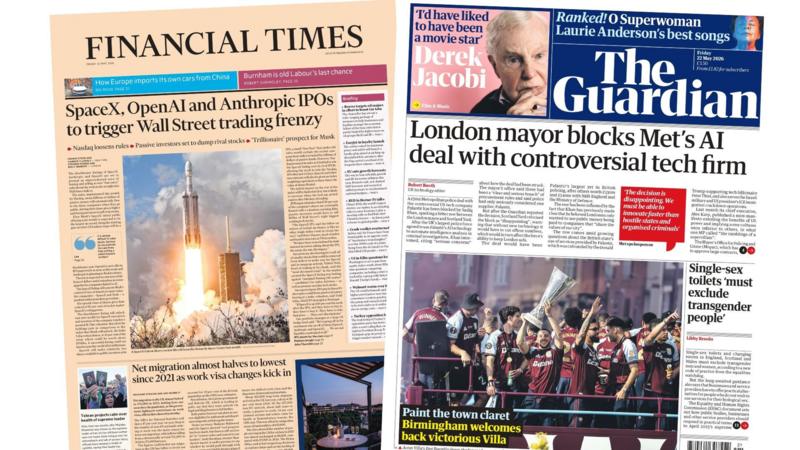
The Financial Times reports that SpaceX, Elon Musk's company, plans a major stock market launch expected to be the largest ever. UK net migration has dropped to its lowest level since 2021, with fewer people moving into the country. Separately, the London mayor has blocked a deal with US tech firm Palantir to use AI in police investigations.
Key Facts
SpaceX’s initial public offering (IPO) is expected to be the biggest ever on record.
Elon Musk may become a trillionaire due to SpaceX’s stock market debut.
The UK saw its net migration number fall to 171,000, the lowest since 2021.
Home Secretary Shabana Mahmood welcomed the migration drop.
London Mayor Sadiq Khan stopped a £50 million AI contract with Palantir.
The Palantir deal aimed to automate intelligence work for criminal cases.
Greater Manchester Police arrested five people over fake council candidate claims.
Aston Villa football team celebrated a major Europa League victory in Birmingham.
Read the Original
Want the full story? Tap a source to open the original
article.
Labor MPs expect the government to offer some tax breaks for startup businesses after complaints about recent capital gains tax (CGT) changes. Lawmakers say the government needs to explain these tax changes more clearly to avoid confusion and backlash.
Key Facts
The government changed the CGT rules, replacing a 50% discount on profits with a system that taxes gains after adjusting for inflation, plus a minimum 30% tax rate.
These changes have upset many startup founders and small business owners, who fear it will hurt innovation and growth.
Startups often give employees stock options instead of high pay; CGT changes could reduce the benefits of this practice.
Labor MPs told Guardian Australia they expect some concessions or special treatment for startups to address these concerns.
Industry Minister Tim Ayres said the government is working with the tech sector to make sure the changes are fair for startups.
Some Labor MPs believe the government has not clearly explained the tax reforms, leading to online misinformation and strong criticism.
Officials worry the tax debate could get out of control like past negative gearing controversies, so clear communication is needed.
Labor says the CGT reform is necessary but admits it involves difficult choices that need careful handling.
Read the Original
Want the full story? Tap a source to open the original
article.
CBS Radio, a long-standing part of American media, will stop broadcasting on Friday. Over time, people have moved from listening to radio to watching TV and using podcasts and streaming services.
Key Facts
CBS Radio has been an important part of American media for many years.
It will broadcast for the last time on Friday.
Radio audiences have decreased as people prefer TV, podcasts, and streaming.
Podcasts are on-demand audio shows you can listen to anytime.
Streaming services deliver audio and video over the internet.
The change reflects shifting habits in how people consume news and entertainment.
CBS News is covering this final sign-off through its app and website.
Read the Original
Want the full story? Tap a source to open the original
article.
Career coach Eliana Goldstein offers practical advice to people who feel stuck in a cycle of constantly searching for jobs online without success. She helps job seekers manage feelings of overwhelm and high competition in today’s job market.
Key Facts
The article focuses on breaking the habit of “doomscrolling” through job listings, which means endlessly scrolling and feeling worse.
Eliana Goldstein is a career and success coach giving tips on how to be more effective in job hunting.
Job seekers face challenges like feeling overwhelmed and worried about being priced out of jobs.
The advice is tactical, meaning it includes specific, doable steps.
The goal is to help people feel more in control and hopeful during their job search.
The article is meant to support people looking for work in a tough market.
Read the Original
Want the full story? Tap a source to open the original
article.
Prediction markets are online platforms where people can bet on events like sports, politics, or cryptocurrency prices. These markets are growing quickly in the US, especially among young men, because they allow users to put money on their opinions and see real-time changes in odds based on others' bets.
Key Facts
Prediction markets let people bet on many subjects, such as sports, political events, or financial outcomes.
Two large prediction market platforms are Polymarket and Kalshi, valued at $9 billion and $22 billion respectively.
The majority of prediction market users are under 45 years old, and about 71% are men.
Around 25% of American men aged 18-24 have used a prediction market or gambling app recently.
Prediction markets are legally classified as commodity futures trading, not gambling, so they are allowed across all US states.
These markets make money by charging small fees on bets instead of setting odds like traditional bookmakers.
Supporters say prediction markets provide better odds and more accurate public opinion insights than polls.
Critics worry these platforms may encourage risky behavior and normalize gambling, especially among young men.
Read the Original
Want the full story? Tap a source to open the original
article.