Michael Fraser, an 88-year-old retiree, says he feels trapped in his retirement flat in Devon due to rising service charges that make selling difficult. Many people in England and Wales face similar problems, with high yearly fees and falling property values causing financial strain for retirees and their families.
Key Facts
Michael Fraser bought a two-bedroom flat for £140,000 with a service charge of £12,000 a year, over half his pension income.
By January 2026, his service charge will rise to £20,000 a year, a 66% increase in six years.
Fraser fears selling the flat will not cover the fees and worries about affording care home costs while paying the charge on an empty property.
More than 400 people contacted the BBC reporting issues with large service charges and low resale values on retirement properties.
Sarah Woods inherited a flat but was told she is too young to live there; she struggles to sell it and faces ongoing fees.
Some management companies say service charges must be paid even if properties are empty, and they pursue debt recovery if fees are unpaid.
Audley Group, which manages Fraser’s development, said costs have increased but vary by location and services chosen by owners.
Read the Original
Want the full story? Tap a source to open the original
article.
Students at Huntington School in York started a project called Dress 2 Impress to help make prom clothes affordable. They offer dresses for £45 and suits for £25, and some students from low-income families can borrow outfits for free. The clothes are donated from shops and people who only wore them once.
Key Facts
Prom dresses can cost up to £595 or more, which many families find expensive.
A charity found that one in four parents spend between £250 and £500 on prom clothes.
Dress 2 Impress lets students hire dresses for £45 and suits for £25.
Students eligible for free school meals can borrow outfits for free.
The dresses and suits are donated from closing shops, businesses, or individuals.
Students help run the boutique, gain work experience as "prom consultants," and manage social media and website tasks.
The boutique offers private appointments because of limited space.
A teacher said the project started as a classroom idea and has grown into a valuable support for students.
Read the Original
Want the full story? Tap a source to open the original
article.
The Michelin Guide has stopped its green star award, which recognized restaurants for eco-friendly cooking and reducing waste. Current green star winners will lose their recognition by the end of the year, and Michelin will replace the award with a new publication called Mindful Voices, which will feature sustainable restaurants but not give any official prize.
Key Facts
Michelin introduced the green star in 2020 to highlight sustainable chefs and restaurants.
The green star recognized eco-friendly ingredients and efforts to reduce waste.
Restaurants with green stars could display a green plaque and use the green star in marketing.
Michelin suddenly decided to retire the green star award and informed chefs mostly after announcing it publicly.
Michelin will replace the award with Mindful Voices, an editorial platform about sustainability in food and hospitality, with no formal awards.
Current 37 green star restaurants will lose their accreditation by the end of the year.
Some chefs who won the green star expressed disappointment and feel Michelin’s decision was poorly communicated.
The Michelin Guide did not officially explain why it ended the green star award.
Read the Original
Want the full story? Tap a source to open the original
article.
Australia’s unemployment rate rose to 4.5% in April, reaching its highest level in over four years. The number of employed people fell unexpectedly, causing concerns about the economy and affecting the central bank’s decision on interest rate increases.
Key Facts
Unemployment increased from 4.3% to 4.5% in April.
The number of employed people dropped by 18,600, the first decline this year.
The Australian Bureau of Statistics provided this data.
Rising unemployment may influence the Reserve Bank of Australia (RBA) to pause rate hikes.
The jobless rate is still below pre-pandemic levels of over 5%.
Australian budget forecasts unemployment to peak at 4.5% this year; it could reach 5% if oil prices rise sharply.
Female employment declined for the first time since August 2025.
The Australian stock market rose after the data, reflecting reduced chances of immediate interest rate increases.
Read the Original
Want the full story? Tap a source to open the original
article.
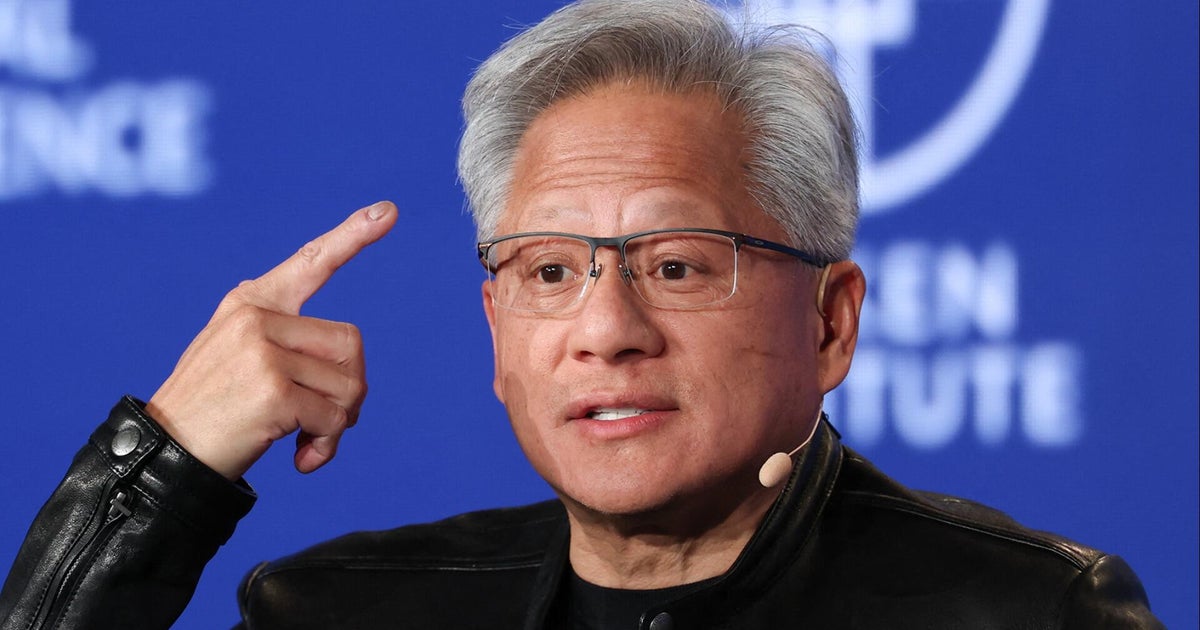
Nvidia reported record earnings with a 37% rise in profit and 20% increase in revenue from the previous quarter, driven mainly by strong sales of AI-related chips. The company announced a large share buyback and increased its dividend for shareholders as its AI technology continues to grow in demand.
Key Facts
Nvidia's profit reached $58.3 billion for the February-April quarter, up 37% from the previous quarter and over 200% higher than the previous year.
Revenue rose to $81.6 billion, a 20% increase from the last quarter and 85% higher than the same period last year.
The data-center business, focused on AI chips, accounted for most growth with revenue up 92% year-over-year to $75.2 billion.
The hardware segment earned $6.4 billion, up 29% from the prior year.
Nvidia announced it will buy back $80 billion worth of its shares and raised its quarterly dividend from $0.01 to $0.25 per share.
CEO Jensen Huang said demand for AI chips is growing rapidly due to new AI technologies that can perform useful tasks.
Despite strong results, Nvidia's stock fell slightly after hours, reflecting very high market expectations.
Experts say Nvidia is now setting the standard for growth in the tech sector, and the company is entering a more mature phase with increased dividends and buybacks.
Read the Original
Want the full story? Tap a source to open the original
article.
Elon Musk’s SpaceX has filed for an initial public offering (IPO) that could raise up to $75 billion, valuing the company at $1.75 trillion. The filing reveals SpaceX’s financial details for the first time and shows Musk will keep control as CEO, CTO, and chairman after going public.
Key Facts
SpaceX seeks to raise $75 billion in its IPO, potentially the largest in history.
The company could be valued at $1.75 trillion after going public.
SpaceX generated $18.7 billion in revenue in 2025 but had a $2.6 billion operating loss.
The Starlink satellite internet division earned $11.4 billion in 2025, growing nearly 50% year-over-year.
SpaceX’s AI businesses, including xAI and the social media site X, made $3.2 billion but lost $6.4 billion operating.
The company invested heavily in AI data centers, spending $12.7 billion in 2025 and $7.7 billion in the first quarter of 2026.
SpaceX will keep a dual-class share structure letting Musk control about 85% of voting power with 42% equity ownership.
SpaceX plans to build data centers in space using solar energy to meet AI computing power needs.
Read the Original
Want the full story? Tap a source to open the original
article.
The largest union at Samsung Electronics paused a planned strike after reaching a temporary agreement on pay with the company. The disagreement was about how to share profits from the high demand for AI memory chips, especially regarding bonus payments for different groups of workers.
Key Facts
Samsung’s union represents about 48,000 workers and planned a strike starting April 27.
The strike was paused so union members can vote on a new tentative pay deal from May 22 to 27.
The main conflict was over how to split bonuses between memory chip workers and those in other divisions.
Samsung proposed big bonuses (around 607% of annual salary) for memory chip workers but much smaller bonuses (50% to 100%) for others.
Rival SK Hynix gave larger bonuses, causing some Samsung workers to move there.
Samsung’s profits rose sharply due to AI chip demand, pushing its market value above $1 trillion in May.
A strike could have cost Samsung $14 billion to $21 billion in profits according to JP Morgan.
A South Korean court limited the strike actions to avoid serious harm to Samsung’s operations and economy.
Read the Original
Want the full story? Tap a source to open the original
article.
Target reported better-than-expected earnings for the first quarter of the year. Other big retailers like Home Depot, Lowes, and TJ Maxx also did well with their earnings and sales, showing strong performance.
Key Facts
Target's first quarter earnings beat analysts’ expectations.
Target experienced its strongest sales growth in several years.
Home Depot, Lowes, and TJ Maxx also reported better-than-expected earnings and revenue.
The earnings results were released on a Wednesday.
These retailers are trying to improve their financial performance.
The reports indicate positive trends for major U.S. retail companies.
Read the Original
Want the full story? Tap a source to open the original
article.
Nvidia announced record revenue in its first quarter earnings report. This report highlights Nvidia’s important role in the development of artificial intelligence (AI) technology.
Key Facts
Nvidia is now the world’s most valuable company.
The company reported its highest-ever revenue in the most recent quarter.
Nvidia produces computer chips important for AI development.
The earnings report shows strong demand for AI-related products.
Experts consider Nvidia a key player in the ongoing AI race.
The company’s success reflects growing interest and investment in AI technology.
Read the Original
Want the full story? Tap a source to open the original
article.
SpaceX filed detailed financial documents with the U.S. Securities and Exchange Commission ahead of a planned stock market debut possibly as soon as June 12, 2024. The filing showed the company earned $18.67 billion in 2025 but lost $4.94 billion, mainly due to spending on artificial intelligence (AI). Elon Musk will keep majority control after the company goes public.
Key Facts
SpaceX was founded in 2002 and operated privately until this recent financial disclosure.
The company reported $18.67 billion in revenue for 2025, up from $14.02 billion in 2024.
SpaceX had a small profit in 2024 but a $4.94 billion loss in 2025 due to heavy AI development costs.
SpaceX estimates its total market opportunity at $28.5 trillion, mostly from AI-related services, with $2 trillion from space activities and Starlink internet.
Elon Musk will hold 85.1% of the voting power after the public offering and remain CEO and chairman.
Musk’s salary was $54,080 in 2025, while President and COO Gwynne Shotwell earned $1.08 million salary plus $85.8 million in stock awards.
The company’s future could be affected by changes in U.S. government politics, spending, and regulations.
SpaceX’s business includes rocket launches, space missions, satellite internet, and AI and social media ventures through recent acquisitions.
Read the Original
Want the full story? Tap a source to open the original
article.
SpaceX announced it will go public on the Nasdaq stock exchange with a valuation of about $1.75 trillion, aiming to raise up to $80 billion. The company's financial details showed strong revenue from its Starlink satellite internet service and large investments in artificial intelligence (AI), but also significant losses in early 2026.
Key Facts
SpaceX plans to list on Nasdaq under the symbol SPCX, likely on June 12.
The company expects a valuation of around $1.75 trillion and seeks up to $80 billion in investment.
SpaceX earned $18.7 billion in revenue for 2025 and over $3.2 billion in the first quarter of 2026 from its connectivity segment, which includes Starlink.
In the first three months of 2026, SpaceX reported a loss of more than $4.2 billion.
SpaceX has invested billions in artificial intelligence and is developing data centers in orbit to support AI technology.
The company acquired Elon Musk’s AI firm, xAI, in February 2026.
SpaceX identified competitors like OpenAI and Anthropic in its investor prospectus.
Elon Musk’s net worth could increase significantly from this IPO, moving him closer to becoming a trillionaire.
Read the Original
Want the full story? Tap a source to open the original
article.
SpaceX has filed for an initial public offering (IPO) that could value the company at $1.75 trillion. The company, founded by Elon Musk, is known for its reusable rocket technology and its Starlink satellite internet service, and it aims to grow in space-based AI and Mars colonization.
Key Facts
SpaceX’s IPO filing reveals a potential valuation of $1.75 trillion.
The company earned $18.67 billion in revenue last year, mainly from its Starlink internet satellites.
SpaceX pioneered reusable rockets, transforming the space industry by lowering launch costs.
The IPO could be one of the largest ever, surpassing Saudi Aramco’s $1.7 trillion offering from 2019.
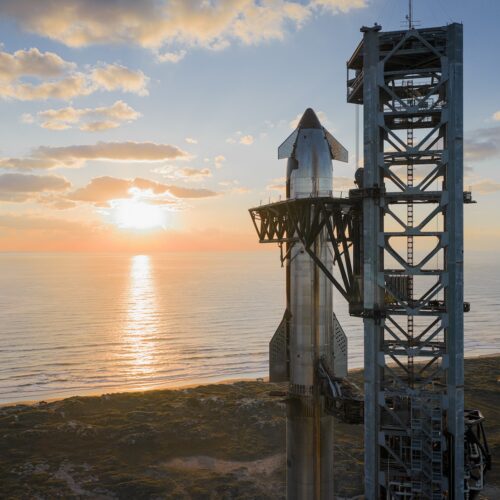
SpaceX’s new Starship rocket is preparing for a test flight, crucial for Mars missions and Starlink expansion.
Elon Musk’s payment is linked to ambitious goals like establishing a colony on Mars and creating space data centers powered by large amounts of energy.
SpaceX’s AI division, xAI, is currently losing money but represents a major part of future growth plans.
The share sale could happen as early as June 11, with the stock listing expected the next day.
Read the Original
Want the full story? Tap a source to open the original
article.
A new group called a “market integrity watchdog” started a major advertising campaign in Washington, D.C., criticizing the prediction market company Kalshi. Kalshi has also been increasing its own advertising efforts in the city this year.
Key Facts
A new group targeting Kalshi launched a large ad campaign in Washington, D.C.
The group calls itself a “market integrity watchdog.”
The campaign involves spending six figures on ads.
The ads focus on Kalshi, a company that operates prediction markets (places where people bet on future events).
Kalshi has increased its own advertising and promotion in Washington this year.
Prediction markets allow people to trade contracts based on outcomes of events like elections or economic results.
Read the Original
Want the full story? Tap a source to open the original
article.
SpaceX plans to sell shares to the public in one of the largest stock sales ever for a space company, despite losing billions of dollars last year. The money raised will help fund space projects like missions to the moon and Mars, while keeping Elon Musk in control of the company.
Key Facts
SpaceX lost $2.6 billion in 2025 but had $18.7 billion in revenue.
The initial public offering (IPO) could raise about $75 billion.
This IPO might be the biggest ever, surpassing Saudi Aramco’s past IPO.
Funds will support space exploration projects aimed at sending people to the moon and Mars.
SpaceX aims to help humans become an intergalactic species and avoid extinction like the dinosaurs.
Elon Musk and some shareholders will get special stock with 10 votes per share.
These shares will allow Musk and others to control most of the company’s board of directors.
Musk could become the world’s first trillionaire from this offering.
Read the Original
Want the full story? Tap a source to open the original
article.
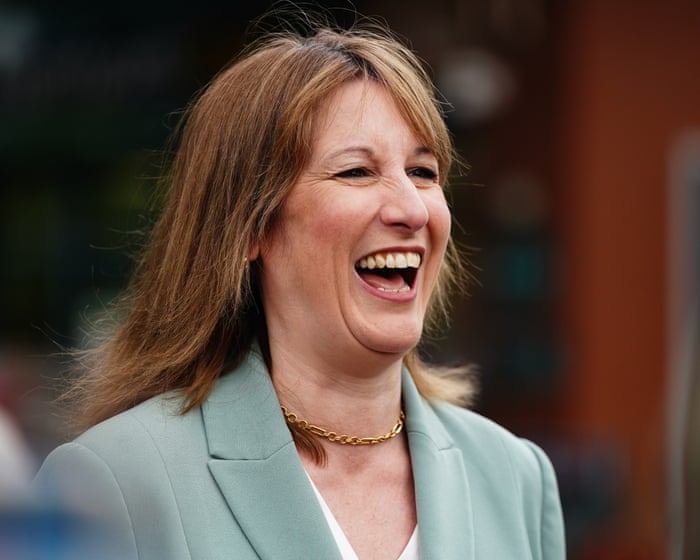
Rachel Reeves, the UK Chancellor, will announce a plan to offer free bus rides for children in August and reduce tariffs on some imported foods to help with rising living costs caused by the Iran conflict. The plan also includes freezing fuel duty increases and offering tax relief to truck drivers to lower prices for consumers.
Key Facts
Free bus rides will be available in August for children 15 and under as part of a “Great British summer savings scheme.”
Tariffs on certain imported foods like biscuits, chocolates, and dried fruits will be cut to reduce prices.
The planned fuel duty increase due in September and December will be postponed.
Truck drivers (hauliers) will receive a 12-month vehicle tax holiday.
The duty on red diesel used by farmers will be cut by one-third.
The cost of these measures for motorists is expected to be about £400 million.
Some experts say the fuel duty freeze mainly benefits wealthier households rather than those with lower incomes.
A plan to get supermarkets to offer low prices on basic foods was dropped after retailer opposition.
Read the Original
Want the full story? Tap a source to open the original
article.
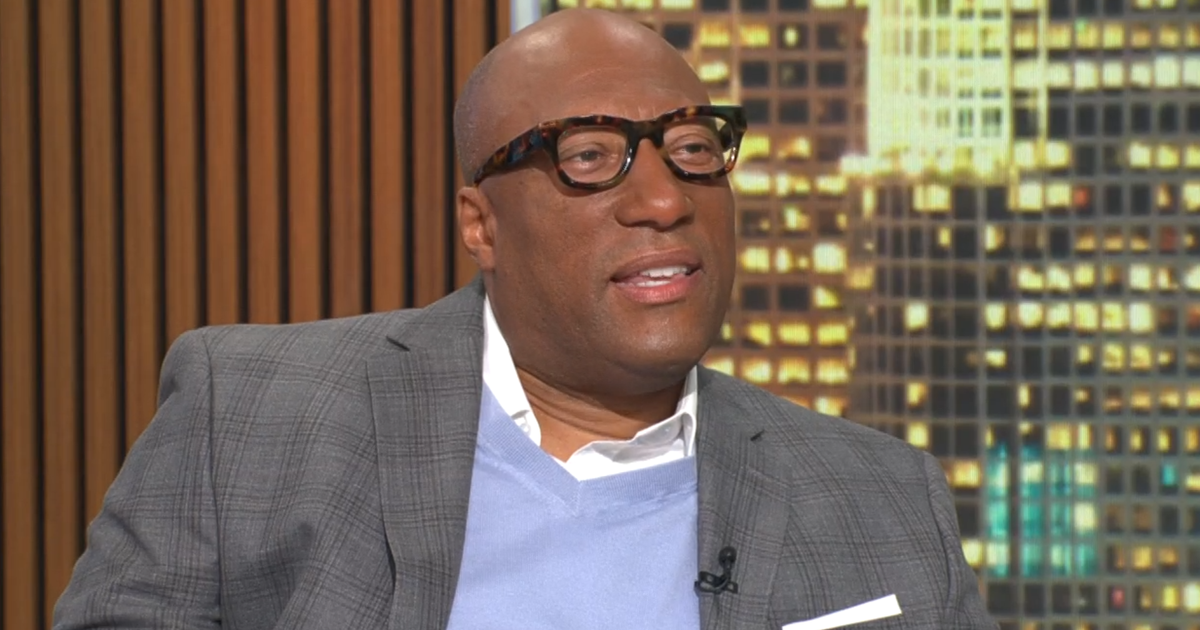
Byron Allen’s show "Comics Unleashed" will take over the late night time slot on CBS after "The Late Show With Stephen Colbert" ends. His company will air two episodes back-to-back at 11:35 p.m. ET on weekdays, replacing the canceled show due to financial reasons.
Key Facts
"The Late Show With Stephen Colbert" is ending on CBS because of financial challenges in late night TV.
Byron Allen’s "Comics Unleashed" will air two episodes each weeknight at 11:35 p.m. ET starting Friday.
Another show by Allen’s company, "Funny You Should Ask," will move to 12:37 a.m. ET.
Allen offered to provide "Comics Unleashed" at no cost to CBS to save money and maintain an audience.
Allen owns many local TV stations and media properties, including The Weather Channel and stakes in major network affiliates.
Allen started in comedy young and has written for famous comedians and appeared on Johnny Carson’s show.
Allen wants to keep the late night audience entertained without politics, focusing on comedy that brings people together.
CBS made the decision based on business reasons rather than show quality.
Read the Original
Want the full story? Tap a source to open the original
article.
Stellantis, a French-Italian car company, and China's Dongfeng are starting a joint venture in Europe. Stellantis will own 51% of the venture, and Dongfeng's new electric vehicles (EVs) will be assembled in a Stellantis factory in western France to meet EU rules that require most EV parts to be made in Europe.
Key Facts
Stellantis and Dongfeng are partnering to create a new company in Europe.
Stellantis will hold the majority share with 51%.
Dongfeng’s new electric cars will be built in Stellantis’ French factory.
This move follows the EU’s “Made in Europe” rule needing 70% of EV parts to be locally made.
The deal helps Dongfeng access the European market with locally assembled EVs.
The joint venture aims to boost EV production and comply with new regulations.
The factory is located in western France, part of Stellantis’ existing manufacturing sites.
Read the Original
Want the full story? Tap a source to open the original
article.
Gas prices in the U.S. are currently the highest since 2022 and are expected to keep rising over the summer travel season. Factors include a conflict in the Middle East disrupting oil shipping routes, seasonal fuel changes, and increased demand from more drivers on the road.
Key Facts
Gas prices averaged $4.56 per gallon recently, up $1.40 from last year.
Prices could reach $4.80 per gallon on average from Memorial Day to Labor Day.
The conflict between the U.S. and Israel against Iran has stalled oil shipping in the Strait of Hormuz, affecting global oil supply.
The Strait of Hormuz normally handles about 20% of the world’s oil shipments.
Seasonal rules require gas stations to sell a special summer fuel blend, which costs about 15 cents more per gallon.
More people driving in summer can raise gas prices by 5 to 15 cents per gallon.
More than half of Americans say high gas prices cause financial difficulties.
It might take a year or more for gas prices to return to normal even after the shipping route reopens.
Read the Original
Want the full story? Tap a source to open the original
article.
SpaceX has filed to sell its shares to the public through an initial public offering (IPO), with a planned stock market debut expected next month. The company, led by Elon Musk, reported large losses but also high revenue, and it aims to start trading on the Nasdaq under the symbol "SPCX."
Key Facts
SpaceX filed confidentially for an IPO with the U.S. Securities and Exchange Commission on April 1.
The IPO could be the largest ever and may make Elon Musk the first trillionaire.
Elon Musk owns 85.1% of voting power at SpaceX because of a special stock structure.
SpaceX had a net loss of $4.9 billion on $18.67 billion revenue in 2025, including its recent merger with xAI.
In the first quarter of 2026, SpaceX lost $4.27 billion on $4.69 billion in revenue.
SpaceX plans to start trading on the Nasdaq stock exchange in late June under the ticker "SPCX."
The filing did not specify how many shares will be offered or the price; details will come later.
SpaceX is known for working with NASA, creating the Starlink satellite internet, and acquiring Musk’s AI company xAI.
Read the Original
Want the full story? Tap a source to open the original
article.