The International Monetary Fund (IMF) has improved its forecast for the UK economy in 2026, predicting 1% growth instead of 0.8%. However, the IMF warns that ongoing conflicts in Iran and uncertainties within the UK could slow economic progress and lead to higher prices for energy and food.
Key Facts
The IMF raised the UK growth forecast for 2026 from 0.8% to 1%.
The UK faces risks from the war in Iran, which may cause higher energy and food prices.
Domestic uncertainty in the UK could reduce consumer spending and business investment.
The UK economy grew by 0.6% in the first quarter of the year, helped by better retail and construction sectors.
Inflation is expected to rise temporarily due to higher energy costs.
The IMF suggests the UK’s central bank does not need to raise interest rates further this year.
Chancellor Rachel Reeves said the upgrade shows the government’s economic plan is working.
The IMF recommends targeted and limited financial support to help households with energy costs.
Long-term financial challenges include spending on aging populations, defense, and climate changes, requiring careful budgeting or tax reforms.
Read the Original
Want the full story? Tap a source to open the original
article.
President Trump’s immigration policies have led many undocumented immigrants to avoid filing taxes out of fear of enforcement. Experts say this drop in tax filing could cause the US government to lose up to $479 billion in tax revenue over the next ten years.
Key Facts
New immigration enforcement policies have made many undocumented immigrants afraid to file taxes.
The IRS planned to share undocumented immigrants’ tax data with immigration authorities, but a judge paused this agreement.
Undocumented immigrant parents lost eligibility for the child tax credit in 2025, even if their children are US citizens.
About half of undocumented immigrant households usually file tax returns and paid nearly $97 billion in taxes in 2022.
Many undocumented immigrants pay taxes despite not qualifying for most tax benefits, often paying a higher share of their income.
Tax advisers report a large drop in undocumented clients filing taxes this year due to fear of deportation.
Yale’s Budget Lab estimates the government could lose between $147 billion and $479 billion in tax revenue over 10 years due to these changes.
As many as 2.7 million US citizen or legal resident children might lose access to the child tax credit because of the policy changes.
Read the Original
Want the full story? Tap a source to open the original
article.
The article explains that wars like the one between the U.S. and Iran show how relying on fossil fuels makes countries less secure. It highlights that renewable energy, which comes from sources like the sun and wind, can provide safer, local power and help communities avoid problems caused by attacks or fuel shortages.
Key Facts
Dependence on fossil fuels makes countries more vulnerable to wars and attacks on energy infrastructure.
Russia’s attacks on Ukraine’s fossil fuel power plants show the dangers of centralized energy systems.
Ukraine is shifting to renewable energy, like solar power and batteries, to protect its communities.
Projects like the Hromada Project help Ukrainian communities get support for renewables during the war.
Countries such as Spain are rapidly adopting renewable energy to avoid gas price spikes and blackouts.
China leads the world in wind, solar, battery, and electric vehicle markets by embracing clean energy.
The current U.S. government under President Trump opposes some renewable energy developments, keeping the country dependent on fossil fuels.
Moving to decentralized renewable energy could improve energy security and lower electricity costs.
Read the Original
Want the full story? Tap a source to open the original
article.
Finance ministers and central bankers from the world's biggest economies are meeting in Paris. They are concerned about problems like inflation and instability linked to the US conflict with Iran, which may harm the global economy.
Key Facts
The meeting includes finance ministers and central bankers from G7 countries.
The global economy faces challenges due to the US military actions against Iran.
Inflation is rising partly because of the ongoing conflict.
The bond markets have dropped as a result of inflation fears.
The US’s busiest commuter rail system has stopped running due to a worker dispute.
Oil prices have increased during this period, affecting drivers in Europe and the US.
President Trump has labeled Iran’s offer as “totally unacceptable.”
The meeting aims to discuss these financial and economic risks.
Read the Original
Want the full story? Tap a source to open the original
article.
A book by Melbourne historian Clare Wright called Näku Dhäruk: The Bark Petitions won the top prize at the NSW literary awards for nonfiction. The book tells the story of the Yirrkala Bark Petitions, important documents created by Aboriginal elders in 1963 that helped start land rights laws in Australia.
Key Facts
Näku Dhäruk: The Bark Petitions won the $10,000 book of the year award and the $40,000 Douglas Stewart prize for nonfiction.
The book is about the Yirrkala Bark Petitions, which were presented by Yolŋu elders to the Australian parliament in 1963.
These petitions protested the government allowing a French mining company to operate on part of Aboriginal land in Arnhem Land.
The petitions helped lead to the Aboriginal Land Rights (Northern Territory) Act 1976, the first land rights law in Australia.
Clare Wright spent 10 years working with the Yirrkala community to write the 640-page book.
The book is part of Wright’s “democracy trilogy” about important moments in Australian political history.
Wright received the Medal of the Order of Australia in 2020 for her contributions to literature and historical research.
Other winners at the NSW literary awards included Moreno Giovannoni for fiction and S Shakthidharan for a multicultural memoir.
Read the Original
Want the full story? Tap a source to open the original
article.
The U.S. aluminum and steel industries are important for national security and military equipment. President Donald Trump's tariffs on imported metals aim to strengthen American steel and aluminum production, reduce reliance on foreign sources, and create jobs.
Key Facts
Aluminum and steel are critical materials for military vehicles, aircraft, ships, and weapons.
Before President Trump's tariffs, foreign countries sold subsidized aluminum in the U.S., hurting American metal industries and causing job losses.
President Trump increased tariffs on imported aluminum and steel to protect U.S. producers and encourage domestic manufacturing.
Canadian government supports its aluminum industry with large subsidies, keeping many smelters in operation, while the U.S. has lost most of its aluminum smelters.
The tariffs increased over time, reaching 50% by June 2025, to level the playing field for U.S. producers.
The Department of Defense needs reliable domestic sources of aluminum with specific quality standards for military use.
Thanks to these tariffs, some U.S. aluminum plants, like Century Aluminum’s Mt. Holly smelter, are restarting full production.
The current conflict involving Iran shows the importance of strong domestic metal supplies for national security.
Read the Original
Want the full story? Tap a source to open the original
article.
Oil prices rose after an attack on a UAE nuclear plant increased tensions in the Middle East. Global bond markets became unstable as investors worried inflation might increase and central banks could raise interest rates. Talks between the US and Iran to end the conflict are ongoing but slow.
Key Facts
Brent crude oil price increased to about $110 per barrel after a UAE nuclear plant was attacked.
Iran said it responded to a new US proposal to end the conflict through a Pakistani mediator.
The 10-year US Treasury yield reached its highest level since February 2025 before easing slightly.
UK 10-year government bond yields hit an 18-year high, influenced by political uncertainty in the UK.
UK finance leaders met in Paris to discuss the Middle East conflict's impact on the economy.
Some UK politicians debate public spending plans amid concerns about rising debt and tax limits.
Japan’s 10-year bond yield rose to a nearly 30-year high as the government plans more debt issuance.
European and Asian stock markets mostly fell at the start of the week, reflecting economic concerns.
Read the Original
Want the full story? Tap a source to open the original
article.
Ryanair said it is confident it will avoid a jet fuel shortage this summer despite worries related to the Iran conflict. The airline warned that people booking flights later in the year might face higher prices. Ryanair reported strong profits but remains cautious about future costs and fare forecasts.
Key Facts
Ryanair’s chief financial officer said the company is confident there will be no jet fuel supply shocks this summer.
Fares fell slightly in recent months due to uncertainty from the conflict in the Middle East.
The airline expects summer ticket prices to be about the same as last year, not higher as previously predicted.
More travelers are booking flights closer to their travel dates, which can lead to higher last-minute fares.
Europe has enough jet fuel due to supplies from West Africa, Norway, and the Americas, despite shipping issues in the Strait of Hormuz.
Ryanair made a record profit of €2.26 billion in the year ending March but suspended future financial guidance due to possible cost increases.
The airline has hedged 80% of its fuel needs until April 2027 at around $67 per barrel but fuel costs could still rise.
Ryanair expects EU environmental taxes to increase by €300 million this year, raising costs for air travel in Europe.
Read the Original
Want the full story? Tap a source to open the original
article.
A group of housemates in Esperance, Western Australia, found a live frog inside a sealed bag of discounted lettuce purchased from a Woolworths supermarket. The supermarket said it was an isolated case and is investigating, while an expert explained that frogs can sometimes accidentally get packaged with produce during harvesting.
Key Facts
Housemates in Esperance bought a discounted bag of lettuce for $1.15 that contained a live frog about the size of a man’s palm.
Woolworths described the incident as isolated and said they have strict quality controls for their produce.
The frog was named "Greg" by the housemates and later released into a nearby dam.
A frog expert said the frog is likely a type of bell frog, which can occur commonly in Western Australia or be a threatened species on the east coast.
Frogs sometimes accidentally hitch rides on produce during packing and shipping processes.
The expert advised that people who find frogs in their food should contact specialists to help identify and care for them properly.
Woolworths’ quality checks include washing and looking for foreign materials before packaging lettuce.
The event drew attention through media and social platforms due to its unusual nature.
Read the Original
Want the full story? Tap a source to open the original
article.
Australian police are facing difficulties storing large amounts of illegal cigarettes and vaping products due to full storage facilities and high destruction costs. The illicit tobacco trade is growing quickly, causing significant financial losses to the government and supporting other criminal activities.
Key Facts
Police storage facilities for seized illegal cigarettes and vapes are full in Australia.
Destroying illegal vaping products can cost up to $13 per kilogram because of dismantling requirements.
Destroying a full pallet of illegal tobacco (about 550kg) can cost over $7,150.
Since 2016, about 2.66 billion illegal cigarettes, 510 tonnes of loose tobacco, and 7.5 million e-cigarette products have been seized.
The illicit tobacco market has caused an estimated $6 billion loss in government excise revenue in under six months.
Criminal gangs use money laundering, including cryptocurrency and private ATMs, to handle profits from illegal tobacco.
Illegal tobacco profits are linked to other crimes like drug trafficking, violence, and corruption.
Some banks have closed more than 1,000 accounts suspected of being linked to illegal tobacco activities.
Read the Original
Want the full story? Tap a source to open the original
article.
Spirit Airlines stopped flying on May 3, 2026, leaving many travelers without cheap flight options. Rising fuel costs and tough competition have made it harder for low-cost airlines to offer very low prices, affecting summer travel plans.
Key Facts
Spirit Airlines closed down suddenly after 34 years in business.
The airline's lawyer apologized to customers who relied on Spirit's low fares.
Rising jet fuel prices linked to the war in Iran have increased flight costs.
Two other budget airlines in the U.S. recently merged to stay competitive.
Traditional airlines use premium services and dynamic pricing to offset fuel costs.
Low-cost carriers can no longer compete by just being the cheapest option.
Major airlines now offer some low-price seats like budget carriers do.
The high cost of fuel and inflation challenge budget airlines’ operations.
Read the Original
Want the full story? Tap a source to open the original
article.
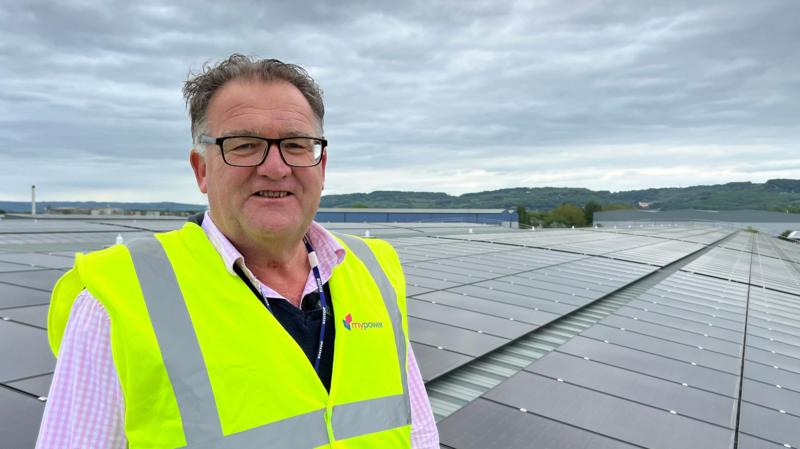
Solar panel sales in the UK have risen sharply as higher energy prices push businesses to invest in their own power sources. A company making vacuum cleaners in Somerset installed a large solar panel field to reduce electricity costs and expects to recover its investment in under four years.
Key Facts
Sales of solar panels for businesses have increased by 65% since the Iran conflict began.
Total solar power installations in the UK are up 11% compared to last year.
Numatic, a vacuum cleaner maker in Somerset, spent £1.5 million on 2,672 solar panels covering a field behind its factory.
The solar panels can power the entire factory on sunny days and aim to cover about 25% of its annual electricity use.
With further technology, the factory hopes to meet half of its energy needs through solar power.
The company expects the solar investment to pay for itself in less than four years.
Energy costs have risen due to global conflicts like the Russia-Ukraine war and the Iran conflict.
Government data shows 27,000 new solar installations in March 2026, the highest since 2012, pushing the total to over 2 million systems in the UK.
Read the Original
Want the full story? Tap a source to open the original
article.
A couple in Derbyshire, Alice and Gavin Munro, have spent 20 years growing trees shaped like chairs and other furniture. They shape young trees using frames and grafting, a process that takes several years, and plan to share their techniques through a future academy.
Key Facts
Alice and Gavin Munro have been growing trees into furniture shapes for 20 years.
The trees are grown upside down and shaped with recycled plastic molds.
It takes 6 to 9 years for a tree to grow into a chair shape, plus 1 year of drying.
Branches are grafted together to form one solid piece of furniture.
The couple started their business, Full Grown, in Derbyshire in 2006.
They work with several tree types such as willow, oak, and ash.
They hope to start Full Grown Academy to teach others to grow furniture.
Their work will be featured at the Chelsea Flower Show with a bronze chair cast.
Read the Original
Want the full story? Tap a source to open the original
article.
Sydney will trial its first Australian-made electric ferry starting in 2028, two years later than planned. The ferry is expected to serve a new route to the Sydney fish market in 2029 and is part of a plan to replace all diesel ferries in the city by 2035.
Key Facts
The trial ferry is 24 meters long and runs on battery power.
Contracts were signed for a 12-month trial beginning in 2028.
The trial was delayed by two years from the original start date in early 2026.
The ferry will run on a new route to the Sydney fish market, which currently has no ferry service.
The ferry is designed and built in Australia by Tasmanian shipyard Richardson Devine Marine, based on a design from Sydney naval architects Incat Crowther.
The NSW government plans to replace all 40 diesel ferries with electric or hydrogen vessels by 2035.
The government aims for net zero emissions across public transport by 2035, with electric buses, trains, and light rail running on renewable energy next year.
The trial will test the ferry’s reliability, charging systems, and get feedback from passengers and crew.
Read the Original
Want the full story? Tap a source to open the original
article.
China will buy at least $17 billion worth of agricultural goods from the United States each year through 2028, following talks between President Donald Trump and Chinese leader Xi Jinping. The deal also includes restoring market access for US beef and poultry and setting up new boards to manage trade and investment between the two countries.
Key Facts
China agreed to buy at least $17 billion in US agricultural products annually until 2028.
The 2026 purchase target applies proportionally for the remainder of the year.
China will buy at least 87 million metric tonnes of US soybeans as part of a previous agreement from October.
China will allow imports of US beef from over 400 production facilities whose listings had expired.
Imports of US poultry will resume from states free of avian influenza, determined by the US Department of Agriculture.
President Trump and Xi Jinping agreed to create two new groups: the US-China Board of Trade and the US-China Board of Investment.
The Chinese government has not yet confirmed or commented on the White House announcement.
US-China trade in goods was about $415 billion last year, down from over $690 billion in 2022.
Read the Original
Want the full story? Tap a source to open the original
article.
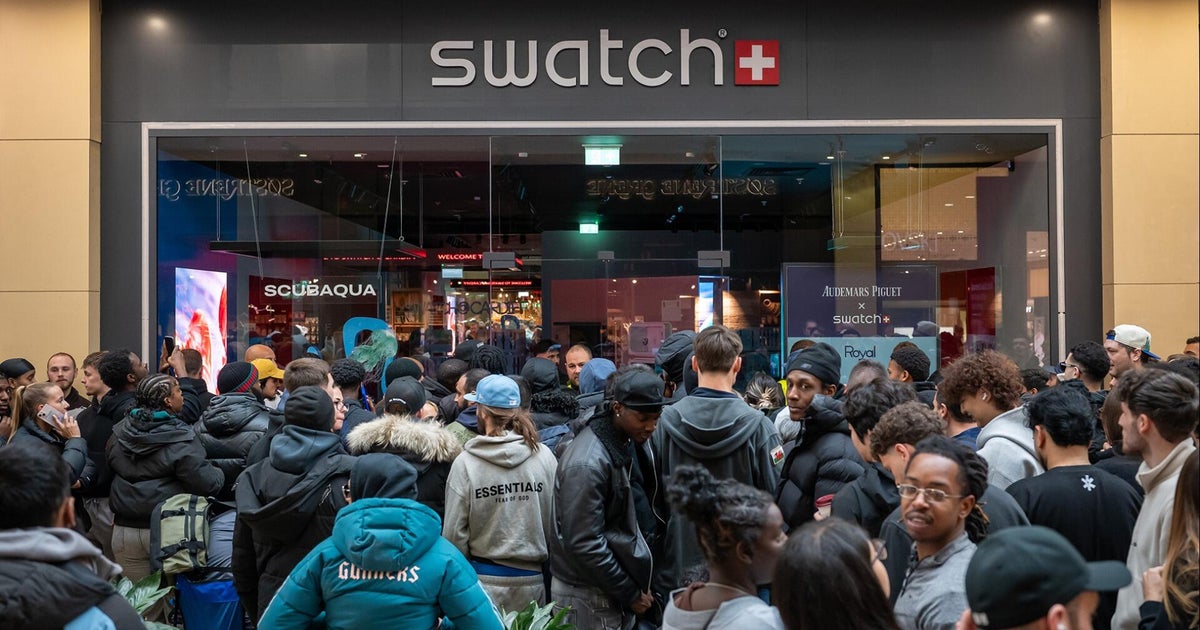
A special edition Swatch pocket watch caused large crowds and busy shopping, similar to past big shopping days like Black Friday. People showed strong interest in buying this limited watch.
Key Facts
Swatch released a special edition pocket watch.
The watch attracted large groups of shoppers.
The shopping activity resembled past Black Friday events.
The watch is a limited or special edition item.
Media outlets like CBS News covered the event.
The shopping excitement showed strong consumer demand.
The event took place recently, as reported by Jonathan Vigliotti.
Read the Original
Want the full story? Tap a source to open the original
article.
A jury has started deliberating in a high-profile lawsuit filed by President Elon Musk against OpenAI and its CEO, Sam Altman. Musk accuses OpenAI of turning from a nonprofit group into a profit-driven company and misusing a $38 million donation he gave to support nonprofit AI research.
Key Facts
The trial took place in Oakland, California, lasting three weeks with many tech leaders testifying.
President Musk claims OpenAI broke its promise by switching from a nonprofit to a commercial business.
Musk alleges OpenAI's leaders, including Sam Altman and Greg Brockman, misused his $38 million donation.
OpenAI is now valued at around $850 billion and is known for developing ChatGPT.
The suit could force OpenAI to return to nonprofit status and cancel its plans for a public stock offering.
Microsoft is OpenAI’s largest investor, contributing $13 billion, and may have helped the shift away from nonprofit status.
The jury first must decide if Musk filed the lawsuit within the legal time limit.
Sam Altman faced criticism during the trial about his leadership and was temporarily fired by OpenAI’s board in 2023 before being reinstated.
Read the Original
Want the full story? Tap a source to open the original
article.
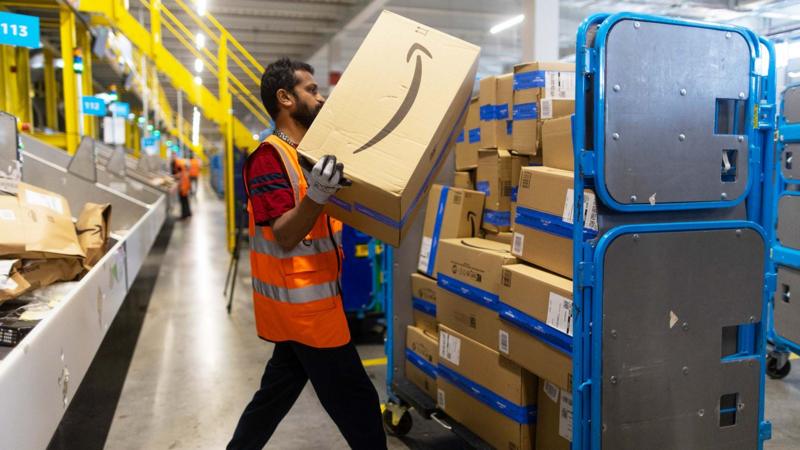
Amazon, started in 1995 as an online bookstore, is now the world’s largest company by sales and leads online shopping in the West. It holds a big share of the market because it grew fast, invested heavily in new ideas, and uses profits from its cloud-computing business to support its retail operations.
Key Facts
Amazon surpassed Walmart earlier this year to become the largest company in the world by annual sales.
In the US, Amazon has 40.5% of all online retail sales; Walmart holds 9.2%.
Amazon also controls about 30% of the UK online retail market.
Other competitors include Walmart, Target, Tesco (UK groceries), Zalando (German clothing), Temu, Shein, and eBay.
eBay focuses on auctions and second-hand goods and recently received a $55.5 billion takeover offer from GameStop.
Amazon’s early start and focus on fast, convenient shopping helped it grow quickly.
Amazon’s shareholders allowed it to reinvest profits and sell products at low prices to outpace rivals.
Amazon uses technology, like automation and data, plus profits from Amazon Web Services (AWS), to keep improving and expanding.
Read the Original
Want the full story? Tap a source to open the original
article.
A review of the HS2 high-speed rail project is expected to say the project's problems were caused by focusing too much on very high speeds and by political pressures. Costs have grown a lot, delays have happened, and parts of the original route have been cancelled, with the opening date now likely to be later than planned.
Key Facts
HS2 is a high-speed rail project in the UK aimed at increasing rail capacity.
The project was originally designed for trains to run up to 360 km/h (224 mph).
The HS2 route was initially planned from London to Birmingham, with branches to Leeds and Manchester.
The eastern leg to Leeds was cancelled in 2021; the Manchester to Birmingham section was cancelled in 2023.
Costs are expected to exceed £100 billion.
The current target opening year of 2033 is expected to be delayed.
The project review criticizes the focus on very high speeds and political changes as causes of problems.
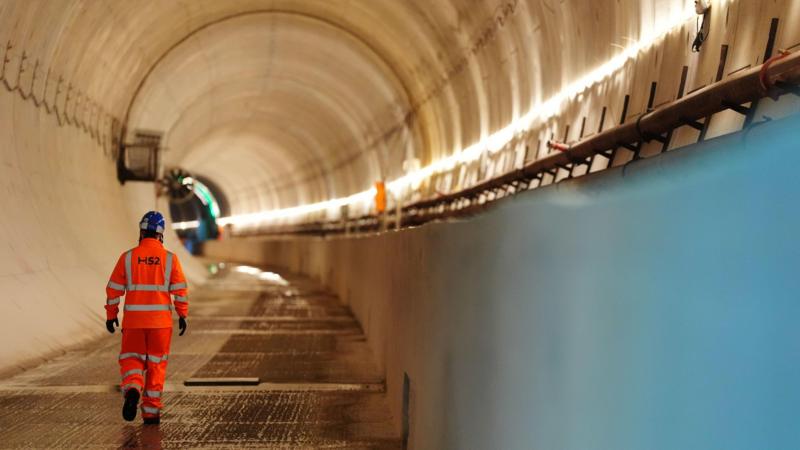
Parts of HS2 construction continue, including a 10-mile tunnel under the Chilterns and the Colne Valley viaduct.
Read the Original
Want the full story? Tap a source to open the original
article.
UK businesses are slowing down investment and hiring because of higher costs linked to the war in Iran and political uncertainty at home. Rising energy prices and supply problems are causing companies to focus on managing expenses instead of growing.
Key Facts
The US-Israeli war on Iran began over two months ago, affecting global markets and UK businesses.
More than half of mid-sized UK companies say increased energy and fuel costs, plus supply chain issues, are their biggest challenges.
UK employers are putting cost control ahead of business growth due to these pressures.
Job vacancies in the UK fell by 7.7% from March to April and are down 5.6% compared to last year.
Some job categories, like pilots and travel agents, saw big drops in postings, while others like nannies and sales executives increased.
The UK government plans new support measures to help households and businesses cope with economic pressures.
About a third of businesses want to use more UK suppliers or bring production closer to home to reduce risks.
UK economic growth was 0.3% in March despite the Iran war starting at the end of February, but future growth is uncertain.
Read the Original
Want the full story? Tap a source to open the original
article.