Hong Kong is carefully creating rules to regulate stablecoins, a type of digital money tied to real currencies. The city aims to avoid two problems: unstable markets from weak rules and losing market share by waiting too long to act. Hong Kong wants to balance safety with speed to stay competitive in digital finance.
Key Facts
Stablecoins link their value to real currencies and need trust through clear rules and strong controls.
Hong Kong is issuing stablecoin licenses step-by-step to ensure safety and avoid early failures.
The city wants to avoid attracting weak issuers by setting high standards rather than racing to the bottom.
Digital money is growing fast, and stablecoins can improve cross-border payments and settlements.
Hong Kong risks losing influence if it only uses foreign stablecoins like those based on the U.S. dollar.
Creating its own Hong Kong Dollar stablecoin can keep the local currency relevant in digital markets.
The goal is to prove that regulated stablecoin issuance is reliable and works well in real business uses.
Success will be measured by how well stablecoins can reduce delays and costs in international trade and banking.
Read the Original
Want the full story? Tap a source to open the original
article.
The Dow Jones Industrial Average closed above 50,000 points on May 14, 2026. This rise happened as President Donald Trump met Chinese President Xi Jinping in an important summit, with investors hopeful for better economic relations between the U.S. and China.
Key Facts
The Dow closed at 50,063.46, up 370 points or 0.7%.
The S&P 500 increased by 0.7%, and the Nasdaq rose by 0.8%.
President Trump is on a multi-day summit with President Xi Jinping to discuss economic and diplomatic ties.
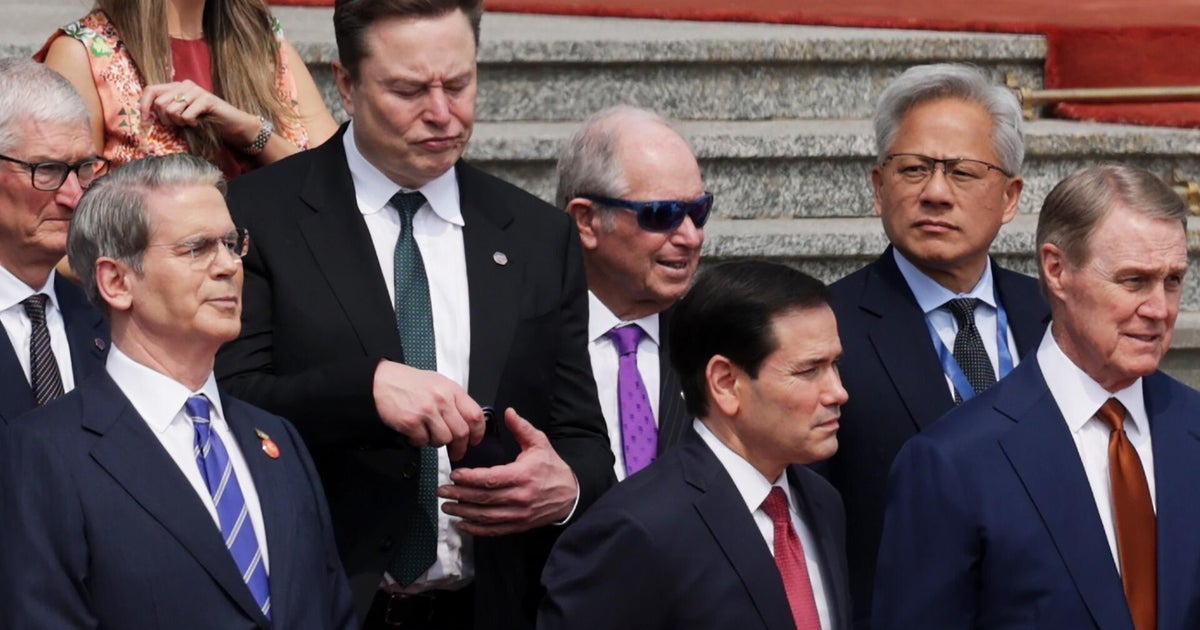
The summit includes top corporate leaders like Tesla’s Elon Musk, Nvidia’s Jensen Huang, and Apple’s Tim Cook.
Inflation in the U.S. rose for the second month in a row, partly due to higher oil prices linked to the Iran war.
Despite inflation, the U.S. economy grew at 2% annual rate in the first quarter of 2026.
The U.S. unemployment rate remained low at 4.3% in April 2026.
Investors remain positive due to strong corporate earnings and signs that the war’s impact on the economy is less severe than feared.
Read the Original
Want the full story? Tap a source to open the original
article.
A Nevada utility company, NV Energy, will stop supplying electricity to 49,000 residents near Lake Tahoe by May 2027 to meet growing power demands from new data centers. This decision forces the local provider, Liberty Utilities, to urgently find a new energy supplier that meets California’s renewable energy rules.
Key Facts
NV Energy supplies 75% of the power to Liberty Utilities, which serves the Lake Tahoe area.
NV Energy plans to end its energy supply contract to Lake Tahoe by May 2027.
The growth of data centers in northern Nevada is a major reason for NV Energy’s decision.
Data center projects could add 5,900 megawatts of demand by 2033 in the region.
NV Energy is working with tech companies like Amazon to add 700 megawatts of low-carbon energy for data centers.
NV Energy states the supply cut is part of a long-term plan, not just because of data centers.
Liberty Utilities must find a new supplier with California-approved renewable energy by 2027.
A new $4.2 billion transmission line, Greenlink West, being built by NV Energy might help but will finish just in time.
Many U.S. communities face power and public opposition challenges related to data center expansion.
Read the Original
Want the full story? Tap a source to open the original
article.
President Trump is visiting China with a group of top U.S. CEOs to discuss expanding American business opportunities in China. Chinese President Xi Jinping promised to open the market more to U.S. companies, despite ongoing trade tensions between the two countries.
Key Facts
President Trump is traveling to China with CEOs from major U.S. companies like Apple, Tesla, and Nvidia.
Chinese President Xi Jinping told the CEOs China will open its market further to American companies.
The CEOs’ companies have big business interests in China, despite years of trade disputes.
The U.S. raised tariffs on Chinese imports last year, but American companies still want to grow in China.
U.S. and Chinese officials discussed improving economic cooperation and expanding market access.
Some CEOs include Tim Cook (Apple), Elon Musk (Tesla), Jensen Huang (Nvidia), Larry Fink (BlackRock), and Jane Fraser (Citigroup).
China may reduce trade restrictions and allow more purchases of U.S. products like soybeans and Boeing aircraft.
The visit follows past trips by U.S. presidents who brought CEOs to promote trade with countries like India.
Read the Original
Want the full story? Tap a source to open the original
article.
The Senate Banking Committee approved the Clarity Act, a bill to regulate cryptocurrency, after gaining support from both Democrats and Republicans. The bill now moves forward for a full Senate vote.
Key Facts
The Senate Banking Committee voted 15-9 to advance the Clarity Act.
The bill focuses on regulating cryptocurrency activities.
Two Democrats, Sens. Ruben Gallego (Arizona) and Angela Alsobrooks (Maryland), supported the bill with Republicans.
Bipartisan support helped the bill overcome challenges.
The next step is a vote by the full Senate.
The Clarity Act aims to create clearer rules for the crypto industry.
The bill marks progress in U.S. efforts to regulate digital currencies.
Read the Original
Want the full story? Tap a source to open the original
article.
Inflation in the U.S. has risen to 3.8%, the highest in around three years, keeping interest rates high. Credit card borrowers should consider how this affects their debt and explore relief options since rate cuts are unlikely soon.
Key Facts
Inflation reached 3.8%, well above the Federal Reserve’s 2% target.
The Federal Reserve paused interest rate changes in April and won't meet again until mid-June.
High interest rates, often over 20%, make credit card debt costly.
The chance of interest rate cuts this year is very low, with possible small increases instead.
Borrowers should research debt relief programs and see which ones they qualify for.
Debt forgiveness may require specific conditions like financial hardship and late payments.
Some people can pay off credit card debt without using relief services, avoiding extra fees.
Understanding options and individual situations is important to manage credit card debt effectively.
Read the Original
Want the full story? Tap a source to open the original
article.
Interior Secretary Doug Burgum shared the new design plan for the East Potomac Golf Links near Washington, D.C. The golf course renovation will be done by Fazio Design, a company started by golf course architect Tom Fazio, aiming to create a high-quality but affordable course.
Key Facts
The East Potomac Golf Links is being renovated.
The golf course is located just outside Washington, D.C.
Interior Secretary Doug Burgum announced the design plan.
The design was revealed through a social media post.
Fazio Design, led by Tom Fazio, is managing the renovation.
The goal is to make a "championship quality" golf course that remains affordable.
Tom Fazio is a well-known golf course architect.
Read the Original
Want the full story? Tap a source to open the original
article.
Closing arguments have started in Elon Musk's $150 billion lawsuit against Sam Altman, the CEO of OpenAI. The case is about a legal dispute between Musk and OpenAI's leadership.
Key Facts
Elon Musk filed a civil lawsuit against OpenAI CEO Sam Altman.
The amount involved in the lawsuit is $150 billion.
The case has reached the stage of closing arguments.
The lawsuit concerns business or corporate matters between Musk and OpenAI.
CBS News is covering the developments in the lawsuit.
Read the Original
Want the full story? Tap a source to open the original
article.
Right now, May 2026, is a good time to put $10,000 into a certificate of deposit (CD) account because interest rates are high and steady. CDs offer a safe way to earn guaranteed interest while protecting money from market ups and downs.
Key Facts
The Federal Reserve has not cut interest rates so far in 2026 and is not expected to do so soon.
Interest rates on CDs are currently around 4% or higher, especially with online banks.
A 6-month CD at 4.10% can earn over $200 in interest before the end of the year.
A 3-year CD at 4.13% can earn almost $1,300 in interest.
CD interest rates are fixed, meaning the earnings are guaranteed if the money stays in the account until it matures.
CDs help protect money from stock market uncertainty and inflation risks.
Terms for CDs can be as short as three months, allowing some flexibility.
Savers have more time to compare CD offers this May because rates are steady and not expected to change soon.
Read the Original
Want the full story? Tap a source to open the original
article.
Several technology company leaders joined President Donald Trump at a summit in China with President Xi Jinping. They spoke about the benefits of stronger economic partnerships between the United States and China.
Key Facts
President Trump attended a summit in China with Chinese President Xi Jinping.
Several tech CEOs accompanied President Trump to the summit.
The tech leaders promoted increased economic cooperation between the two countries.
The goal was to strengthen business and trade relationships.
The meeting was described as historic by news sources.
The event was covered by CBS News reporter Nancy Cordes.
The focus was on technology and economic partnerships.
Read the Original
Want the full story? Tap a source to open the original
article.
Retirees facing a garnishment notice must act quickly to protect their income. The article explains four key steps retirees should take right after receiving such a notice to reduce financial harm.
Key Facts
Garnishment means a creditor can take money directly from a person’s income to pay debts.
Social Security benefits are usually protected from garnishment by private creditors but not from debts like federal taxes, student loans, or child support.
Retirees should carefully review the garnishment notice to understand the debt, creditor, and deadlines.
It is important to verify the debt’s accuracy and request validation if the amount seems wrong.
Some income types and retirement accounts may be partially or fully protected under the law.
Mixing protected funds with non-protected funds in the same bank account can complicate protections.
Retirees should gather financial documents early to prove which funds are protected.
Contacting the creditor quickly can help resolve the garnishment more easily.
Read the Original
Want the full story? Tap a source to open the original
article.
Dan Amos, the CEO of Aflac, spoke about his long leadership at the insurance company and how his family helped build the business. He also discussed changes in the insurance industry over time.
Key Facts
Dan Amos is the current CEO of Aflac.
His family played a key role in building Aflac into a well-known insurance company.
He has led Aflac for a historic, long period.
The insurance industry has experienced significant changes during his time as CEO.
Dan Amos shared his insights in an interview on CBS News 24/7 Mornings.
Read the Original
Want the full story? Tap a source to open the original
article.
This article compares how much money a $100,000 deposit would earn in a short-term certificate of deposit (CD) versus a high-yield savings account in 2024. It shows that in most cases, a high-yield savings account earns slightly more interest, except for the six-month CD where the CD earns a bit more.
Key Facts
A short-term CD locks money for a set time (up to 12 months) with a fixed interest rate.
A high-yield savings account has a variable interest rate and does not require locking up funds.
At 3 months, a $100,000 CD at 3.90% earns $961.06; the savings account at 4.03% earns $992.62.
At 6 months, a $100,000 CD at 4.10% earns $2,029.41; the savings account earns $1,995.10.
At 9 months, a $100,000 CD at 4.00% earns $2,985.24; the savings account earns $3,007.52.
The high-yield savings account pays more interest after 3 and 9 months, while the CD pays more after 6 months.
Interest rates are currently high and expected to remain stable through 2024.
Early withdrawal from a CD can result in a penalty, which could reduce earnings.
Read the Original
Want the full story? Tap a source to open the original
article.
New data shows that small business owners are feeling less optimistic because of economic problems and events happening around the world. These issues are causing concern about how small businesses will do in the near future.
Key Facts
Recent reports reveal small business owners have lower confidence.
The drop in optimism is linked to economic challenges.
Global events are also affecting how small businesses feel about their future.
This information comes from new small-business data.
The report was shared by CBS News and involves commentary by Jill Schlesinger.
The coverage is sponsored by AT&T Business.
Read the Original
Want the full story? Tap a source to open the original
article.
Australia’s Labor government budget focuses on helping young people and poorer households by changing tax rules, including cutting benefits for wealthy older people. The plan reduces tax breaks for investors and provides small tax offsets for workers, but offers limited support for middle-income middle-aged Australians.
Key Facts
The budget aims to benefit young and low-income Australians, while older and richer people pay more tax.
Tax changes include cutting capital gains tax discounts and ending negative gearing for landlords.
A new 30% minimum tax on certain trust incomes targets the wealthiest taxpayers.
Workers get a $250 tax offset and a $1,000 instant tax deduction to reduce their tax burden.
Young generations like Gen Z and millennials gain around $300-$400 yearly on average.
People over 65 lose $500-$1,000 yearly on average due to the budget changes.
The richest 20% pay about $1,500 more in taxes annually, while the poorest gain a few hundred dollars.
Middle-aged, middle-income Australians, many leaning toward parties like One Nation, see little benefit.
Read the Original
Want the full story? Tap a source to open the original
article.
The Australian government is proposing big cuts to the National Disability Insurance Scheme (NDIS) funding to save $36.2 billion over four years. The changes will limit who can join the scheme and give the health minister more power to control how money is spent and how the program operates.
Key Facts
The government plans to reduce funding for some NDIS services, potentially leaving some participants with less money than they need.
The health minister, Mark Butler, will gain authority to lower funding for support groups, set prices for services, and change NDIS rules for up to 12 months without needing state approval.
NDIS eligibility will be stricter, allowing only those with significant and permanent disabilities who have tried all other treatments to join.
People receiving workers compensation or motor vehicle accident support might not qualify for NDIS help anymore.
Requests for extra funding will be limited to times when a participant’s needs change greatly and for a long time.
Plans can be suspended or canceled if the participant cannot be reached after repeated attempts.
Providers must keep records and claim payments within 90 days instead of two years; failure can lead to fines or debts.
The changes are designed to make the NDIS more financially sustainable while focusing support on those most in need.
Read the Original
Want the full story? Tap a source to open the original
article.
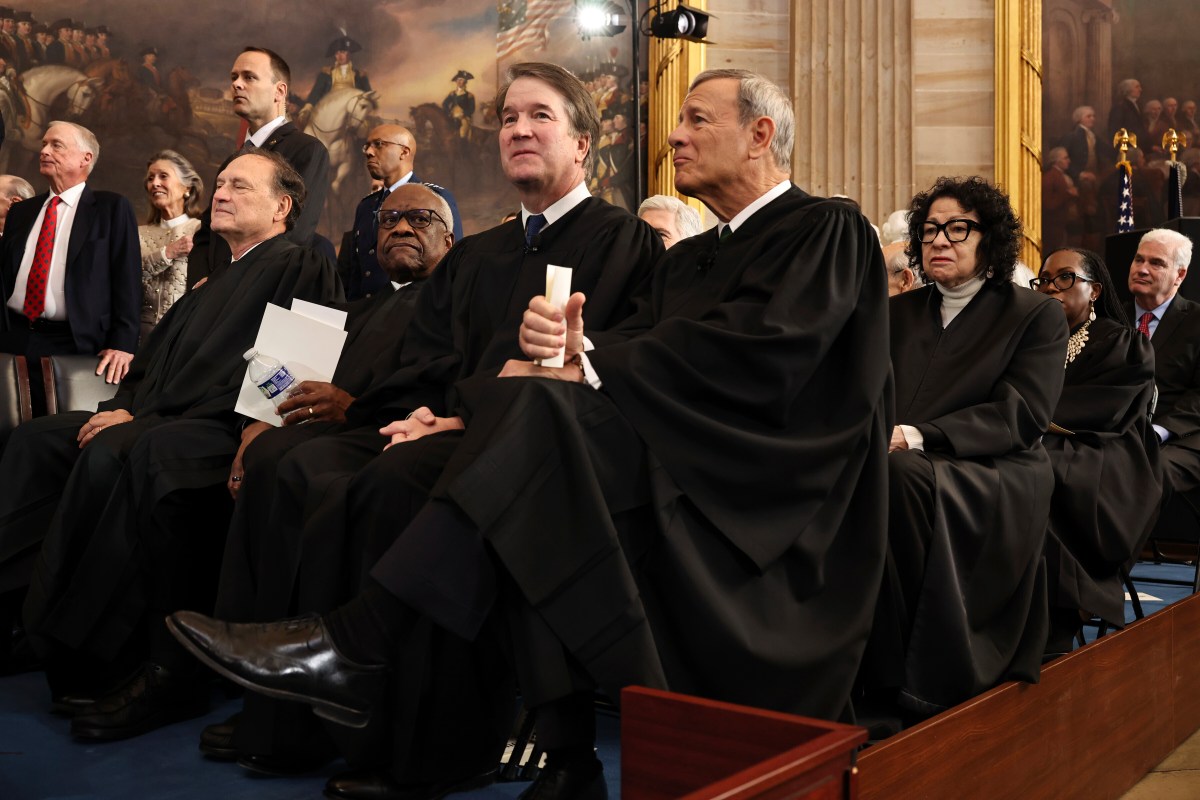
The Supreme Court made two unanimous decisions that affect the shipping and employment industries. These rulings protect shipping brokers from state lawsuits and confirm that federal courts have authority over arbitration disputes.
Key Facts
The Court ruled that federal law prevents negligence lawsuits against freight brokers like C.H. Robinson.
This ruling rejects the idea of a "safety exception" that would allow state courts to hear such cases.
The decision is seen as a win for the logistics and shipping industry.
In a separate unanimous ruling, the Court said federal courts can confirm arbitration awards even after a case is put on hold.
This closes a loophole that could have allowed settled disputes to be delayed or undone.
Both rulings clarify the role of federal courts and limit state-level legal actions.
The decisions will likely change how companies are sued in these industries.
The rulings support the use of arbitration, a way to resolve disputes outside of court.
Read the Original
Want the full story? Tap a source to open the original
article.
Retail sales in the U.S. grew slower in April compared to March, mainly because higher gas prices linked to the war in Iran left shoppers with less money to spend on nonessential items. Gas prices rose sharply after the Iran conflict shut down a key oil route, affecting consumer costs and overall inflation.
Key Facts
Retail sales in April increased by 0.5%, down from 1.6% growth in March.
When gas sales are excluded, retail sales in April rose 0.3%, slower than the 0.7% growth in March.
Sales dropped 3.2% at department stores and 2% at furniture stores in April.
Online retailers and electronics stores saw gains of 1.1% and 1.4%, respectively.
The Iran war caused the shutdown of the Strait of Hormuz, cutting off about 20% of the world’s daily oil supply.
Gas prices averaged $4.53 per gallon in April, up $1.35 from a year ago.
Inflation indicators rose sharply in April, including a 1.4% monthly jump in producer prices and a 3.8% increase in consumer prices over the year.
U.S. employers added 115,000 jobs in April despite economic challenges from inflation and higher energy costs.
Read the Original
Want the full story? Tap a source to open the original
article.
The U.S. Postal Service (USPS) announced a new set of 13 stamps called "American Icons" to celebrate the country's 250th anniversary. These stamps, designed by fashion designer Ralph Lauren, depict symbols representing American values and life, and will be released on June 9 in New York.
Key Facts
USPS partnered with Ralph Lauren to create a special stamp collection for America's 250th anniversary.
This is the first time USPS let one person design an entire official stamp series.
The set includes 13 stamps: 12 images plus a centerpiece knitted American flag designed by Lauren.
Symbols on the stamps include the American flag, Jackie Robinson’s baseball glove, a pickup truck, a dog, the Empire State Building, a barn, a Navajo blanket, a teddy bear, a lighthouse, a hamburger, a racing sailboat, and wild horses.
Each image was chosen to represent important American values like freedom, equality, hard work, loyalty, ambition, and cultural heritage.
The stamps are Forever stamps, meaning their postage value will not change even if prices increase later.
The release date is June 9, and the event will take place in New York City.
Ralph Lauren was chosen for his strong association with American culture and style.
Read the Original
Want the full story? Tap a source to open the original
article.
Owning a home has been an important goal for many Americans, but rising prices and a shortage of houses make it harder to achieve. A recent White House report says the U.S. needs 10 million more homes to meet demand, while costs for buying and renting homes have increased sharply.
Key Facts
The U.S. needs about 10 million more houses to meet current demand, according to a White House report from April 2026.
The average price of new homes has risen by over 30% in the last five years.
Rent prices in most major U.S. cities have gone up by around 40%.
Housing affordability and availability problems have been growing since the late 2000s financial crisis.
Reduced homebuilding after the financial crisis created a long-term shortage of houses.
The COVID-19 pandemic affected the housing market by keeping many families locked into older, lower mortgage rates, slowing turnover.
Many higher-income people are renting longer than expected, making it harder for others to buy homes.
Essential workers in cities like Los Angeles are being priced out of the neighborhoods where they work.
Read the Original
Want the full story? Tap a source to open the original
article.