Netflix posted a social media message showing a scene from the show "The Gentlemen" that included the line "Nearly did himself a neck injury." This post was made on the one-year anniversary of Charlie Kirk being shot in the neck, which led some users to accuse Netflix of mocking his death. Netflix denied the claim, saying the post was about the show's plot and had no connection to real events.
Key Facts
Netflix UK & Ireland posted screenshots from the second season of "The Gentlemen."
The post included the phrase "Nearly did himself a neck injury."
The post's timing coincided with the anniversary of Charlie Kirk being shot in the neck.
Some social media users accused Netflix of making fun of Kirk's death.
Prominent figures, including Rudy Giuliani, called for canceling Netflix subscriptions.
Netflix responded by calling the accusations "ludicrous" and unrelated to real events.
Netflix said the post related only to the show's story and characters.
The incident sparked controversy and discussions about Netflix's intentions.
Read the Original
Want the full story? Tap a source to open the original
article.
The UK economy grew by 0.4% in July, which was more than expected as economists had predicted no growth. This was mainly due to strong performance in services, especially computer programming and businesses connected to artificial intelligence.
Key Facts
The UK economy expanded 0.4% in July, according to the Office for National Statistics (ONS).
Economists had expected no growth for that month.
Growth in July followed 0.3% growth in June and no growth in May.
The services sector, particularly computer programming, led the growth.
AI-related businesses helped boost activity not only in July but also in May and June.
Warm weather and the football World Cup influenced business activity unevenly across industries.
For the three months ending in July, the economy grew 0.4% compared to the previous three months.
Some experts warn growth may slow ahead of the Budget and mention risks from global events like the Middle East conflict.
Read the Original
Want the full story? Tap a source to open the original
article.
Oil prices stayed above $108 per barrel, reaching their highest level since May. Asian stock markets fell, following losses on Wall Street, as investors watched tensions between the U.S. and Iran and awaited new U.S. inflation data.
Key Facts
Brent crude oil price rose to $108.59 per barrel, up 0.9%, the highest since May.
U.S. crude oil price increased to $103.22 per barrel, up 0.7%.
Asian stock markets dropped: Japan’s Nikkei fell 2.8%, South Korea’s Kospi down 2.3%, Hong Kong’s Hang Seng fell 0.8%, Shanghai Composite declined 1.8%.
Shares of Chinese AI chip company Enflame surged about 180% in its first day of trading in Shanghai.
Wall Street’s major indexes fell: S&P 500 dropped 0.6%, Dow Jones lost 0.6%, Nasdaq fell 0.7%.
Oil shipment through the Strait of Hormuz remains below pre-war levels due to geopolitical tensions.
U.S. producer price index for August rose 5.4% compared to last year, up from 4.8% in July, indicating rising inflation.
The 10-year U.S. Treasury bond yield increased to 4.96%, reflecting higher borrowing costs amid inflation and energy price rises.
Read the Original
Want the full story? Tap a source to open the original
article.
The UK economy grew by 0.4% in July, beating predictions of no growth. This positive change comes despite the economic challenges caused by the war in Iran and rising global oil prices.
Key Facts
UK GDP increased by 0.4% in July, up from 0.3% in June.
Economists had expected the UK economy to have zero growth in July.
The Iran war has caused global economic uncertainty and pushed oil prices above $100 per barrel.
Higher oil prices may lead to increased inflation around the world.
UK borrowing costs are at their highest in nearly 20 years.
The UK showed the strongest growth among G7 countries in the first half of 2026.
Rising interest rates and market disruptions may force the UK government to raise taxes or cut spending.
The UK Chancellor, John Healey, will present his budget on 28 October.
Read the Original
Want the full story? Tap a source to open the original
article.
Fuel prices in Australia are expected to rise by 20 to 30 cents per liter soon due to higher global oil prices driven by the Middle East conflict. This increase is causing higher borrowing costs in both the US and Australia, affecting financial markets and raising concerns about inflation and interest rate hikes.
Key Facts
Australian fuel prices may increase by 20 to 30 cents per liter in the next weeks.
The Middle East conflict pushed Brent crude oil prices close to $110 per barrel.
US bond yields reached around 5% for the first time since 2007, raising borrowing costs.
Australia’s 10-year government bond yield rose to 5.38%, a 15-year high.
President Donald Trump promised a $5,000 payment to every adult in the US after the November mid-terms, increasing fiscal concerns.
Rising oil prices and US fiscal issues are causing instability in bond markets.
The Australian stock market (ASX 200) fell 3% recently amid these financial pressures.
The Reserve Bank of Australia is expected to raise interest rates again on September 29 to fight inflation, which may continue until early 2028.
Diesel and unleaded petrol prices could increase by 10 to 30 cents per liter due to higher oil prices.
Read the Original
Want the full story? Tap a source to open the original
article.
The UK National Audit Office (NAO) warns that if the government does not speed up electricity grid upgrades, energy bills could rise significantly for consumers. A £70 billion plan is underway to modernize the grid to carry more renewable energy, but many projects are delayed and few are complete.
Key Facts
The UK is investing £70 billion to upgrade its electricity grid to support more wind, solar, and clean energy.
If upgrades are slow, extra costs to manage the old grid could reach £7.8 billion per year by 2030.
Only 16 of the 80 projects needed for the upgrade are finished; most are just starting.
Without faster upgrades, power companies pay wind farms to turn off and gas plants to turn on, which adds to energy bills.
Transmission owners must increase their annual spending on upgrades from £2.5 billion in 2025-26 to over £11 billion by 2027-28.
The energy regulator Ofgem says completing upgrades on time could reduce household bills by about £30 a year.
The NAO calls for better information from government and regulators about the cost and progress of grid projects.
Parliament’s spending watchdog urges timely delivery and transparency to support the switch to clean energy and meet rising electricity demand.
Read the Original
Want the full story? Tap a source to open the original
article.
Certain De Todito potato chips containing pork cracklings imported from Colombia are being recalled in the U.S. because they are not allowed to enter the country. The U.S. Department of Agriculture declared this a serious health risk and warned consumers not to eat these products.
Key Facts
The recall involves De Todito potato chips with pork cracklings imported from Colombia.
Colombia is currently not allowed to export meat products to the United States.
The recall is classified as Class I, meaning the products could cause serious health problems or death.
About 264 pounds of the affected product, including specific flavors of De Todito chips, were imported on July 28.
The products were shipped to New Jersey and Utah but do not have proper import labels.
No illnesses or injuries have been reported linked to these products so far.
Consumers are advised to throw away or return the recalled products if they bought them.
This recall comes amid other recent recalls involving imported pork products due to contamination concerns.
Read the Original
Want the full story? Tap a source to open the original
article.
Uber has stopped operating in Nigeria and Uganda due to rising costs and challenges in keeping the ride-hailing business profitable. These exits follow similar moves in other African countries, showing difficulties in balancing affordable fares for passengers and good earnings for drivers.
Key Facts
Uber ended its services in Nigeria and Uganda on September 2 after 12 years in Nigeria and about 10 years in Uganda.
The company left Ivory Coast in 2025 and Tanzania earlier in the same year.
Rising costs, like fuel and car maintenance, have made it harder for drivers to earn money, especially after Nigeria's government removed a fuel subsidy.
Drivers face multiple expenses, including Uber’s 25–30% commission, fuel, repairs, insurance, and fines, leaving little money for living or saving.
Drivers protested in Lagos and Ogun states in March, demanding better pay and working conditions.
Competitors like Bolt and inDrive offer lower commissions and more flexible fare systems, attracting many drivers away from Uber.
Uber’s decisions show the company is focusing on fewer markets where the business is more sustainable.
The challenges in Uganda are similar, with drivers opposing high commissions and low fares.
Read the Original
Want the full story? Tap a source to open the original
article.
From early 2028, local mayors in England will be allowed to charge a tourist tax, known as a holiday levy. Some regional leaders support it, but the hospitality industry and some politicians worry it could hurt businesses and families.
Key Facts
Local mayors in England can start charging a tourist tax from early 2028.
The tax is called a holiday levy and targets overnight visitors.
Labour mayors plan to keep the tax rate below 5%.
Some Conservative and Reform UK mayors say they will not introduce the tax.
The hospitality industry opposes the tax, fearing negative effects on business.
The Daily Mail estimates the tax could cost visitors about £1.6 billion by 2030.
Some politicians, including supporters of Greater Manchester Mayor Andy Burnham, argue the tax will harm the economy.
The tax comes at a time when the cost of living is already a concern for many.
Read the Original
Want the full story? Tap a source to open the original
article.
The average 30-year fixed mortgage rate in the U.S. reached 6.76% this week, the highest in 14 months. This increase is linked to rising global bond yields, which influence mortgage rates.
Key Facts
The 30-year fixed mortgage rate rose to 6.76% this week.
This is the highest mortgage rate since late June of the previous year.
The rate increased from 6.71% one week earlier.
Rising global bond yields are a main reason for higher mortgage rates.
Freddie Mac, a government-backed company, reported these numbers on Thursday.
Mortgage rates affect how much people pay monthly when buying homes.
Higher mortgage rates can make home loans more expensive.
Read the Original
Want the full story? Tap a source to open the original
article.
Molly and Taylor Haylett adjusted their finances after having children, with Taylor contributing to Molly’s pension while she took time off work. Research shows many parents reduce pension contributions during parental leave, but partners can contribute to each other’s pensions, which can help balance future retirement savings.
Key Facts
Molly and Taylor had their first child unexpectedly and were not financially prepared.
Molly reduced work hours to care for their baby, leading to Taylor earning more.
Taylor agreed to contribute to Molly’s pension to support her future financial security.
Over a third of parents reduce or stop pension contributions during parental leave.
Many partners don’t know they can pay into their spouse’s pension, which can increase retirement savings.
Couples are advised to talk about finances and pension contributions before having children.
Molly and Taylor use joint and individual accounts and adjust contributions depending on their situation.
They also set up pensions and savings accounts for their children as a long-term financial gift.
Read the Original
Want the full story? Tap a source to open the original
article.
Interest rates may rise soon as central banks respond to higher inflation caused by increased oil prices and the US-Iran conflict. The US Federal Reserve, after holding rates steady, is expected by many to raise rates to help slow inflation, while the Bank of England may keep rates steady for now despite rising energy costs in the UK.
Key Facts
The European Central Bank recently raised interest rates to 2.5% to fight inflation.
The US Federal Reserve has kept rates between 3.5% and 3.75% for five meetings but may increase them soon.
President Donald Trump expects oil prices to stay high until after US elections in November due to the Iran war.
Higher oil prices have increased costs for fuel, goods, and households worldwide.
Central banks raise interest rates to slow down inflation by making borrowing more expensive.
The Bank of England is expected to keep rates at 3.75% despite high energy bills and rising inflation.
The conflict has restricted shipments through the Strait of Hormuz, a key oil route, pushing Brent crude prices to about $105 per barrel.
Economists predict inflation will stay above targets, but some worry that too high rates could hurt economic growth.
Read the Original
Want the full story? Tap a source to open the original
article.
Bond yields on 10-year U.S. Treasury notes rose slightly after President Donald Trump promised to give every American adult a $5,000 payment if Republicans win the midterm elections. The bond yield closed near 4.96 percent, its highest level since April.
Key Facts
President Trump pledged a $5,000 dividend payment to every American adult if Republicans win the midterms.
Following this pledge, 10-year U.S. Treasury bond yields increased by about 1.3 basis points.
The yield on the 10-year Treasury bond closed around 4.96 percent.
This closing yield is the highest it has been since April.
Bond yields rising means investors expect higher returns or more risk in the future.
The midterm elections refer to congressional elections held halfway through a president’s term.
Read the Original
Want the full story? Tap a source to open the original
article.
President Donald Trump has promised to give $5,000 to every American adult if his party wins the upcoming midterm elections. Making this promise real would be very expensive, needing over $1.3 trillion, approval from Congress, and may face legal challenges.
Key Facts
President Trump said he would give $5,000 to each American adult if the midterm elections go his way.
The cost of giving $5,000 to every adult in the U.S. could be more than $1.3 trillion.
This plan would need approval from Congress before it could happen.
Offering money during an election could lead to legal problems about fairness and vote buying.
Similar promises have been made by President Trump in the past.
The proposal relates to the 2026 US midterm elections.
The announcement was reported by BBC journalist Samira Hussain.
Read the Original
Want the full story? Tap a source to open the original
article.
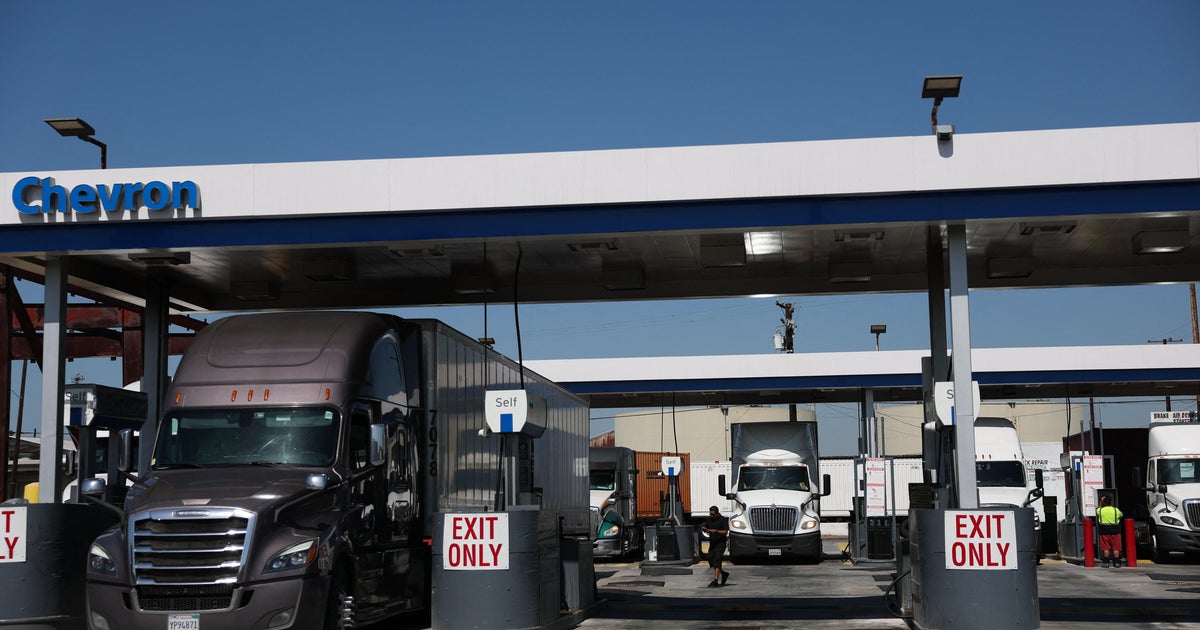
Diesel prices in the U.S. are close to $6 a gallon, reaching record highs due to global supply issues. Higher diesel costs affect transportation, farming, and construction and may soon lead businesses to raise prices for consumers, especially for goods like refrigerated food.
Key Facts
The average price for a gallon of diesel in the U.S. reached $5.98, up 61% from a year ago.
Diesel is used widely in trucking, rail, construction, and farming, making it crucial for moving goods.
Global factors driving the price increase include the conflict between the U.S. and Iran and reduced oil refining in Russia caused by Ukrainian drone attacks.
Diesel refining capacity has fallen sharply in Russia and the Middle East, limiting supply.
Wholesale diesel prices contributed to over a third of the rise in goods prices for producers in August.
Businesses have not yet fully passed on higher diesel costs to consumers but may do so soon if prices stay high.
Foods requiring refrigeration and long transport, like seafood and fresh produce, are most likely to get more expensive.
Analysts predict that global oil production may not bounce back to prewar levels before 2027.
Read the Original
Want the full story? Tap a source to open the original
article.
The UK government announced plans to build 29 new battery-powered trains for TransPennine Express to improve travel in northern England. These trains will be made in Derby starting in 2028 and are expected to start running by 2034, creating thousands of jobs and offering faster, more reliable, and cleaner journeys.
Key Facts
29 new battery-powered trains called Adessia Stream will serve long-distance routes in northern England.
The trains will be built at Alstom’s factory in Derby starting in 2028.
The new trains aim to increase rail capacity by 30% over the next ten years.
Production is expected to support 350 jobs locally and nearly 6,000 jobs across the UK.
Trains will produce no emissions even on routes that do not have electric lines.
Features include step-free boarding for easier access and onboard wifi.
The trains will replace overcrowded and delayed diesel trains.
The plan is part of the Great British Railways project to improve rail services and support British businesses.
Read the Original
Want the full story? Tap a source to open the original
article.
The UK government announced plans to build 29 new battery-electric trains for long-distance travel, starting construction in 2028 and entering service by 2034. These trains will be made by Alstom in Derby, support thousands of UK jobs, and improve train travel across northern England with faster, more reliable journeys.
Key Facts
The trains will be battery-electric, designed for long-distance main line services.
Construction is set to start in 2028, with trains entering service by 2034.
Alstom’s factory in Derby will build the 29 Adessia Stream trains.
The project will support more than 350 jobs at Alstom and 6,000 jobs across the UK supply chain.
The trains will serve northern England routes such as Liverpool to Scarborough and Manchester to Hull.
Journey times will be reduced by up to 10 minutes between Manchester and Leeds, and up to 14 minutes between Manchester and York.
The trains will feature step-free boarding, wheelchair spaces, accessible toilets, family areas, and Wi-Fi.
The trains will be purchased by Rock Rail and leased to TransPennine Express.
Read the Original
Want the full story? Tap a source to open the original
article.
SpaceX has sued Texas Attorney General Ken Paxton and Grimes County to stop the county from releasing the company’s public records. The company asked the court for a temporary order to prevent this information from being shared with two local residents.
Key Facts
SpaceX filed a lawsuit on Tuesday.
The lawsuit is against Texas Attorney General Ken Paxton and Grimes County.
SpaceX wants to block the release of its public records.
The records are requested by two residents of Grimes County, Marie Egyed and Vanessa Burzynski.
SpaceX asked the court for a temporary restraining order to stop the records from being released.
The case involves public records laws and company privacy in Texas.
Ken Paxton is a Republican and the current Texas Attorney General.
Read the Original
Want the full story? Tap a source to open the original
article.
Homeowners who borrow money using a home equity loan in September will face fixed interest rates around 8.14%, making monthly payments between $578 and $732 for a $60,000 loan depending on the repayment period. Locking in a home equity loan now may protect borrowers from possible rate increases following a Federal Reserve rate hike planned for mid-September.
Key Facts
Home equity loans currently have fixed interest rates around 8.14%.
A $60,000 home equity loan taken this September would cost about $732 per month over 10 years.
The same loan over 15 years would cost about $578 per month.
Rates in January were slightly lower, around 8.10%, resulting in slightly lower monthly payments.
Rates one year ago were higher, about 8.34%, making monthly payments more expensive.
Fixed-rate loans protect borrowers from future interest rate increases.
Borrowing with home equity uses the home as collateral, so borrowers should be sure they can repay.
Online marketplaces can help compare home equity loan rates from different lenders quickly.
Read the Original
Want the full story? Tap a source to open the original
article.
Sales of existing homes fell to the lowest point in more than a year in August. This drop happened because mortgage rates and home prices went up, making it harder for people to buy houses.
Key Facts
Sales of previously owned homes dropped 2% in August from July.
This is the lowest home sales level since June 2025.
Higher mortgage rates make borrowing money for a home more expensive.
Higher home prices also reduce the number of buyers.
The National Association of Realtors (NAR) provided the sales data.
The sales numbers are adjusted to account for seasonal changes.
Rising costs are slowing down the housing market.
Read the Original
Want the full story? Tap a source to open the original
article.