A 6-month certificate of deposit (CD) is a good short-term option to save $15,000 now because it offers fixed interest rates and safety. With current CD rates around 4.00% to 4.20%, savers can earn about $300 in interest by the time the CD matures in six months.
Key Facts
A CD is a type of savings account with a fixed interest rate and set time period.
CDs are insured by the government up to $250,000, so the money is safe.
Current top 6-month CD rates range from 4.00% to 4.20%.
Putting $15,000 in a 6-month CD at these rates can earn approximately $297 to $312 in interest.
Interest rates are higher now than in May but slightly lower than last September's peak of 4.40%.
Savers should compare rates at different banks, especially online banks, which often offer higher rates.
Early withdrawal from a CD usually comes with a penalty.
With uncertain markets, a 6-month CD lets savers keep money safe and earn interest while waiting for better opportunities.
Read the Original
Want the full story? Tap a source to open the original
article.
The Federal Reserve will review the August Consumer Price Index (CPI) report to decide whether to raise interest rates for the first time in over three years. Inflation has eased recently but rising energy prices and other costs may influence the Fed's decision at its meeting on September 16.
Key Facts
The August CPI report will be released on Friday at 8:30 a.m. ET.
Economists expect inflation rose 3.3% annually in August, down from 4.2% in May.
The Fed’s main tool to control inflation is raising borrowing costs through interest rate hikes.
Nearly half of Fed policymakers supported a rate hike later this year at the last meeting.
U.S. oil prices rose above $100 a barrel due to conflicts in the Middle East.
Inflation before consumer prices (producer price index) increased 5.4% in August.
Interest rates have been steady since December 2025, but a hike in September is likely.
Core inflation, excluding volatile food and energy prices, is closely watched by the Fed.
Read the Original
Want the full story? Tap a source to open the original
article.
This year, French champagne grapes have more sugar due to record heat and drought. Because of this, producers can now sell champagne with higher alcohol content than usual. They worry that climate change might force permanent changes to winemaking rules.
Key Facts
French champagne grapes have unusually high sugar levels because of heatwaves and drought.
Champagne is now allowed to have more than 13% alcohol for the first time.
The higher sugar in grapes leads to stronger alcohol in the wine.
Producers fear ongoing climate change will require new winemaking regulations.
The article also notes the European Central Bank raised interest rates due to energy costs and possible gas supply problems in Europe.
Read the Original
Want the full story? Tap a source to open the original
article.
An 18-month certificate of deposit (CD) with $150,000 can earn between $9,500 and $9,900 in interest at current rates around 4.2% to 4.35%. CDs offer a fixed, guaranteed return and protect your money from market ups and downs, making them a secure option during economic uncertainty.
Key Facts
Current top 18-month CD interest rates range from 4.20% to 4.35%.
A $150,000 deposit in an 18-month CD earns about $9,500 to $9,900 after maturity.
CD interest rates are fixed, so the return does not change even if the market fluctuates.
Many banks and online accounts offer CDs, providing options to find the best rate.
CDs provide safety from market volatility, unlike stocks or variable-rate accounts.
The 18-month term locks your money but allows access in 2027 without penalties.
The guaranteed return may be lower than stock market gains but offers certainty.
Investors can use CDs to protect part of their savings during inflation and higher borrowing costs.
Read the Original
Want the full story? Tap a source to open the original
article.
Sales of previously owned homes in the US dropped 2% in August to the slowest pace in over a year due to higher mortgage rates and rising home prices. Despite the slowdown, home prices continued to rise, reaching a record high for August.
Key Facts
Existing home sales fell to an annual rate of 3.98 million units in August, the lowest in more than a year.
Home sales have declined for three months in a row and are below the usual historic level of about 5.2 million.
Mortgage rates have increased since February, now averaging 6.76% for a 30-year loan, the highest in over 14 months.
Rising inflation and oil prices pushed up long-term bond yields, which influenced higher mortgage rates.
The median US home price in August was $429,100, the highest for that month since 1999.
Home prices have increased yearly for 38 months straight despite slower sales.
The number of homes for sale rose 3.2% from July but is still below pre-pandemic levels.
The current supply of homes equals about 4.9 months, the highest in a decade but still within a balanced market range.
Read the Original
Want the full story? Tap a source to open the original
article.
Investors around the world are selling government bonds because they worry about rising inflation caused by higher oil prices. The price of oil rose over $107 a barrel due to conflict near Saudi Arabia, which is driving borrowing costs higher and causing central banks to raise interest rates.
Key Facts
Oil prices jumped 6% to above $107 a barrel due to advances by Houthi rebels threatening Saudi crude exports.
Rising oil prices increase inflation, leading central banks like the European Central Bank to raise interest rates to 2.5%.
Higher interest rates make government borrowing more expensive, as shown by UK government bond yields rising to the highest level since 2007.
The UK’s new chancellor, John Healey, faces pressure to manage borrowing costs ahead of his budget on October 28.
Unleaded petrol prices in the UK have risen by 6p per litre since September, increasing costs for consumers.
In the US, 10-year government bond yields rose to 4.92%, the highest since 2023, despite government efforts to stabilize the market.
President Donald Trump suggested the conflict could continue past the November midterm elections, with oil prices expected to fall afterward.
Rising energy costs are expected to put pressure on governments to support consumers during the winter.
Read the Original
Want the full story? Tap a source to open the original
article.
Rolling over a 401(k) retirement account into gold means moving money into a special type of IRA that allows holding certain gold assets. This can help diversify a retirement portfolio, but it involves specific rules, costs, and steps to follow to avoid taxes or penalties.
Key Facts
Gold prices rose to over $5,500 per ounce in 2026 but later dropped to about $4,400 per ounce.
Gold often moves differently compared to stocks and bonds, making it useful for diversifying investments.
To roll over a 401(k) into gold, funds usually must go into a self-directed IRA that permits certain types of gold.
Not all 401(k) money can be rolled over; some distributions like required minimum distributions or hardship withdrawals cannot be moved.
A direct rollover, where the 401(k) sends money straight to the IRA, avoids tax withholding and reduces mistakes.
If the distribution goes to you first, you have 60 days to put it into an IRA, or it may become taxable with penalties.
Only specific approved gold coins and bullion are allowed in these IRAs; many collectibles are not permitted.
Understanding fees, rules, and the type of gold involved is important before making the rollover decision.
Read the Original
Want the full story? Tap a source to open the original
article.
Many popular places in Europe have added a tourist tax on overnight stays, but the UK has avoided this so far due to concerns from hospitality businesses. Some UK cities like Manchester and Liverpool have introduced small tourist taxes that have generated money for local projects without reducing the number of visitors.
Key Facts
Tourist taxes on overnight stays, called levies, are common in parts of Europe such as Spain and the Netherlands.
UKHospitality warns a 5% tourist tax in England could cause 12 million fewer visits and 33,000 job losses.
Some English coastal towns are expected to remain free of tourist taxes after political opposition.
Cities like Amsterdam, Barcelona, and Venice have tourist taxes but still see growing visitor numbers.
Manchester introduced a £1 per night tax in 2023, raising £10.5 million without affecting hotel occupancy.
Liverpool started a £2 per night tourism tax in 2023, raising over £2 million for local projects.
Scotland has the legal power for tourist taxes; Edinburgh began a 5% tax in July 2024.
A 2024 study in Wales found no evidence that tourist taxes reduce visitor numbers.
Read the Original
Want the full story? Tap a source to open the original
article.
Having $10,000 in credit card debt is often enough to qualify for debt forgiveness programs, either through professional companies or by negotiating directly with creditors. Whether this option makes sense depends on a person’s financial situation and their ability to repay the balance.
Key Facts
Credit card debt across the U.S. reached $1.26 trillion in the second quarter of 2026.
Some debt relief companies accept clients with unsecured debts starting around $7,500 to $10,000.
Credit card debt is usually eligible for settlement; secured debts like mortgages or car loans typically are not.
People can try to negotiate debt forgiveness themselves by contacting creditors to settle for less than the full amount owed.
Qualifying for debt forgiveness requires showing financial hardship and struggling to repay the debt.
Owing $10,000 doesn’t guarantee forgiveness but generally opens the possibility to explore relief options.
Choosing debt forgiveness depends on whether it is more cost-effective than other repayment methods.
Read the Original
Want the full story? Tap a source to open the original
article.
The article highlights an episode of the TV show "Dragons' Den" that focuses on female entrepreneurs. It shows how business leaders, called Dragons, help women start or grow their companies.
Key Facts
The article relates to the BBC show "Dragons' Den."
"Dragons' Den" features investors who offer money to new businesses.
This episode spotlights female business owners.
The show helps women entrepreneurs get support for their businesses.
The article was published 17 minutes ago.
Viewers can watch episodes on BBC iPlayer.
The content is linked to the topic of female entrepreneurs.
Read the Original
Want the full story? Tap a source to open the original
article.
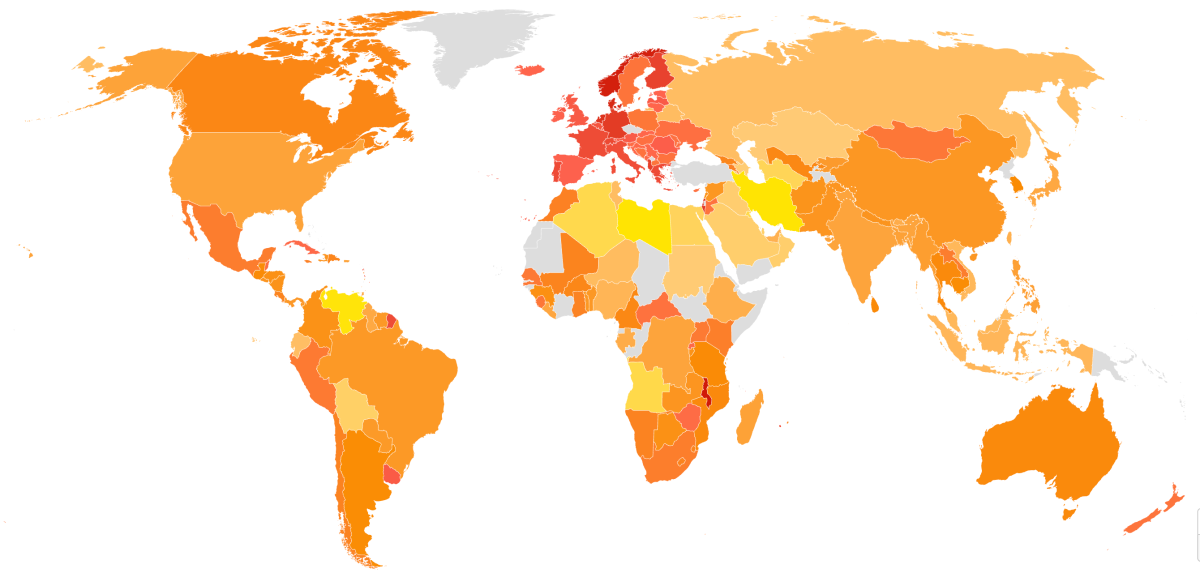
Gas prices around the world have risen sharply, now averaging $5.89 per gallon, up about $1 since late February when tensions rose with Iran. In the U.S., gas prices increased by $1.30 per gallon since late February and now average about $4.28, which is still lower than the global average.
Key Facts
Global average gas price is $5.89 per gallon as of early September.
Gas prices worldwide rose about $1 since late February, before the conflict with Iran.
U.S. gas prices grew from $2.98 to $4.28 per gallon since late February.
Americans pay about $377 million more per day due to higher gas prices, totaling $4.63 billion extra per week.
U.S. gas prices are roughly $1.61 cheaper per gallon than the global average.
Cheapest gas prices are in oil-producing or subsidized countries like Libya ($0.09/gal) and Iran ($0.11/gal).
Highest gas prices are in places with high taxes, such as Hong Kong ($15.89/gal) and Norway ($11.77/gal).
Australia had the biggest gas price increase after the Iran conflict, rising 42% in one month.
Read the Original
Want the full story? Tap a source to open the original
article.
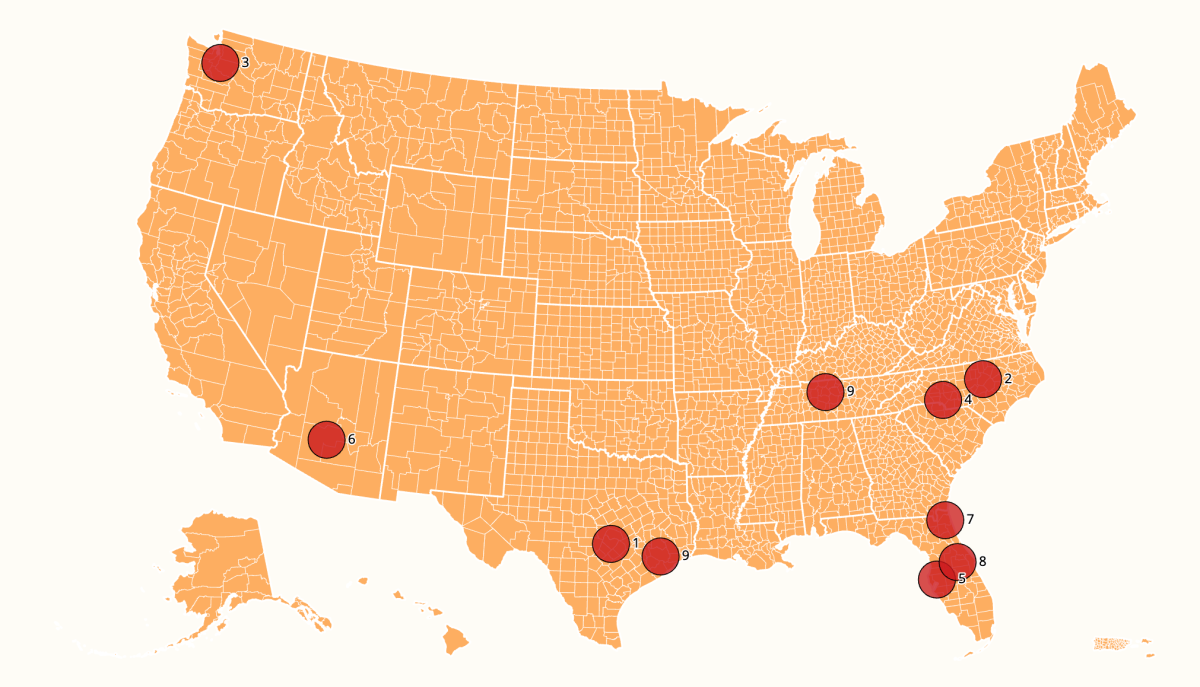
A new study by LendingTree shows that most of the fastest-growing local economies in the U.S. are in the South. Cities like Austin and Raleigh lead in population growth, job creation, and new businesses.
Key Facts
Eight of the 10 fastest-growing metro areas in the U.S. are in the South.
Austin, Texas is the top boomtown for the third year in a row.
Raleigh, North Carolina ranks second, leading in workforce and income growth.
Seattle and Phoenix are the only cities outside the South in the top 10.
Austin had the highest growth in housing units (3.4%) and population (3.1%).
Jacksonville had the largest workforce increase at 5.6%.
Seattle showed strong business growth with 5.1% GDP increase and 9.6% more new business applications.
Factors like lower taxes, cheaper housing, and a favorable business climate help Southern cities grow.
Read the Original
Want the full story? Tap a source to open the original
article.
The price of oil has risen above $100 a barrel due to ongoing conflict in the Middle East, especially involving the US and Iran, which is reducing oil supply through the Strait of Hormuz. This has caused energy costs and borrowing costs to increase, leading to worries about higher inflation and more expensive loans for governments and households.
Key Facts
Oil prices reached $105 a barrel amid signs the Middle East conflict will not end soon.
The Strait of Hormuz, a major route for oil and gas, is effectively closed because of the war.
Natural gas prices in the UK rose above 200p per therm, the highest since 2022.
UK gas storage is lower than usual, pushing prices higher as winter approaches.
The UK has a price cap to protect consumers from sudden gas price spikes, but bills could still rise if prices stay high.
Inflation worries caused UK government bond yields to reach levels not seen since 1998-2007.
Higher bond yields mean the government faces higher borrowing costs, straining public finances.
Increased borrowing costs also affect household financial products like fixed-rate mortgages.
Read the Original
Want the full story? Tap a source to open the original
article.
Credit card interest rates are high right now, with the average rate over 22%, making debt harder to manage. There are ways to try lowering your credit card interest without harming your credit score, such as asking your card issuer for a lower rate, enrolling in hardship programs, or using balance transfer cards.
Key Facts
The average credit card interest rate is now 22.15%, which is higher than usual.
The Federal Reserve will meet in mid-September and likely won't lower interest rates; they might raise them to control inflation.
Asking your credit card company for a lower interest rate usually does not harm your credit score if no hard inquiry is done.
Credit card hardship programs can reduce rates or payments but might limit your account, which can affect your credit score.
Balance transfer cards offer low or 0% interest for a period, helping reduce interest charges but usually require a hard credit inquiry that may temporarily lower your score.
Credit card debt with high rates can become increasingly difficult to pay off.
It is important to understand how different strategies affect your credit before choosing one.
Read the Original
Want the full story? Tap a source to open the original
article.
Stablecoins are digital money tied to stable assets like the U.S. dollar. They are used to move money quickly and smoothly, complementing traditional banking systems and making payments faster and cheaper.
Key Facts
Stablecoins keep a steady value by being backed 1-to-1 with dollars or safe assets like U.S. Treasuries.
In 2023, stablecoins were used for about $33 trillion in transactions, showing their growing role in finance.
Banks, payment companies, and fintech firms are using stablecoins to improve how money moves, not to replace banks.
Stablecoins help merchants get paid faster and let people send money home cheaply, without needing to understand crypto technology.
Visa and Mastercard are working with stablecoins to make payments faster and available worldwide.
Federal laws now require stablecoin issuers to hold real assets equal to the coins they issue and include consumer protections.
New laws like the GENIUS Act and the proposed Clarity Act aim to regulate stablecoins and other digital assets to enable innovation while protecting users.
Read the Original
Want the full story? Tap a source to open the original
article.
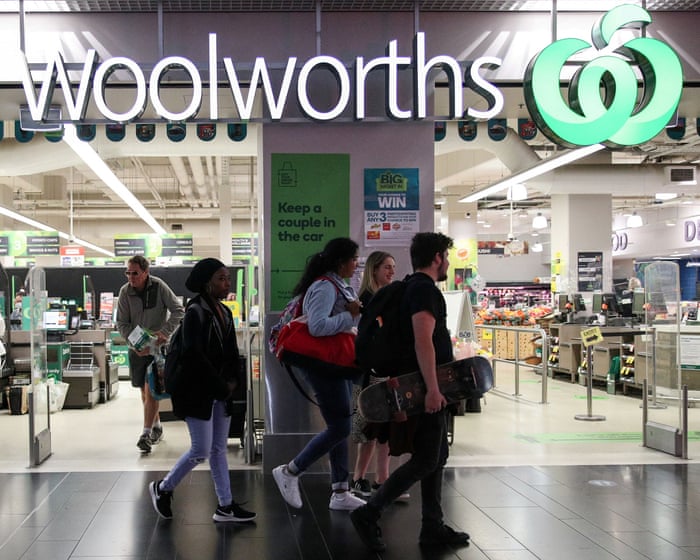
Woolworths raised the prices of several key products during a three-month "Price Freeze" promotion, despite initially promising not to increase prices on 300 essential items. Data showed price increases on items like chicken fillets, canned beans, and donuts, with some prices later lowered after the promotion ended. Woolworths said the price changes were due to previous prices being promotional, not the normal shelf prices.
Key Facts
Woolworths started a "Price Freeze" on 300 family staples on May 1, promising not to raise shelf prices for three months.
Despite this, prices rose for at least four key products during the promotion, including a 33% increase on chicken breast fillets.
A can of "Mexican Style 3 Bean Mix" nearly doubled in price during the promotion before returning to the original price.
Woolworths said the previous prices were promotional sales, so the increases did not break the price freeze.
Chicken fillet prices fluctuated between $9 and $12 several times during the promotion.
After the promotion ended, some prices, like chicken fillets and donuts, dropped below their previous levels.
Woolworths is currently involved in a court case with the Australian Competition and Consumer Commission over alleged misleading discounts.
Consumer experts said raising prices during a "Price Freeze" is confusing and misleading for shoppers.
Read the Original
Want the full story? Tap a source to open the original
article.
Stephen Deckoff, who bought two islands in the U.S. Virgin Islands formerly owned by Jeffrey Epstein, is suing the U.S. Virgin Islands government. He wants to get back $5.7 million he says he overpaid in income taxes for the year 2021.
Key Facts
Stephen Deckoff bought Great St. James and Little St. James islands in 2023 for $60 million.
The lawsuit claims Deckoff paid income tax to the U.S. Virgin Islands Bureau of Internal Revenue (VIBIR) in 2021 but was not a "bona fide resident" there.
Being a "bona fide resident" affects whether someone owes income tax to the Virgin Islands on earnings from outside the islands.
He filed a refund claim in November 2025 demanding $5,757,038 for taxes he says he should not have paid.
The Virgin Islands government has not responded to Deckoff’s refund claim yet; their response is due by October 19.
Deckoff plans to build a luxury resort on the islands to boost tourism and create jobs, with an expected opening in 2025.
Jeffrey Epstein, the late owner, was a convicted sex offender who owned Little St. James since 1998 and Great St. James since 2016.
Epstein died by suicide in jail in 2019 while awaiting trial on sex trafficking charges.
Read the Original
Want the full story? Tap a source to open the original
article.
Primark, a popular clothing retailer, is starting to offer home delivery for its products. This is a new service that lets customers shop online and have their purchases sent directly to their homes.
Key Facts
Primark is launching a home delivery service.
Customers can now buy Primark products online.
Purchased items will be delivered to the customer’s home.
This is a change from Primark’s usual in-store-only shopping model.
The new service aims to make shopping more convenient.
Home delivery is becoming more common in the retail industry.
The launch is a significant step for Primark’s business strategy.
Read the Original
Want the full story? Tap a source to open the original
article.
English winemakers expect an early grape harvest and a good year for sparkling wine after a very hot summer. However, beer producers warn of a barley shortage due to poor crop growth caused by the same hot and dry weather.
Key Facts
English sparkling wine producer Nyetimber will start picking grapes on 14 September, the earliest since 1988.
Nyetimber expects nearly 2,500 tonnes of grapes, enough for over 1.5 million bottles of 2026 vintage sparkling wine.
Late spring frosts reduced the crop size, but sunny summer weather increased grape sugar, which can improve wine quality.
England had its hottest summer on record, with temperatures reaching 38.1°C (100.1°F) in London on 13 August.
The hot weather is linked to the climate crisis caused by burning fossil fuels.
Barley farmers in England suffered poor harvests due to drought and heat, leading to lower yields and quality.
Barley yield in England is about 19% below the five-year average, raising concerns about beer shortages.
Some UK barley farmers cannot easily import grain from other countries due to similar problems abroad.
Read the Original
Want the full story? Tap a source to open the original
article.
Two summer movies, The Odyssey and Spider-Man: Brand New Day, helped make this the biggest summer ever for movie ticket sales in the US, earning $4.761 billion. Spider-Man has made $2.4 billion worldwide so far, and The Odyssey earned $1.6 billion. Other big hits include Toy Story 5 and The Super Mario Galaxy Movie.
Key Facts
The US summer box office from May 1 to September 7 made $4.761 billion, beating the 2013 record of $4.756 billion.
Spider-Man: Brand New Day has made $2.4 billion worldwide and is the third highest-grossing movie of all time.
Spider-Man made $1 billion in just six days, becoming the second-fastest film to reach that amount.
The Odyssey earned $1.6 billion and is the highest-grossing original movie of the year.
Other movies like Toy Story 5 and The Super Mario Galaxy Movie each made over $1 billion.
Low-budget horror movies Backrooms and Obsession also performed well, making $394 million and $513 million.
Some sequels and spinoffs, such as Star Wars: The Mandalorian and Minions & Monsters, earned less than expected.
European countries including the UK, France, Italy, Spain, and the Netherlands saw big increases in cinema ticket sales this summer.
Read the Original
Want the full story? Tap a source to open the original
article.