Two summer movies, The Odyssey and Spider-Man: Brand New Day, helped make this the biggest summer ever for movie ticket sales in the US, earning $4.761 billion. Spider-Man has made $2.4 billion worldwide so far, and The Odyssey earned $1.6 billion. Other big hits include Toy Story 5 and The Super Mario Galaxy Movie.
Key Facts
The US summer box office from May 1 to September 7 made $4.761 billion, beating the 2013 record of $4.756 billion.
Spider-Man: Brand New Day has made $2.4 billion worldwide and is the third highest-grossing movie of all time.
Spider-Man made $1 billion in just six days, becoming the second-fastest film to reach that amount.
The Odyssey earned $1.6 billion and is the highest-grossing original movie of the year.
Other movies like Toy Story 5 and The Super Mario Galaxy Movie each made over $1 billion.
Low-budget horror movies Backrooms and Obsession also performed well, making $394 million and $513 million.
Some sequels and spinoffs, such as Star Wars: The Mandalorian and Minions & Monsters, earned less than expected.
European countries including the UK, France, Italy, Spain, and the Netherlands saw big increases in cinema ticket sales this summer.
Read the Original
Want the full story? Tap a source to open the original
article.
A four-hour shutdown of the UK's air traffic control system caused many flights to be canceled, including a trip for Catie and Phil Allen, who lost over £1,300 on non-refundable accommodation and activities. Airlines refunded flight and car hire costs but cannot pay extra compensation because the disruption was outside their control.
Key Facts
The UK air traffic control system shut down for four hours, causing widespread flight cancellations.
Catie and Phil Allen’s flight to Slovenia was canceled, and alternative flights would have cut their holiday short.
British Airways refunded their flights and car hire booked through them, but not separately booked hotels and excursions.
Airlines do not pay extra compensation when cancellations are caused by external issues like air traffic control failures.
Hotels and excursions booked separately often have strict cancellation rules and may not offer refunds.
Travel insurance claims were denied because air traffic disruptions are usually excluded from coverage.
Some passengers waited hours or stayed overnight at airports without provided food or lodging, but expenses can be claimed later with receipts.
Package holidays often offer better protection and full refunds when flights are canceled.
Read the Original
Want the full story? Tap a source to open the original
article.
Harry Styles is extending his Together, Together tour into 2027 with 25 more shows, including a return to Wembley Stadium and new dates in several European countries and US cities. The tour will have varied support acts, including Kylie Minogue in Los Angeles, and will introduce affordable ticket options to make concerts easier to attend for people with less money.
Key Facts
The Together, Together tour will add 25 shows in 2027 after its initial run in 2026.
New venues include Ireland, Spain, Italy, Germany, France, and US cities like Phoenix and Dallas.
Different support acts will appear at each city, such as Tears For Fears at Wembley and Kylie Minogue in Los Angeles.
Kylie Minogue’s US stadium concerts on this tour will be her first-ever in that setting.
Ticket prices for 2027 range between $60 and $300, with a special "Unpredictable Fun Tickets" program offering some tickets at $20/£20/€20.
Styles is responding to past ticket price concerns by clarifying pricing and adding affordable options.
The tour will shift from long residencies to a traditional moving stage show format.
Styles expressed excitement and gratitude about the tour extension and the chance to share music with fans.
Read the Original
Want the full story? Tap a source to open the original
article.
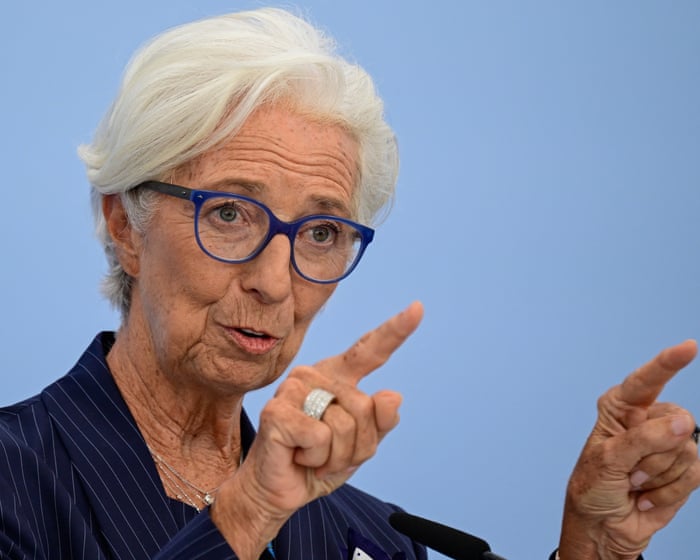
The European Central Bank (ECB) raised interest rates to 2.5% to help control rising inflation, which has increased due to higher energy prices caused by renewed conflict in the Middle East. This situation has pushed up borrowing costs and government bond yields in Europe and the UK.
Key Facts
The ECB increased interest rates from 2.25% to 2.5%.
Inflation is expected to average 3% in the eurozone this year and return to target levels by the end of 2027.
Rising oil and gas prices followed attacks on ships between the US and Iran in the Strait of Hormuz.
Brent crude oil price went above $105 a barrel, and UK gas prices hit their highest since December 2022.
Government borrowing costs rose sharply, with UK 10-year bond yields reaching levels not seen since 2007.
European gas stores are at 67% capacity, below the usual five-year average of 84%, raising concerns about future energy supply.
Higher energy prices increase risks of broader inflation affecting transport and heating costs.
The war in the Middle East has increased economic uncertainty and added pressure on inflation and borrowing costs.
Read the Original
Want the full story? Tap a source to open the original
article.
Ralph Lauren, the 86-year-old fashion designer, showcased a new women’s collection in New York that blended classic and modern styles. His brand has become popular again with young shoppers, helping the company reach a record $8.1 billion in annual sales.
Key Facts
Ralph Lauren held an unofficial fashion show in a large marble hall in New York during fashion week.
The collection featured a mix of velvet evening wear, shredded jeans, and wide ties, referencing Lauren’s original style from 59 years ago.
Younger generations, especially Gen Z, have rediscovered and embraced Ralph Lauren’s clothing like Polo shirts and baseball caps.
The company reported $8.1 billion in annual revenue, a 15% increase from the previous year, marking its highest-ever sales.
Ralph Lauren’s style combines various American cultural influences, such as college sports, aristocracy, and the Wild West.
The brand sells a fantasy of American life that appeals both to wealthy customers and the general public.
Lauren called his latest collection about “freedom and fun” in creating personal style and included innovative fabric techniques.
Other major American designers like Tommy Hilfiger and Michael Kors also participated in New York Fashion Week, showing confidence in the US market.
Read the Original
Want the full story? Tap a source to open the original
article.
Three chemical companies—Chemours, DuPont, and Corteva—agreed to pay $455 million to North Carolina and 11 local groups to settle claims about pollution from toxic chemicals called PFAS. The payment will be spread over 15 years and resolves lawsuits about water contamination from Chemours’ Fayetteville Works plant and other sources.
Key Facts
Chemours, DuPont, and Corteva will pay $455 million to settle PFAS contamination claims in North Carolina.
PFAS are toxic chemicals often called "forever chemicals" because they do not break down easily in the environment.
The settlement covers pollution from Chemours’ Fayetteville Works plant and other PFAS sources like firefighting foam.
Payments start within 30 days and will continue over 15 years.
Chemours will pay about $50 million in the next 12 months.
Under a 2021 deal, Chemours is responsible for 50% of the payment, with DuPont and Corteva splitting the rest.
The settlement resolves lawsuits from the state and local governments not included in a separate 2024 water system class settlement.
Chemours says the deal acknowledges progress they have made to reduce PFAS emissions since a 2019 agreement with North Carolina.
Read the Original
Want the full story? Tap a source to open the original
article.
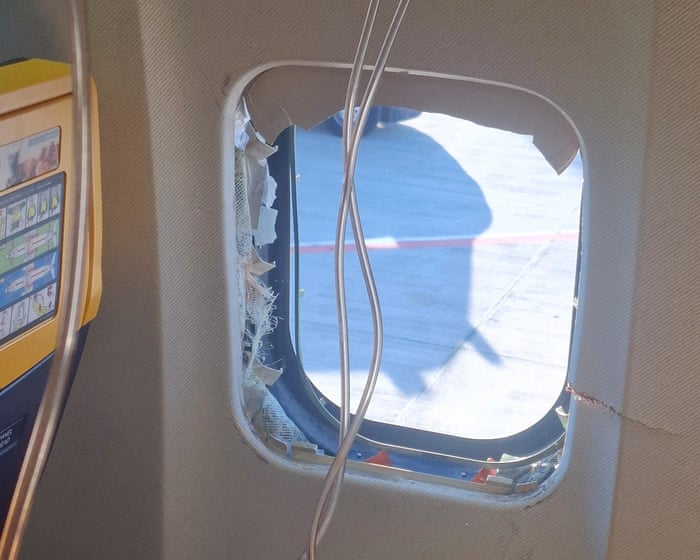
Ryanair said it will dispute claims that a passenger’s body was sucked out of a plane window when it broke during a flight in July. The airline’s CEO, Michael O’Leary, stated the passenger was pulled toward the window but did not go outside, while U.S. investigators continue examining the incident.
Key Facts
A window broke on a Ryanair flight from Greece to Germany in July, causing sudden loss of cabin pressure.
Passenger Ljubisa Karović, 61, was severely injured, with claims that his head and arm were pulled partly outside the plane.
Ryanair’s CEO Michael O’Leary denied any part of the passenger went outside the window but acknowledged he was sucked toward it.
The U.S. National Transportation Safety Board (NTSB) is investigating the incident, with Boeing, the engine maker GE, and Ryanair involved.
Karović’s wife said another passenger helped pull him back inside and blocked the window with luggage.
O’Leary said the passenger was wearing a seatbelt, which likely kept him inside.
Ryanair plans to wait for the full NTSB report before making further comments.
In a separate matter, Ryanair’s CEO faced some shareholder resistance over a large pay deal approved by about two-thirds of shareholders.
Read the Original
Want the full story? Tap a source to open the original
article.
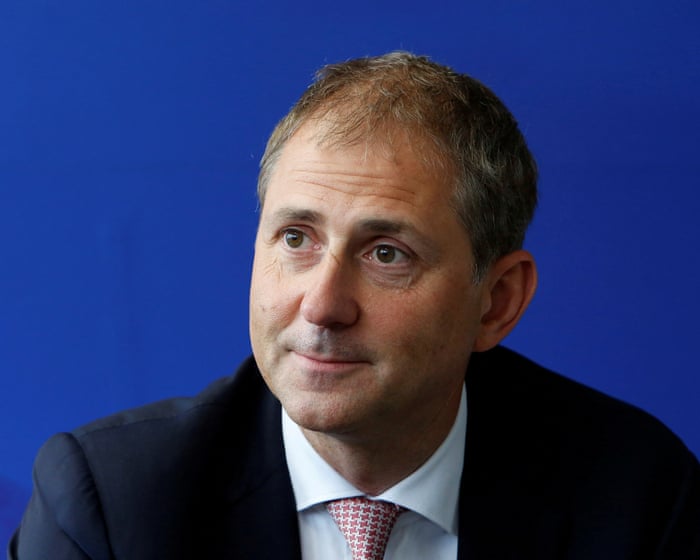
Alex Beard, former head of oil trading at Glencore, has pleaded not guilty to bribery charges related to payments in West Africa. He and five other former Glencore employees deny conspiracy to make corrupt payments to government officials in Nigeria, Cameroon, and Côte d’Ivoire. Their trial is scheduled for October 2027.
Key Facts
Alex Beard is the former head of oil trading at Glencore and a billionaire.
Beard denies two charges of conspiracy to make corrupt payments.
The alleged bribery occurred between 2007 and 2014 in Nigeria, Cameroon, and Côte d’Ivoire.
Andrew Gibson, former head of oil operations, also denies charges including falsifying documents.
Four other former Glencore traders have pleaded not guilty to related charges.
The Serious Fraud Office (SFO) is handling the corruption case.
The trial for all six defendants is set to start on October 4, 2027.
Read the Original
Want the full story? Tap a source to open the original
article.
Homeowners insurance problems in the U.S. have shifted from coastal states like California and Florida to Utah. In 2025, Utah had the highest rate of insurance companies refusing to renew policies, showing a new challenge in a state previously less affected.
Key Facts
Utah had the highest homeowners insurance nonrenewal rate in 2025 at 4.45%, meaning many insurers stopped renewing policies there.
This rate in Utah was 8.4 times higher than in 2018 and 2.6 times higher than in 2024.
California and Florida previously led in insurance nonrenewals due to risks from natural disasters and other issues.
Florida has reduced problems by changing laws to limit lawsuits and reduce fraud.
California updated rules to help insurers set better prices using climate risk data.
Despite improvements, California still had the second-worst nonrenewal rate in 2025.
Florida has the highest homeowners insurance premiums, with most paying $6,000 to $8,500 per year.
Insurers leaving or cutting coverage create challenges for homeowners trying to find affordable insurance.
Read the Original
Want the full story? Tap a source to open the original
article.
The article discusses whether it is better to rent or buy a home. Jill Schlesinger helps a caller named Alan consider factors that affect this decision, showing it is not always simple. The topic also touches on how the cost of going out is rising, making staying home an appealing option.
Key Facts
The article is based on a conversation from Jill Schlesinger’s show "Money Moves."
A caller named Alan asks if he should rent or buy a house.
The answer depends on various personal and financial factors.
The cost of eating out and drinking cocktails has increased significantly.
Due to high prices, some people prefer staying home for activities like playing mahjong.
The decision to rent or buy is described as a long-standing question many people face.
Read the Original
Want the full story? Tap a source to open the original
article.
The UK government plans to allow mayors in England to charge a small tax on hotel and Airbnb stays, called a tourist levy. The money collected would help pay for local services like transport, but some in the hospitality industry worry it could hurt jobs and make holidays more expensive.
Key Facts
Mayors in England will be able to charge a tax on overnight stays in hotels and Airbnb-type accommodations.
The tax will be a percentage of the cost of the stay, not a flat fee, to protect cheaper holidays.
The levy could raise hundreds of millions of pounds for local improvements like transport and public services.
Hospitality groups warn this tax could risk jobs and increase holiday costs, as UK holidays are already relatively expensive.
The first city to introduce such a tax was Edinburgh in Scotland, charging 5% since July 2023.
London plans to keep the levy below 5% and use the funds to support tourism growth.
Wales will allow local councils to charge a visitor tax starting April 2027.
Some mayors, like Andy Burnham in Greater Manchester, have already introduced similar visitor charges.
Read the Original
Want the full story? Tap a source to open the original
article.
The UK government plans to let English mayors charge an overnight visitor tax on hotels and holiday rentals without a limit on how high the tax can be. The hospitality industry warns this could cost thousands of jobs because it may make UK holidays more expensive.
Key Facts
English mayors will have the power to impose an uncapped overnight visitor tax on hotel and holiday accommodation.
Scotland already has a similar tax with no upper limit, while Wales caps the tax.
Hospitality leaders were expecting a capped tax but were informed it would be unlimited.
UK Hospitality estimates the new tax could lead to the loss of about 33,000 jobs.
The sector says UK holiday costs are already high compared to other countries due to existing taxes.
The visitor levy is being considered to help local governments that face budget cuts due to austerity.
Mayors will not be forced to impose the tax, but there is concern they will use it extensively due to funding needs.
The government is preparing to announce more details about the plan soon.
Read the Original
Want the full story? Tap a source to open the original
article.
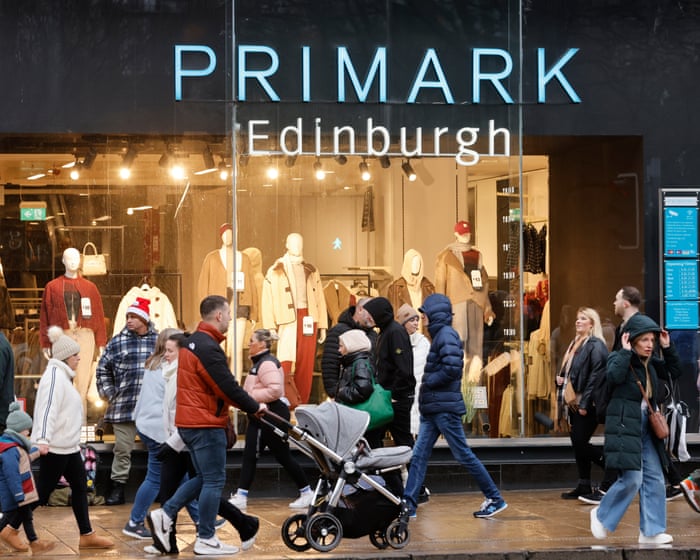
Primark plans to start delivering products directly to customers' homes in Britain. The company recently bought a warehouse in Sheffield to help with shipping, expanding from its previous click-and-collect service that began in 2022.
Key Facts
Primark is launching a home delivery service in Britain.
The company purchased a fulfilment center in Sheffield to handle deliveries.
Primark first entered e-commerce in 2022 with a click-and-collect option.
Click-and-collect requires customers to pick up orders at the store.
Home delivery is a new step intended to grow Primark's online sales.
Primark aims for profitable growth from this new delivery service.
The move may help improve sales after a recent period of slow business caused by hot weather.
Read the Original
Want the full story? Tap a source to open the original
article.
Primark will start offering home delivery in Britain for the first time as it prepares to separate from its parent company, Associated British Foods (ABF). The company bought an automated facility to help with deliveries and expects to grow online sales. The separation could be completed by December 2027, creating two major companies.
Key Facts
Primark will launch home delivery in the UK, adding to its current click and collect service.
The company bought an automated fulfilment center in Sheffield to support future deliveries.
Primark avoided home delivery before because of the high costs compared to its low prices.
Primark is preparing to separate (demerge) from ABF, its parent company, by December 2027.
After the split, Primark could be valued at around £9 billion, and ABF’s food business at about £4 billion.
In the recent quarter, Primark’s sales fell by 3%, with small growth in the UK and Ireland but drops in continental Europe.
George Weston, ABF’s CEO, will lead the food business after the split, and Eoin Tonge will remain Primark’s CEO.
Primark was founded in Dublin in 1969 and now has over 80,000 employees worldwide.
Read the Original
Want the full story? Tap a source to open the original
article.
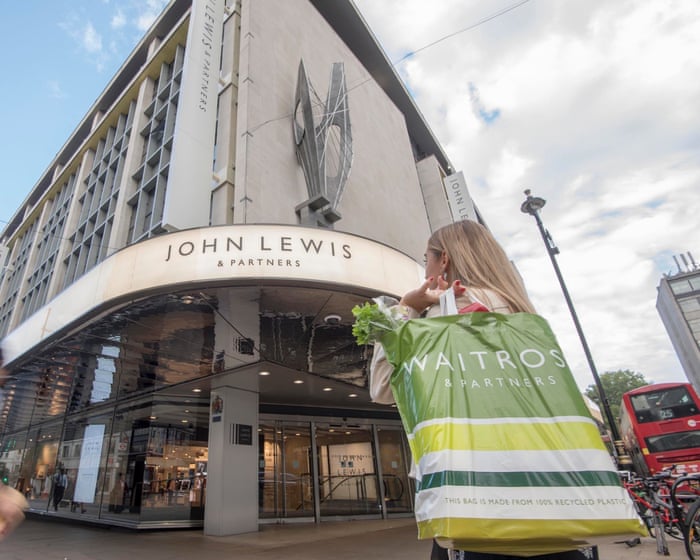
The John Lewis Partnership, which owns John Lewis and Waitrose, reported larger losses of £124 million in the first half of the year due to rising costs and lower shopper confidence. While Waitrose sales increased, John Lewis department store sales fell, and the company has closed several stores and cut jobs as part of a turnaround plan.
Key Facts
John Lewis Partnership’s pre-tax loss rose from £88 million to £124 million for the six months ending August 1, 2026.
The company runs 36 John Lewis stores and over 300 Waitrose supermarkets.
Rising costs included higher national insurance payments and expenses related to managing heatwaves.
Waitrose sales increased by 4%, but John Lewis store sales fell by 2%.
The company closed 16 John Lewis stores and 20 Waitrose outlets and cut thousands of jobs.
Staff received a 2% bonus earlier in the year, the first in four years.
Heatwaves and the cost of living impacted shoppers, reducing sales of big items like sofas and beds.
John Lewis expects better sales in the second half of the year, especially during the Christmas season.
Read the Original
Want the full story? Tap a source to open the original
article.
Families in the UK who use heating oil to warm their homes face rising costs as prices have nearly doubled over the past year due to conflict between the US and Iran. Many are unsure whether to buy oil now or wait, risking higher prices, and some plan to reduce heating use to save money this winter.
Key Facts
Heating oil prices in the UK have risen sharply, almost doubling in one year.
The price increase is linked to conflict between the US and Iran.
About 1.5 million UK households, mostly in rural areas, depend on heating oil.
Heating oil users do not benefit from the government’s energy price cap.
Customers must pay a large upfront cost as their tanks hold between 1,000 and 2,000 liters.
The average price for heating oil on 9 September 2026 was 97.05p per liter, up 85% from the previous year.
The government provided £53 million in support for low-income families using heating oil, but eligibility rules vary and some people do not qualify.
Charities are urging the government for more help and to include heating oil under the energy price cap.
Read the Original
Want the full story? Tap a source to open the original
article.
The UK government plans to allow local leaders in England to charge a tourist tax on overnight stays in hotels and other accommodations. The tax would be a percentage of the accommodation cost, with local leaders deciding how to use the money collected.
Key Facts
Mayors in England will be able to introduce a tourist tax on people staying overnight.
The tax will be charged as a percentage of the accommodation cost, not a flat fee.
The government believes this method protects budget travelers from high fees.
Local leaders will decide how to spend the money raised from the tax.
Similar tourist taxes already exist in Scotland, where Edinburgh charges 5% on overnight stays.
Manchester introduced a £1 per night fee in 2023 to attract more visitors.
The government plans to give local leaders power to manage the tax as part of a broad plan for local control.
Wales will introduce a capped visitor tax of £1.30 per person per night in April next year.
Read the Original
Want the full story? Tap a source to open the original
article.
The leader of Britain's trade unions has asked Prime Minister Andy Burnham to create a discount on energy bills for low and middle-income households. He suggests paying for this by increasing a special tax on banks, which was lowered in 2023, to raise money for these discounts.
Key Facts
The trade union leader wants a "social tariff," a discount on energy bills based on household income.
The tariff could help about two-thirds of households in the UK.
The proposed bank surcharge tax was cut from 8% to 3% in 2023 and could be restored to raise £9 billion over four years.
Burnham has already proposed temporarily removing VAT on electricity bills to reduce costs.
Some political parties also support taxing banks on their extra profits (windfall tax).
UK Finance, representing banks, warns higher taxes may harm growth and jobs in the UK financial sector.
The trade union leader believes banks will not leave the UK because of a restored surcharge.
Additional tax ideas include taxing social media companies and changing capital gains tax to match income tax rates.
Read the Original
Want the full story? Tap a source to open the original
article.
Fashion designer Romeo Hunte talks about his new clothing collection as New York Fashion Week starts. He shares his ideas and creative approach during the event.
Key Facts
Romeo Hunte is a fashion designer.
He has created a new clothing collection.
New York Fashion Week has just begun.
Hunte discussed his collection on CBS News' "The Daily Report."
The event is a major fashion industry showcase.
Hunte explained his creative vision behind his designs.
CBS News covered the story and interviewed Hunte.
Read the Original
Want the full story? Tap a source to open the original
article.
Several top business leaders share advice on how to succeed at work. They say attitude, curiosity, communication, and being open to new challenges matter more than perfect skills or resumes.
Key Facts
Charlotte Tilbury says not letting others limit you and seeing setbacks as opportunities helped her succeed.
Charlie Bowes-Lyon values attitude more than skills and recommends asking questions in job interviews.
Marcia Kilgore looks for curiosity, willingness to ask questions, and good communication when hiring.
Anabel Kindersley advises saying yes to new opportunities to build skills and values honesty and emotional intelligence.
Charlie Nunn highlights curiosity, resilience, teamwork, and openness to AI tools as important employee qualities.
Several leaders emphasize learning from challenges and stepping outside your comfort zone to advance.
Communication and teamwork are key skills across many types of jobs.
Asking what success looks like in a job is a helpful interview question.
Read the Original
Want the full story? Tap a source to open the original
article.