A childcare policy in the UK gives families with both parents earning under £100,000 access to 30 hours a week of free childcare. However, if one parent earns just over £100,000, they lose this benefit completely, causing some families to reduce work hours to keep the subsidy. Experts warn this "cliff edge" discourages work for some parents and suggest gradual reductions in benefits instead of a sudden cutoff.
Key Facts
Families where both parents earn less than £100,000 a year can get 30 hours of free childcare weekly.
If one parent earns just over £100,000, they lose the free childcare entirely.
By 2030, parents may have to earn up to £124,000 to avoid financial loss from losing the childcare benefit.
Around 1,000 families may currently reduce their earnings to stay under the threshold; this could rise to 12,000 by 2030.
More mothers are out of work when their partner’s income reaches over £100,000, likely due to losing childcare help.
Some families claim the benefit based on expected income but end up earning more than £100,000.
Suggested solutions include cutting childcare hours instead of removing it completely or gradually reducing benefits as income rises.
UK Chancellor John Healey is expected to address this in his upcoming budget scheduled for 28 October.
Read the Original
Want the full story? Tap a source to open the original
article.
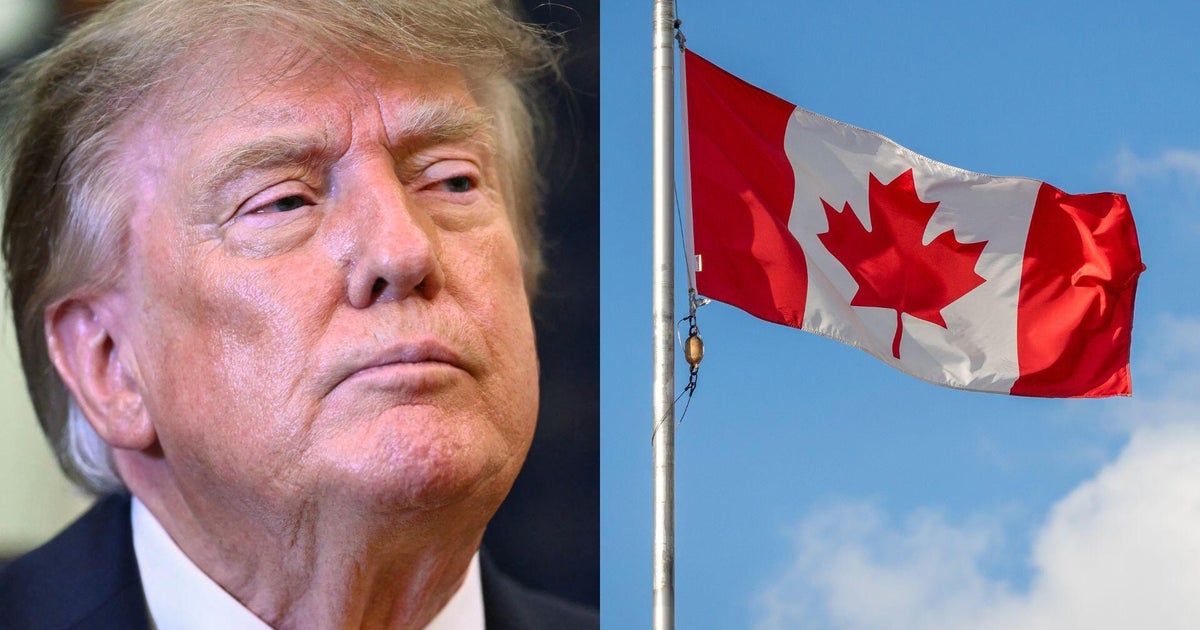
President Donald Trump responded to Canada’s new tariffs on U.S. goods by banning some Canadian products from entering the U.S. These products include certain motorcycles, dairy foods, and alcoholic drinks.
Key Facts
Canada recently started new tariffs, which are taxes on imports, targeting U.S. goods.
In reaction, the U.S. banned imports of some Canadian motorcycles.
The ban also includes certain dairy products from Canada.
Alcoholic beverages from Canada are part of the banned imports.
This move increases trade tensions between the U.S. and Canada.
Tariffs and bans like these affect how goods are bought and sold between the two countries.
The Trump administration took this step to push back against Canada’s trade actions.
Read the Original
Want the full story? Tap a source to open the original
article.
The BBC is ending its broadcast of RuPaul's Drag Race UK after eight series due to financial pressures. Future episodes and spin-offs will move to Wow Presents Plus, a streaming service owned by the show's producer.
Key Facts
RuPaul's Drag Race UK has aired on the BBC for eight series since 2019.
The show is currently shown on BBC Three and their streaming service, iPlayer.
Due to financial challenges, the BBC will no longer air new Drag Race UK series.
New series and spin-offs will be available exclusively on Wow Presents Plus.
The BBC is planning to save £500 million and is making tough budget decisions.
The current series airing on BBC Three will finish on that channel and iPlayer.
Drag Race UK helped popularize British drag culture and made stars of queens like La Voix and Danny Beard.
The BBC has also dropped other LGBTQ+ shows this year because of funding issues.
Read the Original
Want the full story? Tap a source to open the original
article.
A $152.2 million settlement has begun paying consumers who bought packaged tuna products after major tuna companies were accused of illegally raising prices. Payments started on September 8 and vary widely depending on how much tuna a consumer bought during the case period.
Key Facts
The settlement involves StarKist, DWI, and Lion companies accused of fixing tuna prices in the U.S. from June 2011 to July 2015.
The total payout fund is $152.2 million, for those who bought canned or pouched tuna products during that time.
Payments started going out on September 8 through various methods like direct deposit, prepaid cards, or mailed checks.
Consumers received different amounts, some around $100 and others several thousand dollars.
Payment amounts depend on how much tuna individuals reported buying in their claims.
The deadline to file for the settlement was December 31, 2024.
People who filed claims in an earlier related lawsuit didn’t need to reapply to get paid this time.
The U.S. Supreme Court refused to review the case in November 2022, allowing the settlement to proceed.
Read the Original
Want the full story? Tap a source to open the original
article.
A 6-month certificate of deposit (CD) with $25,000 can earn around $495 to $520 in interest at current rates between 4.00% and 4.20%. Savers should compare offers from different banks, especially online ones, and consider waiting for possible rate increases before investing.
Key Facts
Current 6-month CD rates range from about 4.00% to 4.20%.
$25,000 invested in a 6-month CD at these rates earns roughly $495 to $520 in interest.
Last summer, top CD rates were around 4.45%, offering about $550 in interest.
CDs offer fixed interest rates, unlike savings or money market accounts where rates can change.
Many online banks offer higher CD rates compared to traditional banks with branches.
Early withdrawal from a CD may result in penalties that could reduce earnings.
The Federal Reserve may raise interest rates soon, possibly increasing CD rates after September 16.
Savers are advised to shop around and wait for potential rate hikes before investing.
Read the Original
Want the full story? Tap a source to open the original
article.
Hunter Biden’s meme coin, called $LAPTOP, rose quickly in value right after it launched but then lost most of its price within a few hours. It jumped from $37 to about $222 in the first hour, then fell to about $1.36 by mid-afternoon.
Key Facts
The meme coin is named $LAPTOP and is linked to Hunter Biden.
When it launched, the price skyrocketed from $37 to about $222 within one hour.
After peaking, the coin’s price dropped sharply to about $1.36 by 3 p.m. Eastern time.
The price data comes from Coinmarketcap.com, a website that tracks cryptocurrency prices.
The coin’s value fell by about 95% after its initial surge.
Meme coins are cryptocurrencies that often gain popularity quickly because of internet trends or jokes.
Read the Original
Want the full story? Tap a source to open the original
article.
Taking out an $80,000 home equity loan is an option for homeowners who need money and want relatively low fixed interest rates compared to personal loans or credit cards. Current monthly payments on such a loan range from about $771 to $977, depending on the repayment term chosen.
Key Facts
Home equity loans have a fixed interest rate around 8.14% as of September 2026.
Monthly payments for an $80,000 loan at 8.14% are approximately $976.55 for 10 years or $771.00 for 15 years.
Home equity loans generally offer lower rates than personal loans (about 12%) or credit cards (over 22%).
Failing to repay a home equity loan can lead to losing your home through foreclosure.
Interest rates and monthly payments have been fairly stable over the past year with small changes tied to Federal Reserve rate adjustments.
Home equity lines of credit (HELOCs) may have lower initial rates but variable rates mean costs can increase if central banks raise rates.
It is recommended to act soon to secure current rates, as they might rise in the near future.
Borrowers can refinance later if rates drop significantly to reduce their payments.
Read the Original
Want the full story? Tap a source to open the original
article.
The interest rate (yield) on the 10-year U.S. Treasury bond reached its highest level in three years. This rise followed the Treasury Department’s decision to allow the government to buy back three times more of its own debt.
Key Facts
The 10-year Treasury bond yield went above 4.83%, hitting a three-year high.
At one point, the yield rose to more than 4.85%.
The Treasury Department announced it will triple the amount of government debt it can repurchase.
A bond's yield is the return investors get when they buy government debt.
When the government buys back debt, it can affect bond prices and yields.
Higher yields often mean higher borrowing costs for the government.
This change reflects the government’s effort to manage its debt and influence the bond market.
Read the Original
Want the full story? Tap a source to open the original
article.
There are several ways to quickly earn about $100 in interest on savings by putting money into different types of accounts. Options include high-yield savings accounts and certificates of deposit (CDs), which offer different rates and time frames for earning interest.
Key Facts
Moving $5,000 into a high-yield savings account at 4.10% interest can earn about $101 in six months.
A 3-month CD with a 3.95% interest rate requires a $10,000 deposit to earn around $97 by December.
A 6-month CD at 4.20% interest with $5,000 deposited can earn about $104 with guaranteed returns.
High-yield savings accounts have variable interest rates that may rise if the Federal Reserve increases rates.
CDs have fixed interest rates, meaning the earnings are guaranteed for the term.
Traditional savings accounts with low rates (around 0.38%) offer much less interest than high-yield accounts or CDs.
Interest rates are currently elevated but may change depending on Federal Reserve actions.
Choosing the right savings account depends on how quickly and safely you want your money to grow.
Read the Original
Want the full story? Tap a source to open the original
article.
The U.S. Treasury will buy up to $6 billion in long-term government bonds to try to slow down rising bond yields and reduce borrowing costs. Higher yields increase borrowing expenses for people and businesses and can hurt stock prices.
Key Facts
The Treasury aims to buy up to $6 billion in long-term bonds to keep yields from rising too much.
Bond yields are the interest rates the government pays to borrow money; when yields go up, bond prices go down.
Rising U.S. government debt, which exceeded $40 trillion in August, is pushing bond yields higher.
The 10-year Treasury yield recently hit 4.85%, its highest since October 2023, affecting mortgage rates.
Experts say bond buybacks may not be enough to control rising yields effectively.
The government plans several more bond-buyback operations over the coming weeks.
Higher Treasury yields lead to higher borrowing costs for consumers and businesses and can also impact stock prices negatively.
Read the Original
Want the full story? Tap a source to open the original
article.
Two dog supplements are being recalled because they might be contaminated with salmonella bacteria. Salmonella can cause illness in both pets and people who handle the supplements.
Key Facts
Two dog supplements are being recalled.
The reason for the recall is possible contamination with salmonella.
Salmonella is a bacteria that can cause sickness.
Both dogs and humans can get ill from salmonella.
The recall is a safety measure to prevent illness.
Pet owners should stop using the supplements immediately.
Information about which brands or products is not provided in the article.
Read the Original
Want the full story? Tap a source to open the original
article.
Investors are considering whether to buy gold before or after the Federal Reserve's September meeting. The Fed’s decision on interest rates could cause gold prices to move up or down, influencing the best time to invest.
Key Facts
The Federal Reserve will meet on September 15 and 16 to discuss interest rates.
Most economists expect the Fed to keep rates steady at 3.50% to 3.75%.
The chance of a rate hike has increased to over 60%, due to strong economic data and inflation worries.
Higher interest rates can lower gold prices because gold does not pay interest.
If rates rise, other investments like Treasury bonds may become more attractive than gold.
Waiting to invest in gold can reduce uncertainty but might mean missing price rises before or after the Fed meeting.
Gold prices are also affected by geopolitical tensions and other economic concerns.
The decision to buy now or later depends on whether you want a short-term investment or a long-term safe asset.
Read the Original
Want the full story? Tap a source to open the original
article.
The U.S. Treasury Department will increase the maximum amount of government debt it can buy back from $2 billion to $6 billion per operation. This move aims to reduce rising bond yields, which affect borrowing costs for the government and the economy.
Key Facts
The Treasury is tripling its buyback limit to $6 billion per operation.
Previously, the buyback limit was set at $2 billion.
The buyback refers to the Treasury repurchasing government debt bonds from investors.
This action is intended to lower bond yields, which have been rising.
Lower bond yields generally mean cheaper borrowing costs for the government.
The updated buyback schedule was announced on a Wednesday.
The Treasury uses buybacks as a tool to help manage the national debt and influence interest rates.
Bond yields affect loans, mortgages, and overall economic conditions.
Read the Original
Want the full story? Tap a source to open the original
article.
Debt consolidation can help people manage multiple high-interest debts by combining them into one payment, often with lower interest. The chance to get a consolidation loan depends on your credit score, income, and debt levels, but different lenders and programs have different requirements.
Key Facts
Credit card interest rates average over 22%, making debts expensive to carry.
Debt consolidation means paying one monthly bill instead of many with high rates.
No one credit score works for all consolidation loans; lenders have different rules.
Traditional debt consolidation loans usually require a credit score in the mid-600s or higher.
Some lenders offer loans for scores in the 500s but with higher interest rates and fees.
A low credit score might mean a consolidation loan isn’t cheaper than current debts.
Debt consolidation programs often have lower credit score requirements and help those with credit problems.
These programs connect borrowers with lenders who provide loans to pay off credit cards through the program.
Read the Original
Want the full story? Tap a source to open the original
article.
Singapore is planning to redesign the National University Hospital by combining new buildings with changes in how hospital staff work. This approach aims to address challenges like an aging population, fewer workers, and rising costs by matching hospital design with future workforce needs and technology.
Key Facts
Building new hospital facilities without changing how staff work leads to wasted resources.
The hospital’s 2038 redesign will integrate physical infrastructure with workforce transformation.
Singapore faces a triple challenge: aging population, shrinking workforce, and higher healthcare costs.
The hospital is using pilots to test new work processes involving AI, robots, and team-based care.
Leadership needs to plan for the future workforce, not just current hospital operations.
Productivity means focusing staff time on work only they can do, not tasks that could be done differently.
Sustainability and managing long-term costs are top priorities from the start of the hospital design.
The redesign includes considering which patient care should happen in hospitals, homes, or virtual clinics.
Read the Original
Want the full story? Tap a source to open the original
article.
The article discusses advice from author and former journalist Lindsay Crouse about the benefits of quitting. She explains that knowing when to leave a bad situation can be good for a person’s well-being and growth.
Key Facts
Lindsay Crouse is an author and former journalist.
She talks about quitting in a positive way.
Quitting can help people avoid staying in harmful or unhelpful situations.
Knowing when to quit is an important life skill.
The topic was featured on CBS News.
Read the Original
Want the full story? Tap a source to open the original
article.
Ford Motor Company said Transportation Secretary Sean Duffy gave misleading information when he criticized Ford’s business dealings with China. Duffy raised worries about Ford depending on technologies from countries seen as competitors with the U.S., but Ford called his comments a wrong way to get attention.
Key Facts
Transportation Secretary Sean Duffy criticized Ford for its business connections with China.
Duffy is concerned about Ford depending on technology from foreign countries that may be rivals.
Ford replied by calling Duffy’s criticism misleading and aimed at gaining headlines.
Duffy sent a letter to Ford’s CEO, Jim Farley, expressing his worries.
Ford denied the claims and defended its business practices with China.
The issue centers on fears about security and economic dependence on other countries.
Ford’s reaction came on a Tuesday, showing the dispute is recent.
Read the Original
Want the full story? Tap a source to open the original
article.
The Reserve Bank of Australia (RBA) has been trying for years to reduce inflation to its 2.5% target but has not succeeded. Despite three interest rate increases this year, inflation remains high due to factors like rising oil prices and strong consumer spending. The RBA may need to raise rates further to control inflation, but it is cautious to avoid causing high unemployment.
Key Facts
The RBA aims to reduce inflation to 2.5% but has struggled for five years.
Inflation has stayed above target for a long time, leading to higher living costs.
Three interest rate hikes occurred this year to try to lower inflation.
Rising global oil prices, fuel costs in Australia, and increased datacentre investments are pushing inflation up.
Credit card hardship programs can help reduce monthly payments for people struggling to pay their bills. These programs usually lower interest rates, waive fees, or spread out payments over a longer time, but the amount of savings varies depending on the program and individual situation.
Key Facts
Hardship programs are designed to help people with credit card debt who have trouble making payments.
These programs can lower monthly payments by reducing interest rates, waiving fees, or setting up a longer repayment plan.
For example, lowering interest from about 22% to 6% or 0% and spreading payments over five years can cut monthly payments by 30-40%.
The exact payment reduction depends on the card issuer’s terms and the person’s financial status.
Some programs are temporary, so monthly payments may increase again after a few months.
Programs might close or freeze the credit card during the hardship period.
It’s important to understand the full terms, including how long the relief lasts and what happens when it ends, before agreeing to a hardship program.
Read the Original
Want the full story? Tap a source to open the original
article.
President Donald Trump plans to put new tariffs, or taxes, on some Canadian products like maple syrup, motorcycles, and dairy. This is happening because trade talks between the U.S. and Canada are not going well, leading to a dispute over these taxes.
Key Facts
The U.S. government will add tariffs on Canadian maple syrup, motorcycles, and dairy products.
These tariffs mean U.S. buyers will pay extra taxes on these Canadian goods.
The tariffs come amid failing trade negotiations between the U.S. and Canada.
The dispute is part of a larger conflict over trade policies and taxes.
The Trump administration is responsible for deciding and enforcing these new tariffs.
The tariffs are meant to protect U.S. industries but can raise prices for consumers.
Read the Original
Want the full story? Tap a source to open the original
article.