Borrowers in the UK are expected to face higher mortgage rates due to rising interest rates influenced by global bond market turmoil and higher inflation concerns. The increase in UK government bond yields, driven by oil price rises and geopolitical tensions, has pushed up swap rates, which lenders use to set mortgage prices.
Key Facts
UK swap rates, used to price mortgages, hit a three-year high recently.
The five-year swap rate reached 4.52%, the highest since October 2023.
Rising oil prices and US-Iran military tensions have raised inflation fears.
These fears caused investors to sell bonds, increasing bond yields and pushing up borrowing costs.
Higher bond yields raise loan interest rates for credit cards, mortgages, and car loans.
UK government bond yields briefly hit their highest level since 2008.
The UK prime minister promised fiscal responsibility to stabilize markets in an autumn budget.
Fixed mortgage rates stayed steady, with average two-year fixed rates around 5.59% and five-year at 5.63%.
Read the Original
Want the full story? Tap a source to open the original
article.
An acoustic guitar used by George Michael in his 1987 Faith music video is going up for auction, along with other personal items and memorabilia from his career. The auction includes items like gold records, tour documents, and a promotional album box set, with sales taking place online and in Essex in late October.
Key Facts
The guitar is a Gretsch Synchromatic 160 with a sunburst finish, estimated to sell for £60,000-£120,000.
It was featured in the Faith music video, a hit single that topped US charts for four weeks in 1987.
The auction items come from the archive of George Michael’s former assistant, Siobhan Bailey, who died in 2014.
Other auction items include gold and platinum discs, tour programmes, a lighthouse statue from Malaga city council, and private tour documents.
The auction will take place on October 29, available online and in person at Sworders in Stansted Mountfitchet, Essex.
Another Faith-era item, Ray-Ban sunglasses worn by Michael, will be sold separately in London in early October.
A new film and live album titled George Michael: The Faith Tour will be released in November, using rediscovered footage from a 1988 concert.
The auction items will be shown at a London location from October 20-27 before the sale.
Read the Original
Want the full story? Tap a source to open the original
article.
The article discusses how much money people should contribute when giving a gift to a coworker who is leaving their job. It also touches on the unwritten rules and social aspects of collecting money in the workplace for such occasions.
Key Facts
The article focuses on gifts given to coworkers leaving their jobs.
It explores common questions about how much money to give.
The article covers the social etiquette involved in collecting money for leaving gifts.
It highlights that gift-giving at work involves informal rules and expectations.
The topic relates to personal finance and money management in social settings.
There is a video included that requires JavaScript to play.
Read the Original
Want the full story? Tap a source to open the original
article.
Good Good, an American golf brand, fired its CEO and president after an ad showed a woman being pushed to the ground. The ad, made for golf club maker Callaway, caused criticism, leading Callaway to end their partnership and donate $1 million to groups preventing violence against women.
Key Facts
Good Good removed the controversial ad last month and apologized.
CEO Matt Kendrick and president Joe Flannery were dismissed after the backlash.
Good Good's vice-president of brand and marketing was also fired earlier.
Callaway ended its partnership with Good Good and donated $1 million to related causes.
Good Good stepped away from sponsoring a PGA Tour event in Austin, Texas.
Several retailers stopped selling Good Good products after the ad controversy.
The ad showed co-founder Garrett Clark pushing golfer Alexis Miestowski to the ground.
Nahid Giga, a board member, became interim CEO of Good Good.
Read the Original
Want the full story? Tap a source to open the original
article.
Oil prices fell slightly after recent increases, with Brent crude near $95 a barrel. Asian stock markets rose, following gains on Wall Street, supported by strong results and demand in the artificial intelligence (AI) sector.
Key Facts
Brent crude oil price dropped 0.4% to $95.26 per barrel; U.S. crude fell 0.1% to $90.84 per barrel.
Renewed conflict between the U.S. and Iran caused oil prices to rise earlier in the week.
President Donald Trump said the U.S. bombing campaign in the conflict is not expected to last much longer.
Tokyo’s Nikkei 225 index increased 0.2%; South Korea’s Kospi rose 1.4%.
Key tech companies related to AI, like SoftBank, Nvidia, Dell, and Micron, saw significant stock gains.
The S&P 500 rose 0.5%, the Dow Jones 0.6%, and Nasdaq 0.5% on Wall Street.
The yield on the U.S. 10-year Treasury bond decreased to 4.77% amid concerns over inflation and energy prices.
The U.S. is planning to release its August employment report on Friday, which investors are watching closely.
Read the Original
Want the full story? Tap a source to open the original
article.
New safety rules for helicopter travel to North Sea offshore work start in November, setting a maximum weight limit of 124.7 kg for workers in their clothes. Around 800 workers still exceed this limit, which could affect their jobs or lead to alternative roles.
Key Facts
Offshore workers must weigh no more than 124.7 kg (fully clothed) to be safely lifted by Coastguard rescue winches.
The total allowed rescue helicopter winch load is 249 kg, including the worker, rescuer, stretcher, and equipment.
Over 2,200 workers were initially above the weight limit; recent data show about 800 still exceed it.
The new weight rule begins on November 1, 2026.
Industry studies found offshore workers have gained nearly 10 kg since 2008.
Workers above the limit cannot get the medical certificate needed for offshore travel.
Some workers have left the offshore industry or moved to onshore or overseas jobs because of this rule.
The rule follows a long industry review about safety in emergencies involving helicopter evacuations.
Read the Original
Want the full story? Tap a source to open the original
article.
The Australian Coalition government plans to cut tobacco excise taxes by 80% to fight illegal cigarette sales. Public health experts, the Australian Medical Association, and the Labor party oppose the plan, saying it could increase smoking and harm public health.
Key Facts
The excise on a pack of 20 cigarettes would drop from about $30 to $6 under the plan.
The government would spend $200 million to boost law enforcement against illegal tobacco sales.
The plan also includes legalizing and regulating vapes and nicotine pouches.
Parliamentary Budget Office estimates the policy could add $8 billion in revenue over four years.
Public health experts and WHO advise that higher tobacco taxes reduce smoking and health problems.
Labor says cutting excise would raise smoking rates, especially among young and disadvantaged people.
Australian Medical Association warns the cut undermines decades of anti-smoking efforts.
Some economists and former officials support the excise cut, believing strong law enforcement and economic force can reduce the illegal market.
Read the Original
Want the full story? Tap a source to open the original
article.
Margaret Owen, the widow of a farmer who died after falling into a slurry pit in 2024, spoke about the increasing dangers and pressures faced by farmers. Recent data shows farm deaths in Britain rose to 22 in 2025-26, the highest in ten years, with risks much greater than in other industries.
Key Facts
Islwyn Owen died in 2024 after falling into a slurry pit while adjusting machinery at his farm in Bala, north Wales.
An inquest ruled his death accidental, caused by drowning in slurry and injuries from machinery.
Farm deaths in Britain reached 22 in 2025-26, the highest number in a decade.
The death rate for farm workers is seven times higher than in construction and 21 times higher than the average for all industries.
Factors increasing pressure on farmers include bad weather and Welsh government rules banning slurry spreading between mid-October and January to protect rivers.
The Welsh environment minister wants to change the slurry spreading ban under the new Plaid Cymru government.
Margaret Owen said the rising number of farm deaths makes the situation feel worse and is frightening for local communities.
After her husband’s death, Margaret had to sell farm animals and rent out most of their land but has found some comfort in focusing on positive memories.
Read the Original
Want the full story? Tap a source to open the original
article.
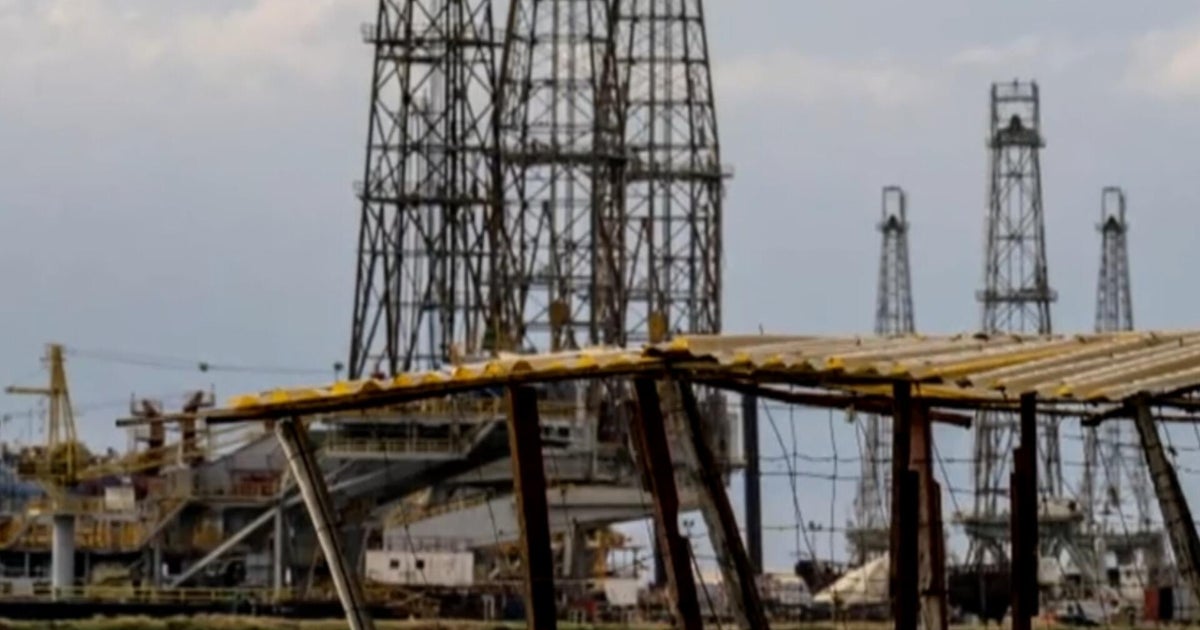
Chevron, Italy’s Eni, and other companies have signed large deals to increase oil production in Venezuela. These agreements were signed in Caracas with Venezuelan and U.S. officials present and aim to expand oil projects and improve the energy sector.
Key Facts
Chevron and Eni will increase their operations and stakes in Venezuelan oil fields.
Chevron’s new project in the Orinoco Belt is valued at $7 billion and will double output in five years.
Eni got exclusive rights to explore the Junin 5 oilfield in Venezuela.
GE Vernova, a U.S. energy company, will help fix Venezuela’s damaged electricity grid.
The deals follow a January oil reform in Venezuela and a recent Caracas-Washington agreement giving the U.S. access to 17 Venezuelan oilfields.
The U.S. Energy Secretary said these deals aim to quickly improve Venezuela’s oil sector and bring economic benefits.
Venezuelan interim President Delcy Rodriguez said involving the U.S. is needed for investment and economic growth.
A Venezuelan businessman linked to corruption plays a key role in some deals, but was not present at the signing.
Read the Original
Want the full story? Tap a source to open the original
article.
The US Mint released a special $1 coin featuring President Donald Trump’s portrait to celebrate the 250th anniversary of the United States. This is the first time in 100 years that a living president appears on US currency, and the coins quickly sold out online.
Key Facts
The coin shows President Trump’s portrait with the phrase "In God we trust."
It marks America’s 250th anniversary as a special commemorative item.
A roll of 25 coins costs $61, and a bag of 100 costs $154.50.
The coins sold out shortly after going on sale on the US Mint’s website.
Federal law usually prohibits images of living people on US currency, but exceptions exist for coins’ front sides (obverse).
In 1926, President Calvin Coolidge’s image appeared on a half-dollar coin while he was still alive.
There is proposed legislation to allow living presidents on paper money, but it is not yet passed.
The Trump administration referred to a 2020 law that permits living presidents on the coin’s front side but not on the back side.
Read the Original
Want the full story? Tap a source to open the original
article.
The Las Vegas Stadium Authority has approved $75 million in public funds to help pay for $158 million in upgrades to Allegiant Stadium. The Las Vegas Raiders will cover the remaining costs, with work planned to finish before the 2029 Super Bowl at the stadium.
Key Facts
Allegiant Stadium opened in 2020 and cost $2 billion to build.
The upgrade aims to improve access to the stadium’s north entrance.
The stadium has a seating capacity of 65,000.
The project includes new pedestrian decks, a plaza, and better transportation options.
Public funds come from surplus room tax revenue and cannot be used to pay down existing bonds.
The Raiders will pay most of the upgrade costs and maintain the new facilities.
Allegiant Stadium hosts NFL games, college football, concerts, and events like the Super Bowl and Final Four.
The upgrades help the stadium compete with new venues opening in other U.S. cities.
Read the Original
Want the full story? Tap a source to open the original
article.
The Dutch central bank moved 86 tonnes of gold from the US and Canada to London because of rising political tensions. This move makes it easier and faster for the bank to access and use its gold in a crisis.
Key Facts
The Dutch central bank moved 86 tonnes of gold from the US and Canada to London.
The total Dutch gold reserves are 612.4 tonnes, valued at about €72.2 billion ($83.7 billion) at the end of 2025.
Before the move, 31.3% of gold was in New York, and 19.7% was in Ottawa; afterwards, each held 18.5%.
Gold stored in London increased from 18.1% to 32.1%, while 30.8% remains in the Netherlands.
The transfer happened between March and August and was done by a mix of physical transportation and buying/selling gold.
Moving gold to London is seen as better because London’s market is larger and easier for trading or lending gold during crises.
Some experts say political issues in the US influenced the decision to move gold reserves to London.
Other central banks, like Germany’s Bundesbank, have considered such moves but kept their gold in New York for now.
Read the Original
Want the full story? Tap a source to open the original
article.
Almost half of households in Britain live in areas where economic growth is not improving their quality of life, with the north of England, Midlands, and Wales having less spending power than average. Meanwhile, London and the South East have higher spending power, showing a clear North-South divide in wealth and living standards.
Key Facts
46% of UK households (about 12.5 million) live in regions where economic growth does not increase spending power.
Spending power measures income left after taxes and housing costs, adjusted for household size.
The North East, North West, and Yorkshire & the Humber regions have spending power significantly below the national average.
The South East has spending power 9% above the average, with London also above average.
Within regions like London, there are wide differences; for example, Richmond’s disposable income is almost double that of nearby Hammersmith and Fulham.
Scotland and the South West are exceptions, with spending power slightly above the national average due to lower housing costs and smaller households.
The report suggests that devolution (shifting power from national to local governments) should allow local areas to keep more revenue and have more control over resources.
Success should be measured by whether economic growth improves prosperity and opportunities, not just by growth numbers.
Read the Original
Want the full story? Tap a source to open the original
article.
Victoria Beckham’s fashion company has made a profit for the first time after nearly 20 years. The business earned £7.3 million in operating profit in 2025, with sales rising 15% to £129.8 million, helped by expanding into beauty products.
Key Facts
Victoria Beckham started her fashion company almost 20 years ago.
In 2025, the company reported an operating profit of £7.3 million.
Sales increased by 15% to £129.8 million in 2025.
The company was once losing tens of millions of pounds and faced big debts.
David Beckham financially supported the business in difficult times.
Private equity firm Neo Investment Partners helped restructure the company from 2017.
Launching a fashion brand usually takes 3 to 5 years to become profitable.
The beauty product range, launched in 2019, now makes up about two-thirds of the brand’s revenue.
Read the Original
Want the full story? Tap a source to open the original
article.
Chevron, a large oil company, will invest $7 billion in oil projects in Venezuela. This decision follows a recent agreement between the U.S. government and the Venezuelan government to allow more oil production cooperation.
Key Facts
Chevron plans to spend $7 billion to increase oil production in Venezuela.
The goal is to double Chevron’s oil output in the country.
The investment comes after the U.S. and Venezuela reached a deal concerning oil cooperation.
The deal was made during the administration of President Donald Trump.
Chevron is one of the biggest oil companies in the world.
Venezuela has large oil reserves that have been underused due to political and economic issues.
The agreement allows U.S. companies to work more freely with Venezuela’s oil industry.
Read the Original
Want the full story? Tap a source to open the original
article.
Some recent business school graduates are borrowing large sums of money to buy existing companies and become their CEOs, instead of working their way up in a company or starting a new business. This method, called entrepreneurship by acquisition or search-fund investing, is growing in the US, with many investors supporting young buyers to lead established firms.
Key Facts
Ania Aliev, 27, bought a medical equipment company soon after graduating with an MBA.
She became CEO and led a takeover that doubled the company's size within a few years.
Entrepreneurship by acquisition involves creating a "search fund" to attract investors and buy a business.
In 2023, 94 new search funds were started in the US, with $682 million invested over 2022-2023.
Specialized investment firms back young entrepreneurs buying companies this way.
A Yale School of Management report says search funds often provide strong financial returns.
Some employees welcome new owners and growth, while others may leave or be made redundant.
For sellers, selling to young buyers is a way to retire or move on from the business.
Read the Original
Want the full story? Tap a source to open the original
article.
The UK government named over 600 employers, including B&Q and Five Guys, for paying workers less than the minimum wage. These businesses have paid back £4 million to staff and received £7 million in penalties.
Key Facts
More than 600 UK businesses were found paying below the minimum wage.
A total of £4 million was paid back to workers who were underpaid.
The companies also faced £7 million in fines.
B&Q underpaid 4,530 workers by over £456,000 due to geographical allowance issues.
Five Guys underpaid 3,699 staff by more than £54,000 because of payroll technicalities.
Some NHS trusts and care providers were also on the list for underpaying staff.
The minimum wage rates are £12.71 for people 21 and older, £10.85 for 18-20 year olds, and £8 for under 18s and apprentices.
Government officials stress that underpaying staff is illegal and encourage employers to check their payroll systems.
Read the Original
Want the full story? Tap a source to open the original
article.
Treasury Secretary Scott Bessent met with economic leaders from different countries in Asheville, North Carolina. He aimed to gather support for President Trump’s financial policies related to Iran during this gathering.
Key Facts
Scott Bessent is the Treasury Secretary.
He hosted economic officials from various countries.
The meeting took place in Asheville, North Carolina.
The goal was to build support for President Donald Trump’s financial agenda.
The focus of the agenda relates to economic policies on Iran.
This event happened during a time linked to the G20 summit, a gathering of world leaders on economic issues.
The effort was part of the U.S. government’s broader international financial strategy.
Read the Original
Want the full story? Tap a source to open the original
article.
Uber is cutting about 10% of its workers, or roughly 3,400 jobs, to make the company simpler and more efficient. The company will also require most employees to work in offices, limiting remote work to about 1% of staff.
Key Facts
Uber will lay off around 10% of its global workforce, about 3,400 people.
The company plans to remove extra management layers and simplify team setups.
The job cuts aim to save about $1.7 billion, according to an outside financial report.
Uber wants to invest more money in drivers, delivery workers, sellers, and new technology like self-driving cars.
Most remote workers must move to work in Uber's main office locations.
Only about 1% of employees will be allowed to work from home in the future.
The CEO said working together in person helps team collaboration and problem-solving.
Uber started as a rideshare company in 2009 but now also delivers food and other goods.
Read the Original
Want the full story? Tap a source to open the original
article.
OpenAI is facing new lawsuits in the U.S. after a mass shooting in Tumbler Ridge, Canada, that killed eight people. The lawsuits claim OpenAI and its CEO did not report warning signs seen in interactions with their chatbot, ChatGPT, before the shooting.
Key Facts
The Tumbler Ridge shooting happened in February in British Columbia, leaving eight dead and over 25 wounded.
30 new lawsuits were filed in California federal court, adding to seven earlier lawsuits from April.
Plaintiffs include teachers, students, and witnesses at the school where most victims died.
The shooter, Jesse Van Rootselaar, reportedly described violent scenarios in conversations with ChatGPT before the event.
OpenAI CEO Sam Altman apologized for not alerting law enforcement after seeing these warnings.
British Columbia’s Attorney General said the province will also seek legal action against OpenAI.
OpenAI faces other lawsuits alleging its AI tech contributed to violence and suicides in the U.S. and Canada.
OpenAI’s head of strategy said the company will respect the legal process and work with victims’ families.
Read the Original
Want the full story? Tap a source to open the original
article.