Uganda has officially named its crude oil blend "Pearl Sweet" as the country prepares to start commercial oil production by the end of 2024. The blend is called "sweet" because it has low sulfur, and Uganda hopes the oil industry will help its economy grow.
Key Facts
Uganda will begin commercial oil production by the end of 2024.
The country named its crude oil blend "Pearl Sweet," referencing Uganda’s nickname as "the pearl of Africa."
"Sweet" refers to the crude oil’s low sulfur content, which is desirable in the oil market.
Uganda has about 1.6 billion barrels of recoverable oil reserves.
Major investors in Uganda’s oil projects include TotalEnergies (France), China National Offshore Oil Corporation (CNOOC), and Uganda National Oil Company, which owns 15%.
Production is expected to reach around 230,000 barrels per day.
The oil pipeline will connect oil fields near Lake Albert to a port in Tanzania.
The pipeline project faces opposition from environmental groups concerned about its impact on protected forests, wildlife, and fresh water sources, and its conflict with climate agreements.
Read the Original
Want the full story? Tap a source to open the original
article.
Pabst Blue Ribbon is offering up to $20,000 for information to recover 1,602 cases of stolen beer in Southern California. The beer was taken in two thefts from a warehouse on August 17, with a total value of about $70,000.
Key Facts
1,602 cases of Pabst Blue Ribbon and Old Milwaukee beer were stolen on August 17 in Montclair, California.
The theft happened in two parts at an Anheuser-Busch distribution center east of Los Angeles.
The first theft involved about $45,000 worth of beer that never reached its destination in Tucson, Arizona.
The second theft used fake paperwork to get $25,000 worth of beer an hour later.
In total, about 40,000 pounds of beer valued at $70,000 was stolen.
Pabst Brewing Co. CEO is offering a reward of up to $20,000 for information leading to the beer’s recovery.
The company wants the beer returned by September 9.
Similar high-value food thefts happened recently, including seafood in New England and chocolate bars in Europe.
Read the Original
Want the full story? Tap a source to open the original
article.
A U.S. federal judge ordered Google to change how it runs its digital advertising system but did not require the company to break up its business. This ruling follows a previous court decision declaring Google’s search engine an illegal monopoly and rejecting a government demand to sell its Chrome browser.
Key Facts
Judge Leonie Brinkema ruled that Google must fix its digital advertising system but stopped short of forcing a breakup.
The U.S. Justice Department had asked for parts of Google’s ad technology to be sold to reduce monopoly power.
Google’s parent company, Alphabet Inc., is valued at $4.11 trillion and makes nearly $400 billion yearly from ads.
This is the second time Google avoided a breakup in court related to monopoly allegations in the past year.
Google argued that breaking up its ad system would harm online publishers who rely on the technology.
The advertising system handles about 55 million requests every second.
The judge’s full detailed decision will be reviewed by both sides before public release.
Some critics say the ruling does not do enough to stop Google from limiting competition in tech.
Read the Original
Want the full story? Tap a source to open the original
article.
Chevron, a major U.S. oil company, will expand its work in Venezuela after President Donald Trump announced a deal to develop Venezuela’s oil and share profits with the Pentagon. Chevron plans to invest over $7 billion in the next five years to more than double its oil production in Venezuela.
Key Facts
Chevron is the only major U.S. oil company currently operating in Venezuela.
Chevron received new land in the Orinoco Belt, an important oil area in Venezuela.
The company aims to produce about 600,000 barrels of oil per day, more than twice its current output.
Chevron’s investment plan is over $7 billion for the next five years.
Venezuela has the world’s largest proven oil reserves, with more than 303 billion barrels.
Venezuela’s oil infrastructure is damaged and production is low because of sanctions and other problems.
Venezuela produces just over 1 million barrels of oil a day, much less than Saudi Arabia and the U.S.
Read the Original
Want the full story? Tap a source to open the original
article.
One dollar coins featuring President Donald Trump’s image sold out very quickly when they came out. The coins went on sale at noon and were no longer available within hours.
Key Facts
The coins are gold-colored and show President Donald Trump’s picture.
They were sold by the U.S. Mint starting at 12:00 PM on Wednesday.
The coins were advertised as a chance to “own a piece of American History.”
A roll of 25 coins was priced at $61.
The coins sold out within hours of going on sale, according to the U.S. Mint website.
Read the Original
Want the full story? Tap a source to open the original
article.
Commerce Secretary Howard Lutnick said that data centers do not use water, even though these facilities need a lot of water. This statement came during an interview where concerns about data centers’ water use affecting local communities were discussed.
Key Facts
Commerce Secretary Howard Lutnick said data centers "don’t use water."
Data centers are known for using large amounts of water, especially for cooling equipment.
There are growing concerns that water use by data centers can impact local communities.
Lutnick made the comments during an interview with CNBC.
Data centers are important facilities that help store and manage digital information.
Water consumption by data centers has become a topic of public discussion.
The discussion involves balancing technology needs and environmental concerns.
Read the Original
Want the full story? Tap a source to open the original
article.
Buy now, pay later (BNPL) loans were first meant to help people buy small items. Now, more people are using these loans to pay for important things like rent, groceries, and medical bills. Experts warn this can be risky because the costs and fees are not always clear.
Key Facts
BNPL loans let buyers split payments into smaller parts, usually four payments over a few weeks or months.
These loans often do not require a credit check and are offered quickly during checkout online or in stores.
In 2025, Americans borrowed $160 billion using BNPL loans, double the amount two years earlier.
More than half of BNPL users say they would struggle to pay their bills without these loans.
Nearly 30% of BNPL users spent the loans on groceries, up from 14% two years ago.
About 23% have used BNPL loans for medical expenses or rent.
Lenders make money from fixed fees and a percentage of the loan amount; late fees are less common but late payments can affect future loan approval.
Some companies are creating new services, like letting renters split monthly rent payments into two parts to help with flexibility.
Read the Original
Want the full story? Tap a source to open the original
article.
Uber is stopping its services immediately in Nigeria and Uganda after reviewing its business in these countries. The company will still work in Egypt, Ghana, Kenya, and South Africa in Africa.
Key Facts
Uber started operating in Nigeria in 2014 and in Uganda in 2016.
Drivers in Nigeria complained that Uber’s prices are too low and commission fees are too high.
Uber’s CEO announced a global job cut of 10%, affecting over 3,000 employees.
Over the past year, Uber also left Ivory Coast and Tanzania.
Nigeria’s removal of a fuel subsidy and rising petrol prices increased costs for drivers and commuters.
Other ride-hailing companies, like Bolt and inDrive, operate in Nigeria and Uganda.
Uber will keep its support centers open in Nigeria and Uganda until 23 September to help drivers and employees.
In Lagos, Uber once offered a boat service to help avoid traffic jams.
Read the Original
Want the full story? Tap a source to open the original
article.
Certificate of deposit (CD) accounts offer higher, fixed interest rates compared to regular savings accounts, making them a good choice for savers in September. However, there are common mistakes to avoid, such as opening a CD before the Federal Reserve meeting, choosing short-term CDs over long-term ones, and only using your current bank without comparing other options.
Key Facts
CD accounts pay higher fixed interest rates than traditional savings accounts.
Withdrawing money from a CD before it matures can lead to significant early withdrawal fees.
The Federal Reserve is likely to raise interest rates after its September 16 meeting.
Opening a CD before the Fed’s decision may mean missing out on higher rates.
Long-term CDs currently offer better interest rates compared to short-term CDs.
Only choose a long-term CD if you can keep the money until it matures.
Online banks often offer better CD rates than traditional banks with physical branches.
Using just your current bank for CDs might cause you to miss out on higher interest rates elsewhere.
Read the Original
Want the full story? Tap a source to open the original
article.
A US judge has rejected the government’s request to force Google to sell part of its online advertising business called AdX. The judge agreed that Google broke competition rules but decided that changing some business practices, rather than breaking up the company, was enough for now.
Key Facts
Judge Leonie Brinkema ruled against breaking up Google’s ad exchange platform, AdX.
The US Department of Justice (DOJ) had argued Google illegally stopped competition in online advertising.
The judge found Google had monopolized key parts of the ad tech market and tied products together unfairly.
Details of the changes Google must make are not yet public and will be filed in 14 days.
Google plans to appeal the earlier ruling that it had illegally monopolized the market.
The DOJ said the decision still requires Google to make significant changes and is considering next steps.
This is the third recent case where US courts rejected breaking up a major Big Tech company.
Google said breaking up parts of its ad business would hurt publishers, advertisers, and consumers.
Read the Original
Want the full story? Tap a source to open the original
article.
Chevron and Eni, two big oil companies from the U.S. and Italy, have agreed to expand their oil projects in Venezuela. The agreement was signed in Caracas with Venezuela’s interim President Delcy Rodriguez and U.S. Energy Secretary Chris Wright present.
Key Facts
Chevron (a U.S. company) and Eni (an Italian company) are increasing oil production projects in Venezuela.
The signing ceremony took place in Caracas, Venezuela’s capital.
Interim President Delcy Rodriguez of Venezuela and U.S. Energy Secretary Chris Wright attended the event.
The aim is to boost Venezuela’s oil output.
This expansion comes while the U.S. government closely watches these developments.
Venezuela is a country rich in oil reserves but has faced economic and political challenges.
Previously, Chinese and Russian companies operated some Venezuelan oilfields.
This deal is part of ongoing energy and economic cooperation between Venezuela and foreign companies.
Read the Original
Want the full story? Tap a source to open the original
article.
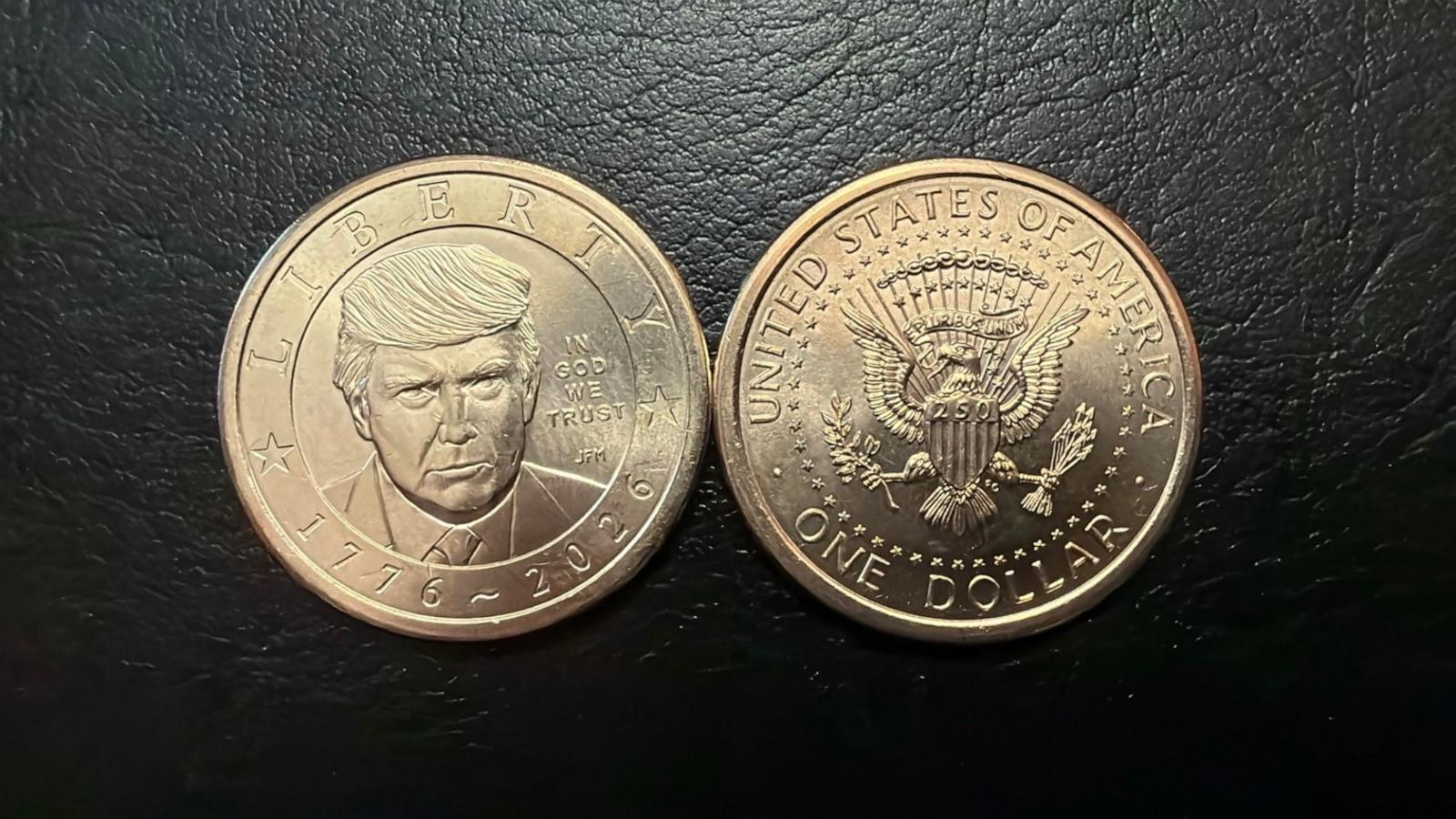
The U.S. Mint has released $1 coins featuring President Donald Trump's face to mark the 250th anniversary of the Declaration of Independence. These coins, which have a gold-colored finish, are legal money and can be bought online or found in circulation.
Key Facts
$1 coins with President Trump’s portrait entered circulation starting September 2, 2026.
The coins commemorate the 250th anniversary of the Declaration of Independence with inscriptions showing "1776 ~ 2026," "LIBERTY," and "IN GOD WE TRUST."
The coins are made from manganese brass, not real gold, and were made at the Philadelphia Mint.
Rolls of 25 coins cost $61, and bags of 100 coins cost $154.50 on the U.S. Mint’s website.
About 250,000 coins with special July 4th markings were randomly included in coin rolls and bags.
Usually, living presidents do not appear on U.S. currency, but a 2020 law allowed this exception for commemorative coins like these.
The last time a living president appeared on U.S. coins was 100 years ago on a half-dollar featuring Calvin Coolidge.
Some officials questioned the legality of the coin’s design because it was not reviewed by the usual advisory committee, but the Treasury said the process was properly followed.
Read the Original
Want the full story? Tap a source to open the original
article.
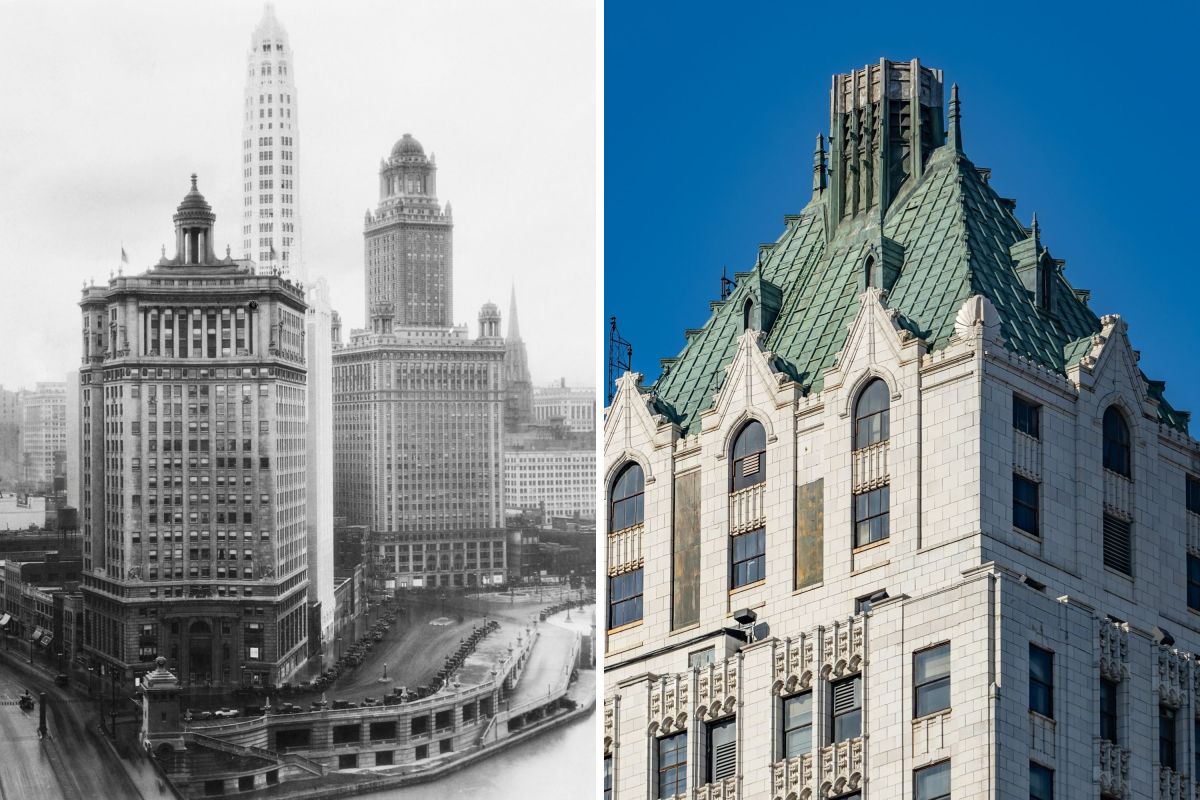
The Pittsfield Building, a historic 38-story skyscraper in Chicago completed in 1927, is being transformed from mostly office space into over 200 apartments, including affordable housing. The project includes one of the largest restorations of a terra cotta façade in the United States and aims to preserve many of the building’s historic features.
Key Facts
The Pittsfield Building is a 38-story Gothic Revival skyscraper completed in 1927 in downtown Chicago.
Originally designed as office space, it housed many doctors' and dentists' offices.
The building is being converted into a mixed-use residential complex with 214 new apartments added to 228 existing units.
Restoration work focuses on the building’s exterior, especially the terra cotta façade, polished black granite at street level, and Gothic architectural details.
The project is considered one of the largest historic terra cotta façade restorations in the U.S.
The building is a City of Chicago Landmark and part of a downtown historic district, with efforts to obtain National Historic Landmark status.
Interior historic features like hand-painted ceilings, cast-bronze elevator doors, and marble finishes will be preserved and restored.
The restoration uses modern digital technology to help maintain the craftsmanship and design quality of the original 1920s construction.
Read the Original
Want the full story? Tap a source to open the original
article.
A judge in Virginia ruled that Google does not have to sell its online advertising exchange, called AdX, despite the US Justice Department's efforts. The judge recognized Google’s past illegal monopoly behavior but decided that forcing a sale would be too difficult and that other solutions could address the issue.
Key Facts
The US Justice Department sued Google in 2023 for monopoly practices in online advertising technology.
Judge Leonie Brinkema ruled Google has illegal monopolies in parts of its ad business but refused to force Google to sell AdX.
AdX is a platform where website owners sell ads and Google takes a 20% fee from these sales.
Google argued that selling AdX would be technically hard and harm customers due to a difficult transition.
The judge accepted alternative behavioral remedies instead of breaking up Google’s business.
Ad Manager, part of Google’s ad tech business, made up 4.1% of Google’s revenue in 2020.
This ruling is the third time a US judge has rejected attempts to break up big tech companies in recent antitrust cases.
Similar cases against other big tech firms like Meta, Amazon, and Apple are ongoing or delayed.
Read the Original
Want the full story? Tap a source to open the original
article.
Interest rates on government bonds are rising worldwide, making borrowing more costly for people and businesses. This increase affects loans like mortgages and car payments, as well as savings and retirement plans. Factors such as inflation concerns, government deficits, and market reactions influence bond yields.
Key Facts
Bond yields represent the return investors earn on government debt and influence loan rates.
The 10-year U.S. Treasury yield recently hit 4.80%, the highest in four years, affecting mortgage rates.
The 5-year Treasury yield, linked to auto loans, reached 4.55%, also a four-year high.
Inflation worries and higher U.S. government borrowing after the pandemic are pushing yields up.
Large technology companies borrowing to build AI-related infrastructure add to demand for loans.
Federal Reserve Chair Kevin Warsh suggested more interest rate increases could come to control inflation.
U.S. Treasury Secretary Scott Bessent took steps to slow rising yields and said the situation is not dire.
When bond prices drop, yields rise because new buyers get better returns on older bonds.
Read the Original
Want the full story? Tap a source to open the original
article.
The UK is facing higher borrowing costs due to global events like the Iran war and currency problems. Investors are worried because the UK government, led by Andy Burnham and Chancellor John Healey, has not yet convinced them that it will manage the country’s finances well, especially with high energy import needs and inflation concerns.
Key Facts
UK 30-year government borrowing costs reached their highest level since 1998.
Global issues such as the Iran war and a weak Japanese yen contributed to higher interest rates worldwide.
The UK has the highest borrowing costs among the G7 nations due to inflation and energy import dependence.
Andy Burnham and John Healey have not given bond investors strong reasons to believe UK finances will improve soon.
Burnham focuses on more public control of utilities, but it is unclear if this will reduce costs or inflation.
Experts say the government may need to make tough choices on pensions and welfare to lower borrowing costs.
The upcoming budget is expected to be a crucial moment for addressing the UK’s economic challenges.
There is concern that delaying difficult decisions could worsen the financial situation, especially if energy market problems continue.
Read the Original
Want the full story? Tap a source to open the original
article.
The cost for employers to provide health benefits to workers is expected to rise by 8.2% in 2027, the largest increase in over 20 years. This prediction comes from a recent report by the financial consulting company Mercer.
Key Facts
Employer health benefit costs will increase by 8.2% in 2027.
This is the highest rise in the past 20 years.
Mercer is the company that made this projection.
The increase is linked to ongoing factors that drive up healthcare expenses.
Rising health costs affect budgets for businesses providing employee benefits.
Read the Original
Want the full story? Tap a source to open the original
article.
New Jersey has asked the U.S. Supreme Court to decide who should regulate prediction markets, which are platforms where people can bet on outcomes of events. This legal issue has seen different decisions from lower courts, and now it will be reviewed by the highest court.
Key Facts
New Jersey filed a request for the Supreme Court to review a legal dispute involving prediction markets.
Prediction markets allow users to place bets on the outcomes of various events.
There is disagreement about whether states or the federal government have the power to regulate these markets.
Lower appellate courts have issued conflicting rulings on this issue.
This case is the first time the Supreme Court will consider this regulatory conflict.
The outcome will affect how prediction markets operate across the United States.
Read the Original
Want the full story? Tap a source to open the original
article.
Treasury Secretary Scott Bessent said China did not agree that its cheap exports are causing problems for other countries during the Group of 20 (G20) meeting. He highlighted that China is not willing to work on fixing trade issues related to low-priced exports.
Key Facts
Treasury Secretary Scott Bessent spoke at the G20 conference in Asheville, North Carolina.
Bessent criticized China for not recognizing that cheap exports can hurt other economies.
China did not agree to address the trade problems caused by selling goods at very low prices.
The G20 includes 20 major economies that meet to discuss global economic issues.
Bessent’s comments suggest challenges in reaching agreements on fair trade practices.
The topic focuses on international trade and economic policies among large countries.
Read the Original
Want the full story? Tap a source to open the original
article.