A record number of 34.5 million people traveled on Amtrak trains in the 2025 fiscal year. Amtrak invested $5.5 billion in infrastructure improvements and achieved significant milestones in ridership, ticket sales, and customer satisfaction.
Key Facts
Amtrak had a record 34.5 million passengers in FY 2025.
This is a 5.1% increase from the previous year when 32.8 million people used Amtrak.
The company invested $5.5 billion in infrastructure projects, including track, signal, and station upgrades.
Amtrak recorded $2.7 billion in adjusted ticket sales and $3.9 billion in total operating revenue.
Passengers traveled a total of 6.9 billion miles in 2025.
Long-distance routes and state-supported services like the Pacific Surfliner saw increased ridership.
New services included the Mardi Gras route and NextGen Acela on the Northeast Corridor.
Amtrak plans to introduce more NextGen Acela trains and new Airo fleets by FY 2028.
Read the Original
Want the full story? Tap a source to open the original
article.
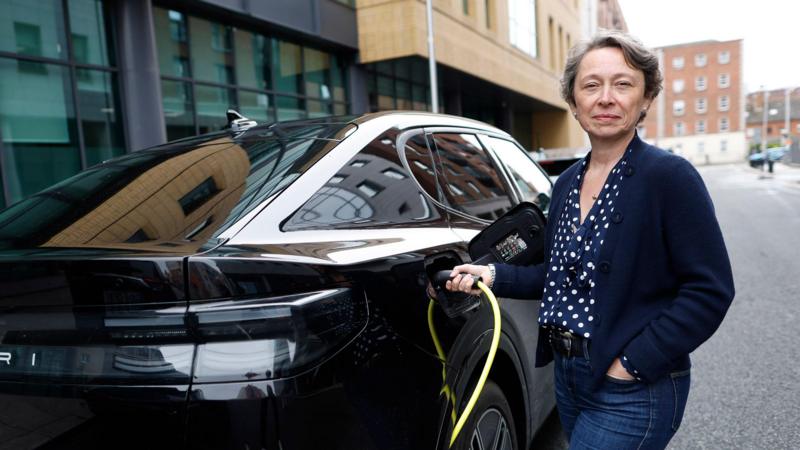
Ford's UK boss, Lisa Brankin, has expressed concerns about potential new taxes on electric vehicles (EVs), arguing that imposing these taxes now could deter buyers. The UK government is considering measures like a pay-per-mile charge for EVs to create a fairer tax system. Ford is under pressure to increase EV sales to meet environmental targets and suggests government incentives are needed.
Key Facts
Ford's UK boss warns that taxes on electric vehicles could discourage buyers as demand is currently weak.
The UK government is considering a pay-per-mile charge for EVs to ensure fairer vehicle tax systems by 2028.
Ford's managing director says calculating mileage for this tax may deter potential EV buyers.
The UK aims for 80% of new car sales to be electric vehicles by 2030 to meet environmental goals.
Ford indicates it might struggle to meet the 80% target without government incentives.
Fully-electric vehicles accounted for about 22.4% of new car sales in the UK by October 2025.
A large portion of new EVs are sold to businesses, benefiting from lower company car taxes.
The future of Ford's diesel engine plant in Dagenham, employing nearly 1,800 staff, is uncertain beyond 2030 due to the shift to EVs.
Read the Original
Want the full story? Tap a source to open the original
article.
Nvidia predicts its revenue for the fourth quarter will be higher than analysts expected, driven by strong demand for its AI chips. The company forecasts sales around $65 billion, despite concerns about an AI investment bubble. Nvidia's data center segment continues to perform well, but some analysts warn about potential growth limits due to infrastructure challenges.
Key Facts
Nvidia expects fourth-quarter sales of around $65 billion, above analysts' estimates.
The data center segment brought $51.2 billion in revenue in the last quarter, exceeding expectations.
There are concerns about an AI investment bubble as Nvidia's shares fell by 8% in November after significant previous growth.
Four customers made up 61% of Nvidia's total sales in its third fiscal quarter.
Nvidia's CEO mentioned $500 billion in bookings for advanced chips up to 2026.
Microsoft reported a large capital expenditure, mainly for chips, partly driven by AI data center expansion.
Nvidia plans an adjusted gross margin of 75% for the fourth quarter, slightly higher than market expectations.
Read the Original
Want the full story? Tap a source to open the original
article.
Nvidia reported better-than-expected earnings, driven by strong demand for its AI chips. The company's latest financial results eased investor worries about heavy spending in the AI sector, causing its stock to rise.
Key Facts
Nvidia's revenue for the past three months rose 62% to $57 billion.
Sales in its AI data center division increased by 66%, reaching over $51 billion.
Nvidia's projected fourth-quarter sales are between $65 billion, which exceeded expectations.
The company's stock price increased by more than 3% in after-hours trading.
Nvidia, the world's most valuable company, significantly impacts market views on AI growth.
CEO Jensen Huang highlighted the high demand for Nvidia's AI Blackwell systems.
Concerns about AI investments had recently contributed to declines in the S&P 500 index.
Read the Original
Want the full story? Tap a source to open the original
article.
Hospitals are working to convert travel nurses, who are temporary workers, into full-time employees. Due to high demand during the COVID-19 pandemic, hospitals relied on travel nurses, but now seek long-term staffing solutions. Leaders in healthcare discussed strategies for attracting and keeping these nurses through benefits and opportunities.
Key Facts
Hospitals faced high nurse vacancy rates during the COVID-19 pandemic.
About 100,000 nurses left the healthcare workforce during the pandemic.
Hospitals initially used travel nurses to fill gaps but found it costly.
Travel nurses were often paid $16 more per hour than regular staff.
Rising costs led hospitals to focus on converting travel nurses to full-time staff.
OhioHealth developed a strategy to reduce nurse shortages in its hospitals.
OhioHealth's approach included understanding why nurses chose contract work.
Listening sessions and improving job conditions helped extend nurse contracts at OhioHealth.
Read the Original
Want the full story? Tap a source to open the original
article.
The U.S. trade deficit decreased by nearly 24% in August due to tariffs imposed by President Donald Trump, which led to fewer imports. The trade gap shrank to $59.6 billion in August from $78.2 billion in July, while imports fell by 5%. President Trump has placed tariffs on many foreign goods, aiming to protect U.S. industries.
Key Facts
The U.S. trade deficit fell by nearly 24% in August.
The trade gap decreased from $78.2 billion in July to $59.6 billion in August.
Imports of goods and services dropped by 5% to $340.4 billion in August.
Exports increased slightly, up 0.1% to $280.8 billion.
President Trump implemented tariffs on many foreign goods, including steel, copper, and autos.
These tariffs aim to protect U.S. industries and reduce reliance on foreign products.
The overall trade deficit for 2025 is up 25% compared to the same period in 2024.
Tariffs have contributed to higher inflation rates, which remain above the Federal Reserve's target.
President Trump recently lifted tariffs on several food items in response to high living costs, influenced by voter dissatisfaction.
Trump's tariff policy is facing a legal challenge in the Supreme Court, questioning his authority to impose them without Congress.
Read the Original
Want the full story? Tap a source to open the original
article.
Health care leaders discussed solving the problem of nurse shortages by creating better partnerships between hospitals and higher education. They emphasized the need to support nursing careers through education, financial incentives, and a positive work environment. Leaders suggested that having a good work culture and clear career paths can help retain nurses.
Key Facts
The health care industry is facing nurse shortages, worsened by the COVID-19 pandemic.
Leaders suggest hospitals should partner with higher education to create clear career paths for nurses.
Dr. Regina Foley from Hackensack Meridian Health emphasized the importance of collaboration between hospitals and educational institutions.
The NCLEX exam is required for nurse licensing in the U.S., Canada, and Australia.
Hackensack Meridian supports nurses through tuition assistance, bonuses, and loan forgiveness.
A positive work environment where nurses feel valued can help retain staff.
David Rutherford from OhioHealth encourages nurses to communicate their career goals to leadership.
Read the Original
Want the full story? Tap a source to open the original
article.
Mortgage repossessions in England and Wales have reached their highest level in five years, with courts handling numerous cases where people are unable to keep up with payments. Rising unemployment and higher interest rates are key reasons why more people are facing the loss of their homes. Reporters documented stories of individuals affected by these issues as well as challenges faced by landlords.
Key Facts
Mortgage repossession orders in England and Wales hit 10,853 in the 2024-2025 period.
Economic experts cited rising unemployment and interest rates as major factors.
BBC reporters attended court hearings in various locations, including London and the East of England.
Cases involved both mortgage and rental property repossessions.
Courts heard stories of hardship, including families in deep mortgage arrears and long-time tenants facing loss of homes.
There is no free legal aid available for housing-related cases.
Housing case workers reported being overwhelmed with requests for assistance.
A large number of councils in England noted an increase in people seeking help to avoid homelessness.
Read the Original
Want the full story? Tap a source to open the original
article.
West Virginia University Health System (WVU Medicine) will acquire five hospitals from Pennsylvania's Independence Health System by the fall of 2026. The merger aims to expand healthcare services, improve financial stability, and enhance patient care. The deal is still pending legal and regulatory approvals and is expected to take about two years to finalize.
Key Facts
WVU Medicine will acquire five hospitals from Independence Health System.
The hospitals involved are Butler Memorial, Clarion, Frick, Latrobe, and Westmoreland.
WVU Medicine is the largest health system and employer in West Virginia, with 25 hospitals.
Independence Health System is the third-largest health system in western Pennsylvania.
WVU will invest $800 million to modernize Independence Health System’s facilities.
The integration will include new private rooms, operating rooms, and imaging suites.
The acquisition requires state and federal regulatory approval, which may take several months.
The integration process is expected to be completed by October 1, 2026.
Read the Original
Want the full story? Tap a source to open the original
article.
The U.S. housing market currently has a big gap between sellers and buyers, the largest since 2013, with sellers outnumbering buyers by about 36.8%. This situation gives buyers more power to negotiate, but factors like high interest rates and home prices are still challenges. The market's conditions vary by region, with some areas strongly favoring buyers, while others continue to benefit sellers.
Key Facts
In October, the amount of home sellers in the market was 36.8% higher than buyers.
The number of buyers is at its lowest since the start of the COVID-19 pandemic.
The U.S. housing market has been labeled a "buyer's market" since May 2024.
The last strong buyer's market was right after the 2008 financial crisis.
The strongest buyer’s markets currently are in Texas and Florida.
Seller numbers have decreased by 0.5% due to low buyer demand.
Many buyers face challenges from high mortgage rates and home prices.
The divide between buyer and seller expectations is causing negotiation difficulties.
Read the Original
Want the full story? Tap a source to open the original
article.
Rising methane emissions are a concern for the U.S. oil and gas industry. A report warns that not controlling methane leaks could affect trade and profits as countries adopt stricter import rules. President Trump has stopped regulations that would have imposed fees on methane emissions.
Key Facts
Methane emissions are increasing, posing a challenge for the oil and gas sector.
Methane controls can significantly reduce emissions at a relatively low cost, impacting only 2% of the sector's annual earnings.
Over 70% of possible emission reductions can come from the oil and gas industry.
The European Union and other countries are creating import rules that charge for greenhouse gas emissions.
U.S. companies need to show their emissions levels to meet global trade standards for natural gas.
President Trump has blocked new regulations and fees designed to control methane leaks.
Industry group API states that methane emissions from land-based production have fallen by 42% from 2015 to 2023.
The oil and gas industry contributed about $239 million to Republican causes in the 2024 election cycle.
Read the Original
Want the full story? Tap a source to open the original
article.
The article explains what biologics and biosimilars are, focusing on their cost and the Trump administration's efforts to make them more affordable. Biologics are complex drugs made from living organisms and are expensive, while biosimilars are nearly identical alternatives designed to increase market competition and reduce prices.
Key Facts
Biologics are drugs made from living organisms and include treatments like Humira and Trulicity.
In 2024, biologics made up 5% of U.S. prescriptions but over half of the total spending on prescription drugs.
Biosimilars are similar versions of biologics, created after the original drug's patent expires.
Approval of biosimilars by the FDA typically takes 5 to 6 years and involves ensuring no significant differences from the original biologic.
Biosimilars increase competition in the market, potentially lowering prices of brand-name biologics.
Biologics and biosimilars are costly, with average annual costs ranging from $10,000 to $30,000 for U.S. patients.
Biosimilars can be 15% to 35% cheaper than the original biologics they mimic.
Read the Original
Want the full story? Tap a source to open the original
article.
The current economic situation resembles the one in 2000, with strong GDP growth but a weakening job market. In 2001, GDP growth stayed solid despite a technology investment slump and a short recession. The job market took longer to recover as companies began using technology to improve productivity, which led to fewer jobs.
Key Facts
The current economy is similar to the year 2000, with a strong stock market and GDP growth but a weakening job market.
In 2001, despite a minor recession, GDP grew slightly and returned to strong growth the following year.
The 2001 recession was driven by a decline in investment in telecommunications equipment.
Consumer spending continued to grow every quarter during the early 2000s, helped by tax and interest rate cuts.
Although GDP bounced back quickly, job recovery was slow, with significant job losses in 2001 and 2002.
By the end of 2003, total employment was still lower than at the end of 1999, though economic output increased by 10%.
High productivity growth was achieved through technology investments, outsourcing, and globalization, leading to fewer jobs needed.
A significant economic shift might not necessarily lead to a severe recession, but it could lead to difficult adjustments for workers.
Read the Original
Want the full story? Tap a source to open the original
article.
Olive Garden has stopped offering its "Never-Ending Pasta Bowl" deal. This was a temporary offer meant to attract more customers, and it ended on November 16. The deal allowed diners to enjoy unlimited pasta combinations at a set price.
Key Facts
Olive Garden ended its "Never-Ending Pasta Bowl" offer on November 16.
The promotion included unlimited pasta, soup or salad, and breadsticks for $13.99.
Diners could choose from several pasta types and sauces, with optional toppings for an extra cost.
The deal aimed to increase restaurant visits during economically uncertain times.
This promotion returned for several years and ended as a limited-time offer.
Olive Garden announced the end of the deal on Facebook.
Promotions like this help restaurants attract more customers temporarily.
Read the Original
Want the full story? Tap a source to open the original
article.
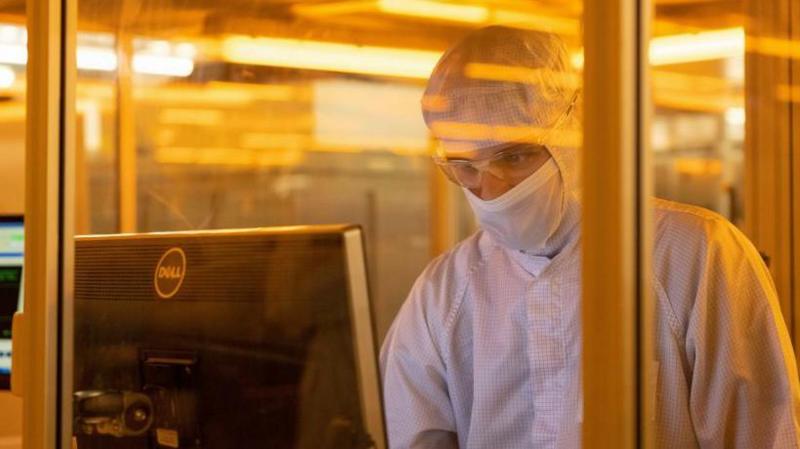
The Dutch government temporarily stopped its intervention with Nexperia, a Chinese-owned chipmaker in the Netherlands, after talks with China. Initially, the Netherlands acted due to concerns about governance issues and semiconductor supply security. The decision aims to reduce tensions between the EU and China.
Key Facts
The Dutch government paused its intervention in Nexperia after discussions with China.
Initial concerns included governance issues and semiconductor supply security.
China blocked Nexperia's chip exports in response to Dutch actions.
Nexperia is important for supplying chips to the car industry.
The Dutch move seeks to ease EU-China tensions over trade and geopolitical issues.
A Dutch court removed Nexperia’s ex-CEO over alleged mismanagement.
The US government listed Wingtech, Nexperia's parent company, as a national security concern.
Nexperia sold a UK chip plant due to security concerns but still holds another UK facility.
Read the Original
Want the full story? Tap a source to open the original
article.
The television show "The Real Housewives" has helped its stars start and grow business ventures. These ventures boost local economies and gain loyal customers from the show's fans. Many stars, including Kathy Hilton, use the show as a business platform.
Key Facts
"The Real Housewives" TV show started in 2006 and features women from 31 different locations.
Stars from the show have used their fame to successfully promote their businesses.
Kathy Hilton, a cast member, highlighted fan loyalty as key to business success.
Hilton used her TV platform to promote a jewelry line with sustainable materials.
Nicky Hilton Rothschild, Kathy's daughter, launched her jewelry line at a major fan event.
Lisa Vanderpump expanded her TV presence with a spinoff show from her restaurant.
Vanderpump's spinoff, "Vanderpump Rules," became successful and attracts fans to her restaurant.
The show inspires cast members to not only grow their own businesses but also encourage others.
Read the Original
Want the full story? Tap a source to open the original
article.
Retailers in England and Wales say it takes too long to bring shoplifters to justice. The average time for shoplifting cases to be resolved in magistrates' courts has increased from 32 days in 2014 to 59 days in 2024. Some retailers feel this delay discourages them from reporting crimes.
Key Facts
Retailers are unhappy with the time taken to punish shoplifters.
The average time for dealing with shoplifting cases in courts has risen by over 80% in 10 years.
A thief who stole £2,000 in goods waited 10 months for sentencing.
Retailers like Andrew Goodacre say delays reduce trust in the justice system.
Some store owners, like Fiona Malone, caught thieves quickly but still faced long waits for court action.
Tom Hirst, a head of security, says the system is too lenient on shoplifters.
The delays are causing some retailers to stop reporting theft altogether.
Read the Original
Want the full story? Tap a source to open the original
article.
A portrait by Austrian artist Gustav Klimt sold for $236.4 million at a Sotheby's auction in New York, setting a new record for modern art prices. The painting, "Portrait of Elisabeth Lederer," played a key role in helping its Jewish subject survive during the Holocaust. The sale surpassed the previous record held by an Andy Warhol piece, with several other notable pieces, including a gold toilet sculpture, also auctioned.
Key Facts
Gustav Klimt's "Portrait of Elisabeth Lederer" sold for $236.4 million.
This sale set a new record for a piece of modern art.
The portrait helped the Jewish subject survive Nazi persecution during WWII.
The painting was part of billionaire Leonard A. Lauder's art collection.
The auction included other famous art pieces by van Gogh, Matisse, and Munch.
A solid gold toilet, created by artist Maurizio Cattelan, also sold for $12.1 million.
The Klimt sale surpassed a previous modern art record set by an Andy Warhol painting.
Sotheby's did not disclose the buyer of Klimt's portrait.
Read the Original
Want the full story? Tap a source to open the original
article.
Inflation in the UK has slowed to 3.6%, which means prices are still increasing but at a slower rate. This change might lead to lower interest rates for mortgages, providing relief to homeowners. However, food prices continue to rise, making grocery shopping more expensive for consumers.
Key Facts
The UK inflation rate has decreased to 3.6%, meaning prices are rising more slowly.
The Office for National Statistics (ONS) reports inflation rates monthly.
Food prices, including items like fish, vegetables, and chocolate, have increased, while fruit prices have slightly decreased.
The Bank of England may reduce interest rates to get closer to its target inflation rate of 2%.
Major lenders are already lowering mortgage rates—average rates for new two-year fixed deals have dropped to 4.88%.
First-time buyers are seeing some of the lowest mortgage rates in years if they have a small deposit.
Borrowing costs might drop because lenders expect a slow housing market during the Christmas season.
Despite lower borrowing costs, savings rates are not increasing due to limited competition among lenders.
Read the Original
Want the full story? Tap a source to open the original
article.
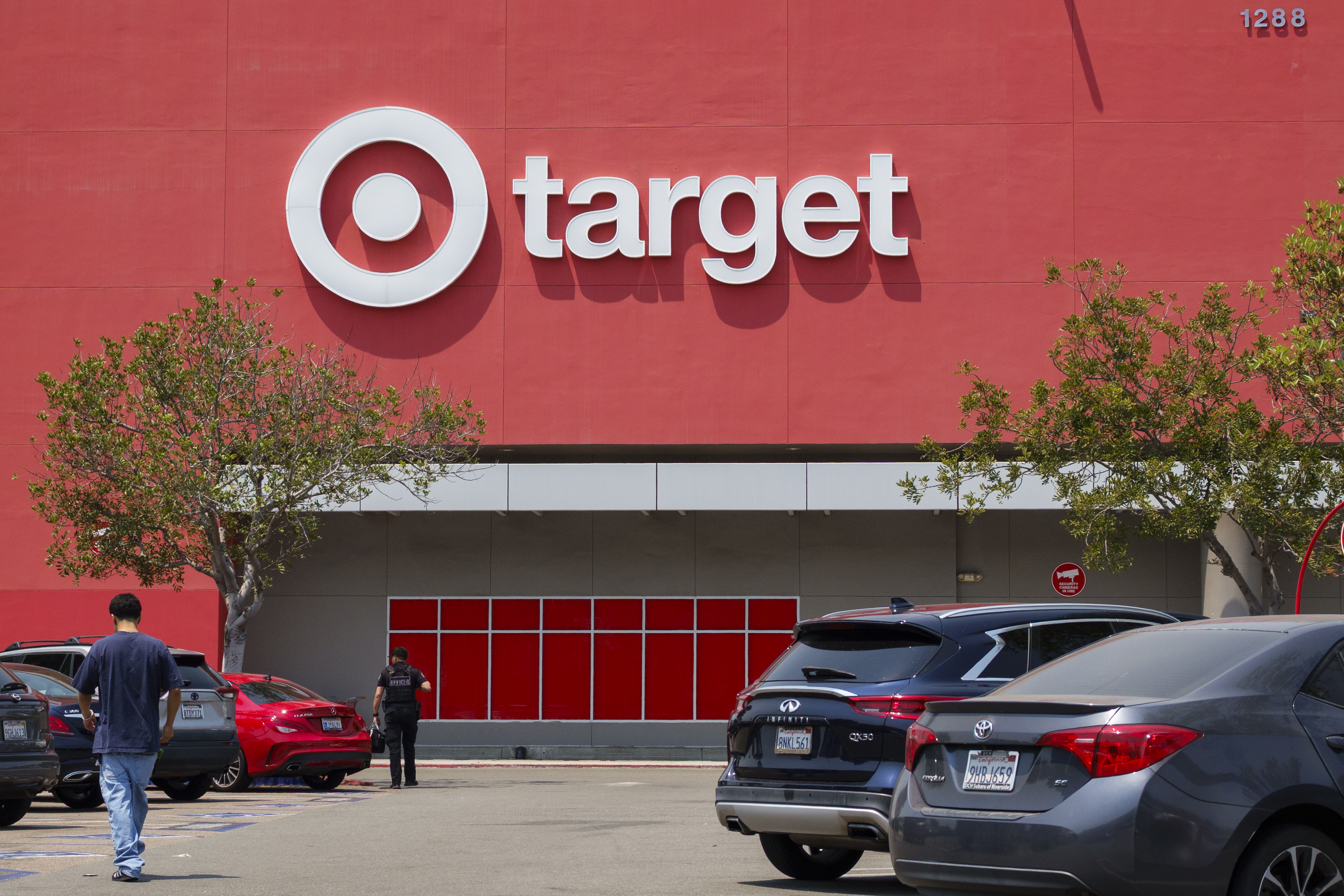
Target has updated its return policy to allow more time for holiday returns. Purchases made between November 1 and December 24 can be returned until January 24, except for Apple and Beats products and mobile phones, which have earlier return deadlines.
Key Facts
Target's new return policy applies to items bought from November 1 to December 24.
Shoppers can return most purchases until January 24.
Apple and Beats products, as well as mobile phones, have a return deadline of January 9.
This change aligns Target with other major retailers like Amazon and Walmart, which have also extended their return periods.
Walmart allows returns until January 31 for items bought from October 1 to December 31, with some restrictions on electronics.
The move is part of a trend where retailers extend return windows to enhance customer satisfaction during holidays.
Easy and flexible return policies are seen as a competitive advantage in the retail market.
Read the Original
Want the full story? Tap a source to open the original
article.