Nvidia’s stock price rose by about 8.5% on Thursday after it announced strong earnings for the second quarter of the year. The company’s shares went above $227, up from under $190 at the start of the year.
Key Facts
Nvidia reported strong earnings for the second quarter of this year.
On Thursday, Nvidia’s stock increased around 8.5%.
The stock price went above $227 per share after the earnings announcement.
At the beginning of the year, Nvidia’s stock was trading below $190 per share.
The earnings report positively influenced investor confidence in Nvidia.
Read the Original
Want the full story? Tap a source to open the original
article.
Mortgage rates for 30-year home loans in the U.S. have risen slightly, reaching 6.66%, close to the recent high this year. Higher mortgage rates make home loans more expensive, which can reduce people’s ability to buy homes and contribute to slower home sales.
Key Facts
The average 30-year fixed mortgage rate increased to 6.66% from 6.65% last week.
One year ago, the average rate was 6.56%.
Higher mortgage rates add hundreds of dollars to monthly payments for borrowers.
The 15-year fixed mortgage rate also rose to 5.98% from 5.95% last week; it was 5.69% last year.
Mortgage rates tend to follow the 10-year U.S. Treasury bond yield, which is currently 4.66%, up from 3.97% before the conflict with Iran began.
The U.S. war with Iran has increased oil prices and inflation expectations, pushing mortgage rates higher.
Concerns about U.S. government debt have also contributed to rising long-term bond yields.
The U.S. housing market has been weak since 2022 due to rising mortgage rates, with home sales remaining low.
Read the Original
Want the full story? Tap a source to open the original
article.
Putting $50,000 into a 9-month certificate of deposit (CD) account can earn about $1,500 in interest based on current rates between 4.00% and 4.10%. This type of account protects the original money from market ups and downs while offering a reliable return over the short term.
Key Facts
Current top interest rates for a 9-month CD range from 4.00% to 4.10%.
With a $50,000 deposit, savers can earn between $1,492 and $1,530 by the end of 9 months.
A CD account guarantees the original money (principal) and interest, unlike riskier investments.
Early withdrawal from a CD usually results in penalties that can reduce or eliminate earned interest.
Shopping around, especially online, can help find higher CD interest rates.
A 9-month CD offers shorter access restrictions compared to longer-term CDs.
Economic factors like inflation, interest rate changes, and political events can impact financial decisions.
Choosing a CD can be a smart way to earn predictable income while protecting savings in uncertain times.
Read the Original
Want the full story? Tap a source to open the original
article.
A large AI datacenter being built in Vineland, New Jersey, is accused of breaking federal law by running dozens of gas-powered generators without permits. These generators produce harmful air pollution and are located near schools, which has raised health and legal concerns from environmental officials.
Key Facts
The DataOne AI datacenter in Vineland, NJ, operated at least 45 unpermitted gas generators out of 62 available.
The site is about 40 miles from Philadelphia and is set to provide AI computing for Microsoft under a $17 billion deal.
The generators emit air pollution linked to serious health problems like asthma and heart attacks.
Federal and state law require permits before operating such generators; DataOne has none for these turbines.
The New Jersey Department of Environmental Protection has not approved or reviewed any permits for these generators.
DataOne withdrew its air permit application for large Bergen gas engines and now plans to use Bloom fuel cells, which produce less pollution.
Nearly 60 datacenters in the U.S. use or plan to use on-site power plants, a strategy called “bring your own power.”
Environmental officials may take enforcement action against DataOne for their unpermitted emissions.
Read the Original
Want the full story? Tap a source to open the original
article.
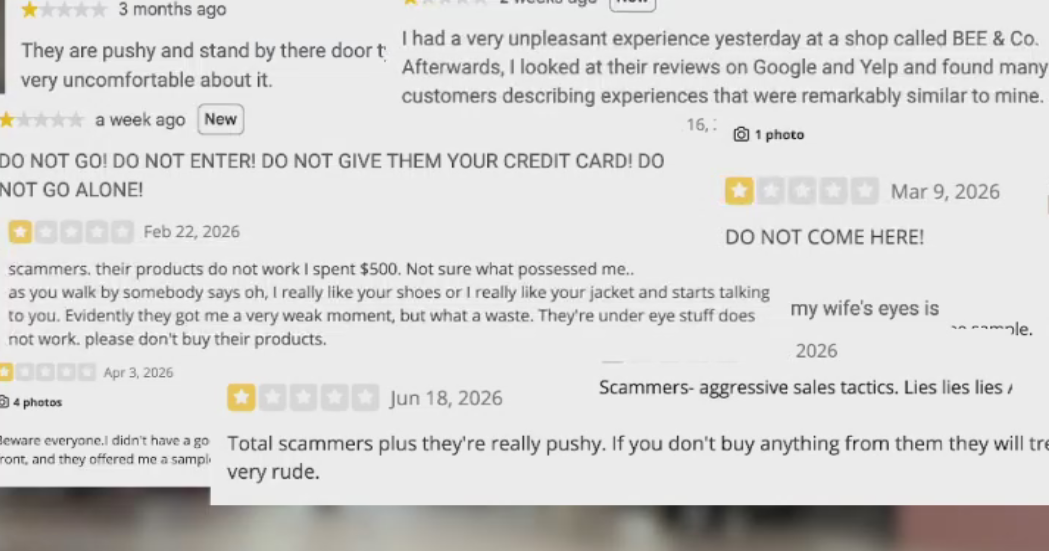
A skincare store called Bee & Co. in Southern California is accused of pressuring customers into buying expensive products and services. One customer with developmental disabilities reportedly spent over $40,000 and gave large tips under pressure, while other shoppers have also complained about high-pressure sales tactics.
Key Facts
Victor Chisolm, a man with developmental disabilities, spent $41,747 at Bee & Co. in multiple transactions.
Chisolm also gave employees more than $10,000 in tips through Cash App under coercion.
Chisolm was taken to a private room in the store and pressured to buy products, despite saying he did not want to spend that much.
Bee & Co. has a "NO REFUNDS" policy, which Chisolm could not overcome despite attempts to get his money back.
Other customers have posted complaints about aggressive sales and high-priced skincare packages.
An undercover investigator was initially quoted over $1,200 for a product but was later offered a lower price after questioning.
Bee & Co. is owned by Mazal Group LLC, which is not a member or accredited by the Better Business Bureau.
The Better Business Bureau received multiple warnings about Bee & Co.’s sales tactics and advises caution.
Read the Original
Want the full story? Tap a source to open the original
article.
It is possible to settle $50,000 in credit card debt without filing for bankruptcy, but success depends on your financial situation and whether creditors agree to negotiate. Debt settlement usually involves convincing creditors to accept less than the full amount owed, often between 30% and 50% less, but comes with potential risks like credit damage and tax consequences.
Key Facts
Americans collectively owe $1.26 trillion on credit cards.
Credit card interest rates average over 22%, which makes paying down balances difficult.
Monthly payments often cover mostly interest, not the principal balance.
Settling debt means negotiating to pay less than the total owed.
Settlements typically reduce debt by 30% to 50%, but this varies and must be negotiated separately for each creditor.
Creditors are more likely to settle if debts are overdue and the borrower faces financial hardship.
You may need available money to pay the negotiated settlement, sometimes in a lump sum.
Settling debt can harm credit scores, and forgiven debt might be taxed as income.
Read the Original
Want the full story? Tap a source to open the original
article.
The game company Panic is refunding customers the extra fees they paid because of tariffs imposed during President Donald Trump’s administration. These tariffs were ruled illegal by the Supreme Court, and now companies like Panic are returning the money to customers who had to pay the import taxes.
Key Facts
Panic sells the Playdate, a small handheld game device, and had to charge customers an extra 19% tariff on imports.
The Supreme Court ruled in February that these tariffs were illegal and ordered refunds to companies that paid them.
Panic has started receiving refunds from the government and is now reimbursing customers for the tariff amounts they were charged.
Panic could not absorb the tariff costs due to low profit margins, so they showed the tariff as a separate charge on orders.
Nintendo is facing a lawsuit seeking similar refunds for tariffs passed on to customers but argues that keeping refunds is not unjust.
Nintendo received $300 million in tariff refunds and says it mostly covered the costs instead of raising prices.
Many other companies like Microsoft and Sony face lawsuits over tariff-related price increases.
Some shipping companies have also refunded tariffs directly to customers.
Read the Original
Want the full story? Tap a source to open the original
article.
Alabama Shakes has released their first album in 11 years, called "I Must Be Dreaming," following a reunion sparked by a performance invitation from a craft brewery in Alabama. The band members came together to rehearse and record new songs, resulting in an album mixing love themes and social reflections.
Key Facts
Alabama Shakes released a new album after 11 years titled "I Must Be Dreaming."
The band reunited after being invited to perform at Druid City Brewing Company in Tuscaloosa, Alabama.
Brittany Howard, the singer and guitarist, was contacted by the brewery’s co-founder to help support the brewery and a local food pantry.
The reunion started with rehearsing old songs and soon led to creating new music.
The album contains 11 tracks featuring love songs and social commentary.
One song, “I Feel Hope Coming,” has political themes expressing hope and resistance.
The band describes their reunion and album-making as a positive and almost miraculous experience.
The album was released by Island Records in 2026.
Read the Original
Want the full story? Tap a source to open the original
article.
Alex Warren, a singer-songwriter known for his hit song "Ordinary," is releasing his second album this Friday. He says that messages from his late father after his passing helped inspire the new music on this album.
Key Facts
Alex Warren became well-known for his 2025 hit song "Ordinary."
He is releasing his second album soon.
The album release date is this Friday.
Warren spoke to CBS News about the new album.
His new music is different from his first album.
He found inspiration from messages his father sent after passing away.
The interview was with CBS journalist Anthony Mason.
Read the Original
Want the full story? Tap a source to open the original
article.
CBS Mornings Deals offers special discounts on various products that aim to improve daily life. Customers can visit cbsdeals.com to access these offers and CBS earns a commission from sales made through the site.
Key Facts
CBS Mornings Deals shares exclusive discounts on everyday products.
The deals are featured during the CBS Mornings program.
Shoppers can find these offers at the website cbsdeals.com.
CBS receives commissions when customers buy items through their site.
The deals focus on items to enhance lifestyle and daily routines.
The promotion encourages viewers to visit the website to take advantage of offers.
The article invites users to view CBS News via their app or web browsers like Chrome and Safari.
Read the Original
Want the full story? Tap a source to open the original
article.
Actress Blake Lively asked for $8 million to cover legal fees after a defamation case involving her former co-star Justin Baldoni. A judge awarded her about $400,000, saying much of her requested costs were not necessary or related to the defamation claim. Both sides said the ruling was a win for them.
Key Facts
Blake Lively sued Justin Baldoni for sexual harassment and retaliation; Baldoni countersued for defamation.
The judge dismissed Baldoni’s defamation claim in 2025.
Lively requested $7.5 million for lawyers’ fees and about $540,000 for other legal costs.
The judge approved only $407,451, saying much of the claimed fees were for unnecessary time or unrelated issues.
Lively’s lawyers called the fee award historic under a 2023 California law protecting sexual harassment accusers.
Baldoni denied harassment and said the ruling shows the law cannot be used for personal gain.
The two parties previously settled some disputes to end the case.
The case received attention for its use of a law meant to protect people from retaliatory lawsuits after making harassment claims.
Read the Original
Want the full story? Tap a source to open the original
article.
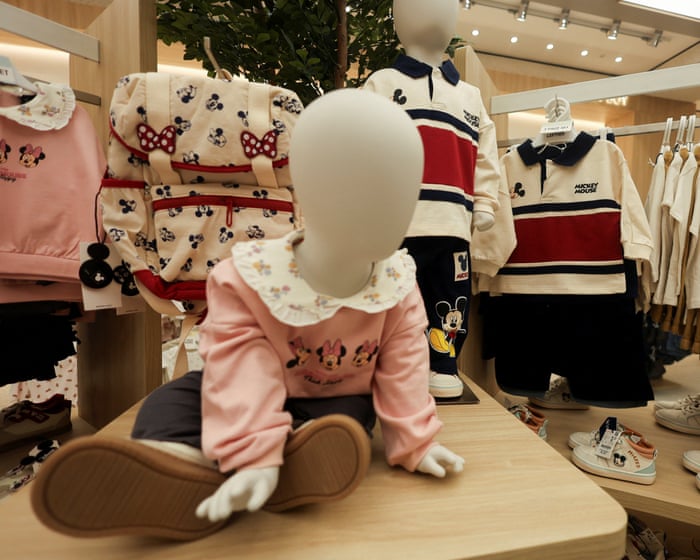
The Spanish company Inditex, owner of Zara, has opened its budget fashion store Lefties in the UK, starting with a store in Liverpool. The store uses robots to help with tasks like sorting clothes and self-checkouts to reduce staff costs. Lefties aims to compete with other budget brands like Primark and Shein by offering affordable clothing and home items both in stores and online.
Key Facts
Lefties is a low-cost fashion chain owned by Inditex, the same company that owns Zara.
The first UK Lefties store opened in Liverpool, with two more planned in Essex and near Newcastle this year.
The store uses robots to sort clothes and self-checkout technology to speed up shopping and reduce staff needs.
Lefties started as a place to sell leftover Zara items but now sells its own clothing, shoes, and home goods.
Prices at Lefties are generally slightly higher than Primark but lower than Shein. For example, dresses average £18.
The Liverpool store is the first Lefties to offer thermal clothing like underwear and bras.
Lefties offers nationwide online shopping with free delivery on orders over £49, unlike Primark which only offers click and collect.
The brand operates in 20 countries with 225 stores and is growing quickly, entering new markets like France, Italy, and soon Germany.
Read the Original
Want the full story? Tap a source to open the original
article.
Ghana has stopped the export of unrefined (raw) gold from the country. The government wants to process gold within Ghana to make more money from its gold resources instead of just selling raw minerals.
Key Facts
Ghana is Africa’s top gold producer.
The export ban applies only to unrefined gold, meaning gold that hasn’t been processed or purified.
The goal is to create more economic value within Ghana by processing gold locally.
This move aims to reduce dependency on exporting raw minerals.
The ban was officially announced on August 27, 2026.
Local gold refining could create jobs and boost Ghana’s economy.
The ban may affect businesses involved in the gold export industry.
This is part of Ghana’s broader plan to move up the value chain in mining.
Read the Original
Want the full story? Tap a source to open the original
article.
Young workers are leaving digital careers because many entry-level jobs are being replaced by AI automation. Instead, they are choosing traditional crafts like bookbinding and metalwork, which rely on skills AI cannot imitate easily and have steady demand.
Key Facts
AI is disrupting many entry-level white-collar jobs, including accounting, software engineering, and law.
Creative jobs are also affected by AI tools that can quickly create art and writing.
Some young people are learning traditional crafts that need hands-on skills and creativity, like bookbinding and metalwork.
These crafts use old techniques and tools that have changed little for centuries.
Apprenticeships in these crafts are in high demand, with many more applicants than available places.
Handcrafted goods are valued commercially, and some publishers avoid using AI in their creative work.
Industry leaders see new interest from young people as essential to keeping these crafts alive.
Craft work is seen as satisfying, meditative, and resistant to automation by AI.
Read the Original
Want the full story? Tap a source to open the original
article.
The Trump administration is planning to introduce new tariffs on semiconductor products and related tech devices like laptops and gaming consoles. This move aims to boost U.S. chip manufacturing but faces concerns from tech companies about its impact on America's leadership in artificial intelligence.
Key Facts
The administration wants to impose tariffs not just on chips but also on many tech products made with chips.
Commerce Secretary Howard Lutnick supports linking tariff relief to foreign companies investing in U.S. chip production.
A gradual phase-in of the tariffs is being considered.
The plan is still being developed and may change in the coming weeks or months.
Technology companies warn these tariffs could slow down progress in artificial intelligence.
The tariffs are part of efforts to encourage more chip manufacturing domestically in the U.S.
The reported information comes from multiple sources cited by Politico.
Read the Original
Want the full story? Tap a source to open the original
article.
Meta has agreed to make major changes to Instagram and Facebook to protect teenage users as part of a settlement that ends a big lawsuit in California. The company will pay up to $18 billion and set new safety rules, like daily time limits and blocking app use at night for teens in the US.
Key Facts
Meta will change Instagram and Facebook to have safety limits turned on by default for teenage users.
The company agreed to pay up to $18 billion to settle the lawsuit.
The lawsuit accused Meta of making addictive apps that harm teenagers’ mental health.
California and 28 other US states joined the lawsuit against Meta.
New rules include daily usage limits and stopping the apps from working late at night for teens.
Meta denies any wrongdoing but calls on other social media companies to adopt similar safety measures.
The settlement ends a major trial in California but does not fully settle broader concerns about app safety.
Meta’s chief legal officer said an industry-wide solution is needed because teens use many apps.
Read the Original
Want the full story? Tap a source to open the original
article.
Texas and Florida have grown their economies partly due to changes in their legal systems called tort reforms. These reforms limited lawsuits and legal costs, encouraging business growth. Now, these legal protections are in danger, which could affect their economic success.
Key Facts
Texas and Florida reshaped their legal rules to limit lawsuits and reduce costs for businesses.
These changes are known as tort reforms.
Tort reforms helped attract companies and investments to these states.
The legal protections made doing business cheaper and less risky.
Currently, these tort reforms face challenges that may reduce their effectiveness.
Losing these protections could slow down economic growth in Texas and Florida.
The states are known for their strong economies in the U.S.
Read the Original
Want the full story? Tap a source to open the original
article.
The average CEO at the 100 largest U.S. companies with the lowest worker pay earned 614 times more than their workers in 2025. CEO pay rose much faster than worker pay and inflation between 2019 and 2025, widening the gap between executives and employees.
Key Facts
The average CEO at these 100 companies earned $17.5 million in 2025.
Median worker pay at these companies was $36,571 in 2025.
CEO pay increased by 41.4% from 2019 to 2025, while worker pay increased by 20.7%.
Inflation rose by 25.9% over the same period.
Walmart’s CEO earned 958 times more than its median worker in 2025.
These companies collectively employed 1,282 federal lobbyists.
Stock buybacks by these firms totaled $108.6 billion in 2025, up from $105 billion in 2024.
Policy ideas to reduce pay inequality include higher taxes on corporations with large CEO-to-worker pay ratios and increased taxes on stock buybacks.
Read the Original
Want the full story? Tap a source to open the original
article.
This article looks at whether young people from Generation Z are moving away from traditional full-time jobs and choosing side jobs or freelance work instead. It also features a conversation with a business owner who started a side business without quitting his main job.
Key Facts
The article discusses the trend of Generation Z considering alternatives to 9-to-5 jobs.
It explains the rise of the gig economy, which involves short-term or freelance work instead of regular full-time jobs.
The hosts include Jill Schlesinger, Mark, and a guest host named Kayla Sabbagh.
They talk about the pros and cons of leaving corporate jobs for side hustles or freelance work.
The episode features an interview with Ben, who started a company called Ready Golf Club as a side business.
Ben successfully manages his side business without quitting his main job.
The discussion highlights different views on working in corporate America versus pursuing more flexible work options.
Read the Original
Want the full story? Tap a source to open the original
article.