Marvel Studios released the first full trailer for Avengers: Doomsday, a major new movie in the Marvel Cinematic Universe (MCU). The film features heroes and villains from three different universes and is part of the MCU’s Phase Six, leading into a larger story about the multiverse.
Key Facts
Avengers: Doomsday is the second-to-last film in the MCU’s Phase Six and wraps up the “Multiverse Saga.”
The movie was reworked after actor Jonathan Majors, originally planned to star as Kang the Conqueror, was fired following a legal conviction.
Directors Anthony and Joe Russo returned to direct this film, shifting the story towards the Secret Wars comic storyline.
The film includes characters from three universes: Earth-616 (Avengers and Wakandans), Earth-828 (Fantastic Four), and the original X-Men universe.
Robert Downey Jr. returns as the villain Doctor Doom.
Main cast members include Chris Hemsworth (Thor), Anthony Mackie (Captain America), Paul Rudd (Ant-Man), and Letitia Wright (Shuri as Black Panther), among others.
The trailer shows many superhero cameos and previews a large team-up against a significant new threat.
The movie is set 14 months after the events of the film Thunderbolts.
Read the Original
Want the full story? Tap a source to open the original
article.
Nearly half of companies hit by ransomware attacks pay the hackers to regain control of their data, according to recent research. While some governments, like the UK, plan to ban such payments for public services, experts warn that paying ransoms does not guarantee data recovery and can encourage more attacks.
Key Facts
Around 50% of ransomware victims pay the demanded ransom to unlock their data or systems.
The average ransom amount is increasing over time.
Some governments, including the UK, want to ban ransom payments by public sector and critical infrastructure groups.
Ransomware gangs have become more organized and use advanced AI tools to perform more attacks faster.
Confirmed ransomware cases increased nearly 4 times from 2024 to 2025 globally.
Paying ransoms can lead to further extortion since criminals may not delete stolen data.
Experts disagree on bans; some say bans risk more harm when data recovery is impossible without payment.
Cyber insurers may raise costs if ransom payments are banned for critical infrastructure sectors.
Read the Original
Want the full story? Tap a source to open the original
article.
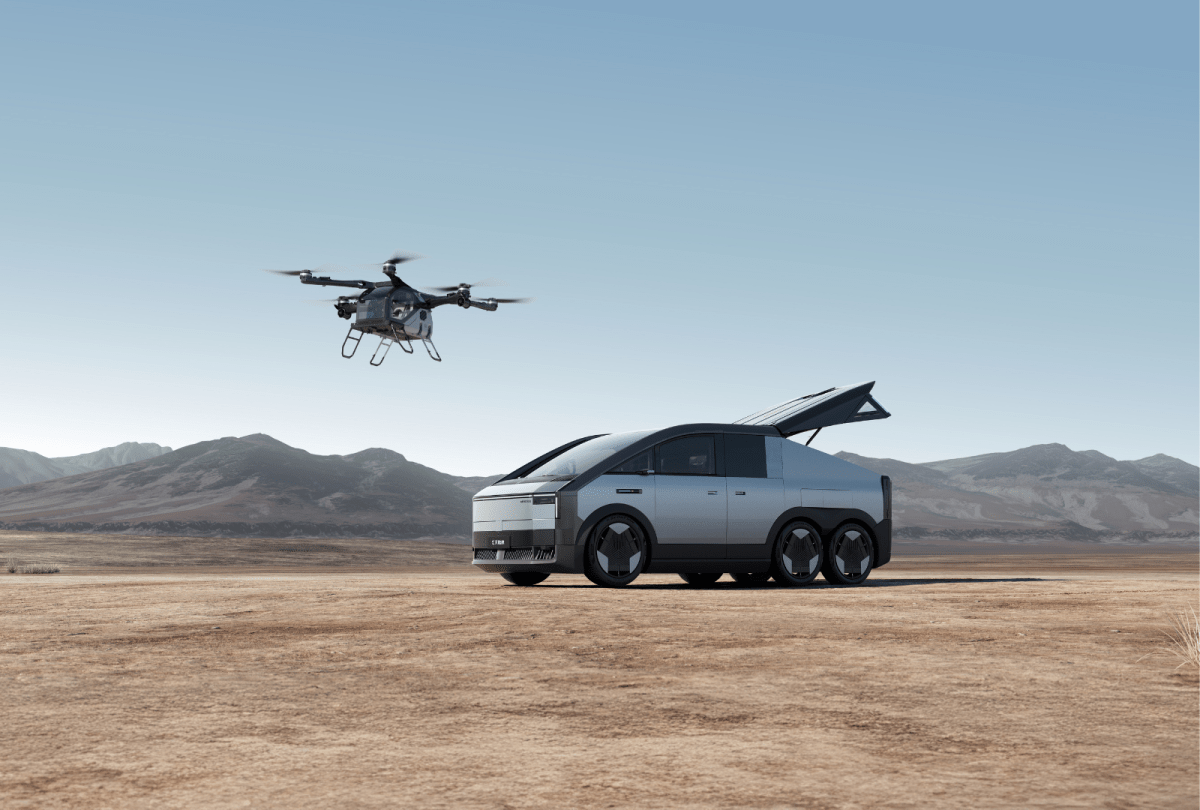
A Chinese company named XPENG ARIDGE is creating a new flying car system that combines a six-wheeled van and a small, two-seat flying vehicle called the A868. The flying car can take off and land vertically and is stored and launched from the van, allowing it to operate from many locations.
Key Facts
The system includes a plug-in hybrid six-wheeled van and a detachable electric vertical take-off and landing (eVTOL) aircraft.
The flying car seats two people and is controlled by a joystick.
It takes about five minutes to learn how to fly the aircraft.
The van can carry and deploy the flying car from almost anywhere it can drive.
XPENG ARIDGE plans to build many "flight camps" across China as take-off and landing hubs.
Artificial intelligence (AI) plays a key role in operating the flying car and overall mobility.
The company aims to make flying cars accessible to the average person over time.
The Land Carrier van alone costs about $280,000.
The eVTOL market in China is expected to grow significantly, reaching about $23 billion by 2040 according to Boston Consulting Group.
Read the Original
Want the full story? Tap a source to open the original
article.
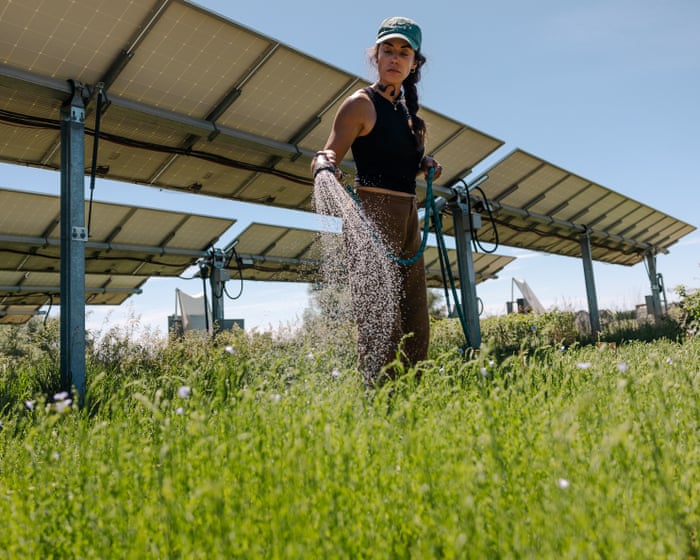
Byron Kominek uses solar panels on his Colorado farm to grow crops and produce electricity at the same time, a method called agrovoltaics. This approach helps protect plants from extreme weather and provides steady income by selling solar power to a utility company.
Key Facts
The farm has 3,276 solar panels integrated with growing crops and raising animals.
Agrovoltaics means combining solar energy production with farming activities.
The solar panels create protective shade that helps crops like flaxseed and berries survive heat and frost.
The farm generates 2 gigawatt hours of electricity yearly, sold to a local utility company.
The solar income covers the farm’s basic costs, letting Kominek try growing different crops.
The farm also raises ducks, geese, chickens, and keeps beehives.
Kominek works with university researchers to find the best ways to farm under solar panels.
He says expanding power lines to rural areas would help more farmers use solar panels alongside their crops.
Read the Original
Want the full story? Tap a source to open the original
article.
The article discusses different software tools called "harnesses" that manage how AI models assist in coding. It compares two approaches: one that keeps the software simple and flexible, like Anthropic’s Claude Code, and another that uses complex methods to better understand large code collections, like Augment Code.
Key Facts
AI coding harnesses are software layers that control how AI models interact with code projects.
Anthropic’s Claude Code uses a simple, flexible harness that avoids adding many preset features.
Claude Code trusts that AI models will improve quickly, so it avoids building restrictive tools.
Augment Code uses a "semantic retrieval" approach to better understand and search large codebases.
Semantic retrieval uses embeddings (math-based code representations) and a special database to quickly find relevant code.
Claude Code relies more on traditional search methods like grep, which looks for text matches.
Augment Code’s method works better for very large and private code collections.
Different companies use different harness designs based on what they want to achieve with AI coding help.
Read the Original
Want the full story? Tap a source to open the original
article.
Researchers discovered that one specific sweetener affects the growth of two important types of gut bacteria. This finding suggests the sweetener could influence the balance of bacteria in the digestive system.
Key Facts
The study focused on the effect of a single sweetener on gut bacteria.
Two key types of gut bacteria showed direct changes when exposed to this sweetener.
Gut bacteria are important for digestion and overall health.
Changes in gut bacteria growth may impact how the digestive system works.
The sweetener's impact could affect the balance of bacteria in the gut.
Read the Original
Want the full story? Tap a source to open the original
article.
Artificial intelligence (AI) is helping drug companies develop medicines much faster and cheaper before testing them on people. A recent survey shows AI tools could reduce early research costs and time by up to 70%, leading to more new drugs in the next five years.
Key Facts
A survey of 80 biopharma leaders found AI cuts preclinical drug development costs and timelines by about 70%.
AI tools include software, gene sequencing, and computer models that run many virtual experiments quickly.
AI supports research before human testing but cannot replace scientists’ judgment or lab work.
New U.S. policies aim to reduce animal testing by using computers and 3D human tissue models instead.
Spending on AI and lab technology in drug research could increase by $1 billion over a few years.
Despite advances, no AI-discovered drug has yet been approved by the FDA.
Challenges include accounting for how different humans respond to drugs, keeping failure rates high around 90%.
China is investing heavily in biotech, competing with the U.S. by offering lower costs and faster results.
Read the Original
Want the full story? Tap a source to open the original
article.
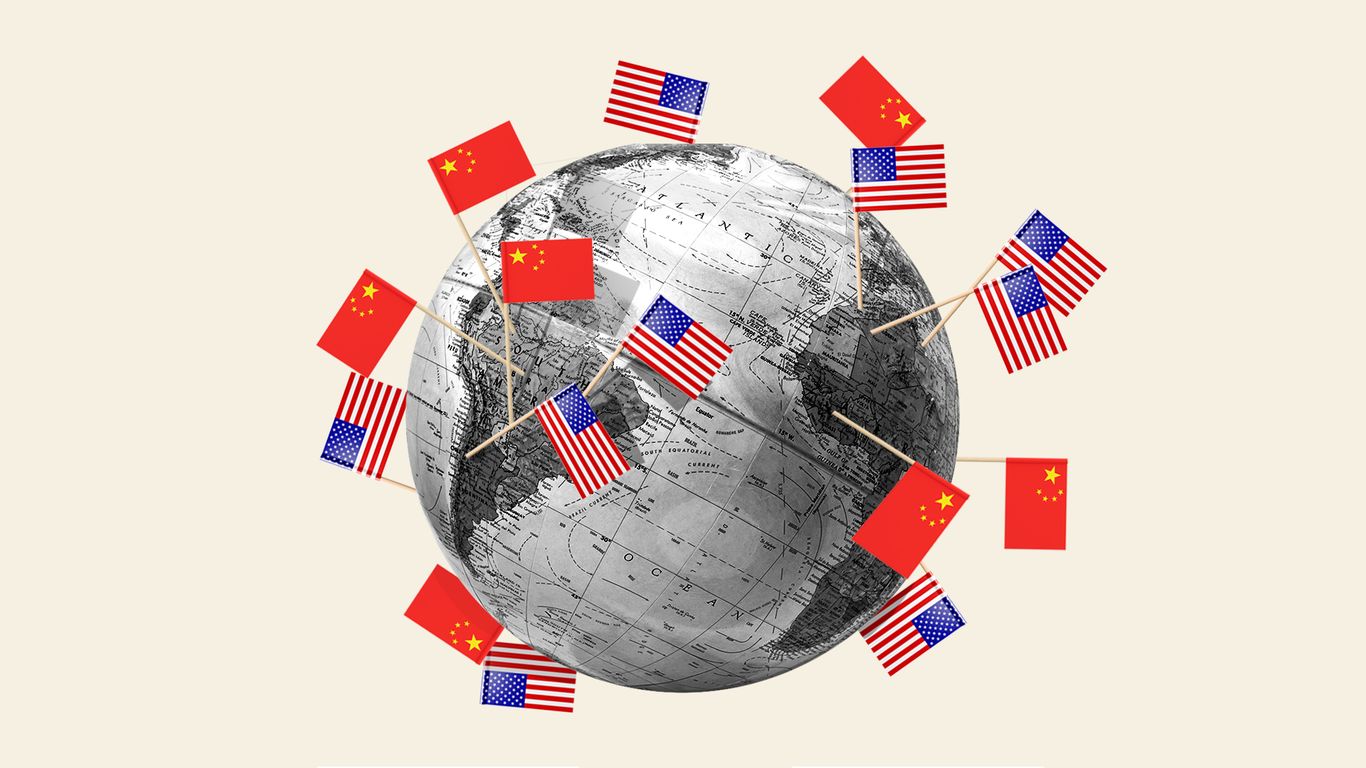
The Trump administration is considering banning advanced Chinese artificial intelligence (AI) models to protect U.S. companies and national security. This move aims to limit the use of Chinese open-source AI technology, which is becoming popular due to its low cost and good performance, and to support domestic AI innovation.
Key Facts
The Commerce Department looked into adding Chinese AI labs to an "Entity List" that restricts U.S. access without a special license.
Other government agencies, including the National Security Agency, discussed warnings about security risks from Chinese AI models.
The White House considered rules requiring U.S. companies to guarantee security and take responsibility if they use Chinese AI technology.
Earlier efforts to restrict Chinese AI were blocked to avoid hurting innovation, but recent security concerns have renewed interest in restrictions.
Instead of an outright ban, the government may use rules and public pressure to discourage companies from using Chinese AI models.
Chinese AI technology is cheaper and often as effective as U.S. alternatives, making it popular among U.S. businesses.
Some U.S. AI leaders support safety measures and licensing, but critics worry this could reduce competition by favoring large companies like OpenAI.
The debate reflects growing tensions in the global race for AI leadership between China and the United States.
Read the Original
Want the full story? Tap a source to open the original
article.
Jeff Bezos and the UK government have invested in CuspAI, a British artificial intelligence startup valued at £2 billion. CuspAI uses advanced AI to discover and develop new materials that could improve technologies like computer chips, energy networks, and batteries.
Key Facts
CuspAI is a two-year-old startup based in Cambridge, UK, valued at $2.6 billion (£2 billion).
The company has raised $450 million (£330 million) from investors including Jeff Bezos and the UK government’s sovereign AI fund.
CuspAI created the AI Materials Foundry, a group of over 48 tech and industrial companies collaborating to find new materials.
The startup aims to reduce or eliminate rare metals like iridium and ruthenium used in making computer chips.
Members of the coalition include Nvidia, Meta Platforms (owner of Facebook and Instagram), and Hyundai.
CuspAI plans to use frontier AI, which is the latest and most advanced type of AI, to speed up material discovery.
The new funding will help CuspAI expand globally with offices in Singapore, Cambridge, Amsterdam, Berlin, Tokyo, and the US.
John Giannandrea, formerly of Apple and Google, recently joined CuspAI to help develop its US operations.
Read the Original
Want the full story? Tap a source to open the original
article.
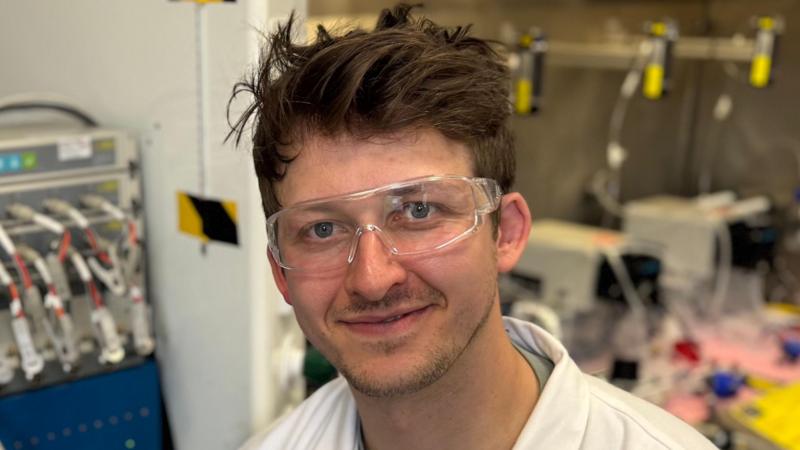
Scientists at Queen’s University Belfast have created a cheaper and easier-to-make flow battery using 3D printing and iron instead of expensive metals like vanadium. This new battery can store renewable energy and help researchers worldwide create reliable and consistent results to speed up green energy development.
Key Facts
The new flow battery costs about £74 to make, much cheaper than commercial ones costing up to £3,000.
It uses iron, which is easier to get than vanadium typically used in flow batteries.
The battery was developed by Dr. Hugh O’Connor during his PhD research.
The team provides a free, step-by-step instruction manual so other scientists can build the battery.
Flow batteries store energy in liquids and can hold power from renewables like wind and solar.
Consistent equipment helps scientists worldwide compare results more accurately.
This innovation aims to support the global move toward net zero carbon emissions.
Read the Original
Want the full story? Tap a source to open the original
article.
Fitness trackers, like the Oura ring, are helping some women notice early signs of pregnancy by tracking body temperature and heart rate changes. Users have reported that these devices sometimes detect pregnancy before a test can, and even show potential signs of miscarriage.
Key Facts
Ravika noticed her Oura ring showed poor health data despite feeling fine, which led her to discover she was pregnant before a test confirmed it.
Her fitness tracker monitored heart rate, body temperature, and heart rate variability, which changed after conception.
Many women share online that their fitness trackers alerted them to pregnancy early by detecting body changes.
Body temperature usually rises after ovulation and stays high during early pregnancy, a key sign these devices track.
Some users report that Oura rings also predicted miscarriages by showing unusual changes in health data.
The popularity of fitness trackers in the UK has nearly doubled, with 36% of adults owning one by early 2026.
Oura is a leading company in smart rings, competing with brands like Ultrahuman and RingConn.
Monitoring body signs with these devices offers new ways to track fertility and pregnancy health before traditional tests can.
Read the Original
Want the full story? Tap a source to open the original
article.
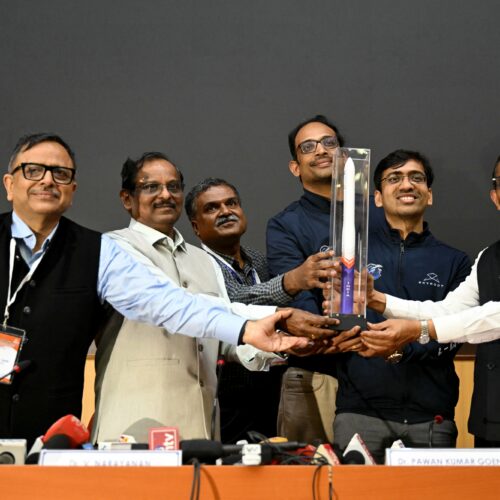
Skyroot Aerospace successfully launched Vikram-1, India’s first fully private rocket, reaching orbit on its first try. The rocket lifted off from Sriharikota Island and placed a payload into a 280-mile-high orbit, marking a major step for India’s private space sector.
Key Facts
Vikram-1 is India’s first fully commercial, privately developed rocket.
The rocket launched from the Satish Dhawan Space Center on Sriharikota Island.
It reached a 280-mile (450-kilometer) high orbit with a 60-degree tilt to the equator.
Vikram-1 is about 72 feet (22 meters) tall and can carry up to 770 pounds (350 kilograms) to low Earth orbit.
The rocket uses three solid-fueled stages and one small liquid-fueled stage.
The fourth stage used a 3D-printed engine to reach orbital velocity (~17,000 mph).
The launch had a slight issue with third and fourth stage separation, but reached the target orbit successfully.
This is the first private Indian rocket to reach orbit on its maiden flight, which is rare globally.
Read the Original
Want the full story? Tap a source to open the original
article.
Many workers are worried about losing jobs due to AI taking over tasks. Experts say while AI can replace some work, human skills like curiosity, humility, and emotional intelligence remain important and can help people adapt.
Key Facts
Public sector workers, including Paul, face job cuts linked to AI integration.
AI is being used as a cost-saving tool in government agencies.
Fear of becoming obsolete (called "Fobo") is a growing concern among employees.
MIT research shows AI can replace some tasks, but workers have time to prepare for changes.
Experts recommend developing human skills that AI cannot copy, such as curiosity, humility, and emotional intelligence.
Staying connected and networking can help people adjust to AI changes in the workplace.
Retraining or switching jobs may be difficult without financial backup and does not guarantee immunity from AI impact.
Using AI to assist with learning and idea generation can support career adaptation.
Read the Original
Want the full story? Tap a source to open the original
article.
Sam Smith, a famous gay British singer, released a new song called "My Guy" that openly talks about a same-sex relationship using simple words. This is rare in popular music because most love songs are written from a straight person's view or avoid clear LGBTQ references.
Key Facts
Sam Smith is a well-known gay singer with millions of record sales.
Their new single, "My Guy," uses a masculine noun to describe a same-sex partner.
Most popular love songs are written from a straight perspective and do not clearly mention LGBTQ relationships.
Barry Walters, a writer who studies LGBTQ music history, notes this clear use of language as significant.
The song "My Guy" represents a gentle form of revolution in LGBTQ pop music.
Walters has a new book called "Mighty Real," which covers LGBTQ music history from 1969-2000.
Historically, LGBTQ artists like Little Richard and David Bowie challenged gender norms in different ways.
The article links Sam Smith’s song to a broader history of LGBTQ culture and music activism.
Read the Original
Want the full story? Tap a source to open the original
article.
A new HBO Max comedy series called "Stuart Fails to Save the Universe" is a spin-off from "The Big Bang Theory." It follows the character Stuart Bloom, a comic book store owner, as he becomes an unlikely hero trying to fix a universe that is falling apart.
Key Facts
The show is a comedy series on HBO Max.
It is a spin-off of the popular TV show "The Big Bang Theory."
Kevin Sussman plays Stuart Bloom, the main character.
Stuart is a comic book store owner turned action hero.
The story focuses on Stuart trying to save a disintegrating universe.
The creators are Chuck Lorre, Bill Prady, and Zak Penn.
The series explores new and unusual storylines with familiar characters.
CBS News interviewed the cast and creators to discuss the show.
Read the Original
Want the full story? Tap a source to open the original
article.
The Australian government is introducing new rules to control how artificial intelligence (AI) is used in government decisions, focusing on fairness, safety, and transparency. The plan also includes stronger privacy laws, workplace AI safety measures, and rules for large data centers that use a lot of energy.
Key Facts
The government will set strict rules for AI use in automated decisions by federal departments.
Attorney General Michelle Rowland will lead the development of these AI rules.
New laws will create a digital duty of care, requiring AI companies to build safety features and prevent harm.
Privacy laws will be updated to better protect personal data in the AI era.
Workplace safety regulations will address risks related to AI technology.
Prime Minister Anthony Albanese announced plans for a new AI office inside his department for better AI management.
Rules will be introduced for large data centers, including limits on energy use and location restrictions to protect communities.
Australia currently has over 200 data centers, using about 2% of the country’s electricity, with plans allowing that number to potentially triple.
Read the Original
Want the full story? Tap a source to open the original
article.
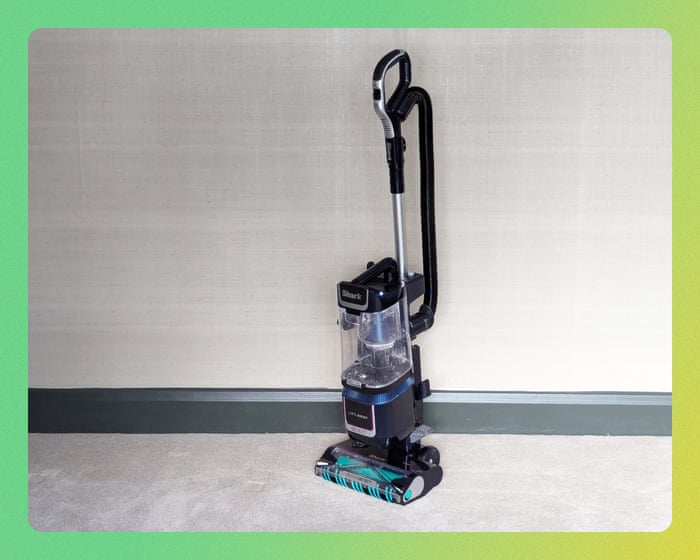
The Shark Detect Lift-Away XL is a corded vacuum cleaner that offers consistent power and versatility. It features a special floor head with two rollers and a sensor that adjusts cleaning speed depending on the floor type, making it easy to switch between carpets and hard floors without manual changes.
Key Facts
Corded vacuums stay powered as long as they are plugged in, unlike cordless ones that rely on battery life.
The Shark Detect Lift-Away XL has a Duo Clean floor head with two rollers, one fluffy and one brush bar, to clean both carpets and hard floors well.
It has a Detect sensor that senses the floor type and adjusts the roller speed automatically.
The vacuum’s collection bin holds 2.5 liters of dirt, which is larger than most cordless vacuums but smaller than some large corded models.
The vacuum weighs 5.2 kg overall but can be reduced to 2.9 kg in Lift-Away mode when using just the hose and handle.
The vacuum was tested by measuring suction power and by cleaning up known amounts of dirt like flour, cat litter, and pet hair from different floor types.
The vacuum is easier to handle than expected for its size and weight thanks to its low centre of gravity.
It includes a foot pedal to release the collection bin and allows for handheld use by detaching the handle from the extension wand.
Read the Original
Want the full story? Tap a source to open the original
article.
New types of batteries are being developed to store renewable energy more efficiently and sustainably. These include large-scale projects like molten salt batteries in deserts and liquid air "cryobatteries," as well as tiny batteries that can power small devices without relying on scarce minerals.
Key Facts
The UAE has the world’s largest battery system, combining 5.2GW of solar power with 19GWh of storage to power about 500,000 homes overnight.
Researchers in Colorado are creating very small batteries to track young fish, showing alternative uses of battery technology.
Traditional lithium-ion batteries depend on minerals like lithium, cobalt, and nickel, which can harm the environment and communities.
Alternative batteries can often be reused or recycled indefinitely, lasting about 20 years.
The Carrington "liquid air" cryobattery in the UK stores energy by cooling air to -196°C, turning it liquid, and then releasing electricity by warming the air.
The Carrington project will store 300MWh of energy and produce 50MW for six hours, enough for nearly half a million homes.
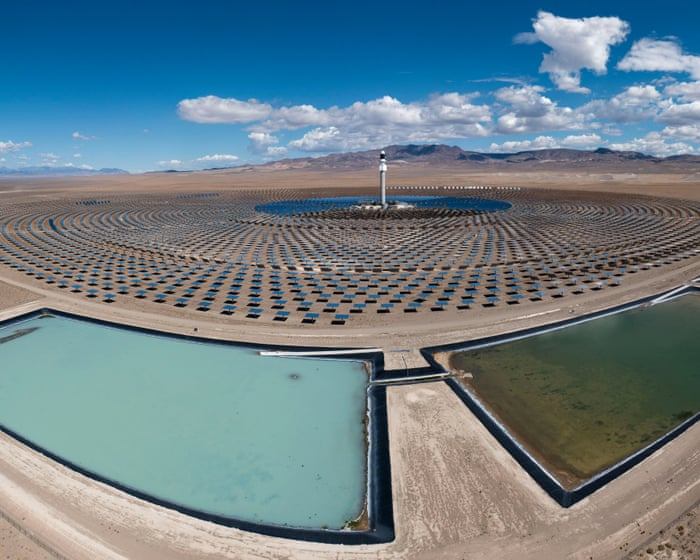
The Crescent Dunes project in Nevada uses molten salt heated to 560°C to store solar energy and release it for up to 10 hours after sunset.
New battery technologies aim to power everything from small electronics to heating systems and even missiles without relying heavily on critical minerals.
Read the Original
Want the full story? Tap a source to open the original
article.
Researchers and AI experts are exploring whether advanced artificial intelligence systems could be conscious or have moral significance. While current understanding is limited and uncertain, AI systems are becoming more complex, and some believe conscious AI might appear within the next decade.
Key Facts
Anthropic, an AI company, is uncertain but open to the idea that its AI model Claude could be conscious.
Philosopher David Chalmers believes there is a good chance AI systems could be conscious within 10 years.
Some modern AI systems match the complexity of a mouse brain and might reach human brain levels in 5-10 years.
Researchers say no obvious technical barriers currently prevent AI from possibly being conscious.
AI systems might have preferences and identities that matter, even if they are not fully conscious.
AI can form relationships with humans, which could influence how they should be treated.
Our knowledge of AI consciousness is like physics before Newton—still unclear and unsettled.
A future with many morally significant AI systems could shift ethical considerations on a large scale.
Read the Original
Want the full story? Tap a source to open the original
article.
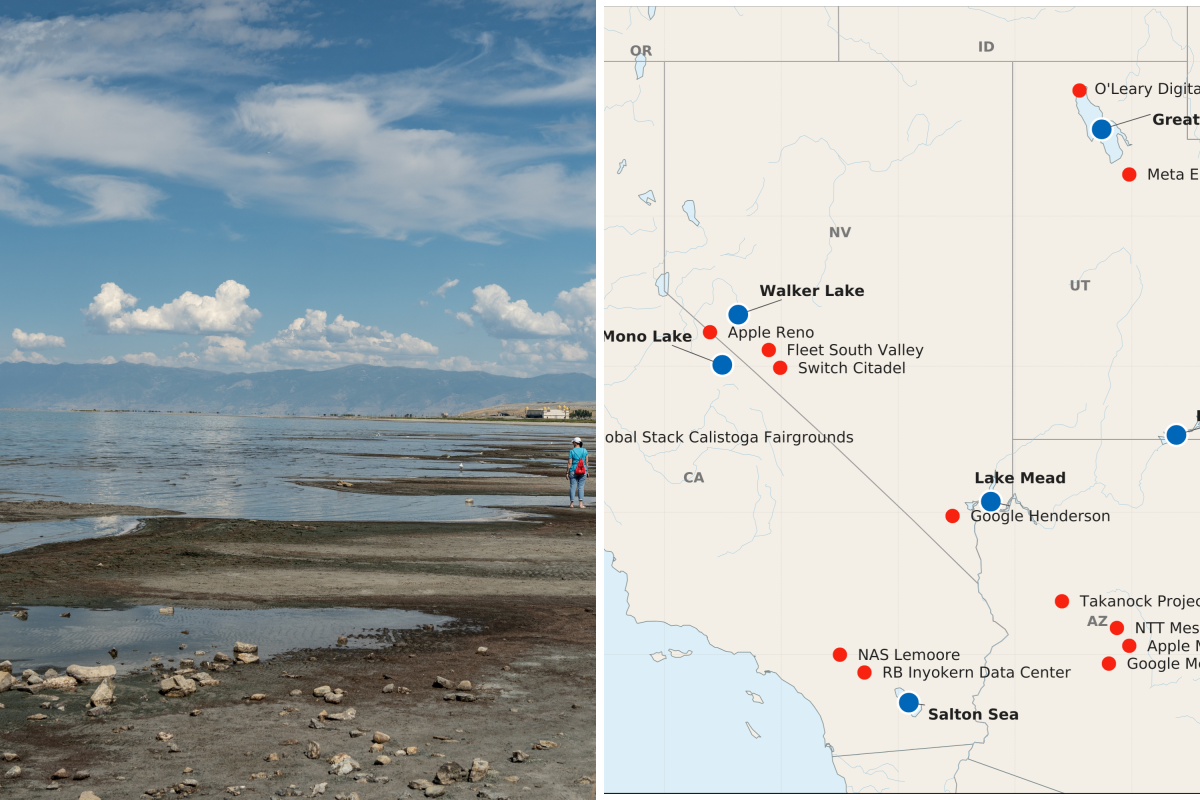
Many Western U.S. lakes and reservoirs, including the Great Salt Lake and Lake Mead, are shrinking due to drought, water use, and climate changes. At the same time, AI companies are building more water-using data centers in these dry areas, raising questions about water supply and environmental impact.
Key Facts
The Great Salt Lake, Lake Mead, Lake Powell, Salton Sea, Mono Lake, and Walker Lake have all shrunk significantly in recent decades.
The Great Salt Lake loses more water from evaporation in summer than it gains from winter rain and snow.
Shrinking lakes expose dry lake beds that can release dust, heavy metals, and microplastics into the air.
About 2.5 million people live near the Great Salt Lake and could face health risks if the lake dries up.
Lake Mead and Lake Powell are at record low levels, threatening water supplies for roughly 40 million people relying on the Colorado River.
The Western U.S. is getting hotter and drier, making water shortages more severe.
At the same time, AI companies are rapidly building new data centers in these water-stressed states like Utah, Arizona, and Nevada.
Data centers use large amounts of water for cooling, which adds pressure on limited water resources in those regions.
Read the Original
Want the full story? Tap a source to open the original
article.