The UK government has removed the Department for Science, Innovation and Technology, but has made the AI Minister, Kanishka Narayan, a full cabinet member to show the importance of AI. Narayan will continue to oversee AI and related areas, while the responsibilities of the scrapped department are divided among other parts of government.
Key Facts
The Department for Science, Innovation and Technology (DSIT) was created in 2023 but has now been abolished.
Its duties will be split across various government departments.
There is no longer a dedicated technology secretary after Liz Kendall was removed from the role by Prime Minister Andy Burnham.
Kanishka Narayan, the AI Minister appointed by Sir Keir Starmer, has been invited to join the cabinet.
Narayan previously handled AI opportunities, AI security, semiconductors, and online safety.
Experts say Narayan’s presence in cabinet highlights the government's focus on AI.
Challenges for the AI Minister include managing job risks from AI and building national technology resilience.
Increasing data centers and reliable energy supply are important for supporting AI growth in the UK.
Read the Original
Want the full story? Tap a source to open the original
article.
Researchers at The University of Hong Kong created an AI-powered blood test called CardiOmicScore that can predict a person's risk of six major heart and blood vessel diseases up to 15 years before symptoms appear. The test analyzes proteins and small molecules in the blood to provide a current picture of health, rather than relying on fixed genetic information.
Key Facts
CardiOmicScore predicts risks for coronary artery disease, stroke, heart failure, atrial fibrillation, peripheral artery disease, and venous thromboembolism.
It uses data from one blood sample, analyzing thousands of proteins and metabolites.
The test detects warning signs long before traditional methods that focus on age, blood pressure, or smoking history.
CardiOmicScore was developed using data from the U.K. Biobank with advanced AI techniques called deep learning and multiomics.
Unlike genetic tests, which only show inherited risk, this tool reflects changes caused by lifestyle, aging, and illness.
The test’s predictions are more accurate than conventional polygenic risk scores and improve with clinical information like age and gender.
Cardiovascular disease caused about 19.8 million deaths worldwide in 2022.
Early detection allows patients and doctors to take preventive steps much sooner.
Read the Original
Want the full story? Tap a source to open the original
article.
An Australian company called Proudly Human tested and confirmed that a collection of speeches and writings by Pope Leo XIV was written by a human, not by artificial intelligence (AI). This review came shortly after Pope Leo warned about the risks of AI in one of his official letters.
Key Facts
Proudly Human, led by Australia’s former chief scientist Dr. Alan Finkel, checked Pope Leo XIV’s speeches for AI use.
The collection, called Maps of Hope, was certified as human-written within a day.
Pope Leo’s encyclical, Magnifica Humanitas, warned that AI could threaten humanity if controlled by only a few.
The certification process requires ID checks and rules forbidding AI from writing first drafts or content.
Proudly Human uses several AI detection tools combined with their own system to judge if writing is human-made.
Certifications can be revoked if authorship is misrepresented or standards are not met.
Dr. Finkel hopes this certification system helps people know when something is truly human-written, especially in important areas like religion.
The Australian Catholic University supports the value of confirming works as products of human thought amid rapid AI-generated content growth.
Read the Original
Want the full story? Tap a source to open the original
article.
Vertical Aerospace, a British startup making electric flying taxis, is working to get government approval to carry passengers by 2029. The UK Ministry of Defence has shown interest in a military version of the aircraft, which can take off and land vertically and produces no direct emissions.
Key Facts
Vertical Aerospace demonstrated its electric flying taxi prototype at the Farnborough international airshow.
The aircraft is an eVTOL (electric vertical takeoff and landing) vehicle aiming to offer quiet, zero-emission urban flight.
The company received a total of £48 million in UK government funding, including a recent £10 million grant.
Vertical Aerospace faced financial challenges in 2024 but was saved through a takeover by US investor Jason Mudrick.
The firm is working with the UK Civil Aviation Authority to get certification for passenger flights.
The UK Ministry of Defence is interested in a hybrid-electric military variant of the aircraft for silent and low-heat operations over distances up to 1,000 miles.
Vertical plans to launch commercial flights carrying four passengers by 2029, after delays from an original 2025 target.
The aircraft can switch from airplane-like flight to helicopter-like vertical flight by tilting its propellers.
Read the Original
Want the full story? Tap a source to open the original
article.
Meta has released new smartglasses that let users record video hands-free and without looking at a screen. While these glasses help users capture moments easily, they also raise privacy concerns because people could secretly film others, especially children, without their knowledge. This risk is heightened by the potential misuse of images in harmful ways involving AI technology.
Key Facts
Meta’s smartglasses allow filming without holding a phone or looking at a screen.
The glasses have a small flashing light to show when recording, but many people may not notice it.
There are concerns the glasses could be used to secretly film children and others without consent.
AI technology can use stolen images to create realistic but harmful fake content involving children.
Previous smartglasses, like Google Glass, faced rejection because of privacy worries and awkward design.
Meta markets the glasses to parents as a way to capture family moments conveniently.
Some schools and nurseries have banned the glasses to protect children’s privacy.
The glasses may also help blind people by providing useful audio and navigation features.
Experts suggest new rules might be needed to make recording more obvious or hold manufacturers responsible for misuse.
Read the Original
Want the full story? Tap a source to open the original
article.
A study found that popular AI chatbots like ChatGPT and Gemini gave wrong or confusing advice about which political party to vote for in Hungary's 2024 parliamentary election. These AI tools often missed the winning party, named parties not running, or gave different answers to the same question, raising concerns about their reliability in elections.
Key Facts
AI chatbots gave inaccurate and inconsistent voting advice during Hungary’s 2024 parliamentary election.
The winning party, Tisza, was recommended by ChatGPT in only 2% of tests with Tisza-aligned voter profiles.
ChatGPT more often recognized and recommended the long-ruling Fidesz party.
AI models frequently suggested parties not actually on the national ballot.
Researchers tested five voter profiles using ChatGPT and Gemini, each 10 times with two prompt types.
The AI systems gave confident, detailed answers, despite disclaimers about not giving political advice.
Problems likely stem from outdated training data that missed recent political changes.
The study warns unreliable AI voting advice could influence election outcomes in closer contests.
Read the Original
Want the full story? Tap a source to open the original
article.
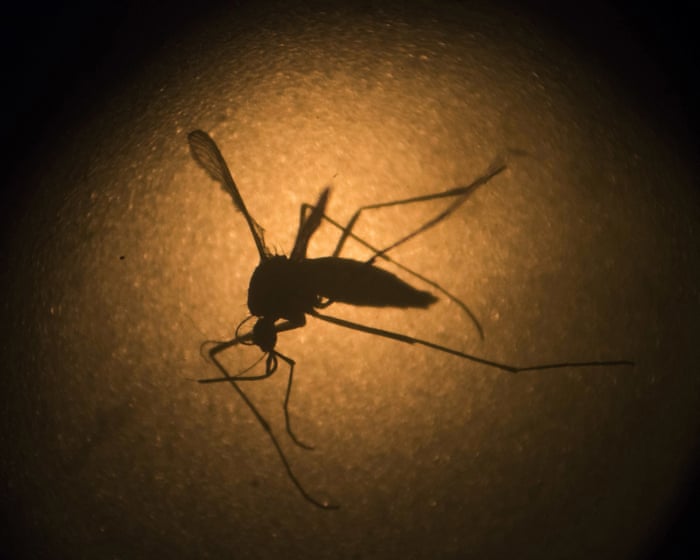
Google’s parent company Alphabet wants to release 32 million sterilized male mosquitoes in parts of the U.S. to reduce disease-carrying mosquito populations. An Australian project that released similar specially bred male mosquitoes showed this method can greatly lower mosquito numbers without harming people.
Key Facts
Alphabet’s Debug program seeks approval to release millions of sterilized male mosquitoes in California and Florida.
Male mosquitoes do not bite or spread diseases like dengue or Zika.
The goal is for these males to mate with females, causing eggs to fail and reducing mosquito populations.
Australia’s similar project used mosquitoes carrying a natural bacterium called wolbachia to disrupt reproduction.
Wolbachia causes reproductive incompatibility, so eggs from these matings don’t hatch.
Over 3 million wolbachia-infected male mosquitoes were released across several Australian towns in 2018.
The Australian trial worked well partly due to local community support and strict safety checks.
Verily (Alphabet’s life sciences division) developed technology using machine learning to sort male and female mosquitoes to ensure only males were released.
Read the Original
Want the full story? Tap a source to open the original
article.
Ollie Priestley is doing a special apprenticeship to restore modern classic cars using both old skills and new technologies like 3D printing and computer design. This kind of training mixes practical work like welding with digital skills to prepare apprentices for today's tech-influenced engineering jobs.
Key Facts
Ollie Priestley is training as a heritage vehicle technician at Tolman, a specialist car restoration business.
He uses new technology such as computer-aided design (CAD) and 3D printing alongside traditional mechanical skills.
The apprenticeship lasts three years and is equivalent to three A-levels (level three).
The Heritage Skills Academy introduced this apprenticeship in 2018 to combine digital and practical skills.
Apprenticeships are moving towards higher levels of education, with fewer people starting on basic (level two) apprenticeships.
Some worry apprentices might focus too much on digital tools and not enough on hands-on trade skills.
Experts say combining digital and trade skills creates more skilled workers able to diagnose problems and innovate.
Modern engineering apprenticeships now often include programming, robotics, and production monitoring technologies.
Read the Original
Want the full story? Tap a source to open the original
article.
Environmental activist Erin Brockovich started a website to track community concerns about new AI data centers across the U.S. These centers use large amounts of electricity and water and sometimes affect local residents by causing noise, land use issues, and lack of transparency. Her project collects reports from people who find out about these centers only after construction begins.
Key Facts
Erin Brockovich launched a website called BrockovichDataCenter.com to map concerns about AI data centers.
The site allows residents to report data centers that are planned, under construction, or already operating.
Within 72 hours of launching, the site received so many reports it crashed twice.
The map now includes over 8,000 community-reported locations across the country.
AI data centers consume large amounts of electricity and water for cooling their servers.
Residents have reported issues such as water use, energy demands, noise, and unclear community planning.
Many residents say they were not informed about projects before construction started.
Some confidentiality agreements limit public knowledge about the data center projects.
Read the Original
Want the full story? Tap a source to open the original
article.
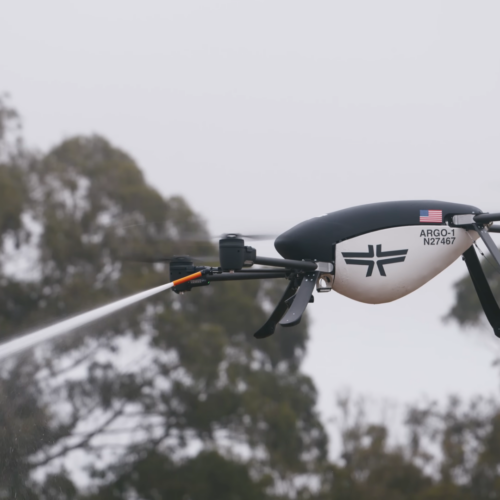
Companies and fire agencies are testing drones that can spray water and fire retardant to help fight wildfires. These smaller drones could quickly respond to and control small fires before they grow larger, especially as wildfire seasons are lasting nearly all year in the U.S.
Key Facts
Drones used for firefighting can carry about 100 pounds of water or fire retardant each.
They work in groups, or swarms, of 4 to 6 drones to spray fire-suppressing foam or liquids.
CAL FIRE tested five autonomous drones that together dropped between 500 and 1,000 gallons of foam in California.
These drones fly about 30 miles per hour and can cover a round-trip distance of 10 miles.
The drones can be refilled and have their batteries swapped quickly, within about two minutes.
In Alaska, a drone system connected to a network of solar-powered smoke sensors successfully detected and fought a wildfire.
Dryad Networks developed drones that launch automatically when sensors detect a fire and spray up to 26 gallons of suppressant.
The Aspen Fire Protection District in Colorado signed a $5 million contract for five firefighting drones over five years.
Read the Original
Want the full story? Tap a source to open the original
article.
Almost 3,000 websites were shut down or blocked for illegally streaming World Cup soccer matches, according to the US Department of Justice. The crackdown involved agencies in the US and South America, targeting websites that shared games without permission.
Key Facts
The US Department of Justice says nearly 3,000 illegal streaming sites were taken down during the World Cup.
Over 1,000 of these sites were shut down in the US, with a similar number blocked in Colombia.
The operations, named "operation offsides" and "operation red card," were carried out by US Immigration and Customs Enforcement and South American authorities.
Unauthorized streaming violates intellectual property rights and supports criminal groups, officials explained.
Illegal sports streaming costs broadcasters billions of dollars each year.
Some fans use illegal streams to avoid paying high prices for watching matches legally.
Colombian authorities arrested four people from a hacking group called "Los Ciberinfiltrados" linked to illegal streaming.
Police also seized counterfeit sports clothing and arrested 11 people in Colombia for making and selling fake merchandise.
Read the Original
Want the full story? Tap a source to open the original
article.
NASA plans to build a permanent human base on the moon near its South Pole, aiming to make living and working there a reality by the late 2020s. Experts say future lunar cities might use tall buildings made from lunar materials but are more likely to be underground in natural lava tubes to protect people from radiation.
Key Facts
NASA revealed plans for a Moon Base with the goal of a sustained human presence.
The agency has contracts for lunar vehicles and delivery systems for missions by 2028.
Lunar skyscrapers are possible since the moon has low gravity and no weather like Earth.
Buildings on the moon would need to support life with pressure, oxygen, water, temperature control, and radiation shielding.
The moon lacks natural protection from space radiation because it has no thick atmosphere or magnetic field.
Large underground lava tubes on the moon could provide natural shelter from radiation.
Experts believe underground habitats in these lava tubes are safer than tall buildings.
Lunar structures would mostly be made from local materials, like processed lunar dust and rock.
Read the Original
Want the full story? Tap a source to open the original
article.
Sony plans to stop making physical PlayStation discs by 2028, which will end the market for used games sold on discs. An analysis found that used discs are usually cheaper than digital downloads when there is no sale. However, during frequent PlayStation Store sales, digital downloads can be cheaper than used discs.
Key Facts
Sony will stop producing PlayStation physical game discs in 2028.
Used discs often cost less than digital copies at regular prices.
PlayStation Store sales offer discounts of 40% to 80% off digital game prices.
During sales, digital downloads can be cheaper than used discs for many popular games.
Some older games still sell digitally near their original launch price of about $60.
Used discs can sometimes be found for about $10 at stores like GameStop.
The analysis included checking prices on Amazon, GameStop, eBay, and the PlayStation Store.
Digital game prices without sales are often higher than used disc prices.
Read the Original
Want the full story? Tap a source to open the original
article.
Ofcom, the UK internet regulator, said it cannot take more legal action against a pro-suicide forum after the site blocked access for most UK users. Although the site is geoblocked in the UK, people can still reach it using tools like VPNs. Ofcom is working with the government to explore stronger legal powers to block such websites.
Key Facts
Ofcom investigated a pro-suicide forum linked to over 130 deaths in the UK.
The site has put a geoblock in place, stopping most UK users from accessing it directly.
People can still use VPNs (tools that hide location) to access the forum.
Ofcom fined the site £950,000 in May for breaking the Online Safety Act.
The site did not pay the fine by the 12 June deadline.
Ofcom says it has used all legal powers available under current UK law.
Ofcom wants new laws to allow court orders forcing internet providers to block harmful websites fully.
Suicide prevention groups say the current Online Safety Act does not handle harmful online content effectively.
Read the Original
Want the full story? Tap a source to open the original
article.
Apple Crumble is a new mystery game inspired by the movie Knives Out. Players explore a family home, searching through drawers and rooms to uncover the story behind a potential crime involving a grandmother. The game mixes humor with deeper emotional themes and features detailed art and interactive storytelling.
Key Facts
Apple Crumble is a mystery game focused on exploring a family home to solve a plot involving a possible threat to the grandmother.
The game is inspired by the movie Knives Out and the studio’s previous game, Duck Detective.
Players can open every drawer and door to find clues and learn about family members’ troubles and secrets.
The story begins with humor but becomes more serious and emotional, reflecting the creator’s personal feelings about losing a grandmother.
The art style uses layered paint splatters inspired by Puss in Boots concept art to create a natural and detailed look.
The script is nearly finished, and voice actors will be recorded together to create realistic interactions.
Apple Crumble is being developed by Happy Broccoli Games for PC.
The planned release date is in late 2026.
Read the Original
Want the full story? Tap a source to open the original
article.
Global spending on artificial intelligence in business is expected to reach $2.52 trillion by 2026 as companies try to update and automate their operations. However, many businesses face challenges because they invest in new software without fully understanding how their work processes function, leading to inefficient systems.
Key Facts
Worldwide AI investment in businesses will likely surpass $2.5 trillion by 2026.
Many companies have trouble knowing where software can truly improve their operations.
Ramesh Pimentel, CEO of Ramedia, says the main problem is not the technology but a poor understanding of business workflows.
Ramedia focuses on studying how companies work before suggesting or creating software solutions.
The company’s approach involves workflow analysis and operational audits to match software with real business needs.
Founders Pimentel and Veludandi grew their skills by working on increasingly complex projects, moving from small websites to enterprise-level software.
Many businesses hesitate to change old processes because it can be risky and expensive.
Ramedia helps companies find gaps in their work processes to save time, reduce errors, and improve efficiency before adding new software.
Read the Original
Want the full story? Tap a source to open the original
article.
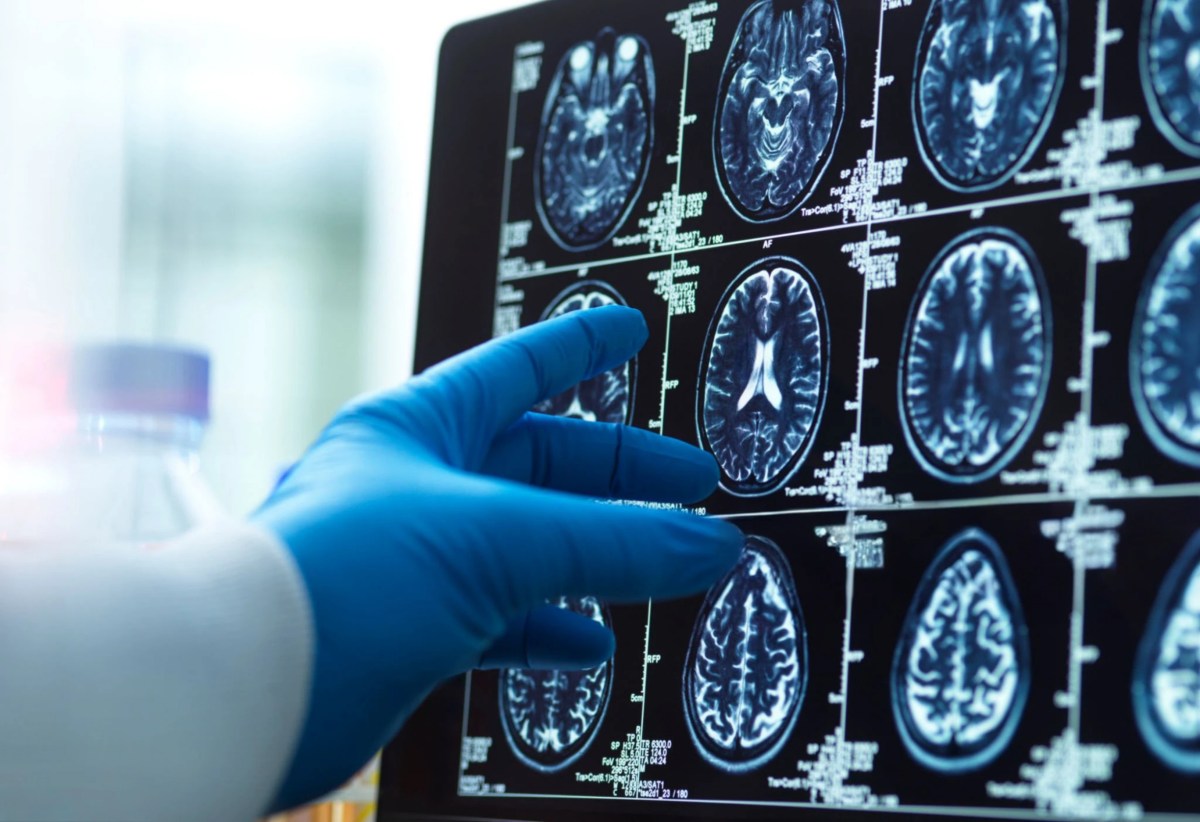
Scientists have found that a natural brain protein called SORLA may help protect against damage from tau protein buildup in Alzheimer’s disease. In studies with mice, increasing SORLA reduced harmful tau clumps, brain shrinkage, and loss of connections between brain cells.
Key Facts
SORLA is a protein that naturally occurs in the brain and may defend against tau protein problems linked to Alzheimer’s.
Tau proteins normally support neuron structure, but in Alzheimer’s they form harmful clumps called tau tangles.
Mice engineered to have more human SORLA showed less tau accumulation and less brain shrinkage.
Increasing SORLA reduced tau hyperphosphorylation, which is a key process causing tau to become harmful.
Higher SORLA levels helped maintain synapses, the communication points between brain cells, and supported brain plasticity.
Mice lacking the gene for SORLA experienced worse tau-related brain damage.
The study also found that lack of SORLA increased activity in brain support cells (glial cells) linked to disease progression.
Existing drugs targeting certain brain receptors (plexin-B family) might be repurposed to help in tau-related dementia.
Read the Original
Want the full story? Tap a source to open the original
article.
Christopher Nolan directed the movie "The Odyssey," which was filmed in six countries and made over $260 million worldwide. The movie was the first commercial film shot entirely using IMAX cameras, offering a very clear and immersive viewing experience, but filming was difficult and demanding for the cast and crew.
Key Facts
"The Odyssey" was shot in six different countries.
The film earned more than $260 million worldwide over its opening weekend.
The cast includes well-known actors like Matt Damon, Anne Hathaway, Zendaya, and Tom Holland.
It is the first commercial movie shot completely in IMAX format, which provides sharp images and wide viewing angles.
Filming in IMAX is challenging because the film reels last only about three minutes before needing reloads.
Many scenes were filmed on real locations, such as mountains and boats, to create authenticity.
Christopher Nolan wanted to film entirely in IMAX since he was a teenager to create an immersive experience for audiences.
Nolan says making the movie felt like an expedition due to the physical challenges of the locations.
Read the Original
Want the full story? Tap a source to open the original
article.
Many businesses want to use artificial intelligence (AI) to improve their work, but they often struggle to apply AI successfully in real life. Experts say that AI projects need time, testing, and a clear understanding of business needs before they can produce good results.
Key Facts
AI is important for organizations to improve efficiency, customer experience, and growth.
Many companies only experiment with AI instead of fully using it to get measurable results.
A common mistake is expecting AI to work perfectly right after it is launched.
Successful AI implementation requires testing, feedback, and gradual improvements.
AI projects need close collaboration between technical teams and business leaders.
Understanding the business’s real problems and goals is essential for AI to be helpful.
Organizations should spend more time learning about their operations before starting AI projects.
Rushing AI projects can cause poor results and wasted investment.
Read the Original
Want the full story? Tap a source to open the original
article.
Marvel Studios released the first full trailer for Avengers: Doomsday, a major new movie in the Marvel Cinematic Universe (MCU). The film features heroes and villains from three different universes and is part of the MCU’s Phase Six, leading into a larger story about the multiverse.
Key Facts
Avengers: Doomsday is the second-to-last film in the MCU’s Phase Six and wraps up the “Multiverse Saga.”
The movie was reworked after actor Jonathan Majors, originally planned to star as Kang the Conqueror, was fired following a legal conviction.
Directors Anthony and Joe Russo returned to direct this film, shifting the story towards the Secret Wars comic storyline.
The film includes characters from three universes: Earth-616 (Avengers and Wakandans), Earth-828 (Fantastic Four), and the original X-Men universe.
Robert Downey Jr. returns as the villain Doctor Doom.
Main cast members include Chris Hemsworth (Thor), Anthony Mackie (Captain America), Paul Rudd (Ant-Man), and Letitia Wright (Shuri as Black Panther), among others.
The trailer shows many superhero cameos and previews a large team-up against a significant new threat.
The movie is set 14 months after the events of the film Thunderbolts.
Read the Original
Want the full story? Tap a source to open the original
article.