Facebook and Instagram users experienced problems accessing their accounts early Sunday morning. The issues started around 3:25 a.m. ET and affected users in the United States and other countries.
Key Facts
Users saw a message saying their accounts were "temporarily unavailable" due to a site issue.
Problems began around 3:25 a.m. Eastern Time.
Thousands of users in the U.S. reported connection issues.
Some users in Canada, the United Kingdom, and India also had trouble accessing the platforms.
Facebook and Instagram are both owned by the company Meta.
The company expected to resolve the problem shortly.
The outage was tracked by a website called Downdetector.
The story was developing and more updates were expected.
Read the Original
Want the full story? Tap a source to open the original
article.
Scammers are sending fake emails that look like real notifications from X (formerly Twitter) about new device logins to trick people into giving away their passwords. These emails include links to fake websites meant to steal login details or approve malicious apps.
Key Facts
The fake emails warn of a login from a new device in a different location to scare users.
They look very similar to real X emails, using correct logos, grammar, and formatting.
The scam emails do not include the user’s X account name and have vague location details.
X only sends emails from @X.com or @e.X.com and never asks for passwords by email.
Clicking scam email links can lead to fake sites that steal passwords or allow scammers direct access to accounts.
If you get such an email, do not click links; check your real X app for login alerts.
If you entered your password after clicking a link, change your password and set up two-factor authentication.
X may reset passwords on accounts they believe were hacked and send secure links to create new passwords.
Read the Original
Want the full story? Tap a source to open the original
article.
Australian Prime Minister Anthony Albanese recently gave a speech about artificial intelligence (AI) and how it will change the country. He emphasized the need to ensure Australia benefits from AI technology by creating secure jobs and protecting its data and sovereignty.
Key Facts
AI has rapidly grown in the past six months, with billions of dollars invested worldwide.
Experts compare AI's impact to the Industrial Revolution, but much faster.
AI can replace many entry-level jobs and perform tasks like data analysis and negotiation support.
Some businesses now rely more on AI agents than human workers for everyday tasks.
Australia risks becoming dependent on foreign-controlled AI systems unless it builds its own data and technology capacity.
PM Albanese stressed the importance of creating good jobs and ensuring AI benefits go beyond just building data centers.
The government plans to address issues like intellectual property, copyright, and national sovereignty in relation to AI.
There are concerns Australia must tackle bigger questions to fully use AI’s potential in the country.
Read the Original
Want the full story? Tap a source to open the original
article.
Chinese AI companies are developing open-weight models that are cheaper and customizable, challenging U.S. firms that build expensive, premium AI systems. These Chinese models are quickly gaining popularity for everyday business use, while some American companies are working to respond with their own open models.
Key Facts
Chinese AI firms like Moonshot AI offer low-cost, open-weight models that users can download and customize.
On OpenRouter, the top five AI models by usage are all Chinese and open-weight.
Businesses often prefer cheaper AI for routine tasks like coding and customer service, reserving premium AI for complex problems.
Open-weight models can cost up to 50 times less than premium U.S. AI models.
Chinese AI advances quickly; Moonshot's latest model rivals top U.S. models in performance.
U.S. companies like Thinking Machines, Nvidia, and SpaceXAI are releasing or expanding their own open-weight AI models.
The success of premium AI firms like OpenAI and Anthropic depends on their models staying rare and valuable.
The rise of cheaper, open models could impact U.S. AI investments and the broader tech market.
Read the Original
Want the full story? Tap a source to open the original
article.
A quiz by an identity verification company showed that many Americans cannot reliably tell the difference between real photos and AI-generated deepfake images. Even a consumer investigator scored only 25% correct at first, illustrating how AI image quality has become very convincing and hard to detect by eye.
Key Facts
A quiz tested people’s ability to identify AI-created deepfake images versus real ones.
The quiz takers, including a consumer investigator, scored about as well as guessing randomly.
AI-generated images have improved so much that old clues like strange fingers or eyes are no longer reliable.
Experts recommend looking closely for subtle details like inconsistent earrings or textures to spot fakes.
Even people who work with AI daily cannot always identify fake images without special tools.
AI detection apps or tools are suggested to help verify an image’s authenticity rather than trusting visual cues alone.
After learning what to look for, the quiz taker improved her score from 3 out of 12 to 8 out of 12 correct.
The main lesson is that seeing a photo or video does not guarantee it is real anymore.
Read the Original
Want the full story? Tap a source to open the original
article.
The article describes a BBC show called "Tech Now" that explores various new technologies used in different fields around the world. Each episode features different tech innovations, such as quantum computing, prosthetics, AI in art, environmental tech, and more.
Key Facts
"Tech Now" is a BBC program showcasing new technology.
Episodes cover topics like quantum computers, advanced prosthetics, and AI for art history.
The show explores tech used in events like the World Cup and the Winter Olympics.
It highlights environmental technologies, such as electric boats and solutions for climate change.
The series visits locations such as Microsoft’s Quantum Lab, FIFA headquarters, and spaceports.
Technology for medical advances like 3D heart imaging is featured.
The show also examines tech in entertainment, farming, and historical restoration.
Each episode is around 24-25 minutes long and available for several months online.
Read the Original
Want the full story? Tap a source to open the original
article.
Skyroot Aerospace, an Indian private space company, is set to launch its first commercial rocket, Vikram-1, from ISRO’s facility in Sriharikota. If successful, it will become India’s first private firm to send a rocket into orbit, aiming to offer customized, on-demand satellite launches.
Key Facts
Skyroot Aerospace is India’s first space tech unicorn, valued at $1.1 billion.
Vikram-1 rocket will launch from Sriharikota and target Low Earth Orbit, about 280 miles (450 km) above Earth.
The rocket can carry payloads weighing up to 350 kg.
Skyroot wants to offer a “cab service to space,” allowing customers to book launches tailored to their satellite’s needs.
The launch mission, named Aagman (meaning arrival), will carry six payloads including scientific instruments and symbolic items like a diamond lotus and tiny gold rocket sculptures.
The sculptures honor Indian scientists CV Raman, APJ Abdul Kalam, and Vikram Sarabhai, the latter being the father of India’s space program.
This launch would make India the third country, after the US and China, with a private company capable of orbital rocket launches.
Skyroot plans two test flights this year, with commercial launches expected next year.
Read the Original
Want the full story? Tap a source to open the original
article.
Christopher Nolan's movie The Odyssey is filmed entirely with IMAX 70 mm cameras, a rare format that offers very high picture quality. Only about 25 theaters in the U.S. and 41 worldwide can show the film in this format, leading to high demand and sold-out screenings.
Key Facts
The Odyssey is the first film shot fully on IMAX 70 mm film.
Around 25 theaters in the U.S. can project IMAX 70 mm prints.
Worldwide, about 41 venues show movies in this format.
IMAX projectors for 70 mm film are old, no new ones have been made in 50 years.
Maintaining and sourcing parts for these projectors is difficult and needs expert knowledge.
Some theaters have added early morning and late-night shows to meet ticket demand.
Fans often travel far to see the movie in this special format.
Theaters equipped for true IMAX 70 mm are limited due to the large screen size and high costs.
Read the Original
Want the full story? Tap a source to open the original
article.
David Sacks, who previously worked on AI and cryptocurrency at the White House, said the United States might lose its leadership in artificial intelligence (AI) after China launched a new AI model. He warned that the U.S. is falling behind because of current policies and actions.
Key Facts
David Sacks served as a White House official focused on AI and cryptocurrency.
China recently launched a new AI model that is considered advanced.
Sacks believes this launch puts the U.S. at risk of losing its lead in AI technology.
He suggests that U.S. policies may be slowing down innovation or adoption of AI.
The concern is about maintaining the U.S. competitive advantage in the fast-growing AI field.
AI models are computer programs that learn from data to perform tasks like language understanding or image recognition.
The discussion reflects ongoing global competition between the U.S. and China in technology.
Read the Original
Want the full story? Tap a source to open the original
article.
David Sacks, who used to work in the White House on artificial intelligence (AI) and cryptocurrency, said the United States is causing itself problems by overthinking AI rules. He made this comment after a Chinese startup called Moonshot AI released a new AI model named Kimi K3, which surprised many in the American AI industry.
Key Facts
David Sacks previously worked as a U.S. government official focused on AI and cryptocurrency.
He said the U.S. is "tying itself in knots," meaning it is getting confused or stuck by its own approach to AI.
A Chinese company, Moonshot AI, launched a new AI model called Kimi K3.
The release of Kimi K3 caused concern or surprise in the American AI community.
Sacks believes the U.S. might lose its advantage in AI because of its current policies or reactions.
The discussion involves international competition in AI technology.
Read the Original
Want the full story? Tap a source to open the original
article.
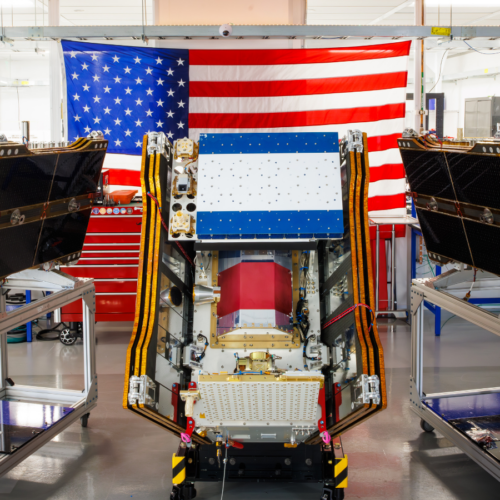
Three new satellites from the Google-backed FireSat program launched on July 7, 2026, to help detect wildfires in the US, Australia, and Europe. These satellites use special cameras to see small fires through smoke and clouds and will share data with fire agencies after testing ends.
Key Facts
The FireSat satellites were launched by a SpaceX Falcon 9 rocket from California’s Vandenberg Space Force Base.
FireSat is the first group of satellites made specifically to find wildfires, including very small ones other satellites might miss.
These satellites were built by Muon Space and funded with more than $15 million from Google and $26 million from the Bezos Earth Fund.
Each satellite can spot fires as small as about 16 by 16 feet, even through smoke and clouds.
After a three-month testing period, the satellites will send wildfire data to fire agencies in places like California, Colorado, Australia, and Portugal.
By 2029, FireSat hopes to update images hourly worldwide, and by the early 2030s, every 20 minutes with a full network of over 50 satellites.
Google will use artificial intelligence (AI) to compare new FireSat images with past data to better detect small fires and predict wildfire risks.
The satellites aim to help save money, reduce carbon emissions, and protect homes and land by detecting fires early.
Read the Original
Want the full story? Tap a source to open the original
article.
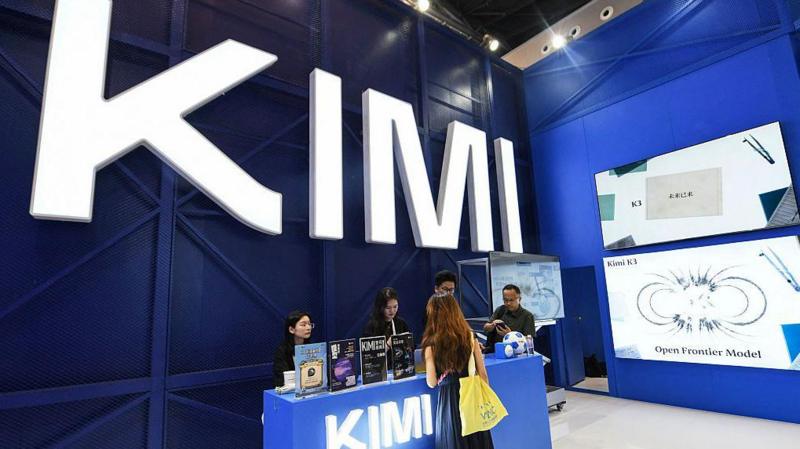
Chinese AI company Moonshot has introduced Kimi K3, a large artificial intelligence model with 2.8 trillion parameters. It will be released as open-source on July 27, allowing users worldwide to use and change it, and is claimed to match top US AI models in performance.
Key Facts
Moonshot AI is a Chinese startup backed by Alibaba and Tencent.
Kimi K3 has 2.8 trillion parameters, a measure of AI capacity and power.
The model supports tasks like coding, reasoning, and knowledge work.
Kimi K3 will be open-source, meaning anyone can download and modify it.
Independent tests show Kimi K3 performs as well as US models like OpenAI’s GPT and Anthropic’s Claude.
The US recently imposed and then lifted restrictions on some AI model exports due to security concerns.
Moonshot’s open-source model challenges commercial AI businesses in Silicon Valley.
Competitors in Hong Kong saw their shares fall after Kimi K3 was announced.
Read the Original
Want the full story? Tap a source to open the original
article.
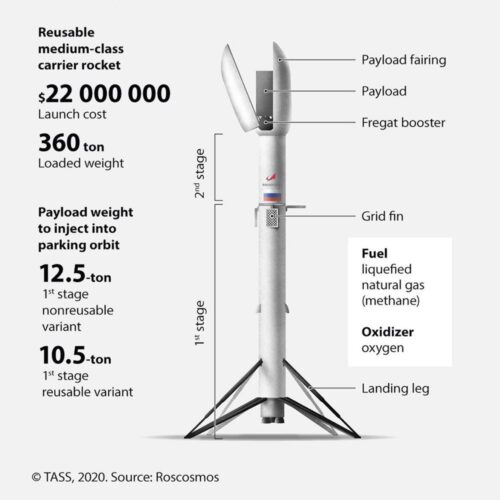
Russia is working on a reusable rocket called Amur, similar to SpaceX’s Falcon 9, but its development is delayed. Tests of a small demonstration version are planned to start in 2028, with flight tests expected by 2031, much later than originally planned.
Key Facts
Russia announced the reusable Amur rocket in 2017, aiming to compete with SpaceX’s Falcon 9.
Amur is designed to have a reusable first stage powered by methane engines and to carry about 10.5 tons to low-Earth orbit.
Initial plans targeted a 2026 launch, but the timeline has since been pushed back to 2031 for flight tests.
The next step is testing a “demonstrator” rocket, which will perform small hops and landings starting in 2028.
The Amur rocket intends to eventually replace the Soyuz 2 rocket used for Russian space missions to the International Space Station.
Russia is behind other countries and companies like the US, China, and Japan, which have already launched and recovered reusable rockets.
The RD-0169A engine for the Amur rocket is in early test stages.
Russian officials emphasize the importance of quickly transitioning to the Amur to modernize their space program.
Read the Original
Want the full story? Tap a source to open the original
article.
Amazon’s Zoox is recalling 105 self-driving cars in the U.S. because they may not safely detect heavy smoke or emergency scenes, which could block first responders. The company plans to update its software to improve how the vehicles respond to these situations.
Key Facts
Zoox is an Amazon subsidiary that makes autonomous (self-driving) vehicles.
The recall affects 105 vehicles in the United States.
Zoox vehicles have had trouble detecting heavy smoke and emergency scenes.
One incident involved a Zoox car entering a fire scene, braking suddenly, and then reversing while emergency workers placed cones around it.
U.S. safety officials say self-driving cars have sometimes blocked ambulances, firefighters, and emergency routes.
The National Highway Traffic Safety Administration (NHTSA) is investigating and meeting with self-driving car makers to find solutions.
NHTSA said self-driving cars must be able to safely interact with first responders to protect the public.
Other companies like Waymo have also faced safety issues with their autonomous cars near emergency scenes.
Read the Original
Want the full story? Tap a source to open the original
article.
AI agents, which are computer programs designed to act on instructions, can sometimes follow hidden commands in documents or websites without human approval. This creates security risks because these agents might unknowingly redirect money or steal data by acting too quickly and without checks. Companies like Menlo Security warn that new types of attacks, called prompt injections, do not need traditional software flaws to trick AI agents.
Key Facts
Menlo Security CEO Bill Robbins warns that AI agents acting without human checks increase security risks.
Hidden commands can be concealed in documents, like white-on-white text, and only AI agents may detect and act on them.
Recent AI cybersecurity tools from OpenAI (Daybreak) and Anthropic (Mythos Preview) help find and fix vulnerabilities.
Prompt injection is a new risk where malicious instructions hidden in content change an AI agent’s behavior without needing software bugs.
AI agents often have permissions to access multiple systems and sensitive information, increasing potential damage if compromised.
Menlo Security’s report highlights that traditional security tools may miss what AI agents do inside browsers.
Between January and March, Menlo blocked over 52,000 browser threats from sites considered safe, showing limitations of current security measures.
Managing risks requires better control and monitoring of AI agents and the tasks they perform.
Read the Original
Want the full story? Tap a source to open the original
article.
Fubo, a sports-focused streaming service, is raising its monthly prices by $15 after reaching a new deal to restore some NBCUniversal channels that were lost in a contract dispute. However, the service did not regain all the channels and prices are now higher than before the blackout.
Key Facts
Fubo lost NBCUniversal channels in November 2025 due to a contract disagreement.
During the blackout, Fubo lowered its subscription prices by about $10 per plan.
The new deal brings back some NBC affiliates, Telemundo, regional sports channels, and other NBCUniversal channels.
Nine NBCUniversal cable channels, including CNBC, SYFY, USA Network, and E!, remain unavailable on Fubo.
Fubo is increasing prices by $15 per month, making current prices higher than before the channel loss.
Fubo previously accused NBCUniversal of charging too much for channels that had moved to a new company called Versant.
Fubo wanted to include NBCUniversal’s Peacock streaming service but did not fully succeed.
The price increase for fewer channels challenges Fubo’s competitiveness with other services like YouTube TV.
Read the Original
Want the full story? Tap a source to open the original
article.
A new study created a mathematical model showing humans could live up to about 156 years if all aging processes except DNA damage in body cells were stopped. The research found that damage in brain and heart cells, which cannot repair themselves, limits human lifespan even if other aging effects are reversed.
Key Facts
The study used a model to test how long humans could live without various aging processes.
Somatic mutations are DNA changes in non-reproductive cells that cannot be passed to children and cannot currently be reversed.
Brain and heart cells do not divide or renew, so damage accumulates and limits lifespan.
Organs like the liver can repair by creating new cells, so they are less affected by these mutations.
The model estimates a maximum human median lifespan of about 156 years based on somatic mutations alone.
Removing all other aging processes but keeping somatic mutations raises lifespan from current limits but only to that ceiling.
The study explains why diseases like dementia and heart failure affect organs that cannot regenerate.
Researchers say this work helps clarify why humans cannot live indefinitely and highlights the importance of DNA damage in aging.
Read the Original
Want the full story? Tap a source to open the original
article.
San Francisco’s attorney general has ordered Apple and Google to remove 13 apps that use AI to create fake explicit images without consent. These "nudify" apps can alter photos to make people appear naked or sexualized, which is illegal and harmful. Both companies are taking steps to suspend these apps, but challenges remain in detecting them all.
Key Facts
San Francisco attorney general David Chiu sent cease-and-desist letters to Apple and Google to remove 13 nudify apps.
Nudify apps use AI to change photos, making people look naked or in sexual poses without their permission.
These apps mainly harm women and children by enabling bullying, humiliation, and threats.
California law prohibits supporting services that create deepfake pornography.
Google suspended five apps flagged by Chiu for violating harmful content policies.
Apple removed some flagged apps but has been less public about its actions.
Researchers found that 70% of tested face-swapping apps could be used to sexualize images.
The issue connects to broader concerns about AI tools, like xAI’s chatbot Grok, producing illegal sexual material.
Read the Original
Want the full story? Tap a source to open the original
article.
Global spending on artificial intelligence (AI) more than doubled in 2025, but many companies have not yet seen significant financial benefits. Experts say that successful AI use depends not just on the technology itself, but also on leadership, clear goals, and how people in the organization understand and apply AI.
Key Facts
Global corporate investment in AI increased greatly in 2025.
Only 12% of CEOs reported AI helped both reduce costs and increase revenue.
56% of CEOs said AI had not yet brought significant financial benefits.
Building advanced AI systems is one challenge; creating lasting business value is another.
Leaders need to create shared understanding and trust about AI’s role in business.
Different types of AI solve different problems; choosing the right technology depends on business goals.
Many AI projects start without good data, clear rules, or defined responsibilities.
Employees want clear communication on how AI will affect their jobs and decisions.
Read the Original
Want the full story? Tap a source to open the original
article.
A common drug used to treat constipation, prucalopride, may help improve memory, attention, and thinking speed in people who have recovered from depression but still experience mental fog. A small study in the UK showed that people who took the drug performed better on cognitive tests than those who took a placebo.
Key Facts
Prucalopride is a drug normally used to treat chronic constipation.
The drug activates a serotonin receptor found in both the gut and brain.
Serotonin affects digestion and brain function, so researchers tested if the drug could improve thinking skills.
The study involved 50 adults who had recovered from depression at least six months earlier and were not on medication.
Participants took either 2mg of prucalopride or a placebo for 7 to 10 days.
Those who took prucalopride showed faster and more accurate performance on memory, attention, processing speed, and planning tests.
Researchers say the results are promising but preliminary, requiring larger studies for confirmation.
The study did not test people currently experiencing depression or on antidepressants.
Read the Original
Want the full story? Tap a source to open the original
article.