Meta has introduced Muse Image, an AI tool that can create pictures using faces from public Instagram profiles by default. Privacy experts are concerned because users are not notified when their photos are used, and opting out requires finding a hidden setting.
Key Facts
Muse Image allows AI-generated photos using faces from public Instagram accounts.
Private accounts and users under 18 are automatically excluded from the feature.
Adult users with public accounts can opt out by changing a setting in Instagram's “sharing and reuse” section.
Meta does not notify users when their photos are used in AI-generated images by default.
Privacy experts say the opt-out setting is hard to find and that data sharing is turned on by default.
Meta says it has safety controls and will act against content violating community rules.
There is uncertainty if children shown in public photos of adults are included in AI image generation.
Critics argue this setting should be opt-in since users did not expect new uses of their photos when joining Instagram.
Read the Original
Want the full story? Tap a source to open the original
article.
Several news outlets, including The New York Times, have asked a judge to punish OpenAI for not providing evidence in a legal dispute. The case involves claims that OpenAI used copyrighted news content without permission to train its AI models.
Key Facts
Multiple news organizations are involved in the lawsuit against OpenAI.
They claim OpenAI used their copyrighted articles without approval.
The issue centers on how OpenAI trained ChatGPT's AI technology.
The news outlets say OpenAI did not fully share evidence in court.
They want the judge to impose sanctions on OpenAI for withholding information.
The dispute highlights conflicts over AI use of copyrighted material.
OpenAI denies it can search some data to respond to the legal requests.
Read the Original
Want the full story? Tap a source to open the original
article.
Meta has introduced a new AI tool called Muse that lets Instagram users create AI-generated images using photos from public accounts. This tool can make people’s images vulnerable to deepfakes without their permission or awareness.
Key Facts
Meta launched an AI imaging tool named Muse.
Muse can create AI-generated images using photos from public Instagram profiles.
Users do not need to get approval or notify the person whose photo is used.
This raises concerns about people being targeted by deepfakes—fake images or videos made to look real.
The tool could affect the privacy and security of public Instagram users.
Muse is part of a growing trend in AI tools that manipulate images.
Read the Original
Want the full story? Tap a source to open the original
article.
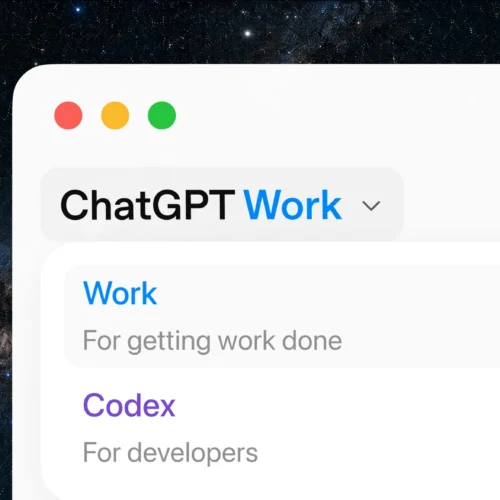
OpenAI has launched ChatGPT Work, a new tool designed to help users complete long and complex projects by automating workflows and managing tasks over time. The tool connects with common work apps, can run scheduled tasks, and uses updated AI models to improve performance while allowing users to approve important actions.
Key Facts
ChatGPT Work can handle tasks for hours, turning goals into finished work.
It integrates with workplace tools like Slack, Microsoft Teams, Google Drive, and SharePoint through plugins.
The tool includes Scheduled Tasks, which automate repetitive jobs on a set schedule or when certain events happen.
Users can control access to outside apps and files with compliance and admin settings.
ChatGPT Work merges with OpenAI’s Codex coding app technology but offers separate views for different uses.
The existing basic ChatGPT app is renamed “ChatGPT Classic” and is now less prominent.
Usage of ChatGPT Work is billed based on a credit system and subscription plans, with usage limits to control costs.
The launch coincides with the release of the new GPT-5.6 AI model, designed for better cost efficiency and stronger performance.
Read the Original
Want the full story? Tap a source to open the original
article.
Several U.S. media companies, including The New York Times and Daily News, have asked a federal court to penalize OpenAI for allegedly hiding evidence in a lawsuit about copyright. The case focuses on whether OpenAI used millions of news articles without permission to train its AI, ChatGPT, which may affect how news is shared and paid for online.
Key Facts
The New York Times, Daily News, and other media outlets are suing OpenAI and Microsoft over copyright issues related to AI.
The media companies claim OpenAI hid important data showing how it used news articles to train ChatGPT.
They want the court to sanction OpenAI for "discovery misconduct," which means hiding or destroying evidence.
OpenAI says revealing ChatGPT conversation logs could harm user privacy.
The lawsuit started in late 2023 after ChatGPT’s rise changed how people find information on the internet.
Google introduced AI summaries in 2024, reducing traffic and ad money for news websites.
Other copyright owners like authors and artists are also suing AI companies for using their work without permission.
The New York Times has spent over $28 million on court cases against AI companies, while some media companies have licensed their content to AI firms.
Read the Original
Want the full story? Tap a source to open the original
article.
Microsoft released a patch on Wednesday to fix a security flaw in Windows Defender that allowed attackers to take control of Windows 10 and 11 systems. However, this patch may cause a new problem where the system can fill up the hard drive by writing very large files, leading to disk space running out and system instability.
Key Facts
The patched flaw, called RoguePlanet (CVE-2026-50656), lets attackers control Windows machines remotely.
Microsoft’s update fixes this vulnerability automatically through the Microsoft Malware Protection Engine.
The new patch includes extra security updates called “defense-in-depth.”
A security researcher named NightmareEclipse says these updates cause a bug that can make Defender write huge files that fill up the disk.
This happens because Defender tries to keep copies of special hidden metadata files called Zone.Identifier for files downloaded from the internet.
Attackers could exploit this through a custom SMB server, which is a way computers share files over a local Windows network.
The bug causes Defender to lock files and fill the disk space, making the computer unstable but not crash.
Microsoft has not confirmed whether the disk-filling problem is real yet.
The researcher and Microsoft have had ongoing disagreements about vulnerability disclosures and patches since May.
Read the Original
Want the full story? Tap a source to open the original
article.
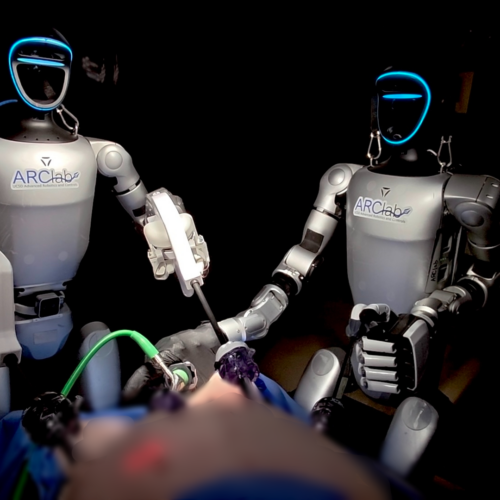
Surgeons remotely controlled humanoid robots to remove gallbladders from live pigs in a new medical experiment. This trial shows potential for cheaper, smaller surgical robots that could be used in places with fewer resources.
Key Facts
The experiment involved removing gallbladders from live pigs using humanoid robots controlled by surgeons.
The study was published in the journal Nature and conducted by researchers at UC San Diego.
The robots used were Unitree G1 humanoid robots, made by a Chinese company, costing much less than current specialized surgical robots.
Unitree G1 robots weigh about 60 pounds and stand 5 feet tall, much smaller than existing surgical robots that weigh around 1,800 pounds.
Surgeons operated the robots remotely using a computer console with a headset and foot pedal.
The system still requires improvements because surgery took longer and needed pauses to recalibrate the robots.
The robots’ smaller size limits their movement and reach compared to human arms.
If developed further, this technology could help hospitals in rural areas, battlefields, or even space missions.
Read the Original
Want the full story? Tap a source to open the original
article.
A writer named Rose Horowitch says that fewer Americans are reading books now. She believes that new technology and shorter attention spans have made gambling and other activities more popular than reading.
Key Facts
Rose Horowitch wrote an article for The Atlantic in August.
She claims that the era when many people read books is ending.
Gambling has become more popular as a leisure activity than reading.
New technology is partly responsible for shorter attention spans.
Overall, fewer Americans are reading and literacy levels are dropping.
Read the Original
Want the full story? Tap a source to open the original
article.
OpenAI is involved in a legal dispute with news organizations, including The New York Times, over the use of news content by its AI chatbot, ChatGPT. The news groups accuse OpenAI of hiding evidence related to users bypassing paywalls, which has led to calls for penalties against OpenAI.
Key Facts
News organizations, led by The New York Times, are suing OpenAI over copyright issues with ChatGPT using their news articles.
OpenAI reportedly hid information and made false statements about its ability to search ChatGPT’s user logs.
These logs show whether users accessed news content behind paywalls through ChatGPT.
OpenAI had two large samples of anonymized logs but did not disclose them for two years.
The company had already searched these logs to develop a filter to block copyrighted content.
News plaintiffs say OpenAI’s actions delayed the legal process and increased costs.
OpenAI denies wrongdoing and says the lawsuit is an attempt to invade user privacy.
The dispute centers on whether ChatGPT’s use of news content is fair use or infringement.
Read the Original
Want the full story? Tap a source to open the original
article.
OpenAI released its new AI model, ChatGPT 5.6, after delaying the launch due to US government cybersecurity concerns. The Trump administration asked OpenAI to limit access to trusted users first and review the model before a wider release.
Key Facts
OpenAI delayed ChatGPT 5.6 to address cybersecurity issues raised by the Trump administration.
The administration requested a limited release to government-approved users initially.
The government’s Center for AI Standards and Innovation tested the model before wider access was allowed.
Anthropic, a rival AI company, also faced US restrictions and an export ban on its AI models last month.
The Trump administration supports advancing AI to compete with China but has recently increased security measures due to cyber-attack risks.
President Trump issued an executive order encouraging voluntary reviews of AI models by the government.
US restrictions on advanced AI models have caused concern among businesses, foreign governments, and US allies.
OpenAI and Anthropic are competing ahead of planned stock market offerings, with OpenAI targeting a $1 trillion valuation.
Read the Original
Want the full story? Tap a source to open the original
article.
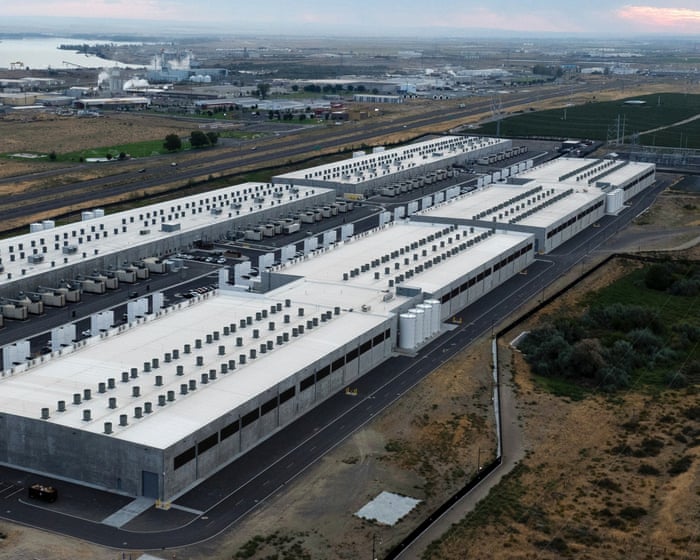
A new report shows strong growth in local groups opposing large AI data centers across the U.S., with over 430 groups and more than 525,000 members in 40 states. People are concerned about the centers’ energy use, water demand, noise, and other impacts as these facilities expand rapidly.
Key Facts
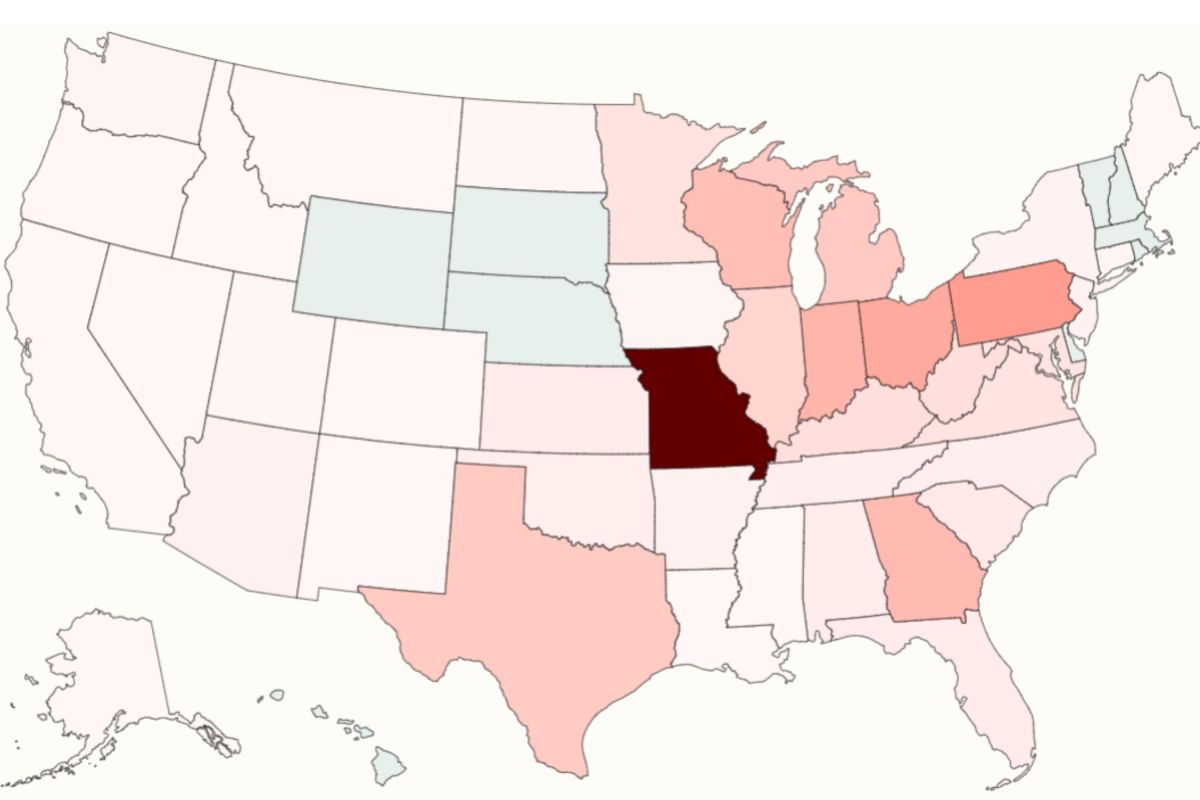
The number of opposition groups rose from 268 in April to 430 in the latest report.
Opposition members increased nearly seven times since December 2025, now totaling over 525,000 people.
Ohio has the most groups (47) while Pennsylvania has the second most (46), but Missouri has the largest number of members (about 141,000).
The report tracks groups mainly on Facebook to avoid counting duplicates on other platforms.
Data centers use lots of energy, sometimes as much as major cities, driven by demand for AI technology.
There are nearly 4,500 data centers in the U.S., including almost 500 in Texas and over 637 in Virginia.
A national protest against data centers is planned for July 18 in over 50 locations.
Concerns against data centers include rising utility costs, high water use, noise, land changes, and national security risks related to AI growth.
Read the Original
Want the full story? Tap a source to open the original
article.
A young man named Harchie Sagoo, who had cerebral palsy after a viral illness, helped test and improve communication technology for people with disabilities. In recognition of his contributions, a Bristol-based company named its new testing laboratory "Harchie's Lab" in his honor.
Key Facts
Harchie Sagoo developed cerebral palsy after contracting viral encephalitis during a family holiday in Spain.
Despite his disability affecting movement and speech, Harchie understood everything and used eye-tracking technology to communicate and control devices.
He began using Eye Gaze technology at around four-and-a-half years old, which allowed him to operate screens and household devices like lights and heating.
Harchie worked closely with Smartbox, a company that creates communication aids for disabled people, testing their devices and providing feedback.
Smartbox named its new laboratory "Harchie's Lab" to honor Harchie's role in improving their technology.
Smartbox's communication aids are used by over 100,000 people worldwide.
The technology helps users express themselves, build relationships, and participate in daily life.
Harchie's father said Harchie valued being able to express himself and would have been very pleased by the lab naming.
Read the Original
Want the full story? Tap a source to open the original
article.
Microsoft's new environmental report shows its efforts to build artificial intelligence technology are increasing its greenhouse gas emissions and water use. Though the company is improving water efficiency and investing in new clean energy, expanding AI infrastructure is making its climate goals harder to reach.
Key Facts
Microsoft's greenhouse gas emissions rose 25% due to AI growth and changes in electricity sourcing.
Emissions from purchased electricity jumped 945% between 2024 and 2025, while electricity use grew 24%.
Microsoft shifted from buying certificates for existing renewable energy to investing in new clean energy projects.
The company claims it matches 100% of its electricity use with renewable energy purchases.
At least two Microsoft data centers will use natural gas power to ensure reliable and fast energy as AI demand grows.
Microsoft improved data-center water-use efficiency by 25% from 2022 and aims for a 40% improvement by 2030.
The company returned more water to local watersheds than it withdrew worldwide for the first time.
Microsoft faces challenges because AI infrastructure is growing faster than many sustainability solutions can keep up.
Read the Original
Want the full story? Tap a source to open the original
article.
AI notetaker tools can record and summarize virtual meetings quickly, helping participants remember key points and tasks. However, some professionals worry about privacy risks, data storage, and how sensitive information might be misused or exposed.
Key Facts
AI notetakers use artificial intelligence to listen, transcribe, and summarize conversations in online meetings.
These tools can help save time and improve participation during virtual meetings.
There are concerns about where the recorded data is stored and how long it is kept.
Privacy experts worry AI notetakers may create voiceprints without user consent, which could lead to security risks.
Some companies selling AI notetakers may share or sell meeting data or use it to train their AI systems.
Sensitive or confidential information, like legal conversations or company secrets, could be at risk of exposure.
Users should check for AI notetakers during meetings, as some apps show them as attendees or display notifications when recording.
Not all virtual meeting platforms clearly inform participants if an AI notetaker is being used.
Read the Original
Want the full story? Tap a source to open the original
article.
A cybersecurity expert showed how a photo of house keys posted on social media can be used to create a working copy of the keys using free software and 3D printing. This demonstrates the risk of sharing such images online, as advanced methods can replicate keys and potentially allow unauthorized entry.
Key Facts
People often share photos of their house keys on social media when announcing home purchases.
A Virginia-based ethical hacker, Evan Ottinger, demonstrated copying keys from photos.
Ottinger used free online tools and a 3D printer to make a functioning key from a key photo.
The process involved decoding the key cuts using transparent overlays and computer-aided design (CAD) software.
The 3D printer used was a Bambu X1C model with PLA filament.
Ottinger learned these techniques from a security expert at a Red Team Alliance event.
The tools for decoding and designing keys are free and publicly available.
Keys can also be copied by hand or with commercial key cutters, not just 3D printing.
Read the Original
Want the full story? Tap a source to open the original
article.
A new study looked at how well seven popular AI chatbots give financial advice on topics like emergency savings, retirement withdrawals, and investing. The research found that while AI can offer helpful basic guidance that aligns with common financial rules, it is best used as a starting point before consulting a human financial advisor.
Key Facts
The study examined seven AI tools: ChatGPT, Claude, Gemini, Copilot, DeepSeek, Meta AI, and Perplexity.
Researchers tested AI advice using identical questions but changed the race or gender of the hypothetical household head.
Most AI platforms gave similar retirement withdrawal advice, roughly following the 4 percent rule.
Investment advice varied more between platforms, with Gemini, Claude, and Copilot giving more reliable recommendations.
The study found no major recommendation differences based on the user’s race or gender.
Experts suggest using AI as a helpful first step, not a replacement for professional financial advice.
AI can help people get a basic understanding of finances before talking to a financial planner.
AI tools may work best for typical financial situations rather than more complex or unique ones.
Read the Original
Want the full story? Tap a source to open the original
article.
People in the US are concerned about the building of data centers used for artificial intelligence (AI) because of their impact on land, energy, and the environment. However, focusing only on data centers might miss bigger issues like the growing power and influence of AI companies and how AI could change jobs and industries.
Key Facts
Opposition to AI data centers in the US comes from worries about using land, higher energy costs, environmental harm, and few local jobs created.
Lower-income communities are often the most opposed because they feel tech companies benefit while they get little in return.
The US is spending about $750 billion this year on building data center infrastructure, but this is smaller than other tech markets.
AI companies aim to expand their impact beyond data centers to areas like software, creative work, management, education, and healthcare.
Some big data center projects continue despite local opposition; for example, a project in Michigan backed by OpenAI and Oracle overcame local rejection through legal action.
The current wave of data center growth may be temporary, as future technology might reduce the need for so much centralized computing power.
The Trump administration supports the growth of AI infrastructure, even willing to override state decisions and use federal lands.
Read the Original
Want the full story? Tap a source to open the original
article.
Several news organizations, including The New York Times and the Daily News, have asked a federal judge to punish OpenAI for not sharing important information in a lawsuit about copyright and artificial intelligence. The case focuses on whether OpenAI and Microsoft used copyrighted news articles without permission to train their AI tools, like ChatGPT.
Key Facts
The New York Times and Daily News claim OpenAI is hiding key evidence about how it used news articles to train AI.
They argue this could harm news companies by reducing web traffic and advertising revenue.
The complaint says OpenAI refused to share datasets and ChatGPT logs that could show use of copyrighted content.
OpenAI is accused of “discovery misconduct,” meaning not properly sharing information in the court case.
The lawsuit began in late 2023 and involves other media groups like the Chicago Tribune’s parent company.
OpenAI says using online content for AI training is allowed under “fair use” copyright law.
Other creative industries are suing AI companies over similar copyright concerns.
A similar case involved Anthropic paying $1.5 billion to authors for using their work to train an AI chatbot.
Read the Original
Want the full story? Tap a source to open the original
article.
Ruf, a German car maker once known for modifying Porsches, revealed a new flat-eight engine called the B8 at the Goodwood Festival of Speed in England. The engine produces over 1,000 horsepower and will be tested in a prototype car named "Erprober."
Key Facts
Ruf started as a company that modified Porsche cars but is now recognized as a car manufacturer.
Ruf has been building its own cars and parts, including carbon fiber chassis for models like the SCR and Rodeo.
The new B8 engine is a flat-eight design, different from Ruf's previous six-cylinder engines.
The B8 engine has a size of 4.8 liters.
It produces more than 1,000 horsepower (745 kW) and 737 lb-ft (1,000 Nm) of torque.
The B8 engine was shown running publicly for the first time at the Goodwood Festival of Speed.
The engine is installed in a prototype called the "Erprober," which is a modified version of Ruf’s CTR3 car.
Tanner Faust, a racing driver, will drive the car with the new engine up the Goodwood hill climb.
Read the Original
Want the full story? Tap a source to open the original
article.
NASA is working on a plan to build a human base near the Moon’s South Pole. The goal is to create a place where people can live and work on the Moon for a long time. This plan includes living mostly indoors to protect against harsh temperatures and space radiation, and using the Moon’s resources to produce energy.
Key Facts
NASA’s Moon Base Program aims to establish a lasting human presence near the lunar South Pole.
The Moon has no atmosphere or magnetic field, exposing inhabitants to space radiation.
Temperatures near the Moon’s South Pole vary widely, from over 130°F in sunlight to minus 334°F in shadowed craters.
People living on the Moon will spend most time inside shelters covered with lunar soil for protection.
Robotic systems will be used extensively to do outdoor tasks to limit human exposure to radiation.
Lunar materials could help build large solar power satellites in space.
These satellites could provide continuous, green energy to Earth because they won’t be affected by weather or night.
Building solar satellites from Moon materials may be cheaper than launching them from Earth.
Read the Original
Want the full story? Tap a source to open the original
article.