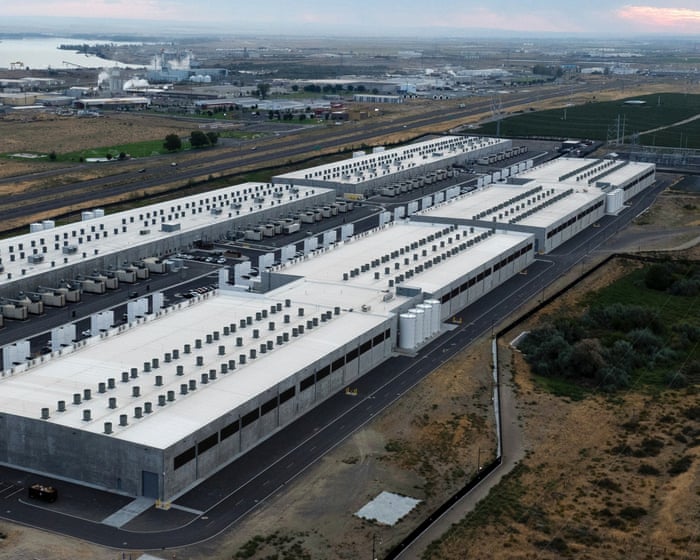
People in the US are concerned about the building of data centers used for artificial intelligence (AI) because of their impact on land, energy, and the environment. However, focusing only on data centers might miss bigger issues like the growing power and influence of AI companies and how AI could change jobs and industries.
Key Facts
Opposition to AI data centers in the US comes from worries about using land, higher energy costs, environmental harm, and few local jobs created.
Lower-income communities are often the most opposed because they feel tech companies benefit while they get little in return.
The US is spending about $750 billion this year on building data center infrastructure, but this is smaller than other tech markets.
AI companies aim to expand their impact beyond data centers to areas like software, creative work, management, education, and healthcare.
Some big data center projects continue despite local opposition; for example, a project in Michigan backed by OpenAI and Oracle overcame local rejection through legal action.
The current wave of data center growth may be temporary, as future technology might reduce the need for so much centralized computing power.
The Trump administration supports the growth of AI infrastructure, even willing to override state decisions and use federal lands.
Read the Original
Want the full story? Tap a source to open the original
article.
Several news organizations, including The New York Times and the Daily News, have asked a federal judge to punish OpenAI for not sharing important information in a lawsuit about copyright and artificial intelligence. The case focuses on whether OpenAI and Microsoft used copyrighted news articles without permission to train their AI tools, like ChatGPT.
Key Facts
The New York Times and Daily News claim OpenAI is hiding key evidence about how it used news articles to train AI.
They argue this could harm news companies by reducing web traffic and advertising revenue.
The complaint says OpenAI refused to share datasets and ChatGPT logs that could show use of copyrighted content.
OpenAI is accused of “discovery misconduct,” meaning not properly sharing information in the court case.
The lawsuit began in late 2023 and involves other media groups like the Chicago Tribune’s parent company.
OpenAI says using online content for AI training is allowed under “fair use” copyright law.
Other creative industries are suing AI companies over similar copyright concerns.
A similar case involved Anthropic paying $1.5 billion to authors for using their work to train an AI chatbot.
Read the Original
Want the full story? Tap a source to open the original
article.
Ruf, a German car maker once known for modifying Porsches, revealed a new flat-eight engine called the B8 at the Goodwood Festival of Speed in England. The engine produces over 1,000 horsepower and will be tested in a prototype car named "Erprober."
Key Facts
Ruf started as a company that modified Porsche cars but is now recognized as a car manufacturer.
Ruf has been building its own cars and parts, including carbon fiber chassis for models like the SCR and Rodeo.
The new B8 engine is a flat-eight design, different from Ruf's previous six-cylinder engines.
The B8 engine has a size of 4.8 liters.
It produces more than 1,000 horsepower (745 kW) and 737 lb-ft (1,000 Nm) of torque.
The B8 engine was shown running publicly for the first time at the Goodwood Festival of Speed.
The engine is installed in a prototype called the "Erprober," which is a modified version of Ruf’s CTR3 car.
Tanner Faust, a racing driver, will drive the car with the new engine up the Goodwood hill climb.
Read the Original
Want the full story? Tap a source to open the original
article.
NASA is working on a plan to build a human base near the Moon’s South Pole. The goal is to create a place where people can live and work on the Moon for a long time. This plan includes living mostly indoors to protect against harsh temperatures and space radiation, and using the Moon’s resources to produce energy.
Key Facts
NASA’s Moon Base Program aims to establish a lasting human presence near the lunar South Pole.
The Moon has no atmosphere or magnetic field, exposing inhabitants to space radiation.
Temperatures near the Moon’s South Pole vary widely, from over 130°F in sunlight to minus 334°F in shadowed craters.
People living on the Moon will spend most time inside shelters covered with lunar soil for protection.
Robotic systems will be used extensively to do outdoor tasks to limit human exposure to radiation.
Lunar materials could help build large solar power satellites in space.
These satellites could provide continuous, green energy to Earth because they won’t be affected by weather or night.
Building solar satellites from Moon materials may be cheaper than launching them from Earth.
Read the Original
Want the full story? Tap a source to open the original
article.
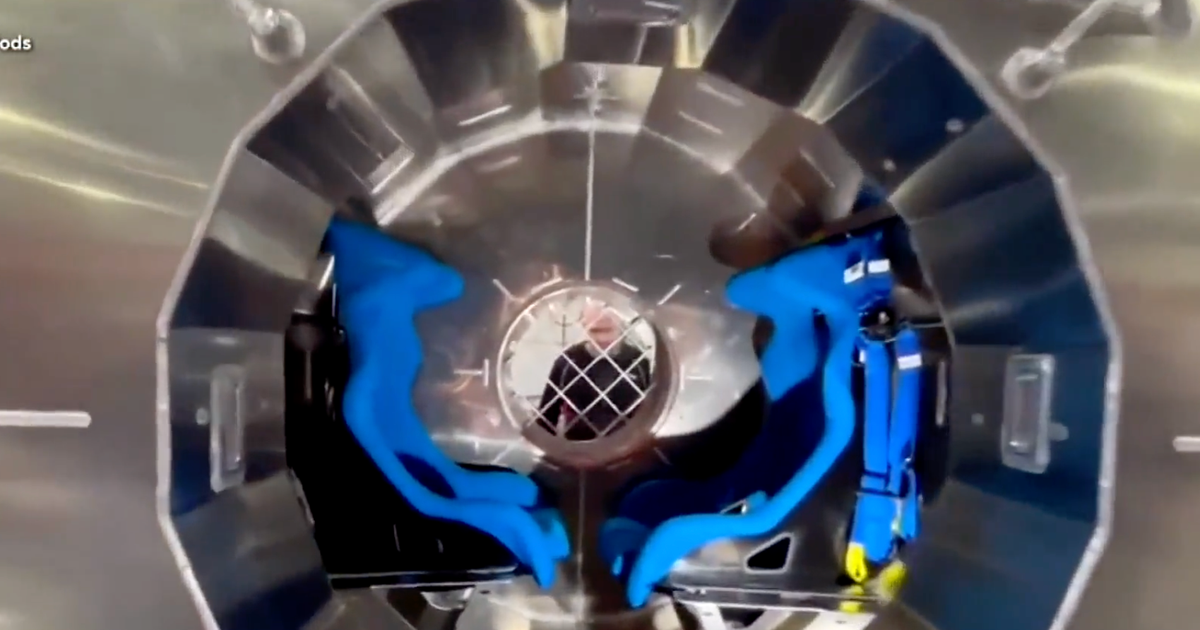
A French startup called LifePods revealed a prototype of a floating survival capsule designed to protect people during tsunamis and severe floods. The device can hold up to eight people, offers safety from debris, and sends distress signals until rescuers arrive. It is planned to be sold next year, mainly targeting organizations involved in disaster response.
Key Facts
LifePods is a French company that created the W-01, a floating survival pod for tsunamis and floods.
The pod fits four adults and four children tightly inside and includes harnesses and space for supplies.
It uses a special design to float and resist impact from large debris like cars and trees.
The capsule can send emergency signals and has an optional GPS tracker for locating it.
LifePods has not yet tested the pod in real disasters but plans staged trials starting in harbors.
The pod will likely cost about $45,000 and is aimed at governments and emergency organizations, not individual buyers.
LifePods faces competition from Survival Capsule LLC, which sells a cheaper spherical pod in the U.S.
The company is also working on other types of survival pods for earthquakes and armed attacks.
Read the Original
Want the full story? Tap a source to open the original
article.
Waymo, Alphabet’s driverless taxi service in California, cannot yet expand its ride area or charge for rides in its new Ojai vehicle because of a delay by California’s regulatory agencies. The company is waiting for state approval to operate and charge fares while addressing safety and legal concerns.
Key Facts
Waymo operates driverless taxi services in California using autonomous vehicles.
The company introduced a new car called the Ojai, made by Chinese company Zeekr but assembled with U.S. technology.
California requires companies to get permission from two agencies before allowing driverless taxis to carry paying passengers.
Waymo applied in January to expand its service to more cities in Northern and Southern California and add Ojai cars to its fleet.
The California Public Utilities Commission (CPUC) delayed approval, asking for more information about safety during emergencies and rules about minors riding alone.
A labor union filed a complaint about Waymo carrying unaccompanied minors, which is illegal in California.
Waymo cannot charge for rides in Ojai cars until CPUC approves its request; the company may offer free rides until at least the end of September.
Waymo’s existing Jaguar I-Pace robotaxis continue charging passengers as usual.
Read the Original
Want the full story? Tap a source to open the original
article.
The article discusses the idea that cellphone data may not be fully protected from government searches without a warrant. It suggests that assumptions about digital privacy could be mistaken based on past events.
Key Facts
Cellphone data often contains sensitive personal information.
Legal protections for cellphone data searches have been debated.
Some court decisions have allowed access to cellphone data without a warrant.
Public expectations about digital privacy might not match legal realities.
The issue continues to be important as technology use grows.
Read the Original
Want the full story? Tap a source to open the original
article.
The US Space Force added two companies, Impulse Space and Relativity Space, to its list of bidders for military rocket launch contracts. Impulse Space is unusual because it focuses on spacecraft that operate in space rather than rockets, but it is developing a special "kick stage" to help launch satellites to higher orbits.
Key Facts
The US Space Force’s National Security Space Launch Phase 3 program selects companies to bid on military rocket launch contracts from 2025 to 2029.
Two companies, Impulse Space and Relativity Space, were recently added as eligible bidders.
Relativity Space is working on launching its heavy-lift Terran R rocket.
Impulse Space builds spacecraft for operations in space, not traditional rockets.
Impulse Space is developing a "kick stage" called Helios to boost satellites from low-Earth orbit to geostationary orbit (about 36,000 km high).
Helios can increase the performance of medium-lift rockets like SpaceX's Falcon 9, acting like a powerful extra booster.
To bid on contracts, Impulse Space must first demonstrate Helios in a successful test flight.
Impulse Space is testing Helios components in Mojave, California, including a test tank and the Deneb engine, which runs on liquid oxygen and methane.
Read the Original
Want the full story? Tap a source to open the original
article.
An Indonesian farmer became popular online for using a drone to travel. A video shows him flying above the ground on the drone as he moves through Java.
Key Facts
The farmer is from Indonesia.
He used a drone as a way to get around.
A video captured his drone journey.
The drone carried him safely over the ground.
The location of the trip was Java, an island in Indonesia.
The video quickly gained attention and spread widely online.
Read the Original
Want the full story? Tap a source to open the original
article.
A group of UK MPs and NHS workers have urged the Labour Party to end a £330 million contract with the US tech company Palantir, which provides software for managing NHS health data. Critics worry about patient privacy and public trust due to Palantir’s links to military and government agencies, while the company claims its software improves patient care.
Key Facts
Palantir has a £330 million contract with NHS England since 2023 to manage and analyze health data.
MPs on two parliamentary committees want the NHS to cancel the contract by using a break clause in 2027 or finding a UK alternative.
Around 117 NHS data and technology workers signed a letter criticizing the contract, citing risks to patient privacy and trust.
Palantir’s software is used by US, Israeli, and UK militaries, raising concerns about its involvement beyond healthcare.
Palantir's CEO, Alex Karp, responded controversially about the company’s military work, which has added to public debate.
Palantir says its software has helped reduce surgery delays by 15% and improve cancer diagnosis times.
Sadiq Khan, London’s mayor, prevented the Metropolitan Police from awarding Palantir a £50 million contract over similar concerns.
The NHS controls how the software is used and data is processed according to legal and contractual rules.
Read the Original
Want the full story? Tap a source to open the original
article.
Ofcom fined the company behind the porn site Fapello £630,000 for not checking if UK users are 18 or older, as required by law since July 2025. The company did not respond to Ofcom’s requests and later blocked UK visitors. Ofcom continues to monitor compliance and has fined several other adult sites for similar failures.
Key Facts
UK law requires porn sites to verify users are at least 18 using effective age checks since July 2025.
The operator of Fapello did not implement any age verification methods.
Ofcom fined the company £600,000 for not checking ages and an extra £30,000 for ignoring information requests.
The site blocked UK users after the fine, but Ofcom is still watching the company’s compliance.
Ofcom has fined other adult sites millions of pounds in total for failing to meet age check rules.
Age verification methods accepted include credit card checks, photo ID, and selfie-based age estimation.
Ofcom stresses that age checks must be accurate, reliable, and fair.
A new investigation is underway into another porn site, Bit Hive, due to concerns about its age verification methods.
Read the Original
Want the full story? Tap a source to open the original
article.
A new study shows that a common blood test measuring immature white blood cells, called immature granulocytes, can help predict the risk of death within 30 days after a heart attack. Researchers found that patients with higher levels of these immature cells in their blood were more likely to have severe heart attacks and worse outcomes.
Key Facts
Immature granulocytes are a type of white blood cell usually found in the bone marrow but can appear in the blood during severe heart attacks.
The study analyzed blood samples from over 200 patients and healthy volunteers to track these cells.
The highest levels of immature granulocytes were found in patients with STEMI, the most serious kind of heart attack.
Patients with the most immature granulocytes had a much higher risk of dying within one month after their heart attack.
The test is low-cost and uses a routine blood count, making it easy to include in hospital procedures.
These immature cells reflect the level of inflammation in the body after a heart attack.
Researchers confirmed these results by testing additional patient groups, showing this measure is better at predicting death risk than other current markers.
More studies are needed before using this test routinely, but it could help doctors identify high-risk patients quickly for better care.
Read the Original
Want the full story? Tap a source to open the original
article.
SpaceX’s Starship rocket can carry more than 100 metric tons into low-Earth orbit, which is much more than existing rockets. This large capacity could change how satellites are designed and launched, enabling new missions to the Moon, Mars, and beyond. Starship is still being tested, but NASA, the US military, and satellite makers are preparing to use its capabilities.
Key Facts
Starship can carry over 100 metric tons (220,000 pounds) to low-Earth orbit.
Refueling in space could allow Starship to reach higher orbits, the Moon, or Mars.
Starship is still experimental and has not fully proven its capabilities.
NASA and the US military plan to use Starship for lunar missions and cargo transport to remote locations.
Satellite makers are designing new payloads to take advantage of Starship’s high capacity.
The traditional approach matched rocket size to satellite size; Starship’s size breaks this pattern.
NASA’s Space Shuttle once challenged these launch norms but was replaced by more cost-effective rockets.
Competitors like China are developing rockets similar to Starship.
Read the Original
Want the full story? Tap a source to open the original
article.
Virginia is known for having the largest number of data centers in the world, but a major new project called the Prince William Digital Gateway was canceled. This happened after courts ruled that the local government did not follow the proper legal steps when approving the land use for the project, which faced opposition from residents and preservation groups.
Key Facts
Virginia has the highest concentration of data centers globally, with Northern Virginia accounting for 13% of the world's data center capacity.
The Prince William Digital Gateway project planned to build the world's largest data center campus on about 2,100 acres.
Blackstone-owned QTS company stopped the project after losing a legal fight involving local residents and historians.
Courts found that the county did not give proper public notice before changing land rules for the project.
Opposition came from people concerned about damage to the nearby Manassas National Battlefield Park and local resources.
Virginia’s data center growth is driven by good internet infrastructure, reliable electricity, and tax incentives.
Increasing demand for data centers is linked to the rapid growth of artificial intelligence technology.
Experts warn that limited land and concerns about electricity and water use are making new data center projects harder to approve.
Read the Original
Want the full story? Tap a source to open the original
article.
Three major AI developments are happening at once, changing how governments and businesses respond. The U.S. and China are both considering controls on advanced AI technology to address security concerns and protect their leadership.
Key Facts
New AI models like Anthropic's Mythos and OpenAI's Sol can handle complex tasks like writing and testing code with minimal human help.
Elon Musk's SpaceXAI introduced Grok 4.5, a much bigger AI model, and plans to release an even larger one soon.
China leads in open-source AI with models like GLM-5.2, which matches top U.S. AI performances and may reach advanced levels by early 2027.
The U.S. government, under President Donald Trump, is debating stronger rules for AI development, including formal protocols before releasing powerful models.
Past restrictions on certain AI models showed the government can require companies to cooperate for national security reasons.
Officials are considering creating a new organization to oversee AI regulation, possibly with international partners.
China is discussing ways to limit global access to its best AI technology, while the U.S. is also thinking about blocking Chinese access to its models.
The growing abilities of AI have shifted the approach from light oversight to serious concern about security and global competition.
Read the Original
Want the full story? Tap a source to open the original
article.
Sony announced that it will stop making physical PlayStation game discs starting in 2028 and focus only on digital game sales. This decision follows a recent example where Sony removed some digital movies from users' libraries, highlighting concerns about owning digital products. Many gamers and companies reacted strongly to Sony's news, worried about losing the option to buy physical discs.
Key Facts
Sony will end production of physical PlayStation game discs in 2028.
Around 80% of PlayStation game sales are already digital downloads.
The switch saves Sony money on manufacturing and shipping discs.
Players will no longer be able to share, resell, or buy discounted physical games.
Sony currently controls game pricing through its digital PlayStation Store.
This decision might impact PlayStation superfans who spend above average and promote games.
Sony has faced criticism and lawsuits over its digital sales monopoly.
The change could lead to cheaper PlayStation consoles without disc drives in the future.
Read the Original
Want the full story? Tap a source to open the original
article.
Meta has launched Muse Image, a new AI tool that creates and edits images using photos from public Instagram accounts. Users with public profiles can opt out if they do not want their photos used, but privacy concerns have arisen because people are not notified when their images are used and past AI creations cannot be removed.
Key Facts
Muse Image is an AI model by Meta that generates and edits images based on text prompts and photos.
It can use photos from public Instagram accounts to create personalized images.
The feature is currently being introduced in the United States and is built into Meta AI and Instagram apps.
Users with public Instagram profiles must opt out if they do not want their photos included in Muse Image creations.
Meta does not notify users when their photos are used to make AI-generated images.
Opting out only stops future uses; existing AI-generated images using a person’s photos remain online.
Critics and privacy advocates worry about consent and personal data being used without clear permission.
Meta describes Muse Image as a tool for creating custom graphics, artworks, and edits combining multiple references.
Read the Original
Want the full story? Tap a source to open the original
article.
Low-emissivity (low-E) windows help keep homes warm in winter and cool in summer by reflecting heat. However, if the glass is curved or bowed, it can focus the reflected sunlight onto nearby objects, sometimes causing fires on neighbors’ properties.
Key Facts
Low-E glass has a special coating that lets light in but reflects heat to improve energy efficiency.
The glass keeps homes warm by reflecting interior heat back inside during winter.
It also reflects solar heat away in summer to keep homes cool.
If the glass is bowed or curved, it can act like a magnifying glass and concentrate heat on a single spot.
Concentrated reflected heat has caused damage like scorching wooden decks and melting artificial turf.
There have been cases where low-E windows caused fires on neighboring properties.
Large buildings avoid curved reflective glass because of this fire risk, but smaller home windows may still cause problems if poorly made.
One homeowner moved a propane tank after three fires linked to nearby low-E windows focused heat on it.
Read the Original
Want the full story? Tap a source to open the original
article.
Two 15-year-olds were stopped by police after being reported by a self-driving Waymo car in Northern California. The teens were drinking and shooting water beads while riding in the vehicle, which was remotely pulled over by the company and alerted law enforcement.
Key Facts
Two 15-year-old teens were detained by police in San Mateo, California.
They were drinking alcohol and shooting water-absorbent beads (Orbeez) from a self-driving Waymo car.
Waymo remotely stopped the vehicle and notified police, who then searched the car.
The teens were not locked inside and could leave the vehicle at any time.
Police used the Waymo’s communication system to talk to a company representative during the stop.
Waymo vehicles have internal cameras for safety and lost item recovery but do not use facial recognition.
Company policy allows reviewing video if an issue is reported or in urgent situations.
This incident follows another recent case where a Waymo vehicle was involved in a police matter after being used by a burglary suspect.
Read the Original
Want the full story? Tap a source to open the original
article.
Meta will spend over $9.1 billion to build its first AI data center in Canada, located in Alberta. The center will be the largest outside the U.S. and will be powered by a natural gas plant planned to start operating in 2030.
Key Facts
Meta owns Facebook and Instagram.
The new data center will be in Sturgeon County, Alberta.
It will be Meta’s biggest AI data center outside the United States.
The power for the center will come from a natural gas plant developed by several companies including Pembina Pipeline.
Alberta aims to attract data centers by allowing companies to build their own power sources.
The data center will use a cooling system that does not use local water sources.
Meta will also spend $42 million to improve local roads and water systems.
The natural gas power plant is planned to begin operations in the second half of 2030.
Read the Original
Want the full story? Tap a source to open the original
article.