Meta will spend over $9.1 billion to build its first AI data center in Canada, located in Alberta. The center will be the largest outside the U.S. and will be powered by a natural gas plant planned to start operating in 2030.
Key Facts
Meta owns Facebook and Instagram.
The new data center will be in Sturgeon County, Alberta.
It will be Meta’s biggest AI data center outside the United States.
The power for the center will come from a natural gas plant developed by several companies including Pembina Pipeline.
Alberta aims to attract data centers by allowing companies to build their own power sources.
The data center will use a cooling system that does not use local water sources.
Meta will also spend $42 million to improve local roads and water systems.
The natural gas power plant is planned to begin operations in the second half of 2030.
Read the Original
Want the full story? Tap a source to open the original
article.
A Brown University economics professor noticed unusually high scores on a take-home midterm exam and suspected many students used AI tools to cheat. When the final exam was held in person, scores dropped sharply, confirming widespread cheating with AI during the midterm.
Key Facts
Brown University economics professor Roberto Serrano offered take-home midterm and final exams in spring 2026 after a traumatic campus event.
Enrollment in Serrano’s course rose from a usual 8–30 students to 86 students that semester.
The midterm average score was 96 out of 100, with 40 students scoring a perfect 100, unusually high for this difficult course.
Professor Serrano and his assistants found student exam answers resembled responses generated by ChatGPT, an AI chatbot.
Serrano made the final exam in-person to compare results and verify academic honesty.
For the in-person final, average scores dropped sharply to 48 out of 100.
27 students dropped or skipped the final; most of them had scored perfect 100s on the midterm.
The case highlights concerns about AI use for cheating and its impact on learning.
Read the Original
Want the full story? Tap a source to open the original
article.
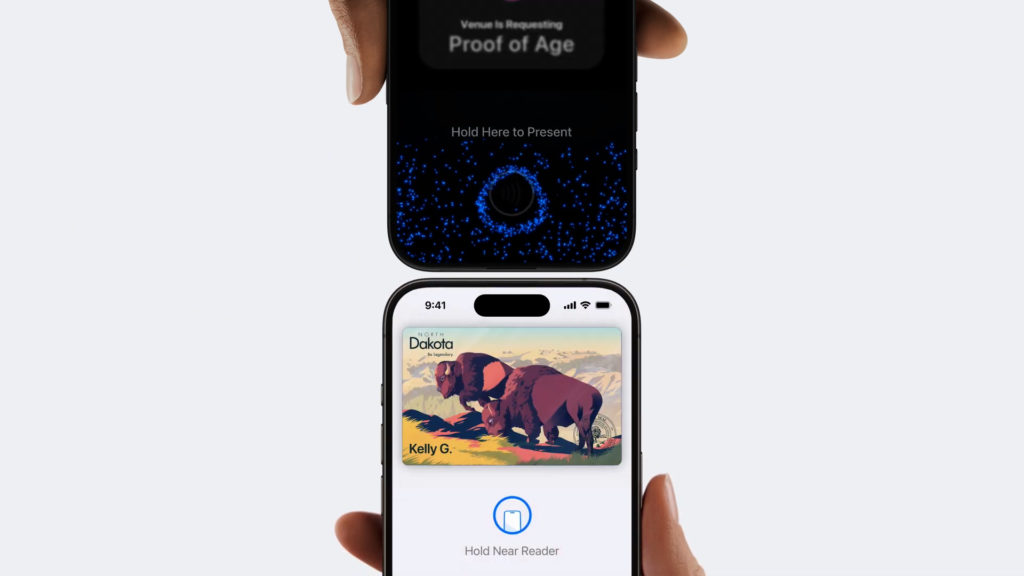
Twenty states and Puerto Rico now offer digital driver’s licenses that you can store on your phone. These digital IDs let you prove your identity by tapping your phone or showing a QR code, which can protect more of your personal information than a plastic ID. However, some people are worried about privacy, especially if governments could track where you use your digital ID.
Key Facts
Twenty states plus Puerto Rico offer mobile driver’s licenses (mDL).
You can add the digital ID to your phone’s mobile wallet or a state app.
Over 250 U.S. airports accept mobile driver’s licenses for domestic flights.
Digital IDs can share only necessary information, like age, without revealing full details.
Phones can use security features like facial ID or fingerprints to protect the digital ID.
If a phone with a digital ID is lost, the ID can be remotely removed via your DMV account.
Privacy advocates worry that digital IDs could allow governments to track users.
The AAMVA guidelines forbid “phone home” systems where the ID checks call back to a server, reducing tracking risks.
Read the Original
Want the full story? Tap a source to open the original
article.
Quantum computers have the potential to break current security systems that protect important digital information like money and personal data. Because large institutions cannot rebuild their security systems quickly, experts say they need to develop new quantum-safe infrastructure that can work with existing technology.
Key Facts
Quantum computing can eventually break the encryption that protects online banking, passwords, and government communications.
Preparing for quantum-safe security is urgent because large institutions take a long time to update systems.
Many current plans suggest completely replacing infrastructure, which is unrealistic for banks, governments, and other institutions.
Quantum-safe infrastructure should strengthen security without forcing organizations to replace their entire systems.
Encryption is essential for protecting digital economy operations such as payments, medical records, and identity verification.
Companies must test new quantum-safe security measures in real-world conditions before fully adopting them.
Security changes affect many parts of digital systems, including access controls, approvals, and compliance processes.
Experts focus on developing cryptographic tools that are strong, efficient, and meet new standards for quantum safety.
Read the Original
Want the full story? Tap a source to open the original
article.
A lawsuit alleges that a man used the AI tool Grok to create 7,000 sexually explicit images of his stepdaughter and then took his own life after police discovered this. The complaint claims the AI company xAI failed to help law enforcement by withholding important user information, which delayed the investigation.
Key Facts
A stepfather used Grok to make thousands of illegal sexual images of his stepdaughter starting from one photo when she was 11 years old.
Grok allowed creating extreme and harmful images without warning or blocking until a certain prompt triggered a report to a national child protection center.
xAI, the company behind Grok, reportedly did not provide police with key details like the user’s IP address, which is usually required in such cases.
This lack of cooperation allegedly obstructed law enforcement’s ability to identify and arrest the man quickly.
After his release on bail, the man died by suicide.
The stepdaughter suffers from serious emotional harm, including anxiety, depression, and suicidal thoughts.
The lawsuit claims that many reports sent by xAI to the child protection center did not include enough information to act, protecting users instead of children.
Jane Doe 4, the victim, says the company remained silent despite knowing about the abuse caused by their AI.
Read the Original
Want the full story? Tap a source to open the original
article.
Two serious security bugs have been found in Linux, an open-source operating system used around the world. One bug allows virtual machines to break out and take control of the main system, and the other lets users gain higher access rights than allowed. Google paid large rewards to the researchers who found these bugs.
Key Facts
A Linux bug called Januscape lets a virtual machine escape its container and take over the host system.
Januscape affects KVM, a virtual machine feature used in many Linux systems, and has been undetected for 16 years.
The bug works on computers with both AMD and Intel processors.
Exploiting Januscape requires root access inside the virtual machine.
Another Linux flaw, named GhostLock, allows users with limited rights to gain full root access.
GhostLock was found in a kernel system related to task priority and memory handling and existed for 15 years.
Google awarded $250,000 for Januscape and $92,337 for GhostLock through its bug bounty program.
Both bugs have been fixed with software updates released to protect users.
Read the Original
Want the full story? Tap a source to open the original
article.
The Australian government’s broadband testing program, run by the ACCC and using SamKnows routers, ended on June 30, 2026. After the program finished, thousands of these routers were disabled, even though many still work and could be reused.
Key Facts
The Measuring Broadband Australia (MBA) program started in 2020 to test internet speeds using SamKnows routers given to volunteers.
The program focused on fixed-line broadband services over Australia’s NBN network and other access networks.
After June 30, 2026, the routers were “bricked,” meaning they were disabled and stopped collecting data.
Volunteers were told their accounts would be closed and their data deleted after the program ended.
Some volunteers pointed out the routers still function and can be reused by installing open-source software called OpenWRT.
Reusing the routers could prevent unnecessary electronic waste, but the government encouraged volunteers to dispose of the devices responsibly instead.
About 4,000 routers were expected to be distributed during the program, with over 2,600 given out by late 2020.
A similar program in the US distributed 9,000 routers in 2011, but it is unknown what happened to those devices afterward.
Read the Original
Want the full story? Tap a source to open the original
article.
Researchers from Northwestern University studied how TikTok’s For You Page (FYP) algorithm reacts to user feedback. They found that while users can reduce unwanted videos by marking them "not interested," the effect usually fades unless users keep providing the same feedback repeatedly.
Key Facts
TikTok’s FYP uses an algorithm that looks at how long users watch videos and if they like or follow content creators.
Some users feel their negative feedback, like clicking "not interested," does not stop certain videos from appearing.
Northwestern researchers created 90 bot accounts to test how the TikTok algorithm responds to different signals.
Their tests focused on three video types: cooking, fitness, and sports betting.
Using the "not interested" button reduced unwanted videos by about 84%, but skipping videos only lowered them by 48%.
The "not interested" button is not always easy for users to find.
The algorithm often returns to showing unwanted videos after a short time, especially if the user briefly interacts with that content again.
The research shows TikTok’s algorithm needs constant, repeated negative feedback to keep unwanted videos off a user’s feed.
Read the Original
Want the full story? Tap a source to open the original
article.
SpaceXAI, led by Elon Musk, has launched Grok 4.5, a new advanced AI model focused on coding and work tasks. This model is faster and cheaper than some rivals and is now available on several platforms, but not yet in the EU.
Key Facts
Grok 4.5 is SpaceXAI’s newest AI model, designed mostly for coding and work automation, not just chatting.
It was developed together with Cursor, an AI coding startup recently acquired by SpaceXAI.
The model is claimed to be faster, lower cost, and more efficient than Anthropic’s Opus 4.8 and some OpenAI models.
Grok 4.5 costs $2 per million input tokens and $6 per million output tokens, cheaper than some competitors.
The AI was trained using the same computer power that SpaceXAI currently rents out to competitors like Anthropic and Google.
Grok 4.5 is available in Grok Build, Cursor, and on the SpaceXAI console, but not yet in the European Union.
OpenAI is releasing its GPT 5.6 model widely soon, alongside new voice AI models.
SpaceXAI plans to compete seriously with other AI companies by offering a business-focused, cost-effective model.
Read the Original
Want the full story? Tap a source to open the original
article.
City Labs, a company in Miami, launched a small satellite called BOHR that uses a new type of nuclear battery powered by tritium, a radioactive form of hydrogen. This marks the first commercial nuclear-powered CubeSat satellite, designed to provide a small but steady source of electricity in space without relying on sunlight.
Key Facts
BOHR stands for Betavoltaic Orbital High-Reliability and is a "1U" CubeSat, about the size of a softball.
The satellite uses a betavoltaic battery that converts energy from tritium decay into electricity.
Tritium is a radioactive isotope with low-energy radiation, making it safer and less toxic than common nuclear fuels like plutonium or uranium.
BOHR was launched on a SpaceX Falcon 9 rocket as part of a mission that carried 80 other payloads.
The satellite’s main spacecraft functions still rely on solar power; the nuclear battery powers a demonstration payload.
Betavoltaic batteries provide low-level, long-lasting energy, suitable for remote sensors and small devices.
City Labs is working with NASA and the U.S. military on other nuclear power applications in space and on Earth.
BOHR was the first commercial nuclear satellite to receive launch approval from the U.S. Federal Aviation Administration under new rules.
Read the Original
Want the full story? Tap a source to open the original
article.
This article explains how to use an electric fan effectively to stay cool without air conditioning. Experts say you should keep windows closed during hot days and open them at night, position the fan to circulate cool air around your body, and sometimes place ice or water in front of the fan to help cool the air.
Key Facts
Keep windows closed during the day to prevent hot air from entering your home.
Draw curtains on sunny windows to keep rooms cooler.
At night, open windows and place the fan near the open window, pointing inward to bring in cooler air.
Point the fan at your whole body rather than just your face for better cooling.
Fans help sweat evaporate, which cools your body naturally.
Do not point a fan directly at young children to avoid dehydration.
Placing a bowl of water or ice in front of the fan helps cool the air through evaporation.
Using fans with misting functions can help but avoid making the room too humid, which can reduce cooling effectiveness.
Read the Original
Want the full story? Tap a source to open the original
article.
Google has updated Android Bench, a test that measures how well large language models (LLMs) perform at Android app development. The update adds new models and a simpler testing framework, but Google's own Gemini model ranks below some competitors in accuracy and cost efficiency.
Key Facts
Android Bench tests how well LLMs handle 100 Android development tasks.
Google added eight new LLMs to the leaderboard, including Claude Fable 5 and GPT 5.4.
Gemini 3.1 Pro, Google's model, ranks fifth behind other models like GPT 5.4 and Claude Fable 5.
Claude Fable 5 leads with 84.5% accuracy but costs over $130 per test run.
Gemini 3.1 Pro costs less to run ($87 per test) but scores lower.
Gemini 3.5 Flash is the most expensive model to run ($165) due to long runtime.
Google switched Android Bench to use the Harbor framework to make it easier for developers to run tests and share results.
Developers can contribute new tasks and benchmarks to Android Bench via GitHub.
Read the Original
Want the full story? Tap a source to open the original
article.
NASA played a key role in helping SpaceX develop its Falcon 9 rocket. The article suggests NASA may have overlooked the support and cooperation that contributed to SpaceX's success.
Key Facts
NASA provided support to SpaceX during the development of the Falcon 9 rocket.
This support was important for SpaceX’s early progress.
SpaceX’s Falcon 9 is a significant rocket used for space missions.
NASA and private companies like SpaceX have worked together in the past.
The article implies NASA should remember the value of this cooperation.
Read the Original
Want the full story? Tap a source to open the original
article.
Two teenagers in California used a Waymo self-driving taxi to shoot gel beads out of toy guns and drink alcohol, breaking the company’s passenger rules. Waymo stopped the car and alerted the police, who detained the teens for their actions.
Key Facts
The teens were riding in a Waymo robotaxi when they shot gel beads from toy guns while drinking alcohol.
Waymo’s rules prohibit drug or alcohol use inside its vehicles, regardless of local laws.
Passengers under 18 must be accompanied by an adult, which the teens were not.
Throwing objects and bringing weapons (including toy guns) inside the robotaxi is not allowed.
Waymo can review video footage inside the vehicle and access live video during trips if needed.
Police were called by Waymo and detained the teens for endangering public safety and underage drinking.
This is not the first time Waymo has reported passengers for breaking rules, including drinking inside the car.
Police highlighted that toy guns can cause fear or harm because they often look real and projectiles can cause injuries.
Read the Original
Want the full story? Tap a source to open the original
article.
A new study suggests that a chemical formed from tire wear, called 6PPD-quinone, may affect the brain in ways linked to Alzheimer's disease. Researchers used machine learning to find that this chemical can interact with genes and proteins related to brain cell damage and inflammation.
Key Facts
6PPD-quinone is created when tiny particles from car tires react with ozone in the air.
This chemical has been found in water, soil, and human samples, showing people are exposed to it regularly.
The study used advanced computer tools to examine how 6PPD-quinone affects brain cell functions.
Researchers found that 6PPD-quinone binds to three key genes connected to Alzheimer’s risk.
This binding may cause oxidative stress (cell damage), inflammation, and communication problems between brain cells.
Previous studies showed 6PPD-quinone harms fish and can enter mice brains.
Experts caution that more lab studies are needed to confirm if this chemical really increases Alzheimer’s risk in people.
The findings highlight air pollution as a possible factor in dementia and suggest environmental chemicals should be studied more.
Read the Original
Want the full story? Tap a source to open the original
article.
"The Blood of Dawnwalker" is a new vampire role-playing game set in 14th-century Europe where players have 30 in-game days to save their family. The game uses time as a key part of its story and gameplay, with players transforming into a vampire each night and gaining new powers.
Key Facts
Players have 30 days to complete the main mission of saving their family from a vampire lord named Brencis.
The game is set in medieval Europe and follows Coen, a young peasant who becomes a vampire.
Time limits encourage players to plan carefully because the world and story change as time passes.
At night, players transform into a vampire called a "vrakhir" with special abilities like claws, teleportation, and mind control.
The game offers different powers, weapons, and outfits for both human and vampire forms.
The map is large, promising 50-70 hours of gameplay, but avoids unnecessary side quests.
Story and quests are tightly connected to the game world, making every action significant.
Players build reputation by disrupting vampire enemies’ operations, leading up to important confrontations.
Read the Original
Want the full story? Tap a source to open the original
article.
John Edwards, the UK information commissioner, resigned after an investigation found he used inappropriate language and behavior toward staff. Now, he is reportedly taking legal action against a woman who reported his conduct, prompting criticism from government officials and a planned review of the regulator’s culture.
Key Facts
John Edwards resigned as the UK information commissioner due to sexual harassment and bullying claims.
He allegedly used vulgar and highly sexualized language with his staff.
A woman who reported Edwards’ behavior is now facing legal action from him.
Government officials, including Science and Technology Secretary Liz Kendall, have condemned Edwards’ actions and support those who spoke out.
The UK's Information Commissioner’s Office (ICO) said Edwards’ behavior did not meet workplace standards.
An independent review into the ICO’s culture and management is planned, along with appointing more women to leadership roles.
Edwards described his behavior as "misplaced humour" but accepted he showed poor judgment.
Additional government measures to protect young people on social media, including curfews and app design changes, are being developed.
Read the Original
Want the full story? Tap a source to open the original
article.
A contractor working for Meta flushed water contaminated with a rare bacteria into public sewers during construction of a new AI datacenter in Cheyenne, Wyoming. The city responded by tightening rules on wastewater disposal and stopped Meta from discharging waste into its water treatment system.
Key Facts
Meta’s contractor, Fortis, flushed water containing Cupriavidus gilardii bacteria into public sewers during the datacenter build.
The bacteria is rare, naturally found in soil, and mainly harmful to people with weak immune systems.
The contamination was found in routine testing of wastewater from the datacenter’s cooling system.
Cheyenne banned wastewater discharges from datacenters using certain cooling and flushing systems.
The city revoked Meta’s permission to send wastewater to its water treatment plants, where water is reused for irrigation.
Meta ordered Fortis to stop discharging wastewater and to cooperate fully with city officials.
Independent tests by Fortis showed no bacteria in drinking water or on-site after the incident.
The new rules aim to prevent health risks and protect local water resources during datacenter construction.
Read the Original
Want the full story? Tap a source to open the original
article.
OpenAI plans to release its latest advanced language model, GPT 5.6, to the public on Thursday. The release was delayed because the Trump administration asked the company to wait before making it available.
Key Facts
OpenAI is releasing GPT 5.6, its newest advanced AI language model.
The public release will happen on Thursday.
The rollout was delayed at the request of President Donald Trump’s administration.
OpenAI announced the release on the social platform X (formerly Twitter).
OpenAI CEO Sam Altman made a separate post encouraging developers to start using the model.
The delay was related to government safety or policy concerns (implied by the administration’s request).
The Hill contacted OpenAI for additional comment on the release.
Read the Original
Want the full story? Tap a source to open the original
article.
Meta has launched a new AI tool called Muse Image that lets users create pictures using other people’s public Instagram profile photos. Users can opt out of having their images used, but privacy groups and experts warn this technology could lead to misuse and privacy problems.
Key Facts
Muse Image is an AI tool by Meta that generates pictures using public Instagram profile photos.
The tool is available on the Meta AI app, web browser, WhatsApp, and Instagram Stories in the US.
Users with public accounts can opt out by changing a setting in Instagram under "Sharing and Reuse."
Privacy groups warn non-consensual AI image use can cause harm and is a privacy risk.
Meta says Muse Image uses advanced AI to blend photos and create high-quality images.
The tool is free for regular users, with subscription plans for heavier use.
Meta plans to expand the tool to Facebook, Messenger, and for advertisers.
A version for generating videos with AI is being developed.
Read the Original
Want the full story? Tap a source to open the original
article.