Wing Commander IV, released in early 1996, was a video game that used full-motion video (FMV) with big-name actors and real film sets. The game pushed technology by using six CDs to store nearly four gigabytes of content, making it one of the most expensive CD-ROM productions of its time.
Key Facts
Wing Commander IV was released in February 1996, after missing its original Christmas 1995 launch date.
The game featured full-motion video (FMV) using 35mm film and real sets, unlike earlier digital backgrounds.
Well-known actors like Mark Hamill and Malcolm McDowell returned to star in the game.
It came on six CD-ROM discs, holding nearly four gigabytes of data.
The game’s production cost was around $12 million, considered extremely high for a CD-ROM title.
Wing Commander IV aimed to combine elements of movies and games into one interactive experience.
The game was part of a 1990s trend where games tried to match Hollywood’s quality and storytelling.
Read the Original
Want the full story? Tap a source to open the original
article.
A special spacecraft called Link was launched to save NASA’s Swift telescope, which is falling closer to Earth faster than before. The Link spacecraft will catch the telescope and raise its orbit so it can keep studying space events like explosions of stars.
Key Facts
The Link spacecraft was launched from the Marshall Islands using a Pegasus rocket carried by an airplane.
NASA is paying $30 million to have Katalyst Space Technologies capture and boost the Swift telescope’s orbit.
Swift was launched in 2004 and is currently orbiting about 224 miles above Earth.
Solar storms have increased the drag on the telescope, causing it to lose altitude faster.
Link will raise Swift’s orbit by about 150 miles slowly to avoid shaking the telescope.
The mission was put together in just nine months because Swift needs help before October.
Observations from Swift are paused to save its orbit until the rescue mission is complete.
NASA might use a similar mission in the future to help the Hubble Space Telescope, which is also losing altitude.
Read the Original
Want the full story? Tap a source to open the original
article.
NASA has launched a new spacecraft named LINK to catch and rescue the Swift space telescope, which is falling toward Earth due to atmospheric drag caused by increased solar activity. LINK will use robotic arms to capture Swift and lift it back to a safer orbit, marking the first time such a mission has been attempted.
Key Facts
The Swift observatory studies powerful cosmic explosions and was launched in 2004.
Swift’s orbit has dropped from 373 miles (600 km) to around 220 miles (360 km) because Earth's atmosphere has expanded and slowed it down.
If Swift falls below 186 miles (300 km), a rescue will not be possible.
NASA funded a commercial company, Katalyst Space Technologies, to build and launch the rescue spacecraft LINK.
LINK has three robotic arms, cameras, and guidance systems to capture Swift.
LINK launched aboard a Pegasus XL rocket and is currently checking its systems before approaching Swift.
The mission is considered high-risk but important for preserving Swift’s unique scientific capabilities.
The rescue attempt has about three to four weeks before LINK approaches and tries to capture Swift.
Read the Original
Want the full story? Tap a source to open the original
article.
Some of the largest data centers in the U.S. are located in areas where power grids are already under stress or may face problems soon. In regions like the Mid-Atlantic and Texas, high electricity demand caused by heat waves and fast growth in data centers is pushing the power systems to near or above record levels.
Key Facts
The Mid-Atlantic grid, managed by PJM Interconnection, is seeing electricity demand close to or above its highest summer peak from 2006.
PJM serves parts of 13 states and Washington, D.C., including areas with many data centers like Northern Virginia.
The Department of Energy says rising demand in PJM is mainly driven by data centers, along with electrification and manufacturing.
Emergency orders allow cutting power to data centers with backup electricity in extreme situations to protect the overall grid.
Northern Virginia has the world’s largest concentration of data centers, with capacity of 11.3 gigawatts.
Texas’s grid operator ERCOT expects electricity demand to break records again in 2024 due partly to new data centers and other big projects.
ERCOT believes blackouts this summer are unlikely due to new power plants coming online, but rising demand remains a concern.
Electricity use in Texas is projected to grow by 7% in 2025 and 14% in 2026 because of data centers and cryptocurrency mining.
Read the Original
Want the full story? Tap a source to open the original
article.
Paralives is a new life simulation game similar to The Sims, letting players create and control virtual people and their homes. Released in early access on PC in May 2026, it quickly sold many copies and attracted players with its creative building tools and inclusive character options.
Key Facts
The Sims series has dominated life simulation games for 26 years.
Paralives was originally a solo project by designer Alex Massé and now has a small development team.
Paralives launched on Steam in early access in May 2026 and sold 250,000 copies in eight hours.
It reached nearly 79,000 players online at the same time, close to The Sims 4’s peak.
The game emphasizes creativity and customization, allowing detailed body features and removing gender limits.
Building tools let players place and resize objects freely, unlike The Sims which restricts placement.
Paralives includes personalizable items like text on gravestones and doormats and has a "medical clutter" category with items like wheelchairs and sign language books.
Its art style is a comic-book look, different from The Sims’ more realistic style, and has sparked mixed reactions.
Read the Original
Want the full story? Tap a source to open the original
article.
A BBC investigation found that Instagram was showing paid ads in India promoting child sexual abuse material, linking to Telegram channels where such content could be purchased. Instagram’s parent company Meta has removed some ads and accounts after being notified but acknowledged its systems do not catch all violations.
Key Facts
Instagram displayed ads in India using terms like "rape video" and "child video" that linked to Telegram channels selling illegal content.
These ads appeared even though Instagram’s automated system is supposed to approve ads before publication.
BBC created a fake Instagram account in India to monitor sexualized content and began seeing such ads within a week.
Meta, Instagram’s parent company, said it removed some of the ads, suspended accounts, and blocked related URLs after the BBC's report.
Telegram reported removing over 274,000 groups related to child sexual abuse material in 2026.
Some Instagram ads showed minors in sexually explicit situations and linked to Telegram channels selling the videos for as little as $1.
Instagram initially told the BBC that some reported ads did not violate their community standards before later taking action.
Both Instagram and Telegram have legal obligations to remove this content and report it to authorities, including the National Center for Missing and Exploited Children (NCMEC).
Read the Original
Want the full story? Tap a source to open the original
article.
Yann LeCun, a leading AI expert and founder of AMI Labs, says current AI systems like ChatGPT cannot handle complex real-world tasks. His company is developing a new AI technology called JEPA that aims to better understand and predict physical outcomes by focusing on useful information.
Key Facts
Yann LeCun worked as Meta’s chief AI scientist before starting AMI Labs in 2025.
Current AI models like ChatGPT are good at coding and text but lack deep understanding of the real world.
AMI Labs raised over $1 billion from investors like Nvidia and Jeff Bezos’s wealth fund.
Large Language Models (LLMs) predict outcomes based on patterns but do not reason about physical realities.
JEPA creates simplified models of the world to predict what actions will happen more accurately.
Humanoid robots find it hard to perform household chores because current AI cannot navigate real environments well.
LeCun believes simply making LLMs bigger will not lead to human-level intelligence.
Read the Original
Want the full story? Tap a source to open the original
article.
Scientists at the University of Minnesota have created the first synthetic cell that can grow and divide, completing a full life cycle. This synthetic cell represents a breakthrough in creating life-like systems from scratch.
Key Facts
The synthetic cell was developed by a team at the University of Minnesota.
This cell can complete a full life cycle, meaning it can grow and divide.
This is the first time scientists have made a synthetic cell able to fully reproduce.
Kate Adamala, a professor at the university and co-founder of the company Biotic, worked on the project.
The achievement was shared in an interview on CBS News.
This development may help scientists better understand life and create new biological technologies.
Read the Original
Want the full story? Tap a source to open the original
article.
Spotify removed streams of the song "Earrings" by Malcolm Todd after detecting that the streaming numbers were not from real listeners. This happened following suspicious bets placed on the song’s success on the prediction market platform Kalshi, which is now investigating the issue with Spotify.
Key Facts
The song "Earrings" quickly rose 70% in streams overnight, reaching No. 1 on Spotify's U.S. chart.
Spotify identified the streams as manipulated and removed them, saying they do not pay royalties for fake streams.
Kalshi is a prediction market where people bet on future events, including music chart success.
Kalshi is working with Spotify to investigate the suspicious bets.
There are concerns about prediction markets being vulnerable to manipulation with inside information.
In a previous case, a suspicious bet on the capture of Venezuelan leader Nicolás Maduro involved a U.S. soldier charged with using classified information.
The Commodity Futures Trading Commission (CFTC) regulates prediction markets in the U.S.
Prediction markets have attracted billions in venture capital but face questions about security and fairness.
Read the Original
Want the full story? Tap a source to open the original
article.
Researchers discovered a new type of malware called PamStealer that targets Mac computers. It tricks users into running it by pretending to be a clipboard app, then secretly steals login passwords by validating them through macOS’s built-in system before sending them to hackers.
Key Facts
The malware spreads in two steps: first through a fake disk image posing as the Maccy clipboard manager, then through a hidden second-stage program.
PamStealer uses AppleScript and JavaScript for Automation to quietly download and run its secret code.
The second stage is written in the programming language Rust, which is rare for Mac malware.
It uses the macOS Pluggable Authentication Modules (PAM) system to check passwords locally, making stolen credentials more accurate.
The malware pretends to be parts of macOS, like Finder or Software Update apps, to hide its activity.
It delays showing security permission requests to avoid detection.
The malware encrypts its communications to hide data sent to hackers.
Users see a fake password prompt that looks like a normal system message to capture their passwords.
Read the Original
Want the full story? Tap a source to open the original
article.
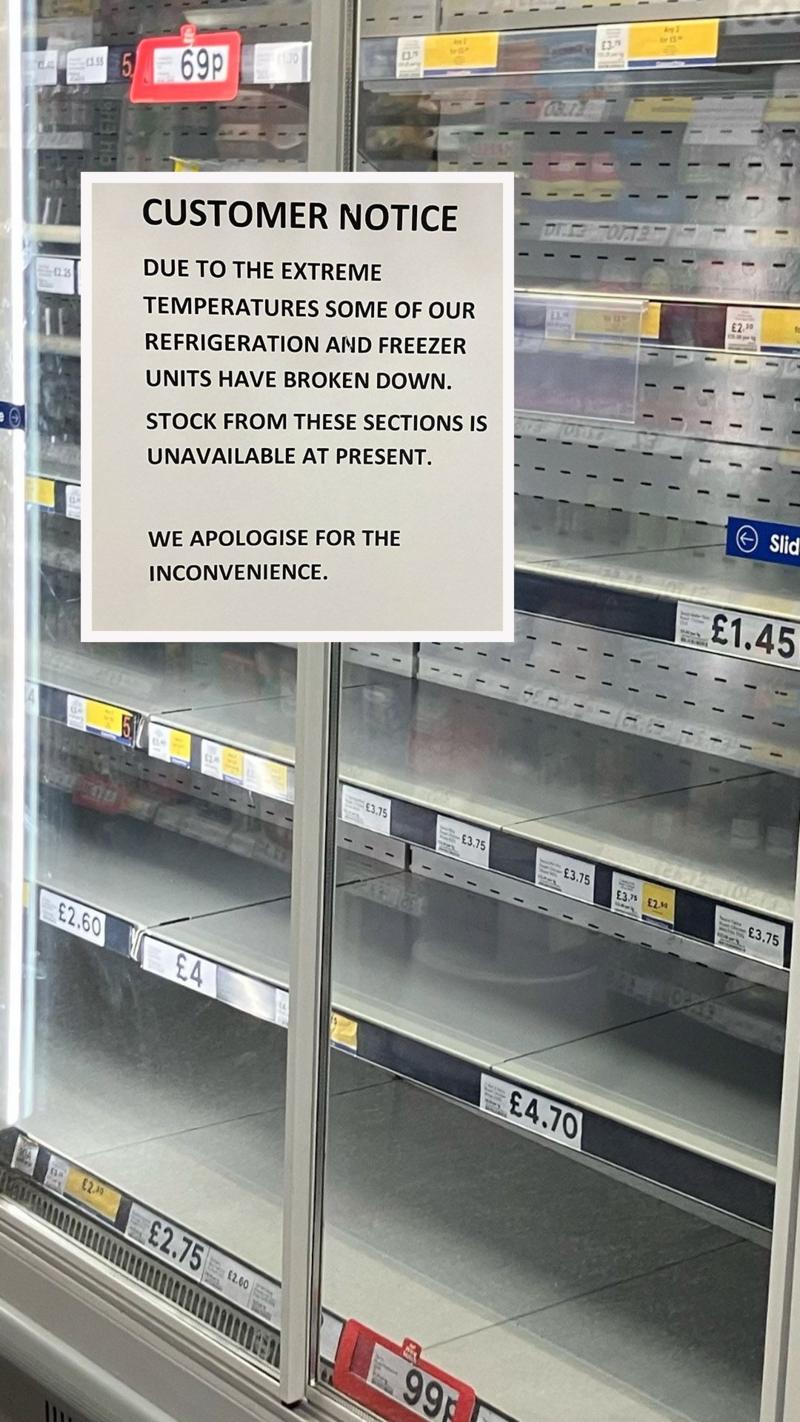
This article discusses whether home refrigerators can keep food safe during heatwaves. It looks at how higher temperatures affect fridge performance and what people can do to protect their food.
Key Facts
Heatwaves increase outside temperatures, which can make fridges work harder to stay cool.
Higher heat can cause fridges to get less cold inside, risking food spoilage.
Some fridges have better insulation and cooling systems designed for warm weather.
Experts suggest keeping fridge doors closed as much as possible during heatwaves.
It is important to regularly check fridge temperatures to make sure food stays safe.
Supermarkets also face challenges keeping food cool during hot weather.
Heatwaves are becoming more common due to climate change.
Simple steps like moving fridges away from direct sunlight can help maintain cooling efficiency.
Read the Original
Want the full story? Tap a source to open the original
article.
The US Federal Aviation Administration (FAA) has proposed a new rule to allow commercial supersonic flights over US land if the planes are quiet enough. This could end a 53-year ban by requiring that the sonic booms are much quieter than before, based on new technology from companies like Boom Supersonic.
Key Facts
The FAA’s ban on overland supersonic commercial flights started in 1973 due to loud sonic booms causing disturbances.
President Donald Trump issued an executive order in 2025 to repeal the ban to encourage supersonic travel.
The proposed rule sets a noise limit for sonic booms at 0.11 pounds per square foot to reduce disruption on the ground.
Boom Supersonic demonstrated a quieter supersonic flight with its XB-1 aircraft using special flight techniques.
Concorde’s sonic boom had a noise level of 1.94 pounds per square foot, much louder than the new proposed limit.
Some experts criticize the new standard, saying it measures pressure but not how loud or annoying the boom sounds to people.
NASA is testing the X-59 Quesst, designed to produce a soft "sonic thump" like a car door closing, which could influence future rules.
The FAA aims to finalize the new rule by mid-2027 and may introduce further regulations later this year.
Read the Original
Want the full story? Tap a source to open the original
article.
A live discussion focused on the impact of the recent New Glenn rocket explosion on NASA’s plans to land humans on the Moon with the Artemis IV mission. Experts expressed doubts about the timeline for Blue Origin’s new and more powerful 9×4 rocket variant, suggesting NASA may need to rely mainly on SpaceX’s Starship to achieve lunar goals this decade.
Key Facts
The New Glenn rocket by Blue Origin exploded in late May, causing setbacks for the space industry.
Blue Origin’s planned 9×4 rocket has nine engines on the first stage and four on the upper stage, making it more powerful than the variant that exploded.
Blue Origin has not announced an official date for the 9×4 rocket’s first flight, but some sources suggest late 2027 or early 2028.
Experts doubt Blue Origin will meet these targets; some think development might slip into the 2030s.
NASA’s Artemis IV mission aims to land humans on the Moon this decade, requiring reliable rockets.
SpaceX’s Starship currently has proven launch capabilities and infrastructure, making it a likely primary vehicle for lunar missions.
Experts recommend focusing on Starship rather than waiting for new Blue Origin rockets due to timing and complexity issues.
Panelists also answered viewer questions during the live event hosted by Ars Technica.
Read the Original
Want the full story? Tap a source to open the original
article.
Plex has introduced a new five-year subscription pass for $250, a change from their previous lifetime pass pricing. They also raised the cost of lifetime access to $750 to reflect the software’s ongoing value and support future development.
Key Facts
Plex started in 2012 selling lifetime access for $75.
Lifetime Plex Pass price increased to $120 in 2014, then to $250 in March 2025.
As of now, $250 buys a five-year subscription instead of lifetime access.
Lifetime Plex Pass price jumped to $750 recently.
Plex has raised $87.6 million in funding but is not yet profitable.
The company aims to increase recurring revenue via subscriptions for steady cash flow.
Plex has broadened beyond media server software to include movie rentals, ad-supported streaming, social features, and data monetization.
Since 2022, more users use Plex’s streaming service than the original media server capabilities.
Read the Original
Want the full story? Tap a source to open the original
article.
Experts say the best way to save energy and money on air conditioning is to raise the thermostat a few degrees while you are away. Turning off the AC completely for long periods can save energy but may cause problems like mold in humid areas and more wear on the system.
Key Facts
Setting your thermostat 7-10 degrees higher for about 8 hours a day can save up to 10% annually on cooling costs.
Turning off the AC for short trips (like 15 minutes) does not save energy.
For workdays around 8 hours long, turning off the AC or raising the thermostat saves energy and money.
In dry climates, letting the house warm up more by increasing the thermostat is effective.
In humid climates, turning off the AC can cause moisture buildup and mold problems.
Raising the thermostat by 1 degree Fahrenheit can reduce cooling costs by about 3%.
Frequently turning the AC off and on may cause wear and require more repairs.
Comfort level, AC type, building insulation, and local climate affect the best AC use strategy.
Read the Original
Want the full story? Tap a source to open the original
article.
Researchers at the University of Minnesota created an artificial cell called "SpudCell" that can enclose genetic material, import new materials from outside, and divide a few times to create offspring. The system uses parts from viruses and purified proteins to copy DNA and make proteins inside the cell-like membranes.
Key Facts
SpudCells are simple artificial cells enclosed by membranes that can take in new materials.
The cells contain genetic material spread across seven circular DNA molecules.
DNA replication is powered by a system from the Phi29 virus, which infects bacteria.
RNA production comes from a viral gene called T7 RNA polymerase, which the SpudCells can make themselves.
Proteins needed to translate RNA into other proteins were purified and added to the system by researchers.
A gene in SpudCells produces pore proteins to allow small molecules and ions to pass through the membrane.
SpudCells can divide and create a few generations of offspring but lose some DNA molecules after several divisions.
This work may help understand how life first formed and what minimal living cells could look like.
Read the Original
Want the full story? Tap a source to open the original
article.
The Court of Justice of the European Union has confirmed a $4.7 billion fine against Google for abusing its dominant position in the Android phone market. The fine is related to Google making its search engine and Chrome browser the default options on many Android devices, which the EU says limits competition.
Key Facts
In 2018, Google was fined 4.34 billion euros (about $4.9 billion) by the EU for abusing its Android market monopoly.
A lower court later reduced the fine to 4.1 billion euros ($4.7 billion), which Google must now pay.
The EU's complaint focuses on Google bundling its search engine and Chrome browser as default apps on Android phones.
This affects devices from companies like Samsung and Xiaomi, making Google's apps automatically used.
Google argues there is plenty of competition because users can install alternative apps and search services.
Europe has a history of similar cases, like forcing Microsoft to offer browser choices in Windows.
Google has made some changes, like adding ballot screens and supporting third-party app stores, largely due to legal pressure.
The EU is using new laws, such as the Digital Markets Act, to increase oversight of big tech companies including Google.
Read the Original
Want the full story? Tap a source to open the original
article.
Hot weather is making it harder for data centers to operate efficiently. These centers use a lot of electricity and water to stay cool, which can strain local power grids and harm air quality in nearby neighborhoods.
Key Facts
Data centers generate a lot of heat and need energy to keep servers cool during hot weather.
Cooling methods include energy-heavy air conditioning and water-using evaporation systems.
Increased electricity demand from data centers adds pressure to local power grids.
Backup diesel generators used by data centers can pollute the air with fumes.
Neighborhoods near data centers, like Lowell, Massachusetts, face higher health and environmental risks.
Many affected communities are low-income and have been historically excluded from decision-making.
The fast growth of AI-related data centers raises questions about their environmental impact.
Experts say heat waves are particularly challenging for keeping data centers running safely.
Read the Original
Want the full story? Tap a source to open the original
article.
Major AI companies like SpaceX, OpenAI, and Anthropic plan to go public with very high valuations soon, testing if their market value holds up under financial review. These companies depend on a few large tech firms for computing power and cloud services, creating a closely linked business environment. Experts debate whether this setup will lead to healthy collaboration or too much control by a few big players.
Key Facts
SpaceX, OpenAI, and Anthropic are all expected to launch public stock offerings soon, valued at around a trillion dollars.
These AI firms rely on big tech companies like Microsoft, Google, and Nvidia for infrastructure and investment.
The close ties between AI startups and large platform providers create a network similar to a keiretsu, a term for tightly connected companies.
Some experts worry this concentration of power may replicate social problems from past tech eras.
Others believe the main advantage will go to companies that effectively use AI tools to improve specific tasks.
There are two main development paths debated: creating narrow, practical automation now or investing in long-term general-purpose humanoid robots.
Humanoid robots training often involves recording human work to build datasets for future AI.
Increased automation may encourage bringing simple manufacturing closer to customers, speeding up production and lowering costs.
Read the Original
Want the full story? Tap a source to open the original
article.
Privacy advocates have asked the Federal Trade Commission (FTC) to continue overseeing Elon Musk’s social media platform X, formerly known as Twitter. They warn that ending the FTC’s audits could put Americans’ personal data and privacy at risk because of X’s new data practices and AI developments.
Key Facts
The FTC originally ordered X to undergo audits after Twitter shared users’ contact information wrongly for advertising.
X’s owner, Elon Musk, wants the FTC to stop these audits, saying the platform has changed after rebranding and now follows European privacy rules.
Fifteen privacy groups disagree and say X’s request to end oversight should be denied to protect user data.
Advocates highlight a recent lawsuit involving X’s chatbot Grok related to harmful content, raising privacy concerns.
In 2023, about 2.8 billion records leaked from X, showing risks to user data security.
Musk was reported to have instructed staff to act against the FTC order and gave journalists open access to internal data.
X is collecting user posts for AI training without clear, direct consent from users, which worries privacy experts.
Cambridge Analytica’s former data misuse case is compared to how X uses data for AI and behavioral modeling.
Read the Original
Want the full story? Tap a source to open the original
article.